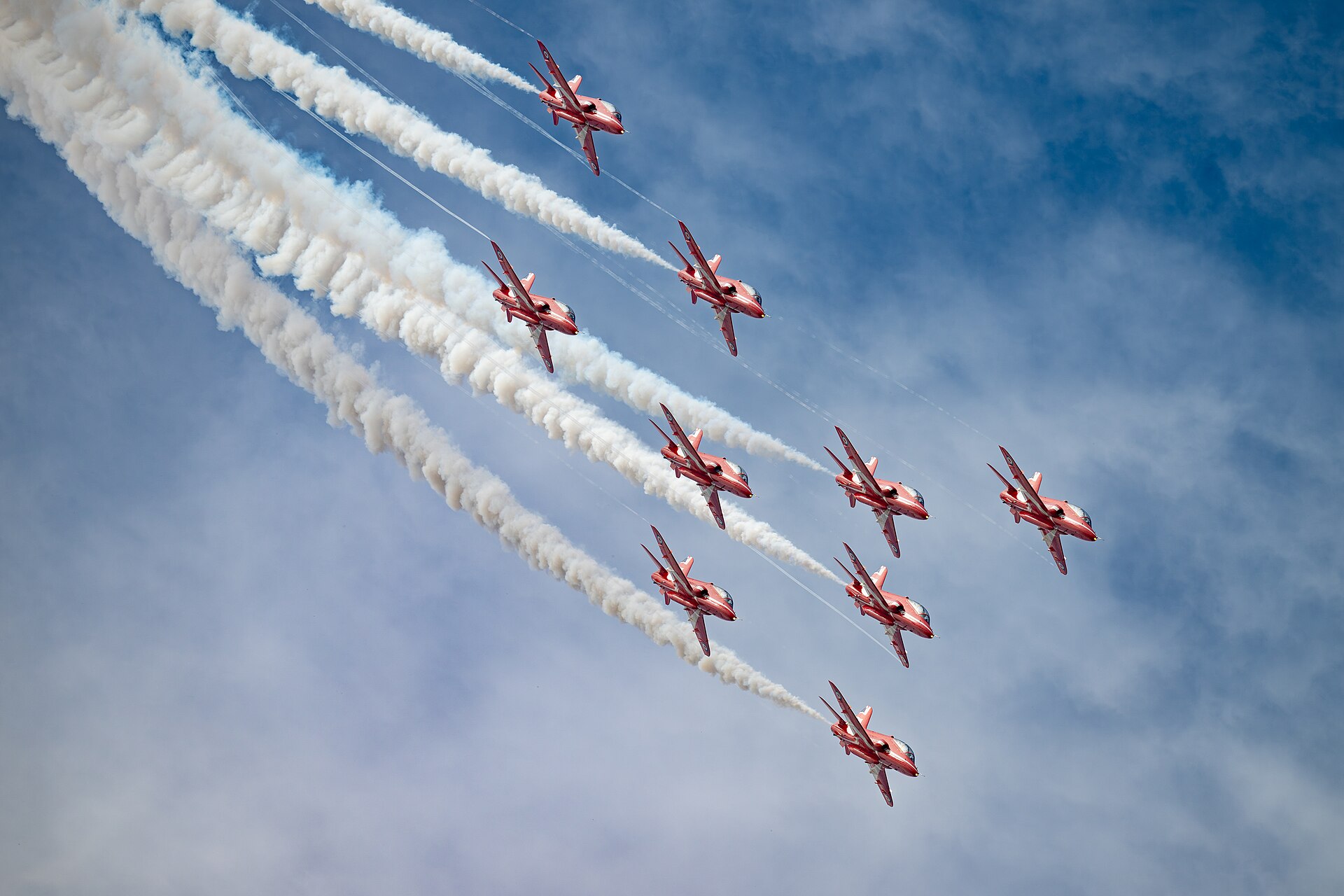
The best UK airshows for photography are the ones that combine a long, varied flying programme with a crowd line that faces away from the sun, and on that test IWM Duxford, RAF Cosford, the Shuttleworth shows at Old Warden and the seafront displays at Southport and Eastbourne consistently give you more usable frames than anything else in the calendar. That is the short answer. The longer answer is that “best” depends entirely on what you are trying to photograph, because a show that is superb for warbirds can be poor for fast jets, and a show that puts a hundred aircraft on the ground can be frustrating if what you actually want is clean air-to-air style flying shots against a blue sky.
Britain has one of the densest airshow calendars in the world. Between late April and early October you could, in theory, be at a flying display almost every weekend. In practice, most photographers have a handful of days a year and a finite budget, so the question is not “which shows exist” but “which shows will actually put good aeroplanes in good light in front of my lens”. This guide answers that. It covers the big set-piece events, the specialist warbird shows, the seafront displays where the aircraft fly over water, and the small grass-field fly-ins that produce some of the most personal work of the year. It also covers the practical business of light, position, kit and settings, because a brilliant show in bad light will still send you home with a memory card full of grey silhouettes.
One thing to say up front, since this guide is being written in the middle of the 2026 season: the British calendar is not as stable as it once was. The Royal International Air Tattoo, for many years the anchor of the year, did not run in 2026. The Bournemouth Air Festival has ended. Several shows have moved, paused or changed operator. Treat every date in this article as something to verify on the organiser’s own website before you book a hotel.
What this guide covers
- What makes a show good for photography
- The shortlist at a glance
- IWM Duxford: the warbird photographer’s home ground
- The Royal International Air Tattoo
- RAF Cosford Air Show
- Shuttleworth at Old Warden
- Seafront shows: flying over water
- Small shows and fly-ins
- Reading the light and the crowd line
- Gear for each type of show
- Settings that work
- Planning and position
- Mistakes that ruin the day
- The 2026 season and what changed
- Frequently asked questions
What makes a show good for photography
Visitors judge an airshow by the line-up. Photographers should judge it by four things that have nothing to do with the programme.
Which way the crowd line faces
This is the single biggest factor and most people never think about it. An airshow crowd line is a fixed piece of geometry. The aircraft fly along a display line parallel to it, at a regulated distance, and they will keep doing that for six hours. If the sun is behind you, you get front-lit aircraft with detail in the panels, readable serials and colour in the markings. If the sun is in front of you, you get rim-lit shapes and blocked shadows, and you will spend the winter trying to rescue them in Lightroom.
Most permanent airfield venues in the UK were laid out with an east to west runway because of the prevailing wind, and the public enclosure usually sits on the southern side. That is a happy accident for photographers, because it means the sun spends the display day roughly behind the crowd. Fairford and Duxford both work that way. Seafront shows are the opposite case: the crowd stands on a promenade facing the water, and whether that is good or bad depends entirely on which coast you are on. More on that below.
How close the display line is
Display line distances are set by the Civil Aviation Authority and vary with the category of aircraft and the type of display. A fast jet performing an aerobatic sequence will be further out than a light aeroplane flying a gentle topside pass. This is why a 200 to 500mm zoom is comfortable at Old Warden and marginal at Fairford. It also explains why small shows often produce better frame-filling images than big ones: at a grass airfield with light aircraft, the aeroplanes are really close.
Whether the background is sky or ground
A clean blue sky is easy but sterile. What lifts an airshow photograph is usually a background: trees, a hangar line, hills, a sea horizon, a wall of cloud. Shows on flat sites with high display lines give you sky and nothing else. Shows where the aircraft fly below the horizon at some point in the sequence, or where there is topography behind the display line, give you the frames people actually stop scrolling for.
How long the flying goes on
A six-hour flying programme is not just more aircraft; it is more light. A show that finishes at 17:00 in June ends before the good light arrives. A show that keeps flying until 19:00, or runs an evening display, hands you the last hour for free. Shuttleworth built its reputation on exactly this.
The shortlist at a glance
Here is the honest ranking, judged purely on what you are likely to bring home. Dates move, so the season column is a guide, not a booking.
| Show | Typical season | Best for | Photographic verdict |
|---|---|---|---|
| IWM Duxford | Several events, May to October | Warbirds, mass formations, period atmosphere | The most reliable warbird photography in Britain. Good light, generous flying, and a historic airfield background instead of empty sky. |
| Royal International Air Tattoo, RAF Fairford | Mid-July (did not run in 2026) | International military, rare types, variety | Nothing else in Europe comes close for the sheer number of types. Long reach needed. Enormous crowds. |
| RAF Cosford Air Show | June, single day | Current RAF types, helicopters, big static park | Excellent value and a strong static line. Very busy; get there early or you will shoot over heads all day. |
| Shuttleworth, Old Warden | Multiple shows, May to October | Pre-war and vintage aircraft, evening light | The closest display line in the country and the best light of any UK show. Shorter lenses work here. |
| Southport, Blackpool | August, seafront | Jets and teams over water | Aircraft over sea, no clutter, free to watch. West-facing, so expect strong backlighting later in the day. |
| Eastbourne (Airbourne), Clacton | August, seafront | Teams, jets, long lens work over water | South and east-facing promenades give friendlier light than the west coast shows. |
| Wales National Airshow, Swansea | July, seafront | Teams over Swansea Bay | Big free show with a wide beach, which gives you room to move and vary the background. |
| Small fly-ins (Old Buckenham, Little Gransden, Sywell, Stow Maries) | Summer weekends | Light aircraft, intimate atmosphere, detail work | The aircraft are close and the crowds are thin. Underrated by photographers chasing fast jets. |
IWM Duxford: the warbird photographer’s home ground
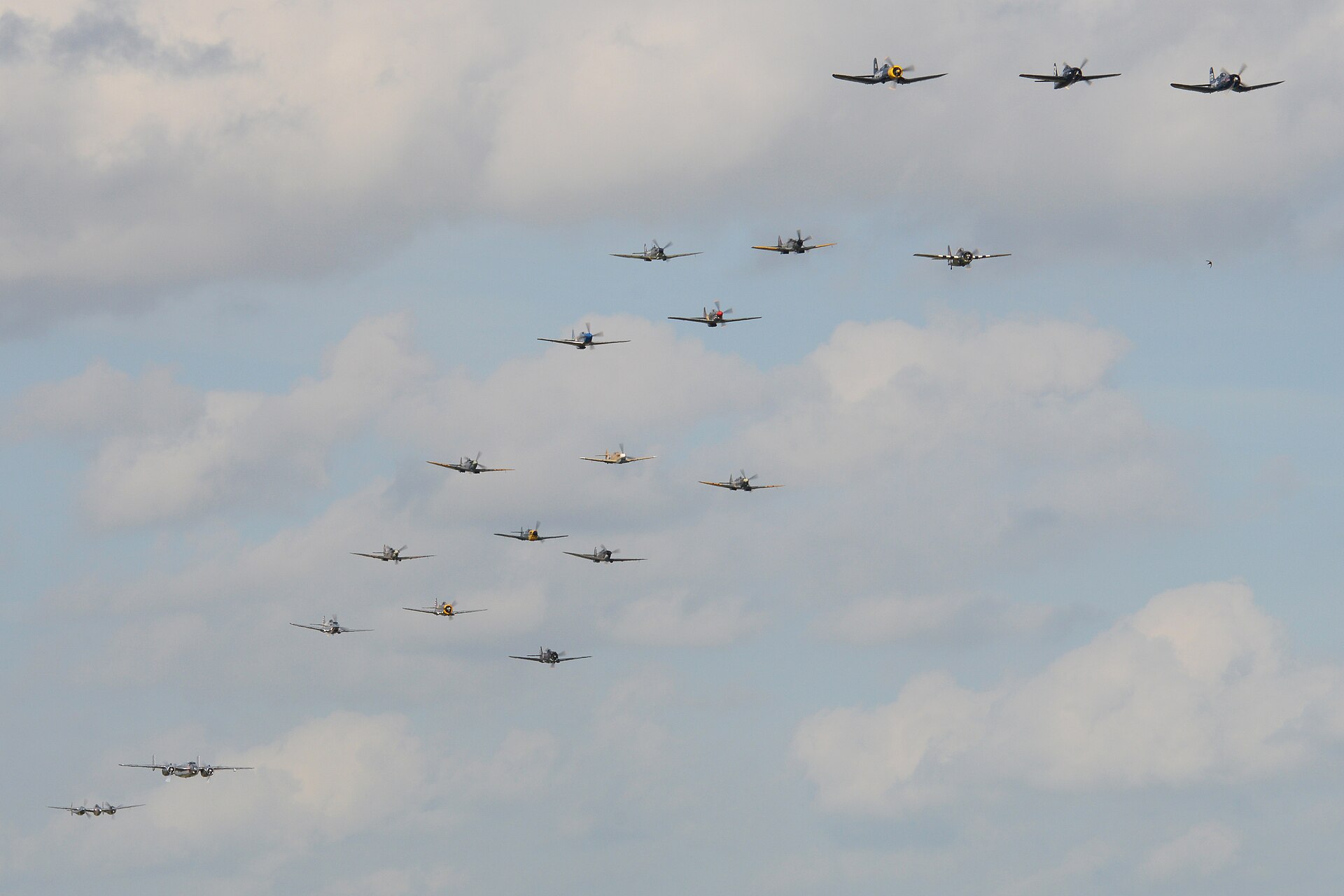
If you photograph one UK show a year and you care about piston aircraft, make it Duxford. The Imperial War Museum’s airfield in Cambridgeshire is a working Battle of Britain station with its original hangars still standing, and it hosts a series of flying events through the season rather than one big weekend. The Battle of Britain Air Show in September is the flagship, but the smaller Flying Days and the Flying Evening are arguably better for photographers, because there are fewer people and the light is often better.
Why it works photographically
Three reasons. First, the showground sits on the southern side of the runway looking north, so the aircraft display in front of you with the sun behind your shoulder for most of the day. Second, the display line is close by British standards for piston aircraft, so a 400mm lens on a full-frame body fills the frame on a Spitfire and a 300mm is usable. Third, the background is the airfield itself: hangars, control tower, grass, trees. When a Spitfire pulls off the top of a wingover you can put a hangar roof behind it instead of blank sky, and that single choice is what separates a snapshot from a photograph.
What to shoot
The obvious targets are Spitfires, Hurricanes, Mustangs and the two-seat warbirds that fly passenger flights before and after the display. The less obvious ones are the ground moves. At Duxford the aircraft taxi past the crowd line at close range, engines running, canopies open, pilots visible. That is where you get portrait-style frames of a Merlin at idle, exhaust haze bending the air behind the stacks, a groundcrew hand on a wingtip. Almost nobody bothers with these, which is precisely why they are worth having.
Practical notes
Duxford is a museum first, so your ticket also buys you a huge collection of static aircraft in hangars. That matters if the weather closes in: you can spend a washed-out afternoon on museum work rather than driving home. Bring a fast lens and something to steady the camera if you plan to shoot inside the hangars, and read our guide to photographing warbirds before you go, because the propeller blur problem catches out almost everybody on their first visit.
The Royal International Air Tattoo
RIAT at RAF Fairford in Gloucestershire is the largest military airshow in the world by participation, and in a normal year it is the one event where you can photograph aircraft from thirty nations in a single weekend. The 2026 edition did not take place: the organisers cancelled it, citing uncertainty over access to RAF Fairford, and offered ticket holders a rollover to the next edition, a refund or the option to donate. That makes 2027 the next opportunity, and it is worth planning for.
Why photographers care
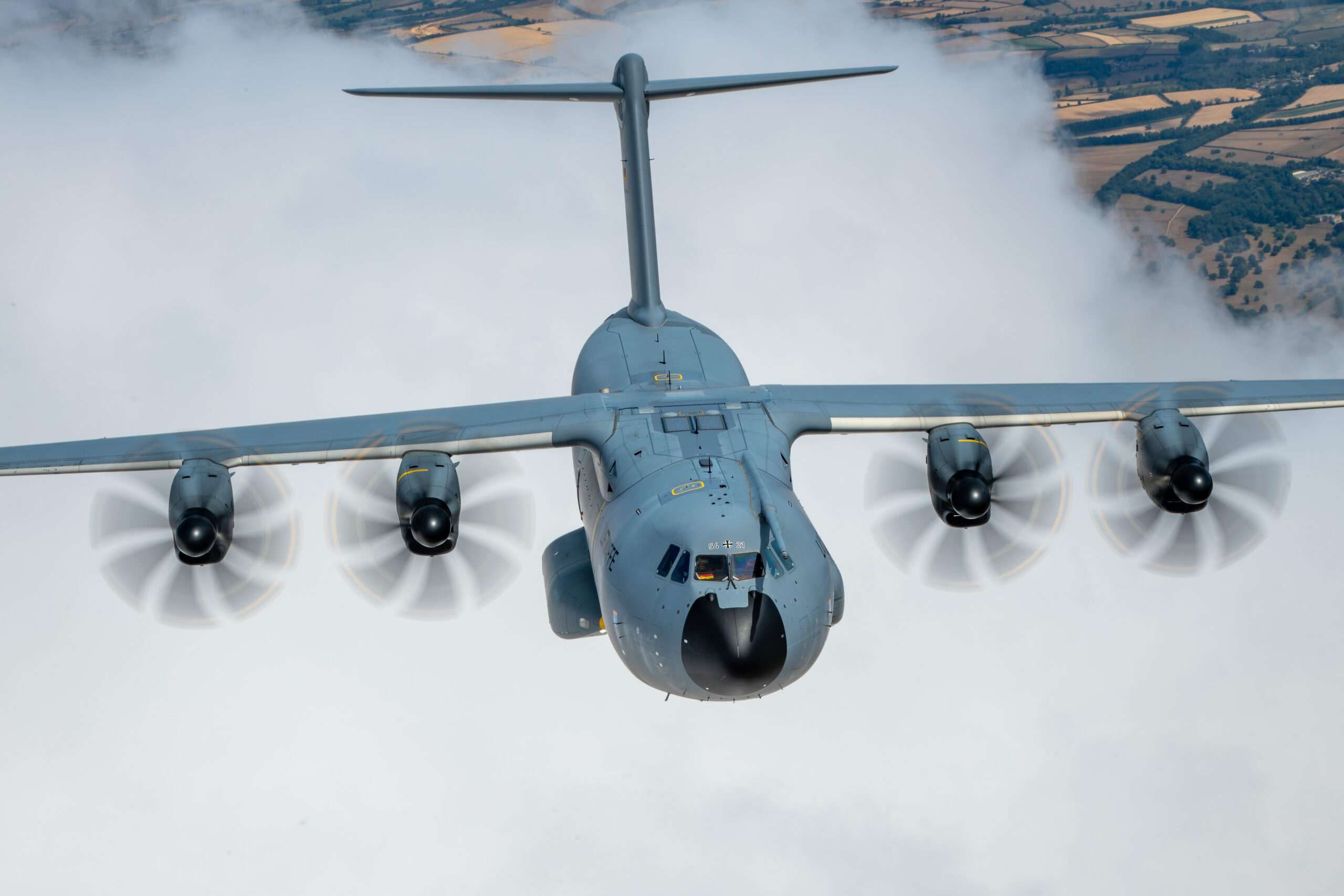
Variety. In one afternoon at Fairford you might photograph a Polish MiG-29, a Spanish Eurofighter, an Italian Tornado, a US Air Force B-52 on a flypast, a Turkish Solo Turk display and the Red Arrows, and then walk a static park containing types you would otherwise need to travel across Europe to see. No other UK show comes close, and the arrivals days on the Thursday and Friday of the show week are, for many regulars, better than the show itself, because the aircraft land one after another with the light still good and the crowds still thin.
The catch
Fairford is a big airfield and the display line is a long way out. This is the show where a 500mm or 600mm lens stops being a luxury and starts being the minimum. A 100 to 400mm zoom on a crop-sensor body is workable but you will be cropping hard. The crowd is enormous, the walk from the car park is long, and the enclosure fills quickly. If you go, go early, take a stool, take water, and accept that you will be shooting over shoulders unless you commit to standing on the rail from first light.
Our full RIAT photography guide goes into detail on enclosures, arrivals days and where to stand. It is worth reading well before the tickets go on sale, because the good enclosures sell out.
RAF Cosford Air Show
Cosford, in Shropshire, is a one-day June show on an active RAF station, and it is probably the best value military airshow in Britain. It has a strong flying programme built around current RAF types, the Red Arrows, helicopters and a rotating cast of visiting display aircraft, plus one of the largest static parks of any UK show and the RAF Museum Midlands on the same site.
The photographic character
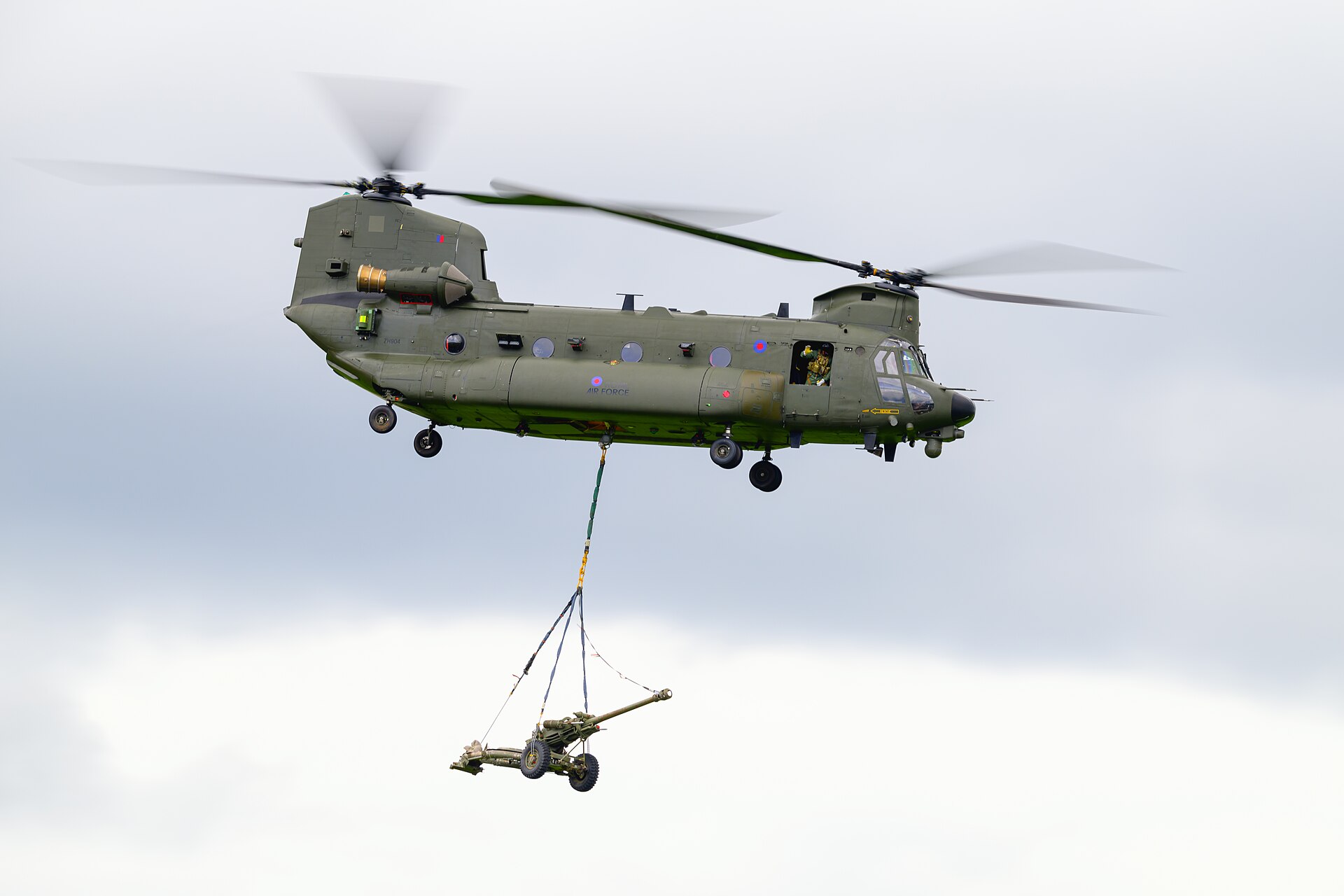
Cosford’s runway is short, which means the display line is closer than at Fairford and a 400mm lens does real work. Rotary displays are a Cosford strength: the Chinook display in particular is a really photogenic act, all rotor disc and dust and improbable angles, and it flies close. Helicopters need slow shutter speeds to keep the disc turning, so this is the show where your panning technique gets tested. If you have never made a rotor blur before, read the helicopter photography guide first and practise on cars.
The crowds
Cosford is a victim of its own value. It is affordable, it is a single day, and it draws tens of thousands of people onto a compact site. The crowd line is deep by mid-morning. There are two workable strategies. One is to arrive very early, take a rail position and stay there, which means accepting that you will not walk the static park. The other is to skip the rail entirely, work the static aircraft in the morning while everyone else is fighting for a spot on the fence, then find a raised patch of ground behind the crowd for the flying and shoot over the top. A monopod, or even a step, buys you a metre of height, and a metre of height at Cosford is worth more than a stop of aperture.
The static park
Static aircraft are the part of an airshow that most photographers waste. The light is harsh, the aircraft are surrounded by barriers and bins and people, and it is really hard to make an interesting frame. The answer is to stop trying to photograph the whole aeroplane. Go in tight on details: the rivet line down a fuselage, a wheel and oleo, the pitot tube against sky, a squadron badge, a wing walkway with its paint scuffed. Long lens, wide aperture, and use the shallow depth of field to remove the clutter. Our post on airshow photography technique covers this in more depth.
Shuttleworth at Old Warden
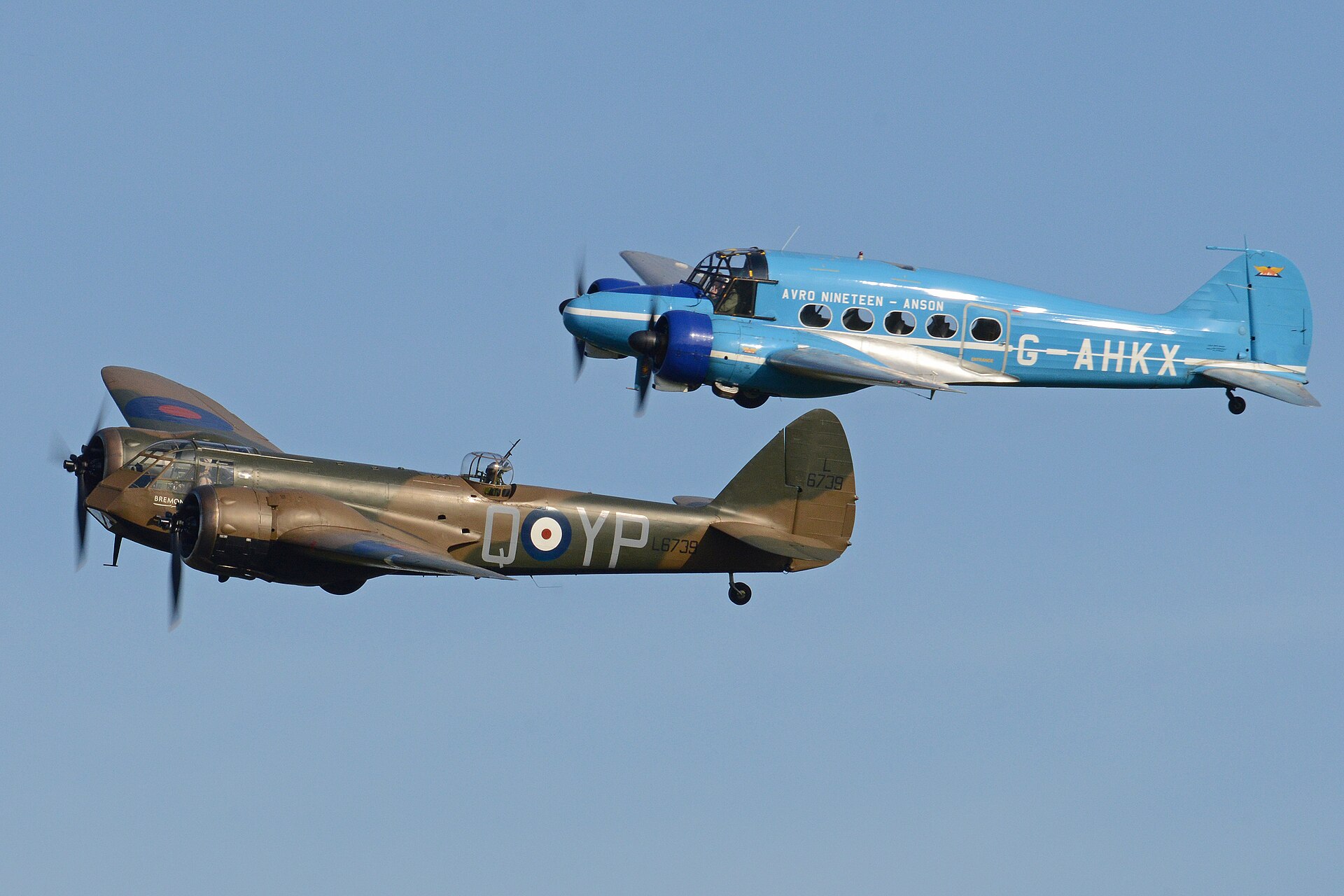
Old Warden in Bedfordshire is a small grass aerodrome and the home of the Shuttleworth Collection, which flies aircraft that no other collection in the world still flies: Edwardian machines, First World War types, 1930s racers, wooden aeroplanes with wire bracing and open cockpits. The Collection runs several shows a season, and for a certain kind of photographer these are the best days of the year.
Why the light is exceptional
Shuttleworth shows often run into the evening, and the fragile early aircraft can only fly in still air, which in practice means the last hour or two of the day. The result is that the rarest aeroplanes in the programme fly in the softest, warmest, lowest light available. A Blackburn Monoplane or a Bristol Boxkite drifting across a hedgerow in golden light at 19:30 is a photograph that no amount of fast jet noise can match. If you have read our golden hour guide, this is where you get to apply all of it.
The display line
Old Warden’s display line is the closest in Britain. The aircraft are slow, they are low, and they are near. A 100 to 400mm zoom is ideal, a 70 to 200mm is really usable, and photographers who turn up with a 600mm prime spend the afternoon backing away from the fence. This is the one UK show where you may want a shorter lens, not a longer one.
The trade-offs
The aircraft are slow, which means low shutter speeds, which means your panning has to be good. A Sopwith Pup at 1/60 of a second with a turning propeller is a lovely thing and a technically demanding one. Second, the evening light that makes the show also brings backlighting depending on where the aircraft are in the circuit, so you will be working the exposure compensation dial constantly. Third, the grass is often wet by the time you leave. None of this is a reason to stay away. It is a reason to bring a lens cloth, a spare battery and some patience.
Seafront shows: flying over water
Britain’s seafront airshows are a category of their own. The aircraft display over the sea, the crowd stands on a promenade or a beach, there is usually no ticket, and the background is water and sky with nothing else in it. Southport and Blackpool on the north-west coast, Eastbourne’s Airbourne and Clacton on the south and east coasts, the Wales National Airshow at Swansea, the International Ayr Show in Scotland, and the English Riviera Airshow at Paignton are the main names.
The sun problem, and which coast solves it
This is the whole game at a seafront show, and it is simple geometry. If the promenade faces west, as it does at Southport and Blackpool, then the sun is out over the sea for the whole afternoon and the aircraft are backlit. By early evening you are shooting into a low sun off a bright sea, which is either a disaster or an opportunity depending on how you approach it. If the promenade faces south or east, as at Eastbourne and Clacton, the sun is behind or beside you for much of the display and the aircraft are front-lit.
None of which means west-facing shows are worthless. Backlight over water gives you something no front-lit show can: rim-lit silhouettes, sun glinting off a canopy, smoke trails lit from behind so they glow rather than sit grey against the sky. You just have to commit to it. Underexpose, let the aircraft go dark, expose for the highlight in the water, and shoot for shape rather than detail. Our guide to metering for bright skies is directly relevant here, because a bright sea will fool a camera’s meter exactly the way a bright sky does.
Practical advantages
Seafront shows are free, which changes the economics of a bad-weather day. If the cloud base is on the deck you can simply go home without having burned a ticket. There is usually miles of promenade, so you can walk until you find a background you like: a pier, a tower, a groyne, a hotel frontage. You have room to move, which is rare at an airfield show where the crowd line is a fixed line. And because the aircraft are over water, you can shoot low angles from the beach with nothing but sea behind the aeroplane, which is the cleanest background available anywhere.
Practical disadvantages
Salt, sand and wind. Sand in a zoom barrel is expensive. Do not change lenses on a beach in a breeze. Wipe everything down when you get home. Beyond that, the display line at a seafront show is set out over the water and is often further away than it looks, so bring the long lens after all.
Small shows and fly-ins
The events that photographers routinely overlook are the small ones: Old Buckenham in Norfolk, Little Gransden in Cambridgeshire, Sywell in Northamptonshire, Stow Maries in Essex, East Kirkby in Lincolnshire, Abingdon, Headcorn, Compton Abbas. Light aircraft, vintage types, a handful of warbirds, a few thousand people, and a display line you could throw a stone across.
Why they are worth your time
Access. At a small fly-in you can often walk the flight line, talk to owners, photograph aircraft being prepared, catch a pilot pulling on a helmet, watch a propeller being swung by hand. The pictures that result are about aviation as an activity rather than aeroplanes as objects, and they are the ones that hold up. Editors and picture buyers see ten thousand frames of a Spitfire against blue sky. They see very few good frames of an engineer’s hands on a magneto.
Distance. At Old Buckenham or Little Gransden the aircraft are close enough that a 70 to 300mm zoom on a crop body is plenty. That is a lens most people already own, which makes these shows the best place for a beginner to learn panning without first spending two thousand pounds. If you are working within a budget, our guide to budget telephoto lenses for aviation will tell you what actually matters.
East Kirkby: a special case
The Lincolnshire Aviation Heritage Centre at East Kirkby is home to the Avro Lancaster NX611 “Just Jane”, which taxis under her own power. A four-engined heavy bomber running up at close range at dusk, with the exhaust stacks flaring blue, is a photographic subject with no equivalent anywhere else in Britain. It is not flying, and some photographers dismiss it for that reason. They are wrong. Ground running at night is one of the richest subjects on the calendar, and our post on night airshow photography covers the technique.
Reading the light and the crowd line
Everything above comes back to this. Here is the working method.
Before you book
Find the venue on a satellite map. Identify the runway or, for a seafront show, the promenade. Identify which side the public goes on. Then use a sun-tracking app, or simply reason it out: in British summer the sun rises well north of east, tracks high through the south around the middle of the day, and sets well north of west. If the crowd is on the south side of an east-west runway, the sun is behind you from mid-morning to late afternoon. If the crowd is on the north side, you will be shooting into it all day and no amount of technique will fix that.
On the day
Get the direction of the display early. Watch the first act. Aircraft display along a fixed line but they turn at the ends, and the topside passes, where the aircraft banks towards the crowd and shows you the upper surfaces, will always favour one direction over the other. Once you know which end the good turns happen at, move towards it. Two hundred metres along the crowd line can be the difference between a belly shot and a topside.
Cloud is not the enemy
Photographers complain about grey days. Grey days give you soft, even light with no blown highlights, and they let you shoot topsides without the shadowed underside going black. What grey days take away is contrast and colour, and you can put a good deal of that back in post. A high, broken cloud base with sunlight breaking through is the single best condition for aviation photography in Britain, and it is also the condition that produces vapour off wingtips and control surfaces. Learn to like it.
The hour after the crowds leave
At airfield shows the aircraft do not all vanish when the flying stops. Visiting aircraft depart, sometimes with a topside pass on the way out, and they depart into an empty sky in the best light of the day. If you can stay, stay.
Gear for each type of show
There is no single airshow kit, because a 600mm prime that is essential at Fairford is a liability at Old Warden. Match the kit to the venue.
| Venue type | Minimum | Comfortable | Notes |
|---|---|---|---|
| Large military airfield (Fairford, Farnborough) | 400mm | 500 to 600mm | Long display line. A teleconverter earns its keep. Expect to crop. |
| Medium airfield (Duxford, Cosford) | 300mm | 400 to 500mm | A 100 to 400mm zoom is the sweet spot. Second body with a wide lens for statics. |
| Small grass field (Old Warden, Old Buckenham) | 200mm | 300 to 400mm | You will often be at the short end. A 70 to 200mm is really useful here. |
| Seafront (Southport, Eastbourne, Clacton) | 300mm | 400 to 600mm | Display line over water is further out than it looks. Protect the kit from sand. |
| Static parks and museums | 24mm | 24 to 70mm plus a fast prime | Go tight on details rather than trying to fit whole aircraft in. |
The things that are not lenses
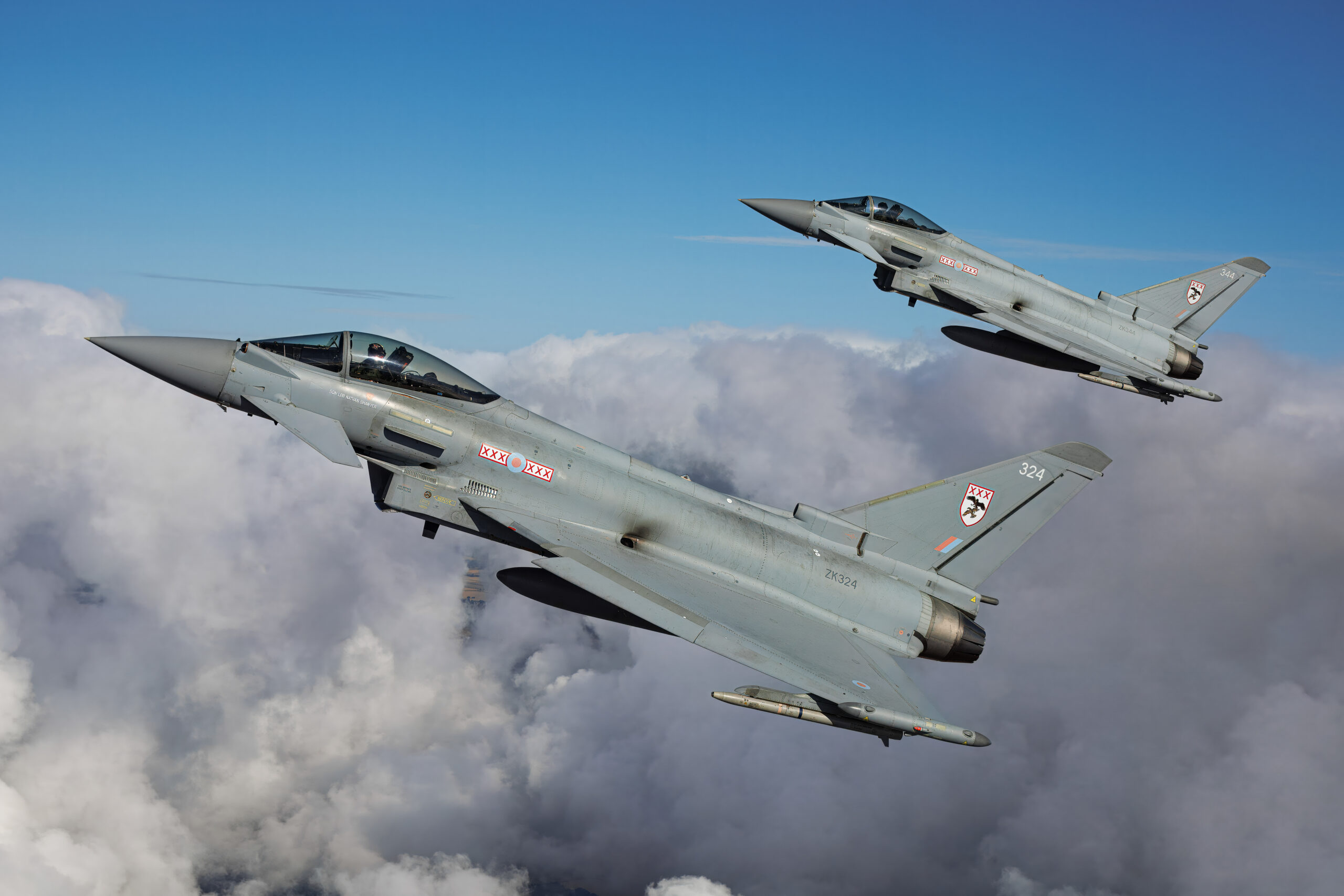
A monopod is worth more than most people think. It takes the weight of a long lens off your arms for six hours, which means your last hour of shooting is as steady as your first. It also gives you a little height. A second body saves you changing lenses in dust and salt. Spare batteries, because continuous autofocus and burst shooting drain a battery far faster than normal use. A folding stool, because standing on a rail for six hours is really exhausting and tired photographers stop panning smoothly. Ear protection if you plan to be near the rail for a fast jet display, which is not vanity: it is a Typhoon at full reheat at 100 feet.
Our airshow packing checklist is the full version of this list, including the things people forget: sunscreen, a bin bag to sit on, and a card reader so you can dump images in the car before the drive home.
Settings that work
Airshow settings are not one setting. They change every time a different type takes off, and the single biggest cause of ruined airshow photographs is leaving the camera on the fast jet setting when a Spitfire comes down the line.
| Subject | Shutter speed | Mode and aperture | Autofocus | Why |
|---|---|---|---|---|
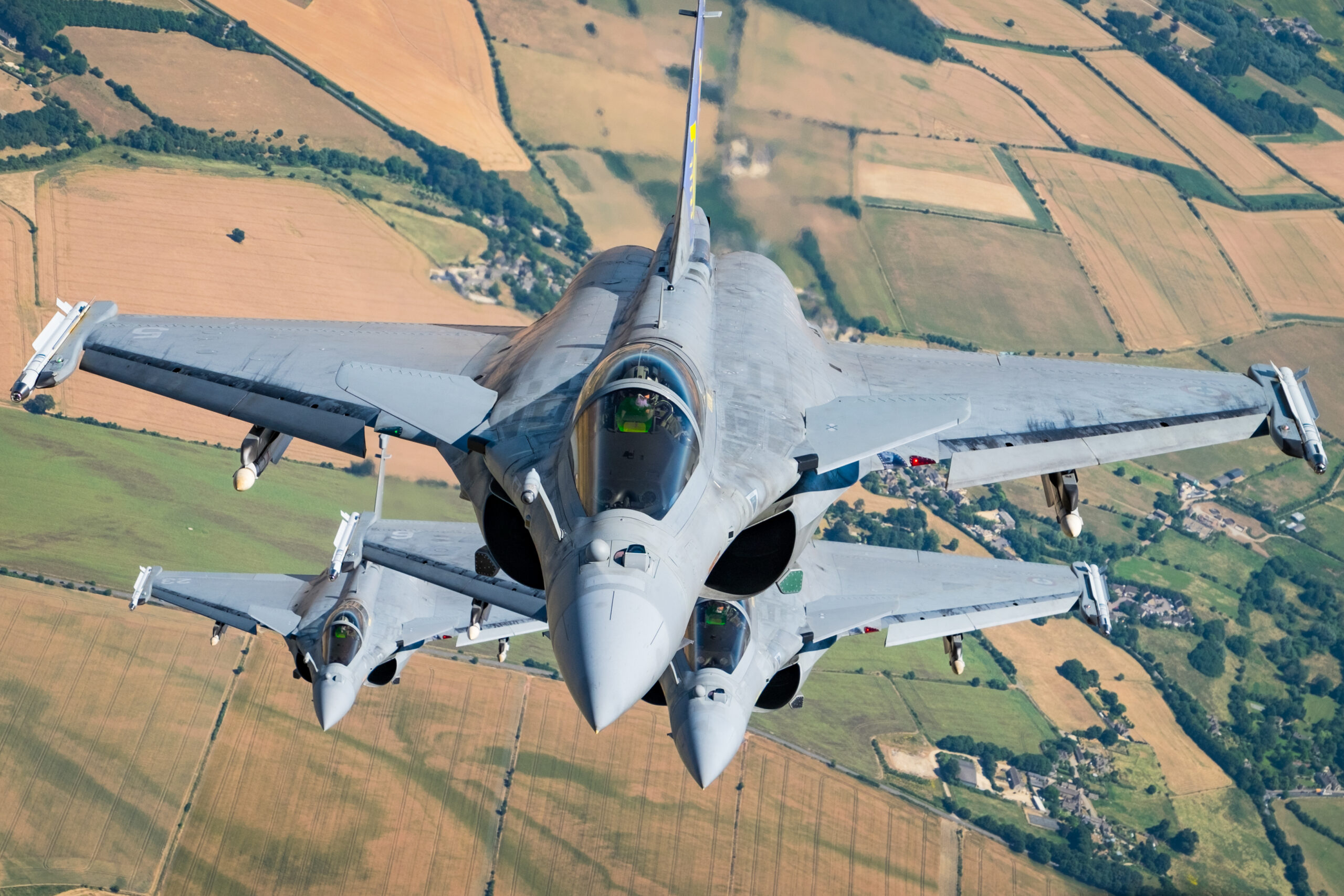
| Fast jets (Typhoon, F-16, F-35) | 1/640 to 1/1250 | Shutter priority or manual, f/5.6 to f/8 | Continuous, zone or tracking | No propeller to worry about. Fast enough to freeze, slow enough to keep some background motion when you pan. |
| Jet display teams (Red Arrows) | 1/500 to 1/1000 | Shutter priority, f/5.6 to f/8 | Continuous, wide zone | You are tracking a shape made of nine aircraft. A wider AF zone keeps the formation, not the sky, in focus. |
| Piston warbirds (Spitfire, Mustang) | 1/160 to 1/320 | Shutter priority, auto ISO | Continuous, single point or small zone | Slow enough to blur the propeller into a disc. Anything faster and the aircraft looks dead. |
| Vintage and light aircraft | 1/80 to 1/200 | Shutter priority | Continuous, single point | Slow aircraft, slow propellers. The prop needs a longer exposure to sweep. |
| Helicopters | 1/100 to 1/200 | Shutter priority | Continuous, single point | Rotor discs turn slowly. A frozen rotor is the classic beginner’s mistake. |
| Static aircraft | 1/250 | Aperture priority, f/8 for the whole aircraft, f/2.8 to f/4 for details | Single shot | Nothing is moving. Use aperture to control what stays in the frame. |
| Night and pyrotechnics | 1/30 to several seconds | Manual, tripod | Manual focus, pre-set | Autofocus will hunt in the dark. Focus on the aircraft while it is still light and lock it. |
The one thing to set before you arrive
Back-button focus. Separating focus from the shutter release means you can hold focus on a tracking aircraft and fire when the composition is right, rather than refocusing on every frame. It takes an afternoon to get used to and it is the single most useful change most airshow photographers ever make to their camera. Once you have it, a pass that used to give you two sharp frames out of twenty gives you fifteen.
Auto ISO, and why to use it
Set the shutter speed you need for the subject, set the aperture you want, and let ISO float. Modern sensors handle ISO 1600 without complaint and a slightly noisy sharp frame beats a clean blurred one every time. Set a ceiling, around ISO 3200 for most bodies, so the camera cannot run away from you. Then stop thinking about it and concentrate on the panning, which is the thing that actually determines whether you go home with anything.
Planning and position
An airshow day is mostly logistics. Get those right and the photography looks after itself.
Tickets and enclosures
The large military shows sell tiered tickets. At the top end there are photographic or premium enclosures that put you at the front of the crowd line, sometimes with a raised platform and a bar. They cost real money. Whether they are worth it depends on how you shoot: if you want clean, unobstructed frames of every act, they are; if you would rather roam and shoot details and atmosphere, they are not. Buy early either way, because the good enclosures sell out months in advance and prices tend to rise as the date approaches.
Arrival
Arrive earlier than you think you need to. At Cosford and Duxford the queue for the car park can absorb an hour on its own, and the rail positions are gone within minutes of the gates opening. If the flying starts at midday, the photographers who will get the good frames were in the car park at 07:00. Our post on planning an airshow photography day covers tickets, timings, parking and where to stand in full.
Where to stand, in one paragraph
Find the display centre point, which is usually marked and is where the aircraft aim their manoeuvres. Stand slightly off it, in the direction the aircraft come from, so that you pick them up early and follow them through the centre rather than swinging round to catch them as they leave. If there is a raised bank, a bund or a gentle slope behind the crowd, consider it seriously: height beats proximity when there are ten thousand people between you and the fence.
The weather call
UK airshows fly in weather that would cancel a display in most countries, but they also cut the programme when the cloud base is too low. A flat-calm, overcast day means the aerobatic aircraft fly a flat display: no loops, no vertical work, just passes and turns. That is worth knowing before you drive four hours. Check the show’s social media on the morning, because a decision to run a limited display is usually announced there first.
Mistakes that ruin the day
Shooting props at jet speeds
Said three times in this article because it is the mistake that produces more disappointing airshow photographs than everything else combined. A frozen propeller makes a flying aeroplane look like a parked one.
Shooting everything and looking at nothing
Burst mode at 20 frames a second will give you 4,000 images from one show, of which 15 are worth anything. The problem is not the number; it is that machine-gunning encourages you to stop watching the aircraft and start watching the buffer. Shoot in short bursts at the moments that matter: the top of the loop, the point where the aircraft banks towards you, the moment the gear comes down. Between those, watch. Anticipation beats frame rate.
Standing still
The crowd line is long. Every metre you walk changes your background and your angle. Photographers who plant a chair at 09:00 and do not move produce a portfolio of near-identical frames.
Ignoring everything that is not an aeroplane
The airshow is a scene. There are groundcrew, spectators with binoculars, children on shoulders, pilots walking out, a line of long lenses along the fence, a Spitfire seen through the legs of a crowd. These frames tell the story of the day, they are far rarer than the aircraft shots, and they are frequently the ones that sell.
Not protecting the kit
Sand, salt, dust, rain, and above all the fine grit that a helicopter rotor picks up off a taxiway and fires at you. Bring a cover. Bring a cloth. Do not change lenses in the open at a seafront show.
Leaving early
The best light of the day arrives after the last display, and so do the departures. The car park will still be there in an hour.
The 2026 season and what changed
The British airshow calendar has been through a difficult few years, and if you are planning around old advice you will get caught out. Here is the position as it stands.
The Royal International Air Tattoo did not run in 2026
RIAT 2026 was scheduled for 17 to 19 July at RAF Fairford and was cancelled. The organisers cited uncertainty over access to RAF Fairford, and ticket holders were offered a rollover to the next edition, a full refund, or the option to donate the value of their tickets to the RAF Charitable Trust. Plan for the next edition rather than assuming a summer trip to Gloucestershire.
Bournemouth Air Festival has ended
For years Bournemouth was one of the biggest free seafront shows in Europe, running over several days with flying from mid-afternoon into the evening. BCP Council withdrew funding, no commercial operator was found, and the festival did not run in 2025 or 2026. If you have an old guide recommending it, that guide is out of date.
Others have moved or paused
The Manston International Airshow, planned for June 2026, did not go ahead as scheduled. The Abingdon Air and Country Show was also cancelled for 2026. The Royal Navy International Air Day at Yeovilton has run intermittently in recent years and its status changes; check the Royal Navy’s own announcements rather than a third-party calendar. Farnborough remains primarily a trade show and public access has varied edition to edition, so do not assume you can simply buy a spectator ticket.
What is still solid
Duxford’s programme of flying days and its September Battle of Britain Air Show. Cosford in June. The Shuttleworth season at Old Warden. The seafront shows at Southport, Blackpool, Eastbourne, Clacton, Swansea, Ayr and Paignton. The small fly-ins. Between them, that is still more good flying than most photographers can get to in a season, and the loss of the very biggest events has made the mid-sized shows more interesting rather than less.
Where to go next
If you are new to this, start small. Pick a fly-in or a Shuttleworth show where the aircraft are close and slow, learn to pan, and get comfortable with propeller blur before you spend a day at Fairford wondering why nothing is sharp. Then work up to Duxford, where the subjects are the ones you actually want and the light is generally kind. Save the biggest military shows for when your technique and your reach can both handle them.
If you want to see what a season’s worth of UK airshow work looks like, the Piemags aviation galleries and the archive collections are worth a browse, and if you reach the point where somebody wants to use one of your images, the licensing page explains how that side of it works.
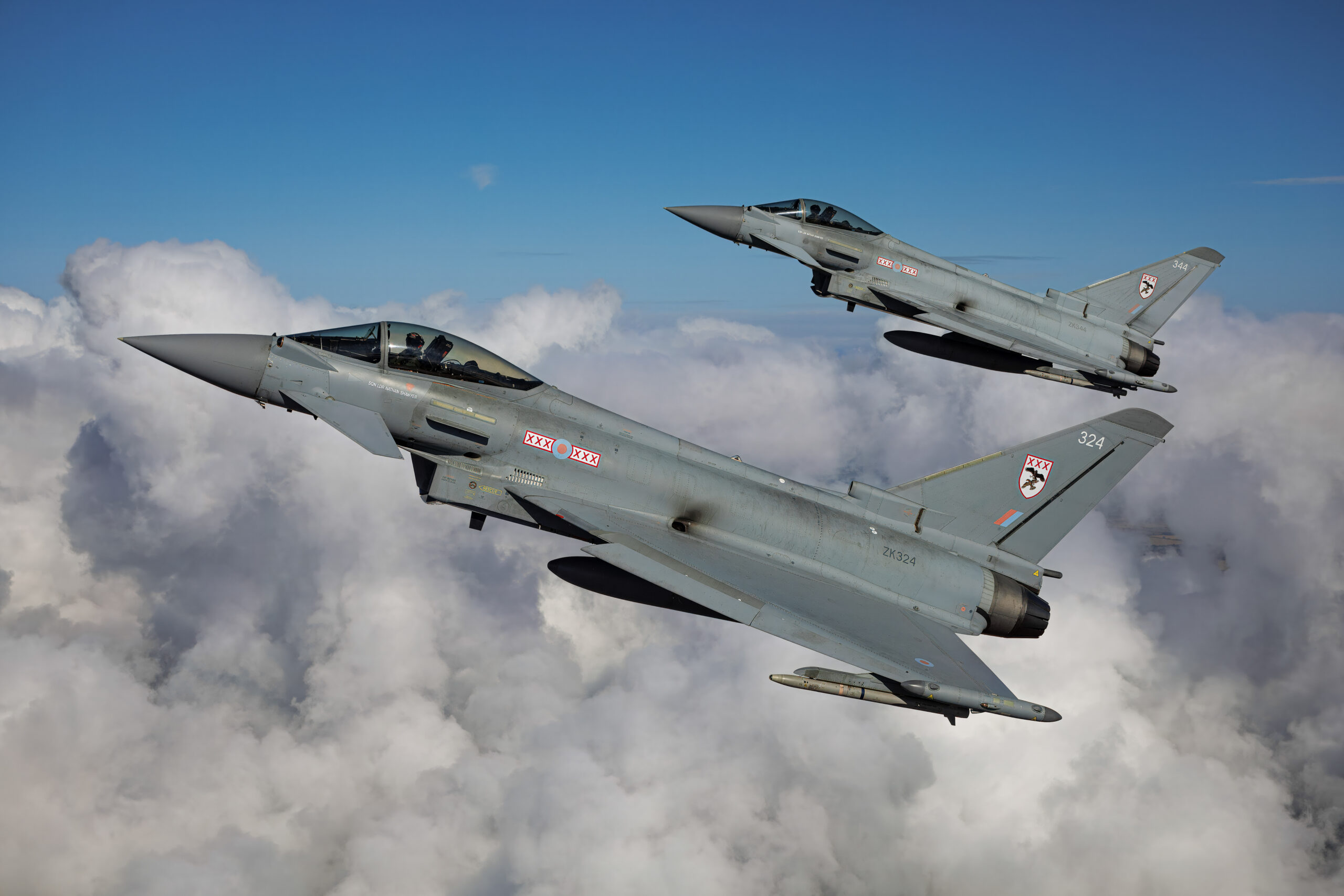
Seafront shows are their own discipline, because display aircraft may come down to 100 feet over water against 200 feet over land. There is a full guide to seafront airshow photography covering the geometry, the light and the current UK coastal calendar.
Duxford repays a guide of its own, because the crowd line runs parallel to a runway on 058 degrees true and that one bearing decides the whole day: the sun is worst in the late morning and best at the end of the afternoon. Our photographer’s guide to IWM Duxford has the computed light, the focal lengths and the permission rules.
Frequently asked questions
What is the best UK airshow for photographers?
For most photographers it is IWM Duxford. The crowd line faces away from the sun for most of the day, the display line is close enough for a 400mm lens, the historic airfield gives you a background instead of empty sky, and the warbird flying is the best in Britain. If your interest is current military types rather than pistons, RAF Cosford in June is the better choice.
Is the Royal International Air Tattoo happening?
RIAT 2026, scheduled for 17 to 19 July at RAF Fairford, was cancelled by the organisers, who cited uncertainty over access to the airfield. Ticket holders were offered a rollover to the next edition, a refund, or the chance to donate the value of their ticket to the RAF Charitable Trust. Check the Air Tattoo’s official website for confirmation of future dates before making travel plans.
What lens do I need for a UK airshow?
It depends on the venue. At a large military airfield such as Fairford you want 500mm or more on full frame. At Duxford or Cosford a 100 to 400mm zoom covers almost everything. At a small grass show such as Old Warden a 70 to 300mm is often plenty and a 600mm prime is too much lens. If you can only own one, a 100 to 400mm or 150 to 600mm zoom is the most versatile choice for the British calendar.
Which UK airshows have the best light for photography?
Airfield shows where the public enclosure sits on the southern side of an east to west runway give you the sun behind you for most of the display day, which is the case at Duxford and at Fairford. Shuttleworth’s evening shows at Old Warden give the warmest light of any UK event because the rarest aircraft fly last, in still air, at the end of the day. West-facing seafront shows such as Southport and Blackpool are backlit through the afternoon, which suits silhouettes but not detail.
Why are my airshow photos soft or blurry?
Almost always one of three things. Your panning is not smooth, so the aircraft moves across the frame during the exposure. Your autofocus is locking onto the sky or the crowd rather than the aircraft, which usually means the AF zone is too small or the mode is wrong. Or you are shooting at a shutter speed too slow for your technique. Fix the panning first, practise on cars, and use continuous autofocus with a zone rather than a single point on fast movers.
Do I need a photo pass or a special enclosure?
No. Every image in most photographers’ airshow portfolios was taken from the public crowd line. Premium and photographic enclosures at the big military shows buy you a front-row position and sometimes a raised platform, which is really useful if you want clean frames of every act, but they are expensive and they tie you to one spot. Many experienced photographers prefer a general ticket and the freedom to move.
Are seafront airshows free to attend?
Generally yes. Shows such as Southport, Blackpool, Clacton, Eastbourne and the Wales National Airshow at Swansea are watched from public promenades and beaches, with no ticket needed for a basic view, although organisers usually sell paid grandstand or enclosure seats and charge for parking. That makes them a low-risk option when the forecast is uncertain, because a cancelled or curtailed display has not cost you a ticket.
What time should I arrive at a UK airshow?
Earlier than the published gate time if you want a rail position. At popular one-day shows such as Cosford the car park queues build well before opening and the front of the crowd line is taken within minutes of the gates opening. If the flying starts at midday, aim to be parked two to three hours beforehand. That also gives you time to work the static aircraft in softer morning light before the crowds thicken.
Do you need a press pass to get good airshow photos in the UK?
No. The overwhelming majority of published airshow photography is taken from the public crowd line with a normal ticket. Enclosures and early entry can help with position and light, but they are usually paid upgrades open to anyone rather than press-only access.
Is it worth paying for a premium enclosure?
Often yes, but for position rather than prestige. The value is in being closer to display centre, having space to swing a long lens without hitting people, and sometimes earlier access for arrivals. Check which side of the runway the enclosure sits on before booking, because a sun-behind-you position matters more than the seating.
What is the best UK airshow for a first-time photographer?
A smaller, single-day show is usually a better introduction than the largest events, because the crowds are thinner, you can move position easily and the flying programme is less relentless. It lets you practise panning and settings without the pressure and logistics of a very large show.
What should I check before booking an airshow for photography?
Three things above all: which side of the display line the crowd sits on and therefore where the sun will be, whether the show runs into the evening for better light, and what the published flying programme looks like. Travel and parking arrangements matter too, because the best light is often at the start and end of the day when traffic is heaviest.
Final thoughts
The best UK airshow for you is the one whose light, distance and subject matter line up with the pictures you actually want to make. Chasing the biggest name in the calendar is a common mistake: a photographer who spends every summer at the largest military shows and comes home with distant, heat-hazed jets would have been better served by three afternoons at a grass airfield learning to pan. Work out what you want, look at the geometry, and go where the light is.
Airshows are not the only way to photograph fast jets in Britain. Our location guides cover RAF Coningsby and RAF Lakenheath and Mildenhall, where the flying happens on ordinary weekdays.
