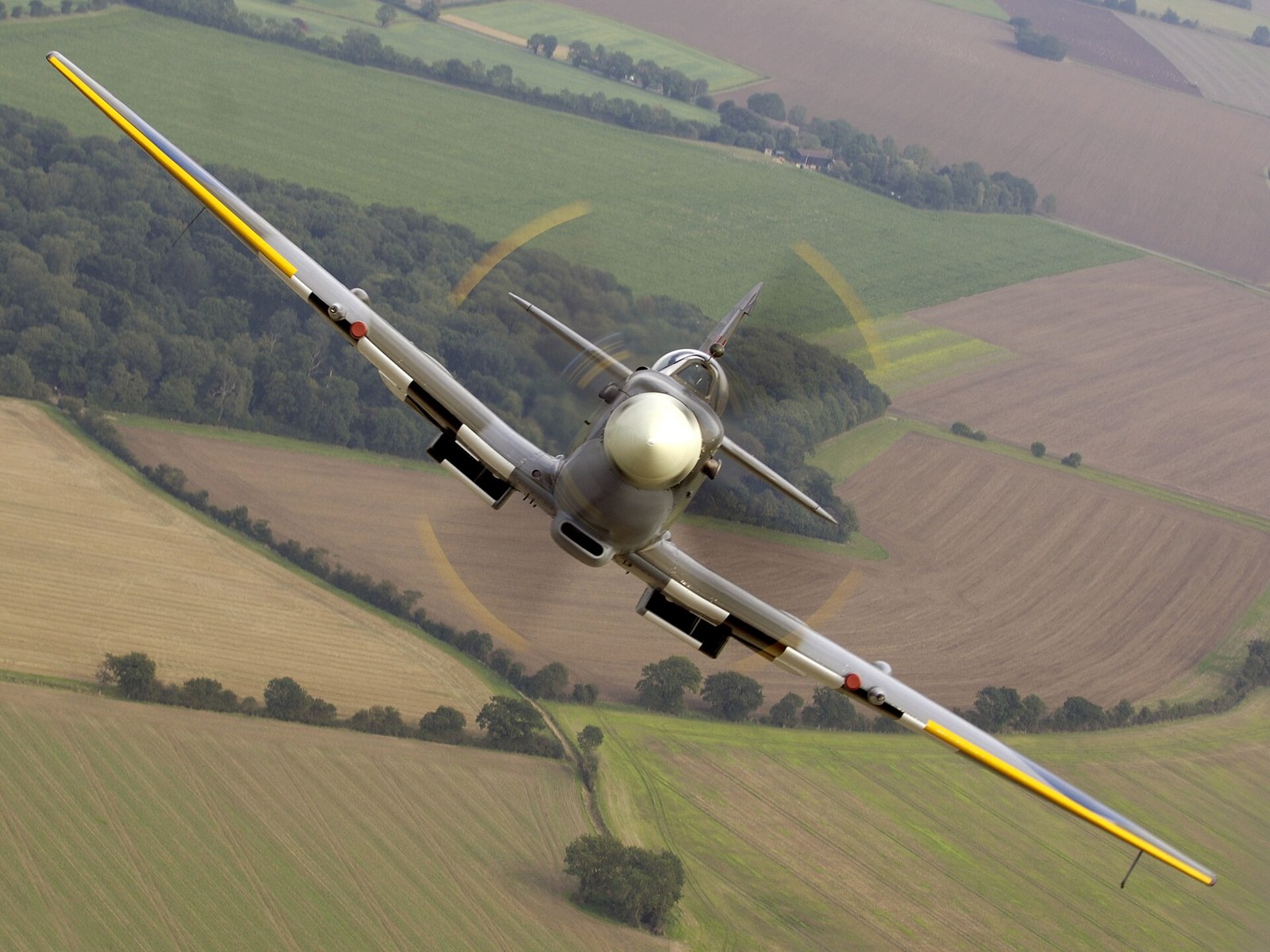
RAF Coningsby is the most approachable fighter station in Britain to photograph, and the Royal Air Force says so itself: there is a free public car park on Dogdyke Road and the station tells you that you can watch aircraft from it. This is a full guide to photographing Typhoons and the Battle of Britain Memorial Flight there, with the light computed for every month, the focal lengths worked from the published approach, every viewing spot the spotting community actually documents and how many independent guides back each one, and the one thing you need to know before you set off in 2026.
What this guide covers
- The traffic lights that stop for aeroplanes
- The one thing to know before you set off in 2026
- What flies from Coningsby
- Two aeroplanes at the end of a wire
- The Battle of Britain Memorial Flight
- When the old aeroplanes actually fly
- One runway, two ends, and why that is the whole guide
- The light, and the awkward fact about the official car park
- The light in one table
- What you need on the front of the camera
- The car park the Royal Air Force tells you about
- The fence outside the Memorial Flight hangar
- The eastern end, and the aeroplanes over the road
- The taxiway corner
- Reedham Lane and the southern lanes
- The northern side
- The spots that are not there any more
- The building site
- Inside the hangar
- Night flying
- The signs on the fence
- What actually matters on the ground
- When to go
- The hours, in plain English
- Getting there
- How it actually goes
- Before you go
- Frequently asked questions
The traffic lights that stop for aeroplanes
There is a set of traffic lights on the B1192 east of Coningsby village that has nothing to do with traffic. It sits under the approach to runway 25, and when a Typhoon is on finals the lights go red and the road stops. Then the aeroplane comes over the top of the queue at under a hundred feet, gear down and nose high, and the noise arrives a half second after the shadow does.

You do not need permission for this. You do not need a pass, a pass photograph, a booking or a friend on the inside. You need to park somewhere sensible, stand at the side of a public road in Lincolnshire, and look up.
That is the thing about Coningsby. It is one of the two stations that keep armed fighters at the end of a wire around the clock, it is the home of the Battle of Britain Memorial Flight, and it is about as approachable as a working fighter station gets in this country. The Royal Air Force publishes the postcode of a free car park and tells you that you can watch from it. Not many places do that.
The one thing to know before you set off in 2026
The Lancaster is not there.

PA474 went to Duxford at the end of October 2025 for a major service with the Aircraft Restoration Company. The visitor centre says it is expected back in 2027. The Royal Air Force initially put the job at about twelve months, so treat any return date as an estimate. It will not fly a display in 2026 and it is not sitting in the hangar at Coningsby for the visitor tour either. The Dakota is leading the memorial formation in its place, usually with a Spitfire and a Hurricane behind.
That matters, because the Lancaster is the aeroplane the Memorial Flight is best known for. If it is why you are going, go in 2027. If you are going for Typhoons, or for the fighters, or for the Dakota, go now.
The published work list from the maintenance updates gives you a sense of the scale of it. The rear fuselage has been split to change control rods. More than eighty components are in bay maintenance. The wing spar reinforcing plates and shackles have been through non-destructive testing. Damage has been found in the starboard wing trailing edge ribs, several riveted wing skin access panels are beyond repair and are being made from scratch, and a first batch of ten chains has come out for inspection, work never done on that aeroplane before, because more than half the engine control cable runs cannot be looked at in place.
What flies from Coningsby
Typhoons, and a lot of them. Coningsby is the centre of the Typhoon force, with about three thousand service personnel, civil servants and contractors on the station.

Three Squadron and Eleven Squadron are the front-line units. Eleven has a decent claim to being the oldest dedicated fighter squadron anywhere in the world, and it moved onto Typhoon in 2007. Three Squadron arrived at Coningsby in 2006. Between them they hold the alert commitment described below.
Twenty-nine Squadron is the Operational Conversion Unit, which means it is where every RAF Typhoon pilot learns the aeroplane. For a photographer this is the squadron that matters most, because a training unit generates more sorties, more circuits and more repetition than a front-line squadron does. Twenty-nine also provides the Typhoon Display Team.
Forty-one Squadron is the fast jet test and evaluation squadron. It belongs administratively to the Air and Space Warfare Centre at Waddington but it flies from Coningsby, and its aeroplanes sometimes carry stores and fits you will not see on anything else.
Twelve Squadron is the odd one and the interesting one. It is a joint British and Qatari unit, stood up in 2018 and flying from Coningsby since 2020, the first joint squadron the RAF has run with another nation since the Second World War. Qatari aircrew and ground crew work alongside RAF ones on the same aeroplanes. Britain and Qatar signed a further two year extension in May 2025 that runs to 2027, and the squadron deployed to Qatar in January 2026.
Then there are the old ones, which have their own hangar and their own visitor centre, and which are the reason half the people in the car park are there.
Two aeroplanes at the end of a wire
Coningsby is one of two stations that hold Quick Reaction Alert for the United Kingdom. Lossiemouth covers the north. Coningsby covers the south. Two armed Typhoons and their crews sit at immediate readiness, every hour of every day, all year.
The chain runs from the radar picture at Boulmer, through the operations centre at High Wycombe, to the scramble order at the station. Air traffic control at Swanwick clears a path through the civil airways, and a Voyager tanker from Brize Norton launches to keep the fighters airborne if the job runs long.
It does not happen often. The Ministry of Defence reported six launches in the 2025 to 2026 financial year, three against Russian aircraft and three in response to incidents involving civil airliners. In July 2026 a pair went off to a Qatar Airways Boeing 777 inbound to Manchester. Accounts of why differ, between a loss of radio contact and a hoax threat. The airliner landed safely.
You will not be told in advance. Nobody is. What you may get, if you are unlucky enough or lucky enough, is two aeroplanes going off together at a moment nobody expected, at a time of day when nothing else is flying, including the middle of the night. If you hear two engines wind up at once, point the camera at the runway.
The Battle of Britain Memorial Flight
The Flight has been at Coningsby since March 1976. It operates five Spitfires, two Hurricanes, a Lancaster, a Dakota and two Chipmunks, and its job is to keep them flying rather than to keep them in a museum.

The two Chipmunks are worth knowing about, because they are the aeroplanes you are most likely to catch. They are the last Chipmunks in RAF service, they fly all year rather than only in the display season, and they are used for tailwheel training, for flying pilots and spare parts about, and for looking at new display venues from the air. They are also, by the Flight’s own account, the least seen aircraft it has. If you turn up at Coningsby in February and something old takes off, it will probably be a Chipmunk.
Hurricane PZ865 is the last Hurricane ever built. Spitfire AB910 came back to Coningsby in February 2026 after more than two years away at Biggin Hill, wearing the markings it carried on D-Day with a Royal Canadian Air Force squadron.
The Flight lost Spitfire MK356 and its pilot, Squadron Leader Mark Long, in an accident just east of the airfield in May 2024. It is a five-Spitfire flight now rather than a six.
When the old aeroplanes actually fly
The display season runs from May to September, and outside it the fighters are mostly in bits.

Winter servicing for the Spitfires and Hurricanes is done at Coningsby, in the same hangar the public tour walks through, which is why a winter visit to the hangar is often better than a summer one. In summer the aeroplanes are away flying. In winter they are in front of you with their panels off.
Deep maintenance is different again. When an airframe needs a major it leaves Coningsby for months or years at a time, to Duxford or to Biggin Hill. That is where the Lancaster is now and where the Dakota spent about three years before it came home in August 2025.
The best flying to catch is practice, and the practice concentrates in the couple of months before the season starts. March and April are the months. Display authorisation events are usually held in late April, and the Typhoon display pilot flies his practices over the home airfield too, which means you can watch a full display routine without paying for an airshow ticket. The routine is flown for an audience on the north side, so most of the manoeuvring happens over the southern shelter complex, and the southern lanes are the better ground for it.
One runway, two ends, and why that is the whole guide
Coningsby has a single runway, 2,744 metres long and 57 metres wide, running roughly west-south-west to east-north-east. The published true bearings are 072 and 252 degrees. The airfield sits 24 feet above sea level, which in this part of Lincolnshire counts as a hill.

Everything about photographing the place follows from that one line on the map. The runway points at the sunrise and the sunset, more or less, which means the light is either behind you or in your face depending on which end you are standing at and what time it is. There is no third option and no clever spot that solves it.
The two ends are quite different places. The 07 end, the western one, is where Dogdyke Road runs down the side of the airfield past the Memorial Flight hangar to the official viewing area. The 25 end, the eastern one, is where the B1192 crosses under the approach at those traffic lights.
Two details from the published aerodrome information are worth carrying in your head. The instrument approach and the visual glidepath are both three degrees, at both ends, so the height of an aeroplane on finals is predictable. And the circuit for runway 07 is right-handed, which is unusual, but both circuits put aircraft downwind on the southern side of the airfield rather than the northern one.
The light, and the awkward fact about the official car park
I computed the sun for the airfield through the year rather than repeating what other guides say, and one result is worth stating plainly before anything else.
The car park the Royal Air Force sends you to, on Dogdyke Road at the western end, is an afternoon spot. You stand there looking east into the airfield, at the servicing platform, the hangars and anything taxiing, so the sun needs to be behind you in the west. On a clear day in June that works from about two in the afternoon until the flying stops. In late March it works from about half past one. On the shortest days of the year it does not work at all.
Turn round and photograph an aeroplane on approach to runway 07 from the same car park and the answer inverts. Now you are facing west and you want the sun in the east, which means morning. In June you have from the start of flying until about eleven. By late September that window has shrunk to an hour. In November it has closed before anything is flying.
The eastern end behaves the opposite way, which is what makes it worth the drive round. Standing on the B1192 looking west into the airfield is a morning proposition. Standing on the same road looking east at an aeroplane on approach to runway 25 is an afternoon one, and it is the most forgiving light at Coningsby by a wide margin. It works from early afternoon until the flying stops for most of the year, and it is the only combination that still gives you anything at all in late December, when the window is about an hour either side of one o’clock.
The light in one table
Times are local clock time, computed for the airfield. The test is that the sun is at least ten degrees above the horizon and within sixty degrees of directly behind the camera. The two ends give slightly different answers for what looks like the same shot, because you do not stand square to the runway at either of them. Flying at Coningsby is reported to run on weekdays between roughly nine in the morning and six in the evening, so anything outside that is academic.
| Date | West end, into the airfield | West end, at a 07 approach | East end, into the airfield | East end, at a 25 approach |
|---|---|---|---|---|
| 21 March | 13:30 to 17:00 | 09:00 to 09:20 | 09:00 to 09:50 | 12:50 to 17:00 |
| 1 May | 14:05 to 18:00 | 09:00 to 10:40 | 09:00 to 11:05 | 13:30 to 18:00 |
| 21 June | 14:00 to 18:00 | 09:00 to 11:05 | 09:00 to 11:25 | 13:30 to 18:00 |
| 1 August | 14:10 to 18:00 | 09:00 to 10:55 | 09:00 to 11:20 | 13:40 to 18:00 |
| 23 September | 14:20 to 17:40 | 09:00 to 10:05 | 09:00 to 10:35 | 13:35 to 17:40 |
| 1 November | 13:25 to 15:00 | closed | 09:00 only | 12:35 to 15:00 |
| 21 December | none | none | none | 12:50 to 13:45 |
What you need on the front of the camera
I worked these from the published threshold coordinates and the published three degree glidepath rather than from other people’s guesses.
An aeroplane on a three degree approach is at about 360 feet a nautical mile out, 680 feet at two and a thousand feet at three. Those are not my numbers to argue with, they are what the approach chart publishes, and my arithmetic lands on the same figures.
To fill the long edge of a full-frame sensor with a Typhoon side on you need about 340mm at 150 metres, 560mm at 250 metres, 1,130mm at 500 metres and 2,260mm at a kilometre. Divide by 1.5 for an APS-C body and by two for Micro Four Thirds. Nobody has 2,260mm, which is the point of the table: past about 500 metres you are not filling the frame with a fighter, you are recording that one was there.
| Distance | Fills the frame lengthways | Fills it wingtip to wingtip |
|---|---|---|
| 150 m | 340 mm | 490 mm |
| 250 m | 560 mm | 820 mm |
| 350 m | 790 mm | 1,150 mm |
| 500 m | 1,130 mm | 1,640 mm |
| 750 m | 1,690 mm | 2,470 mm |
| 1,000 m | 2,260 mm | 3,290 mm |
In practice, 400mm is the working minimum at Coningsby and 600mm is comfortable. A 100-400 or a 200-600 zoom will do everything the place offers. Anything shorter is for the aeroplanes that come over the road at the eastern end, where the problem is the opposite one and a long lens will not fit them in.
There is more on choosing glass for this kind of work in our guide to the best lenses for aviation photography, and on handling it once you have it in handholding a long lens.
The car park the Royal Air Force tells you about
Continue south past the Memorial Flight hangar on Dogdyke Road, round a bend, and the viewing area is on your right. It is a surfaced car park on an old pan handle dispersal, free, with bins, and it is the best documented spotting location I have found anywhere in this series. Thirteen separate published sources describe it, including the Royal Air Force itself, which gives the postcode and says you can safely watch aircraft from it.

From here you are roughly 270 metres north-west of the runway 07 threshold, off to one side of the extended centreline. You are looking east into the airfield, across the servicing platform, with the dispersals in front of you and aircraft taxiing for departure past your right shoulder.
Aircraft landing on 07 come towards you from the west and cross the boundary to your left. The guides say to get as far to the right of the car park as you can for those, and that a 300 to 400mm lens will hold a larger aeroplane on approach.
It fills up. Reports from 2024 and 2025 describe the car park full by ten in the morning on a good day, and cars blocked in behind other cars. Height barriers were taken away in February 2024, and signs prohibiting overnight camping went up in September 2025, after motorhomes began staying the night. The local town council was recorded in September 2025 discussing enforcement over spotter parking spilling onto Dogdyke Road and Leagate Road, so the position on parking outside the car park may tighten.
There are usually vans selling food and drink. There are no toilets on the car park itself.
The fence outside the Memorial Flight hangar
Before you reach the viewing area, on the north side of Dogdyke Road, there is a small parking area against the fence and a marked visitor centre car park. Four independent guides treat the fence here as a viewing spot in its own right, and they are right to.
A short walk along the fence puts the Memorial Flight hangar directly in front of you and the main servicing platform to your right, which is usually full of Typhoons and sometimes has visitors parked on it. If a Spitfire or the Dakota is out on the apron, this is where you photograph it from.
There is an information board here listing where the Memorial Flight aircraft are due to appear. The full season programme is published online as well, but the board is the version you can read while standing at the fence.
The visitor centre car park is open from ten in the morning until five, it is free, and you cross the road to reach the centre itself.
The eastern end, and the aeroplanes over the road
Drive round to the B1192, the Langrick Road, and the character of the place changes completely. Five independent guides document the rough lay-by near the traffic lights, and it is the spot people come back for.
The runway 25 threshold is about 230 metres beyond the road. On the published three degree slope, with the published threshold crossing height, that puts an aeroplane over the B1192 at roughly ninety feet. It is close enough that the aircraft fills the sky rather than sits in it, and close enough that you will feel the approach before you hear it properly.
This is the wide lens end. A 70-200 is more use here than a 600, and for a Typhoon directly overhead you may want something shorter still. It is also the afternoon end, with the sun behind you from early afternoon until flying stops, in every month of the year.
Parking here is the unresolved bit. Two of the guides describe double yellow lines covering the verge. One from 2026 describes parking on rough ground in a farmer’s field with a donations box for charity. The most recently updated guide says not to park in that field. The honest answer is that it changes, and you should look at what is actually painted on the road when you arrive rather than trusting any guide including this one.
The taxiway corner
From the eastern end you can walk along the field edge towards the airfield boundary to a corner where the taxiway turns. Four independent guides describe it. It gives you aircraft at close range on the ground, moving slowly, with the crews visible.
It is a walk rather than a park-and-shoot, and in winter it is a walk through mud. The light here is a morning proposition, because you are looking broadly west into the field.
Reedham Lane and the southern lanes
The southern side of the airfield has the hardened shelter complexes on it, and a set of narrow lanes running along the boundary: Reedham Lane off the B1192, and the lanes towards Hawthorn Hill and Scrub Hill with their crash gates. Four independent guides cover each of them.
These are quiet, single-track roads with few passing places, and the entire value of them is that they are quiet. Do not block a gate. A crash gate is exactly what its name says, and a fire appliance needing to come through one at speed will not have time to wait for you to move a car.
Do not go looking for the gate guards. There is a Phantom in Forty-one Squadron markings and a Tornado F3 at the main gate, but both sit well inside the station and cannot be photographed from the road. A Lightning belonging to Eleven Squadron stands outside their buildings inside the shelter complex, and parked cars usually block it anyway. Pointing a long lens at a main gate is the one thing guaranteed to produce a conversation you did not want.
The northern side
North of the airfield, reached by Cross Keys Lane and the track past the old bomb dump, and separately at the crash gate beyond the main station entrance, there are more boundary positions. Four and three independent guides respectively.
The northern side is where the right-hand circuit for runway 07 puts aircraft, so on a 07 day with circuit training running it is the side to be on. It is also the side the sun is on for most of the day, which makes it a harder proposition for anything but a morning shoot.
The spots that are not there any more
Every spotting guide older than a couple of years will send you to a mound of earth on the western side, across the field from Dogdyke Road, from which you could see over the boundary. It is gone. The landowner got tired of the behaviour, blocked the track and cut the mound down to the point where it is no use.
Two of the guides still circulating date from 2008 and 2009. One still lists Harriers and Tornados on the station. Both are perfectly good on where the roads go and useless on everything else. Foreign visitors used to be common here and are now rare, because the air combat training range that brought them has closed, so treat any guide promising German or Italian Typhoons as out of date.
At least one page written for holidaymakers states there are no official viewing areas at Coningsby, which the Royal Air Force’s own website contradicts, and puts the crash gates on the wrong sides of the airfield. Check anything you read against the station’s own page.
The building site
There is a twenty-eight million pound programme running on the airfield through 2026, replacing taxiways and apron areas, and it is due to finish in October. It is being phased around the alert commitment, so the aeroplanes keep flying, but it means aircraft are parking and taxiing in places they normally would not.
Most of the documented viewing spots exist to photograph exactly those taxiways and aprons. Nobody has published anything about the works affecting public viewing, and I am not going to invent it. But if you arrive at a spot that every guide praises and find nothing happening in front of it, this is the likely reason, and it is temporary.
Inside the hangar
The Memorial Flight visitor centre is run by Lincolnshire County Council in partnership with the Royal Air Force, and it sits on Dogdyke Road at the edge of the airfield. The exhibition and the shop are free. Getting into the hangar means a guided tour and a ticket.

Tours run Monday to Friday, not on bank holidays, starting at half past ten and going every half hour, with the last one at half past three from March to October and three o’clock from November to February. They take an hour to an hour and a half. Adult admission is twelve pounds fifty. At the moment there is no advance booking for ordinary visits: you turn up and go on the next available tour.
Two things matter to a photographer. Cameras are allowed and stills photography is fine, but bags are not allowed in the hangar and there is nowhere secure to leave them, so take a body and a lens and nothing else. And the presence of any particular aeroplane cannot be guaranteed, especially in the flying season when they are out working. Ring ahead if you are going for a specific airframe. Shooting indoors is its own problem, and our guide to getting usable pictures inside a hangar covers the light and the angles.
The centre does say that occasionally the hangar cannot be opened at all because of Royal Air Force commitments. Phone first if the drive is a long one.
Night flying
Coningsby publishes its night flying weeks in advance, on the station’s own website, and it is one of the few stations that does. Night flying runs from half an hour after sunset to half an hour before sunrise, usually Monday to Thursday, and the station’s own account posts the finishing time for each night when a week is running, which is usually somewhere around half past one in the morning.
In 2026 the published weeks began on 9 February, 2 March, 13 April, 4 May, 8 June, 6 July, 10 August, 28 September, 26 October and 16 November. The station’s own page carries a warning in capital letters that these dates may change very quickly, and that warning is not decoration. Check the page the day before rather than trusting a list, including this one.
For a photographer that published list is unusually useful. Afterburner in the dark, from a public car park, on a date given weeks in advance. There is a full guide to the technique in our post on night airshow photography, and most of it applies here.
The signs on the fence
In the summer of 2025, signs went up on gates and fences around the perimeter warning that this is a prohibited place and that unauthorised activity, including photography, may lead to arrest and prosecution. They caused a certain amount of upset among people who had been standing in the same lay-bys for twenty years.
The Royal Air Force declined to comment on them, which did not help. What did help was the observation from one of the spotters interviewed at the time, which was that if the station did not want people there, it would have removed the public car park.
It has not. The Royal Air Force’s own website still gives the postcode of the viewing area and says you can safely watch aircraft from it. A former head of the national counter terrorism security office made the sensible point that the signs are mostly there to mark private land and to warn off anyone with bad intentions, and that he doubted anyone without ill intent would be prosecuted.
The signs went up a few weeks after a break-in at another RAF station in which aircraft were damaged, and a security review followed. That is the context, and it is a good deal less mysterious than it looked at the time. Nobody photographing aeroplanes from the road at Coningsby has been arrested or prosecuted, as far as any published record shows.
What actually matters on the ground
Not the signs. Manners.
Stay on the public side of the fence and do not climb anything. Do not block a gateway, a farm entrance or a crash gate, and take the extra minute to park somewhere that a tractor could still get past. Do not leave litter in a lay-by that only exists because a farmer tolerates it, because tolerance is exactly the thing that gets withdrawn.
If someone in uniform or a police officer asks what you are doing, tell them. Photographing aeroplanes is what everyone else in the lay-by is doing too, and a straight answer ends the conversation almost every time.
The mound on the west side is the object lesson. It was open for years, people took liberties with the landowner’s field, and now nobody gets to use it. Every one of these spots exists on somebody’s goodwill.
When to go
Weekdays. Almost all flying at Coningsby happens Monday to Friday, and Friday afternoon is the worst slot of the week because the aeroplanes go away for the weekend. Monday to Thursday morning is the best general bet.
March and April for the Memorial Flight, because that is when the display practices are flown before the season opens and the aircraft are working up rather than away.
May to September for the old aeroplanes going somewhere and coming back, which is a different kind of shot: transits rather than displays, often at odd hours, and dependent on where they are appearing that day.
Winter for the hangar tour, because in winter the fighters are in it with their panels off and the engineers are working on them, and in summer they are somewhere else.
Any time at all for Typhoons, which is the great advantage of the place. It is a training station as well as a front-line one, and a training station flies.
The hours, in plain English
The published aerodrome day is eight in the morning to five in the afternoon, Monday to Friday, but that is a baseline rather than a promise. The published entry says specific timings are issued by notice to airmen, and lists air traffic control, fuel, handling and briefing as available to meet operational requirements, which is the service’s way of saying it opens when it needs to.
Enthusiast guides give the practical flying window as roughly nine in the morning to six in the evening. That is not an official figure and I am not going to pretend it is, but it matches what people report and it is a reasonable planning assumption.
The alert commitment sits outside all of this. It runs around the clock regardless of what the aerodrome hours say, which is why an aeroplane can go off at three in the morning on a Sunday.
Getting there
Coningsby is about eight nautical miles north-west of Boston and some five miles south-east of Woodhall Spa, in the flat country between the Wolds and the Wash. The Royal Air Force gives LN4 4SY for the viewing area, which is also the postal address of the visitor centre a few hundred metres up the road. Some spotting guides give LN4 4TE for the car park itself. Set a satnav to the first and you will arrive at the visitor centre, which is the easier landmark anyway. The centre is signposted from the A153.
It is not near a railway station in any useful sense and there is no realistic way to do it without a car. The lanes on the southern and northern sides are single track with few passing places.
There is a garage at the junction of the A153 and the B1192 with a shop and toilets, which is the nearest thing to facilities on the eastern side. Coningsby village has the usual things a village has.
How it actually goes
You arrive at the car park at half past nine on a Tuesday and there are already eleven cars in it, most with the tailgate up and a chair out. Nothing happens for forty minutes. Somebody with a radio says something about a pair getting airborne and everybody stands up, and then nothing happens for another ten minutes.
Then two Typhoons taxi out, and there is a stretch of about ninety seconds when the whole car park is worth it. They go, and the noise rolls back off the flat fields for a surprisingly long time, and then it is quiet again and somebody puts the kettle on in the back of an estate car.
That is the rhythm of it. Long gaps and short bursts. The people who get the good pictures at Coningsby are the ones who stayed until four o’clock rather than the ones with the best lens, and the ones who worked out which end of the runway the light was on before they set off. For anyone who needs the picture without the wait, the Piemags aviation photography archive is online, and what you may do with an image from it is set out on the licences page.
Before you go
Check three pages the night before. The station’s flying information page for the night flying weeks, which change. The Memorial Flight news page for what is actually airworthy, which changes more. And the weather, because in Lincolnshire in winter you can drive two hours to look at a wall of grey.
Take more lens than you think for the western end and less than you think for the eastern one. Take something to sit on. Take the long view about the gaps between aeroplanes, because the gaps are most of it.
And if you are going for the Lancaster, wait for 2027.
Frequently asked questions
Can you photograph aircraft at RAF Coningsby?
Yes. The Royal Air Force publishes a free public car park on Dogdyke Road and says on its own website that you can safely watch aircraft from it. It is one of the most openly accessible fighter stations in Britain. Signs went up on the perimeter fences in 2025 warning that the site is a prohibited place, which caused some alarm, but the car park is still there and the RAF still points people at it. Stay on the public side, do not block gateways or crash gates, and answer politely if anyone asks what you are doing.
Where is the best place to watch aircraft at RAF Coningsby?
There are two, and which is better depends on the time of day. The official viewing area on Dogdyke Road at the western end has a free surfaced car park and is the best documented spot in this series, and it works in the afternoon when the sun is behind you looking east into the airfield. The rough lay-by on the B1192 at the eastern end puts aircraft on approach to runway 25 over your head at under a hundred feet, and it is the better afternoon spot for approach shots because you are facing east.
Is the Lancaster at RAF Coningsby in 2026?
No. Lancaster PA474 went to Duxford at the end of October 2025 for a major service with the Aircraft Restoration Company. The visitor centre says 2027; the Royal Air Force initially put the job at about twelve months. Treat any return date as an estimate. It is not flying displays in 2026 and it is not in the hangar at Coningsby for the visitor tour. The Dakota is leading the Battle of Britain Memorial Flight formation in its place, usually with a Spitfire and a Hurricane behind it.
What aircraft are based at RAF Coningsby?
Typhoon FGR4s, and the historic aircraft of the Battle of Britain Memorial Flight. Three Squadron and Eleven Squadron are the front-line units, Twenty-nine Squadron is the Typhoon Operational Conversion Unit, Forty-one Squadron is the fast jet test and evaluation squadron, and Twelve Squadron is a joint British and Qatari unit. The Memorial Flight operates five Spitfires, two Hurricanes, a Lancaster, a Dakota and two Chipmunks.
What lens do I need at RAF Coningsby?
Four hundred millimetres is the working minimum at the western end and six hundred is comfortable. To fill the long edge of a full-frame sensor with a Typhoon side on you need about 340mm at 150 metres, 560mm at 250 metres and 1,130mm at 500 metres, so past roughly half a kilometre you are recording that an aeroplane was there rather than filling the frame with it. The eastern end is the opposite problem: aircraft cross the road at under a hundred feet and a 70-200 is more use than a 600.
What time of day is best for photography at RAF Coningsby?
The runway runs west-south-west to east-north-east, so the light is either behind you or in your face depending which end you stand at. Afternoons suit the western car park for anything inside the airfield and the eastern lay-by for approach shots. Mornings suit the eastern end for looking into the field and the western end for aircraft on approach to runway 07. In late December there is no useful window at all except an hour after midday at the eastern end.
Does RAF Coningsby have Quick Reaction Alert?
Yes. Coningsby holds Quick Reaction Alert for the southern half of the United Kingdom and Lossiemouth holds it for the north. Two armed Typhoons and their crews sit at immediate readiness around the clock, all year. The Ministry of Defence reported six launches in the 2025 to 2026 financial year, three against Russian aircraft and three involving civil airliners. Launches are never announced in advance.
When does RAF Coningsby fly at night?
The station publishes its night flying weeks in advance on its own website, which few stations do. Night flying runs from half an hour after sunset to half an hour before sunrise and usually takes place Monday to Thursday. The published 2026 weeks began on 9 February, 2 March, 13 April, 4 May, 8 June, 6 July, 10 August, 28 September, 26 October and 16 November, but the station warns in capital letters that the dates may change very quickly, so check the page rather than a list.
Can you visit the Battle of Britain Memorial Flight hangar?
Yes, by guided tour. The visitor centre on Dogdyke Road is run by Lincolnshire County Council in partnership with the Royal Air Force. Tours run Monday to Friday from half past ten, every half hour, with the last at half past three from March to October and three o’clock in winter, and take an hour to an hour and a half. Adult admission is twelve pounds fifty and the exhibition and shop are free. Photography is allowed but bags are not permitted in the hangar.
What days does RAF Coningsby fly?
Almost all flying is Monday to Friday. Friday afternoon is the worst time of the week because the aircraft are put away for the weekend. The published aerodrome day is eight in the morning to five in the afternoon with actual timings issued by notice to airmen, and enthusiast guides give the practical window as roughly nine to six. Quick Reaction Alert is the exception and runs around the clock, including weekends and the middle of the night.
When can I see the Battle of Britain Memorial Flight practising?
March and April. The display practices concentrate in the couple of months before the season opens, and display authorisation events are usually held in late April. The Typhoon display pilot also flies practice routines over the home airfield, so you can watch a full display without an airshow ticket. The routine is flown for an audience on the north side, so most of the manoeuvring is over the southern shelter complex. During the May to September season the aircraft are mostly away at events, and what you catch at Coningsby is transits out and back.
Is there parking at RAF Coningsby for plane spotting?
Yes. The viewing area on Dogdyke Road has a free surfaced car park with bins, and there is a separate free car park for the Memorial Flight visitor centre. The viewing area fills up, with reports of it being full by ten in the morning on a busy day. Signs prohibiting overnight camping went up in September 2025. Parking at the eastern end on the B1192 is less settled, with some guides describing double yellow lines on the verge, so look at what is painted on the road when you arrive.
If it is fast jets you are after, our guide to RAF Marham covers the only station flying the F-35B.
Sources
- RAF Coningsby: the station, its squadrons and its role
- RAF Coningsby: flying information, the public viewing area and the night flying weeks
- Royal Air Force: how Quick Reaction Alert works
- Battle of Britain Memorial Flight: the aircraft and the Flight
- Battle of Britain Memorial Flight news, including the Lancaster maintenance updates
- Royal Air Force: the Memorial Flight Chipmunks WG486 and WK518
- Lincolnshire County Council: the Memorial Flight Visitor Centre, tours and admission
- UK Military Aeronautical Information Publication: the Coningsby aerodrome entry
- Defence Infrastructure Organisation: the airfield upgrade works
- BBC News: plane spotters question the warning signs at RAF Coningsby
- Thunder and Lightnings: the long-running Coningsby viewing guide
- Airport Spotting: RAF Coningsby spotting guide
