The Panavia Tornado was the aircraft that proved European nations could design, build and field a front-line combat jet together. Conceived at the end of the 1960s by Britain, West Germany and Italy, it served for roughly four decades and flew in almost every major conflict the Western air forces took part in from the Gulf War onward. This guide looks at where the Tornado came from, how it was built, what it did in service, the variants that grew from the basic design, and where you can still see one today.
What this guide covers
- Origins and development
- Design and technology
- Built for the Cold War: life at low level
- Service and combat history
- The Gulf War: Tornado’s hardest test
- The Tornado F3: the fighter Tornado
- Variants
- From GR1 to GR4: the mid-life rebirth
- Retirement and the final operators
- Where the survivors are today
- Specifications
- Photographing the Tornado today
- Legacy
- Frequently asked questions
Origins and development
By the late 1960s several NATO air forces faced the same problem at the same time. Britain, West Germany, Italy and others all needed to replace ageing types such as the F-104 Starfighter, the Buccaneer, the Canberra and the Vulcan, and none of them relished paying the full development cost of a modern strike aircraft alone. The answer was collaboration. The programme that emerged was called the Multi-Role Combat Aircraft, or MRCA, a name that says a great deal about the ambition behind it: one airframe that could handle strike, reconnaissance, air defence and counter-air work for several nations at once.
To manage the project the partner countries set up Panavia Aircraft GmbH in 1969. The work was shared out by national company. The front fuselage and tail went to the British Aircraft Corporation, which later became part of British Aerospace and then BAE Systems. The centre fuselage went to MBB in West Germany, now part of Airbus. The wings went to Aeritalia in Italy, now part of Leonardo. The engines were handled by a separate joint company, Turbo-Union, formed in June 1970 and owned 40 per cent by Rolls-Royce, 40 per cent by MTU of Germany and 20 per cent by FIAT of Italy.
Getting four partners (the Netherlands was involved early on before withdrawing) to agree a single specification was not simple. By May 1970 the concepts had narrowed to two: a single-seat design that West Germany initially favoured, and a twin-seat aircraft preferred by the RAF. The twin-seat layout won, which suited the demanding low-level, all-weather strike role that drove the requirement. The engine choice mattered too. Britain pushed hard for a home-developed powerplant rather than an American one, and in September 1969 the Rolls-Royce RB199 was selected. When Rolls-Royce entered receivership in 1971 the multinational structure of the programme helped absorb the shock without derailing the aircraft.
The first prototype, P01, made its maiden flight on 14 August 1974 from Manching in West Germany. The first British prototype, XX946, followed on 30 October 1974 from BAC Warton. Fifteen development aircraft were built in all, nine prototypes and six pre-series machines, before production proper began. The first full production Tornado GR1, ZA319, flew on 10 July 1979, and the first RAF aircraft were delivered to the Tri-National Tornado Training Establishment at RAF Cottesmore on 1 July 1980. That training unit, which pooled British, German and Italian crews under one roof, was itself a statement about how far the partner nations were prepared to take their co-operation.
Design and technology
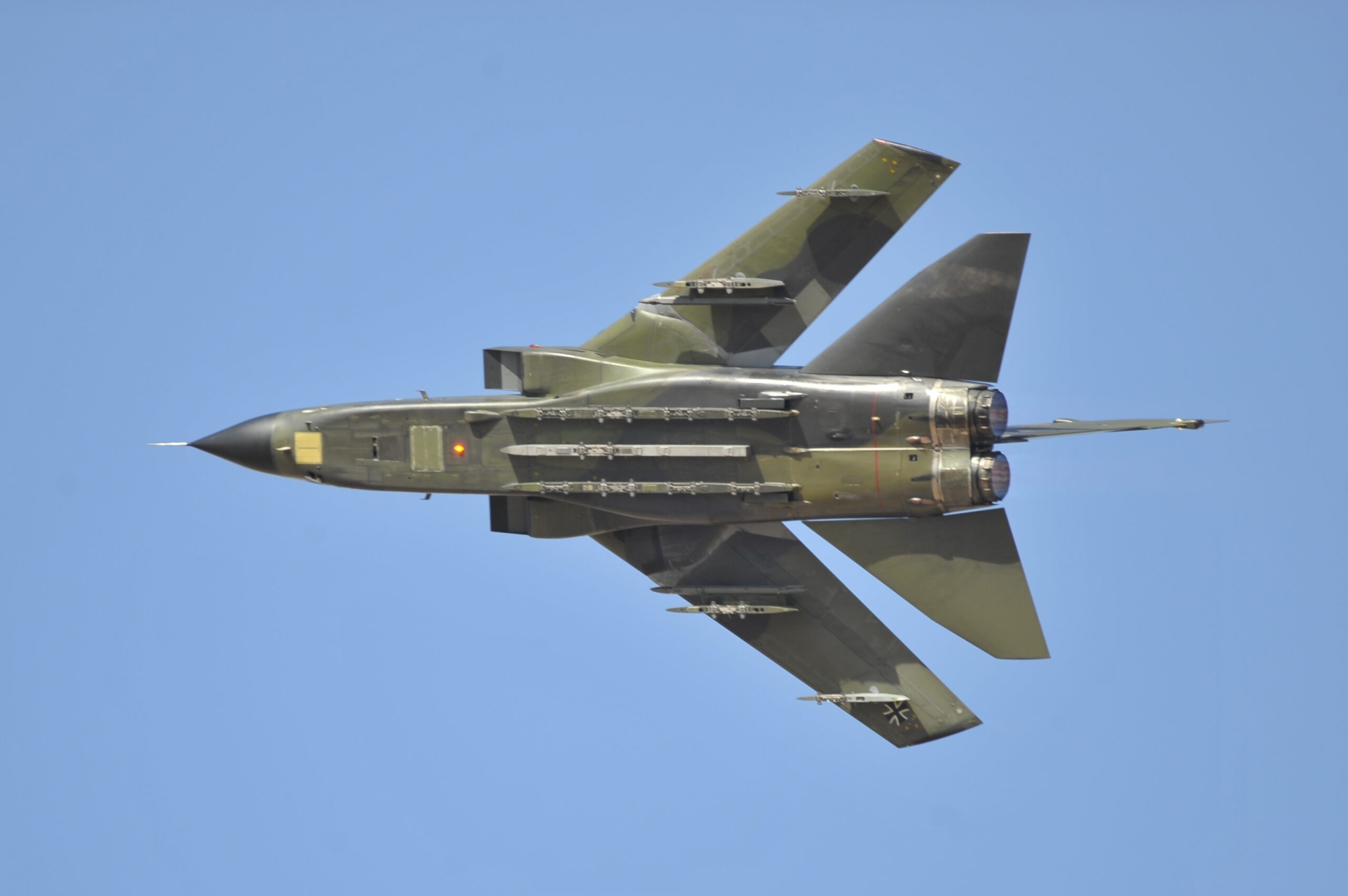
The single feature that defines the Tornado’s look is its variable-geometry, or swing, wing. The pilot can select the sweep angle in flight, anywhere between 25 degrees fully forward and 67 degrees fully swept. Forward sweep gives a long, efficient wing for take-off, landing and loitering at lower speeds. Sweeping the wings back reduces the exposed area and cuts drag, which is exactly what an aircraft needs to dash at very high speed close to the ground. The Tornado was built to fly low and fast, slipping under radar cover to reach targets that higher-flying aircraft could not, and the swing wing made that practical. The weapons pylons were designed to pivot with the wing so that stores always pointed into the airflow whatever the sweep angle.
Power came from two Turbo-Union RB199 turbofans, compact three-shaft engines fitted with reheat and, unusually for a fighter, thrust reversers. The reversers let the Tornado pull up sharply on short or wet runways, which fitted the German emphasis on short-field performance from dispersed wartime airfields. Combined with full-span flaps and leading-edge slats when the wings were forward, the result was an aircraft that could operate from surprisingly short strips for its weight and speed.
The crew of two sat in tandem, a pilot in front and a navigator or weapons officer behind. The back-seater was not a passenger. The Tornado’s whole reason for being was precise navigation and weapons delivery at night and in bad weather, and that workload was split between two people. Central to this was the terrain-following radar, which could automatically fly the aircraft along the contours of the ground at low level while a second radar function searched for targets. Being able to do this hands-off, in cloud and at night, was one of the Tornado’s genuine advantages over many contemporaries.
For close-in defence the strike Tornado carried two 27 mm Mauser BK-27 revolver cannon mounted internally under the fuselage. The BK-27 was developed specifically for the Tornado and went on to arm other European aircraft including the Gripen and the Eurofighter Typhoon. The aircraft could carry a very wide spread of NATO weapons across its hardpoints, from unguided and laser-guided bombs to anti-ship and anti-radiation missiles, runway-denial weapons and, in the strike role, nuclear bombs. The Tornado holds a distinction here: it is generally described as the only non-American-designed aircraft certified to carry United States nuclear weapons under NATO’s nuclear-sharing arrangements.
Built for the Cold War: life at low level
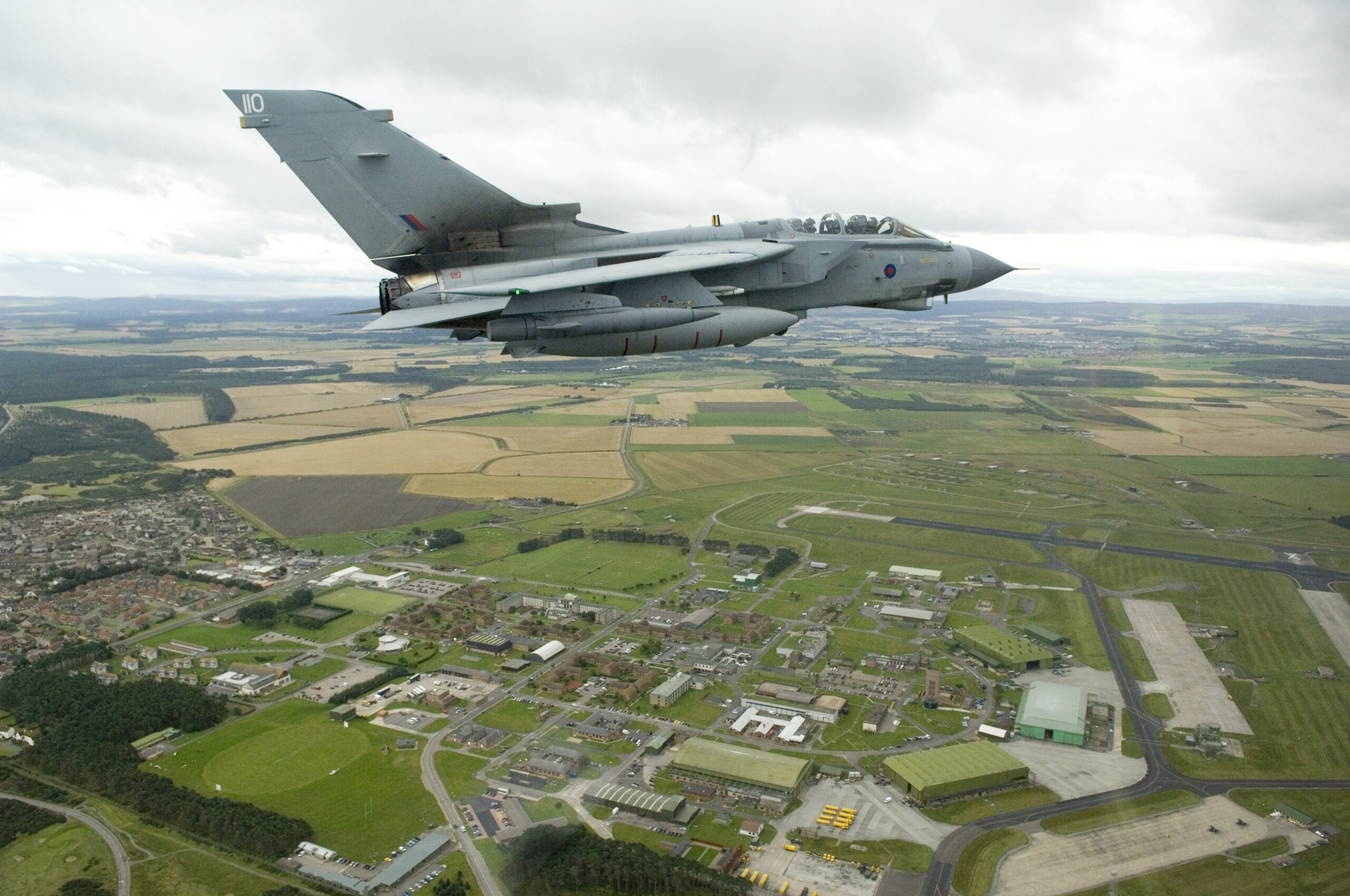
To understand the Tornado you have to understand the job it was built for, because almost every unusual thing about the aircraft follows from it. NATO’s strike aircraft in the 1970s faced the densest air defence network ever assembled, layered belts of radars, missiles and guns covering the inner German border and everything behind it. Flying over it at medium altitude was considered close to suicidal. The answer was to go under it: to cross the border at very low level, below the radar horizon, in weather that kept everyone else on the ground, and to do it at night.
That is what the Tornado was for. Its terrain-following radar let the crew engage the automatics and let the aircraft hug the ground through cloud and darkness while the navigator managed the attack. The small, highly loaded swing wing, a liability in a turning fight, was exactly what was wanted for a fast, stable, comfortable ride in the dense, turbulent air near the ground, where a lightly loaded wing would have hammered its crew to exhaustion. The two RB199 turbofans were compact and economical at low level, and their built-in thrust reversers let a returning aircraft stop on a short, wet, possibly damaged runway. Nothing about the design makes sense at an air show. All of it makes sense at low level in bad weather over north Germany.
For the crews of RAF Germany and the Luftwaffe’s strike wings and the German Navy’s Marineflieger, that meant a professional life spent at heights and speeds that still sound improbable, training week in and week out through the last fifteen years of the Cold War for a mission everyone hoped would never be flown. The photographs from that era, camouflaged jets streaking through the Mach Loop‘s valleys or across the north German plain, remain some of the most dramatic aviation images ever taken.
Service and combat history
The Tornado entered RAF squadron service in the early 1980s. No. IX (B) Squadron became the first front-line unit in the world to operate the type when it reformed on 1 June 1982, and was declared combat ready to NATO in January 1983. Through the 1980s the bulk of the RAF’s Tornado force, along with the German and Italian fleets, was pointed firmly at the Cold War mission: low-level strikes against Warsaw Pact airfields, bridges and air defences in the event of war in central Europe. RAF Germany squadrons held nuclear quick-reaction alert armed with the WE.177 bomb.
The aircraft’s first major test in action came in the 1991 Gulf War, and it was a hard one. The RAF deployed 49 Tornado GR1s for Operation Granby, flying dangerous low-level missions against Iraqi airfields with 1,000 lb bombs and the specialised JP233 runway-denial weapon. Six RAF Tornados were lost during the conflict. The first, on 17 January 1991, was brought down by a surface-to-air missile after a low-level run. The exposure of those early low-level attacks pushed the RAF to move to medium-level bombing as the campaign went on, using Buccaneers and then the aircraft’s own TIALD pods to designate targets for laser-guided bombs. Italy contributed eight Tornado IDS aircraft under Operazione Locusta and lost one to anti-aircraft fire, its crew captured and later released. Saudi Arabia, the only export customer, flew 665 IDS and 451 ADV sorties and lost one IDS.
After the Gulf War the Tornado became a fixture of Western air operations. RAF and Italian aircraft policed the Iraqi no-fly zones through the 1990s. German Tornados flew in the 1999 Kosovo campaign, Germany’s first offensive air missions since the Second World War, with the ECR variant firing some 236 anti-radiation missiles to suppress enemy air defences; Italian Tornados fired a further 115 in the same operation. In 2003 RAF Tornados took part in the invasion of Iraq under Operation Telic and fired the Storm Shadow cruise missile in anger for the first time. One RAF GR4 was lost early in that campaign to friendly fire from a US Patriot battery, with both crew killed; a later inquiry pointed to the aircraft’s lack of a working identification signal as a factor.
RAF and German Tornados both served in Afghanistan, the British flying close support and reconnaissance from Kandahar between 2009 and 2014 and the Germans flying reconnaissance from Mazar-i-Sharif until 2010. RAF Tornados flew long-range strikes over Libya in 2011, described at the time as the longest-range RAF bombing missions since the Falklands. The type’s final chapter was the campaign against Islamic State over Iraq and Syria, Operation Shader, where Tornado GR4s flew with Brimstone missiles, Paveway bombs and Storm Shadow until the RAF flew its last operational Tornado sorties on 31 January 2019.
The Gulf War: Tornado’s hardest test
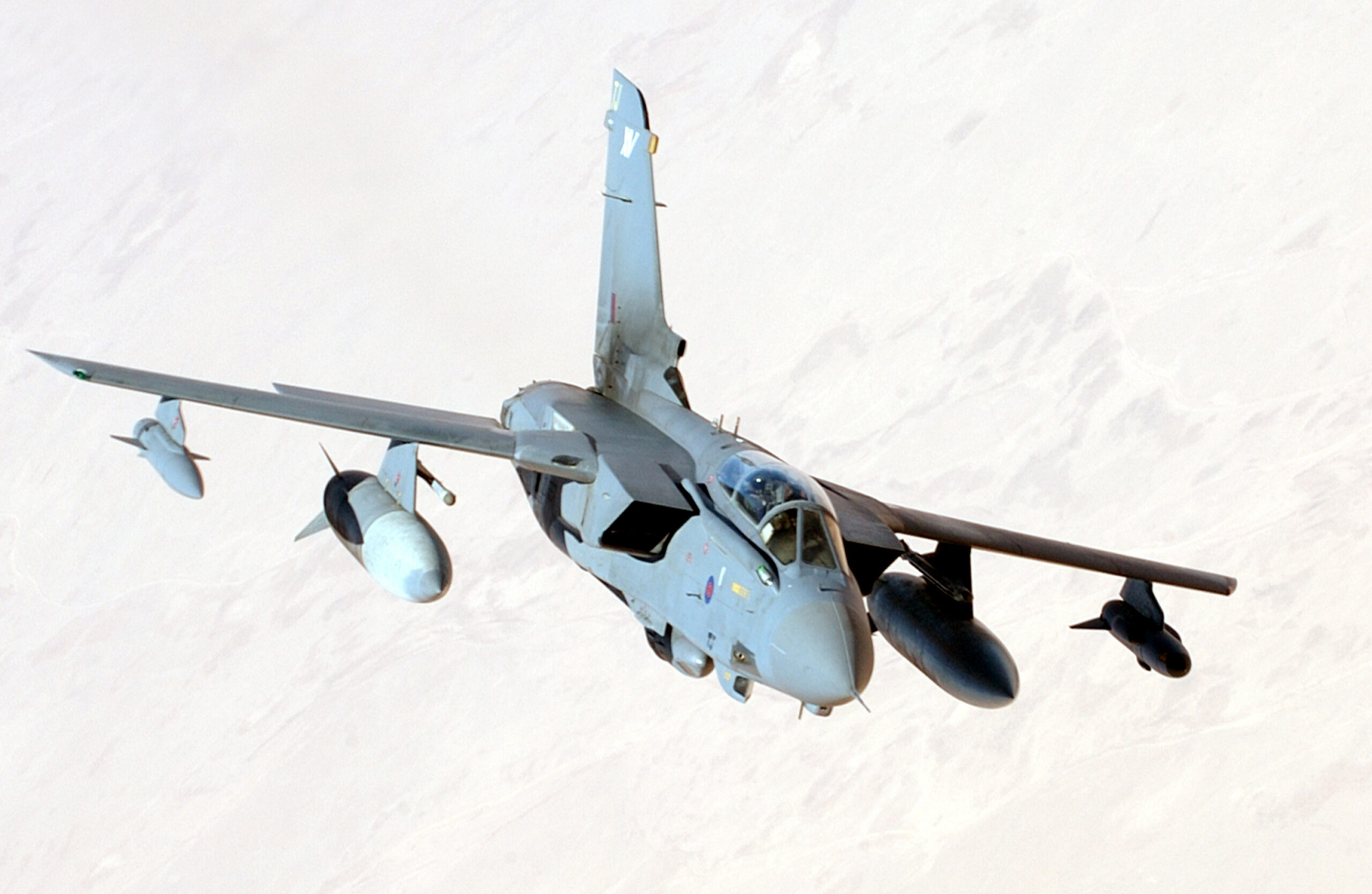
Everything the Tornado force had trained for through the 1980s was put to the test in January 1991, though not against the enemy it had been designed to fight. For Operation Desert Storm the RAF deployed GR1s to Muharraq in Bahrain and to Tabuk and Dhahran in Saudi Arabia, and in the opening nights of the war they were given one of the most dangerous jobs in the entire coalition air campaign: attacking Iraqi airfields at extreme low level with the JP233 runway denial weapon.
JP233 was a weapon that could only have been designed for the Tornado’s way of war. Two enormous dispensers, together weighing over 5,000 lb, were carried under the fuselage, and as the aircraft flew straight down the line of an enemy runway at low level they dispensed 60 cratering bombs and 430 area denial mines in a programmed stream, wrecking the surface and salting it against repair crews. Delivering it meant flying stable, straight and very low, at night, directly over one of the most heavily defended pieces of ground in the theatre, with anti-aircraft fire rising to meet the aircraft. The crews who did it described it flatly as the longest seconds of their lives.
The airfield attacks were suspended within the first week, because the Iraqi air force had effectively stopped flying and the risks of low level delivery no longer bought anything worth the exposure. Six RAF Tornados were lost during the war. Contrary to a myth that has followed the aircraft ever since, none was shot down during the attack run of a JP233 mission: four were lost delivering conventional unguided bombs, one crashed after delivering JP233, most likely through controlled flight into terrain at low level, and one was lost attempting a laser-guided attack. But the losses in that first week, when the RAF was flying some of the most exposed mission profiles of the coalition, were keenly felt at home.
The force then did something that says a great deal about the aircraft and its crews: it changed doctrine mid-war. The Tornados moved from low level to medium level, outside the reach of light anti-aircraft fire, and switched to precision attack with laser-guided bombs. It was the beginning of a transformation that would define the rest of the Tornado’s career, from a Cold War low-level penetrator into an all-weather precision strike aircraft, a role it flew over Iraq for another decade of no-fly-zone patrols, then over Kosovo, Iraq again in 2003, Afghanistan and Libya.
The Tornado F3: the fighter Tornado
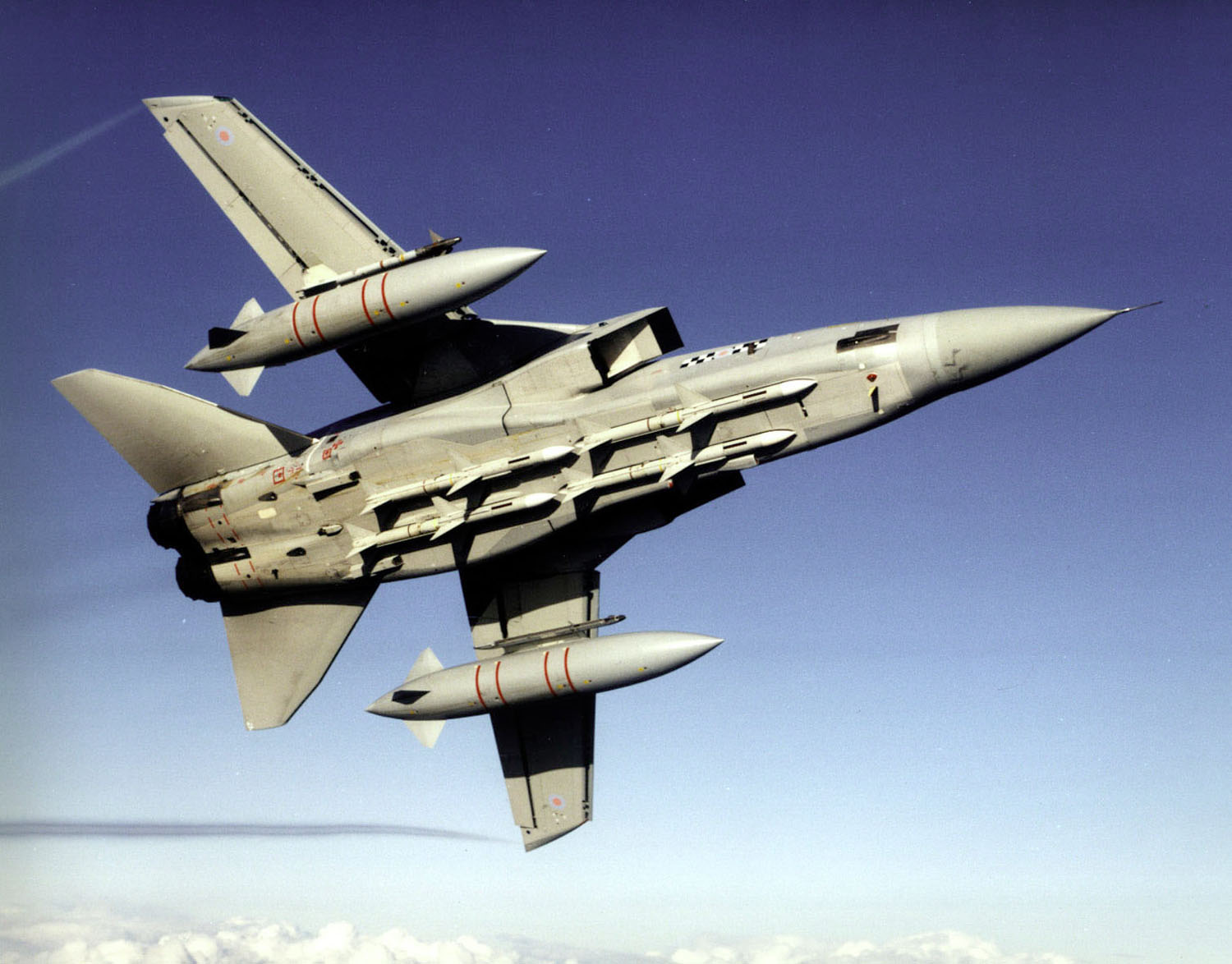
Britain’s third requirement, and the one its partners never shared, was for a long-range interceptor to defend the UK Air Defence Region, the vast block of airspace stretching far out over the North Sea and the Atlantic approaches. Rather than buy an American fighter, Britain developed the Air Defence Variant of the Tornado, with a lengthened fuselage, a longer radar nose and long-range missiles carried semi-recessed under the belly. In total 194 ADVs were built, almost all for the RAF, and the definitive F3 served from the late 1980s until 2011.
The F3 was never an agile dogfighter and was never meant to be. Its job was to run out hundreds of miles from base, loiter on combat air patrol in filthy weather, find Soviet bombers coming around the North Cape with its radar, and kill them at range before they could launch missiles at the UK or at NATO convoys. Judged as a dogfighter it was ordinary; judged as a long-range, all-weather patrol interceptor with two crew, good endurance and a heavy missile load, it was exactly what the requirement asked for.
In the 1991 Gulf War, F3s flew combat air patrols over Saudi airspace. They scored no kills, but the deterrent presence of their long-range missiles was part of the reason Iraqi pilots so rarely came up to fight, and Saudi Arabia thought well enough of the type to operate the ADV itself. When the F3 finally retired, its place in the UK’s air defence was taken by the Typhoon, an aircraft born from the same kind of European partnership the Tornado had pioneered.
Variants
Three main versions of the Tornado were built, and the differences between them are worth understanding because they shaped how each air force used the aircraft.
Tornado IDS
The IDS, for interdictor/strike, was the original and by far the most numerous version. This was the low-level, all-weather bomber the whole programme had been designed around, flown by Britain (as the GR1 and later GR4), Germany, Italy and Saudi Arabia. The RAF re-manufactured its GR1 fleet into the much-improved GR4 standard from the late 1990s, adding forward-looking infra-red, a wide-angle head-up display, night-vision compatibility, GPS and the ability to carry newer weapons such as Storm Shadow, Brimstone and Paveway laser-guided bombs. The first GR4 flew on 4 April 1997 and conversions were completed in 2003. A dedicated reconnaissance sub-variant, the GR1A, traded its cannon for sideways-looking infra-red sensors.
Tornado ADV
The ADV, for air defence variant, was the most heavily altered version. To turn a low-level bomber into a long-range interceptor for the RAF, the airframe was stretched, given the AI.24 Foxhunter radar and armed with beyond-visual-range missiles such as Skyflash and later AMRAAM. It carried only one cannon rather than two. Entering RAF service as the Tornado F2 and then the definitive F3, its job was to guard the airspace and sea approaches around the United Kingdom, intercepting incoming bombers far out before they could reach their targets. Italy leased a number of F3s to fill a gap in its own air defences before its Eurofighters arrived, returning the last of them to the RAF in December 2004.
Tornado ECR
The ECR, for electronic combat and reconnaissance, was a specialised defence-suppression aircraft operated by Germany and Italy. Built to find and attack enemy radars, it carried the AGM-88 HARM anti-radiation missile and the sensors needed to locate hostile emitters. It was the ECR that gave the German and Italian air forces a credible capability to clear the way for other aircraft, as demonstrated over Kosovo in 1999.
From GR1 to GR4: the mid-life rebirth
The Gulf War had shown that the Tornado’s future lay in precision attack from medium level, and the RAF rebuilt its fleet around that lesson. A contract signed with British Aerospace in 1994 saw 142 GR1s rebuilt to GR4 standard, with the work running from the late 1990s to 2003. The upgrade transformed the cockpit and sensors: forward-looking infrared, night-vision-goggle-compatible displays and modern avionics let crews operate at night and in bad weather with a precision the GR1’s designers could not have imagined, and the aircraft gained the ability to carry each new generation of guided weapons as it arrived.
Reconnaissance had its own thread in the story. The GR1A carried the internal TIRRS infrared reconnaissance system in place of its cannon and proved itself hunting Scud missiles at low level during the Gulf War; 26 aircraft of the upgraded fleet were completed as GR4As with the reconnaissance fit built in. In the GR4 era the recce role increasingly moved to podded sensors that any aircraft could carry, and Tornado crews spent much of the type’s last two decades providing reconnaissance and close air support over Iraq and Afghanistan, work that would have looked utterly alien to the Cold War crews of 1982.
The GR4 also introduced the weapons the type is now remembered for in its later years, including the Storm Shadow cruise missile, first used operationally by RAF Tornados in 2003, and the Brimstone anti-armour missile. By its retirement the GR4 was, in everything but shape, a different aircraft from the GR1 that had gone to war in 1991, and the airframes themselves had proved adaptable enough to absorb nearly three decades of continuous change.
Retirement and the final operators
The RAF marked the end of its Tornado story in the spring of 2019, with the GR4 officially retired on 1 April, the RAF’s own 101st birthday. The farewell flypasts that spring drew crowds and camera lenses to airfields all over Britain, and the last aircraft went out wearing commemorative schemes that photographers still talk about. After nearly 40 years, including a combat record that ran almost unbroken from 1991 to 2019, the aircraft that had defined RAF strike aviation was gone from British skies.
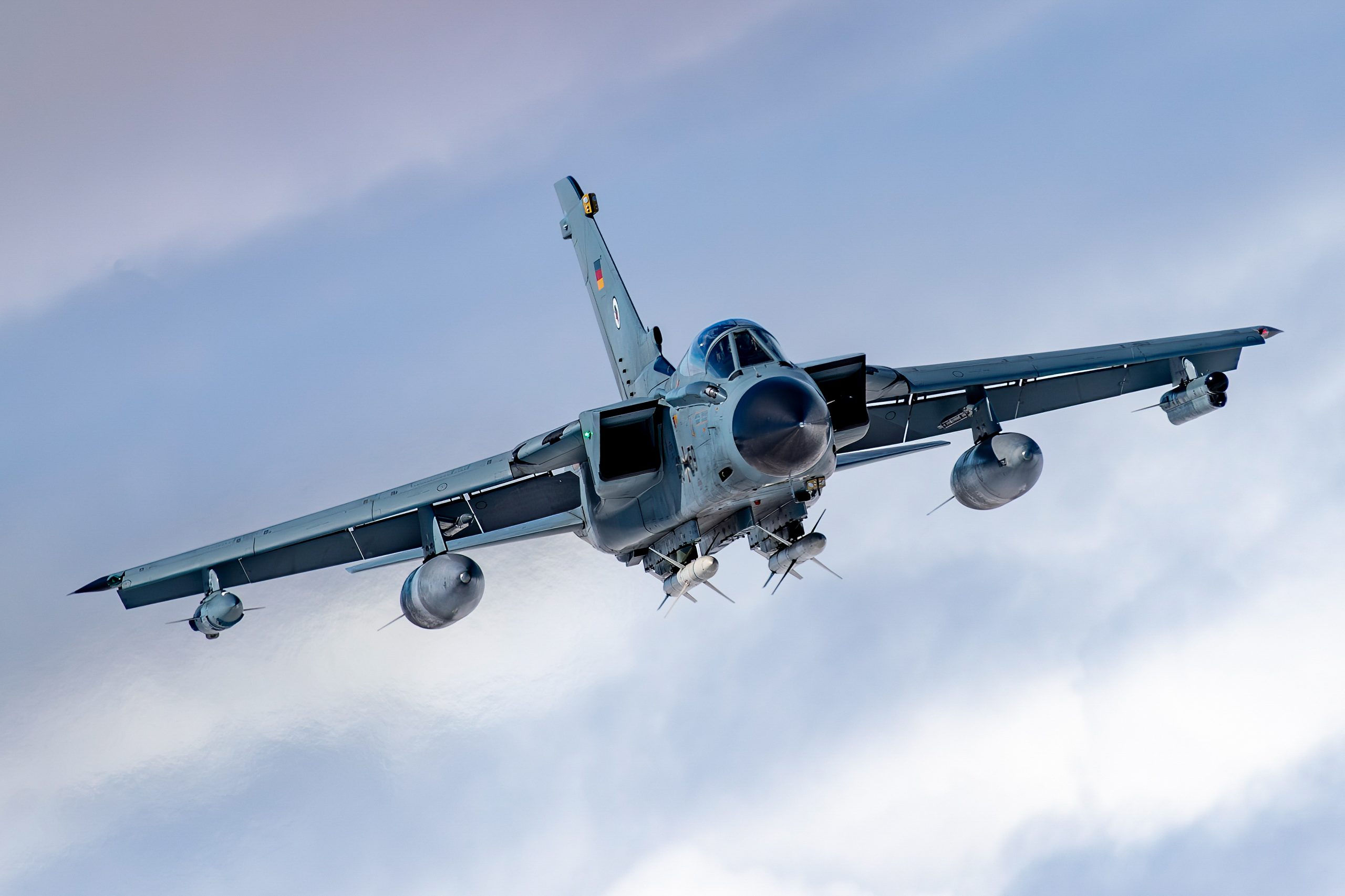
It did not disappear from Europe’s. Germany and Italy, the other two partners, kept their Tornados flying, and The Luftwaffe still fields a reduced fleet, including its specialist ECR electronic combat and reconnaissance jets, with retirement now set for 2030 as the F-35A takes over the nuclear role. Italy has consolidated its remaining IDS, ECR and trainer aircraft into a single unit, 155 Gruppo, after 154 Gruppo converted to the F-35A in July 2025. Saudi Arabia, the only export customer for the strike Tornado, continues to operate upgraded IDS aircraft. All three are winding down as replacements arrive, but more than fifty years after the prototype’s first flight at Manching on 14 August 1974, the Tornado remains a working combat aircraft.
That longevity is worth dwelling on. The three-nation Panavia consortium, with its awkward compromises and its committee-designed requirement, was mocked at the time and has been mocked since. But it produced an aircraft that served three founding air forces for between 40 and 50 years each, fought in every major air campaign of its era, and laid the industrial groundwork for the Eurofighter Typhoon. Very few multinational programmes can claim as much.
Where the survivors are today
Across all variants, around 990 Tornados were built before production ended in 1998 (some references put the figure at 992). Of these, the bulk were IDS aircraft, with the ADV interceptors and the smaller batch of ECR machines making up the rest. With the RAF’s retirement in 2019 and Italy winding its fleet down, large numbers of airframes left service in a short space of time, and a good many have found their way into museums and collections.
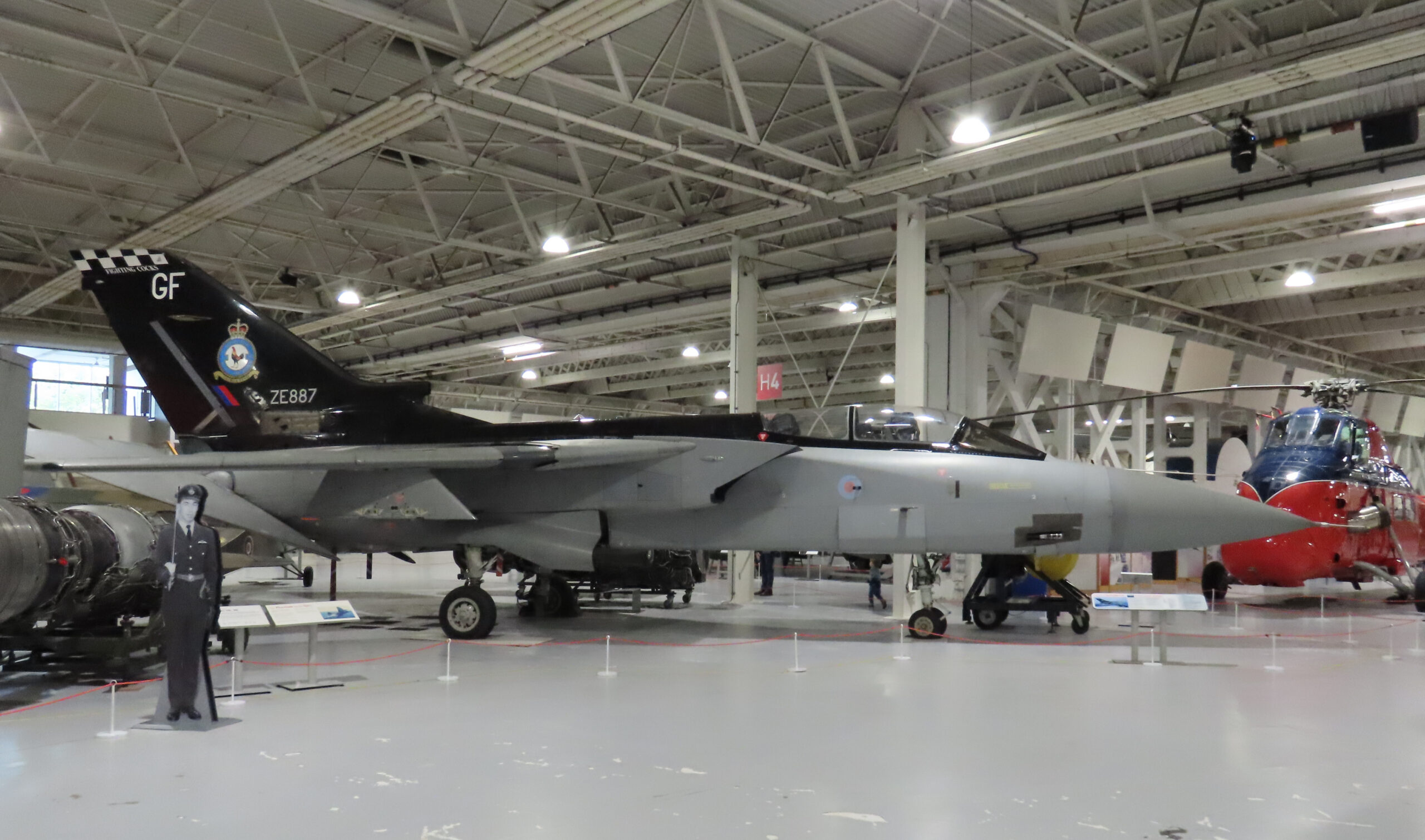
In Britain the obvious places to look are the major aviation museums, where preserved GR1, GR4 and F3 aircraft are on display, along with gate guardians at former Tornado stations and examples held by collections that keep them in ground-running condition. Italy retained at least one of its returned ADVs for static display at the Italian Air Force Museum. Because the type left service so recently, many surviving airframes are in good cosmetic condition, and several of the RAF’s special retirement colour schemes from 2018, applied to mark the aircraft’s farewell, have been preserved.
It is worth a word of caution if you are tracking down a specific aircraft. Tornado airframes have moved around a great deal since 2019, and the location of any individual machine can change as museums reorganise or collections are dispersed. If you want to photograph a particular example, it is sensible to check directly with the museum before travelling rather than relying on an older listing.
If you are after period photographs of the Tornado in service, the Piemags archive galleries hold a deep run of military aviation images, and there is more across the wider gallery collection.
The retirement flypasts of 2019 released a wave of airframes to collections, so the Tornado is now one of the easier fast jets to find preserved in Britain. The RAF Museum displays the type, including the F3 at Hendon, and preserved examples sit in regional collections from the Ulster Aviation Society’s GR4 ZG771 in Northern Ireland to gate guardians and cockpit sections around the former Tornado bases. Because so many survivors flew operationally within recent memory, many still carry mission markings and squadron art from Iraq, Afghanistan and Libya, details worth seeking out with a camera before repaints slowly erase them. And for a few more years yet, the truly dedicated can still catch a live one: German and Italian Tornados soldier on, and a booking at a continental spotters’ day remains the last chance to photograph the type doing what it was built for. When the last of them lands for good, the Tornado will have outlived the world it was designed to fight in by more than three decades.
Specifications
The figures below are representative of the Tornado IDS, the strike version flown by the RAF as the GR1 and GR4. The ADV interceptor differed in several respects: it was around 1.3 metres longer, carried a single cannon and used the Foxhunter air-intercept radar. Performance figures vary with weapons load and fuel, so treat these as typical rather than absolute.
| Crew | Two (pilot and navigator) |
|---|---|
| Length | 16.72 m (54 ft 10 in) |
| Wingspan | 13.91 m wings forward (25 degrees); 8.60 m fully swept (67 degrees) |
| Height | 5.95 m (19 ft 6 in) |
| Empty weight | Around 13,900 kg (30,600 lb) |
| Maximum take-off weight | Around 28,000 kg (61,700 lb) |
| Powerplant | Two Turbo-Union RB199 afterburning turbofans, with thrust reversers |
| Thrust | Around 16,000 lb (about 71 kN) each with reheat |
| Maximum speed | About Mach 2.2 at altitude |
| Service ceiling | Around 15,000 m (50,000 ft) |
| Wing sweep range | 25 to 67 degrees, selected in flight |
| Cannon | Two 27 mm Mauser BK-27 (IDS); one on the ADV and on the RAF GR4 |
| First flight | 14 August 1974 |
| Number built | Around 990 across all variants |
The crews’ own name for the aircraft says something about the affection it earned: in RAF service the Tornado was universally the “Tonka”, a nickname that followed it from first squadron to last flypast. Affection was not automatic. The Tornado was a demanding aircraft to fight in, its cockpit workload was high by modern standards, and its Cold War mission was among the grimmest ever assigned to an RAF fleet. The regard it is held in was earned the hard way, over 40 years of doing difficult jobs in bad weather, mostly without fuss and mostly without headlines.
Photographing the Tornado today
For British photographers the Tornado is now a museum subject, and a rewarding one. Preserved GR1s, GR4s and F3s sit in collections around the country, and the type’s bulk works in its favour indoors: the enormous fin fills a frame on its own, the swing wings are usually displayed swept forward so the aircraft reads clearly, and the two-seat cockpit under that long canopy makes a strong nose-on study. Watch for the details that tell the aircraft’s story: the thrust reverser buckets on the jetpipes, the laser designator fairing under the nose of later GR4s, and squadron markings that in many cases record Gulf War service.
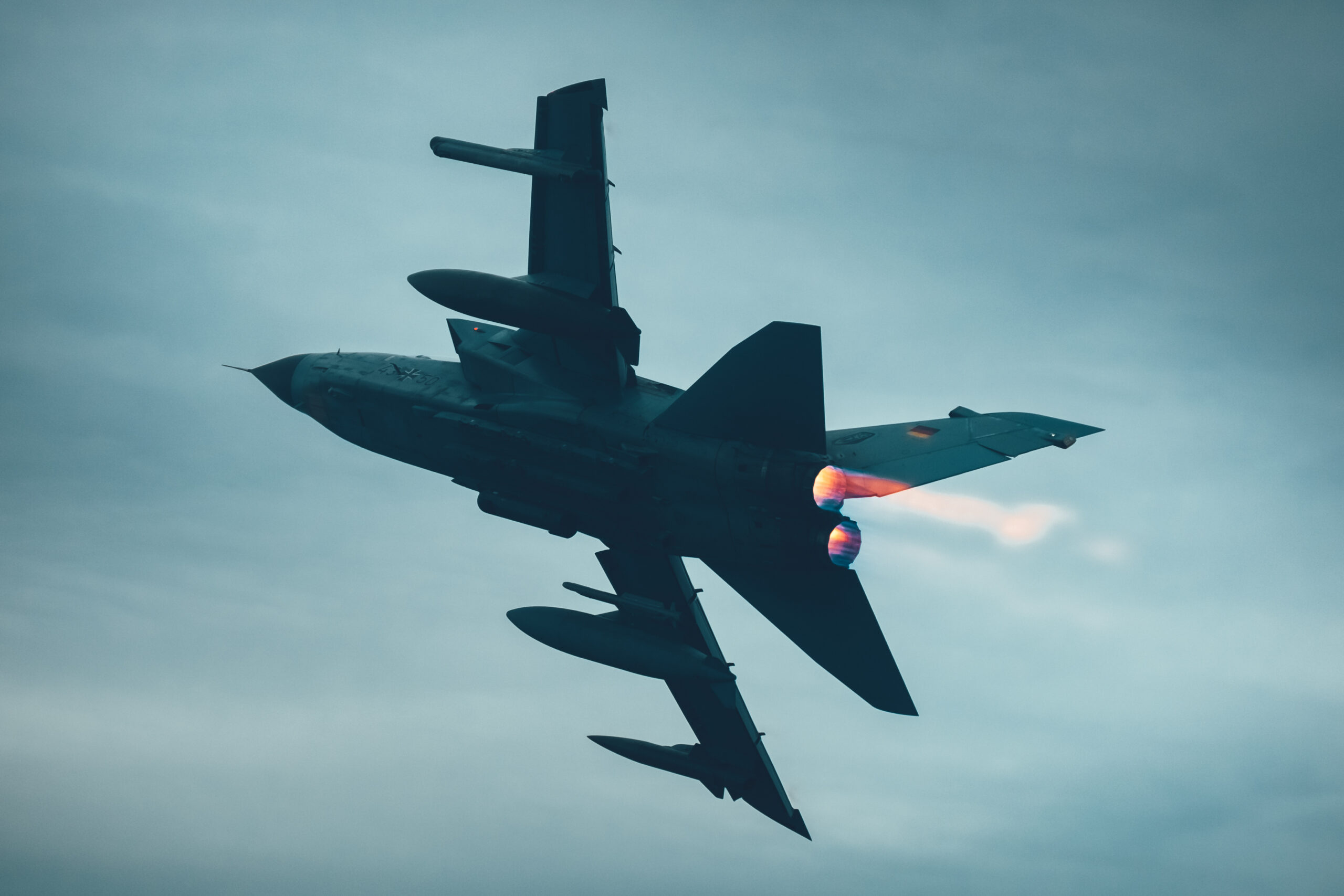
The type is not quite beyond the reach of the action photographer either. German and Italian Tornados are still flying in 2026, though both fleets are winding down, and continental spotting trips or major European exercises remain the way to catch one with its wings swept and its burners lit. If that appeals, our guides to photographing fast jets and shooting at RIAT cover the technique, and our piece on military aircraft markings and serials will help you decode the airframes you find. For archive material from the Tornado’s RAF years, the Piemags archive galleries are worth a look.
Legacy
The Tornado’s most lasting achievement may have less to do with bombs and radar than with the way it was built. Three nations with different needs, languages and industrial interests set out to design and manufacture a complex combat aircraft together, and they succeeded. The structure created for the programme, the shared factories, the joint engine company and the tri-national training unit, became a template for the much larger Eurofighter Typhoon that followed. Without the Tornado experience, European collaboration on later fighters would have been a far steeper climb.
As a piece of engineering the Tornado did exactly what it was asked to do for a very long time. It was never the most agile dogfighter, and it was conceived for a low-level Cold War mission that never came. Yet when the wars it did fight arrived, the aircraft adapted, moving from low-level iron bombing to precision weapons, reconnaissance and defence suppression, and staying relevant from 1991 all the way to 2019. Few aircraft of its generation had so long or so varied a front-line career.
For Britain the Tornado GR4 was retired on 1 April 2019, the RAF’s 101st anniversary, with the last two squadrons, No. IX (B) and No. 31, having stood down at RAF Marham in March that year. Germany and Italy kept their Tornados flying well beyond that point, with Germany planning a phased withdrawal towards the end of the decade as the F-35A takes on the nuclear mission and the Eurofighter absorbs the strike, reconnaissance and defence-suppression roles. When the last Tornado finally lands for good, it will close out one of the most significant collaborative aircraft programmes the continent has produced.
And the programme’s influence did not end with the aircraft. Panavia’s three-nation structure, with its arguments, workshare battles and eventual success, was the direct ancestor of the four-nation Eurofighter consortium, and the lessons of running it shaped how Europe has built combat aircraft ever since. The Typhoon squadrons that took over the Tornado’s bases inherited more than the real estate: they inherited an industrial and political model that the Tornado proved could work.
The Tornado missed the South Atlantic, but the campaign shaped the force it joined. Our account of the Falklands air war of 1982 sets out what the RAF and the Fleet Air Arm learned there.
Frequently asked questions
Which countries built and flew the Tornado?
The Tornado was designed and built jointly by Britain, West Germany and Italy through the consortium Panavia Aircraft GmbH, with engines from the Turbo-Union joint venture. Those three nations all flew it, and Saudi Arabia became the only export customer.
When did the Tornado first fly and enter service?
The first prototype flew on 14 August 1974. The aircraft entered service with its operators between 1979 and 1980, and No. IX (B) Squadron of the RAF became the first front-line unit to operate it in 1982.
What is the difference between the IDS, ADV and ECR versions?
The IDS was the low-level strike bomber and the most numerous version. The ADV was a stretched long-range interceptor with a different radar, flown by the RAF as the F2 and F3. The ECR was a specialised defence-suppression aircraft used by Germany and Italy to attack enemy radars.
Why does the Tornado have swing wings?
The variable-sweep wing let the aircraft spread its wings for efficient take-off, landing and lower-speed flight, then sweep them back to cut drag for high-speed dashes at low level. That flexibility was central to its design as a fast, low-flying strike aircraft.
When did the RAF retire the Tornado?
The RAF flew its last operational Tornado sorties on 31 January 2019, stood the last squadrons down in March, and formally retired the type on 1 April 2019. Germany and Italy continued to operate the Tornado after that date.
How many Tornados were built?
Around 990 were built across all variants before production ended in 1998, the great majority of them IDS strike aircraft. Some references give the figure as 992.
What weapons is the Tornado best remembered for carrying?
In its later GR4 years the RAF Tornado became closely associated with the Storm Shadow cruise missile, first fired in anger during the 2003 invasion of Iraq, and the Brimstone anti-armour missile used against vehicles and dispersed targets. It also carried Paveway laser and satellite-guided bombs and, earlier in its life, the specialised JP233 runway-denial weapon. This growing precision arsenal turned a Cold War low-level bomber into an all-weather precision strike aircraft.
How fast was the Tornado and how did it fly so low?
The Tornado could reach around Mach 2.2 at altitude with its wings fully swept back, but its real trick was flying very fast and very low. A terrain-following radar could automatically fly the aircraft along the contours of the ground at low level, in cloud and at night, while the navigator managed the attack. The small, highly loaded swing wing gave a stable ride in the turbulent air near the ground, exactly what was needed to slip under enemy radar cover.
Why could the Tornado carry American nuclear bombs?
Under NATO’s nuclear-sharing arrangements, certain allied aircraft are cleared to deliver US nuclear weapons held in Europe, and the Tornado holds a notable distinction as the only non-American-developed aircraft ever cleared for that role. German and Italian Tornados were assigned this task, while RAF aircraft in the Cold War stood nuclear alert with the British WE.177 bomb. It reflected how central the Tornado was to NATO’s strike planning in central Europe.
Want to use Tornado imagery in a book, magazine or exhibition? See the Piemags licensing page for details. You may also enjoy our histories of the English Electric Lightning, the Avro Vulcan, the Hawker Siddeley Harrier and the McDonnell Douglas F-4 Phantom II, plus our guide to the best lenses for aviation photography.
The Tornado replaced the SEPECAT Jaguar on the RAF’s Cold War frontline from 1984, taking over the low-level strike role in Germany. For the story of the aircraft it succeeded, see our full history of the SEPECAT Jaguar.
