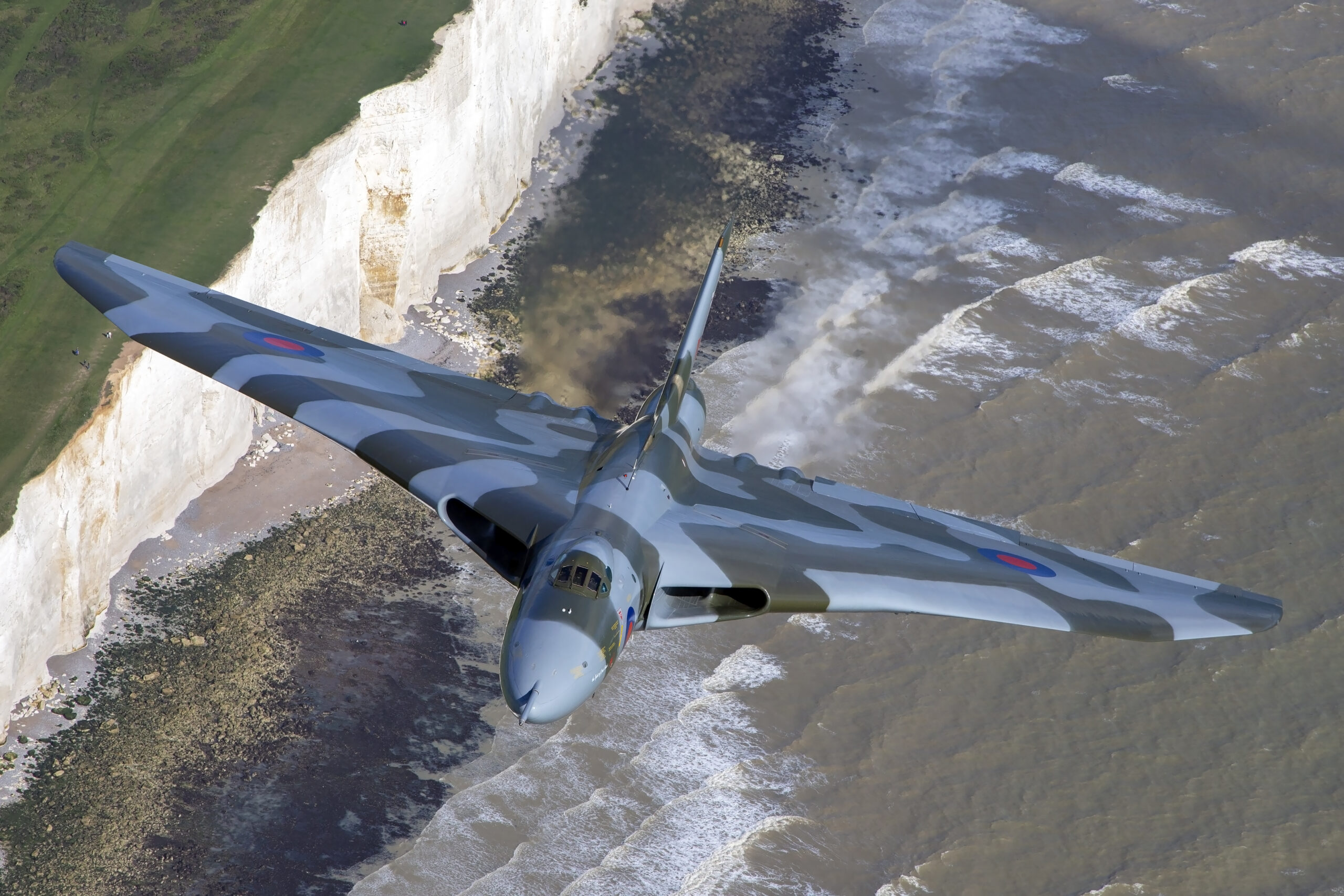
Few aircraft have ever looked the part of a nuclear bomber quite like the Avro Vulcan. The Avro Vulcan was a British delta-wing jet bomber that formed part of the RAF V-force nuclear deterrent through the Cold War, and flew its most famous raids against Port Stanley airfield during the 1982 Falklands War. A vast white delta with no tailplane, it could climb away from a runway with a noise that people who heard it never forgot, and at an air display it could throw itself around the sky in a way that seemed impossible for something the size of a small terraced street. Yet behind the showmanship sat one of the most serious machines Britain ever built: for years the Vulcan carried the country’s nuclear deterrent, and in 1982 it flew the longest bombing missions the world had then seen. This is the full story of the aircraft, from a drawing board in wartime Manchester to the last airworthy example falling silent in 2015.
What this guide covers
- An aircraft built for the unthinkable
- Origins: a bomber for the atomic age
- Design: the great white delta
- Into service: the backbone of the V-force
- The other V-bombers: Valiant and Victor
- Operating the Vulcan: alert, dispersal and the bombing system
- Avro Vulcan B.2 specifications
- Operation Black Buck: the Vulcan goes to war
- Variants and other roles
- Retirement and the Vulcan Display Flight
- Where the survivors are today
- Legacy: why the Vulcan still matters
- Frequently asked questions
An aircraft built for the unthinkable
The Vulcan belonged to a small and famous group known as the V-bombers, alongside the Vickers Valiant and the Handley Page Victor. All three were ordered to do the same grim job: to carry an atomic, and later a thermonuclear, bomb deep into Soviet territory if the Cold War ever turned hot. The Vulcan was the most striking of the three and, in the public memory, the one that endured. Its delta planform was a leap into the unknown for British industry in the late 1940s, and the aircraft that resulted served the Royal Air Force in one form or another from 1956 until 1984.
What follows looks at where the design came from, how it was built and flown, the part it played in the nuclear standoff, its one and only campaign in anger over the South Atlantic, and what survives today for anyone who wants to stand next to one. Along the way it is worth keeping a clear eye on fact and legend, because the Vulcan attracts both. Where a figure is firmly established it is given plainly. Where it is contested or uncertain, that is said too.
Origins: a bomber for the atomic age
By the early 1980s the Vulcan was old. The RAF’s nuclear role had long since passed to the Navy’s submarines, newer aircraft were taking over the strike and reconnaissance tasks, and the cost of keeping an ageing fleet flying was hard to justify. The type was withdrawn from regular RAF service in 1984. The brief return to combat in the Falklands had been a final flourish rather than a reprieve.
The requirement that started it all
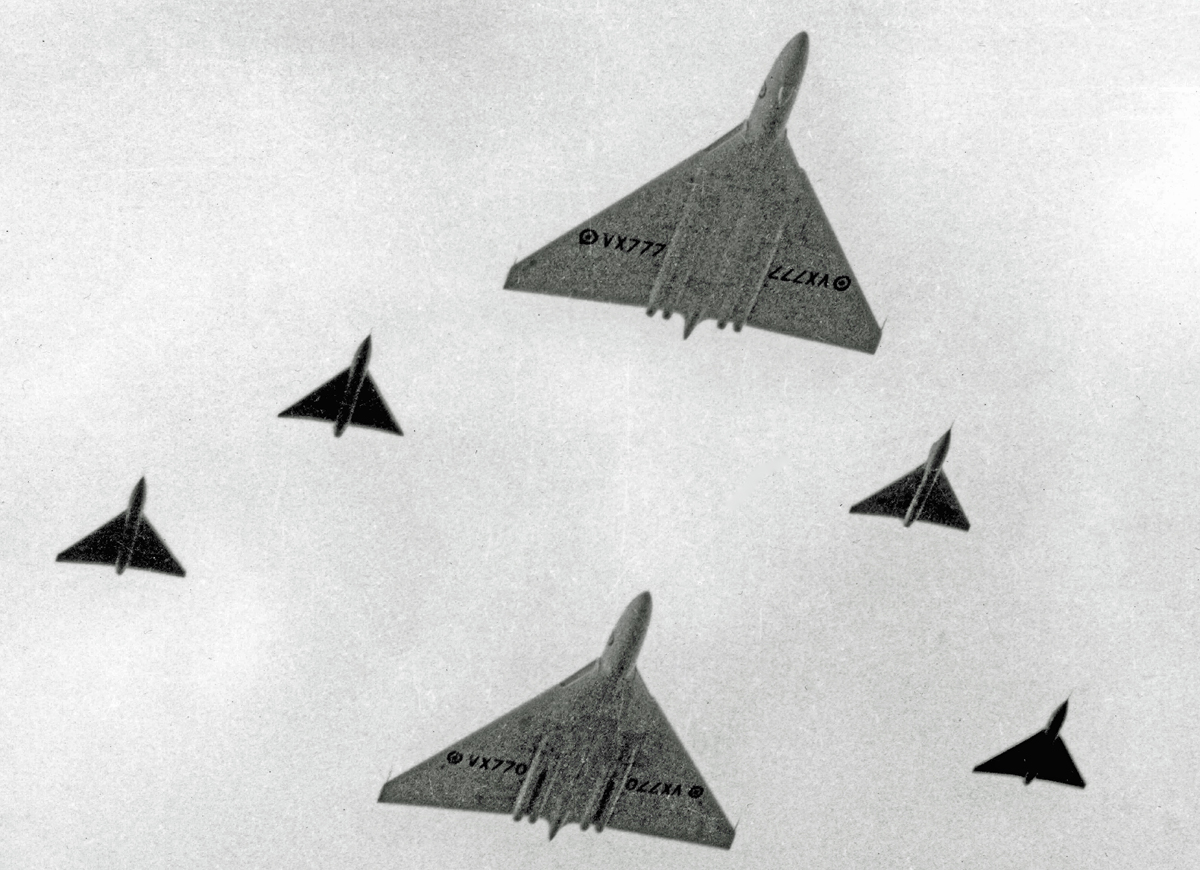
The story begins in the years just after the Second World War. Britain had decided to build its own atomic bomb and needed an aircraft capable of delivering it. In 1947 the Air Ministry issued Specification B.35/46, which asked for a jet bomber able to carry a 10,000 lb bomb to a target 1,500 nautical miles away, cruising at high subsonic speed and at heights around 50,000 feet, well above the fighters and anti-aircraft guns of the day. The demands were severe for the technology of the time, and they pushed designers towards radical shapes.
A. V. Roe and Company, universally known as Avro and famous as the maker of the wartime Lancaster, answered with a design designated the Type 698. Work began in 1947 under the technical director Roy Chadwick, the engineer behind the Lancaster, with Stuart Davies as chief designer. Chadwick was killed in the crash of an Avro Tudor in August 1947, a serious blow to the company. Davies took over leadership of the design team and carried the 698 forward.
The delta gamble
To reach the height and speed the specification demanded, Avro chose a tailless delta wing, a broad triangular plan with no separate horizontal tail surface. The delta offered a large wing area for lift at altitude, plenty of internal volume for fuel and a bomb bay, and good behaviour at high speed. It was also almost entirely untried at this scale in Britain. Nobody had built a large delta-winged aircraft and flown it, and the engineers were working at the edge of what was understood about how such a wing would behave, particularly at low speed and high angles of attack.
Rather than gamble the whole programme on theory, Avro built a series of small research aircraft to learn the delta’s habits first.
The Avro 707 research aircraft
The Avro 707 was a single-seat research aeroplane, roughly one-third the size of the planned bomber, built to explore the low-speed and high-speed characteristics of the delta wing before the full machine flew. The first 707 was lost in a fatal accident in 1949, but later examples in the family flew successfully and fed useful data back into the main design. The little deltas gave Avro confidence in the planform and helped refine details of the wing before the big aircraft committed to metal. It was a sensible, cautious approach to a truly new idea, and it paid off.
First flight and a new name
The first prototype Type 698, serial VX770, made its maiden flight from Woodford, near Manchester, on 30 August 1952, with Avro’s chief test pilot Roly Falk at the controls. The aircraft flew initially on Rolls-Royce Avon engines because the intended Bristol Olympus units were not yet ready, and a second prototype, VX777, followed. The shape caused a sensation when it appeared at the Farnborough air show, and Falk famously rolled the big delta in front of the crowd, something that looked outrageous for an aircraft of that size.
The name Vulcan, after the Roman god of fire and the forge, was adopted in line with the RAF’s practice of giving these bombers names beginning with the letter V. Production of the first version, the Vulcan B.1, got under way at Woodford, and the type began entering RAF service in the second half of the 1950s.
Design: the great white delta
The wing
The Vulcan’s defining feature was its wing. On the B.1 it was a pure delta with a straight leading edge; on the later B.2 the leading edge gained a gentle kink and a slightly cranked, drooped shape to improve handling and buffet behaviour at high altitude. The wing carried the engines buried in its roots, two on each side, fed by intakes set into the leading edge close to the fuselage. There was no separate tailplane. Pitch and roll were controlled by elevons, control surfaces along the trailing edge that worked together as elevators and differentially as ailerons, while a single large fin and rudder handled yaw.
Burying the engines kept drag low and gave the aircraft its clean lines, but it also meant that an engine fire or failure sat deep inside the structure, close to its neighbour and to the fuel. The thin delta wing held a great deal of fuel and gave the aircraft its long reach. Because the wing was so large in area relative to the aircraft’s weight, the Vulcan had a surprisingly gentle feel for its size and could be flown with real precision, which is one reason it became such a celebrated display aircraft in later life.
Power: the Bristol Olympus
The Vulcan was built around the Bristol Olympus axial-flow turbojet, an engine that grew enormously in power across the aircraft’s life. Early B.1 aircraft used Olympus units of around 11,000 to 12,000 lb thrust each. The B.2 introduced far more powerful versions, the Olympus 201 and then the 301, the latter giving on the order of 20,000 lb of thrust apiece. Four of these engines gave the big delta really strong performance, and the surge of power available is what allowed display pilots to haul the aircraft into steep climbing turns that left spectators open-mouthed.
The Olympus had a long career of its own. A developed, reheated version of the same basic engine, produced by Bristol Siddeley and then Rolls-Royce together with the French company Snecma, went on to power Concorde. That lineage, from a Cold War bomber to the supersonic airliner, is one of the quieter connections in British aviation history.
Crew and cockpit
The Vulcan carried a crew of five. Two pilots sat side by side on ejection seats under the canopy, with a good view forward and upward. Behind and below them, facing the rear in a windowless compartment, sat three men without ejection seats: the navigator plotter, the navigator radar, and the air electronics officer who managed the radio and the electronic countermeasures. In an emergency the rear crew had to bail out through the door, a fact that drew criticism over the years, since at low level there was rarely enough height for them to escape. The cramped, dark rear cabin was a world away from the airy front office, and the difference in escape chances between the front and rear crews was a long-running concern.
The bomb bay and weapons
The Vulcan was designed primarily to carry a single large nuclear weapon in a capacious internal bomb bay. In British service this meant the early Blue Danube free-fall atomic bomb, then later and more practical weapons including Yellow Sun and the WE.177. The same bay could instead be filled with conventional bombs. The aircraft could carry twenty-one 1,000 lb bombs, a load of around 21,000 lb, an arrangement that lay almost forgotten for years until it was suddenly needed in 1982.
For part of its career the B.2 was adapted to carry the Blue Steel stand-off missile, a rocket-powered weapon with a nuclear warhead, slung partly recessed under the fuselage. Blue Steel let the bomber launch its weapon from some distance out rather than having to fly directly over a heavily defended target.
Into service: the backbone of the V-force
The Vulcan was too popular simply to disappear, and the RAF kept a small number flying for display purposes as the Vulcan Display Flight, based at Waddington. Two aircraft, XL426 and later XH558, thrilled air show crowds through the second half of the 1980s and into the early 1990s, until the cost of running the flight saw it disbanded in the early 1990s. For a time it seemed the public would never see a Vulcan fly again.
The B.1 and B.1A
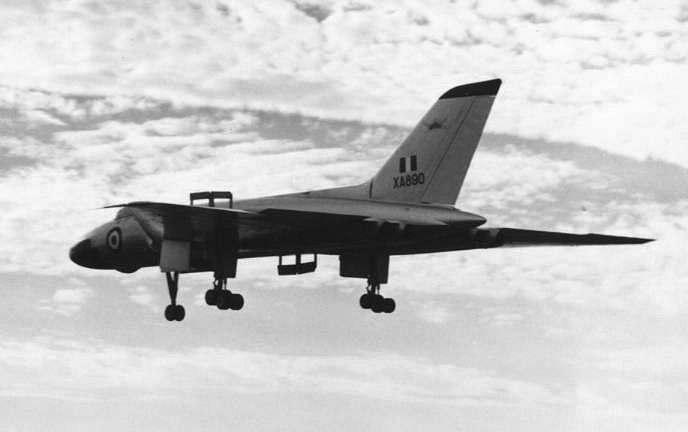
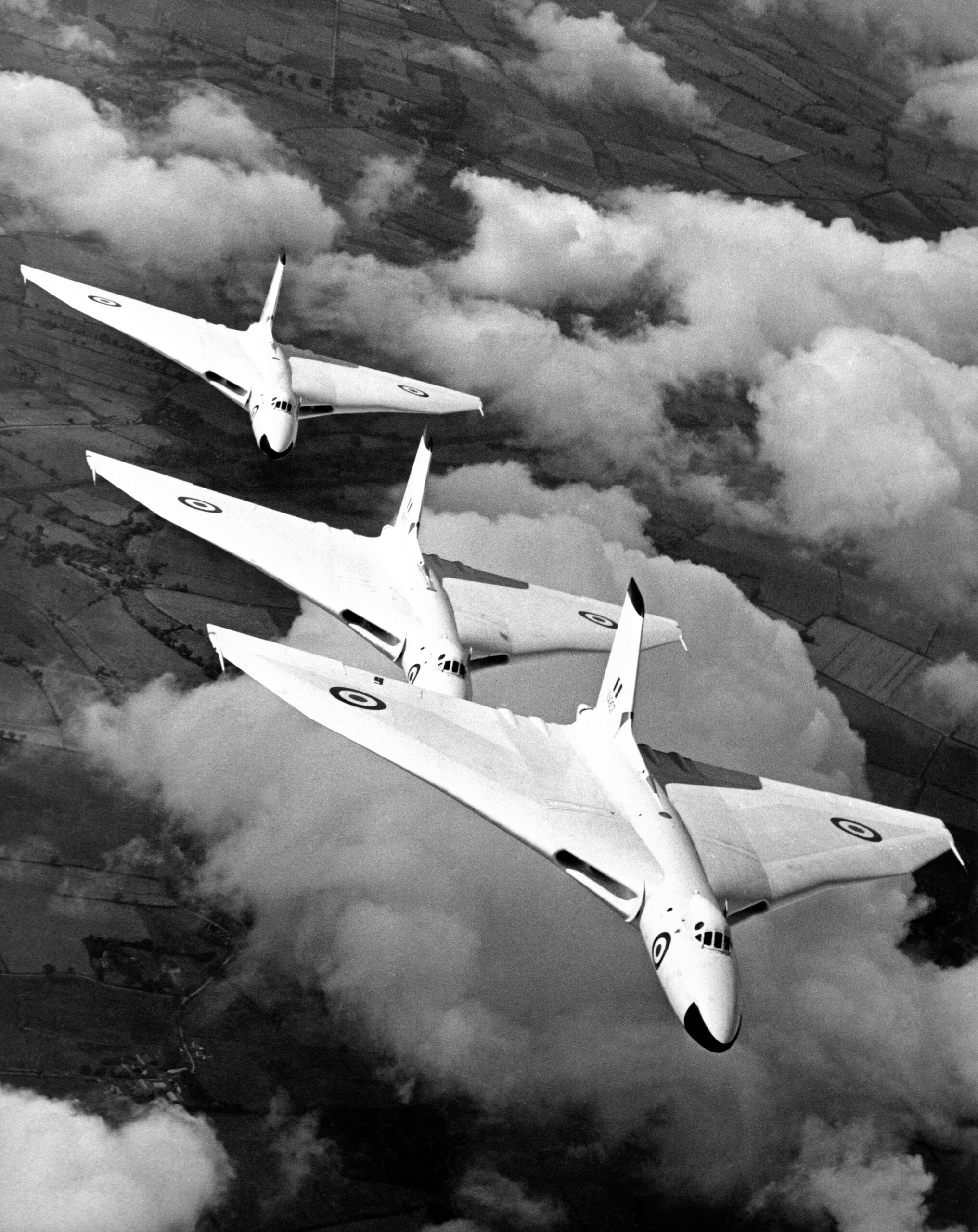
The Vulcan B.1 began reaching the RAF in 1956, with the first operational conversion unit, No. 230 OCU, forming to train crews, and No. 83 Squadron becoming the first front-line Vulcan squadron from 1957. The early aircraft wore an overall anti-flash white finish, a pale gloss scheme intended to reflect the heat and light of a nuclear detonation and protect the aircraft from its own weapon. National markings were toned down to pale pastel versions for the same reason.
To keep the B.1 useful as defences improved, a programme by Armstrong Whitworth between 1959 and 1963 brought twenty-eight aircraft up to a standard known as B.1A, adding a bulged tail cone packed with electronic countermeasures equipment, in-flight refuelling capability and improved radios. The B.1 and B.1A were not given the heavy structural strengthening that later allowed sustained low-level flying, and they were withdrawn relatively early, in the mid to late 1960s, as the more capable B.2 took over.
The B.2: bigger, stronger, more powerful
The definitive Vulcan was the B.2, deliveries of which began in 1960. It had the enlarged and revised wing, the much more powerful Olympus engines, a new and more capable electrical system, and a comprehensive electronic countermeasures fit in the tail. Many B.2s were wired to carry Blue Steel. The B.2 was the version that served longest and that flew in the Falklands, and it is the variant most people picture when they think of the Vulcan.
In total, Avro built 134 production Vulcans at Woodford between the mid-1950s and January 1965, made up of 45 B.1 aircraft and 89 B.2 aircraft, in addition to the two prototypes. It was never a large fleet by wartime standards, but each aircraft represented an enormous concentration of striking power.
Carrying the deterrent
For roughly a decade the Vulcan, with its V-bomber stablemates, was Britain’s nuclear deterrent. Crews stood Quick Reaction Alert, ready to get airborne within minutes of a warning, and the force trained relentlessly to be able to reach Soviet targets at short notice. The discipline of that role, the constant readiness, the dispersal exercises that scattered aircraft to airfields around the country, shaped a generation of RAF aircrew. The deterrent was meant never to be used. Its whole purpose was to make a Soviet attack unthinkable by guaranteeing a reply.
Blue Steel, Skybolt and the move to Polaris
Keeping a high-flying bomber credible against improving Soviet surface-to-air missiles was a constant struggle. One answer was the stand-off missile. The Blue Steel missile entered service in the early 1960s and let the Vulcan strike from distance. A longer-ranged American weapon, the air-launched Skybolt, was intended to follow and would have given the bombers far greater reach, but the United States cancelled Skybolt in December 1962, causing a serious political row between London and Washington. In its place Britain decided to move its deterrent to the Royal Navy, buying the submarine-launched Polaris missile. The handover took effect in 1969, when responsibility for the strategic nuclear deterrent passed from the RAF’s bombers to the Navy’s submarines, and the Blue Steel missile was withdrawn.
From high level to low level
The shooting down of an American U-2 spyplane over the Soviet Union in 1960 showed that even very high altitude was no longer a safe place to be against modern missiles. The whole basis of the V-force, flying over the top of the defences, was undermined. The response was to come down rather than go up. From the mid-1960s the Vulcan force switched to low-level penetration, flying fast and low to hide beneath enemy radar cover. This was punishing work for both crew and airframe, throwing the big delta around in the turbulent air near the ground, and it is one reason the B.2’s strengthened structure mattered so much. The aircraft swapped its gleaming anti-flash white for a disruptive grey and green camouflage suited to its new life down among the hills.
The other V-bombers: Valiant and Victor
The Vulcan never worked alone. It was one of three V-bombers ordered to spread the risk of so important a programme across more than one design. The Vickers Valiant came first and was the most conventional of the three, a simple swept-wing jet that entered service in 1955 and gave the RAF an immediate nuclear capability while the more advanced types matured. It was the Valiant, not the Vulcan, that actually dropped Britain’s first operational atomic and hydrogen test weapons, and a Valiant took part in the Suez campaign in 1956. The Valiant’s career was cut short when serious metal fatigue was found in its wing spars, and the type was grounded and scrapped in the mid-1960s.
The Handley Page Victor was the most futuristic looking of the trio, with a crescent-shaped wing whose sweep reduced from root to tip. Like the Vulcan it served as a bomber and then found a long second life, in the Victor’s case as the air-to-air tanker that made Operation Black Buck possible. Between them the three V-bombers gave Britain a credible deterrent for over a decade, and ordering all three meant that the failure of any single design, as happened with the Valiant, did not leave the country without a bomber. The Vulcan outlasted both of its stablemates in the bomber role and became the best remembered, helped in no small part by its dramatic shape and its later air show fame.
Operating the Vulcan: alert, dispersal and the bombing system
Day-to-day life in the V-force revolved around readiness. A proportion of the force stood Quick Reaction Alert, with armed aircraft and crews held at short notice so that bombers could be airborne before incoming missiles or aircraft could catch them on the ground. To survive a surprise attack the force also practised dispersal, scattering aircraft in small groups to airfields around the country so that they could not all be destroyed in one blow. Crews rehearsed the scramble start, in which all four engines were lit almost together to get the aircraft moving in the shortest possible time, a procedure that became a memorable part of any display.
Finding and hitting a target at night and in any weather, from high or low level, demanded sophisticated equipment for its day. The Vulcan carried a navigation and bombing system built around radar, descended from the wartime H2S, that let the crew identify aiming points and release weapons without seeing the ground. The two navigators in the rear cabin worked this system between them, one concentrating on getting the aircraft to the right place and the other on the radar picture and the bomb release. The air electronics officer, meanwhile, watched for enemy radar and missile activity and managed the jammers and countermeasures in the tail, a job that grew steadily more important as Soviet defences improved. The Vulcan also carried large airbrakes that opened from the rear fuselage, useful both for steep descents and for steadying the aircraft during display flying.
The handling that made the Vulcan such a spectacle was a by-product of its design. The huge wing gave low wing loading, so the aircraft could turn tightly and fly slowly without difficulty, and the powerful late engines gave a strong reserve of thrust. Pilots who flew it often spoke of how light and responsive it felt for its size. That combination is what allowed the famous rolling take-off, in which the aircraft lifted off and was rolled gently as it climbed away, and the steep wing-overs that became staples of its display routine in the years after it left front-line service.
Avro Vulcan B.2 specifications
The figures below are for the Vulcan B.2, the most numerous and longest-serving version. Performance figures for aircraft of this era vary between sources and with weight, fuel and engine standard, so they are best read as representative rather than absolute.
| Role | Strategic bomber, later low-level strike and maritime radar reconnaissance |
|---|---|
| Crew | Five (two pilots, two navigators, one air electronics officer) |
| First flight (prototype) | 30 August 1952 |
| Entered RAF service | 1956 (B.1); B.2 from 1960 |
| Number built | 134 production aircraft (45 B.1, 89 B.2), plus 2 prototypes |
| Length | Approx. 99 ft 11 in (30.5 m) |
| Wingspan | 111 ft 0 in (33.8 m) |
| Height | Approx. 27 ft 1 in (8.3 m) |
| Engines | Four Bristol Siddeley Olympus 201 or 301 turbojets |
| Thrust (Olympus 301) | Approx. 20,000 lb each |
| Maximum speed | About Mach 0.92 (around 625 mph) at altitude |
| Service ceiling | In the region of 55,000 to 60,000 ft |
| Range | About 4,000 nautical miles, far greater with air-to-air refuelling |
| Conventional bomb load | Up to 21 x 1,000 lb bombs (around 21,000 lb) |
| Nuclear weapons | Free-fall bombs (Blue Danube, Yellow Sun, WE.177) or the Blue Steel stand-off missile |
| Retired from RAF | 1984 as a bomber and tanker, with RAF display flying continuing until 1993 |
Operation Black Buck: the Vulcan goes to war
A bomber with one campaign
For all its years of readiness, the Vulcan never dropped a weapon in anger during the Cold War, which was exactly the point. Its only combat came right at the end of its RAF career, and in a place nobody had planned for. When Argentina invaded the Falkland Islands in April 1982, the nearest British airfield able to mount an attack was on Ascension Island in the middle of the Atlantic, a colossal distance from the islands. The job of striking the airfield at Port Stanley fell, improbably, to the ageing Vulcan, an aircraft built to bomb Moscow from England, now asked to reach a target nearly 4,000 miles out across open ocean.
The longest raid
The series of missions was called Operation Black Buck. To get a single Vulcan to Port Stanley and back from Ascension meant air-to-air refuelling on a scale never attempted before. The Vulcan’s own refuelling system, long unused, had to be hurriedly brought back to working order, and a fleet of Handley Page Victor tankers was assembled to pass fuel forward in a relay. As many as eleven Victor tankers supported a single Vulcan on the outbound leg, refuelling the bomber and each other in a carefully choreographed chain that grew shorter as the formation pushed south, each tanker turning for home once it had given away what it could spare.
The first mission, Black Buck 1, flew on the night of 30 April into 1 May 1982. The reserve aircraft, Vulcan B.2 XM607, captained by Flight Lieutenant Martin Withers, took over when the primary aircraft developed a fault, and pressed on to the target. The round trip covered close to 6,600 nautical miles and took around 16 hours, the longest-ranged bombing raid that had ever been flown at that point. XM607 dropped a stick of twenty-one 1,000 lb bombs diagonally across the runway, aiming to guarantee at least one hit on the strip.
What Black Buck actually achieved
One bomb struck the runway and cratered it, while the rest fell across the airfield area. The single runway hit did not put Port Stanley out of action for long. Argentine engineers patched the crater within a day or so, and the strip remained usable by transport aircraft such as the C-130 Hercules. The Vulcan’s bombs were never going to keep a runway closed indefinitely with that kind of attack.
The deeper value of the raid is debated, and it is fair to lay the arguments side by side rather than pick one. Supporters point out that the attack showed the Argentine command that British bombers could reach the islands and, by extension, the Argentine mainland, which is often credited with encouraging Argentina to hold fighters back for home defence rather than commit them over the Falklands. Critics note that the physical damage was slight for an enormous effort, that the runway stayed open to transports, and that the resources involved were huge. Both points contain truth. What is beyond dispute is the sheer airmanship and logistics involved in flying a bomber that far and bringing it home.
The later missions
Several further Black Buck sorties followed over the weeks of the campaign, some aimed again at the airfield with bombs and some at Argentine radars, using American-supplied AGM-45 Shrike anti-radiation missiles fitted to the Vulcan for the purpose. The anti-radar missions had mixed results, damaging some secondary radars. Not every planned mission was completed, and at least one Vulcan was forced to divert to Rio de Janeiro in Brazil after a refuelling problem, an awkward episode that ended with the aircraft and crew interned briefly and then released. Taken together, the Black Buck raids were the Vulcan’s swansong, an extraordinary improvisation that pushed a Cold War bomber to do something its designers never imagined.
Variants and other roles
Beyond the basic bomber marks, the Vulcan took on several other shapes during its life. A number of B.2 aircraft were converted to a maritime radar reconnaissance role, sometimes listed as the B.2(MRR) or SR.2, using the aircraft’s range and powerful radar to patrol vast areas of ocean after the dedicated reconnaissance need arose. Right at the end of its service, with the Falklands campaign straining the RAF’s tanker fleet, six Vulcans were hurriedly converted into air-to-air tankers themselves, designated K.2, by fitting a refuelling hose unit in the tail in place of the electronic countermeasures equipment. These stop-gap tankers filled a gap until more Victors and the new VC10 and TriStar tankers were available.
The major versions can be summarised as follows: the B.1, the original production bomber; the B.1A, B.1 aircraft updated with extra electronic countermeasures and refuelling; the B.2, the definitive enlarged and re-engined bomber; the B.2(MRR) maritime reconnaissance conversion; and the K.2 tanker. The two prototypes and the Avro 707 research aircraft sit outside this list as development machines rather than service types.
Retirement and the Vulcan Display Flight
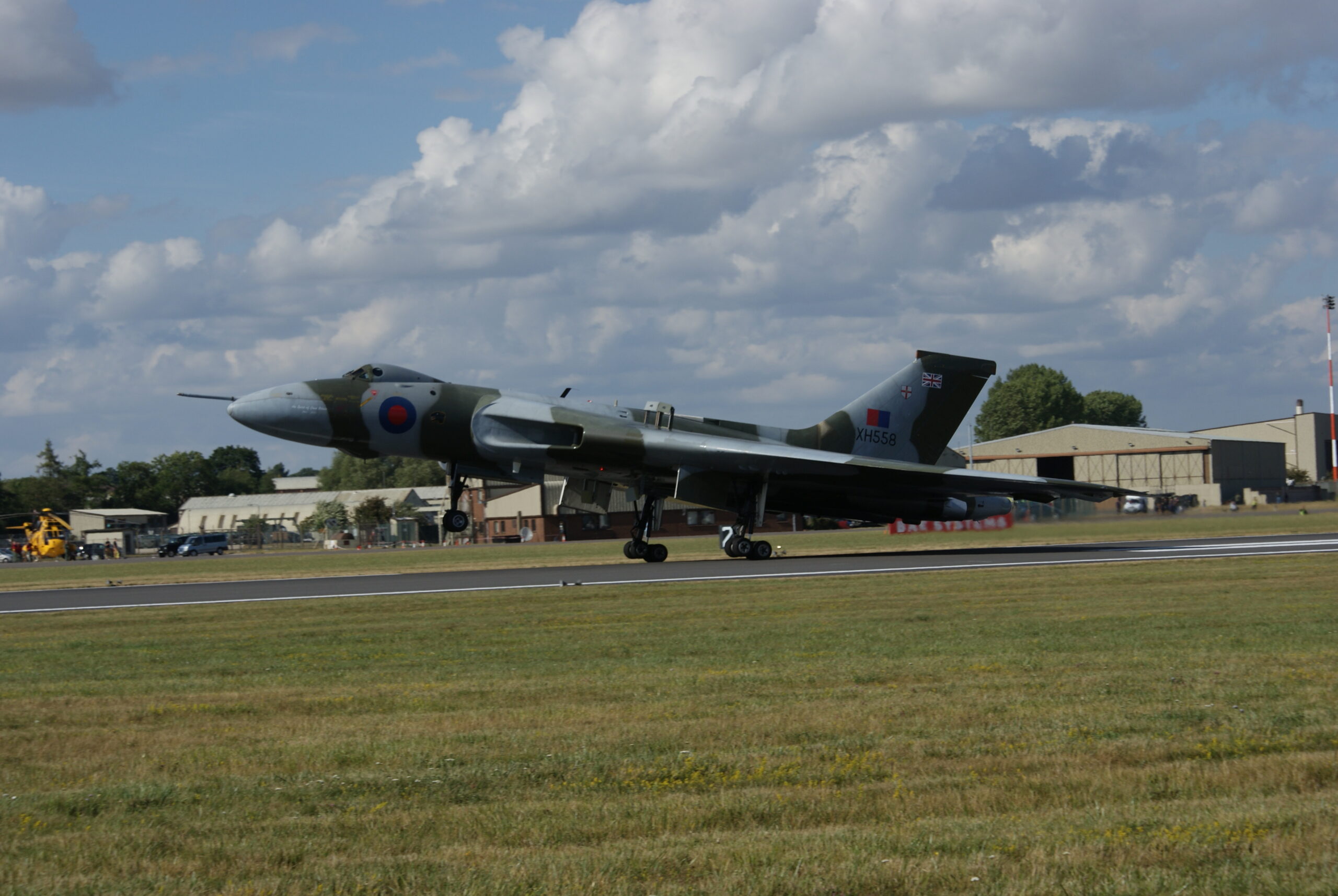
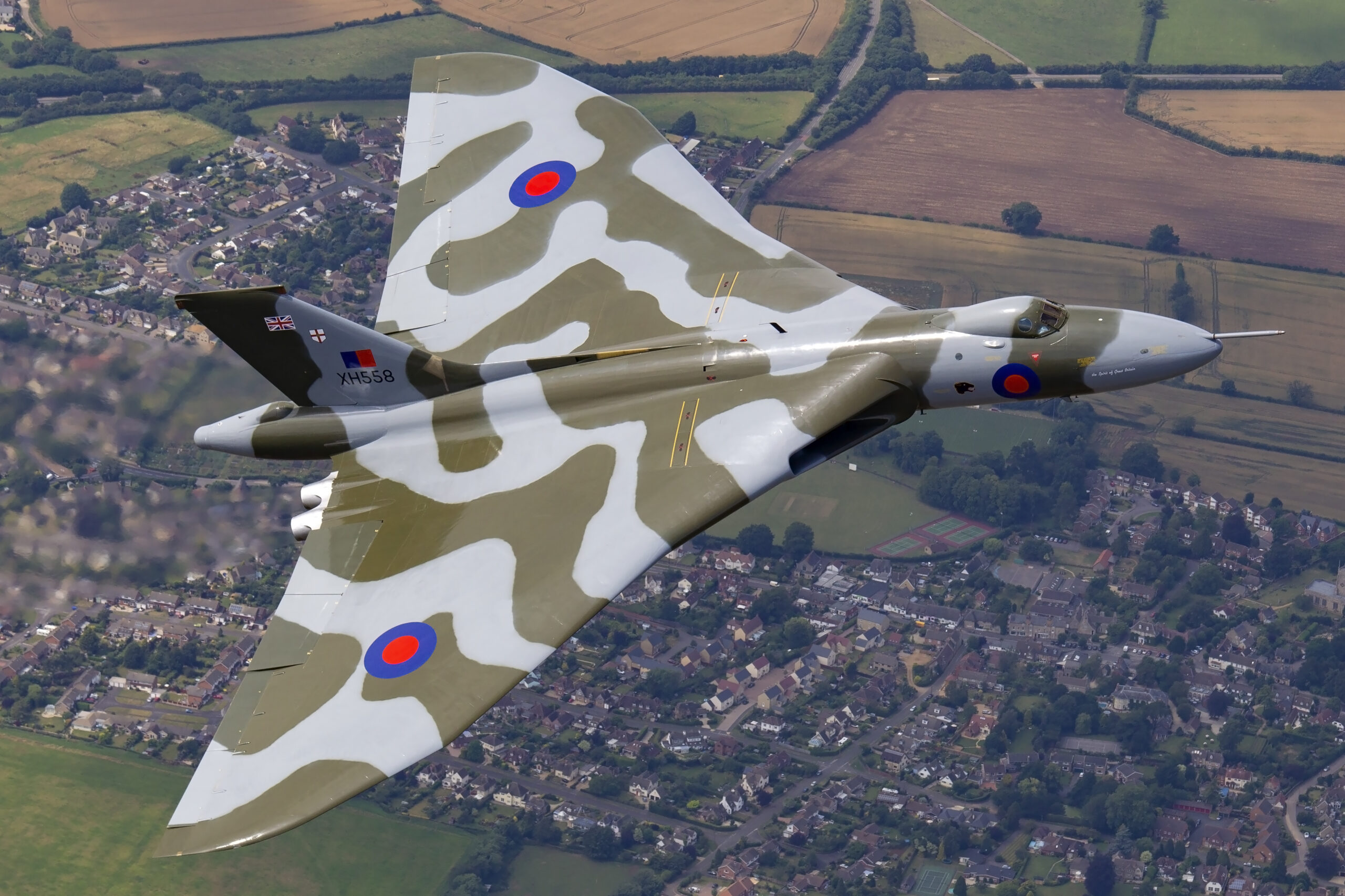
Almost every Vulcan photograph in circulation shows either XH558 or a museum airframe, and the two are routinely mixed up. Picture editors sourcing Vulcan images will find our guide to aviation picture research a useful check.
Where the survivors are today
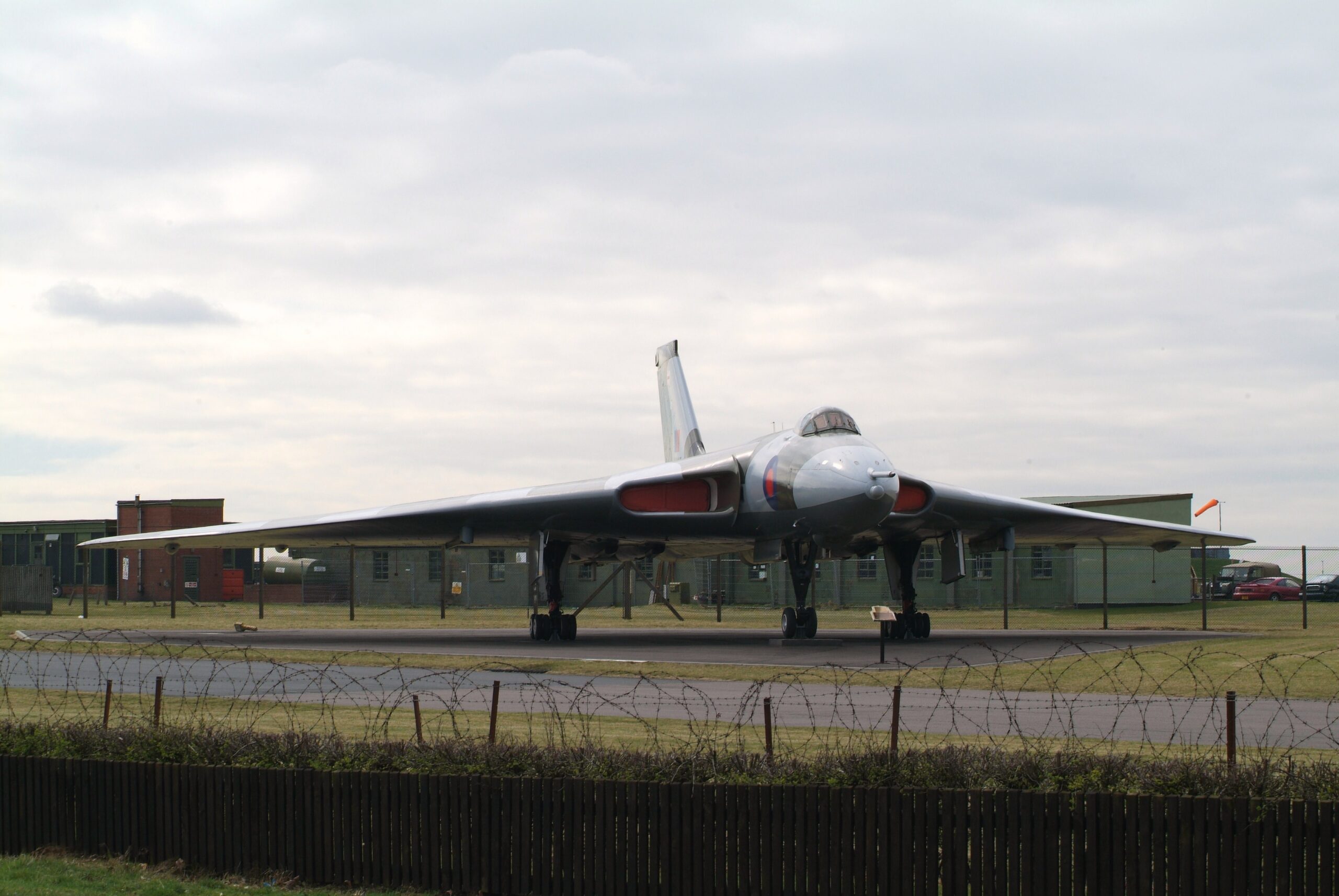
No Vulcan is airworthy today, but a good number survive, and three are kept in running condition: XL426 and XM655 perform fast taxi runs, while XH558 carries out static engine ground runs even though they no longer fly. For anyone who wants to photograph one, several are accessible at museums and former airfields around the United Kingdom.
XH558, the last to fly
The most famous survivor is XH558. After the Display Flight closed, this aircraft was bought by enthusiasts and, through the Vulcan to the Sky Trust and an enormous fundraising and engineering effort, restored to flight. It flew again on 18 October 2007, becoming the only airworthy Vulcan in the world, and gave displays every season from 2008 to 2015. Rising costs and the withdrawal of essential technical support from the companies that underpinned its airworthiness brought the flying to an end, and XH558 made its final flight on 28 October 2015, more than 55 years after it first flew. It is now kept in taxiable condition, based at Doncaster Sheffield Airport, which is reopening, where Vulcan to the Sky runs public engine-run events, where it remains a focus for the people who saved it.
XL426 at Southend, and the closest thing left to a Vulcan in motion
XL426 first flew from Woodford on 23 August 1962 and was delivered to the RAF three weeks later, on 13 September, to 83 Squadron. It spent the 1970s with 617 Squadron and finished its service career with 50 Squadron at Waddington. It was one of the two aircraft of the Vulcan Display Flight, giving its last RAF display on 14 June 1986, and it flew into Southend on 19 December that year.
Since 1993 it has been owned and maintained by the Vulcan Restoration Trust, a registered charity in England and Wales, number 1058111, run by volunteers at London Southend Airport. They keep XL426 in live ground running condition and open it to the public through the year, and what they can offer is not available anywhere else.
The fast taxi runs. At the Trust’s Summer and Twilight Taxi-Run events the aircraft is run up in front of spectators and then accelerated down the full length of the Southend runway under its own power. It is not flight and nobody pretends it is, but a delta with a 111 foot wingspan moving at speed on a live runway is a great deal closer to the real thing than a static airframe on a plinth, and it is the reason these events sell out.
The howl. This is the sound people travel for. It is a by-product of the intake design rather than anything Avro set out to create, and it appears at certain power settings as air passes over the intake lips. It is loud, it is unmistakable, and no recording has ever done it justice. If you have only ever heard a Vulcan on video, hearing four Olympus engines wind up in the open is a different experience entirely.
The brake parachute, if you are lucky. Be clear that this one is rare rather than routine. The Trust reported XL426 streaming her brake parachute at the Summer Taxi-Run on 26 June 2021, and said it was the first time in fifteen years, the previous occasion having been 12 August 2006. It has appeared at taxi runs since, but it is not a fixture and it is not something to travel expecting. When it does happen it is the picture of the day.
Events, dates and tickets are on the Trust’s own site at avrovulcan.com, and the taxi runs in particular sell out well in advance. As a charity run by volunteers, the Trust funds the aircraft’s upkeep largely through these events and its membership.
XM655 at Wellesbourne Mountford
XM655, one of the very last Vulcans built and delivered in 1964, lives at Wellesbourne Mountford in Warwickshire, maintained by its own preservation society and likewise run up to taxiing speed at open days. Watching either of these aircraft come alive, even on the ground, gives a powerful sense of what the howling Olympus engines meant to those who served on them.
The static survivors
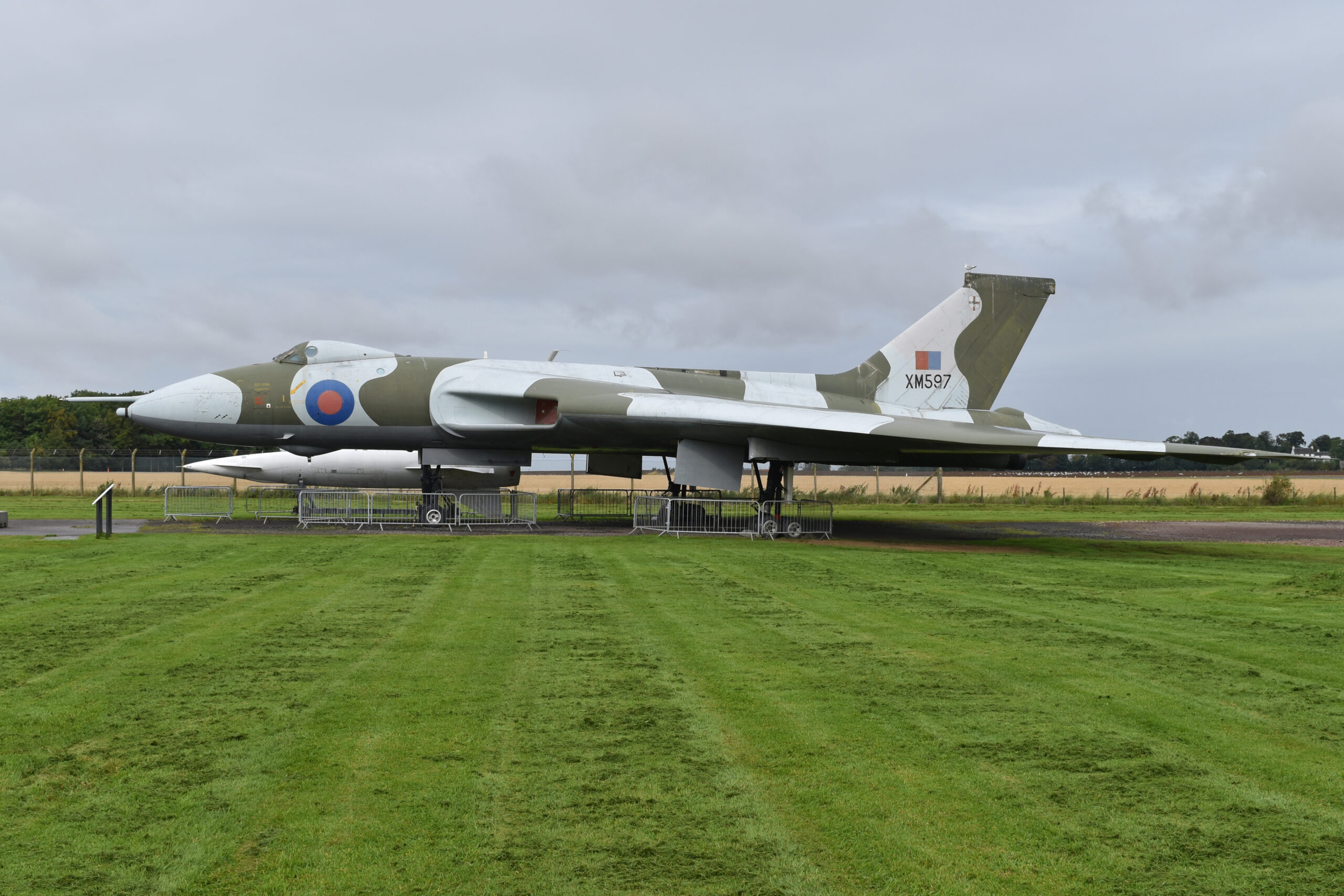
Beyond the three taxiable machines, complete Vulcans are displayed indoors and out at museums across Britain, including the Royal Air Force Museum site at Cosford, the Imperial War Museum at Duxford, the Midland Air Museum, the Newark Air Museum, the City of Norwich Aviation Museum and others, with a small number preserved overseas. Because the survivors are scattered, it is worth checking with each museum before travelling, as access, opening times and whether an aircraft is under cover all vary. The Piemags archive galleries hold images of Vulcans gathered over many years of photographing these aircraft at airfields and shows, and the wider gallery collection covers the V-force and the air show scene that kept the Vulcan in the public eye.
Legacy: why the Vulcan still matters
The Vulcan’s importance runs deeper than its looks. It was a bold piece of engineering that took Britain straight into the era of the large delta wing, and the knowledge gained fed into later projects. Its Olympus engine grew into the powerplant of Concorde, linking a nuclear bomber to the most glamorous airliner ever flown. As one third of the V-force it carried the country’s nuclear deterrent through some of the tensest years of the Cold War, a job whose success was measured entirely by the fact that it was never used.
The aircraft also occupies an unusual place in public affection. Long after the strategic role ended, the Vulcan became a star of the British air show circuit, and the campaign to keep XH558 flying turned into a national story of its own, sustained by tens of thousands of small donations. Part of that pull is the noise, the so-called Vulcan howl that the engines produced at certain power settings, a sound that drew people to airfield fences for one more pass. The Vulcan belongs in the same conversation as other British icons such as the Supermarine Spitfire and Avro’s own wartime masterpiece, the Avro Lancaster, aircraft that long outlived their service careers in the public imagination.
For the photographer, the Vulcan is a reminder of why these machines are worth recording while there is still a chance. The flying days are over, but the surviving aircraft can still be captured on the ground in good light, and the techniques that suit fast, dark, large jets, covered in our guide to photographing fast jets, apply just as well to a taxiing delta as to a modern fighter. We have written before about why aviation history still matters, and the Vulcan is one of the clearest cases for it. Images of these aircraft, both archive and modern, are available to license through the Piemags licensing page.
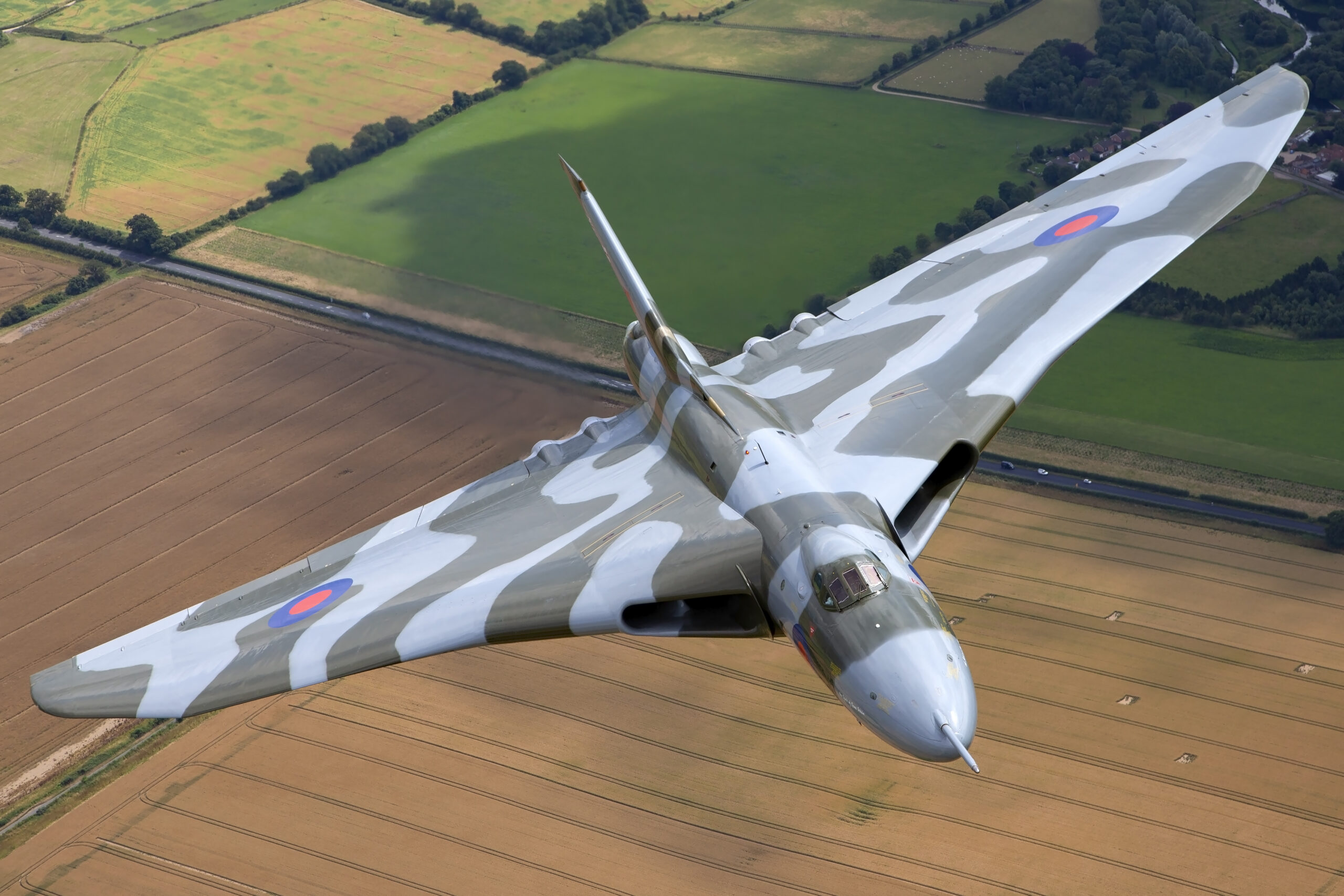
The Vulcan’s longest operational sorties were flown at the very end of its bombing career. Our account of the Falklands air war of 1982 covers the Black Buck raids, what they cost in tankers and what the single bomb on the runway actually achieved.
Frequently asked questions
When did the Avro Vulcan first fly?
The first prototype, serial VX770, made its maiden flight from Woodford near Manchester on 30 August 1952. The Vulcan B.1 entered RAF service in 1956, and the improved B.2 followed from 1960.
How many Avro Vulcans were built?
Avro built 134 production Vulcans, made up of 45 of the early B.1 mark and 89 of the definitive B.2, along with two prototypes. Production ran from the mid-1950s until January 1965.
What was Operation Black Buck?
Operation Black Buck was a series of very long-range bombing missions flown by Vulcans during the 1982 Falklands War, against targets on the Falkland Islands. Flying from Ascension Island and refuelled in the air many times by Victor tankers, each round trip covered close to 6,600 nautical miles and lasted around 16 hours, the longest-ranged bombing raids flown up to that time. The first raid, Black Buck 1, put one bomb into the runway at Port Stanley.
Why was the Vulcan retired?
The Vulcan’s nuclear role had passed to the Royal Navy’s Polaris submarines in 1969, and by the early 1980s the airframes were old and expensive to maintain while newer aircraft covered its tasks. The RAF withdrew the type from service in 1984, shortly after its brief combat use in the Falklands. A few aircraft were kept flying for display until the early 1990s.
Are there any Avro Vulcans still flying?
No. The last airworthy Vulcan, XH558, made its final flight on 28 October 2015. Three aircraft, XH558, XL426 and XM655, are kept in running condition, though only XL426 and XM655 taxi under their own power and can still run their engines and move under their own power, but none are permitted to fly. Several more are preserved as static exhibits in museums.
What is the Vulcan howl?
The howl is a distinctive sound the Vulcan’s Olympus engines made at certain power settings, particularly during a rolling take-off or a climbing turn, caused by airflow through the engine intakes. It became one of the aircraft’s signatures and was a major part of its appeal at air shows in its later years.
What connects the Vulcan and Concorde?
Both were powered by versions of the Bristol Olympus engine. The Olympus was first developed for the Vulcan and then, in a much more powerful afterburning form, went on to power Concorde, which is why two very different British aircraft share an engine ancestry.
How many Vulcans survive and can you still see one fly?
Around nineteen complete Vulcans survive in museums and collections, but none is currently airworthy. XH558, the last to fly, was grounded in 2015, so today the Vulcan can be seen on the ground and occasionally taxiing under its own power, but not in the air.
