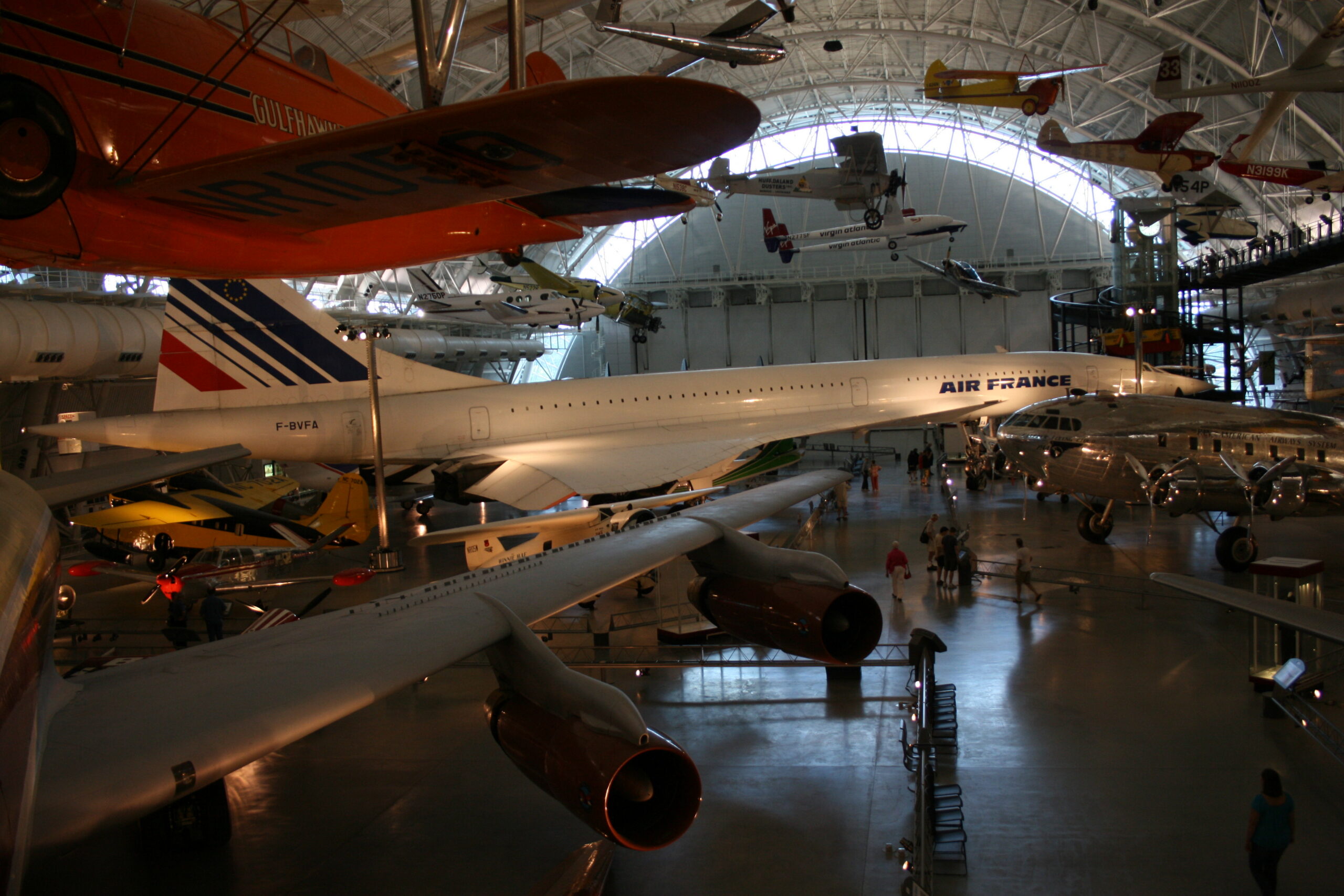
No other airliner has ever made the rest of the sky look slow. Concorde was the Anglo-French supersonic airliner that flew fare-paying passengers across the Atlantic at Mach 2, from its entry into service in 1976 until its retirement in 2003. For 27 years a thin white delta crossed the Atlantic at twice the speed of sound, carrying a hundred passengers in the stratosphere while ordinary jets plodded along seven miles below. Concorde was a national project for two countries, a feat of engineering that has still not been repeated in scheduled service, and a commercial idea that never quite added up. This is the full story of how it came to be, how it flew, why it stopped, and where you can stand beside one today.
What this guide covers
- Origins: two countries chasing the same dream
- Designing the impossible
- On the flight deck
- Sonic boom and the routes Concorde could fly
- Into the air: the prototypes and the long road to service
- Entry into service and the battle for New York
- Flying at the edge of space
- The economics, and the second life of a money-losing machine
- The fleet: twenty aircraft, and what became of them
- The Paris crash and its aftermath
- Retirement
- Where to see a Concorde today
- The Soviet rival and the American non-starter
- Legacy
- Frequently asked questions
Origins: two countries chasing the same dream
The idea of a supersonic transport, or SST, was born in the optimism of the 1950s, when the jet airliner was brand new and progress seemed to have no ceiling. Aircraft had only just gone faster than sound in level flight, and engineers on both sides of the Channel began to ask whether the same leap could be made by an aeroplane carrying fare-paying passengers rather than a test pilot.
In Britain, the Supersonic Transport Aircraft Committee was set up in 1956 to study the problem. The work converged on a slender delta design, an aircraft shape that promised efficient flight at high speed. In France, Sud Aviation was developing very similar thinking around a design it called the Super-Caravelle. By the early 1960s both countries had reached roughly the same conclusions about what a supersonic airliner should look like, and both had discovered the same uncomfortable truth: the cost of developing one alone was enormous, probably too large for a single national budget to carry.
The political answer was collaboration. On 29 November 1962 Britain and France signed a formal treaty to share the cost and risk of building a supersonic airliner. The agreement was unusual in two respects. It was solemnised as an international treaty between governments rather than a simple commercial contract, and it deliberately contained no break clause that would let either side walk away cheaply. That second feature mattered enormously later, because when the project ran far over budget and politicians in both countries had second thoughts, the treaty held them to the work. The name Concorde, meaning agreement or harmony, was chosen to mark the partnership. For a period the British government spelled it without the final “e”, and the two spellings became a small diplomatic irritation before the French form was settled on.
The industrial partners were Sud Aviation in France, which later became part of Aerospatiale, and the British Aircraft Corporation, or BAC, on the British side. The engines were a parallel Anglo-French effort between Bristol Siddeley, later absorbed into Rolls-Royce, and the French firm Snecma. Two assembly lines were built, one at Toulouse in France and one at Filton near Bristol, and components were shared back and forth across the Channel. It was a really binational machine, and that doubling of effort was one of the reasons it cost so much.
Designing the impossible
Building an aircraft that could cruise at twice the speed of sound for hours at a time, day after day, in airline service, threw up problems that the test aircraft of the 1950s had only touched. A fighter could dash to Mach 2 for a couple of minutes. Concorde had to live there.
The ogival delta wing
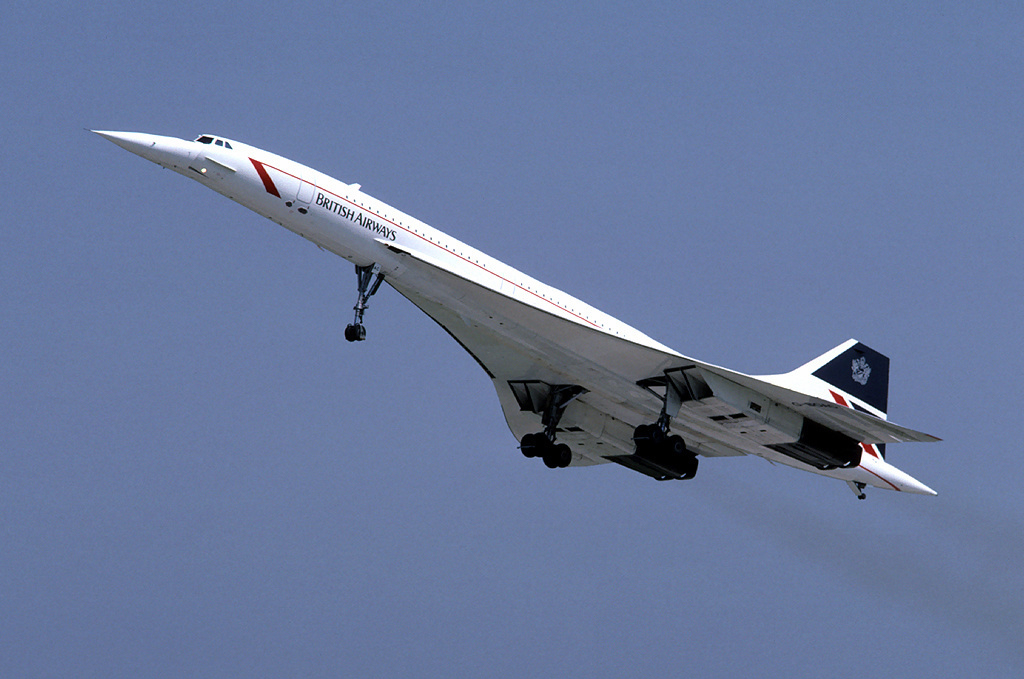
The most obvious feature of Concorde is its wing, a slender delta with a curved, tapering leading edge known as an ogival or ogee shape. This planform was a careful compromise. A thin delta wing produces little drag at high speed, which is essential for efficient supersonic cruise, but a conventional thin wing would give terrible handling at the low speeds needed for take-off and landing. The ogival delta solved this by generating powerful vortices over its upper surface at high angles of attack. Those vortices created extra lift just when the aircraft was slow and nose-high on approach. It is why Concorde came in to land at such a steep, nose-up attitude, and why it never needed the elaborate flaps and slats of a normal airliner wing.
The drooping nose
That nose-high landing attitude created a practical problem. With the long pointed nose needed for low drag, the pilots would have been staring at sky during the approach and would not have been able to see the runway at all. The answer was the famous droop nose. The entire nose section, together with a retractable visor that protected the windscreen at speed, could be lowered hydraulically. It sat fully up and streamlined for supersonic cruise, drooped to five degrees for taxiing and take-off, and drooped fully to around twelve and a half degrees for landing, giving the crew a clear view forward. It is one of the most recognisable features of any aircraft ever built, and it existed for the simple reason that a streamlined shape and a visible runway could not be had at the same time.
Heat, aluminium and a stretching airframe
At Mach 2 the friction of the air against the skin heats the airframe considerably. The nose grew hottest, reaching well over 100 degrees Celsius, and the whole structure warmed through during cruise. Concorde was built largely from a high-strength aluminium alloy that could cope with these temperatures while remaining light, rather than the titanium and steel that an even faster aircraft would have demanded. The heat made the airframe expand in flight. Concorde grew measurably longer at cruise, by something in the region of 15 to 25 centimetres, and the stretch was visible inside as a gap that opened up on the flight deck between panels. Crews famously marked the moment by wedging a cap into the gap on the last flights, where the warm metal would hold it in place until the aircraft cooled and shrank back on the ground.
Power: the Olympus 593 with reheat
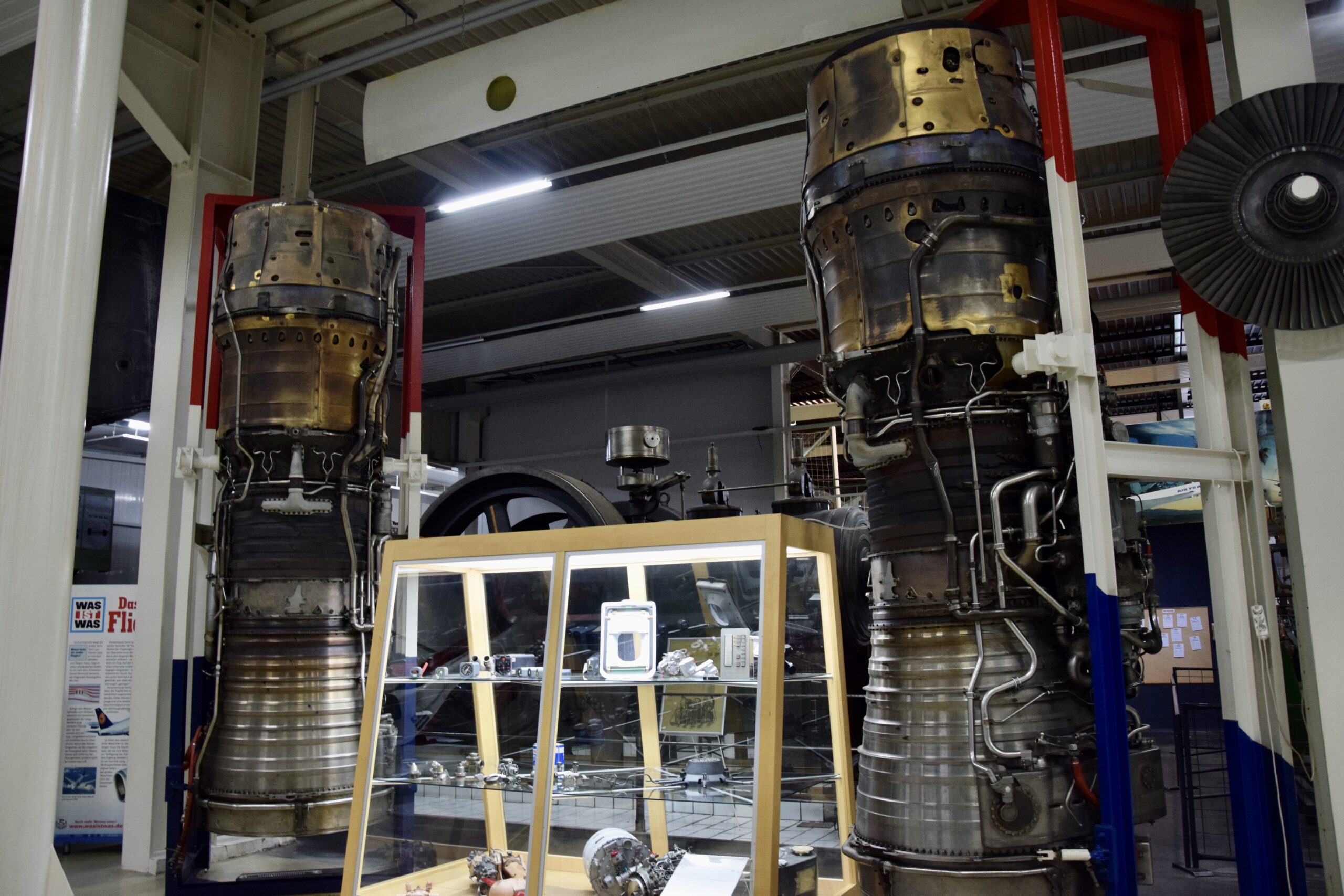
Concorde was driven by four Rolls-Royce/Snecma Olympus 593 turbojets, a development of an engine that had begun life in the Avro Vulcan bomber. Pure turbojets were chosen rather than the high-bypass turbofans that make modern airliners quiet and economical, because turbojets work better at very high speed. Each engine in its final Mk 610 form produced in the region of 31,000 pounds of thrust dry, rising to around 38,000 pounds with reheat, also called afterburning, where extra fuel is burned in the jet pipe.
Reheat was used for take-off and again to push the aircraft through the area around the speed of sound, where drag rises sharply. Once safely supersonic and climbing, the reheat was switched off and Concorde cruised on dry thrust alone, a point its defenders made often: it spent most of its flight without the afterburners lit. The engine intakes were a piece of engineering as clever as the wing. At Mach 2 the air has to be slowed to subsonic speed before it reaches the engine, and Concorde’s variable intake ramps did this automatically, managing shock waves inside the intake. The intake system was so important that it was sometimes said to contribute a large share of the thrust at cruise.
Fuel as ballast
As any aircraft accelerates through the sound barrier, the point at which lift effectively acts, the centre of pressure, moves rearwards. Left uncorrected this would have made the aircraft want to pitch nose-down. Rather than fight it constantly with the controls, which would have wasted energy as drag, Concorde pumped fuel between tanks at the front and rear of the aircraft to shift its centre of gravity backwards to match. The fuel was both propellant and movable ballast, and the careful trimming of the aircraft by moving fuel around was part of the routine of every supersonic flight. The fuel did another job too, acting as a heat sink that absorbed some of the warmth soaking into the airframe and systems.
Brakes, tyres and the undercarriage
Getting a heavy aircraft to accelerate to take-off speed on a normal runway, and to stop again if a take-off had to be abandoned at the last moment, was a serious problem at Concorde’s weights and speeds. The aircraft was a pioneer of carbon brakes, which could absorb the enormous amount of heat generated in a rejected take-off and were lighter than the steel brakes of the day. Carbon brake technology developed for Concorde and other programmes of the period went on to become standard across the airline industry. The tyres had to cope with very high take-off and landing speeds, and tyre integrity became a matter of life and death, a point driven home cruelly in the aircraft’s only accident. The undercarriage itself was tall, to give the delta wing the steep angle it needed on rotation, and the nose leg retracted forwards so that it could be lowered by airflow even if hydraulic pressure was lost.
On the flight deck
Concorde was flown by a crew of three: two pilots and a flight engineer. That third crew member was central to operating the aircraft, because Concorde demanded constant management of systems that a modern airliner automates. The flight engineer watched over the engines and the intakes, and above all managed the fuel, moving it between tanks to keep the centre of gravity in the right place as the aircraft accelerated, cruised and slowed down. Keeping the trim correct by pumping fuel fore and aft was a continuous task throughout a supersonic flight rather than a single setting.
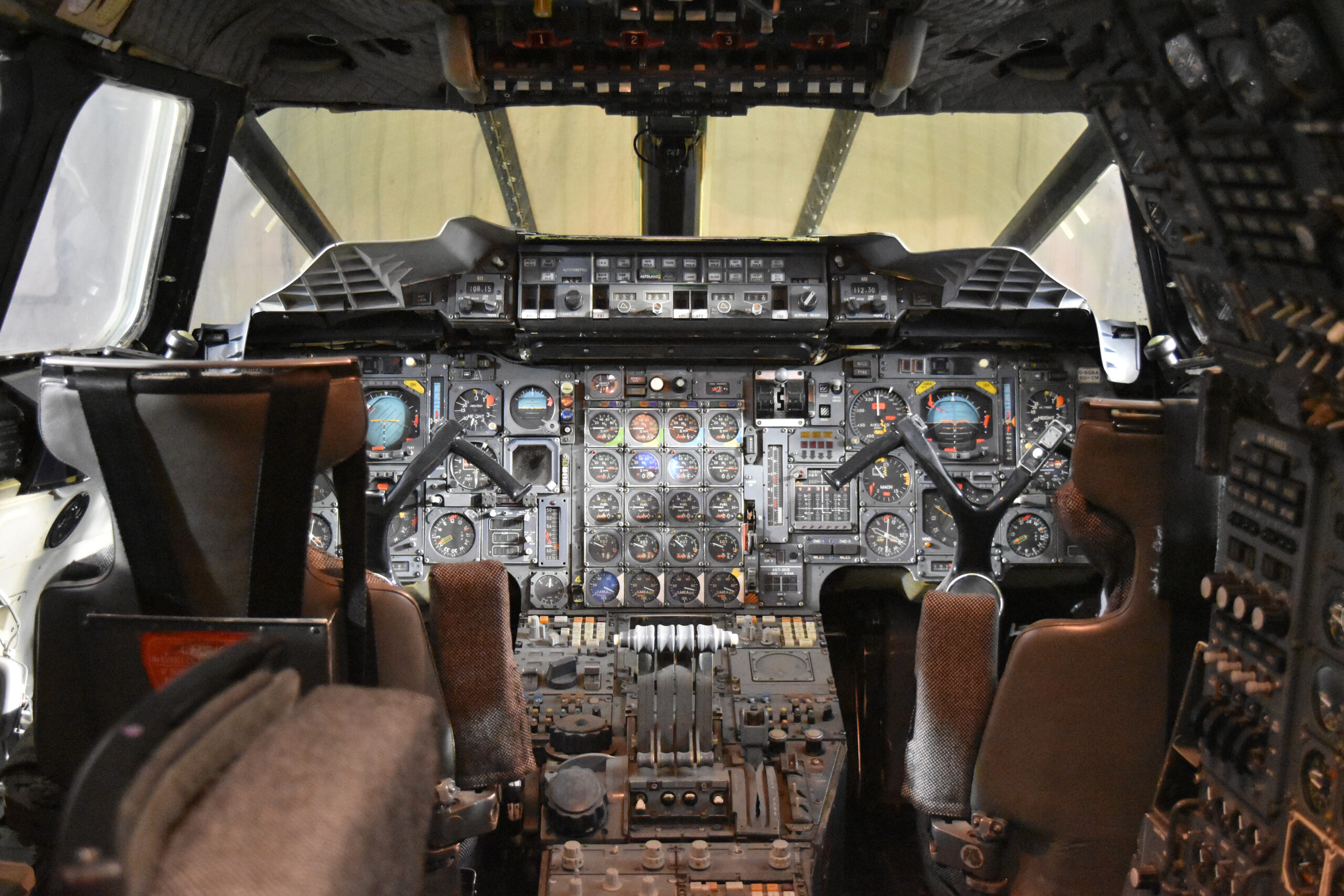
The aircraft used analogue systems of its era rather than the digital glass cockpits that came later, and it had an early form of autopilot and autothrottle, but flying it well was a skilled, hands-on business. Pilots had to manage the transition through the sound barrier, the climb to ever higher altitudes as fuel burned off, and an approach and landing flown at a steep angle and a precise speed, with the delta wing behaving quite unlike a conventional airliner’s. Crews regarded a posting to Concorde as one of the most prized in either airline, and the training was correspondingly demanding. Because so few aircraft existed and they flew a limited route network, the pool of qualified Concorde pilots and engineers was always small, which added to the cost of keeping the type in service.
Sonic boom and the routes Concorde could fly
Concorde’s greatest commercial limitation was a consequence of physics. Any aircraft flying faster than sound drags a pair of pressure waves along with it, which reach the ground as a sudden double bang, the sonic boom. The boom is not a single event at the moment an aircraft “breaks” the sound barrier but a continuous carpet of noise that follows the aircraft along its whole supersonic track, audible in a broad corridor beneath the flight path.
By the time Concorde entered service, public and political opposition to sonic booms over land had hardened into firm rules. Many countries simply would not allow supersonic flight over their territory, and that closed off a great many of the routes that might otherwise have made Concorde pay. The aircraft could only realise its speed advantage where it could go supersonic, which in practice meant over the sea. That is the deeper reason the North Atlantic became its home: it was a long, busy, high-value route that ran almost entirely over water, where the boom fell on the ocean and not on towns. Promising overland routes, by contrast, had to be flown subsonically, at which point Concorde lost its whole reason for existing while still burning fuel at a supersonic rate. The boom problem, more than any single factor, confined Concorde to a handful of routes and is the same obstacle that every would-be supersonic airliner since has had to confront.
Into the air: the prototypes and the long road to service
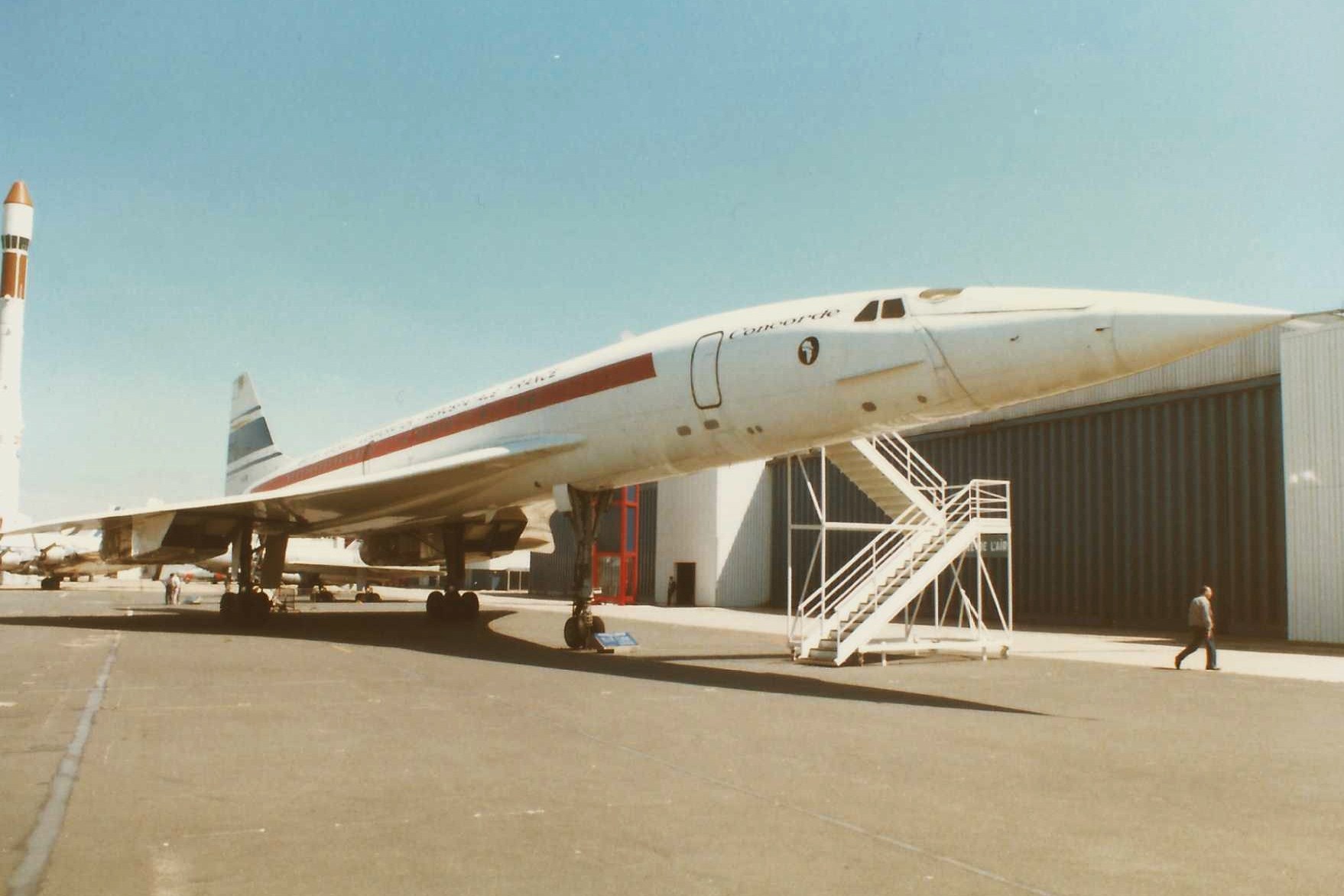
Two prototypes were built, one on each assembly line. The first to fly was the French-assembled prototype 001, registered F-WTSS, which lifted off from Toulouse on 2 March 1969 in the hands of chief test pilot Andre Turcat. The British-assembled prototype 002, registered G-BSST, followed on 9 April 1969, flown by Brian Trubshaw from Filton to the long runway at RAF Fairford, which became the British flight test base. Both prototypes were shown to the public together at the Paris Air Show in June 1969.
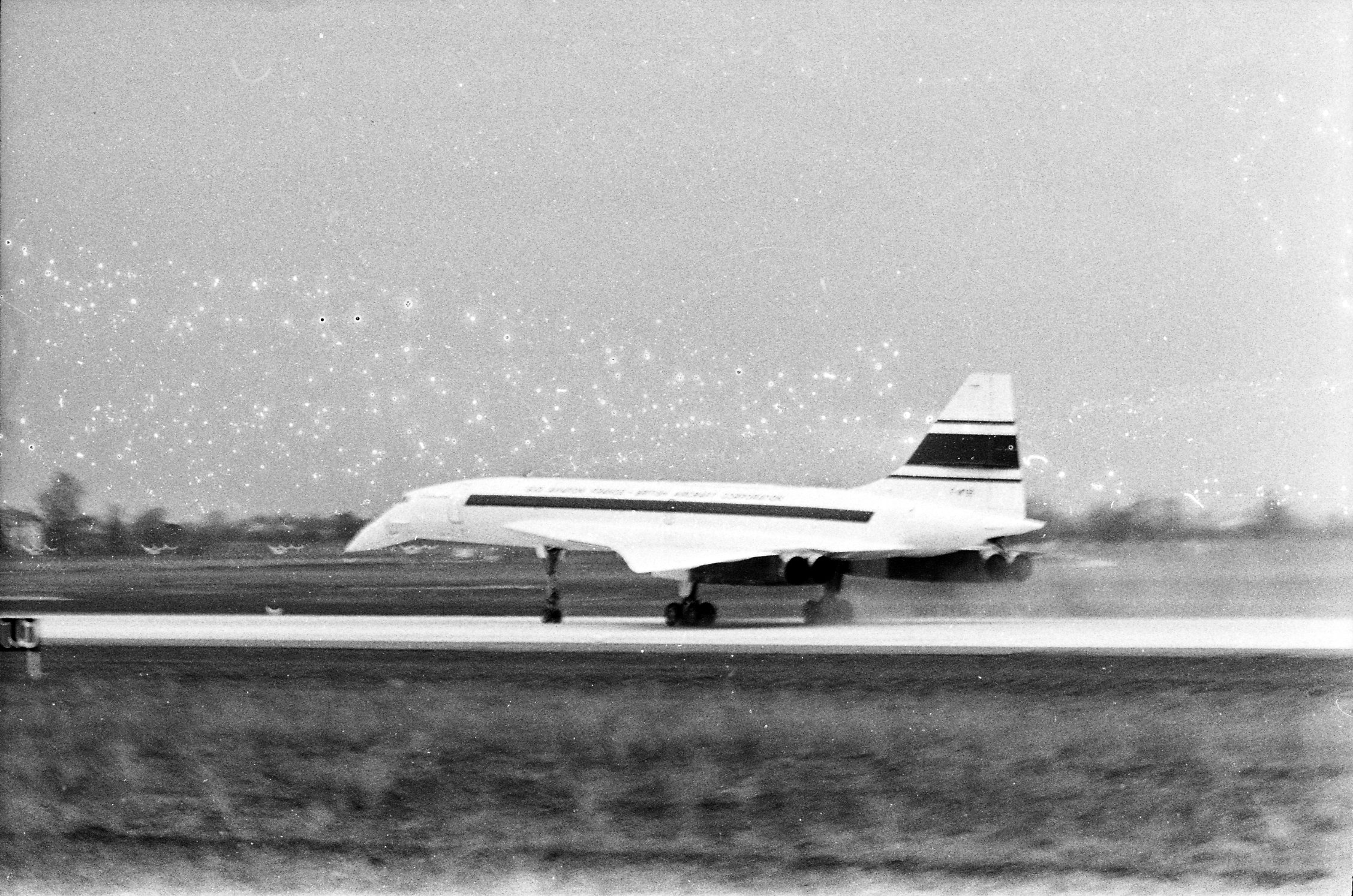
The first flights were deliberately subsonic. Concorde first went supersonic on 1 October 1969, and reached its design cruising speed of Mach 2 for the first time on 4 November 1970. From there the test programme ran for years. Two prototypes were followed by two pre-production aircraft, including the British G-AXDN, and then by production airframes, the early examples of which were also used for development and certification rather than going straight to airlines. The flight test effort was one of the most thorough in aviation history, and it needed to be, because nothing about routine supersonic passenger flight had been done before.
That long gestation came at a price. The project ran years late and massively over its original budget, and by the time Concorde was ready the world had changed. The 1973 oil crisis sent fuel prices soaring, which was poison for a thirsty supersonic aircraft. Concern about sonic boom and aircraft noise had hardened into firm opposition in many countries. The United States cancelled its own rival SST programme. Airlines around the world that had once placed tentative orders, more than a hundred options in total from carriers across the globe, quietly let them lapse. In the end only the two national flag carriers of the countries that built it, British Airways and Air France, took the aircraft into service.
Entry into service and the battle for New York
Concorde entered commercial service on 21 January 1976 in a carefully choreographed double launch. At almost the same moment, a British Airways Concorde took off from London Heathrow bound for Bahrain, and an Air France Concorde left Paris for Rio de Janeiro by way of Dakar. Neither of these was the route Concorde had really been built for. The prize was the North Atlantic, the busy, high-yield run between Europe and the United States where time-rich business travellers might pay for speed.
Getting there meant a fight. New York, the most valuable destination of all, resisted Concorde on noise grounds, and a legal and political battle ran for many months before the aircraft was allowed in. Washington Dulles, with more room around it, opened first, with services starting in May 1976. Scheduled flights to New York’s John F. Kennedy airport finally began in late 1977 after the courts cleared the way. Once established, the transatlantic crossing became Concorde’s natural home. London or Paris to New York took around three and a half hours, less than half the time of an ordinary jet, and because of the time difference westbound passengers could land in New York at an earlier local time than they had left Europe, the closest thing to flying backwards through the day.
Over the years Concorde flew far beyond the regular schedule. It operated charters, round-the-world trips broken into supersonic legs, and special flights to airshows and celebrations. British Airways in particular built a profitable business around the aircraft once it had been given the fleet by the government on commercial terms, charging premium fares to a clientele for whom the name itself was part of the appeal.
Flying at the edge of space
What was it actually like? Concorde cruised at Mach 2.04, a little over 1,350 miles per hour, at altitudes that climbed towards 60,000 feet as the flight went on and the aircraft grew lighter. That is roughly twice as high as a normal airliner. From up there the sky overhead turned a deep dark blue, the curve of the Earth was visible on the horizon, and passengers were, briefly, among the highest people on the planet who were not astronauts.
The cabin was narrow, with four-abreast seating, two each side of a single aisle, and it was not especially spacious by the standards of a first-class section on a big jet. The appeal was not room but speed and exclusivity. A small Mach-meter at the front of the cabin showed the passengers their speed ticking past the figures, and a glass of champagne at Mach 2 became the defining image of the experience. Service was lavish to match the fares, which ran into thousands of pounds for a return crossing.
The aircraft set records along the way. The fastest ever transatlantic crossing by a commercial airliner was made by British Airways Concorde G-BOAD on 7 February 1996, which flew from New York to London in 2 hours, 52 minutes and 59 seconds, helped by a strong tailwind. No scheduled airliner has beaten it since, because none has flown that fast.
The economics, and the second life of a money-losing machine
Concorde’s development swallowed an extraordinary amount of public money in both countries, far more than the original estimates, and the aircraft was effectively never going to repay that investment from ticket sales. The research and development bill was a sunk cost borne by the taxpayer rather than the airlines. What is less widely understood is that the operation of the aircraft, once it was flying, did not have to lose money, and for a period it did not.
The key moment came when British Airways was given its Concorde fleet by the British government on commercial terms in the early 1980s, freeing the airline from the burden of the capital cost. Relieved of that, and helped by clever market research which found that many of its passengers had no idea how much a Concorde ticket actually cost and were willing to pay more than the airline had been charging, British Airways ran its Concorde operation at a profit for much of its later life. The aircraft also earned its keep on charters and special flights, including round-the-world trips sold to wealthy enthusiasts, flights to view eclipses from the edge of the stratosphere, and countless appearances at airshows and national occasions where it was guaranteed to draw a crowd. Concorde regularly performed flypasts at royal and ceremonial events in Britain, often in company with the Red Arrows, and became as much a national symbol as a means of transport.
None of this changed the underlying picture. The fleet was tiny, the spares were costly, and once the manufacturer decided to stop supporting the aircraft there was no realistic way to keep it flying. But the idea that Concorde simply lost money throughout its career is too simple. The development was a national investment that was never recouped; the airline operation, at least for British Airways in its best years, was a profitable premium business built around the most glamorous name in the sky.
The fleet: twenty aircraft, and what became of them
Only 20 Concordes were ever built. The breakdown is worth setting out clearly, because the often-quoted figure of “20 Concordes” lumps together very different aircraft. There were two prototypes, 001 and 002. There were two pre-production aircraft that bridged the gap between the prototypes and the finished design. And there were sixteen production-standard airframes. Of those sixteen, the first two were retained for development and testing and never flew passengers in airline colours, while fourteen entered commercial service, split evenly with seven going to British Airways and seven to Air France.
The small fleet size was both a symptom and a cause of Concorde’s commercial troubles. With so few aircraft and no follow-on orders, the development cost could never be spread thinly, spare parts were always going to be expensive to produce, and the type was always going to be a boutique operation rather than a mainstream airliner.
| Type | Supersonic medium-range airliner |
|---|---|
| Manufacturers | Aerospatiale (France) and the British Aircraft Corporation (UK) |
| Crew | Three on the flight deck (two pilots and a flight engineer) |
| Passengers | Typically around 100; cabin certified for up to around 120 to 128 |
| Anglo-French treaty signed | 29 November 1962 |
| First flight (prototype 001) | 2 March 1969, from Toulouse |
| First flight (prototype 002) | 9 April 1969, from Filton |
| First supersonic flight | 1 October 1969 |
| First flight at Mach 2 | 4 November 1970 |
| Entered airline service | 21 January 1976 |
| Number built | 20 (2 prototypes, 2 pre-production, 16 production; 14 of which flew in airline service) |
| Length | Approx. 202 ft 4 in (61.66 m); grew by roughly 15 to 25 cm in flight from heat |
| Wingspan | Approx. 83 ft 10 in (25.6 m) |
| Wing | Ogival (ogee) delta |
| Engines | Four Rolls-Royce/Snecma Olympus 593 turbojets with reheat |
| Thrust (Mk 610) | Around 31,000 lb each dry; around 38,000 lb each with reheat |
| Cruise speed | Mach 2.04 (about 1,354 mph / 2,180 km/h) |
| Cruise altitude | Up to around 60,000 ft |
| Range | In the region of 4,000 to 4,500 miles, enough for the North Atlantic |
| Fastest transatlantic crossing | 2 h 52 min 59 s, New York to London, 7 February 1996 (G-BOAD) |
| Retired | 2003 (Air France 31 May; British Airways 24 October) |
The Paris crash and its aftermath
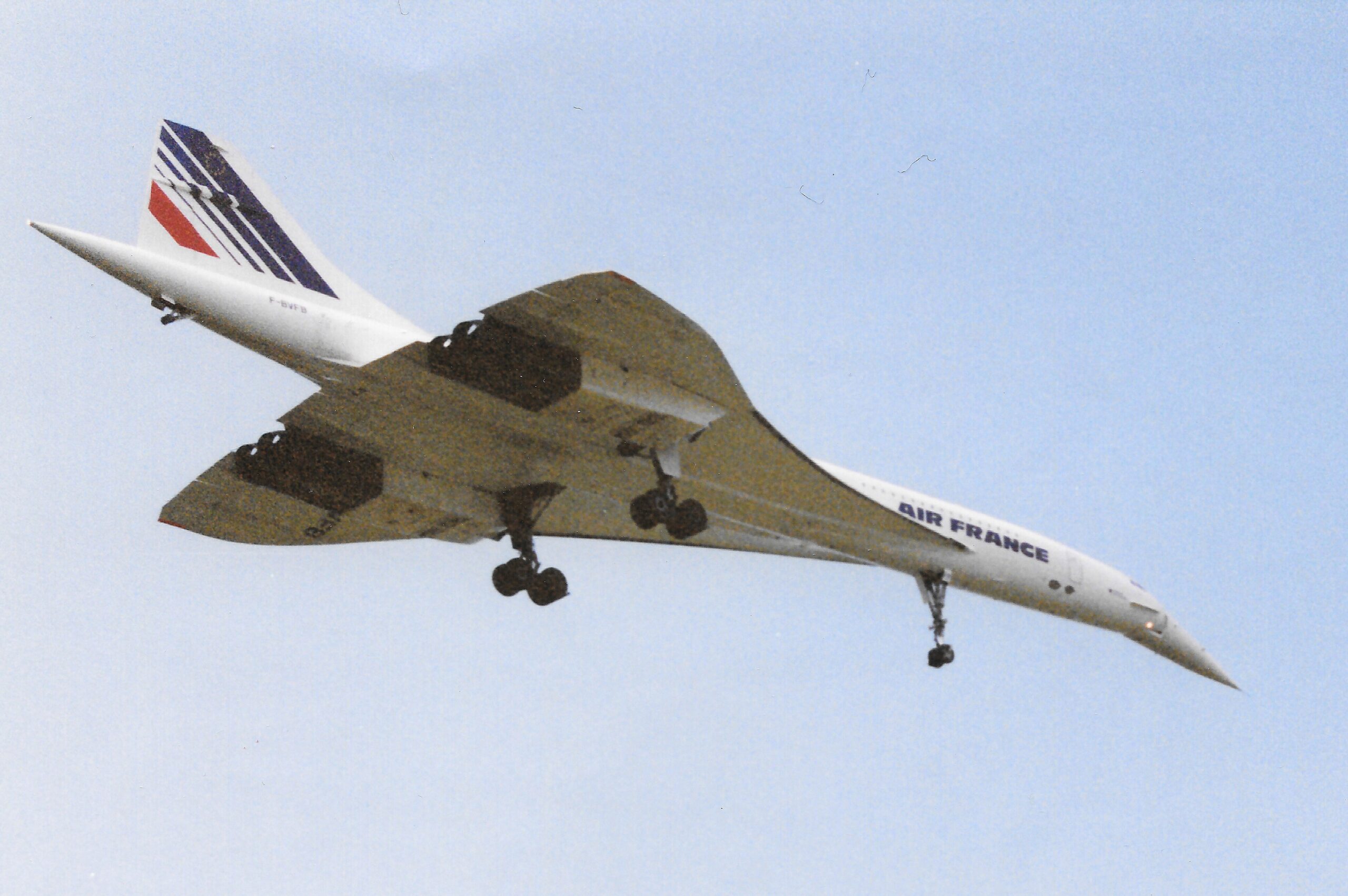
For 24 years Concorde flew without a fatal accident. That ended on 25 July 2000 with the loss of Air France Flight 4590. The Concorde, on a charter to New York, ran over a strip of metal that had fallen from another aircraft on the runway at Paris Charles de Gaulle during its take-off run. The debris burst a tyre, and a large piece of the tyre was thrown up against the underside of the wing with enough force to rupture a fuel tank. The leaking fuel caught fire. Unable to climb away or stop safely, the aircraft came down near Gonesse, close to the airport. All 109 people on board were killed, along with four on the ground. It remains the only crash in Concorde’s history.
The whole fleet was grounded while the cause was investigated and addressed. A series of modifications followed, including tougher, burst-resistant Kevlar linings inside the fuel tanks, strengthened tyres developed with the tyre maker, and reinforced electrical wiring in the undercarriage bays. The modified aircraft were re-certified and Concorde returned to passenger service in November 2001. But it returned to a different world. The crash had dented the aircraft’s reputation for invulnerability, and the attacks of 11 September 2001 in the United States, which fell in the same period, hit premium transatlantic travel hard. Passenger numbers on the very routes Concorde depended on slumped.
Retirement
In 2003 both operators announced that Concorde would be retired. The reasons were a combination rather than any single cause: the falling passenger numbers after the crash and the 2001 downturn, the rising cost of maintaining an ageing and tiny fleet for which the manufacturer no longer wished to support spares, and the simple fact that the aircraft had been flying since the 1970s with no successor and no economic case for building one. Air France flew its last commercial Concorde service on 31 May 2003. British Airways continued a little longer, ending scheduled flights and retiring its fleet on 24 October 2003, with the last aircraft drawing crowds to the fences at Heathrow.
The retirements were marked by a string of farewell flights, and the aircraft were then flown or moved to museums and display sites, mostly in Britain, France and the United States. The very last Concorde flight of all was a delivery to Filton, where the type had first taken shape, in November 2003.
Where to see a Concorde today
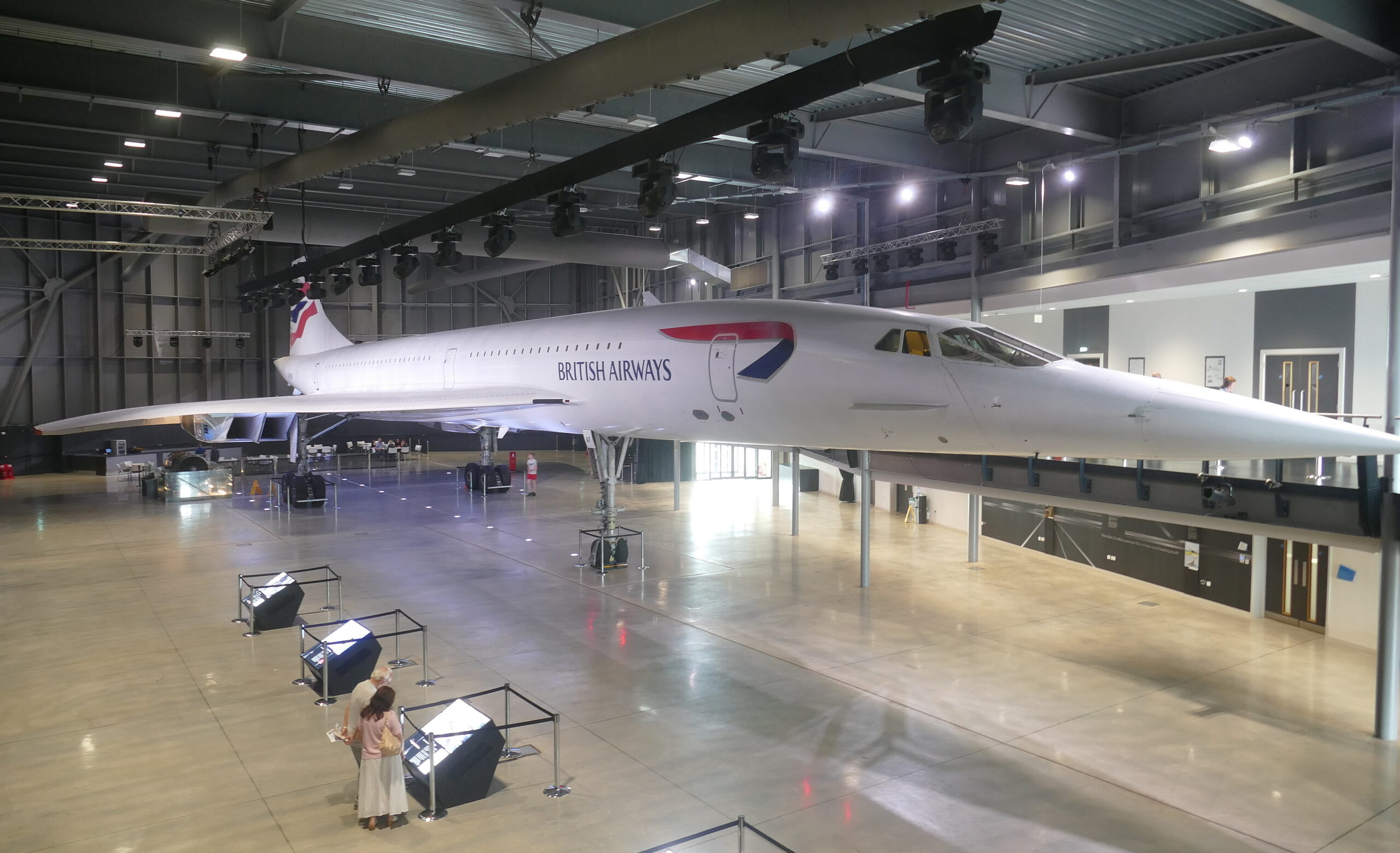
Of the 20 aircraft built, one was lost in the Paris crash and one earlier airframe was broken up, but the great majority survive, preserved at museums and airports on both sides of the Atlantic. For an enthusiast or a photographer it is one of the more rewarding aircraft to seek out, because so many are on public display and several can be boarded. The principal survivors include:
- Aerospace Bristol, Filton holds G-BOAF, the last Concorde built and the last to fly, displayed where the British aircraft were assembled.
- Brooklands Museum, Surrey displays G-BBDG, a production aircraft used for development.
- Fleet Air Arm Museum, Yeovilton has the British prototype 002, G-BSST.
- Imperial War Museum, Duxford displays the pre-production aircraft G-AXDN.
- Runway Visitor Park, Manchester Airport has G-BOAC, long regarded as the flagship of the British Airways fleet.
- National Museum of Flight, East Fortune, Scotland holds G-BOAA.
- Intrepid Sea, Air and Space Museum, New York displays the record-breaking G-BOAD.
- Museum of Flight, Seattle has G-BOAG.
- Musee de l’Air et de l’Espace, Le Bourget, Paris holds the French prototype 001, F-WTSS, the first Concorde to fly.
- Aeroscopia, Toulouse displays two aircraft, including the production test aircraft F-WTSB and the Air France F-BVFC.
- Steven F. Udvar-Hazy Center, Virginia, part of the Smithsonian, has the Air France F-BVFA.
- Technik Museum Sinsheim, Germany displays the Air France F-BVFB alongside a Soviet Tupolev Tu-144 for comparison.
Other aircraft are held at Charles de Gaulle Airport and Heathrow, though neither is open to the public. Locations and access do change over time, so it is always worth checking with a museum before travelling specifically to see an aircraft.
The Soviet rival and the American non-starter
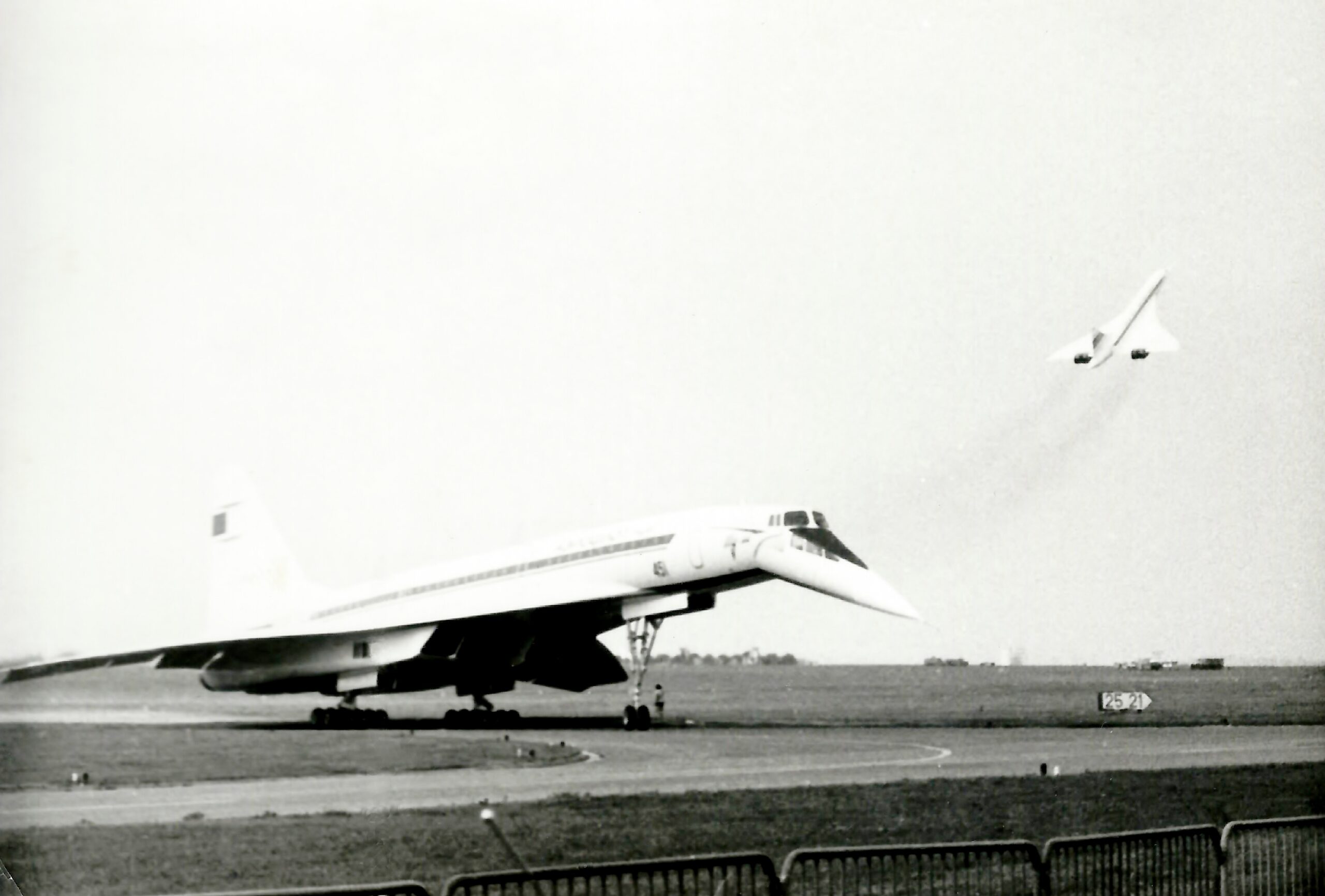
Concorde was not the only supersonic airliner to fly. The Soviet Tupolev Tu-144, broadly similar in concept and sometimes nicknamed “Concordski” in the West because of its resemblance, actually flew slightly earlier, at the very end of 1968. It had a short and troubled career, suffering a famous crash at the 1973 Paris Air Show and never settling into sustained passenger service, ending its days mainly carrying freight and mail before being withdrawn. The United States, meanwhile, funded a much larger and faster SST design, the Boeing 2707, but cancelled it in 1971 before any aircraft was completed, brought down by cost, environmental opposition and doubt about the economics. That left Concorde as the only supersonic airliner to fly scheduled passenger services for any length of time, a record it still holds.
Legacy
It is tempting to file Concorde as a beautiful failure, an aircraft that lost money and was never replaced. That is part of the truth but not all of it. As a commercial proposition it was a product of its time, conceived in an era of cheap fuel and boundless faith in technology, and overtaken by an era of expensive fuel, noise rules and hard economics. Only two airlines flew it, and only because their governments had paid for it.
As an engineering achievement it was something else entirely. Concorde routinely did, for nearly three decades and in safe daily airline service, something that no aircraft has done since: carry ordinary fare-paying passengers across an ocean at twice the speed of sound. Every supersonic and hypersonic airliner project announced in the years since has had to measure itself against an aircraft that first flew in 1969, and so far none has matched it in service. The droop-nosed delta remains the benchmark, and that is a remarkable thing to be able to say of a design more than half a century old.
For aviation photographers, Concorde retains a special pull. Its shape is instantly readable from any angle, the long fuselage and the great curved delta and the lowered nose making a silhouette that needs no caption. Photographs of it in flight are now historic documents, and even the preserved aircraft, lit well and framed against a clean background, make compelling subjects. If you are drawn to the great machines of the jet age, it sits naturally alongside the other icons in our archive galleries, and high-resolution images of classic types are available to license through our licensing page.
If you enjoyed this, you may like our other aircraft histories, including the Avro Vulcan, whose Olympus engine was the ancestor of Concorde’s, the Supermarine Spitfire and the Avro Lancaster. You may also like the de Havilland Comet, the world’s first jet airliner, and the record-breaking Lockheed SR-71 Blackbird. For the earliest chapter of cross-Channel flight that Concorde later conquered at Mach 2, see our piece on Louis Bleriot. And if you want to photograph fast aircraft yourself, our guide on how to photograph fast jets covers the panning and tracking techniques that apply just as well to a preserved supersonic delta.
Supersonic flight was being pushed to its extremes at the same time in a very different machine. Our history of the North American X-15 covers it.
The Atlantic was the route that made reputations long before Concorde flew it. Our account of Lindbergh and the Spirit of St. Louis covers the first man to fly it alone, in 1927.
Frequently asked questions
How fast did Concorde fly?
Concorde cruised at Mach 2.04, a little over 1,350 miles per hour, about twice the speed of sound. It typically crossed between London or Paris and New York in around three and a half hours, less than half the time of a conventional jet.
How many Concordes were built?
Twenty in total: two prototypes, two pre-production aircraft and sixteen production-standard airframes. Of the production aircraft, fourteen entered airline service, split evenly with seven going to British Airways and seven to Air France.
Why was Concorde retired?
There was no single reason. Passenger numbers fell after the 2000 Paris crash and the downturn in premium travel that followed the September 2001 attacks, the cost of maintaining a small, ageing fleet kept rising, and the manufacturer no longer wished to support spare parts. With no successor and no economic case to build one, both airlines retired the aircraft in 2003.
What caused the Concorde crash in 2000?
Air France Flight 4590 ran over a metal strip that had fallen onto the runway at Paris from another aircraft. The debris burst a tyre, and a piece of the tyre struck the wing hard enough to rupture a fuel tank, starting a fire from which the aircraft could not recover. All 109 people on board and four on the ground were killed. It was the only fatal accident in Concorde’s career.
Can you still see a Concorde today?
Yes. Most of the fleet survives in museums and at airports across Britain, France, Germany and the United States. You can see aircraft at Aerospace Bristol, Brooklands, Duxford, Yeovilton, Manchester, East Fortune, New York, Seattle, Le Bourget, Toulouse, the Smithsonian in Virginia and Sinsheim, among others.
Why did Concorde have a drooping nose?
Because of its delta wing, Concorde landed in a steep nose-high attitude, and its long pointed nose would have blocked the pilots’ view of the runway. The nose could be lowered hydraulically, drooping for taxiing, take-off and landing to give a clear view forward, then raised flush for low-drag supersonic cruise.
Was Concorde the only supersonic airliner?
No, but it was the only one to fly scheduled passenger services for any length of time. The Soviet Tupolev Tu-144 flew slightly earlier but had a short, troubled career carrying mostly freight. The American Boeing 2707 was cancelled in 1971 before completion.
How much did a Concorde ticket cost?
Concorde was always a premium product. In its final years a return transatlantic fare cost roughly £6,000 to £8,000, many times the price of an ordinary first-class ticket, and it was aimed squarely at business travellers, celebrities and the wealthy rather than the general holidaymaker.
Why could Concorde only fly supersonic over the sea?
Because of its sonic boom. An aircraft flying faster than sound trails a shockwave that reaches the ground as a loud double bang, so most countries banned overland supersonic flight. Concorde therefore cruised at Mach 2 only over the Atlantic and slowed to subsonic speed over land, which sharply limited the routes it could fly profitably.
What was the Tupolev Tu-144, the “Russian Concorde”?
The Tu-144 was a Soviet supersonic airliner that closely resembled Concorde and actually flew first, at the end of 1968. It entered limited service but was dogged by a fatal crash at the 1973 Paris Air Show and by reliability problems, and passenger flights ended in 1978 after only a brief career.
While Concorde chased speed, the other path out of the 1960s chased size, and it won: that story is told in our Boeing 747 history.
