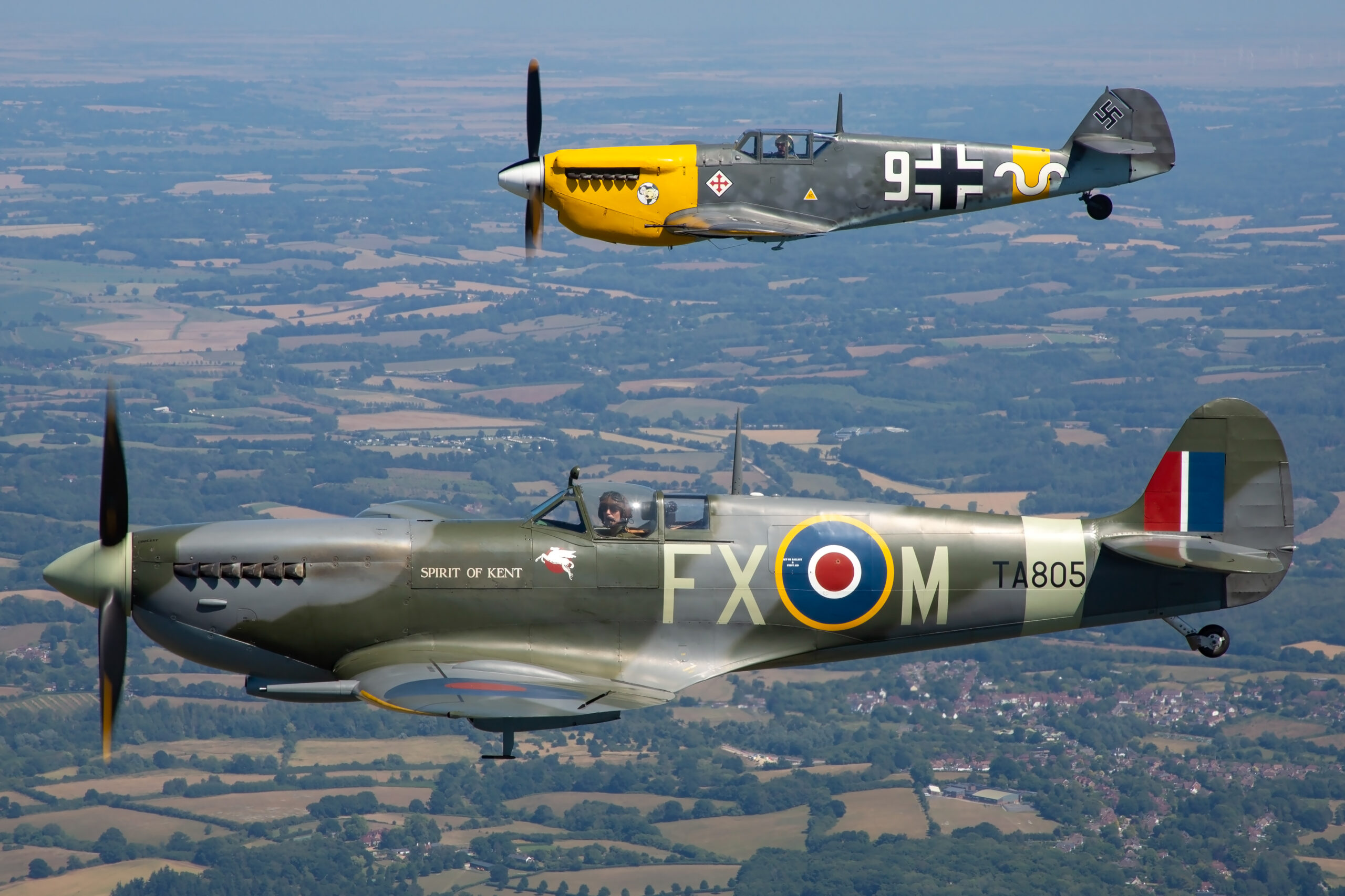
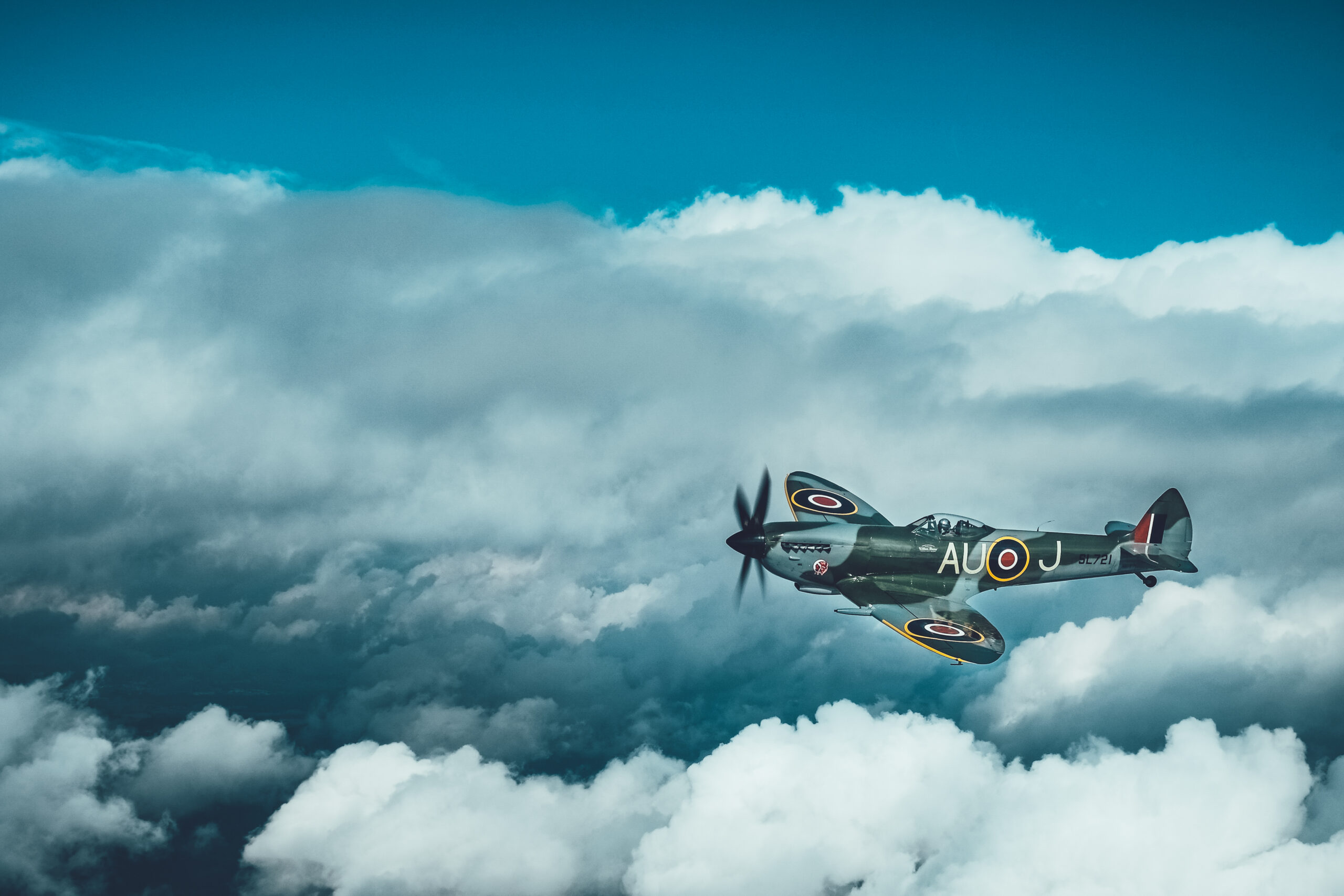
The Supermarine Spitfire was a British single-seat fighter, designed by R.J. Mitchell and first flown on 5 March 1936, that served throughout the Second World War and became the most celebrated aircraft in British history. No aircraft is more closely tied to the idea of Britain at war than the Supermarine Spitfire. It is the shape schoolchildren draw, the silhouette that still empties a beer garden when one passes overhead, and the fighter that, alongside the Hawker Hurricane, held the line in the summer of 1940. But the Spitfire was far more than a single heroic season. It was an aircraft that first flew in 1936 and was still rolling off production lines in 1948, that grew from a 1,030 horsepower interceptor into a 2,000 horsepower thoroughbred, and that served on every major front of the Second World War and well beyond it.
This is the complete history of the Spitfire: where it came from, what made it special, how it fought, how it changed across two dozen marks, and where you can still find the survivors today. Every date and figure here has been checked against reliable sources, and where the record is uncertain or disputed, that is said plainly rather than glossed over.
What this guide covers
- Origins: the Schneider Trophy, R. J. Mitchell and the road to the prototype
- The design: the elliptical wing, the Merlin and the eight-gun battery
- Into service: No. 19 Squadron and the production crisis
- The Battle of Britain: the Spitfire and the Hurricane together
- The war beyond 1940: the Mk V, the Mk IX and the global fight
- The Griffon Spitfires and the end of the line
- Variants, full specifications and surviving aircraft
- Where to see Spitfires today, updated for the 2026 season
- Legacy and a frequently asked questions section
Origins and development: from racing seaplanes to a fighter
The Spitfire did not appear from nowhere. It was the product of a decade of high-speed aircraft design at Supermarine, a small company at Woolston on the River Itchen in Southampton, and of one man in particular: Reginald Joseph Mitchell, the firm’s chief designer. The company’s own remarkable story, from Pemberton-Billing’s flying boats to the last of the jets, is told in our history of Supermarine.
Through the 1920s Mitchell had built a series of racing seaplanes for the Schneider Trophy, the international contest for the fastest aircraft over water. His Supermarine S.5, S.6 and S.6B were sleek, low-drag monoplanes built around the most powerful engines Rolls-Royce could supply. In September 1931 the S.6B won the trophy outright for Britain and then went on to raise the world air speed record beyond 400 mph. The lessons of those record machines, above all the value of a clean airframe wrapped tightly around a big liquid-cooled engine, fed directly into the fighter that followed.
A false start: the Type 224
Mitchell’s first attempt at a fighter for the Royal Air Force was not the Spitfire at all. Responding to Air Ministry specification F.7/30, Supermarine produced the Type 224, a chunky open-cockpit monoplane with a thick cranked wing, fixed and spatted undercarriage and a troublesome steam-cooled Rolls-Royce Goshawk engine. It first flew in 1934 and was a disappointment, slower than the biplanes it was meant to replace. The contract went elsewhere. Mitchell, by his own account dissatisfied, began again on a private-venture design that owed far more to his racing seaplanes than to the Type 224.
The Type 300 and the Merlin
The new aircraft, the Type 300, came together in 1934 and 1935 around two crucial decisions. The first was the choice of a thin, efficient wing of elliptical planform. The second was the engine: a new Rolls-Royce design originally called the PV-12 and soon named the Merlin, a 27-litre V12 that would grow in power throughout the aircraft’s life. The Air Ministry took enough interest to write a fresh specification, F.37/34, effectively around Mitchell’s design, and to fund a prototype.
The elliptical wing is the feature everyone remembers, and credit for refining it belongs in large part to Beverley Shenstone, the Canadian aerodynamicist on Mitchell’s team. An ellipse gives the lowest induced drag for a given wing area, but Shenstone’s wing was not a pure ellipse. It was a carefully distorted shape, thin enough to allow a high top speed yet deep enough at the root to house the retractable undercarriage, the fuel and a battery of guns. That combination of thinness and internal volume, more than the elegant outline itself, was the real achievement.
The prototype: K5054
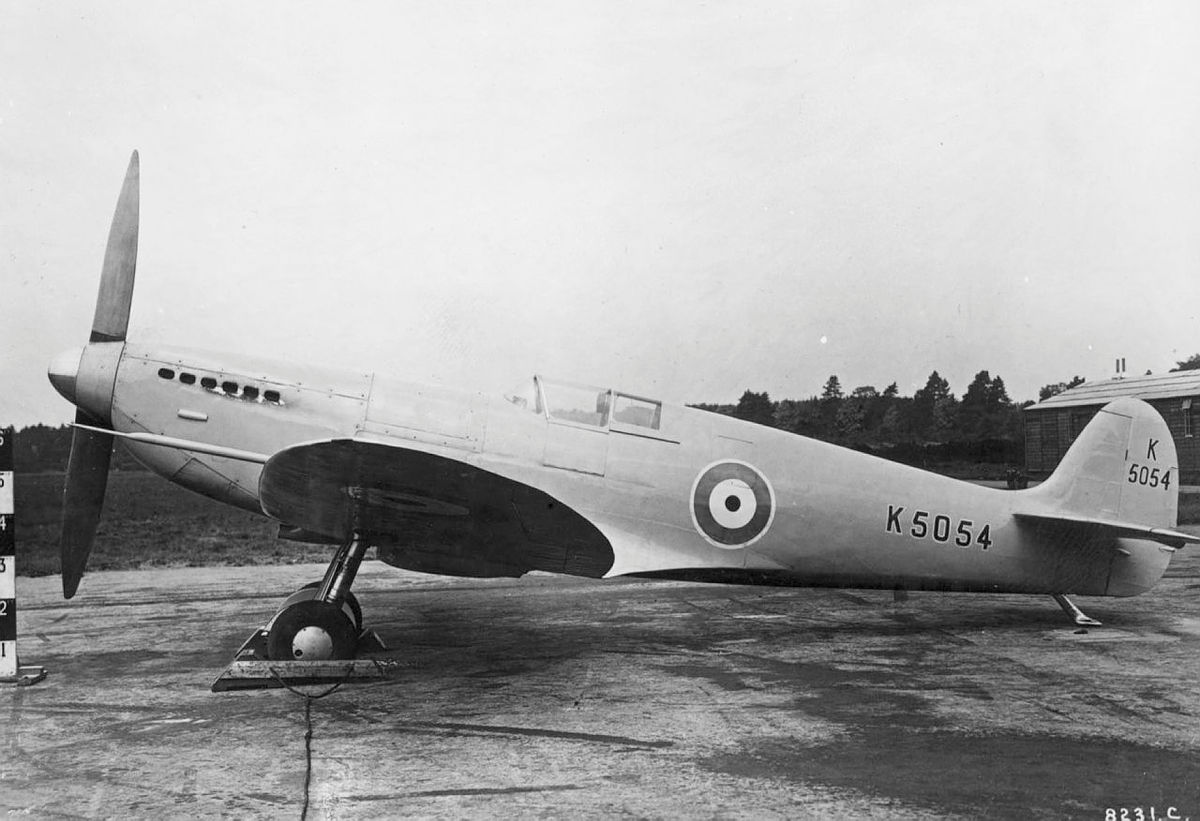
The prototype, given the RAF serial K5054, was rolled out at Eastleigh aerodrome near Southampton in the early spring of 1936. On the afternoon of 5 March 1936 Vickers chief test pilot Captain Joseph “Mutt” Summers took it into the air for the first time. The flight lasted only about eight minutes, and the undercarriage was left down throughout, but Summers was satisfied enough to give the famous instruction that nothing should be touched. The aircraft as first flown used an early Merlin of around 990 horsepower turning a wooden two-blade fixed-pitch propeller, and after refinement it reached around 348 mph, a striking figure for 1936.
The name came later, and not from Mitchell. It was suggested within Vickers, the parent company, reportedly by chairman Sir Robert McLean, who is said to have had in mind his lively daughter. Mitchell himself is widely quoted as thinking it a silly name for a fighting aeroplane. Whatever its origins, “Spitfire” stuck.
The Air Ministry did not wait long. On 3 June 1936, before the prototype had even completed its trials, an initial contract for 310 Spitfires was placed. It was a remarkable act of confidence in an aircraft that existed as a single hand-built example, and it set in motion one of the largest production efforts in British aviation history.
The design: what made the Spitfire special
It is easy to romanticise the Spitfire, so it is worth being precise about what actually made it a good fighter. Several things came together at once.
The wing
The elliptical wing was thin in section, which kept drag low and pushed up the speed at which the airflow over the wing ran into trouble. That gave the Spitfire a high critical Mach number for its day and an ability to be dived hard. The same wing was broad enough in plan to keep the wing loading moderate, so the aircraft turned tightly and handled with a lightness that pilots loved. The downside was that the thin wing made it harder to fit heavy cannon and to carry large fuel loads, problems that would dog the early marks.
Spitfire wings came in several types as armament changed. The original A wing carried eight .303 inch Browning machine guns. The B wing traded two of those guns for a pair of 20 mm Hispano cannon. The C, or universal, wing could take either fit, up to four cannon, and was easier to produce. Later the E wing standardised on two cannon and two .50 inch Browning heavy machine guns, a harder-hitting combination.
The structure
The fuselage was a light alloy monocoque, strong and clean, with flush riveting over much of the airframe to reduce drag. The undercarriage retracted outwards into the wing, which gave the Spitfire its characteristically narrow track. That narrow track made the aircraft tricky to handle on rough ground and was a frequent cause of taxiing and landing accidents, a price paid for the wing design and the desire to keep the structure simple.
The engine
The Rolls-Royce Merlin was the heart of the aircraft. In the Mk I it gave a little over 1,000 horsepower; by the late Merlin marks it was producing well over 1,500. The move from early two-blade fixed-pitch propellers to three-blade variable-pitch and then constant-speed units transformed climb and altitude performance during 1939 and 1940. Later still, the larger Rolls-Royce Griffon would roughly double the original power. The airframe’s ability to absorb that growth, from around 1,000 to around 2,000 horsepower, is the single biggest reason the Spitfire stayed competitive for so long.
Few combat aircraft have ever stretched so far from their first form. The Spitfire that fought in 1945 was far heavier, far more powerful and far better armed than the one that first flew in 1936, yet it was recognisably the same aeroplane.
Into service: No. 19 Squadron and the production crisis
Designing a world-beating fighter was one thing. Building it in quantity was another, and here the Spitfire nearly came unstuck. Its advanced, curved structure was difficult to manufacture, and Supermarine was a small firm with limited capacity. Deliveries fell badly behind schedule through 1937 and 1938.
The first production aircraft reached the Royal Air Force when No. 19 Squadron at Duxford in Cambridgeshire began receiving Spitfires in August 1938, the first example arriving on 4 August. Squadrons converting onto the type had to learn new habits: a retractable undercarriage, a constant-speed propeller, flaps, an enclosed cockpit and far higher speeds than the biplanes most pilots had trained on.
To solve the production problem the government built a vast new shadow factory at Castle Bromwich near Birmingham, drawing on the motor industry’s mass-production skills. It was slow to start and the early management struggled, but once it found its feet Castle Bromwich became the great Spitfire factory, eventually building more than 12,000 of them. Between the original Supermarine works, Castle Bromwich and a network of dispersed sites set up after bombing raids destroyed the Southampton factories in 1940, total Spitfire production would eventually reach 20,351 aircraft, built between 1938 and 1948.
Mitchell’s death and Joseph Smith’s stewardship
The man who created the Spitfire did not live to see it fight. R. J. Mitchell had been seriously ill for some time, and he died of cancer on 11 June 1937 at the age of 42, only fifteen months after the prototype’s first flight. The continued development of the aircraft passed to Joseph Smith, who had been Supermarine’s chief draughtsman and was closely involved in the design from the start. It was Smith who oversaw the Spitfire’s growth through its many wartime marks, and his role in keeping the aircraft at the front rank for so long is often underrated next to Mitchell’s founding genius.
The Battle of Britain, 1940
The Spitfire’s reputation was made in the summer and autumn of 1940, when Fighter Command defended Britain against the Luftwaffe after the fall of France. It is the chapter that fixed the aircraft in the national memory, and it is also the one most surrounded by myth, so the facts are worth stating carefully.
Spitfire and Hurricane together
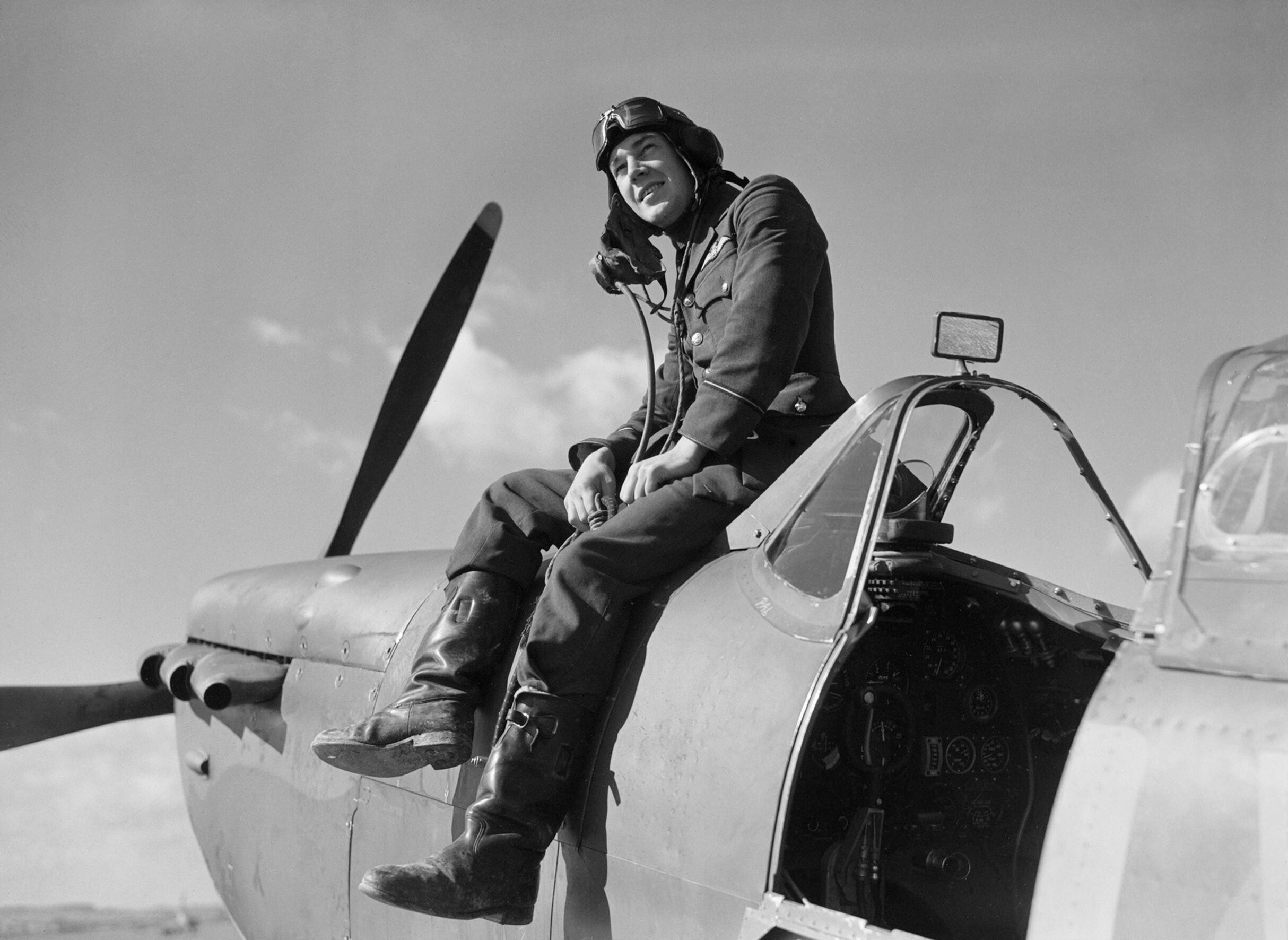
The Spitfire did not win the Battle of Britain alone. The Hawker Hurricane, an older and less glamorous design, was the more numerous fighter throughout. By September 1940 something in the region of 33 RAF squadrons flew Hurricanes against roughly 18 or 19 equipped with Spitfires. The Hurricane, present in greater numbers, was credited with destroying more enemy aircraft than any other British type in the battle. The two fighters worked best as a pair, and where the tactical picture allowed, controllers tried to send the Hurricanes against the German bomber formations while the faster, higher-flying Spitfires took on the Messerschmitt Bf 109 escorts.
That said, the Spitfire was the better match for the Bf 109E, the Luftwaffe’s front-line fighter. It was comparable in speed and climb and superior in turning circle, and German pilots quickly learned to respect it. There is a well-known and probably apocryphal story that Luftwaffe ace Adolf Galland, asked what he needed to win, replied that he would like a squadron of Spitfires. Whether or not he ever said it, the remark captures the regard in which the aircraft was held by both sides. We have profiled every major type that fought that summer, on both sides, in our companion guide to the aircraft of the Battle of Britain.
The Dowding System
What is sometimes forgotten is that the fighters were only part of a larger machine. Air Chief Marshal Sir Hugh Dowding had built an integrated air defence network, the first of its kind, linking the new chain of radar stations, the Observer Corps, and a system of operations rooms that plotted raids and directed fighters by radio. The Spitfire and Hurricane were the cutting edge, but it was the system behind them, getting the right fighters to the right place at the right height, that allowed an outnumbered force to fight efficiently rather than wear itself out on standing patrols.
Across the battle the Spitfire squadrons were credited with destroying a large share of the enemy aircraft brought down by Fighter Command, at a heavy cost in pilots and machines. The exact tallies have been argued over ever since, because wartime claims were inevitably optimistic and double-counting was common, so any single figure should be treated with care. What is not in doubt is that by the end of October 1940 the Luftwaffe had failed to gain the air superiority it needed, and the threatened invasion was indefinitely postponed.
The war beyond 1940: a fighter that kept evolving
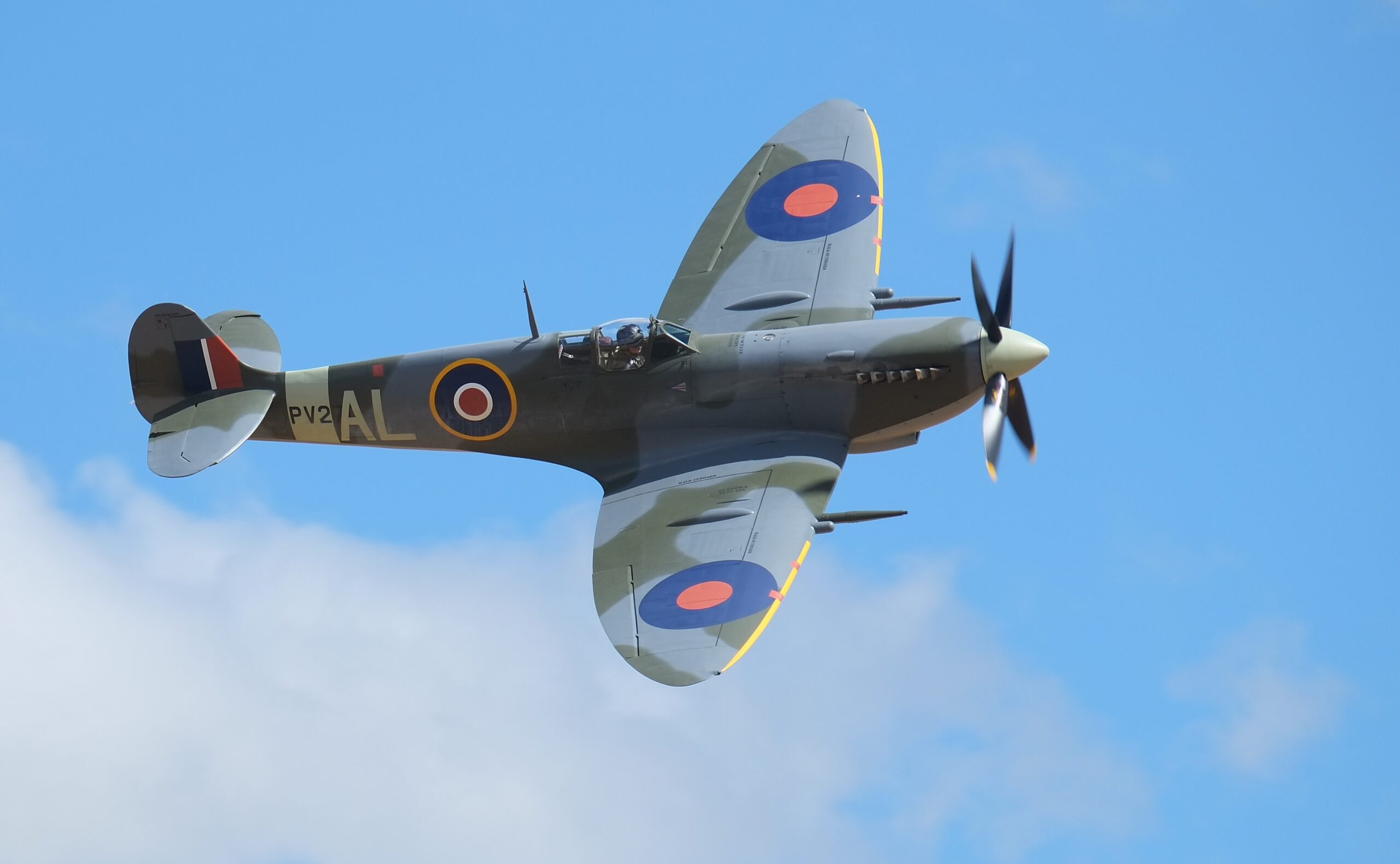
Had the Spitfire’s story ended in 1940 it would still be remembered, but the aircraft’s real distinction is that it stayed in the front line for the whole war and adapted to every new threat. The Battle of Britain Spitfire was the Mk I, soon joined by the broadly similar Mk II. What came after told a story of constant escalation.
The Mk V and the Focke-Wulf shock
The Mk V, introduced in 1941, was in many ways the workhorse of the middle war years. It married a strengthened Mk I airframe to the more powerful Merlin 45 and was built in very large numbers. With it, Fighter Command went over to the offensive, flying sweeps and bomber-escort missions over occupied France. Then, in the autumn of 1941, the Germans introduced the Focke-Wulf Fw 190, and for a time the Spitfire V was outclassed: the Fw 190 was faster, climbed better and rolled far more quickly. For several uncomfortable months British pilots were on the wrong end of the technological race.
The Mk IX: the great recovery
The answer was the Mk IX, essentially a Mk V airframe fitted with the two-stage supercharged Merlin 61 and its successors. It was conceived as a stopgap while a more thoroughly redesigned Spitfire was developed, but it proved so good that it became the most-produced two-stage Merlin mark, with 5,656 built. The two-stage Merlin restored the Spitfire’s edge at high altitude and made the Mk IX a close match for the Fw 190. Many consider it the finest of the Merlin Spitfires, combining the light handling of the early aircraft with much-improved performance.
A global fighter
The Spitfire was not only a home-defence aircraft. It fought over Malta, where in 1942 the island’s survival depended on Spitfires flown in from aircraft carriers. It served across North Africa and the Mediterranean, in Italy, in north-west Europe after D-Day, and in the Far East against Japan, where tropicalised versions with bulky air filters operated in Burma and beyond. It equipped the air forces of many Allied nations, and Spitfire squadrons included Polish, Czech, Free French, Commonwealth and American pilots among many others.
The photo-reconnaissance Spitfires
One of the Spitfire’s quietest but most valuable roles was photographic reconnaissance. Stripped of guns, polished smooth, fitted with extra fuel and cameras and often painted in a pale pink or blue, the PR Spitfires flew unarmed deep into enemy territory and relied on speed and height to survive. They brought home much of the imagery on which Allied planning depended, from tracking the German battleships to photographing the V-weapon sites. The later PR Mk XIX, Griffon-powered, was among the finest of all and would have the distinction of flying the type’s last operational sorties.
The Seafire: a Spitfire for the Royal Navy
The Royal Navy wanted the Spitfire’s performance at sea, and the result was the Seafire, a navalised version with an arrester hook, catapult points and, in later marks, folding wings. The name was a contraction of “Sea Spitfire”. It was never an ideal carrier aircraft, the narrow undercarriage and long nose made deck landings hazardous and accident rates were high, but it gave the Fleet Air Arm a genuine high-performance fighter. Around 2,646 Seafires were built across conversions and new production, a figure separate from the 20,351 land Spitfires.
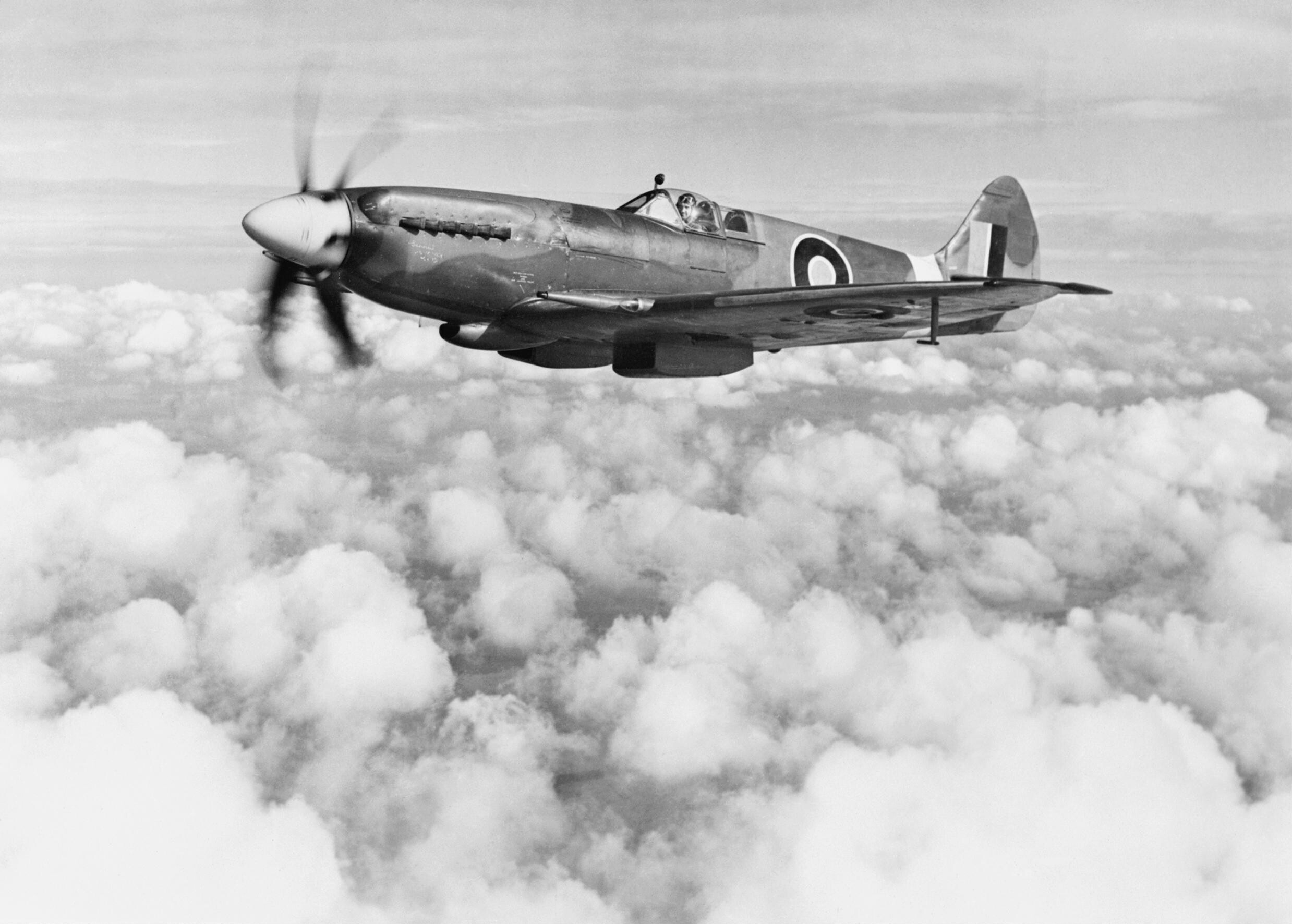
The Griffon Spitfires: power and the end of the line
By the middle of the war the Merlin was reaching the limits of what could reasonably be drawn from it, and Rolls-Royce had a larger engine ready: the 37-litre Griffon, derived from the company’s earlier R racing engine. Fitting it to the Spitfire produced a noticeably different aircraft, with a longer nose, more power and, in the early Griffon marks, some demanding handling because of the engine’s torque.
The first Griffon Spitfire to see meaningful service was the Mk XII, a low-altitude fighter built in modest numbers to counter German fighter-bomber raids on the south coast. Far more important was the Mk XIV, which paired the Griffon with a two-stage supercharger and a five-blade propeller. It was a superb high-altitude fighter capable of around 446 mph, and it arrived in 1944 in time to chase the V-1 flying bombs, whose speed put them beyond many older fighters, as well as to fight the first German jets where it could catch them.
Development continued to the end and beyond. Late Griffon marks such as the Mk 18, the photo-reconnaissance Mk 19 and the final Mk 21, 22 and 24 were in some respects different aircraft from the 1936 original, with revised wings, bubble canopies and far greater weight and power. The mark numbers eventually reached 24. Production did not stop with the war; the last Spitfire of all was completed in 1948, twelve years after the prototype first flew.
The Spitfire and its rivals
The Spitfire is best understood alongside the aircraft it fought and flew with. Its great German opponent through the early war was the Messerschmitt Bf 109, a similarly sized single-seat fighter built in even larger numbers. The two were closely matched: the Bf 109E of 1940 had a fuel-injected engine that kept running under negative G and a hard-hitting cannon armament, while the Spitfire turned more tightly and was, in the eyes of many pilots, the nicer aircraft to fly. Which held the advantage depended on the mark, the altitude and above all the pilot.
From late 1941 the Focke-Wulf Fw 190 raised the bar, outclassing the Spitfire V until the Mk IX restored the balance. The contest then seesawed mark against mark for the rest of the war. Among Allied fighters, the North American P-51 Mustang eventually took over the long-range escort role the short-legged Spitfire could never fill, while the Hawker Hurricane shared the Spitfire’s early battles and shouldered much of the burden in 1940. Set against all of these, the Spitfire’s particular strengths were its handling, its development potential and its sheer adaptability across fighter, reconnaissance, ground-attack and naval roles.
That adaptability showed in the odder variants. Low-altitude fighters had their elegant wingtips removed to give square, “clipped” wings that improved the roll rate near the ground, producing the famous description of aircraft that were “clipped, cropped and clapped”. After D-Day, Spitfires of the Second Tactical Air Force ranged over north-west Europe, strafing and bombing as well as fighting, and Griffon-engined marks proved fast enough to run down the V-1 flying bombs launched at London in 1944, sometimes tipping them over with a wingtip rather than risk the blast of shooting them down.
Variants at a glance
The Spitfire family is large and the mark numbers can be confusing, not least because the RAF switched from Roman to Arabic numerals partway through. The table below picks out some of the most significant marks rather than attempting to list every one.
| Mark | Engine | Notes |
|---|---|---|
| Mk I | Merlin II/III | The Battle of Britain fighter; eight .303 guns; first into service from 1938. |
| Mk II | Merlin XII | Castle Bromwich-built development of the Mk I. |
| Mk V | Merlin 45 | Mass-produced mid-war workhorse; cannon armament common; outclassed for a time by the Fw 190. |
| Mk IX | Merlin 61 family | Two-stage Merlin; 5,656 built, the most of any two-stage Merlin mark; restored parity with the Fw 190. |
| PR Mk XI / XIX | Merlin / Griffon | Unarmed photo-reconnaissance; the PR XIX flew the last RAF operational Spitfire sorties. |
| Mk XII | Griffon | First Griffon-engined service mark; low-level fighter. |
| Mk XIV | Griffon 65 | Two-stage Griffon; about 446 mph; V-1 interception and front-line fighting in 1944-45. |
| Mk 21-24 | Griffon | Final marks; revised structure and wing; postwar service. |
Specifications: Spitfire Mk I
Figures vary slightly from source to source and changed across the production run as armour, equipment and propellers were altered, so the numbers below are best read as representative of the early Mk I rather than absolute. They give a sense of the aircraft that fought in 1940.
| Crew | One |
|---|---|
| Powerplant | One Rolls-Royce Merlin II or III V12, around 1,030 horsepower |
| Wingspan | 36 ft 10 in (11.23 m) |
| Length | 29 ft 11 in (9.12 m) |
| Wing area | 242 sq ft (22.5 sq m) |
| Maximum speed | Around 362 mph (583 km/h) at about 18,500 ft; reduced as weight grew |
| Service ceiling | Approximately 34,000 ft (10,360 m) |
| Armament | Eight .303 in Browning machine guns (A wing) |
| First flight (prototype K5054) | 5 March 1936 |
| Into RAF service | August 1938, No. 19 Squadron, Duxford |
The end of production and the last operational flights
Spitfire production finally ended in 1948. By then the piston-engined fighter had been overtaken by the jet, and the RAF’s front-line day-fighter role had passed to aircraft like the Gloster Meteor. But the Spitfire did not vanish overnight. Photo-reconnaissance examples soldiered on in odd corners of the world, and it is there that the type’s operational career came to a close.
The generally accepted last operational sortie by an RAF Spitfire was flown by a PR Mk XIX, serial PS888 of No. 81 Squadron, from RAF Seletar in Singapore on 1 April 1954, reconnoitring suspected guerrilla positions over Johore during the Malayan Emergency. Spitfires continued in a meteorological role for a while after that, with the type’s service in that capacity ending in 1957. Other air forces, including those of several smaller nations, flew Spitfires into the 1950s, and the Irish Air Corps and others used two-seat trainer conversions.
Where to see Spitfires today
For an aircraft built in such numbers, comparatively few survive, but the Spitfire remains one of the most numerous of all preserved Second World War fighters. Estimates put the number of surviving airframes at somewhere around 240 worldwide, of which only a minority, usually put at somewhere between 70 and 80, are kept in airworthy condition. The rest are museum exhibits, are held in storage, or are under long-term restoration, a process that can take many years and a great deal of money.
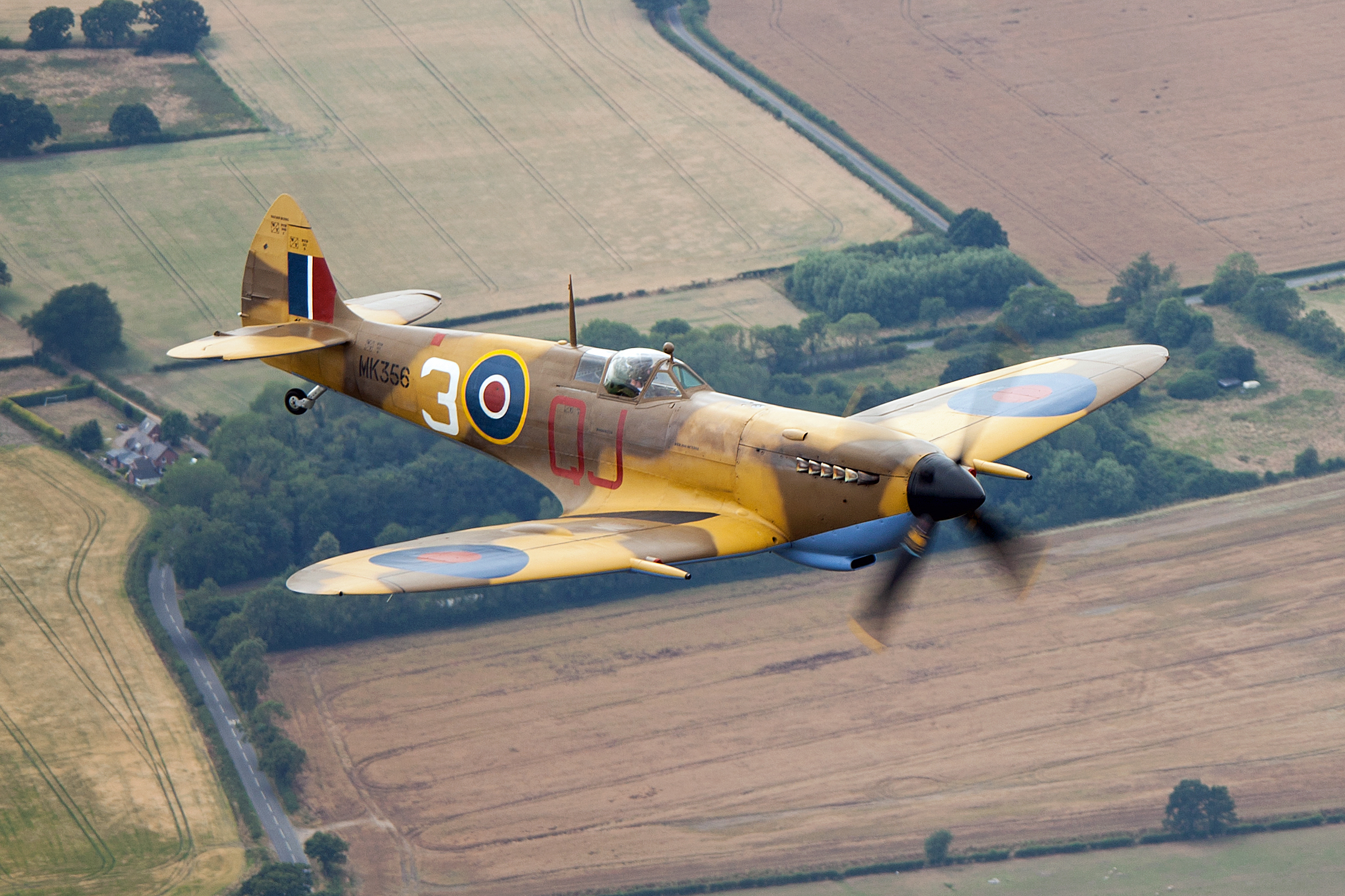
In Britain the best-known flying examples belong to the Royal Air Force’s Battle of Britain Memorial Flight, based at RAF Coningsby in Lincolnshire, which operates several Spitfires alongside a Hurricane and a Lancaster and displays them at events through the summer. Major museum aircraft can be seen at the Imperial War Museum at Duxford, the Royal Air Force Museum, the Science Museum in London, which holds an early example, and many regional collections. Around the world, Spitfires are preserved in Australia, Canada, the United States and across Europe. A thriving restoration industry, much of it in the United Kingdom, continues to return wrecks and long-stored airframes to flight, so the number flying has actually risen over recent decades rather than fallen.
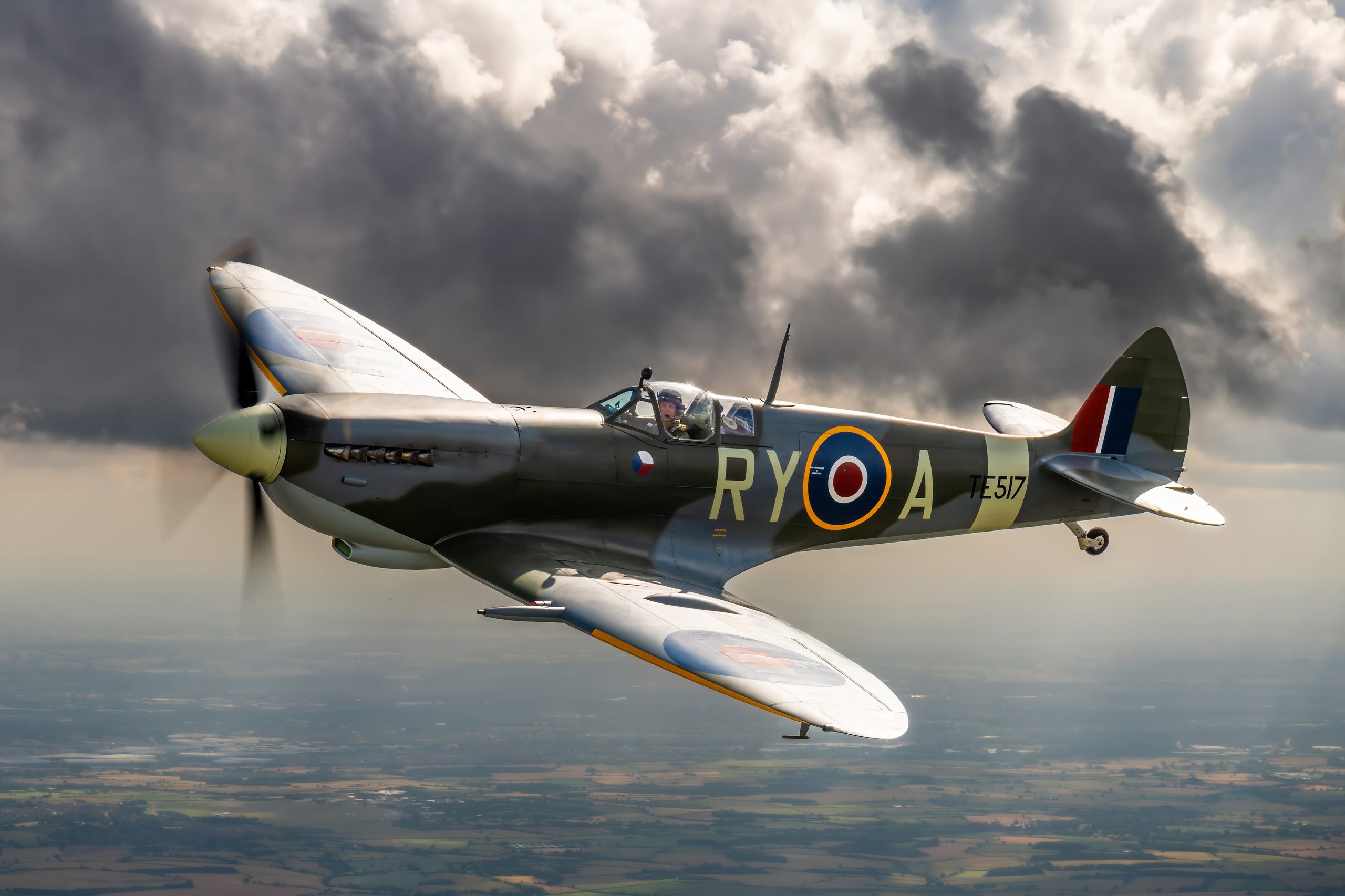
If you want to photograph them, the summer airshow season is the time to do it, and the BBMF and the warbird operators at Duxford are the obvious places to start. We have written separately about how to get the best results, from airshow photography technique to choosing the right glass in our guide to the best lenses for aviation photography and getting your camera settings and autofocus right for fast-moving aircraft.
Updated July 2026: the Spitfire season at a glance
Updated July 2026. This year marks 90 years since K5054 first flew from Eastleigh on 5 March 1936, and the anniversary runs right through the UK display season. The Battle of Britain Memorial Flight is flying its Spitfires and Hurricanes from RAF Coningsby between May and September as usual, with one difference in 2026: the Lancaster is away at Duxford for major scheduled maintenance, so the fighters and the Dakota are carrying the display season. IWM Duxford opened its 2026 flying season with themed flying days in May and June and the Summer Air Show on 4 and 5 July; later in the 2026 season come the after-hours Flying Evening on Saturday 22 August and the Flying Finale on 3 October, with all tickets sold in advance only. The Shuttleworth Collection at Old Warden is running seven shows through to early October, with multiple Spitfire marks appearing across the season in the anniversary year. The one big absence is the Royal International Air Tattoo, cancelled for 2026 because of operational commitments at RAF Fairford; it returns on 16 to 18 July 2027.
Bombed out and dispersed: the production story
The Spitfire’s survival as a weapon was nearly as hard-won on the factory floor as it was in the air. The original Supermarine works lay on the River Itchen at Woolston in Southampton, an obvious and concentrated target. The Luftwaffe found it. On 24 and 26 September 1940, at the height of the Battle of Britain, heavy raids wrecked the Woolston and Itchen factories and killed a large number of workers, by many accounts around a hundred, a substantial share of the workforce.
The response was radical. Lord Beaverbrook, the Minister of Aircraft Production, ordered Spitfire manufacture dispersed away from the vulnerable riverside sites. Teams went out across Hampshire, Wiltshire, Dorset and Berkshire requisitioning anything suitable: garages, bus depots, laundries, a strawberry-basket works and the premises of small engineering firms in towns such as Salisbury, Trowbridge and Reading. Components were built in dozens of scattered workshops and brought together for final assembly and flight testing at requisitioned airfields. Design and drawing-office work moved to Hursley Park near Winchester. It was an improvised, decentralised system that made the production effort far harder to cripple from the air, and it kept the Spitfires coming. Set against the great purpose-built Castle Bromwich factory near Birmingham, the southern dispersal shows the two faces of British war production: vast modern mass manufacture on one hand, and a patchwork of small requisitioned sheds on the other.
Flying the Spitfire
Pilots who flew the Spitfire tended to describe it in the language of horsemanship rather than engineering. It was light on the controls, responsive and forgiving in the air, and it gave plenty of warning before it stalled, which mattered enormously in the tight, frightening business of a turning dogfight. The controls were well harmonised, the view reasonable for a fighter of its day, and the aircraft could be flown hard at the edge of its performance by a competent pilot without springing nasty surprises.
It was on the ground that the Spitfire demanded respect. The narrow undercarriage, the long nose that blocked the view ahead while taxiing, and on the Griffon marks the engine’s powerful swing on take-off, all made the aircraft a handful close to the ground, and accidents during taxiing, take-off and landing were common throughout its career. The early Merlins also had a carburettor that could cut momentarily under negative G, so a Spitfire bunted into a dive would briefly lose power, a quirk the fuel-injected German engines did not share until British engineers devised a fix.
The men who flew it became some of the best-known figures of the war. Douglas Bader, flying despite the loss of both legs, led a wing of Spitfires and became a national symbol of determination. Adolph “Sailor” Malan, the South African, was among the leading scorers of 1940 and wrote the influential “Ten Rules of Air Fighting”. Above all there was James “Johnnie” Johnson, who flew Spitfires almost exclusively and is generally credited as the top-scoring Western Allied fighter ace against the Luftwaffe, with 34 individual victories, including a notably large tally against the Focke-Wulf Fw 190. Their names are inseparable from the aircraft they flew.
Legacy: why the Spitfire still matters
Plenty of fighters of the period were as fast as the Spitfire, and some were faster. The Hurricane shot down more aircraft in 1940. The North American P-51 Mustang arguably did more to win the air war over Germany because it had the range to escort bombers all the way to the target. Yet none of them occupies the place the Spitfire holds in popular memory, and that is worth thinking about rather than simply repeating.
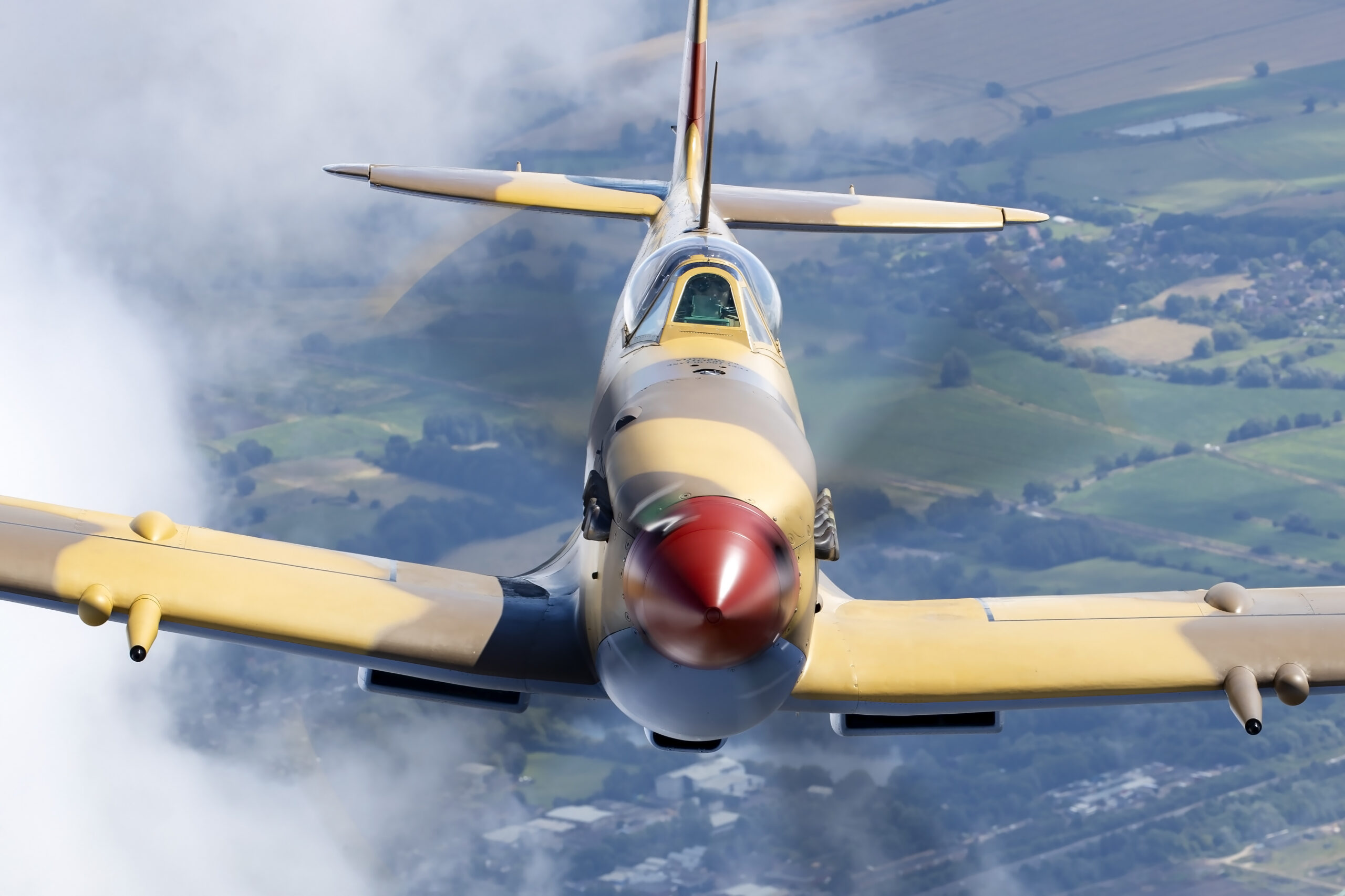
Part of it is the shape. Mitchell and Shenstone produced an aircraft that is really beautiful, and beauty endures. Part of it is timing: the Spitfire came of age in the one battle Britain fought essentially alone, in the skies over southern England where ordinary people could watch it, so it became bound up with a national story of survival. And part of it is longevity. Because the design could absorb so much extra power, it stayed at the front for the whole war and grew into something the 1936 prototype could never have hinted at, which gave it a far richer history than a single famous summer.
It is the aircraft against which other restorations are measured, the warbird whose engine note people recognise without being told. For anyone interested in how aviation history is kept alive in the present, through preservation, flying displays and photography, the Spitfire is the central case. We have written more broadly about why aviation history still matters, and about the pioneers who came before, from Louis Bleriot’s Channel crossing to the wider story of the French aviation pioneers who helped invent the aeroplane the Spitfire perfected.
Frequently asked questions
When did the Spitfire first fly?
The prototype, serial K5054, first flew on 5 March 1936 from Eastleigh aerodrome near Southampton, with Vickers test pilot Joseph “Mutt” Summers at the controls. The flight lasted about eight minutes.
Who designed the Spitfire?
The chief designer was R. J. Mitchell of Supermarine, drawing on his experience with Schneider Trophy racing seaplanes. The distinctive elliptical wing owed much to the aerodynamicist Beverley Shenstone. Mitchell died in 1937, and Joseph Smith led the aircraft’s development through the war.
How many Spitfires were built?
A total of 20,351 Spitfires were built between 1938 and 1948. A further 2,646 or so were built as the navalised Seafire. The most numerous single mark was the Mk V, with 6,479 built, while the most-produced two-stage Merlin mark was the Mk IX at 5,656.
Was the Spitfire or the Hurricane more important in the Battle of Britain?
Both mattered. The Hurricane was more numerous, equipping more squadrons and being credited with destroying more enemy aircraft, while the Spitfire was the better match for the German Bf 109 fighters. They were most effective working together, with Hurricanes directed at the bombers and Spitfires at the escorts where possible. The Spitfire became the more famous of the two.
What was the fastest or most powerful Spitfire?
The Merlin gave way to the larger Rolls-Royce Griffon from 1942. Griffon marks such as the Mk XIV could reach around 446 mph and roughly doubled the original engine power. Late marks were far heavier and more powerful than the 1936 aircraft.
How many Spitfires are still flying?
Around 240 Spitfires are thought to survive worldwide, of which somewhere between 70 and 80 are kept airworthy. The Royal Air Force’s Battle of Britain Memorial Flight at RAF Coningsby keeps several flying, and a number of private operators display them at airshows, particularly at Duxford.
When did the Spitfire stop being used?
Production ended in 1948. The last operational RAF sortie is generally credited to a photo-reconnaissance PR Mk XIX over Malaya on 1 April 1954, with the type continuing in a meteorological role until 1957.
Which Spitfire mark was built in the greatest numbers?
The Mk V, with 6,479 built, was the most numerous Spitfire mark, equipping over 140 RAF squadrons from 1941. The two-stage Merlin Mk IX came second at 5,656. The Mk IX began as a stopgap, a Mk V airframe fitted with the two-stage supercharged Merlin 61, but it restored the Spitfire’s edge over the Focke-Wulf Fw 190 and many pilots considered it the finest Merlin Spitfire of all.
Who was the top-scoring Spitfire pilot?
James Johnnie Johnson, who flew Spitfires almost exclusively, is generally credited as the top-scoring Western Allied fighter ace against the Luftwaffe, with 34 individual victories, though wartime scores are still debated by historians. A large part of his tally was against the Focke-Wulf Fw 190. Other famous Spitfire pilots included Douglas Bader and the South African Adolph Sailor Malan.
What was the Seafire?
The Seafire was a navalised version of the Spitfire developed for the Royal Navy, its name a contraction of Sea Spitfire. It had an arrester hook, catapult points and, in later marks, folding wings. It gave the Fleet Air Arm a genuine high-performance fighter, though the narrow undercarriage and long nose made deck landings hazardous, and around 2,646 were built.
Where can I see a Spitfire fly in 2026?
The RAF Battle of Britain Memorial Flight displays its Spitfires at events across the UK from May to September, and IWM Duxford’s 2026 season includes the Summer Air Show on 4 and 5 July, themed flying days and an after-hours Flying Evening on 22 August. The Shuttleworth Collection at Old Warden also flies Spitfires through its 2026 season, which marks 90 years since the prototype’s first flight. Note that the Royal International Air Tattoo was cancelled for 2026 and returns on 16 to 18 July 2027.
Can you fly in a two-seat Spitfire?
Yes. Several UK operators fly passengers in dual-control two-seat Spitfire T9 conversions, most prominently from Duxford and Goodwood, under Civil Aviation Authority rules for historic aircraft experience flights. Flights are typically sold in 30 to 60 minute slots, and on many of them you can take the controls in the air while a safety pilot remains in command.
The Piemags archive holds original aviation imagery spanning the history of flight. You can browse the archive galleries and the wider photography collections, and details of print and editorial use are on the licensing page.
For the German side of the Spitfire’s hardest duel, the fighter that outclassed the Mk V for a year until the Mk IX answered it, read our history of the Focke-Wulf Fw 190.
If you need Spitfire imagery rather than Spitfire history, our picture researcher’s guide to Spitfire photographs explains the marks in the air-to-air archive, how the sessions are flown and how licensing works.
