The Focke-Wulf Fw 190 was Germany’s second great fighter of the Second World War, a radial-engined design by Kurt Tank that shocked the RAF when it appeared over the Channel in 1941 and outclassed the Spitfire Mk V for the best part of a year. Fast, heavily armed and famously easy to fly, it served as day fighter, fighter-bomber, night fighter and bomber-destroyer, and around 19,500 to 20,000 were built. Its nickname, the Butcher Bird, comes from the shrike, the songbird that impales its prey on thorns.
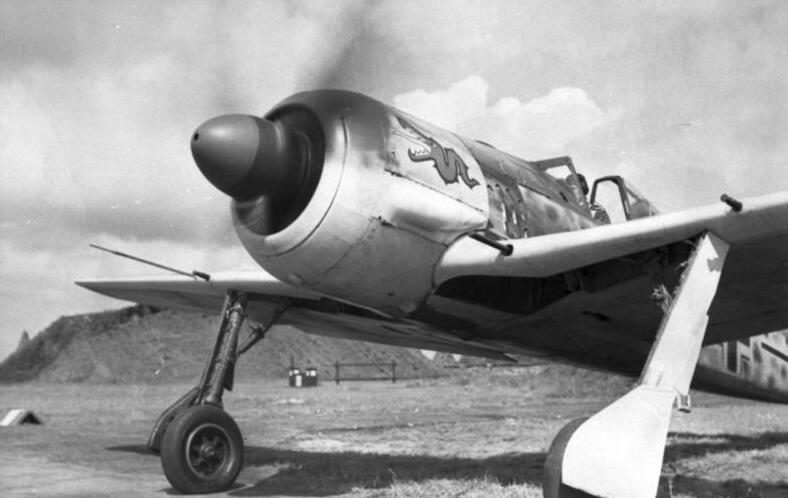
Every fighter has a rival that defines it. For the Fw 190 that rival was the Spitfire, and for one long year the German aircraft had the better of the argument. When the type burst onto the Channel Front the RAF had nothing that could catch it, and the balance only swung back with the hurried introduction of the Spitfire Mk IX. The story of how that happened, and of the extraordinary navigational blunder that handed an intact Fw 190 to the British, is one of the best of the air war.
This guide tells the whole of it: where the design came from and why it used a radial engine when every other German fighter had a liquid-cooled V-12, what made it such a fine gun platform, how it fought on every front the Luftwaffe flew on, what the long-nosed Dora and the Ta 152 changed, and where the survivors are today. Dates and figures are checked against the Smithsonian, the RAF Museum and established references, and where sources really disagree, that is said openly.
What this guide covers
- Origins: Kurt Tank’s second fighter
- Design: the BMW 801 and a fighter built to be flown
- Shock over the Channel
- The gift at Pembrey: Faber’s wrong turn
- The Spitfire IX and the seesaw over France
- Variants and production
- Jabo raids and the Sturmbock bomber-destroyers
- The Eastern Front
- The pilots: Priller, Nowotny and the Fw 190 wings
- The long-nosed Dora
- Ta 152: the last of the line
- Focke-Wulf Fw 190A-8 specifications
- Survivors and where to see one
- Photographing the Fw 190 today
- Legacy
- Frequently asked questions
Origins: Kurt Tank’s second fighter
In the autumn of 1937 the Reich Air Ministry asked Focke-Wulf to design a new single-seat fighter to serve alongside the Messerschmitt Bf 109, which was then only just entering squadron service. That was an unusually far-sighted request. The Bf 109 was the most modern fighter in the world at the time, and most air forces would have been content to build it and nothing else. The ministry wanted insurance, and the man who provided it was Focke-Wulf’s technical director, Kurt Tank.
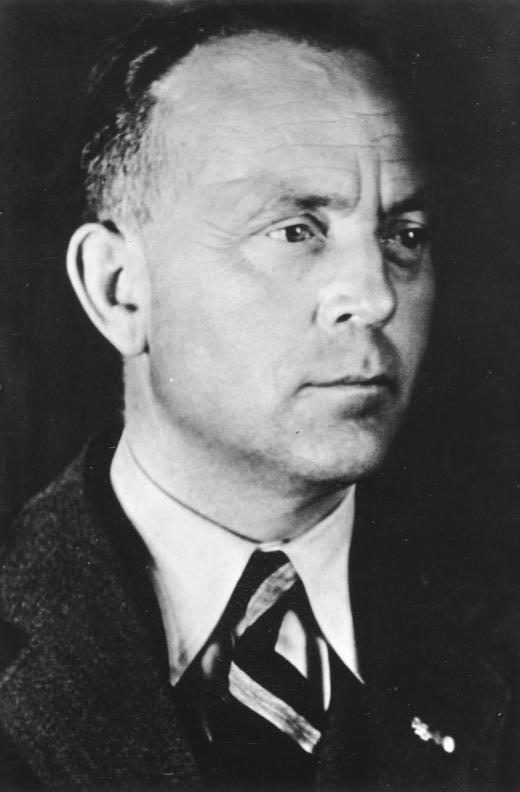
Tank had joined Focke-Wulf in Bremen in 1931 as head of design and flight testing, and he was that rare thing, a designer who flew his own aeroplanes. His philosophy set the Fw 190 apart from the start. Where the Bf 109 had been refined to the limits of aerodynamic delicacy, Tank wanted what he called a cavalry horse rather than a racehorse: a fighter that could operate from rough front-line fields, absorb damage, and be flown hard by an average squadron pilot rather than an expert.
The most radical choice was the engine. Tank proposed a big air-cooled radial at a time when every other German fighter used a liquid-cooled inline engine, and the reasons were practical. The Smithsonian’s National Air and Space Museum records that liquid-cooled engine production was already spoken for, with the Daimler-Benz output committed to the Bf 109 and Bf 110, so a radial-engined fighter would not compete for scarce engines. Tank also drew confidence from American naval practice, where radial fighters were the rule, and a radial had no vulnerable cooling system to be knocked out by a single rifle-calibre bullet. The Fw 190 became the only German fighter of the war to reach mass production with a radial engine.
The prototype Fw 190 V1 first flew at Bremen on 1 June 1939 in the hands of Focke-Wulf’s chief test pilot, Hans Sander. It flew beautifully almost from the first, with one memorable exception: the cooling fan behind the propeller was not ready, and the cockpit sat close behind the original BMW 139 engine, so Sander reported cockpit temperatures reaching around 55 degrees Celsius. The heat problem eased when the BMW 139 was replaced by the longer and more powerful BMW 801, which required a stretched fuselage that moved the cockpit further from the engine. From that point the shape of the definitive Fw 190 was set.
Design: the BMW 801 and a fighter built to be flown
What made the Fw 190 special was not any single figure on a data sheet but the completeness of its engineering. It was designed as a weapon system and as a serviceable piece of front-line equipment, and both qualities showed the moment squadrons got their hands on it.
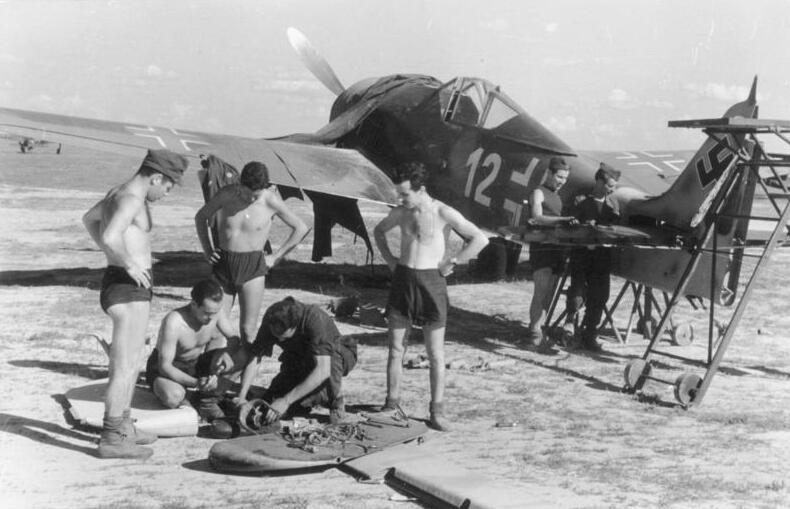
The undercarriage tells the story best. The Bf 109’s narrow, outward-splayed legs made it notoriously treacherous on take-off and landing, and it destroyed aircraft and pilots throughout the war. Tank gave the Fw 190 a wide-track undercarriage, stressed for heavy arrivals and retracting inwards into the wing, and the type suffered far fewer ground accidents as a result. From the third prototype onwards the gear was raised and lowered electrically at the push of a button, and the Smithsonian notes that the electrically operated landing gear and flaps were firsts for a fighter of that era.
The pilot’s workload was cut in a way no other fighter of 1941 could match. The BMW 801 was managed by the Kommandogeraet, a mechanical-computer control unit that adjusted mixture, propeller pitch, boost pressure and ignition timing automatically from a single throttle lever. A Spitfire or Bf 109 pilot juggled several controls to keep his engine happy in combat; the Fw 190 pilot pushed one lever forward and flew the aeroplane. Combined with light, beautifully harmonised ailerons that gave a rate of roll better than anything the Allies flew, it made the 190 a fighter in which an ordinary pilot could perform close to the machine’s limits.
Visibility was another quiet revolution. The canopy was a single moulded piece of clear perspex stretching well aft, giving a view out that the Bf 109, with its heavy-framed hood, could not approach. Armament grew quickly from the first aircraft’s rifle-calibre machine guns, which combat showed to be inadequate, to the classic fit of the A-8: two 13 mm machine guns over the engine and up to four 20 mm cannon in the wings, a battery that could wreck any Allied fighter with a short burst.
Shock over the Channel
The Fw 190 entered service with Jagdgeschwader 26 on the Channel coast in the late summer of 1941, and its first clashes with RAF fighters came that September. The effect on Fighter Command was immediate and unpleasant. Reports came back of a stubby, radial-engined fighter that outpaced and out-rolled the Spitfire Mk V, and at first the claims were disbelieved. Some intelligence officers suggested the pilots were meeting captured French Curtiss Hawks, because the silhouette looked similar and the performance being described seemed impossible.
It was not impossible. An RAF tactical assessment compiled in 1942 found the Fw 190 faster than the Spitfire Mk V at all heights by roughly 25 to 35 mph, with better acceleration, a faster climb, a faster dive and a rate of roll the Spitfire simply could not live with. A favourite escape was a flick roll into a steep diving turn, a manoeuvre the Spitfire’s slower ailerons made almost impossible to follow. The one card the Spitfire held was its turning circle. As the great RAF fighter leader Johnnie Johnson put it, we could out-turn it, but you couldn’t turn all day.
Through the spring and summer of 1942 the Fw 190 wings on the coast, JG 2 and JG 26, made the RAF’s cross-Channel offensive expensive. In one two-day spell in June 1942 JG 26 claimed fifteen Spitfire Vs without loss, and over Dieppe on 19 August 1942 the two Geschwader fought one of the biggest air battles of the war against dozens of Spitfire squadrons, with RAF losses of around a hundred aircraft, roughly twice the Luftwaffe’s. The Fw 190 did not win the Dieppe battle alone, but it was the reason the exchange rate looked the way it did.
The gift at Pembrey: Faber’s wrong turn
Through all of this the British had never examined an Fw 190. Plans were seriously discussed for a commando raid on a French airfield to steal one. Then, on the evening of 23 June 1942, the problem solved itself.
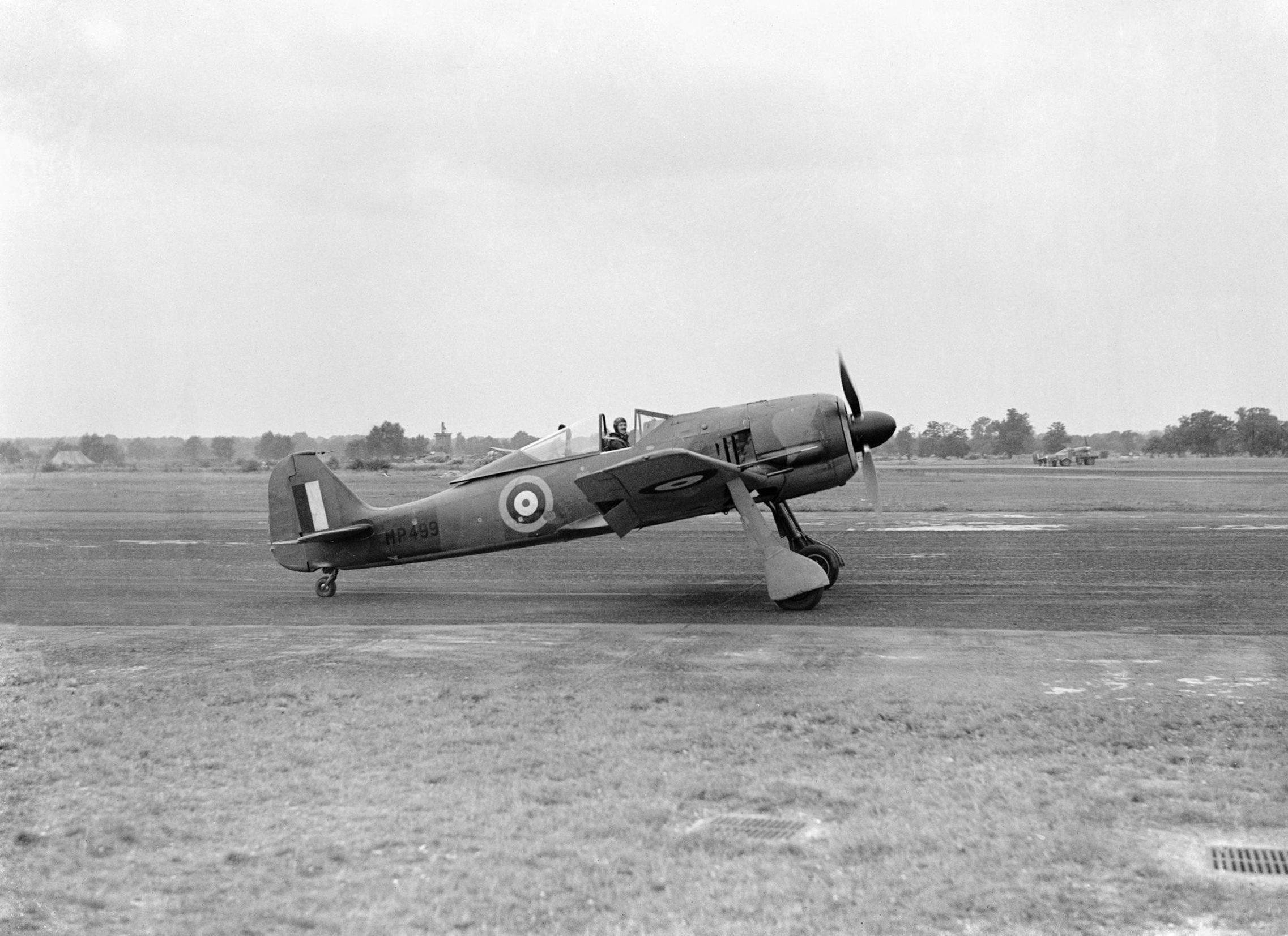
Oberleutnant Armin Faber, the adjutant of III. Gruppe of JG 2, had been in combat with Spitfires over the south-west of England. Disoriented after the fight, he flew north instead of south, mistook the Bristol Channel for the English Channel, and put his Fw 190A-3 down, perfectly serviceable, at RAF Pembrey in South Wales, convinced he was landing in France. The duty sergeant, who had watched a Luftwaffe fighter join the circuit with some astonishment, took him prisoner with a signal pistol.
It is hard to overstate what Faber handed over. His aircraft, given the RAF serial MP499, went to the Royal Aircraft Establishment at Farnborough within days and was flying in British markings by early July 1942. It was the first Fw 190 to fall intact into Allied hands, and the trials that followed, including mock combat against the new Spitfire Mk IX, told the RAF precisely what the Butcher Bird could and could not do. The tactical notes written from those flights went out to every fighter squadron, and the aeroplane the RAF had feared for a year became a known quantity.
The Spitfire IX and the seesaw over France
The real answer to the Fw 190 arrived in service in July 1942: the Spitfire Mk IX, essentially a Mk V airframe with the two-stage, two-speed Merlin 61. British comparative trials found the IX faster than the Fw 190 by around 8 mph at 8,000 feet and around 5 mph at 15,000 feet, with a better climb, and crucially it looked identical to the Mk V from a distance. A German pilot could no longer know whether the Spitfire he was bouncing was prey or peer.
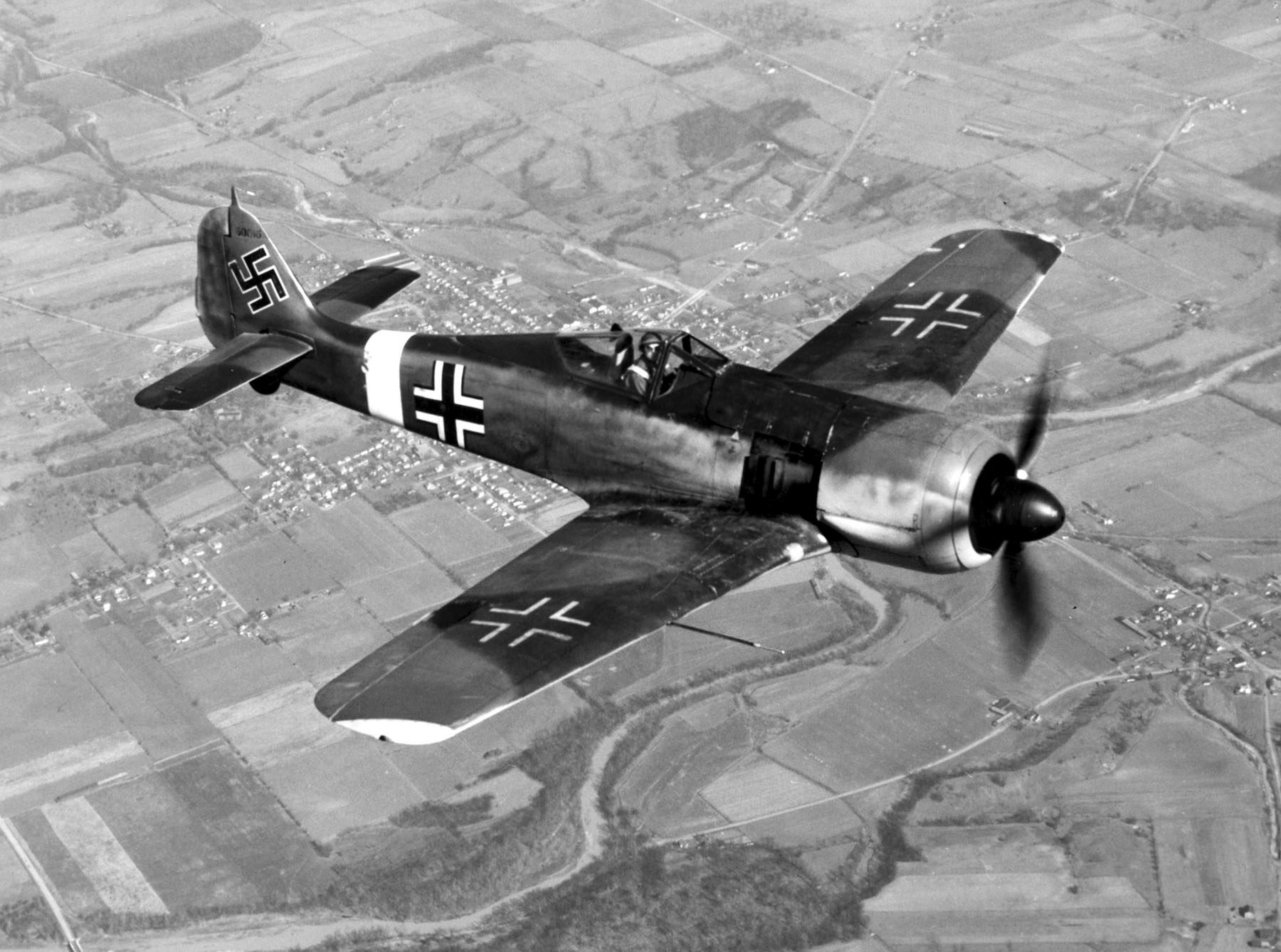
The Fw 190 remained a superb fighter, and below about 7,000 metres, where its BMW 801 gave its best, it stayed dangerous to the end of the war. The RAF Museum’s assessment is blunt about the altitude qualifier: the A-series was very effective in combat below about 23,000 feet, and progressively less so above it, because the 801’s supercharging fell away at height. That weakness mattered more and more as the air war climbed into the stratosphere over the Reich, and it is the thread that leads to the long-nosed Dora and the Ta 152 later in this story.
Variants and production
The Fw 190 family divides into four main streams. The A-series was the radial-engined fighter, developed from the A-1 of 1941 through to the A-9, with the A-8 of 1944 the most numerous of all at over 6,600 built. Armament, armour and equipment grew steadily; the A-5 introduced a slightly lengthened engine mounting, and the A-8 brought the definitive two 13 mm and four 20 mm gun fit.
The F-series was the dedicated ground-attack version, with extra armour under the engine and cockpit and racks for bombs, developed because the Fw 190’s ruggedness and wide-track undercarriage suited rough forward strips. The G-series was a long-range fighter-bomber with outer wing guns removed to save weight for fuel and ordnance. The D-series, the Dora, swapped the radial for a liquid-cooled Junkers Jumo 213 V-12 and gets its own section below.
How many were built in all? The honest answer is that sources disagree within a narrow band. The RAF Museum gives approximately 19,500 of all types; other standard references say around 20,000. Component figures point the same way: 13,291 A-series fighters, several thousand F and G attack aircraft, and 1,805 D-9s. Either way the Fw 190 was produced in greater numbers than any German aircraft of the war except the Bf 109.
Jabo raids and the Sturmbock bomber-destroyers
From the middle of 1942 the Fw 190 began a second career as a hit-and-run raider. Fighter-bomber conversions, the Jabos, crossed the Channel at wave-top height, bombed coastal towns and shipping, and were back over France before defences could react. The low-level raids were extremely difficult to intercept, and standing patrols of the fastest low-altitude fighters the Allies had, Typhoons and Griffon Spitfires, were needed to counter them. The largest such raid, against Canterbury on 31 October 1942, involved around seventy Fw 190s.
Over the Reich the type evolved in the opposite direction, toward armour and heavy guns. By 1944 the American daylight bomber streams demanded a specialised weapon, and the answer was the Sturmbock, an Fw 190 A-8/R2 fitted with heavy armour plate around the cockpit and 30 mm cannon in the outer wings, whose shells could bring down a B-17 with a handful of hits. Around 900 were built, flown by dedicated Sturmgruppen whose task was to press attacks to point-blank range. They were devastating against bombers and, weighed down by armour, so vulnerable to escort fighters that they needed their own Bf 109 top cover. The physics of the trade-off could not be escaped: by late 1944 the Sturmgruppen were destroying bombers at heavy cost to themselves in one of the most brutal battles of attrition in air warfare.
The Eastern Front
The Fw 190 reached the Eastern Front in September 1942 with JG 51, and from January 1943 the famous Green Hearts of JG 54 began converting to the type. In the East the 190’s virtues counted double. Airfields were mud and frozen grass, maintenance happened in the open, and the rugged radial and wide undercarriage kept aircraft flying where more delicate machines would have been grounded. In the great air battles of 1943, above Kursk especially, the Fw 190 wings recorded enormous claim totals against Soviet aircraft, though German victory claims from those days overstate true Soviet losses and should be read as claims rather than counts.
The East is also where the Fw 190 replaced the most famous ground-attack aircraft of the war. From late 1943 the Schlachtgeschwader progressively gave up the slow, vulnerable Ju 87 Stuka for the Fw 190 F, which could fight its way out after delivering its bombs. By the last year of the war the F-series was the backbone of German close air support, and the Smithsonian’s own preserved aircraft is an F-8 of that force, captured at war’s end.
The pilots: Priller, Nowotny and the Fw 190 wings
Three wings are woven through the Fw 190’s story. JG 2 Richthofen and JG 26 Schlageter fought the RAF and later the Americans from the Channel coast for most of the war, and JG 54 Gruenherz took the type through the hardest years in the East.
Josef Pips Priller, who led JG 26 from January 1943, is credited with 101 aerial victories, all of them scored in the West and 68 of them Spitfires, across 307 combat missions. He flew the Fw 190 in combat from January 1942, and on D-Day he and his wingman flew the single strafing pass over Sword Beach that The Longest Day later made famous, though the film exaggerated in showing it as the Luftwaffe’s only appearance that morning. Walter Nowotny, the great ace of JG 54, was credited with 258 victories, the vast majority in the East, and became the first pilot credited with 250, in October 1943, much of his scoring done on the Fw 190 after his wing converted. Both men’s totals are German claims confirmed through German procedure, and like all such figures they are best read with that caveat attached.
The long-nosed Dora
The A-series’ fading performance at altitude had one obvious cure: a better engine. The result, reaching squadrons in September 1944, was the Fw 190 D-9, universally the Dora, with a liquid-cooled Junkers Jumo 213A V-12 in a lengthened nose and a rear fuselage plug to restore the balance. It gave 1,750 horsepower, and more than 2,000 with methanol-water injection, for a top speed of around 426 mph at 21,700 feet.
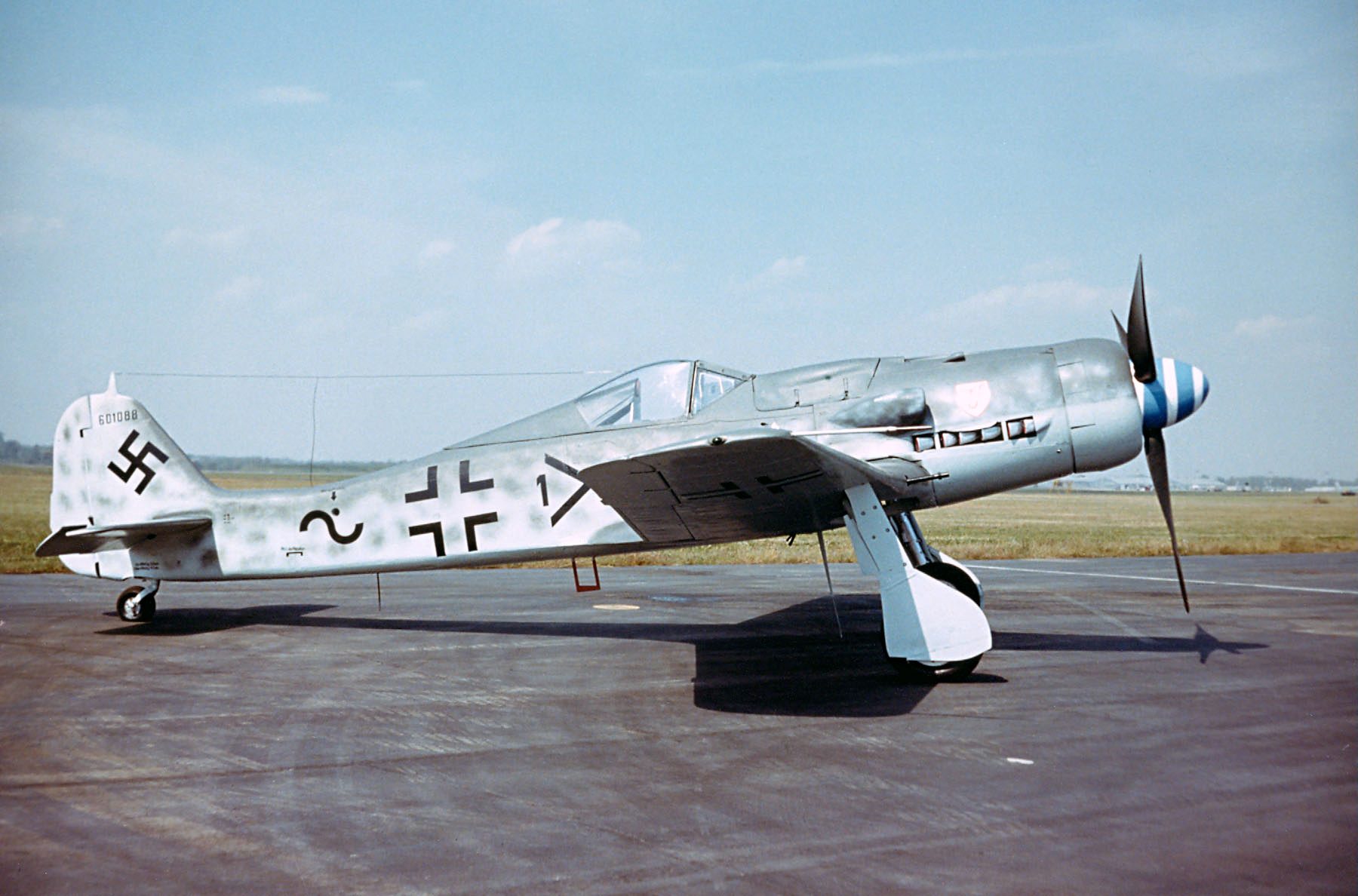
Many Luftwaffe pilots regarded the D-9 as the finest piston fighter Germany fielded, a match at last for the Mustang and the late-mark Spitfires at fighting altitudes. It arrived, though, at the point where aircraft quality had stopped being Germany’s problem. Fuel was running out, experienced pilots were dead, and the training system could not replace them. In the New Year’s Day 1945 attack on Allied airfields, Operation Bodenplatte, fifty D-9s were among the well over a hundred Fw 190s lost in a single morning, losses in pilots the Jagdwaffe never made good. In total 1,805 D-9s were built between August 1944 and the end of the war.
Ta 152: the last of the line
The final development carried its designer’s own name, an honour the Air Ministry granted from 1944. The Ta 152 was Kurt Tank’s ultimate high-altitude fighter, and in its definitive H form it stretched the wing to 14.44 metres and fitted the Jumo 213E with high-altitude boost, good for a remarkable 472 mph at 41,000 feet.
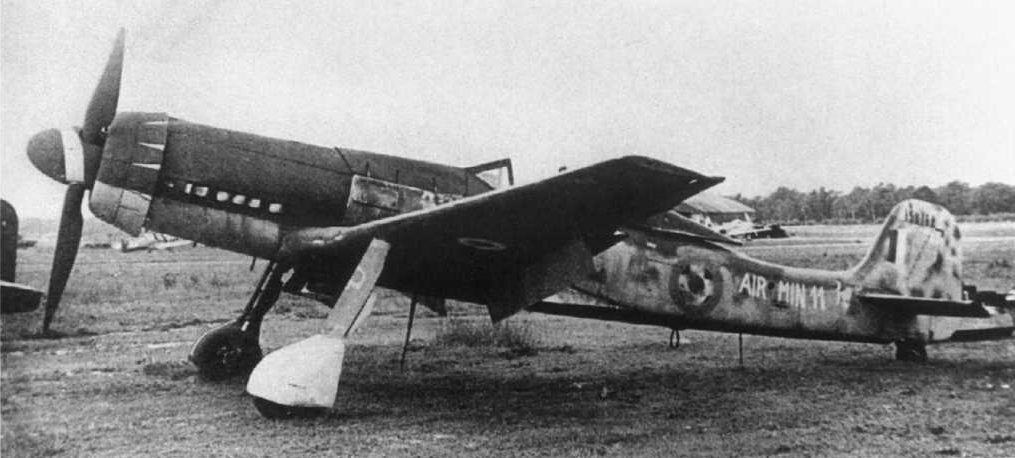
Only a handful were ever completed. Production figures are really disputed, from around 69 aircraft to claims of about 150 delivered, with one detailed count giving 44 pre-production and 25 production H-models; whichever is right, the Ta 152 arrived in January 1945, far too late to matter, and served mainly with a single staff flight of JG 301 that never had more than fifteen on strength at once. A single H-model survives, held by the Smithsonian in storage, the only one of its kind left in the world.
Focke-Wulf Fw 190A-8 specifications
| Specification | Fw 190A-8 |
|---|---|
| Wingspan | 10.51 m (34 ft 6 in) |
| Length | 8.95 m (29 ft 4 in) |
| Engine | BMW 801 D-2 fourteen-cylinder twin-row air-cooled radial, 1,700 PS, up to 1,980 PS with emergency boost |
| Maximum speed | Around 405 mph (652 km/h) at 5,920 m |
| Service ceiling | 10,350 m (33,960 ft) |
| Range | Around 900 to 1,000 km on internal fuel; roughly double with a drop tank |
| Armament | 2 x 13 mm MG 131 machine guns, up to 4 x 20 mm MG 151/20 cannon; provision for bombs |
| Number built (all variants) | Approximately 19,500 to 20,000; 13,291 A-series; 1,805 D-9s |
The altitude figures deserve a second look, because they explain the whole later story of the type. Best speed at just under 6,000 metres and effectiveness fading above 7,000 meant the A-series fought at its best exactly where the war over France and Russia happened, and increasingly below where the war over Germany happened. The D-9 and the Ta 152 existed to fix that, and the fix came too late.
Survivors and where to see one
For an aircraft built in such numbers, the Fw 190 is a rare survivor. At least 23 examples exist in museums, collections and storage worldwide, with eleven of them in the United States, and only one original is airworthy. Compare that with the dozens of flying Spitfires and Mustangs and you see what unconditional defeat does to an aircraft type: nobody preserved the loser’s fighters in 1945, and most survivors today are recoveries from crash sites, lakes and Norwegian mountainsides.
The one flying original is Fw 190A-5 White A at the Flying Heritage and Combat Armor Museum at Paine Field, north of Seattle. Its story is remarkable in itself: it force-landed in a forest east of Leningrad in July 1943, sat undisturbed for 46 years, was recovered in 1989 and restored to fly again in December 2010, and it remains the only Fw 190 in the world flying behind an original BMW 801. The museum closed in 2020 on the death of its founder Paul Allen, was bought by a new non-profit, and reopened in 2023, and it flies its aircraft at events through the season.
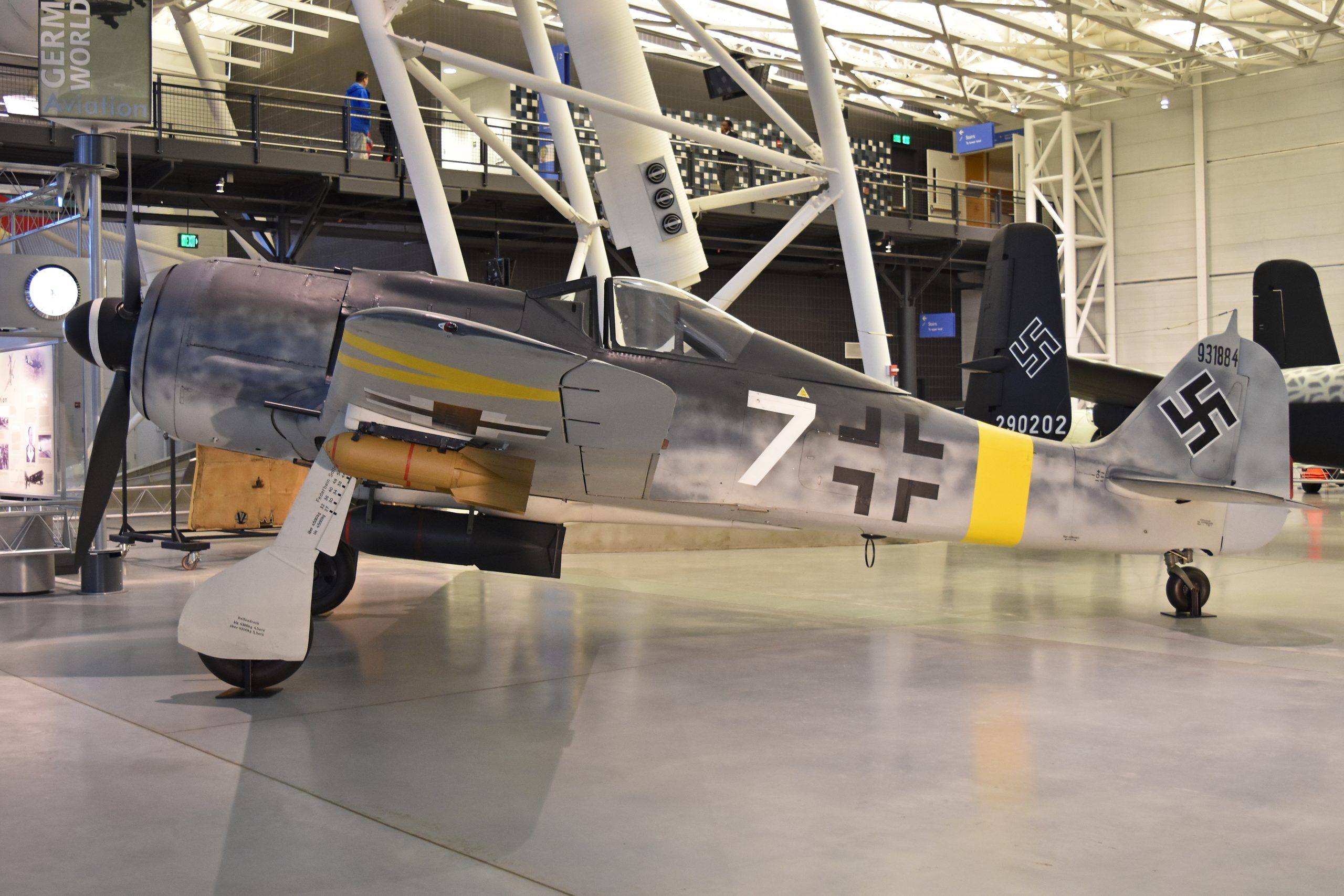
In the UK, the RAF Museum Midlands at Cosford displays an original Fw 190A-8 in its War in the Air hangar, a late-war aircraft that came to Britain for evaluation in 1945. The RAF Museum’s rare two-seat conversion, an F-8/U1, was loaned to the military history museum at Berlin-Gatow for three years from October 2023 and is due back around late 2026, so check before travelling to see that one; Gatow’s own collection also holds an original D-9. In the United States, beyond the Smithsonian’s F-8 and stored Ta 152, the National Museum of the US Air Force in Dayton has a D-9, and the Military Aviation Museum in Virginia Beach displays an original A-8 recovered from Norway alongside its flying reproduction.
Photographing the Fw 190 today
Photographing an Fw 190 in the air is one of the harder ticks on any warbird photographer’s list, simply because so few fly. Alongside the single original, a series of new-build reproductions constructed by the German firm Flug Werk from the 1990s carry the shape, most flying on Russian or American radials, and they appear at airshows in Germany and beyond. One flies with the Hangar 10 collection on the Baltic island of Usedom, another displays from Braunschweig, and in July 2026 a third returned to flight in Turkey with the MSO Air and Space Museum at Sivrihisar, so the type is slowly becoming easier to see in the air than it has been for decades.

The photographic advice for the type is the same as for any radial warbird. Keep the shutter speed down, around 1/250 second or slower, so the propeller blurs into a disc rather than freezing; our guide to propeller blur and shutter speed covers the technique in detail. The Fw 190’s dark, dense camouflage schemes swallow light, so meter for the airframe rather than the sky and expect to lift shadows in processing. And the type’s signature angle is the head-on or front quarter view, where the huge cowling and wide stance give it the pugnacious look that no other WW2 fighter quite has. For the survivors in museums, the low light and tight spaces are their own discipline, one we cover in our guide to photographing aircraft in museums.
Legacy
The Fw 190’s reputation has only grown with time. It was the best fighter in the world for roughly a year after its combat debut, a longer reign than most designs ever manage, and its influence outlived the war that produced it. The emphasis on ease of handling, wide-track undercarriage, automated engine management and concentrated firepower reads today like a specification for every fighter that followed.
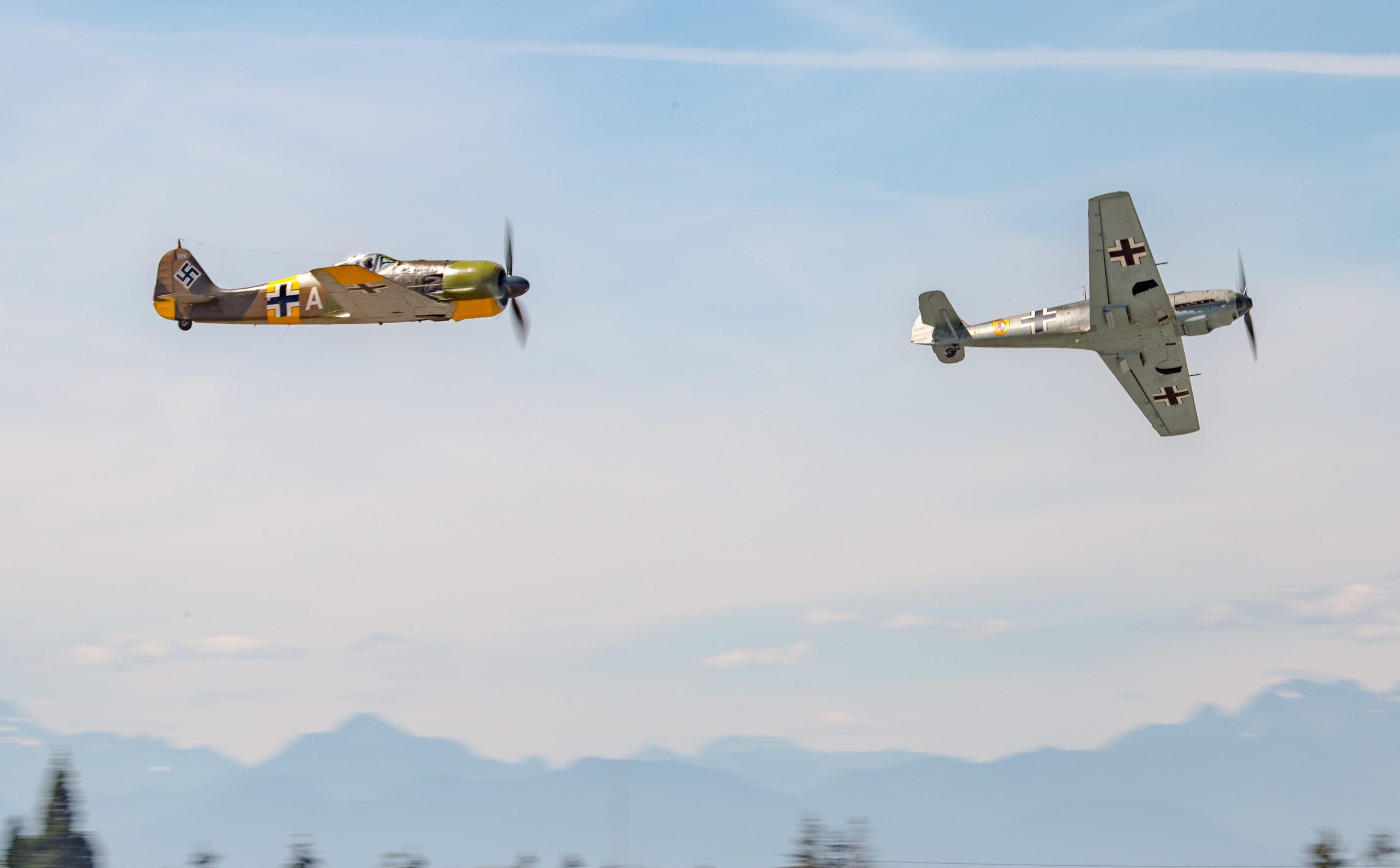
Kurt Tank’s own story carried the design lineage around the world: he went on to build jet fighters in Argentina and helped develop India’s HF-24 Marut in the 1950s. The aircraft itself remains the connoisseur’s Luftwaffe fighter, less famous than the Bf 109 but more admired by many pilots and engineers, and every airshow appearance of the handful that fly draws photographers for exactly that reason.
Photography of surviving and reproduction Fw 190s, and of the aircraft that fought them, is licensed through the Piemags aviation archive, with terms on the licences page.
Frequently asked questions
Why was the Fw 190 called the Butcher Bird?
Its German nickname was Wuerger, the shrike, a songbird known in English as the butcher bird because it impales its prey on thorns. The name was informal and used operationally rather than officially, and there is no good evidence that Kurt Tank himself coined it.
Was the Fw 190 better than the Spitfire?
For about a year, yes. An RAF assessment found the Fw 190 faster than the Spitfire Mk V at all heights by roughly 25 to 35 mph, with a better climb, dive and rate of roll, the Spitfire holding only the tighter turn. The Spitfire Mk IX restored parity from July 1942, and later marks such as the XIV outperformed the radial-engined 190 at most heights.
Who designed the Focke-Wulf Fw 190?
Kurt Tank, Focke-Wulf’s technical director and head of flight testing, leading the company’s design team in Bremen. Tank was a qualified test pilot who flew his own designs, and he later gave his initials to the Ta 152 development of the fighter.
How many Fw 190s were built?
Around 19,500 to 20,000 of all versions, the exact total varying between sources. That includes 13,291 radial-engined A-series fighters, several thousand F and G ground-attack aircraft and 1,805 long-nosed D-9s, making it Germany’s second most-produced wartime aircraft after the Bf 109.
What engine did the Fw 190 use?
The A, F and G series used the BMW 801, a fourteen-cylinder twin-row air-cooled radial of around 1,700 horsepower, managed automatically by the Kommandogeraet single-lever control unit. The D-9 switched to the liquid-cooled Junkers Jumo 213 V-12, and the Ta 152 H used the Jumo 213E with high-altitude boost.
What was the Fw 190 D-9 Dora?
The D-9 was the long-nosed version that entered service in September 1944, replacing the radial with a Junkers Jumo 213A V-12 giving up to about 2,100 horsepower with boost and a top speed of around 426 mph. Many Luftwaffe pilots considered it the best piston fighter Germany fielded, but only 1,805 were built and it arrived too late to change anything.
What was the Ta 152?
Kurt Tank’s final high-altitude development of the design, with a 14.44 metre wing and a Jumo 213E engine good for around 472 mph at over 40,000 feet in the definitive H model. Production figures are disputed, ranging from about 69 to claims of around 150, and it reached only one small unit from January 1945. A single Ta 152 H survives, in the Smithsonian’s reserve collection.
How did the Allies capture an Fw 190?
On 23 June 1942 Oberleutnant Armin Faber of JG 2, disoriented after combat, mistook the Bristol Channel for the English Channel and landed his intact Fw 190A-3 at RAF Pembrey in South Wales, believing he was in France. The aircraft was test-flown at Farnborough within days, and the trials shaped RAF tactics against the type for the rest of the war.
How fast was the Fw 190?
The most-produced A-8 managed around 405 mph at just under 6,000 metres, with performance falling away above about 7,000 metres where the BMW 801’s supercharging ran out. The D-9 reached around 426 mph and the high-altitude Ta 152 H around 472 mph with boost.
Are any Fw 190s still flying?
One original: the Fw 190A-5 White A of the Flying Heritage and Combat Armor Museum at Paine Field near Seattle, recovered from a Russian forest in 1989 and flying again since 2010 on an original BMW 801. A series of Flug Werk new-build reproductions also fly, including aircraft based in Germany at Usedom and Braunschweig and one that returned to flight in Turkey in July 2026.
Where can I see an Fw 190 in the UK?
The RAF Museum Midlands at Cosford displays an original Fw 190A-8 in its War in the Air hangar. The RAF Museum’s two-seat F-8/U1 conversion has been reported on loan to the Berlin-Gatow museum in Germany since 2023, so check with the museum before making a special trip for it. No Fw 190, original or reproduction, is currently based and flying in the UK.
Was the Fw 190 better than the Bf 109?
They were complementary rather than rivals. The Fw 190 was faster-rolling, tougher, easier to fly, far better on the ground and more heavily armed, while the Bf 109 kept the edge at high altitude, which is why armoured Sturmbock Fw 190s attacking American bombers needed Bf 109 top cover. Germany kept both in production to the end of the war.
The Zero’s capture in the Aleutians is the Pacific twin of the Faber story told above. For the fighter that shocked the other ocean, read our history of the Mitsubishi A6M Zero.
