
The Mitsubishi A6M Zero was the fighter that shocked the Pacific: a carrier aircraft with the range of a bomber and the agility of nothing else in the sky, which swept aside Allied opposition from Pearl Harbor to the Indian Ocean. Designed by Jiro Horikoshi to an impossible 1937 specification, it bought its brilliance by carrying no armour at all, and when the tide turned in 1943 that bargain destroyed it. Roughly 10,400 to 11,000 were built, more than any other Japanese aircraft of the war.
No aircraft of the Second World War carried a bigger reputation into battle, and few paid more heavily for it in the end. The reputation was earned plainly, in combat, against real opposition; that is what separated the Zero from the paper wonders of the era. For the first six months of the Pacific war the Zero seemed close to unbeatable, and Allied pilots were briefed never to dogfight it. Yet by 1944 the same aircraft was being shot down in droves by pilots who understood exactly what it could not do, and in the war’s last year it became the archetypal kamikaze weapon, expended along with its pilots.
This guide tells the whole arc: the requirement that produced it, the design gamble that made it possible, the year of dominance, the captured Zero in the Aleutians that gave its secrets away, the long decline against Hellcats and Corsairs, and where you can see and photograph a Zero today. Figures are checked against the Smithsonian, the National Museum of the US Air Force, the US Navy’s museums and the Imperial War Museum, and where sources really disagree, the disagreement is stated.
What this guide covers
- Origins: the impossible specification
- Design: brilliance built from lightness
- First blood over China
- Pearl Harbor and the six months of dominance
- The Akutan Zero: the gift in the Aleutians
- Midway, Guadalcanal and the Thach Weave
- Hellcats, Corsairs and the long decline
- Variants and production
- The kamikaze weapon
- A6M5 Model 52 specifications
- Survivors and where to see one
- Photographing the Zero today
- Legacy
- Frequently asked questions
Origins: the impossible specification
In 1937 the Imperial Japanese Navy asked Mitsubishi and Nakajima for a replacement for the A5M carrier fighter, then barely in service. The requirement, refined that October, read like a wish list nobody expected to be granted in full: 500 km/h at altitude, a climb to 3,000 metres in nine and a half minutes, two hours’ endurance at combat power stretching to six or eight hours at economical cruise with a drop tank, and an armament of two 20 mm cannon and two machine guns. Nakajima looked at the demands and withdrew. Mitsubishi’s team, led by the engineer Jiro Horikoshi, stayed in.
The prototype A6M1 first flew on 1 April 1939 in the hands of Mitsubishi test pilot Katsuzo Shima. Its original Zuisei engine was underpowered, and the decisive change came with the third prototype, which took the 940 horsepower Nakajima Sakae 12; from January 1940 the re-engined fighter beat the specification it had been designed to. There is an irony worth savouring in that engine: Mitsubishi’s masterpiece spent almost its entire career flying on a motor built by its great rival.
The name came from the calendar. The fighter entered service in the imperial year 2600, which is 1940, and became the Navy Type 0 carrier fighter, rei-shiki-kanjo-sentoki, Reisen or Zero-sen to its pilots. The Allies later assigned the reporting name Zeke, but the name that stuck, on both sides, was the Zero.
Context makes the specification even bolder. Japan’s naval air arm had only just received the A5M, the world’s first monoplane carrier fighter, and its combat experience over China was weeks old. To demand, in 1937, a carrier fighter with the range to escort bombers hundreds of miles and fight when it arrived was to ask for something no navy on earth possessed, and the Imperial Japanese Navy asked for it as routine procurement. The pre-series aircraft that went to China in July 1940 joined the 12th Combined Air Group for operational trials, and the trials became victories almost immediately.
Design: brilliance built from lightness
Horikoshi could not have more power, so he removed weight, and he did it with a ruthlessness no other fighter designer of the era matched. The airframe used a new lightweight aluminium alloy developed in Japan, the material standard references call extra-super duralumin, ancestor of the alloys modern airliners are built from. Structure was pared to the calculated minimum. And two things every Western fighter carried were left out entirely: armour plate for the pilot, and self-sealing fuel tanks. The Smithsonian’s National Air and Space Museum puts the consequence in one sentence: the lack of those components eventually became the Zero’s undoing.
What Japan got in exchange was astonishing. The A6M2 could fly close to 1,930 miles with its drop tank, an unheard-of range for a single-seat fighter, and it could turn inside anything that came up against it. It landed comfortably aboard carriers, and engineers who later examined a captured example marvelled at construction one Imperial War Museum account describes as an origami aircraft. The armament of two wing-mounted 20 mm cannon and two cowling machine guns hit far harder than the rifle-calibre batteries of most 1940 contemporaries, though the cannon carried only 60 rounds each, seconds of firing time a pilot had to spend wisely.
The costs were real and, for a while, invisible. The light structure imposed dive limits; the big ailerons stiffened dramatically at high speed; and a single burst of heavy machine gun fire into an unprotected fuel tank could turn a Zero into a torch. In 1940 nobody was in a position to exploit any of that. By 1943 everybody was.
First blood over China
The Zero went to war before Pearl Harbor. Pre-series aircraft joined combat trials over China in July 1940, and on 13 September 1940 thirteen Zeros led by Lieutenant Saburo Shindo engaged Chinese fighters over Chongqing and claimed twenty-seven destroyed without loss. The claim, like most fighter claims of the era, overstates the true Chinese losses, but the pattern it announced was real. The Smithsonian’s account of the China fighting credits Zero pilots with nearly a hundred Chinese aircraft downed for the loss of two Zeros, neither of them in air combat.
Reports of the new Japanese fighter reached the West, including detailed warnings from observers in China, and were largely ignored. When the Pacific war began, American recognition manuals did not even include a picture of it. The Zero achieved something close to strategic surprise despite having been in combat for seventeen months.
Pearl Harbor and the six months of dominance
On 7 December 1941 the Zero arrived over Hawaii with the carrier striking force. The National Museum of the US Air Force counts 125 Zeros flying from the six carriers in the Pearl Harbor attack; the Smithsonian counts 328 combat-ready A6M2s committed across the wider opening offensive against Hawaii and the Philippines. In the months that followed, the fighter seemed to be everywhere at once, covering landings from Malaya to the Dutch East Indies and raids from Darwin to Ceylon.
Against the P-40s and P-35s that met it, the Zero climbed faster and turned far tighter, and its pilots, many of them veterans of China, were among the best-trained naval aviators in the world. Allied pilots who tried to fight it on its own terms died. The legend of invincibility grew with every engagement, fed by the type’s impossible range: Zeros appeared so far from Japanese bases that Americans searched for carriers that were not there. A kill ratio of twelve to one is often quoted for the early months; it comes from wartime claims rather than audited losses, but the dominance it describes was real enough to shape Allied doctrine for a year.
One Pearl Harbor Zero earned a strange footnote. Airman First Class Shigenori Nishikaichi, his A6M2 damaged in the second wave, force-landed on the tiny island of Niihau, and the violent week that followed, ending when a wounded islander killed him, is remembered as the Niihau incident. The wreckage of his aircraft is displayed today at the Pearl Harbor Aviation Museum on Ford Island.
The range deserves one more sentence, because it distorted the whole first year of the war. A fighter that could appear 500 miles from the nearest known Japanese base broke every Allied assumption about where air attack was possible, and commanders repeatedly concluded that carriers must be operating nearby when the Zeros overhead had in fact flown from land. Range was the Zero’s most strategic quality, more even than its agility, and it was bought with the same weight savings that would later prove so costly.
The Akutan Zero: the gift in the Aleutians
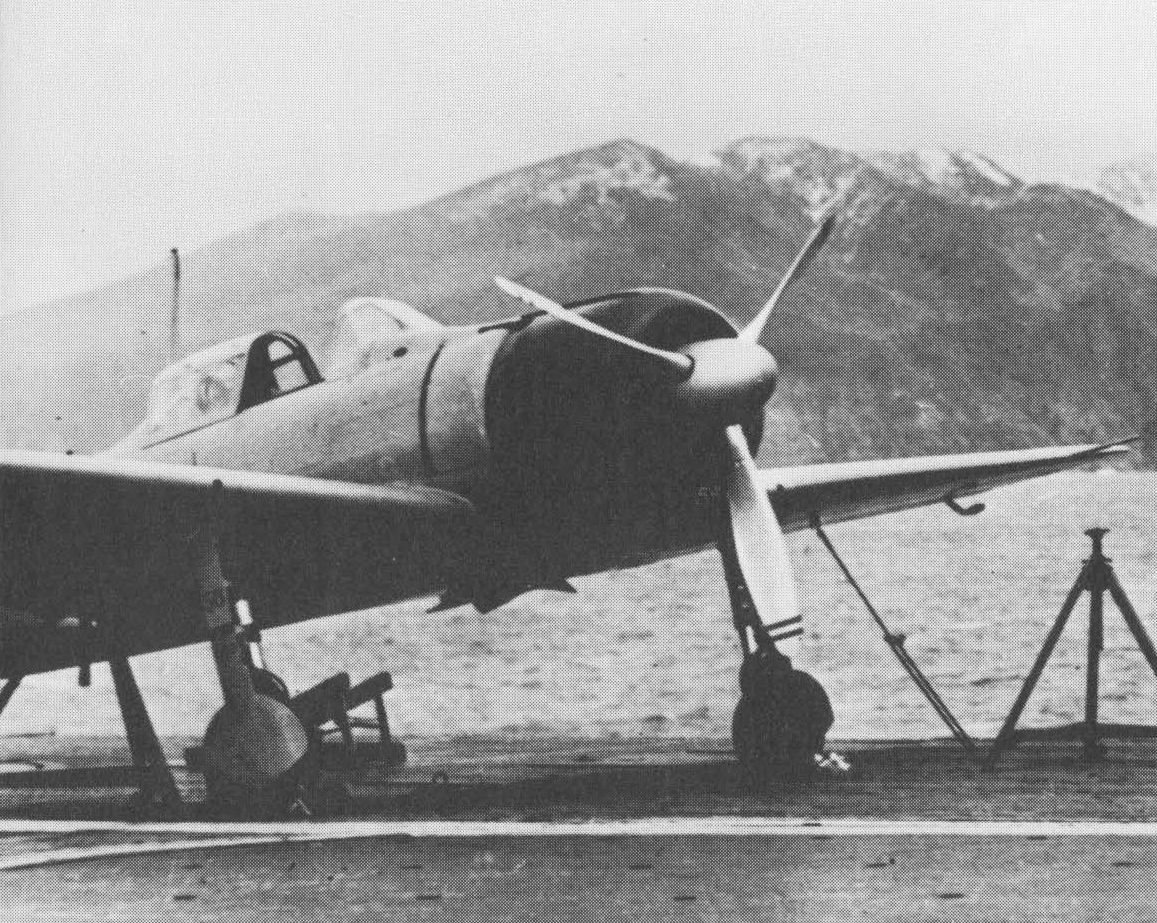
The Zero’s secrets survived exactly seven months of war. During the Japanese raids on Dutch Harbor in the Aleutians in early June 1942, Petty Officer Tadayoshi Koga’s A6M2 took a hit that cut its oil line. He tried to put the fighter down on what looked like firm ground on Akutan Island; it was bog, the Zero flipped onto its back, and Koga was killed. Five weeks later an American patrol aircraft crew spotted the almost intact fighter, and on 12 July 1942 it was recovered.
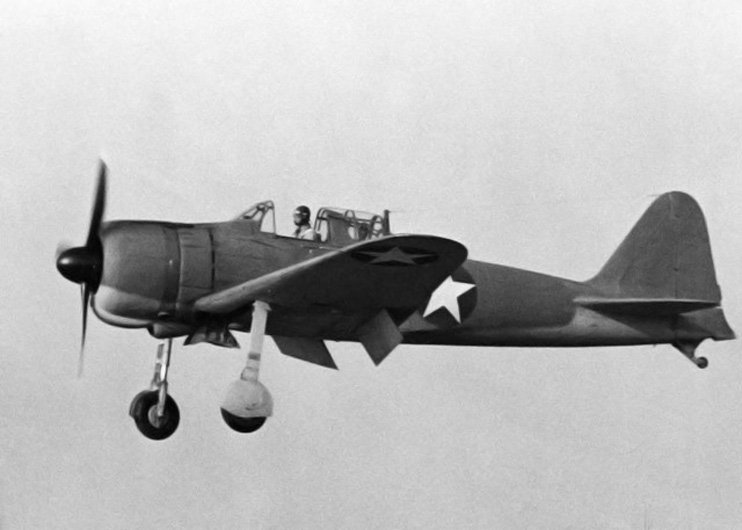
Shipped to Naval Air Station San Diego and repaired to flying condition, the Akutan Zero was flown exhaustively by US Navy test pilots that autumn. What they found changed the air war. The Zero’s fabled manoeuvrability fell away sharply at high speed; its ailerons stiffened, and its engine cut under negative g. The resulting guidance went to every Allied cockpit in the Pacific: keep your speed up, never turn with a Zero, and if one is behind you, dive hard and roll right, where the Zero could not follow. The aircraft itself survived until February 1945, when a taxiing Helldiver chopped through it; by then its work was long done.
The story has an uncanny European twin. Three weeks after Koga crashed, on 23 June 1942, a disoriented Luftwaffe pilot named Armin Faber landed his intact Focke-Wulf Fw 190 at RAF Pembrey in Wales by mistake, handing the RAF the same kind of windfall. We tell that story in our history of the Focke-Wulf Fw 190. One caution the record demands: the popular claim that the captured Zero shaped the design of the Grumman Hellcat is a myth, because the Hellcat first flew on 26 June 1942, before the Akutan Zero ever reached a test pilot. What the capture shaped was tactics, and tactics were enough.
The comparison with its stablemates completes the picture. Ship for ship, Japan opened the war with the finest carrier aviation on earth: the Zero flying cover, the D3A dive bomber and B5N torpedo bomber striking, all three types better than their Allied opposites in December 1941. The system was a rapier, superb in the first thrust and never designed for a long grinding fencing match, and the Zero’s story from 1943 is really the story of that whole system meeting an opponent built for exactly the long match Japan could not fight.
Midway, Guadalcanal and the Thach Weave
The strategic turn came at Midway in the first week of June 1942, where Japan lost four of the carriers that had struck Pearl Harbor, and with them, in the words of the US Navy’s historians, more than a hundred trained pilots who could not be replaced. The Zeros flew brilliantly at Midway; the battle was lost around them, to American code-breaking, carrier tactics and luck, and the balance of the Pacific began to shift.
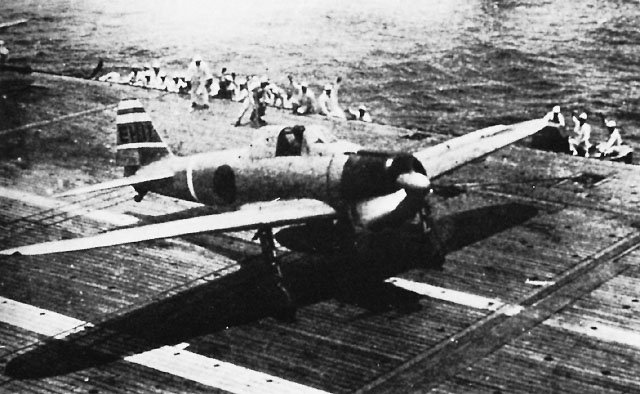
Midway also saw the combat debut of the answer to the turning fight. Lieutenant Commander John Thach of Fighting Three had devised a weave in which two Wildcats flew a linked pattern, each dragging any Zero that followed across the guns of the other. The Thach Weave worked from its first use, and derivatives of it are taught to fighter pilots to this day. Through the Guadalcanal campaign that followed, from August 1942 to February 1943, Zero units flying at the extreme end of their range from Rabaul were ground down in a battle of attrition against defended airspace, and Japan’s small, exquisite corps of veteran carrier pilots bled away sortie by sortie.
Hellcats, Corsairs and the long decline
From 1943 the Zero met a new generation of American fighters built around 2,000 horsepower engines: the F6F Hellcat, the F4U Corsair, the P-38 Lightning. They were faster, far tougher, more heavily armed, and flown in overwhelming and growing numbers by pilots trained in their tens of thousands, while Japan’s training system produced replacements in trickles. The Hellcat is often described, in the Imperial War Museum’s phrase, as designed specifically to counter the Zero; the timeline says rather that it was designed tough and powerful and turned out to be exactly what countering the Zero required.
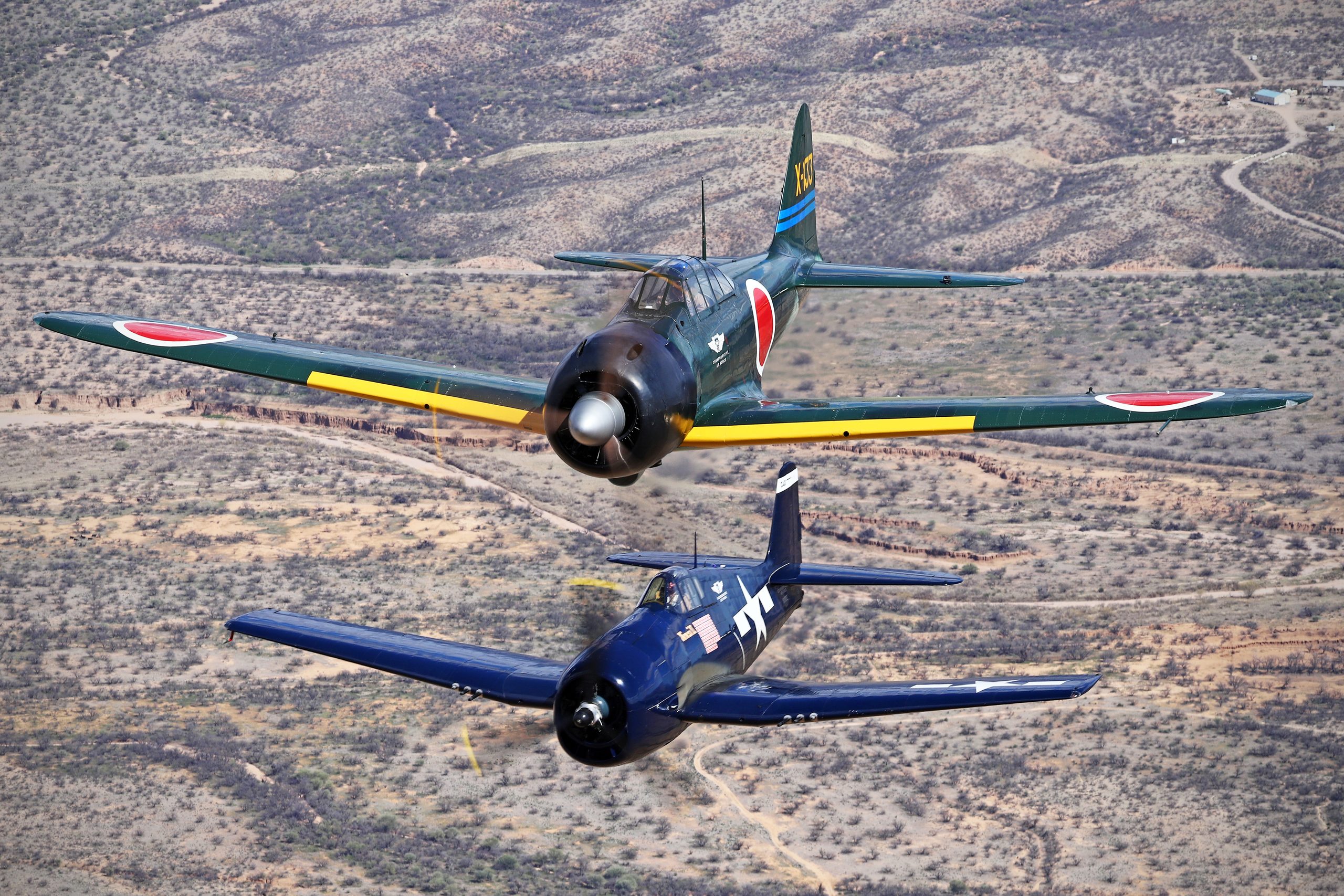
The arithmetic of the late war was pitiless. The Zero airframe received incremental armament, armour glass and, at the very end, self-sealing tanks, but no engine Japan could produce restored its edge. Its pilots, increasingly, were boys with a few dozen flying hours facing veterans with hundreds. In January 1944 a single Marine Corsair pilot, First Lieutenant Robert Hanson, shot down twenty Zeros in seventeen days. The fighter that had owned the Pacific sky in 1942 had become, in the brutal shorthand of one American historian, a victim waiting its turn.
Behind the cockpit arithmetic sat an industrial one. The United States trained pilots by the tens of thousands, rotating combat veterans home to teach; Japan trained by the hundreds, and kept its veterans at the front until they were killed. By 1944 the Imperial Navy was sending pilots into combat with a fraction of the flying hours of the men they faced, in an aircraft that punished every mistake with fire. The Zero did not become a bad fighter; the system that flew it collapsed around it, and the aircraft’s unforgiving design turned that collapse into slaughter.
Variants and production
Three versions dominate the story. The A6M2 Model 21, with folding wingtips for carrier lifts, was the Pearl Harbor Zero and the mount of the great 1941 and 1942 campaigns. The A6M3 Model 32 took the more powerful Sakae 21 and squared-off, clipped wings; it rolled faster but surrendered several hundred kilometres of range, a genuine handicap at Guadalcanal distances, and its changed shape briefly convinced Allied intelligence it was a whole new fighter, code-named Hamp before being recognised as a Zero variant. The A6M5 Model 52 of 1943, with a shorter-span rounded wing, heavier-gauge skin allowing faster dives and thrust-augmenting exhaust stacks, is generally considered the best of the line, and late sub-variants finally added the protection the design had always lacked. A dedicated fighter-bomber version, the A6M7, entered production in the war’s final months.
Production totals vary with what is counted. The standard breakdown gives Mitsubishi 3,879 aircraft and Nakajima, building the type under licence, about 6,500 more, for a core total around 10,400; museum figures that fold in trainer and floatplane derivatives run from 10,800 to a little over 11,200. On any count, well over half of all Zeros were built by Nakajima, and the type was produced in greater numbers than any other Japanese combat aircraft of the war.
The Model 32’s code-name muddle deserves its footnote. Allied intelligence first reported the square-tipped fighter as a new type and named it Hap, quickly amended to Hamp, the change usually attributed to the displeasure of General Henry “Hap” Arnold at the coincidence, though that story rests on anecdote. When examination showed it was simply a Zero with clipped wings, it became Zeke 32, and the episode says something true about the fog of the Pacific air war: eighteen months in, the Allies still knew the Zero mostly by silhouette.
The kamikaze weapon
The Zero’s last chapter is its darkest. Beginning in October 1944, during the battle for the Philippines, Zeros were used in organised suicide attacks, and the US Navy’s historians date the first such organised strikes to 25 October 1944, off Samar during the Battle of Leyte Gulf. Escort carriers including USS St. Lo and USS White Plains were struck or narrowly missed that day; St. Lo was sunk, the first major warship lost to a kamikaze.
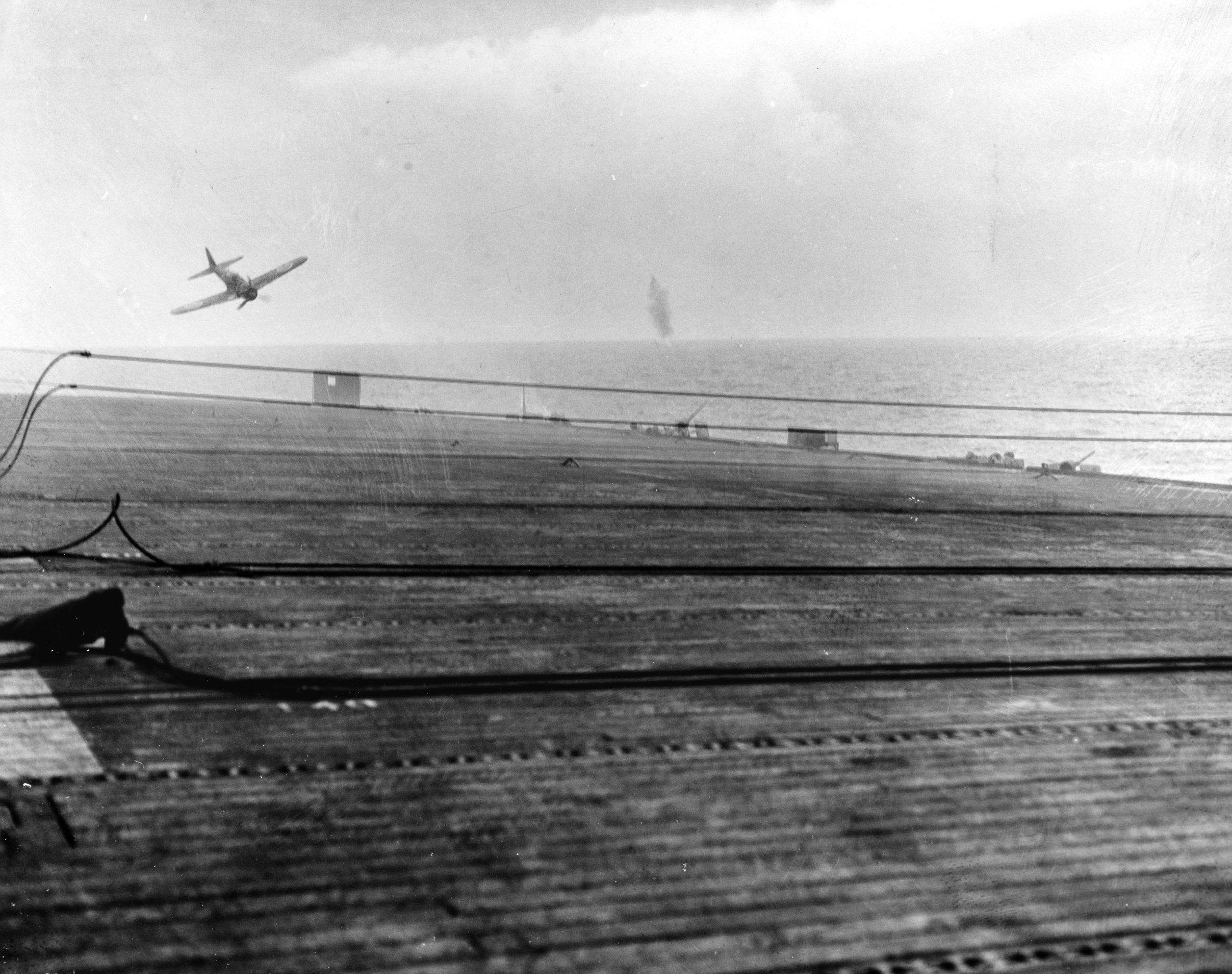
The Zero became the archetypal kamikaze aircraft for the same reasons it had once been a great fighter: it was available in thousands, easy to fly, and could carry a 250 kg bomb. In the last months the A6M7 was built for the role, and most surviving airframes in Japan were converted for special attack. Of all the ways the design’s story could have ended, the expenditure of the aircraft and its young pilots together was the saddest, and it is part of why so few Zeros survive today.
The first organised attack is generally credited to a five-aircraft flight of the Shikishima unit led by Lieutenant Yukio Seki, a name that has come to stand for all the young men expended in the campaign that followed. Between Leyte Gulf and the war’s end, kamikaze Zeros struck carriers, destroyers and transports from the Philippines to Okinawa, and the tactic that began as improvisation in October 1944 consumed much of what remained of Japanese naval aviation.
A6M5 Model 52 specifications
| Specification | A6M5 Model 52 |
|---|---|
| Wingspan | 11.0 m (36 ft 1 in) |
| Length | 9.06 m (29 ft 9 in) |
| Height | Approx. 3.5 m (11 ft 6 in) |
| Engine | Nakajima Sakae 21 fourteen-cylinder two-row radial, about 1,130 hp |
| Maximum speed | 565 km/h (351 mph) at 6,000 m |
| Climb | 6,000 m in 7 minutes 1 second |
| Service ceiling | Around 11,000 m (36,000 ft); sources vary |
| Range | Around 1,160 miles on internal fuel; the earlier A6M2 managed 1,930 miles with drop tank |
| Armament | 2 x 20 mm Type 99 cannon, 2 x 7.7 mm Type 97 machine guns; up to 250 kg of bombs |
| Number built (all versions) | Roughly 10,400 to 11,000; the most-produced Japanese aircraft of the war |
Set those figures against the fighter’s 1939 first flight and they explain both halves of its story. In 1941 nothing carrier-borne came close to that combination of range, agility and hitting power. By 1944 a Hellcat was seventy miles an hour faster, twice as heavy, and built to survive hits that would destroy a Zero, and no incremental change to the A6M could close a gap that had been designed in from the start.
A note on the numbers, because Zero figures are quoted with false confidence everywhere: even the museums disagree. For the earlier A6M2, the National Museum of the US Air Force lists a top speed of 316 mph while the National Naval Aviation Museum gives 331 mph at 14,930 feet, and published service ceilings for the A6M5 span three and a half thousand feet. Nearly all performance data for the type traces to postwar compilation from incomplete Japanese records, which is why this table names its sources and why any Zero figure deserves the word “about” in front of it.
Survivors and where to see one
Of the ten and a half thousand built, roughly thirty complete or substantially complete Zeros survive worldwide, and only a handful are capable of flight. Most survivors are recoveries from Pacific islands, lagoons and jungles, painstakingly rebuilt decades after the war; genuine unbroken survivors are almost unknown, because the type was expended in the war’s endgame and the occupiers scrapped what remained.
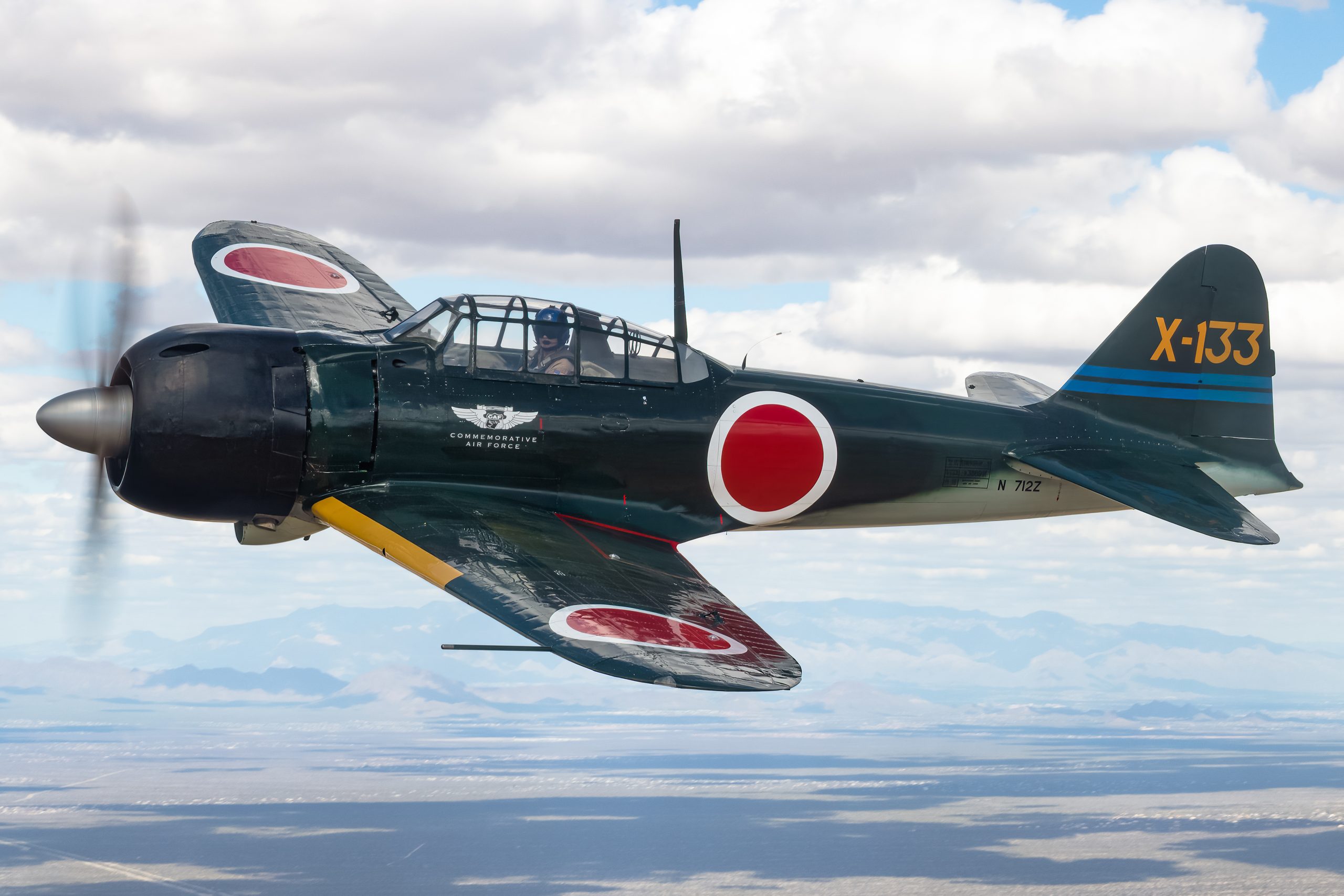
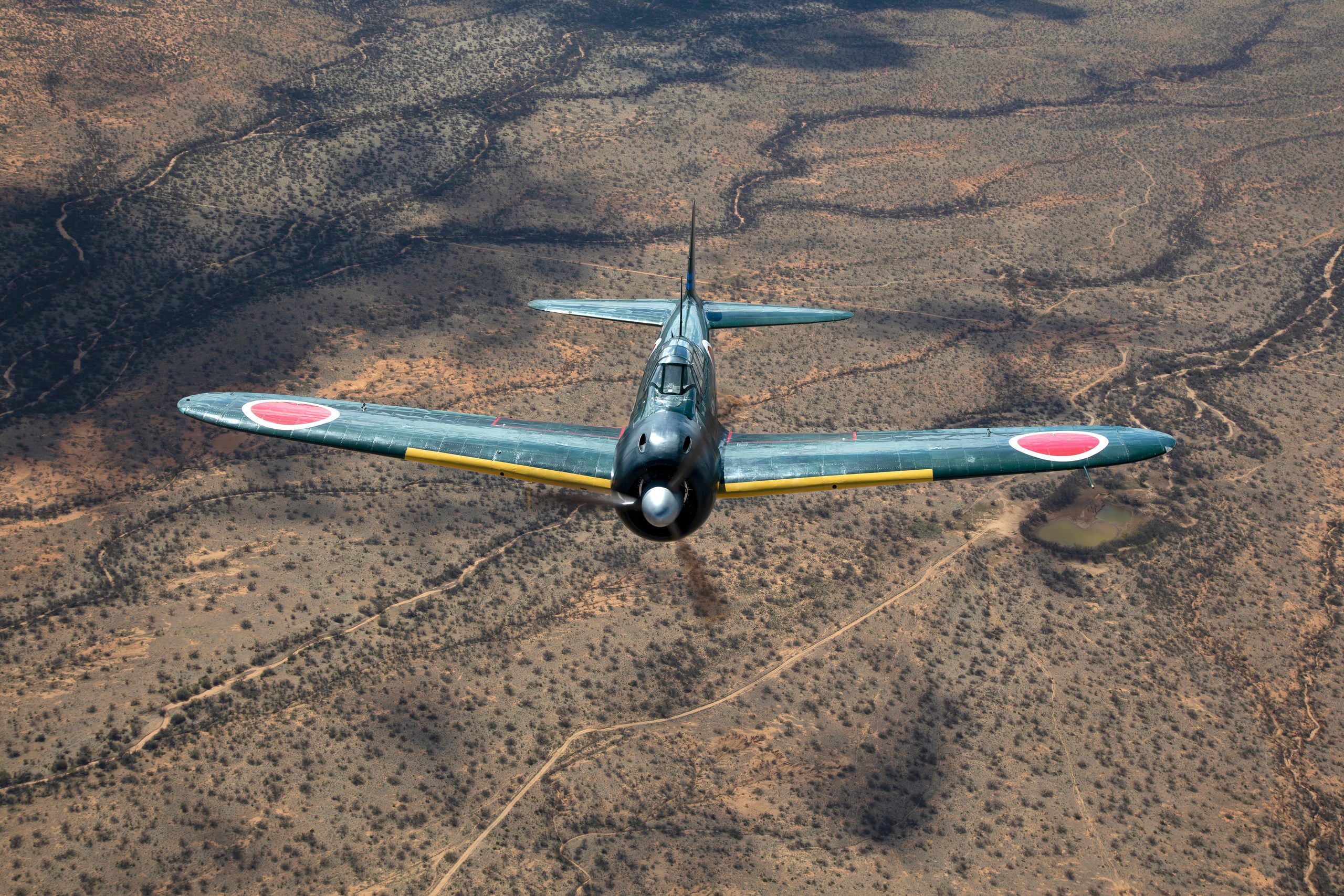
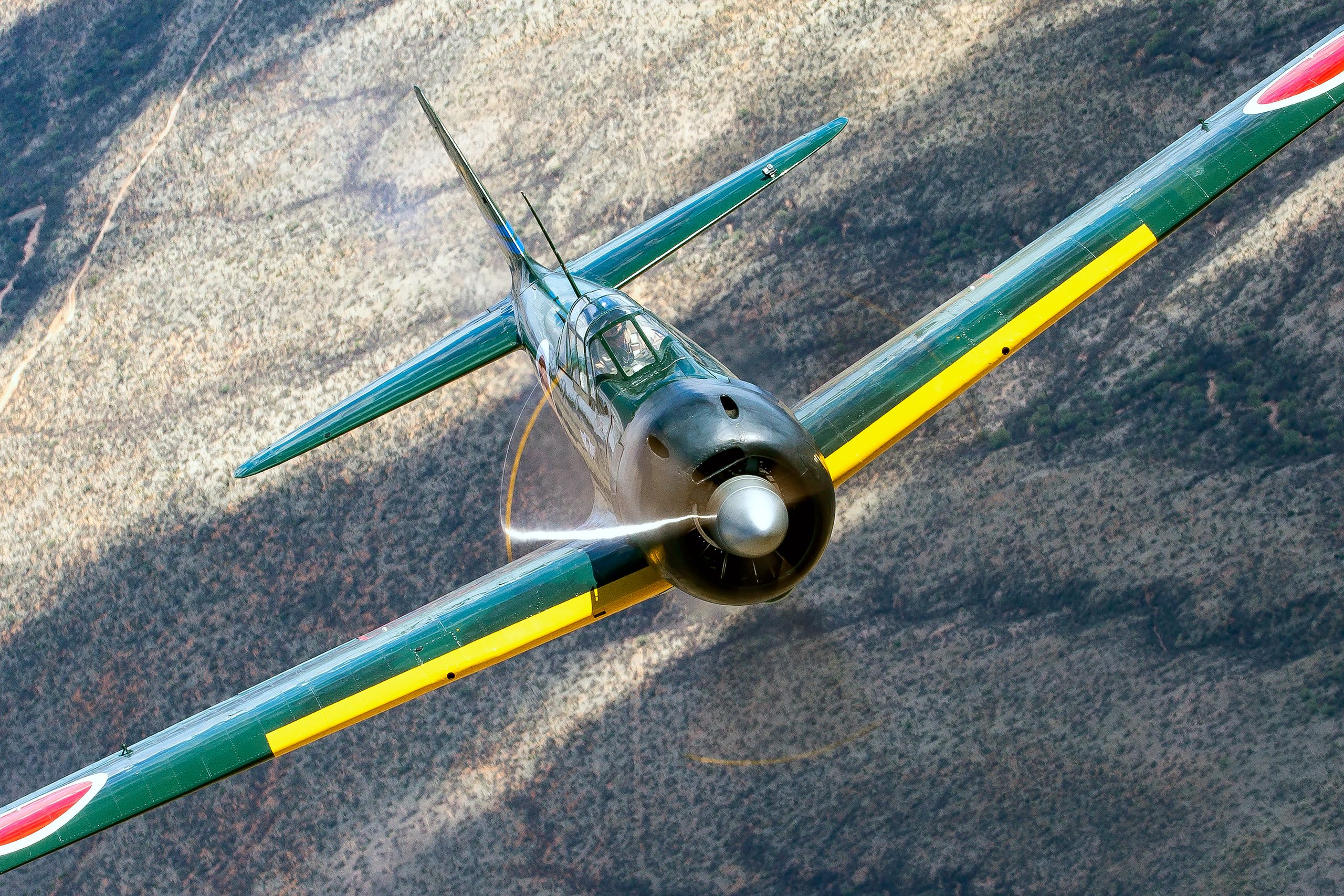
The most famous survivor flies at the Planes of Fame Air Museum at Chino, California: an A6M5, tail code 61-120, captured intact on Saipan in June 1944, test-flown in America by around twenty-five Allied pilots including Charles Lindbergh, and flying today, in the museum’s words, as the only authentic A6M still powered by its original Nakajima Sakae engine. The Commemorative Air Force’s Southern California Wing flies the A6M3 photographed for this article, and in May 2025 the Military Aviation Museum’s clipped-wing A6M3 Model 32 flew again at Everett after restoration, most likely the first Model 32 in the air since 1945. A few more airframes are flight-capable but between owners or in storage, so the working answer to how many Zeros fly is: around three, with more waiting.
For static survivors, the National Museum of the US Air Force displays an A6M2 recovered from New Ireland, the National Naval Aviation Museum at Pensacola shows a composite A6M2 from Ballale, the Pearl Harbor Aviation Museum has both a restored Model 21 and the Niihau wreckage, and the San Diego Air and Space Museum displays a late A6M7. In the UK there is one Zero on public display: the unrestored wreck of an A6M3 recovered from Taroa in the Marshall Islands, shown exactly as found in the Second World War Galleries of the Imperial War Museum in London, engineless and battered and all the more affecting for it.
One survivor carries the war written on its skin. The Smithsonian’s own A6M5, captured with eleven others when US forces took Aslito airfield on Saipan in June 1944, flew more than ninety hours in Allied test hands; inside its rear fuselage, restorers found wartime graffiti left by Japanese workers, including the exhortation to pray for absolute victory in the air war. It is currently off display, in storage or on loan, which is worth knowing before planning a pilgrimage; the museum’s public Zero story is told these days through its photographs and records rather than the airframe itself.
Photographing the Zero today
Photographing a flying Zero is a rare privilege, and the frames in this article show what the opportunity looks like when it comes: the Commemorative Air Force’s A6M3 photographed air to air over the Arizona desert, solo and alongside an F6F Hellcat, the very pairing that decided the Pacific war. Air-to-air sorties like these are the only way to show the Zero’s extraordinary wing from above, and the desert light suits its deep green paint far better than an English overcast ever could.
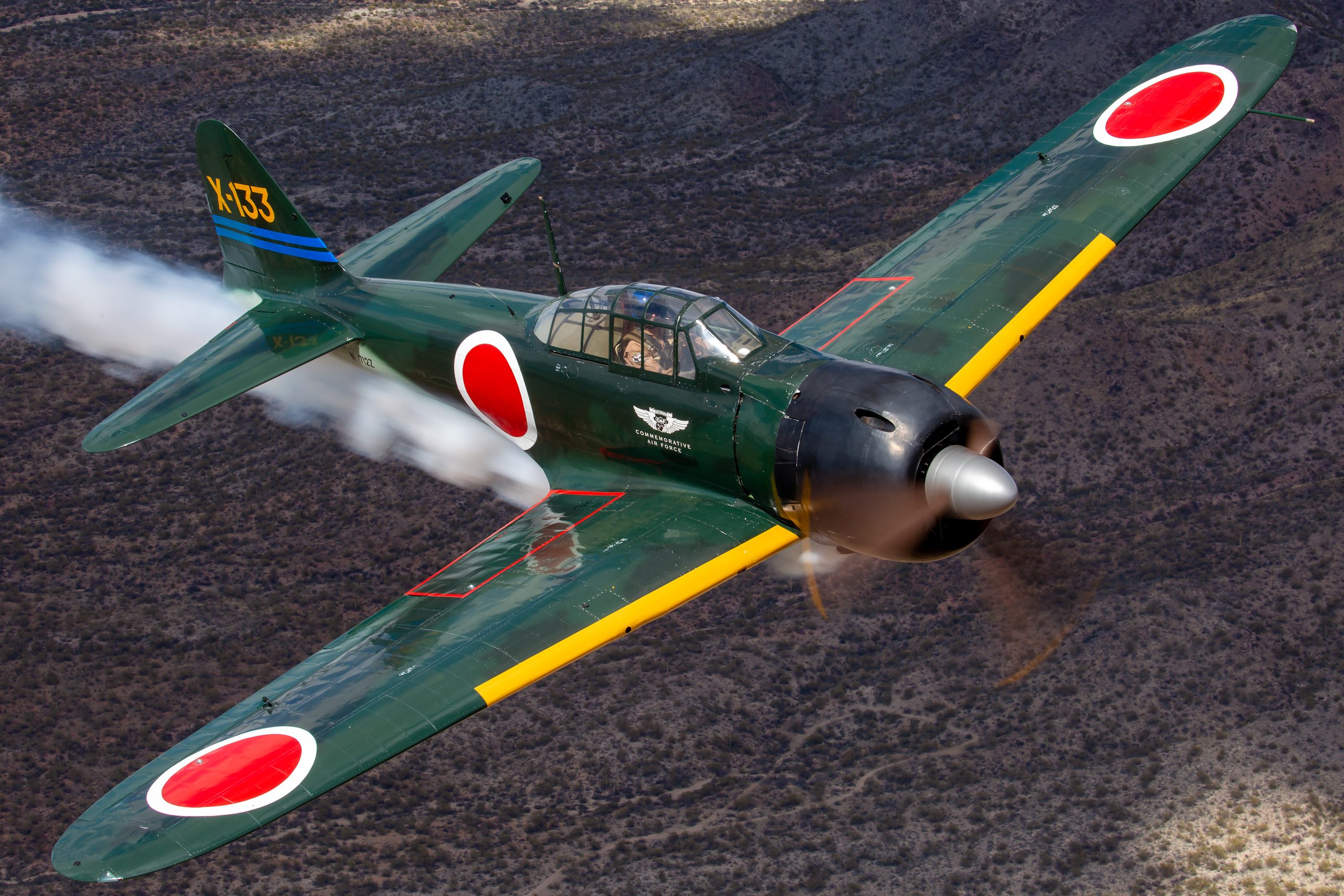
The technique notes are the standard radial-warbird set. Keep the shutter around 1/250 second or below so the propeller blurs into a disc, as our guide to propeller blur and shutter speed explains; expose for the dark airframe and let the sky look after itself; and if you find yourself at a US airshow, remember that most Zeros you will meet are converted T-6 Texans wearing movie paint, so check what is actually flying before you plan a trip around it. For the museum survivors, from Dayton to the IWM’s haunting wreck, our guide to photographing aircraft in museums covers the low-light craft.
Legacy
The Zero remains the most famous Japanese aircraft ever built, and the most argued about. To its admirers it was a masterpiece of design economy that gave Japan a year of air supremacy it had no industrial right to expect. To its critics it was a trap: a fighter so specialised for the duel that it could not grow, flown by a service that spent its irreplaceable pilots as freely as its airframes. Both are true, and the tension between them is exactly what makes the Zero worth studying.
Its deepest lesson outlived the war and passed into every air force’s doctrine: performance bought by discarding protection is borrowed, not owned, and the debt comes due the moment the enemy learns the trick. The handful of Zeros still flying, and the wrecks displayed from Ford Island to London, carry both halves of that story, the brilliance and the price, wherever people still look up at them.
For photographers and historians alike, the type’s scarcity is itself part of the story now. A flying Fortress or Mustang can be seen most summer weekends somewhere in the world; a flying Zero is an event, and the tiny surviving population means every airworthy example, every museum airframe and every unrestored wreck carries archival weight. That is worth remembering when the chance to see or photograph one arrives: the images made around today’s handful of survivors are the visual record the next generation will inherit.
The Zero’s most famous morning is also the one it is most often mis-drawn into. Our account of the aircraft of the Pearl Harbor attack sets out what the fighters were actually tasked with that day, and why no surviving Zero anywhere was there.
At Midway on 4 June 1942 the A6M2 flew the combat air patrol that destroyed three American torpedo squadrons: 35 of 41 Douglas TBD-1 Devastators were shot down and not one torpedo hit. Our account of the battle decided from the air sets out what the fighter did that day and what it cost the ships it was covering.
Frequently asked questions
Why was the Mitsubishi A6M called the Zero?
It entered service in the Japanese imperial year 2600, which is 1940, and was designated the Navy Type 0 carrier fighter, Reisen or Zero-sen to its pilots. The Allies gave it the reporting name Zeke, but Zero was the name both sides actually used.
Who designed the Zero?
Jiro Horikoshi, leading Mitsubishi’s design team, to a demanding 1937 Imperial Japanese Navy specification that rival Nakajima declined to bid for. Ironically, almost every production Zero flew on a Nakajima-built Sakae engine, and Nakajima built well over half of all Zeros under licence.
Was the Zero really the best fighter in the world?
For about a year from late 1941 it was the most dangerous carrier fighter in the world, with unmatched range and manoeuvrability, flown by superbly trained pilots. It was never fast, strongly built or well protected, and once Allied pilots learned energy tactics and stopped turning with it, its dominance ended.
Why did the Zero have no armour?
Its designer could not get more engine power, so he met an extreme specification by stripping weight instead, using a new lightweight aluminium alloy and omitting pilot armour and self-sealing fuel tanks entirely. The Smithsonian notes that the lack of those components eventually became the Zero’s undoing.
What was the Akutan Zero?
An almost intact A6M2 that flipped over in a bog on Akutan Island in the Aleutians in June 1942 after its pilot, Tadayoshi Koga, was killed attempting a forced landing. Recovered on 12 July 1942 and flown by US Navy test pilots at San Diego, it revealed the Zero’s weaknesses, stiff ailerons and fading agility at high speed, and reshaped Allied fighter tactics.
Did the captured Zero inspire the Hellcat?
No, that is a myth. The Grumman F6F Hellcat first flew on 26 June 1942, before the Akutan Zero had even been recovered, let alone test-flown. The captured fighter shaped tactics and pilot briefings rather than the Hellcat’s design.
What was the Thach Weave?
A defensive tactic devised by US Navy Lieutenant Commander John Thach in which two fighters flew a linked weaving pattern, so any Zero following one was dragged across the guns of the other. It debuted successfully at Midway in June 1942 and variants are still taught today.
How many Zeros were built?
Roughly 10,400 to 11,000 depending on what is counted, with figures up to about 11,300 when trainer and floatplane derivatives are included. Mitsubishi built 3,879 and Nakajima around 6,500 under licence, and it was the most-produced Japanese aircraft of the war.
How fast was the Zero?
The definitive A6M5 Model 52 managed about 565 km/h, 351 mph, at 6,000 metres per the standard references. That was competitive in 1940 and hopelessly outpaced by 1944, when Hellcats and Corsairs were sixty to eighty miles an hour faster and far tougher.
Were Zeros used as kamikaze aircraft?
Yes, more than any other type. Organised kamikaze attacks began on 25 October 1944 off Samar during the Battle of Leyte Gulf, when escort carriers including USS St. Lo, which sank, and USS White Plains were struck or attacked. A dedicated bomb-carrying variant, the A6M7, was built in the war’s final months.
How many Zeros survive, and do any still fly?
Roughly thirty complete or substantially complete airframes survive, most rebuilt from Pacific recoveries. Around three fly: the Planes of Fame A6M5, the only one still powered by its original Sakae engine, the Commemorative Air Force’s A6M3, and the Military Aviation Museum’s Model 32, which returned to flight in May 2025.
Where can I see a Zero in the UK?
The Imperial War Museum in London displays the unrestored wreck of an A6M3 recovered from Taroa in the Marshall Islands in its Second World War Galleries. It is the only Zero on public display in Britain, shown engineless and battle-scarred, exactly as recovered.
The fighter that finally broke the Zero’s reign fought beside another American great. Read our history of the Vought F4U Corsair, whose pilots claimed one of the most one-sided records of the Pacific war.
