The B-17 Flying Fortress is one of the most requested subjects in aviation picture research, and one of the hardest to source well: fewer than ten remain airworthy, so fresh photography is rare by definition. This guide is for the people who buy B-17 images, publishers, museums, documentary makers and model manufacturers, and it is built around a single extraordinary shoot: a full air-to-air sortie with the airworthy Fortress that flies as Ye Olde Pub, photographed over Oregon in golden light.
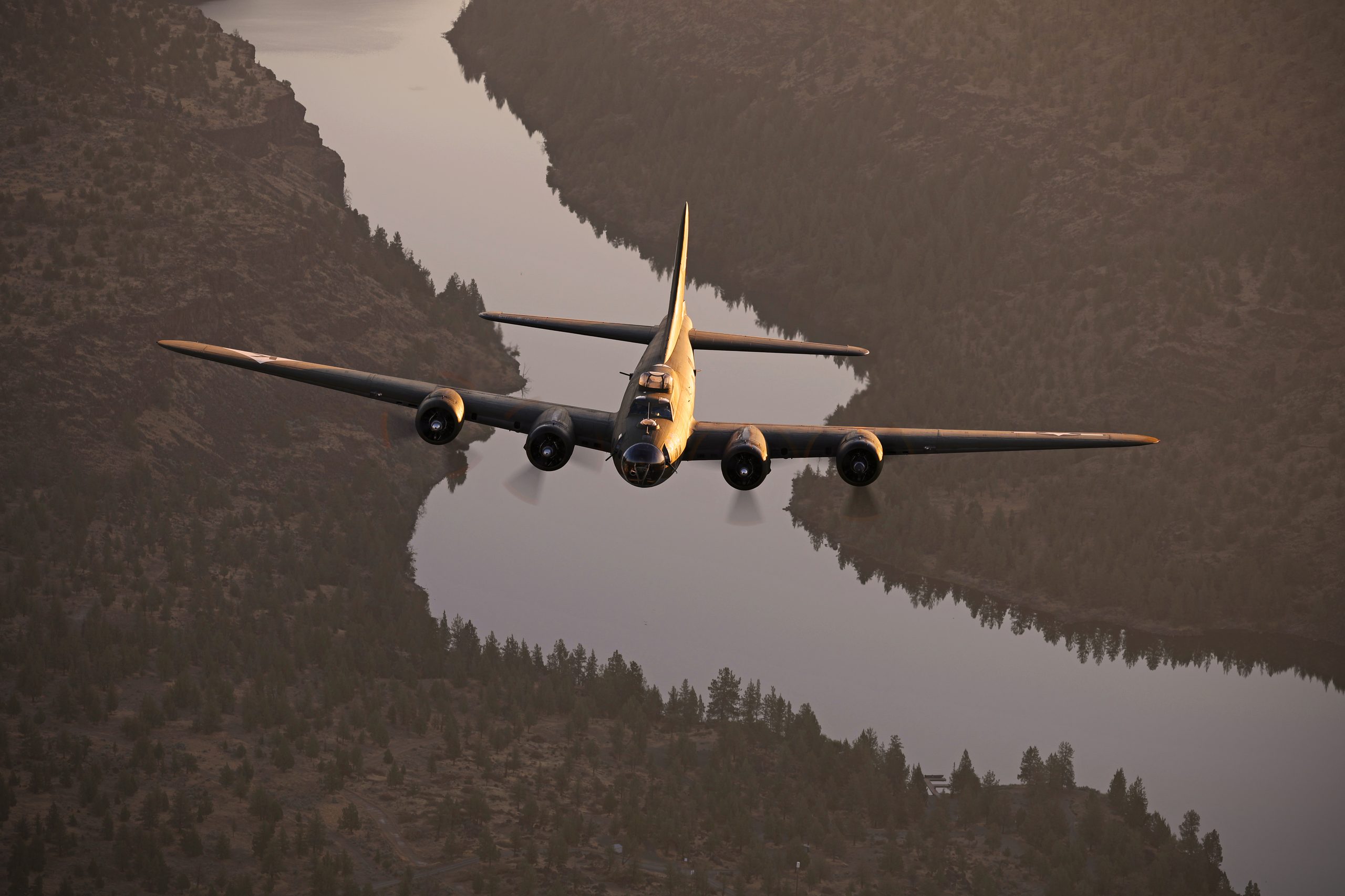
Most B-17 photography available to picture desks falls into two piles: wartime imagery, powerful but low-resolution and often wrongly captioned, and static airshow pictures of parked aircraft behind barriers. The third category, modern air-to-air photography of a flying Fortress, is the scarcest and the most useful, because it shows the aeroplane as the wartime generation actually saw it: in its element, engines turning, against sky and landscape. This guide explains exactly what one such collection contains, how to caption it plainly, and how to license it.
It is also, deliberately, a worked example of the discipline we describe in our general guide to aviation picture research: know precisely which airframe you are looking at, know whose markings it wears, and match the frame to the use. The B-17 in these photographs rewards all three habits.
A note on how to read it. If you are a working picture researcher, the sections on captions, angles and licensing are the operational core. If you are an author or producer shaping a project, start with the aircraft’s own story and the demand section, because they explain why this subject rewards planning ahead. And if you are simply a reader who loves the Fortress, the photographs need no professional excuse; they were made because the aeroplane deserved them.
What this guide covers
- The aircraft: the last Pathfinder
- The name it carries: Ye Olde Pub
- Captioning a tribute aircraft plainly
- Why B-17 demand keeps rising
- What the air-to-air coverage includes
- The Pathfinder story: a subject with one survivor
- An angle guide for designers
- Uses: books, museums, documentaries, model art
- Where else B-17 imagery comes from
- Commissioning beyond the archive
- Pairing modern frames with wartime imagery
- Technical quality and delivery
- Rights questions specific to warbird imagery
- Licensing the images
- A buyer’s B-17 checklist
- Frequently asked questions
The aircraft: the last Pathfinder
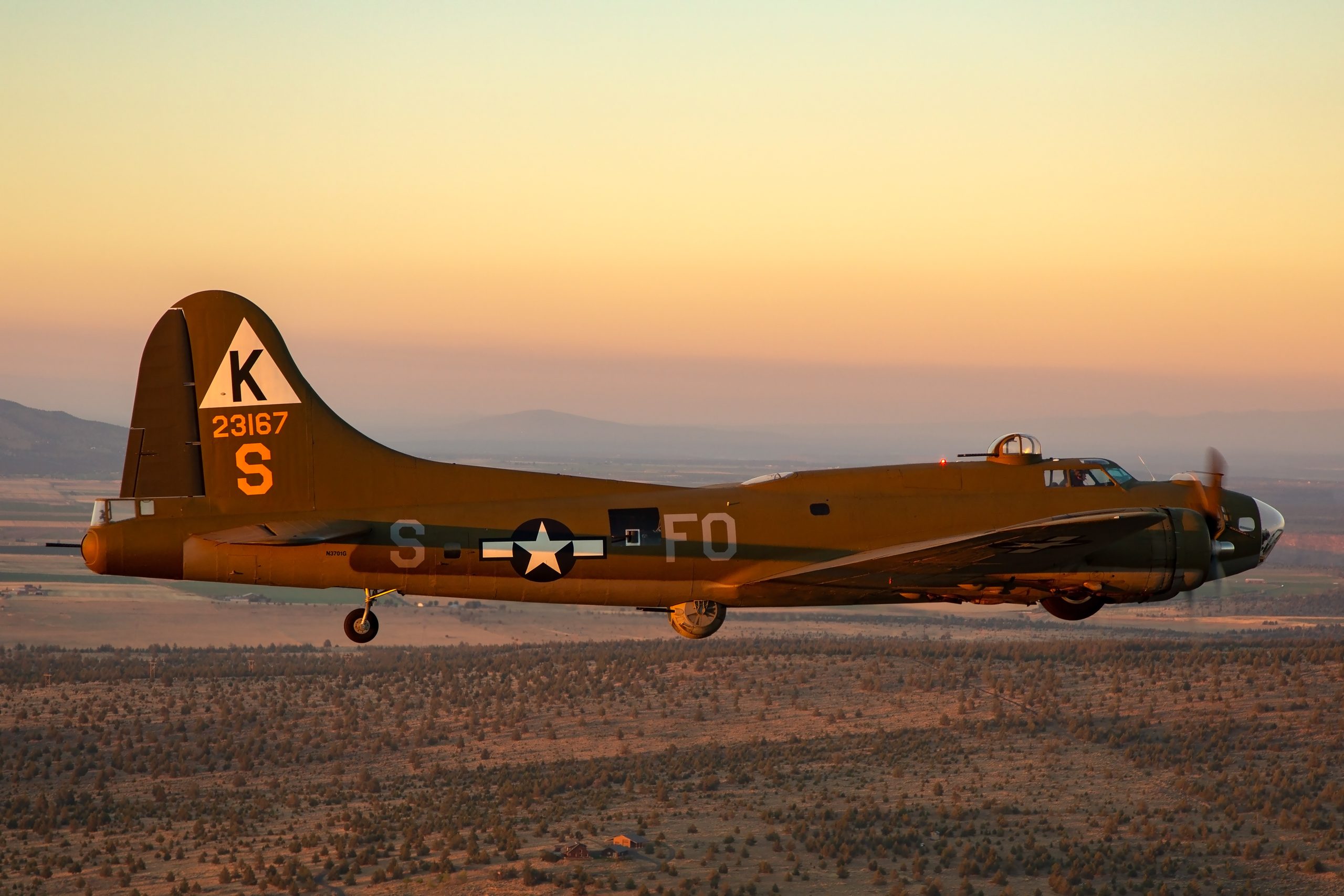
The Fortress in these photographs flies with the Erickson Aircraft Collection at Madras, Oregon. It is a late-production aircraft, built by Lockheed-Vega and delivered to the US Army Air Forces on 16 October 1944, and it carries a distinction no other surviving B-17 can claim: it is described by its operators as the only surviving example of the B-17 Pathfinder configuration, the radar-equipped fit that led formations to their targets when Europe’s weather closed over the bombsights.
For a picture buyer that pedigree matters twice over. It makes the aircraft really historic in its own right, a real 1944 Fortress with a rare operational specialisation, not a film prop; and it means the photography documents an airframe that museums and historians care about independently of its paint. Around forty-five complete B-17s survive worldwide and fewer than ten fly, so every airworthy example is photographed against the clock of maintenance economics; our full history of the B-17 Flying Fortress tells the wider story of the type and its survivors.
Provenance, as ever, closes the section. These frames were flown on a briefed formation sortie by Aviation Photo Crew, whose air-to-air work appears throughout this blog, and catalogued on landing with operator, location, date and airframe identity attached. When a picture desk asks the inevitable diligence questions, who took this, when, with what permission, the answers are one email away and were written down before the propellers stopped. That, more than any single image, is what buying from a working archive means.
The name it carries: Ye Olde Pub
In January 2019 the aircraft was repainted as Ye Olde Pub, in honour of the crew of the original Fortress of that name, and the choice connects it to one of the most retold stories of the air war. On 20 December 1943, the badly shot-up Ye Olde Pub of the 379th Bomb Group, flown by Second Lieutenant Charlie Brown, was intercepted over Germany by Luftwaffe pilot Franz Stigler, who, seeing the wreck the bomber had become and the wounded aboard, declined to finish it and instead escorted it clear. Pilot and would-be attacker met again decades later and remained friends for the rest of their lives.
For publishers, that story is commercial reality as much as history: it has carried a bestselling book and continues to drive editorial demand. Photography of the flying tribute aircraft is the only way to illustrate the story in colour at reproduction quality, and captions can make the connection legitimately provided they are written with the honesty the next section describes.
The story’s afterlife is part of its value. Brown spent years searching for the German pilot who had spared his crew, found him living in Canada, and the two men’s friendship became the subject of a bestselling account and countless retellings across television, print and music. For editors this means the Ye Olde Pub name arrives pre-loaded with recognition: a jacket or exhibition panel that shows the tribute aircraft is showing readers a story many of them already half-know, which is the kind of head start picture editors rarely get from a warbird subject.
Captioning a tribute aircraft plainly
The aircraft in these frames wears the markings of the original Ye Olde Pub, including the 379th Bomb Group’s triangle-K tail insignia and the original aircraft’s painted serial, but it is not that airframe. This is normal warbird practice, a flying memorial rather than an imposture, and the caption discipline is simple. Say what the photograph shows: the airworthy B-17 flown by the Erickson Aircraft Collection in the markings of Ye Olde Pub. Never imply the photograph shows the 1943 aircraft, and never date the image to the war.
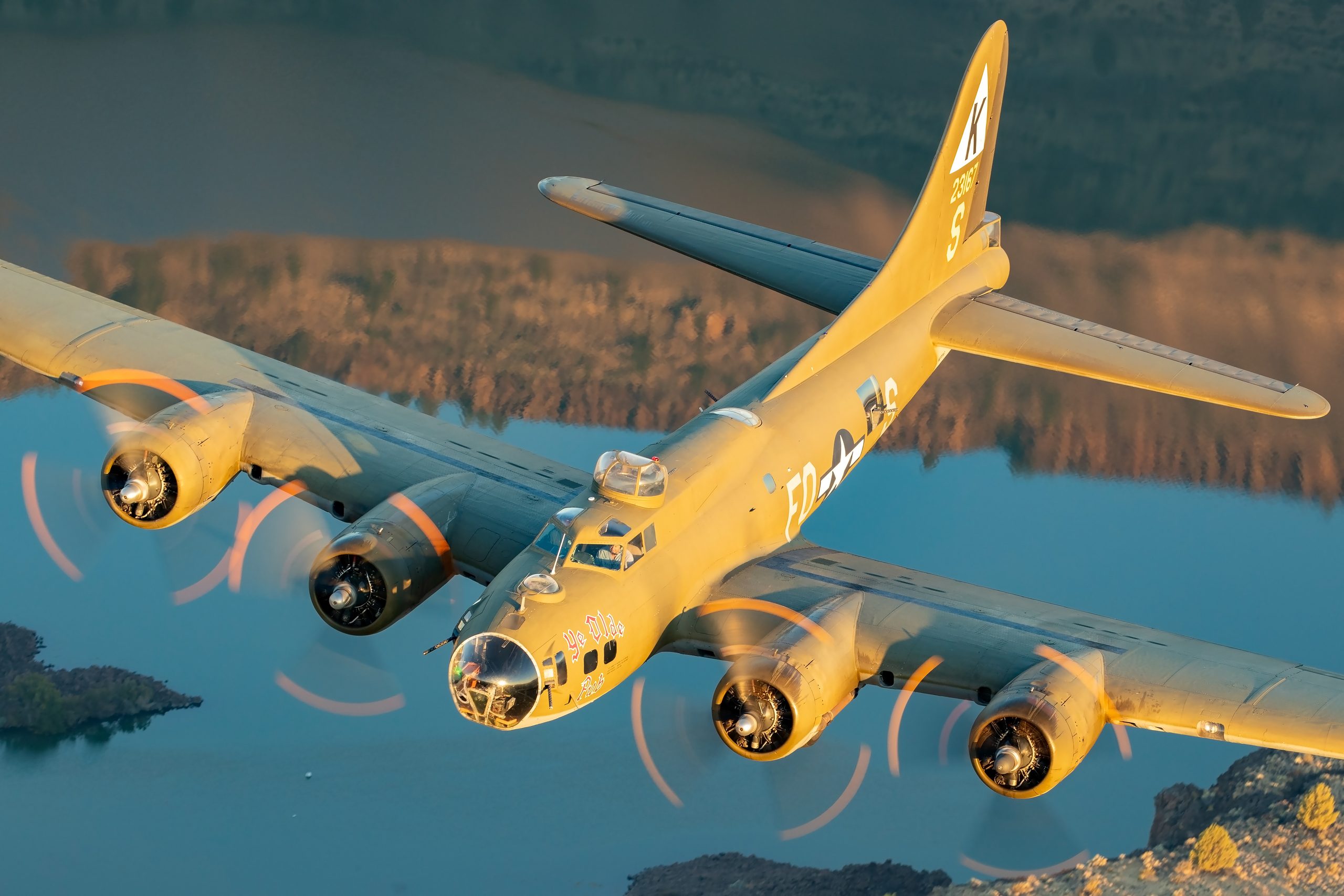
Written that way, the caption is bulletproof against the readers who check, and aviation readers always check. This is the single most common failure in published warbird material: a modern tribute aircraft captioned as a wartime photograph, an error that costs a history title its credibility on the letters page. The details supplied with every frame in this collection carry the honest formulation ready to use, which is one less thing for a picture desk to get wrong on deadline.
The same honesty extends to context. If a spread discusses the December 1943 incident, the modern frame illustrates the aircraft’s memory, not the event, and the caption’s date makes that clear. If a museum panel pairs the tribute aircraft with the original crew’s photographs, the panel text distinguishes the airframes in a sentence. None of this weakens the material; readers respond to remembrance plainly framed, and the operators who keep these aircraft flying deserve captions that honour both the history and the truth.
Why B-17 demand keeps rising
Editors sometimes assume interest in the bomber war peaked with its anniversaries. Publishing data says otherwise, and screen culture keeps refilling the well: the Memphis Belle films carried one generation, and the 2024 series Masters of the Air, built around the 100th Bomb Group, sent a new wave of readers, and picture requests, toward the Eighth Air Force. A caution inside that opportunity: Masters of the Air is a 100th Bomb Group story, square-D tails, while the aircraft in this collection wears the 379th Bomb Group’s triangle-K. Captions and briefs should not mix the two, and a picture desk that knows the difference will use both accurately.
The demand cycle also runs on remembrance. Eightieth-anniversary commemorations of the 1944 and 1945 campaigns, veteran obituaries, museum openings and memorial dedications all call for B-17 imagery at short notice, and modern colour air-to-air of an airworthy Fortress is the material that works beside those stories when wartime frames have been seen a hundred times. Scarcity does the rest: with fewer than ten airworthy examples worldwide, and only one flying in Europe, fresh flying photography of the type will never be common.
What the air-to-air coverage includes
The collection behind this article comes from a briefed formation sortie flown over central Oregon, dozens of usable frames made in one session as the light moved from full sun into the gold of early evening. That matters to a buyer because it means the coverage is systematic rather than opportunistic: the same aircraft, in the same fit and paint, from every working angle, in light that ranges from documentary-clean to frankly cinematic.
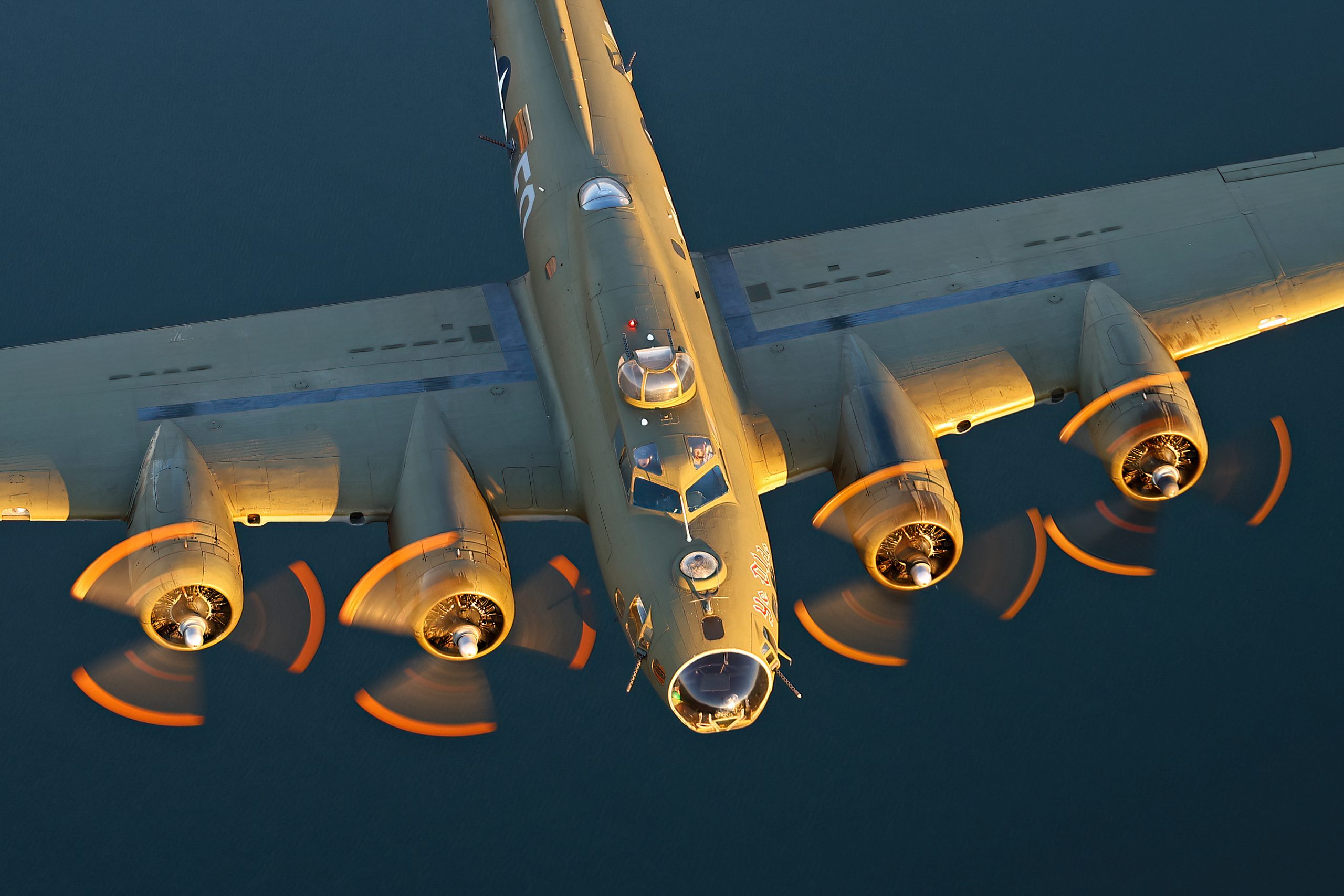
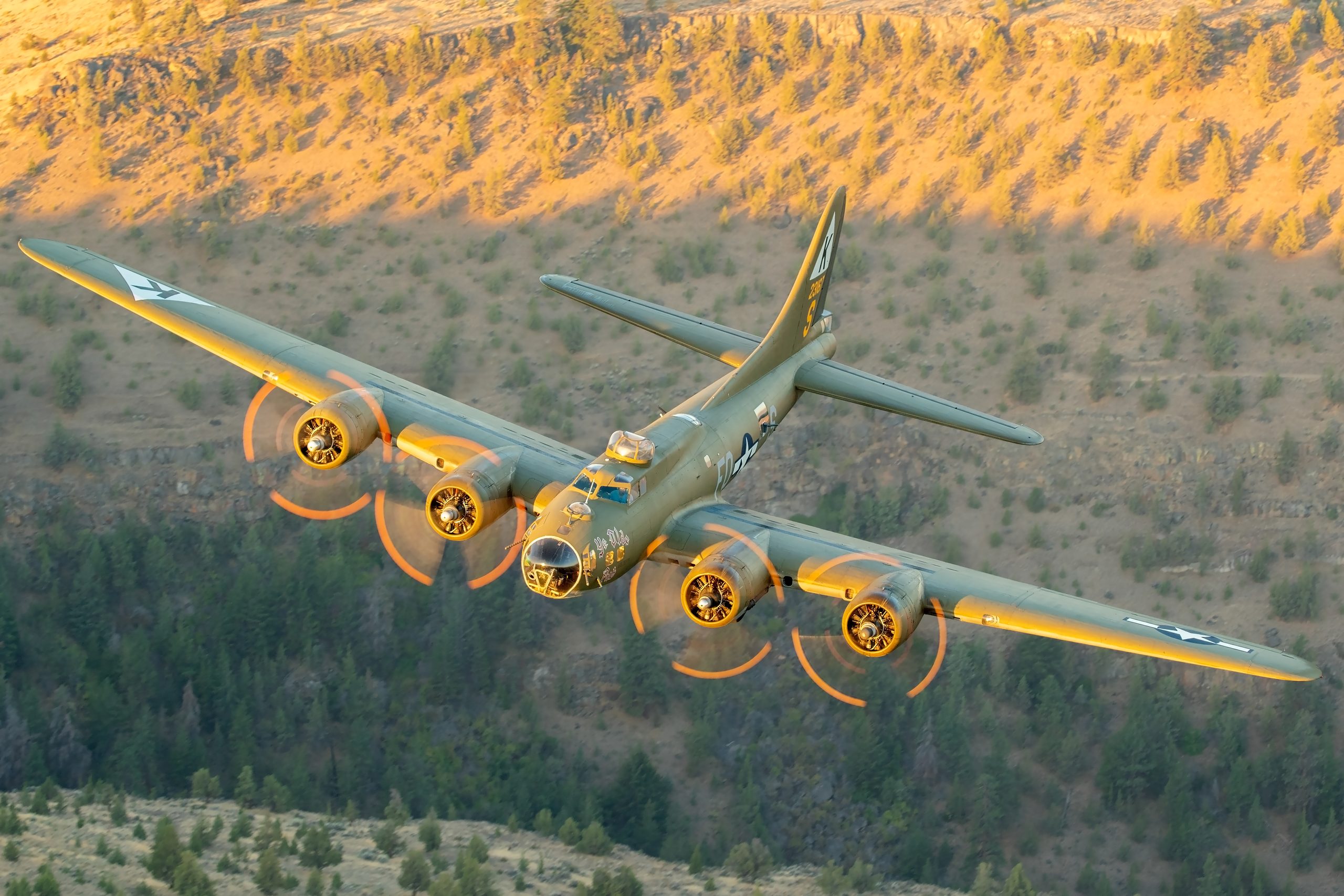
The angles run from dead ahead to dead astern: head-on frames with all four propeller discs alive, front quarters over lake and forest, level side profiles, topside overheads showing the full wing, tail-on frames with the group markings and painted serial legible, and close details of the nose art and gun positions. Backgrounds include open sky, high-desert ridges, forest, and the lakes and rivers that read unmistakably as the American Northwest. Because everything comes from one sortie, tone and fit are consistent across the set, which is exactly what a designer needs when a feature or gallery uses several frames together.
The light is worth dwelling on, because it is what buyers notice first in this set. The sortie ran into the golden hour deliberately, and the second half of the take has the low, warm side-light that turns olive drab into bronze and puts fire in the propeller arcs. Warm light is not always right, a technical reference wants the neutral frames from earlier in the sortie, and both exist here, but for covers, exhibition walls and anything that needs emotion as well as information, the golden frames are the ones that stop a browsing editor. That choice, neutral or golden, is precisely the kind of thing to state in a brief.
The Pathfinder story: a subject with one survivor
The Pathfinder detail deserves its own section because, for specialist publishers, it is the rarest thing this collection offers. By late 1944 the Eighth Air Force’s great problem was European weather: for much of the winter, targets simply could not be seen. The answer was radar, the American H2X ground-mapping set, carried by specially equipped lead aircraft whose operators read the ground through cloud and cued the formation’s release. The crews called it Mickey; the aircraft that carried it led the way on the days the bombsight was blind.
Radar-led bombing is a well-documented chapter in the histories and an almost unillustrated one in modern photography, because the equipment flew in ordinary-looking Fortresses that mostly went to the smelters like the rest. An operator-attested surviving Pathfinder airframe, flying, photographed air to air, is therefore close to a unique illustrative asset: any publisher covering blind bombing, lead crews or the winter campaigns of 1944 and 1945 has exactly one modern subject to point to, and it is the aeroplane on this page.
An angle guide for designers
Different pages want different frames, and with a subject this photogenic the temptation is to choose the prettiest rather than the fittest. A short field guide: the head-on frames are cover and opener material, maximum menace and presence, with clean space above the aircraft for titling. Front quarters are the workhorse editorial view, dynamic but fully descriptive. Side profiles serve reference, comparison layouts and modellers. Topside overheads are the rarest view and the most dramatic double-page spread material. Tail-on frames put the group markings and serial in the reader’s face, perfect beside any discussion of unit identity. And the low-light frames, engines glowing against dusk, are mood pieces for chapter openers and exhibition walls.
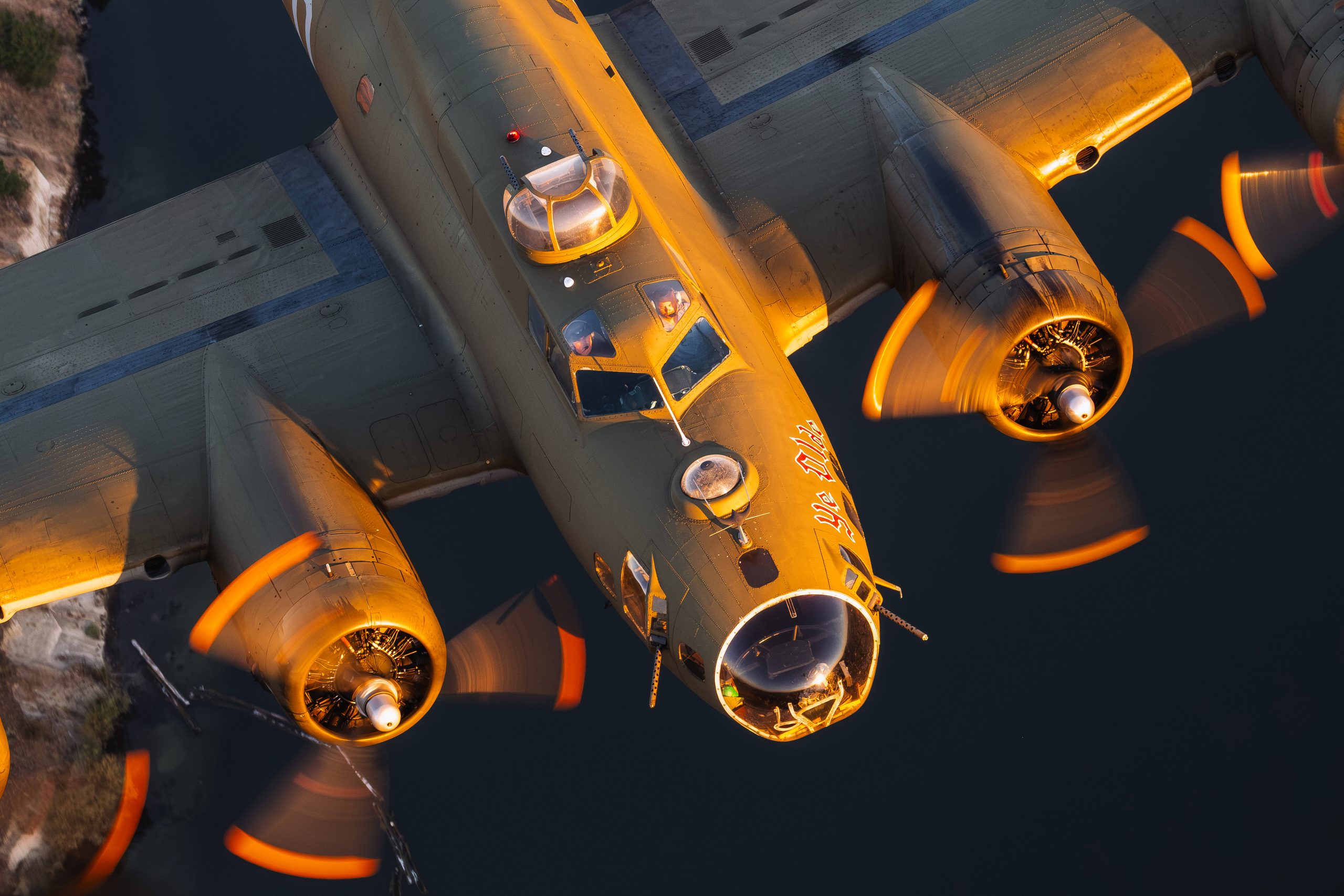
If a layout needs room for text, say so when you brief; several frames in the set were composed with exactly that dead space in mind. And if you need the aircraft matched to a specific paragraph, the group markings, the radar history, the Stigler story, tell the archive the paragraph rather than guessing at the picture, and let the coverage answer.
Formats and crops extend the guide. Nearly all frames are native landscape; the head-on and tail-on compositions crop cleanly to square for social and to portrait for posters without losing the aircraft. Detail crops of the nose art, gun positions and engines hold up at page size thanks to the master resolution, which effectively gives a designer a second tier of images inside the first. When a layout needs a specific ratio, ask for the frame recommendation at that ratio rather than cropping blind; some compositions were flown with exactly these conversions in mind.
For multi-frame features, sequence matters as much as selection. A proven order for a six-page bomber feature: head-on opener for impact, front quarter beside the introduction, side profile with the specification panel, topside across the centre spread, detail frame beside the crew or equipment text, and the banking tail-away frame to close. The collection supports that entire arc from one sortie, in matching light, which is the practical difference between an archive shoot and a scrapbook of singles.
Uses: books, museums, documentaries, model art
Book publishing is the natural home for this material: jackets and plate sections for the Eighth Air Force literature, the Brown and Stigler story, and general histories of the bomber war. Museums and visitor centres use large-format air-to-air frames as immersive backdrops where no real aircraft can hang, and the consistent light across this set suits panoramic treatments. Documentary makers rostrum the stills between archive sequences, where a colour air-to-air of a flying Fortress bridges wartime footage and talking heads better than any static shot. And for model manufacturers, the combination of topside views, tail markings and nose art detail in one collection covers box art and scheme reference from a single source.
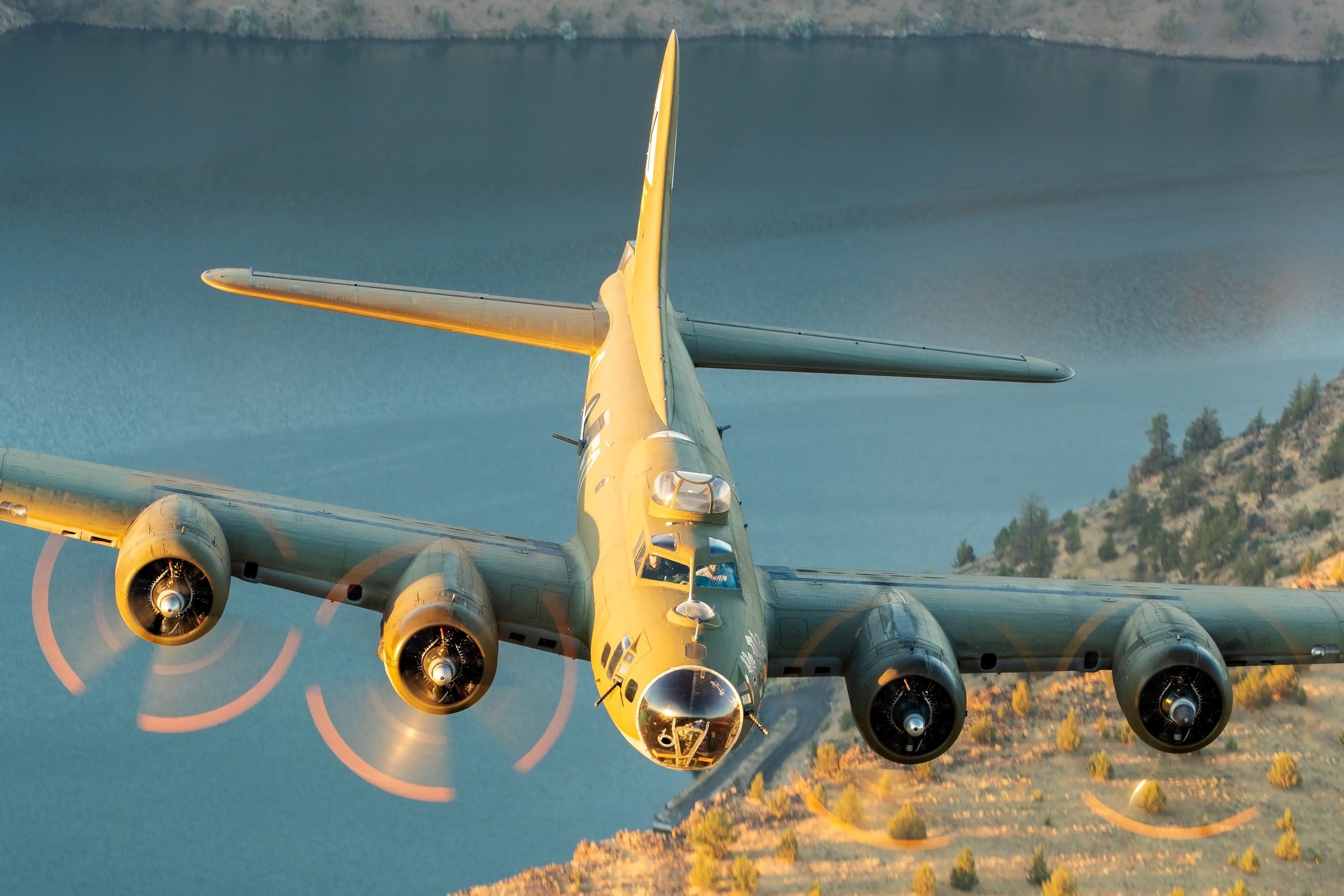
Two practical notes from the supplying side. First, the aircraft’s own history, the last Pathfinder, gives specialist publishers an angle nobody else can illustrate: radar-led bombing is a story with exactly one surviving photographic subject. Second, because the operator flies the aircraft each season, event-specific and newly commissioned coverage is possible; if a project needs the aircraft with a particular background or formation partner, ask early enough and the next season’s flying may answer it.
Education and partworks round out the demand. School and academic publishing returns to the strategic bombing campaign every curriculum cycle, and the visual grammar those titles need, one strong modern image beside period photographs and documents, is exactly the pairing this guide describes. Partwork and collectable publishers, building aircraft-by-aircraft series, need consistent full-aircraft views across many issues, and a single-sortie collection with uniform light gives an art director that consistency off the shelf. In both markets the honest-caption discipline matters even more than in trade publishing, because errors printed for students get corrected in public.
Where else B-17 imagery comes from
An honest guide says what else is on the market. Wartime imagery is abundantly available from official archives, much of it public domain, and every serious bomber-war title should draw on it; its constraints are resolution, condition and caption reliability, which decades of recopying have eroded. Other airworthy Fortresses are photographed at shows each season, and ground-based airshow photography of them is plentiful and inexpensive; its constraint is the airshow itself, crowds, barriers, heat haze and midday light. Museum aircraft can be photographed superbly, as our guide to museum aircraft photography explains, but a museum frame answers a different editorial question from a flying one.
Modern air-to-air sits above all of these in impact and below all of them in availability, which is the honest economics of this guide. When a project needs the flying Fortress as its visual centrepiece, the material either exists in an archive like this one or it does not exist at all, and no amount of searching changes that. The practical consequence for picture desks: find out early whether the centrepiece exists, and build the rest of the picture list around the answer.
Commissioning beyond the archive
Everything above describes photography that already exists. The other half of the service is photography that does not exist yet. Because the operator flies its aircraft through each display season, and because the archive’s photographers fly air-to-air sorties every year, projects with lead time can brief for coverage rather than search for it: the aircraft against a specific kind of landscape, alongside a fighter for an escort-themed spread, or detail coverage of a particular airframe area for a modelling or engineering title.
Commissioned aviation photography of this kind is less costly than most publishers assume, because the expensive parts, the aircraft and the camera ship, are flying anyway; the craft is in attaching your requirement to a sortie that is already planned. The practical rule is simple: if your project is more than one season from press, ask for what you actually want, not just for what exists. The worst case is that the archive answers from existing coverage after all.
Timing, finally, favours the prepared. Display seasons run spring to autumn; the aircraft’s flying calendar is set months ahead; and the golden-light sorties that produce frames like these are flown when weather, aircraft availability and camera ship align, which is a handful of evenings a year. Projects that identify their B-17 needs at commissioning stage, rather than at layout stage, consistently get the stronger material, and occasionally get material flown for them.
Pairing modern frames with wartime imagery
The strongest B-17 layouts pair these modern frames with genuine wartime photography, and the pairing rules are the ones from our picture-research guide: period images for events and people, modern air-to-air for the machine itself, and captions that never blur which is which. Public-domain wartime B-17 imagery is abundant from US official sources, and its weaknesses, resolution and condition, are precisely the strengths of a modern collection shot on high-resolution digital. Used together, plainly labelled, they give a spread both authority and impact.
One specific pairing suggestion for editors working the Ye Olde Pub story: wartime imagery of 379th Bomb Group aircraft and of battle damage carries the December 1943 events, and the modern tribute aircraft carries the remembrance, the friendship of Brown and Stigler and the way the story lives on. Framed that way the modern photography is not a substitute for the archive record; it is the second half of the story.
Digital delivery has one more buyer-side advantage worth naming: speed of correction. If a delivered frame turns out to fight the layout, a different propeller phase, a wing position that crowds the title, the take behind the selects usually holds the fix, and a replacement master can be delivered the same day under the same licence. Build that expectation into your schedule and the archive becomes an extension of the art desk rather than a shop you visited once.
Technical quality and delivery
The collection is shot on professional full-frame digital bodies and supplied from processed masters, with resolution comfortably supporting double-page print and exhibition enlargement from uncropped frames. Files are delivered as high-resolution JPEG as standard, TIFF on request, in a standard colour space, with caption, credit and identification embedded in the file. The credit line is Aviation Photo Crew, and the identification fields carry the operator, location, date and the honest tribute-aircraft formulation discussed above, ready for your digital asset system.
Anything non-standard, extreme enlargement, heavy crops of detail areas, backlit display conversion, broadcast deliverables, is a pre-licence conversation, and a fast one: tell us the final use and dimensions and the file will be matched to them. The one thing we ask buyers not to do is resample a delivered web preview into print; the masters exist precisely so nobody has to.
One archival note buyers increasingly ask about: preservation of the take. The full sortie is archived at master quality, not just the published selects, which means detail exists behind every gallery frame, alternative wing positions, propeller phases and expressions of light from the same seconds of flying. When a layout is nearly served by a published frame but not quite, the neighbouring frames in the take are checked as a matter of routine. Archives that keep only their selects cannot do this; it is worth asking any supplier whether they can.
Rights questions specific to warbird imagery
The usual questions have easy answers here. The photographs are the photographer’s copyright, licensed by the archive; editorial use in books, journalism, documentaries, education and exhibitions is the normal, simple case. The aircraft is privately operated and photographed by arrangement, so the awkward scenarios that occasionally complicate airshow photography, disputed vantage points, restricted events, simply do not arise. Nose art based on wartime originals sits in long-established warbird practice, and editorial reproduction of it in context is everyday publishing.
Commercial uses, advertising, packaging, merchandise, deserve the standard conversation about trademarks, endorsement and the operator’s own arrangements, and the archive will say plainly when a proposed use needs the operator’s blessing alongside the licence. As throughout this series: none of this is legal advice, it is a description of how the trade routinely works, and unusual uses are settled before delivery so the paperwork matches reality. The UK Intellectual Property Office’s published guidance on image copyright is the plain-language reference we point UK buyers to when a colleague needs convincing that internet-found images are not free.
None of the above requires scale to access. A single-image interior licence for a small-press title gets the same verified captions, the same master-quality file and the same day-one answers as a museum commissioning a wall. The archive’s economics work because the photography already exists; the marginal cost of serving a small publisher well is an email, and small publishers become large ones with long memories.
Licensing the images
Licensing follows the shape described in our aviation picture research guide: editorial licences scoped by use, size, territory, duration and exclusivity, agreed in writing before delivery, with commercial uses discussed case by case. The B-17 coverage is browsable in the galleries, licence options are described at our licences, and the wider Piemags archive sits behind it for projects that reach beyond aviation.
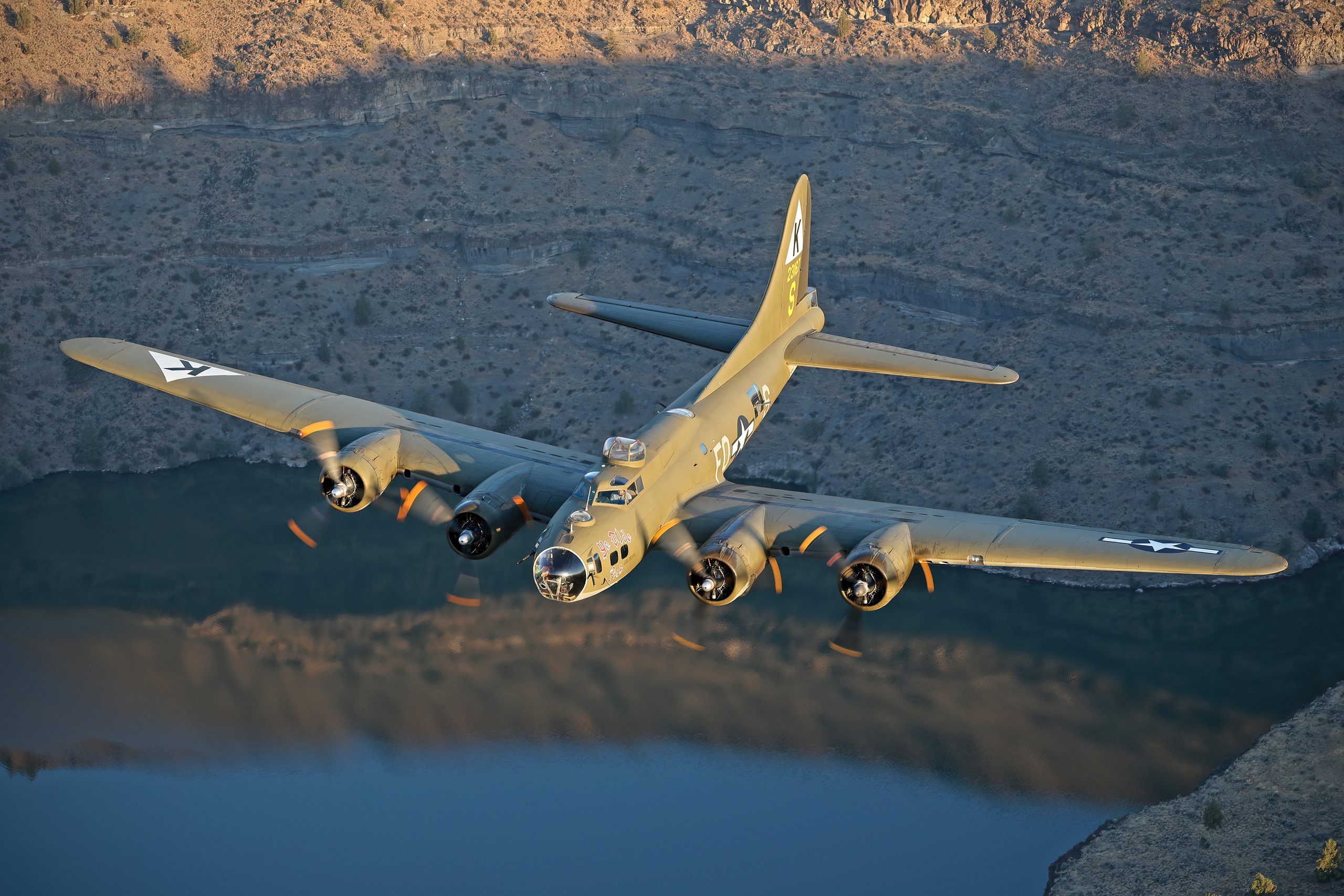
A complete brief gets a same-day answer: the subject, the use, the reproduction size, the territory and duration, the deadline, and whether exclusivity matters. For this collection specifically, mention whether the Pathfinder history or the Ye Olde Pub story is your angle, because the ideal frames differ, tail and markings for the story, airframe and detail for the history. Either way, the pictures exist because one of the last flying Fortresses met a camera ship in perfect light, and that is not an event anyone should assume will repeat on demand.
And when the brief is bigger than one aircraft, the same shelf extends: the archive’s warbird coverage runs from Spitfires and Mustangs to the giant Martin Mars flying boat, photographed with the same air-to-air discipline described here, and the modern military collections reach from Typhoons to F-35s. A bomber-war project that needs its escort fighters, its adversaries, or simply variety across a series can source the whole visual programme from one place, with one licensing conversation and one caption standard, which is a quiet but real saving on any multi-image production.
A buyer’s B-17 checklist
Before licensing any B-17 photograph, from any source, six questions keep a project safe. Which airframe is this, by operator and registration, not just by painted name? Whose markings does it wear, and does the caption say so? When and where was the photograph taken? Does the resolution really support the final reproduction size, uncropped? Does the licence cover the actual use, including territory, duration and any exclusivity the design depends on? And is the credit line agreed and carried? Every frame in this collection arrives with those answers attached; for material from other sources, the checklist is the picture desk’s armour.
The seventh, unofficial question is the one this whole series keeps returning to: does the image serve the story, or merely decorate it? The B-17 is photogenic enough to tempt any designer into ornament. The best bomber-war pages we see use fewer, better frames, each one earning its place beside the text, and that is the standard this collection was flown to meet.
Requesting images. Email sales@piemags.com with the subject you need, the medium, the territory, the print run or audience, and your deadline. That is enough to quote against. Licensing terms are set out on the Piemags licences page.
Frequently asked questions
Which B-17 is shown in these photographs?
The airworthy Flying Fortress operated by the Erickson Aircraft Collection at Madras, Oregon: a Lockheed-Vega built aircraft delivered in October 1944, described by its operators as the only surviving B-17 Pathfinder, flying since 2019 in the markings of Ye Olde Pub as a tribute to the original aircraft’s crew.
Is this the real Ye Olde Pub from the Charlie Brown and Franz Stigler story?
No, and honest captions must say so. The original 379th Bomb Group aircraft did not survive the war; this is a genuine 1944 Fortress flying in its markings as a memorial. The correct formulation names the flying aircraft, its operator and its painted identity, and dates the photograph to when it was taken.
How many B-17s survive, and how many still fly?
Around forty-five complete airframes survive worldwide and fewer than ten are kept airworthy, with Sally B at Duxford the only flyer in Europe. Every airworthy Fortress flies against the economics of maintaining a wartime four-engine bomber, which is why fresh flying photography of the type is permanently scarce.
What is a B-17 Pathfinder?
A lead aircraft fitted with H2X ground-mapping radar, which allowed bombing through the overcast that blinded optical bombsights over wartime Europe. Radar-equipped lead ships guided the formations on bad-weather missions, and the aircraft in this collection is described by its operators as the configuration’s only survivor.
What does air-to-air photography add over airshow pictures?
Angles and settings that do not exist from the ground: head-on frames, topside overheads showing the full wing, clean landscapes instead of crowds and barriers, and light chosen rather than endured. For covers, spreads and exhibition graphics it is usually the strongest B-17 material available.
Can I use these images in a book or magazine?
Yes, that is their core purpose. Editorial licences are scoped by use, size, territory, duration and exclusivity, agreed in writing before delivery. Browse the galleries, send the brief, and a complete brief normally gets a same-day answer.
Can I use them in a documentary or on television?
Yes. Stills are routinely licensed for broadcast and streaming, usually worldwide in perpetuity for a named programme, and delivered at resolutions comfortable for rostrum work. Tell us the programme, the territories and the platforms and the licence will be written to match.
What resolution are the files?
Shot on professional full-frame digital bodies and supplied from processed masters, the frames comfortably support double-page print and exhibition enlargement uncropped. High-resolution JPEG is standard, TIFF available, with captions, credit and identification embedded in the files.
Do I need permission from the aircraft’s owner as well as a licence?
For editorial use, no; the licence from the copyright holder is what you need. Commercial uses such as advertising or merchandise raise the usual questions of trademarks and endorsement, and the archive will say plainly when a proposed use should involve the operator too.
Can I commission specific B-17 coverage?
Yes, with lead time. The aircraft flies each season and air-to-air sorties are flown every year, so projects more than a season from press can brief for backgrounds, formations or detail coverage that does not yet exist, often at less cost than publishers expect.
How should I pair these frames with wartime photographs?
Use period imagery for events and people and modern air-to-air for the machine, with captions that never blur which is which. Public-domain wartime B-17 photography is abundant from official US sources, and the two kinds of material are stronger together than either alone.
How do I license one of these images?
Browse the collection at professionalaviationphotography.com, read the licence options on the our-licences page, and send your brief: subject, use, size, territory, duration, deadline and any exclusivity need. Mention whether the Pathfinder history or the Ye Olde Pub story is your angle so the right frames come back first.
For a subject where no new photography can ever be flown, see the third guide in this series, the Martin Mars final-flights collection.
