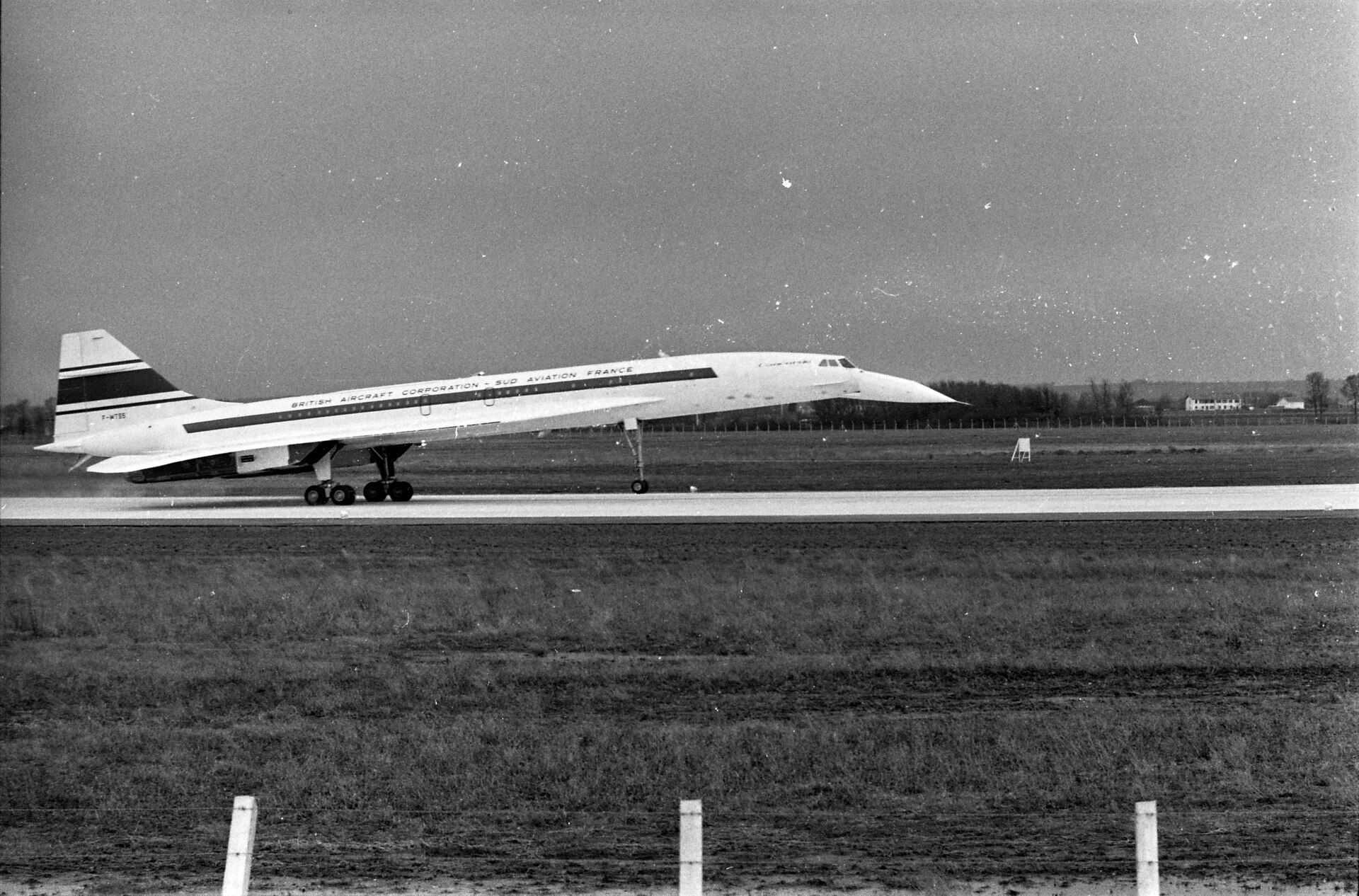
Concorde first flew on 2 March 1969, when French test pilot André Turcat lifted prototype 001 off runway 33 at Toulouse-Blagnac for a careful maiden flight of about 28 minutes. It was one of the most anticipated moments in aviation history: seven years of Anglo-French engineering, politics and public money finally in the air, watched by a crowd of journalists who had been waiting through days of fog and delay. This is the full story of that day, the extraordinary road that led to it, and everything that followed.
What this guide covers
- The world that demanded Concorde
- An unbreakable treaty
- Building and testing 001
- The men in the cockpit
- The flight: 2 March 1969
- Britain’s turn: Concorde 002
- Why the flight mattered
- From prototype to passengers
- Where the first Concordes are today
- Photographing Concorde today
- Key facts and dates
- Legacy
- Frequently asked questions
The world that demanded Concorde
To understand why a crowd stood shivering beside a Toulouse runway in March 1969, you have to understand what commercial aviation looked like in the late 1950s, when the project was conceived. The jet airliner had just arrived. Britain’s de Havilland Comet had shown the way in 1952 and, after its structural tragedies, returned in matured form; the Boeing 707 and Douglas DC-8 were shrinking the Atlantic to seven hours. Speed had doubled inside a decade, and to planners on both sides of the Channel the direction of travel seemed obvious: it would double again. The airliner of the 1970s, everyone serious believed, would be supersonic.
The question was not whether a supersonic transport would be built, but who would build it. For Britain and France the answer carried weight far beyond aviation. Both countries had watched American manufacturers take the lion’s share of the jet market that British engineering had opened; our profile of the de Havilland Comet tells that painful story. A supersonic airliner was a chance to leapfrog the Americans entirely rather than chase them, and neither country could afford to do it alone.
Britain brought a decade of relevant research. The Supersonic Transport Aircraft Committee, formed in 1956, had concluded that a slender delta wing was the shape most likely to make supersonic passenger flight work, and research aircraft had explored the regime’s peculiar aerodynamics: the way a slender delta generates lift through swirling vortices at high angles of attack, the very characteristic that would later give Concorde its dramatic nose-high landings. France, through Sud Aviation, had the Caravelle behind it and a design bureau in Toulouse thinking along strikingly similar lines. When each side examined the other’s studies, the designs were close enough that partnership looked less like compromise than convergence.
The research that made it possible
The confidence to sign for a Mach 2 airliner did not come from nowhere. Through the late 1950s and early 1960s Britain flew a family of research aircraft aimed squarely at the slender delta’s unknowns. The Handley Page HP.115 explored how such a wing behaved at very low speeds, the regime that worried engineers most, and showed the vortex lift that made slow flight controllable was real and usable. The Fairey Delta 2, which had taken the world air speed record in 1956, was rebuilt with an ogival wing as the BAC 221 to test the planform at the other end of the envelope. In France, Sud Aviation’s own studies pointed the same way. By the time the treaty was signed, the shape of the aircraft was, in outline, already agreed by physics; what remained was the far harder job of turning a shape into an airliner.
An unbreakable treaty
The agreement signed on 29 November 1962 was not a commercial contract between companies. It was an international treaty between governments, committing Britain and France to develop a supersonic transport jointly, sharing costs and work equally. And it contained a remarkable feature: no withdrawal clause. There was no mechanism by which either government could simply walk away.
That omission shaped everything that followed. Costs rose far beyond the early estimates, as they do on programmes that push technology this hard, and governments changed on both sides of the Channel. In 1964 Britain’s incoming Labour government, hunting for savings, looked hard at cancellation and concluded that the treaty made it prohibitive; the diplomatic and legal consequences of unilateral withdrawal were judged worse than the cost of carrying on. Whatever one thinks of the economics, the treaty kept both nations at the table long enough to finish the job, which is why the aircraft existed to fly at all.
The work share divided along lines of experience. The British Aircraft Corporation led on the forward fuselage and the complex drooping nose, the electrics, the fuel system and more; Sud Aviation led on the wing and centre fuselage. Rolls-Royce and Bristol Siddeley heritage came together with France’s Snecma on the Olympus 593 engines, an afterburning development of the engine that powered the Avro Vulcan, Britain’s delta winged bomber; readers who enjoy that lineage can find our full Avro Vulcan history elsewhere on the blog. Two assembly lines were agreed, one at Filton near Bristol and one at Toulouse, an arrangement nobody would call efficient but which politics demanded. The French line would produce the first prototype, 001; the British line the second, 002.
Building and testing 001
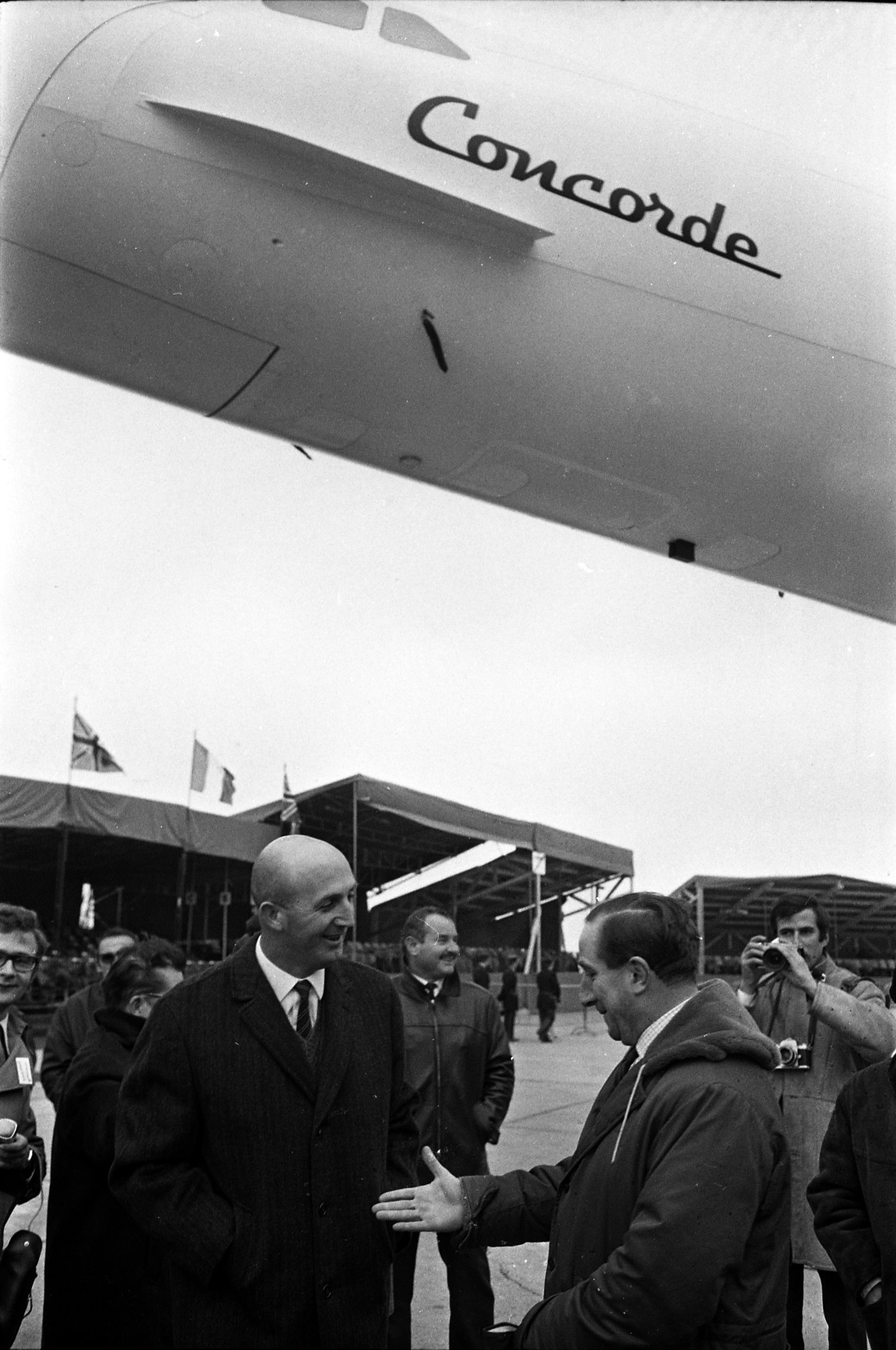
Prototype 001, carrying the French test registration F-WTSS, was rolled out at Toulouse on 11 December 1967 before ministers, executives and the world’s press. The white delta looked like the future, and the ceremony marked a kind of point of no return: the aircraft was real now, whatever the accountants thought. But a rollout is theatre. Between the ceremony and the first flight lay fifteen months of ground testing, systems proving and engine running, a gap that tells you how much of this aircraft had never been tried before.
Nearly everything on Concorde pushed past existing airliner practice. The airframe would soak at temperatures well above a subsonic airliner’s experience during sustained Mach 2 cruise, so materials and structure needed new levels of proof. Fuel had to be pumped between tanks in flight to manage the shift in centre of pressure as the aircraft went supersonic. The engine intakes, with their movable ramps managing the airflow, were as sophisticated as the engines themselves. The four Olympus 593 turbojets, with afterburner for take off and transonic acceleration, had to be tested exhaustively on the ground and under a Vulcan flying test bed. None of this could be hurried, and the programme did not hurry it.
By February 1969 the aircraft was ready for the last step before flight: taxi trials at Blagnac. Through the second half of the month Turcat and his crew ran 001 up and down the runway at increasing speeds, testing steering, brakes and systems, and on 18 February the long nose lifted as the aircraft rotated on the ground for the first time. Photographs from those trials show the prototype in its element at last, a machine visibly straining to fly. The press had by now gathered in Toulouse in force, and then the weather closed in. Fog and low cloud sat over the airfield for days, and the most photographed aircraft in the world sat on the ground beneath it, waiting.
Why the design took so long to prove
It is easy, looking at the finished aircraft, to underestimate how much of it had no precedent. Concorde had no flaps or slats; the ogival delta generated its low speed lift through controlled vortices at high angles of attack, which is why the aircraft approached the runway nose high at an attitude no other airliner used, and why the nose itself had to droop hydraulically so the pilots could see the runway at all. On the prototypes the pilots looked through a metal visor with small glazed ports when it was raised; the production aircraft would later gain the fully glazed visor familiar from service photographs. The engines sat in rectangular underwing boxes whose variable ramps slowed intake air from Mach 2 to subsonic speed before it reached the compressor faces, an arrangement so critical that the intakes were as much a part of the propulsion system as the Olympus engines themselves. Fuel was not just fuel but ballast, pumped aft as the aircraft accelerated to match the rearward shift of the centre of lift, then forward again for landing. Every one of those systems had to work before anyone could responsibly fly the aeroplane once. Fifteen months from rollout to first flight was not slowness; it was the price of getting a truly new machine right.
The men in the cockpit
André Turcat, Sud Aviation’s director of flight test, was a former French Air Force pilot and one of Europe’s most experienced experimental aviators, a precise, cerebral man who had spent years preparing for this aircraft, including extensive work in simulators that were themselves novel for the era. Command of the first flight was his, and nobody in France doubted it.
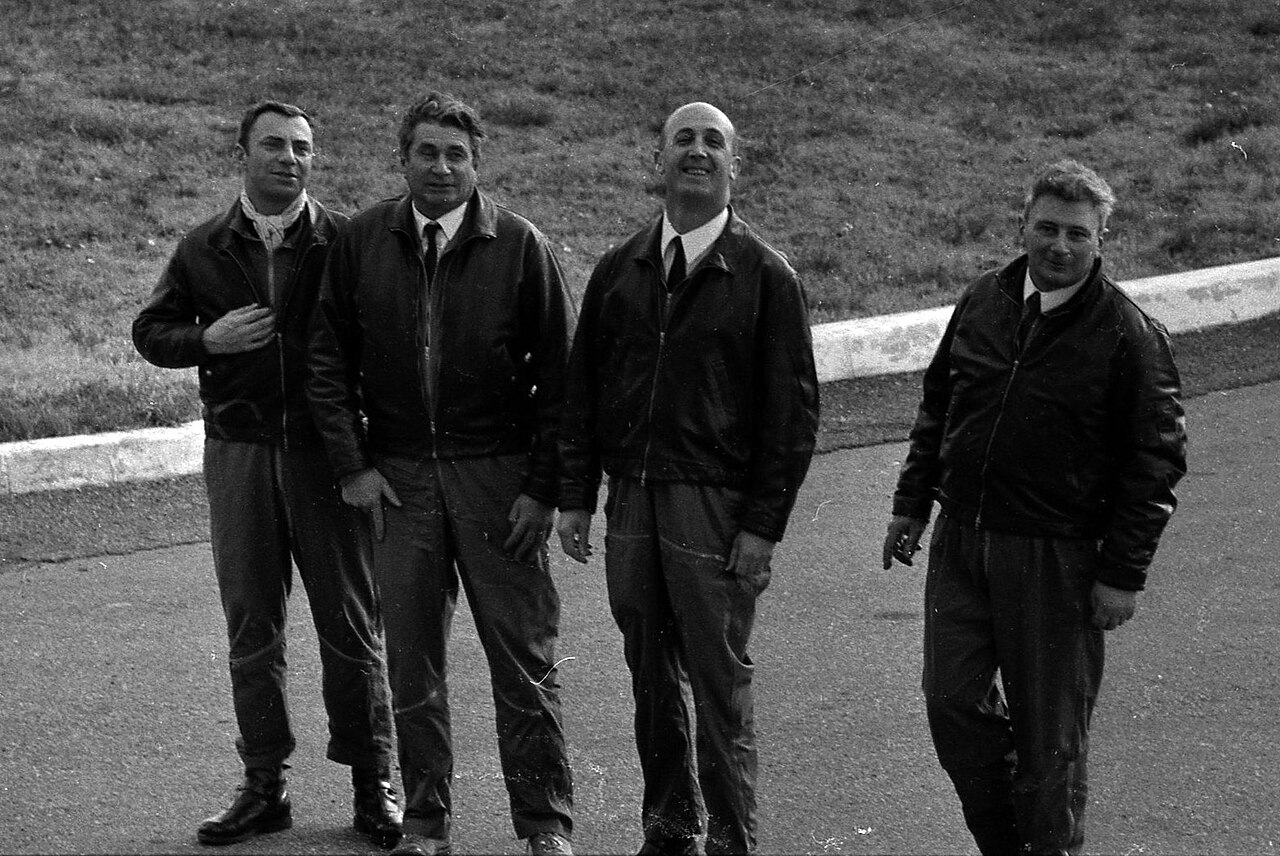
With him on 2 March were three colleagues whose names deserve to be remembered alongside his: Jacques Guignard in the co-pilot’s seat, flight engineer Michel Rétif at the systems panel, and Henri Perrier, the chief flight test engineer, monitoring the torrent of instrumentation data the prototype carried in place of passengers. Across the Channel waited Brian Trubshaw, the British Aircraft Corporation’s chief test pilot, who would command 002’s maiden flight and who shared with Turcat the rare distinction of learning an entirely new kind of airliner from its very first second in the air. The two men had been photographed together under the prototype since the 1967 rollout, a partnership that mirrored the programme itself.
It is worth pausing on what commanding such a flight actually involved. A first flight crew cannot know, whatever the simulators say, precisely how the aircraft will behave in the first seconds after rotation; they carry in their heads the abort criteria, the escape options and the handling predictions for a machine that has never been airborne. Turcat’s preparation was famously exhaustive, extending to the aircraft’s brand new analogue fly by wire style control augmentation and the peculiarities of the delta at low speed. Trubshaw, for his part, was Britain’s most experienced large aircraft test pilot, a veteran of the V bomber programmes, and his relaxed manner in front of cameras concealed the same depth of preparation. Neither man treated the day as a stunt; both described it afterwards, in their different national styles, as a day at the office that happened to have an audience of millions.
The flight: 2 March 1969
Sunday 2 March dawned better than the days before it. The fog that had frustrated the programme, and the hundreds of journalists camped in Toulouse, finally relented enough for the flight to be attempted, though the crew still waited on conditions through the morning. In the early afternoon, local time, 001 taxied out to runway 33 at Blagnac with fire crews deployed along the runway and a world audience watching through television cameras.
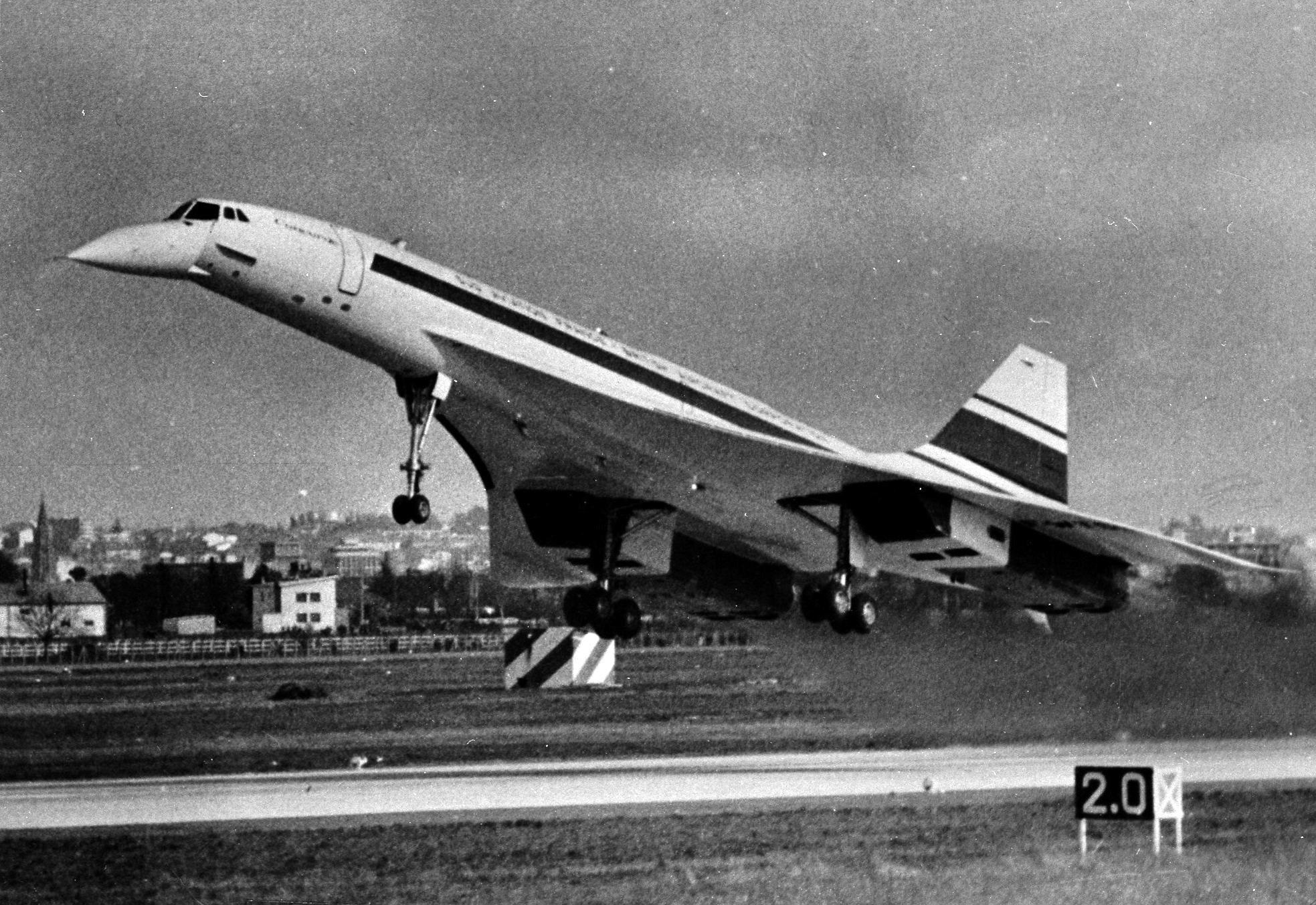
The flight plan was deliberately modest, as first flights should be. The undercarriage would stay down throughout. The droop nose stayed lowered for visibility. Speeds would remain low, far below anything approaching the aircraft’s design envelope, and the crew would simply establish that the aeroplane handled as the years of calculation and simulation had promised. A chase aircraft flew alongside to observe.
At brake release the four Olympus engines, in afterburner, pushed the white delta down Blagnac’s long runway and, after years of political storms and engineering labour, Concorde simply flew. Turcat climbed gently away, the crew worked through their checks in a wide circuit of the Toulouse area, and roughly twenty eight minutes after take off, contemporary reports differ by a minute in each direction, 001 settled back onto the runway in the nose high attitude that would become one of aviation’s most recognisable sights, drag chute streaming behind.
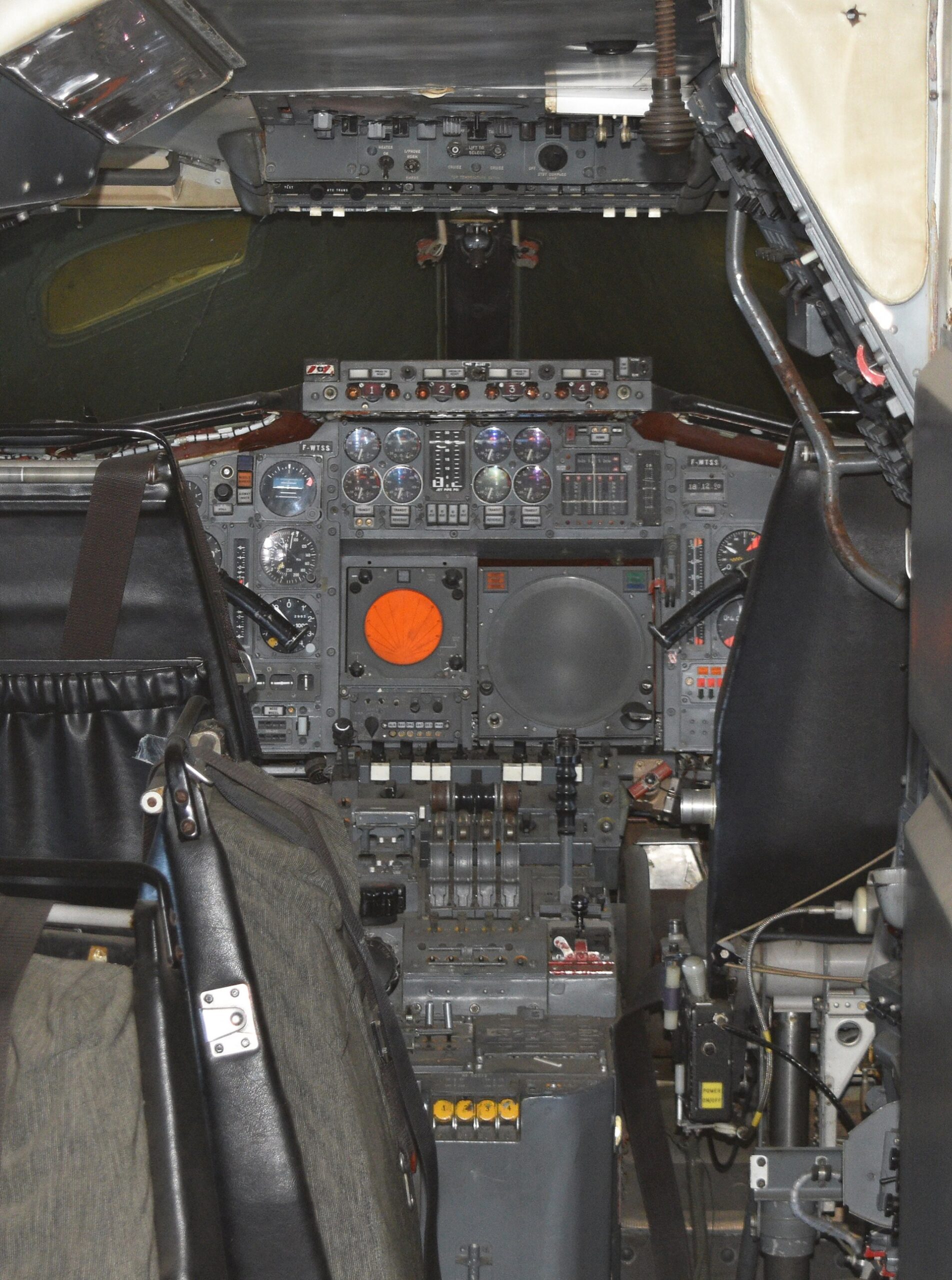
Turcat’s verdict to the waiting press became the day’s headline and one of aviation’s famous lines: finally the big bird flies, he said, and I can say now that it flies pretty well. It was a characteristically measured way to describe the moment. The aircraft had behaved almost exactly as predicted, which was itself the achievement; a first flight without surprises is the highest compliment a design team can receive. The crew walked from the aircraft to a press conference at the Blagnac terminal, photographed on the way in their flight suits, four men briefly the most famous aviators on Earth.
What the world saw
The first flight was a global television event, carried live in France and reported around the world within hours. The timing gave it extra resonance. Nineteen sixty nine was the year aviation and spaceflight seemed to be delivering every promise at once: the Boeing 747 had made its own first flight in Seattle only three weeks earlier, on 9 February, and that July Apollo 11 would put men on the Moon. In a single year the public watched the two futures of civil aviation take off within weeks of each other, the enormous and the fast, with no way of knowing that the 747’s future was the one that would win. For one afternoon in March, at least, the future belonged to Toulouse.
The photographs from that week have become part of aviation’s shared memory: the white delta against the grey Toulouse sky, the crew walking from the aircraft in their flight suits, Turcat’s careful smile at the press conference. The pictures in this article, taken by Toulouse photographer André Cros and preserved in the city’s municipal archive, show the run-up and the day itself as the people of Toulouse saw them, an aircraft that had grown up in their city finally doing what it was built for.
Britain’s turn: Concorde 002
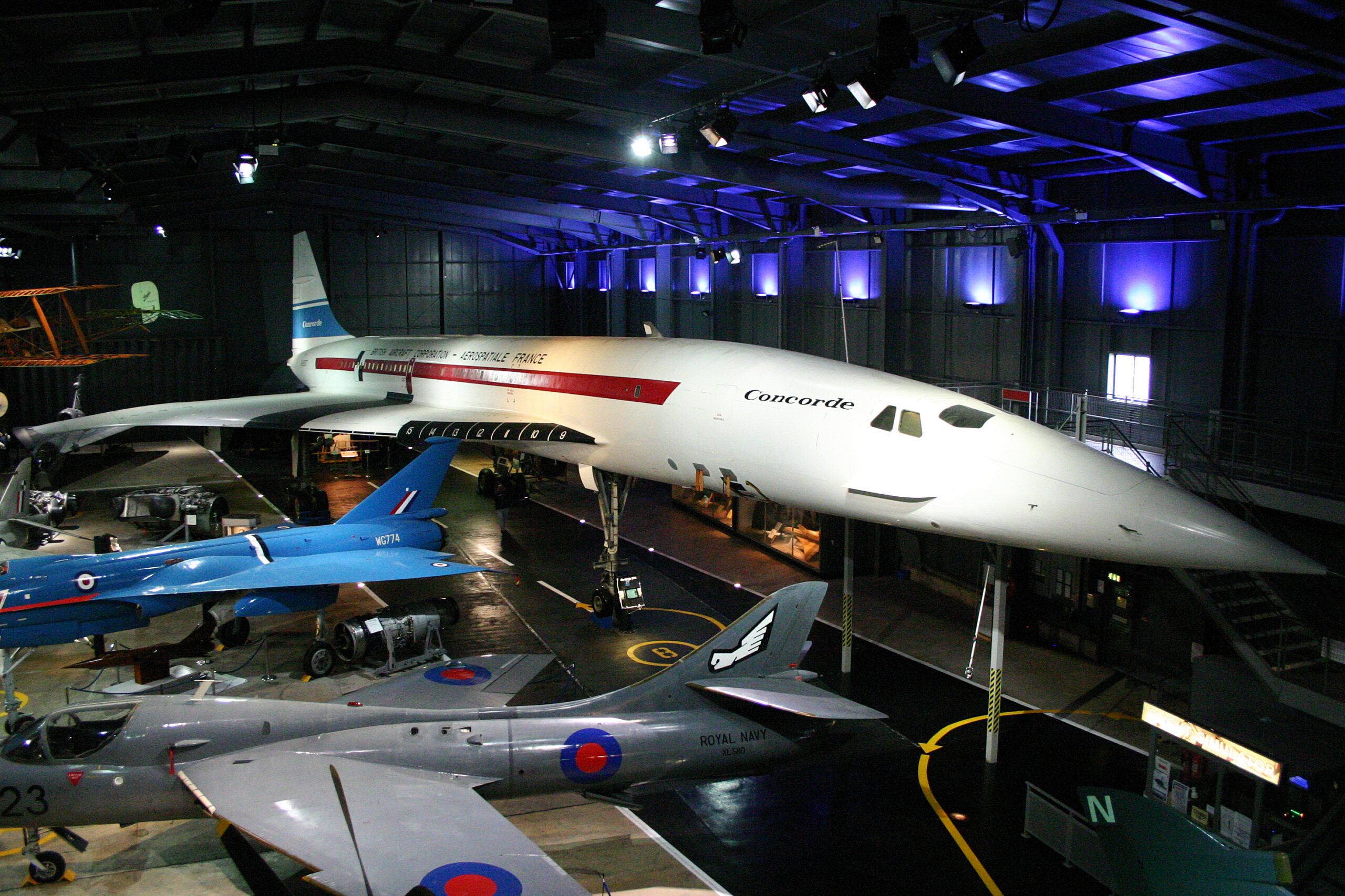
Five weeks later, on 9 April 1969, the first British built Concorde followed. 002, registered G-BSST, lifted off from the British Aircraft Corporation’s home airfield at Filton, near Bristol, with Brian Trubshaw in command, John Cochrane as co-pilot and Brian Watts as flight engineer. Filton’s runway suited a first take off, but the test programme needed more space, so the 22 minute flight ended at RAF Fairford in Gloucestershire, which would host the British flight test operation.
Trubshaw’s flight carried a drama that Turcat’s had been spared. On the approach to Fairford both radio altimeters failed, removing the precise height information a pilot particularly values in an aircraft whose long nose and unusual landing attitude make judging the flare by eye an acquired skill. Trubshaw landed smoothly anyway, an early display of the airmanship that ran through the whole test programme, and his summary to the press was as English as Turcat’s had been French: it was wizard, he said, the aircraft completely serviceable throughout.
Fairford, incidentally, is a name aviation enthusiasts know for another reason: it now hosts the Royal International Air Tattoo each July. Photographers standing on that flightline today are working the same concrete where G-BSST’s test programme unfolded.
Why the flight mattered
It is worth being precise about what 2 March 1969 did and did not prove, because both halves matter to the story.
What it proved
The flight demonstrated that the slender delta configuration, chosen a decade earlier on the strength of theory, wind tunnels and research aircraft, translated into a real aircraft that flew predictably and well. Every large programme lives in fear of its first flight revealing some fundamental misjudgement; Concorde’s revealed none. It also proved the partnership worked. Two national industries, two languages, two measurement systems and two governments had produced a single functioning aeroplane, the deepest industrial collaboration Europe had attempted, and the direct institutional ancestor of Airbus, which was formed in the years that followed and eventually absorbed Sud Aviation’s successors.
What it did not prove
A 28 minute circuit with the wheels down said nothing yet about the aircraft’s actual purpose: sustained flight at twice the speed of sound. That proof came in stages through one of the most demanding flight test programmes ever run. On 1 October 1969, 001 pushed through Mach 1 for the first time; on 4 November 1970 it reached Mach 2 and held it for 53 minutes. Each step required the intakes, engines, fuel management and structure to perform in conditions no airliner had ever sustained. The prototypes were, in effect, flying laboratories, and they did their job so well that the production aircraft that followed needed remarkably little aerodynamic correction.
The race it was part of
Concorde was not alone. The Soviet Union’s Tupolev Tu-144 had beaten 001 into the air, flying on 31 December 1968, two months ahead, and it went supersonic first as well, in June 1969. On paper Moscow had won the race. In practice the Tu-144’s rushed development told: the aircraft suffered a catastrophic crash at the 1973 Paris Air Show and its passenger service proved brief and troubled, while Concorde matured into 27 years of scheduled supersonic flying. The third competitor, Boeing’s swing wing 2707, never flew at all; the United States Congress cancelled it in 1971, leaving the Anglo-French aircraft the only Western supersonic airliner ever to carry passengers. Our full Concorde history follows the aircraft through its whole service career; this piece stays with the machine that started it all.
From prototype to passengers
The seven years between the first flight and the first fare paying passenger were as eventful as the seven that preceded it, and considerably crueller to the programme’s commercial hopes.
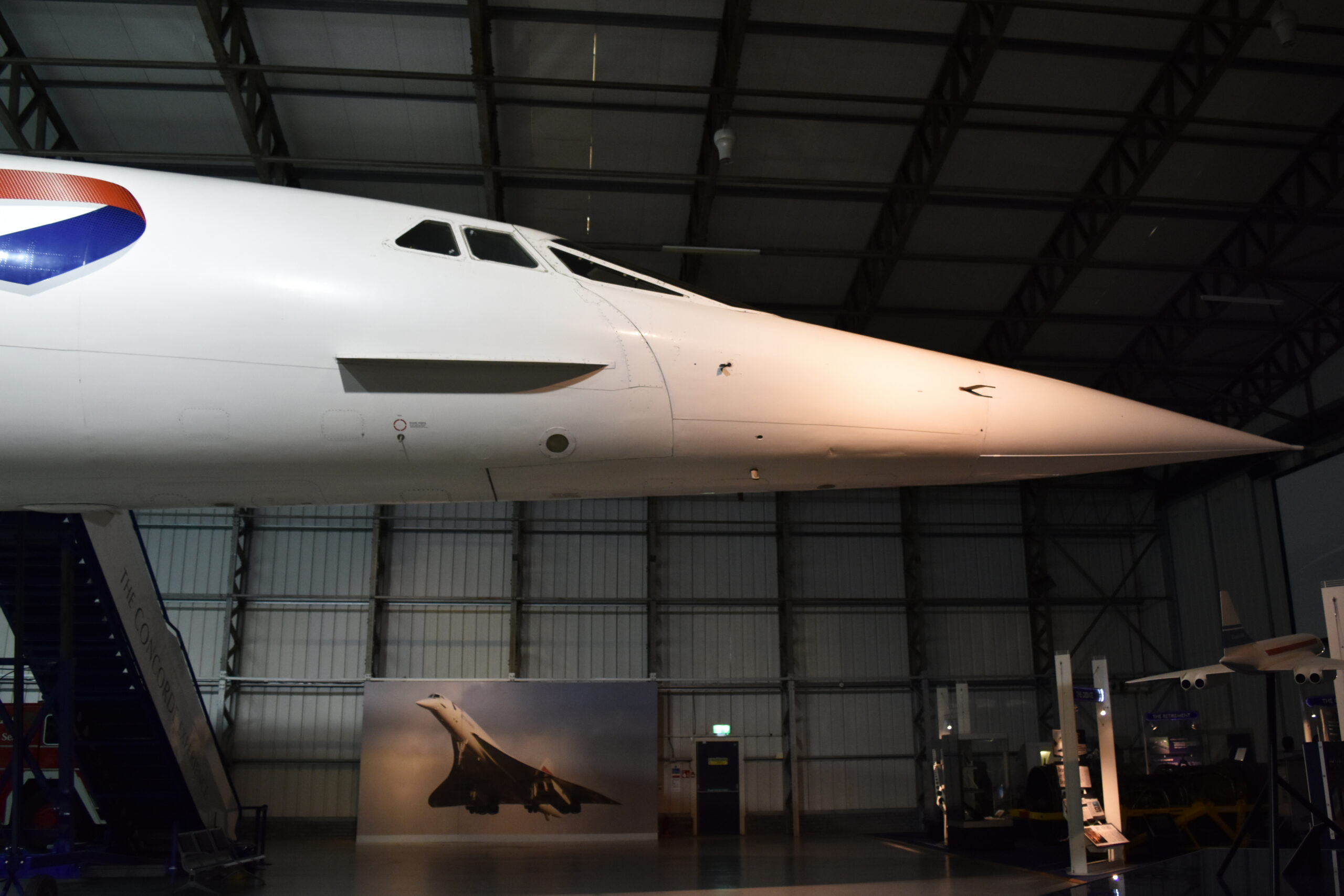
The flight test programme itself was a success story. The two prototypes were joined by pre-production and then production aircraft, and between them they cleared the type for scheduled service at Mach 2, proving everything from engine relight behaviour to hot and high performance at airports around the world. 001 delivered one last gift to science on 30 June 1973, chasing a total solar eclipse across Africa at Mach 2 so that astronomers aboard could observe totality for 74 continuous minutes, an observation no ground station or subsonic aircraft could dream of and a record that stood for decades.
Commercially, the sky fell in. At the start of the 1970s the order book held options from airlines around the world, Pan Am among them. Then came the environmental backlash against sonic booms, which closed overland supersonic routes; the 1973 oil crisis, which quadrupled fuel prices and made a thirsty aircraft look ruinous; and the general realisation, sharpened by the arrival of the Boeing 747, that the future of air travel was cheap seats in wide bodies, not fast seats at premium fares. The options evaporated. In the end only the two national flag carriers took the aircraft: seven for British Airways and seven for Air France, out of twenty airframes built in total, prototypes and development aircraft included.
Entry into service, when it finally came on 21 January 1976, was arranged as a piece of choreography worthy of the programme: British Airways and Air France departed simultaneously, London to Bahrain and Paris to Rio de Janeiro via Dakar, so that neither nation could claim to have been first. The transatlantic services that became Concorde’s signature followed once the United States granted access, and for the next quarter century the aircraft did, superbly, the one job economics left it: crossing the Atlantic in under four hours for those who would pay.
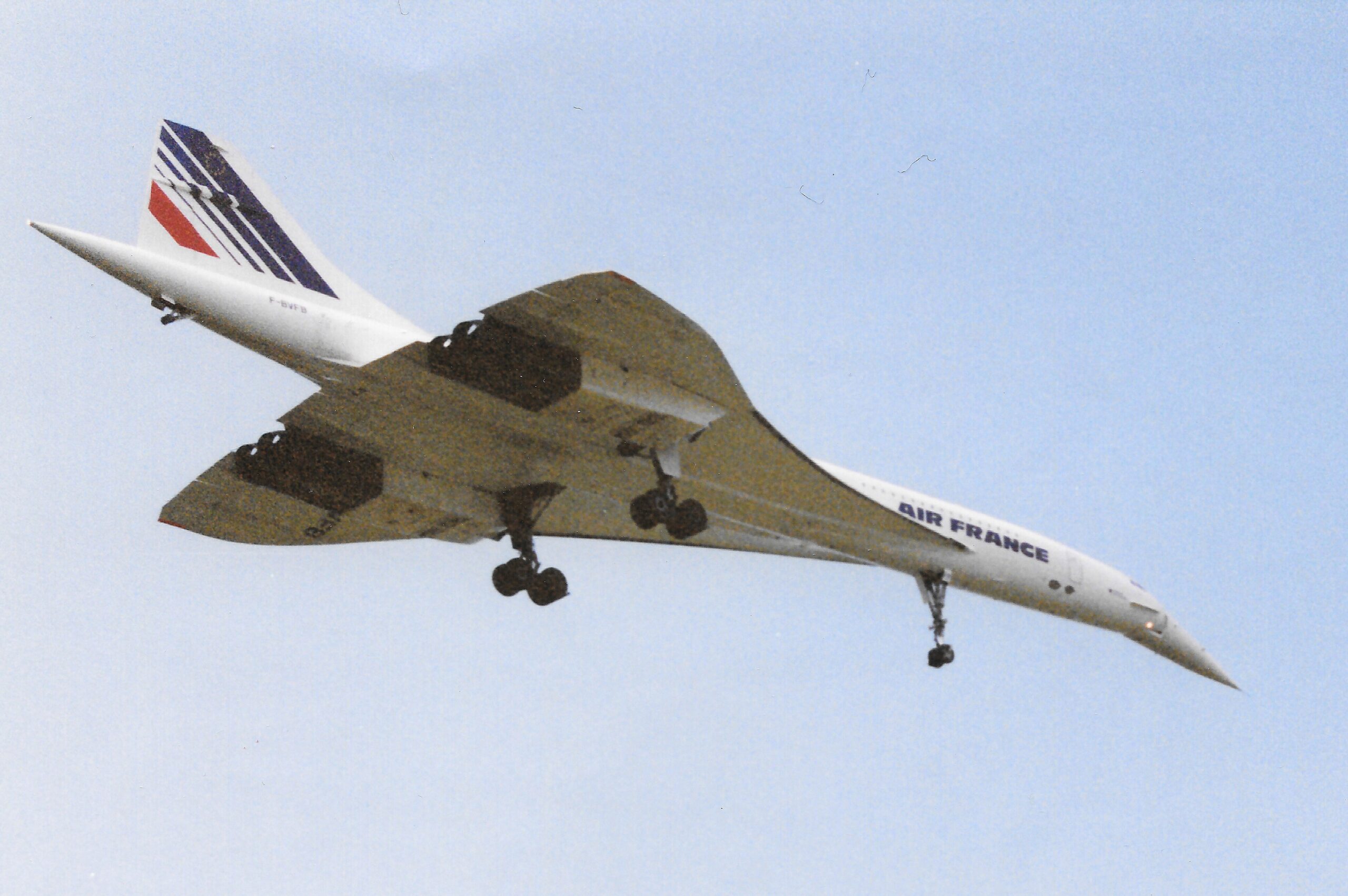
The end, when it came, arrived quickly: the Paris crash of July 2000, the costly return to service into a post September 2001 aviation slump, and the joint decision to retire the fleet. Air France stopped flying Concorde in May 2003; British Airways’ last commercial services ran on 24 October 2003, and the final Concorde flight of all, on 26 November 2003, took G-BOAF home to Filton, the airfield where 002 had first lifted off 34 years earlier.
Where the first Concordes are today
Both of the aircraft at the heart of this story survive, and both are on public display.
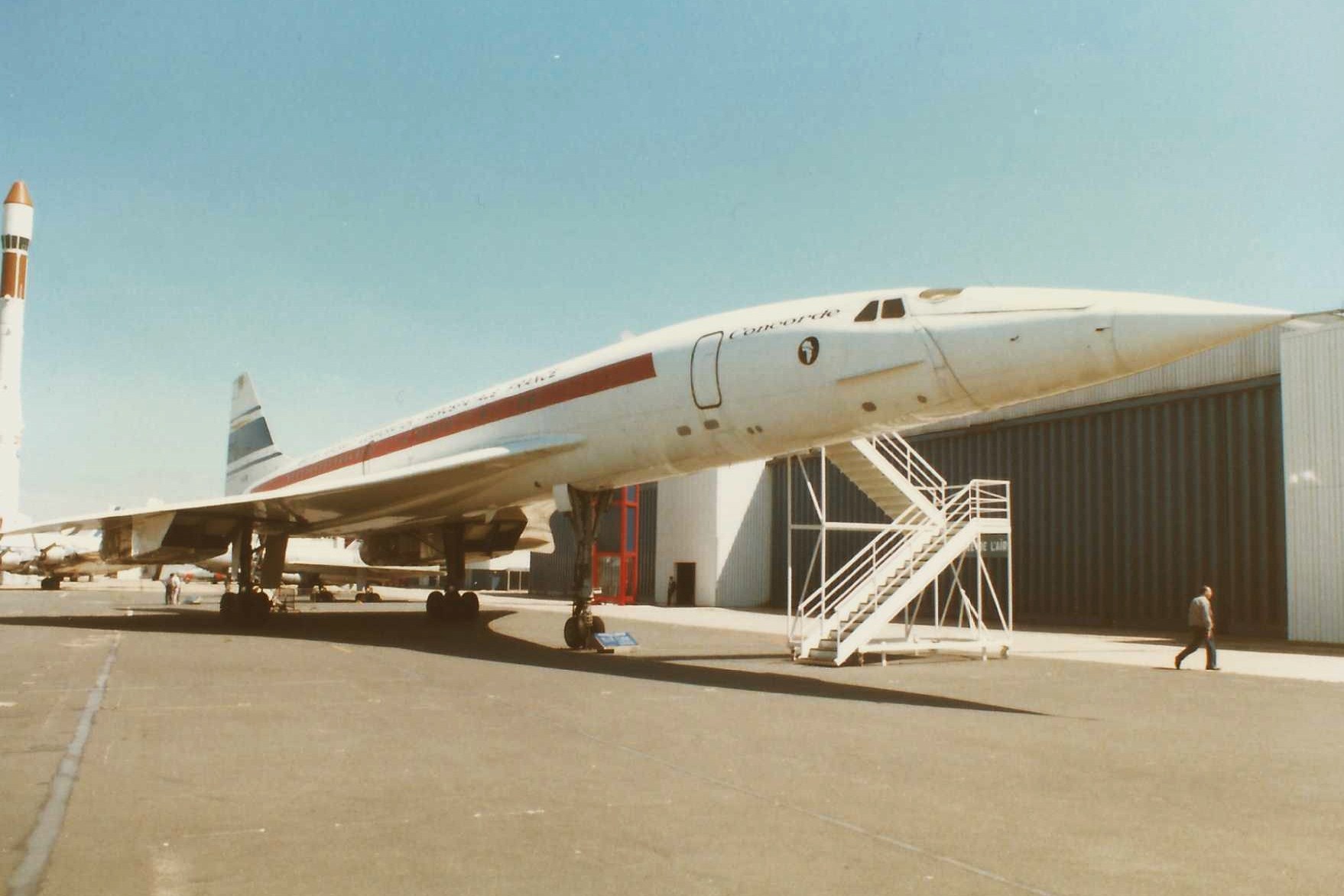
Prototype 001, F-WTSS, made its 397th and final flight on 19 October 1973, landing at Le Bourget to be handed over to the Musée de l’Air et de l’Espace, where it has remained ever since. It had flown 812 hours, 255 of them supersonic. The museum later added a production Concorde alongside it, so visitors can walk under both the prototype and the airliner it became, and the contrast in detail, the test probes, the different visor design, rewards a close look. Le Bourget sits on the northern edge of Paris and combines conveniently with the museum’s unrivalled collection of French aviation.
Concorde 002, G-BSST, finished its flying career with 836 hours in its logbook, 173 of them supersonic, and was retired in 1976 to the Fleet Air Arm Museum at RNAS Yeovilton in Somerset, where it remains the centrepiece of an exhibition on British Concorde development, displayed with several of the research aircraft that fed its design. And the last Concorde ever to fly, G-BOAF, is displayed in a purpose built hangar at Aerospace Bristol at Filton, a museum built, fittingly, beside the runway that opened and closed the British chapter of the story.
The wider development fleet did almost as well. Pre-production aircraft 101, G-AXDN, is preserved at the Imperial War Museum Duxford as part of its airliner collection, and 102, F-WTSA, stands at the Musée Delta at Athis-Mons near Paris Orly. Between the four of them, the early development aircraft offer something the production survivors cannot: a visible record of the design evolving, from the prototypes’ metal visors and test gear to the near production standard of the later machines. For anyone interested in how an aircraft is actually developed, they are the most instructive Concordes of all.
Photographing Concorde today
Concorde is one of the most photogenic aircraft ever built, and the surviving airframes give photographers three quite different problems to solve.
Museum interiors are the usual challenge. Le Bourget’s Concorde hall and Aerospace Bristol’s hangar are indoor displays with mixed artificial light, so shoot raw, watch your white balance, and use the aircraft’s extraordinary geometry: the slender delta rewards wide angle work from low and close, and the detail of intakes, nose mechanism and cockpit rewards a fast standard zoom. Crowds thin dramatically near opening time. Our guide to composition for aviation photography covers the framing craft, and the principles in it apply as well to a static Concorde as to anything moving.
Yeovilton’s G-BSST offers the historic angle: the test registration, the white paint, the sense of an aircraft preserved mid-programme rather than mid-career. Detail shots of the test equipment and the period markings are the pictures other visitors do not take. For photographers building a collection around the type, the surviving fleet is scattered across Britain, France, Germany, Barbados and the United States, which makes Concorde one of the few aircraft you can really photograph your way around the world. You can see how we archive and organise this kind of subject in the Piemags aviation galleries, and our licensing page explains how the archive can be used editorially.
Key facts and dates
| Date | Event | Detail |
|---|---|---|
| 29 November 1962 | Anglo-French agreement signed | Government to government treaty with no withdrawal clause; costs and work shared |
| 11 December 1967 | Prototype 001 rolled out | Official presentation at Toulouse before ministers and world press |
| 31 December 1968 | Tupolev Tu-144 first flight | The Soviet rival beats Concorde into the air by two months |
| 18 February 1969 | Taxi trials begin lifting the nosewheel | High speed runs at Blagnac in the final run-up to flight |
| 2 March 1969 | Concorde 001 first flight | André Turcat and crew, Toulouse-Blagnac, about 28 minutes, undercarriage down |
| 9 April 1969 | Concorde 002 first flight | Brian Trubshaw, Filton to RAF Fairford, 22 minutes, radio altimeters failed |
| 1 October 1969 | First supersonic flight | 001 exceeds Mach 1 for the first time |
| 4 November 1970 | First Mach 2 flight | 001 holds twice the speed of sound for 53 minutes |
| 30 June 1973 | Solar eclipse flight | 001 gives astronomers 74 minutes of totality across Africa |
| 19 October 1973 | 001 retires to Le Bourget | 397 flights, 812 flying hours, 255 supersonic |
| 21 January 1976 | Entry into service | Simultaneous British Airways and Air France departures, London-Bahrain and Paris-Rio via Dakar |
| 26 November 2003 | Final Concorde flight | G-BOAF returns to Filton; 20 airframes built in all, 14 in airline service |
Legacy
More than half a century on, 2 March 1969 remains a peculiar kind of anniversary: the birthday of a future that did not arrive. The confident consensus of 1962, that supersonic flight was simply the next step for everyone, dissolved within a decade of the first flight, and no supersonic airliner has carried a fare paying passenger since 2003. Judged as the opening of a new era, the flight failed.
Judged as engineering, it opened one of the great chapters. The aircraft that flew that afternoon went on to prove sustained Mach 2 passenger flight not merely possible but routine, safe for most of its career, and executed with a technical elegance nothing since has matched. The test programme it began enriched aerodynamics, engine intake design, materials science and flight control practice far beyond one type. The industrial partnership it validated became Airbus, which is not a bad monument by itself. And the aircraft became, and remains, the most beloved shape in the history of civil aviation, the one airliner ordinary people stopped to watch until the day it retired.
For the men in the cockpit the flight remained the defining day of remarkable careers. Turcat and Trubshaw stayed with the programme through certification and are both remembered today as being among the finest test pilots of their generation. Perrier rose through the programme to become one of its leading engineers. Every 2 March, enthusiasts mark the date; every year, round anniversaries send editors hunting for photographs of white deltas, which is why a well captioned Concorde image never stops earning. The big bird flew, and in the memory of everyone who saw it, it never quite landed.
And the story is not necessarily closed. Several companies have spent the past decade working seriously on a return to supersonic passenger flight, wrestling with the same triangle of noise, fuel and economics that defeated Concorde’s order book. Whether any of them succeed, they all start from data, regulation and public memory that trace directly back to the white delta that lifted off from Blagnac. Nobody attempting supersonic flight today works outside Concorde’s shadow, and none of their aircraft will inherit its title as the first to make it routine.
Concorde imagery is heavily reused and much of it is undated or wrongly attributed between the prototypes and production aircraft. If you are sourcing photographs for publication, our guide to aviation picture research will save you time.
Frequently asked questions
When did Concorde first fly?
Concorde first flew on 2 March 1969, when prototype 001, registered F-WTSS, took off from runway 33 at Toulouse-Blagnac in France. Chief test pilot André Turcat kept the flight deliberately gentle and landed after roughly 28 minutes.
Who flew Concorde on its first flight?
The crew were André Turcat, Sud Aviation’s director of flight test, in command, with co-pilot Jacques Guignard, flight engineer Michel Rétif and chief flight test engineer Henri Perrier. Turcat had been preparing for the flight for years and later took 001 through Mach 1 and Mach 2 as the test programme advanced.
Did Concorde go supersonic on its first flight?
No. The first flight was flown with the undercarriage down throughout and speeds kept deliberately low while the crew checked handling. Concorde 001 first went supersonic on 1 October 1969 and first reached Mach 2 on 4 November 1970, holding it for 53 minutes.
Was Concorde the first supersonic airliner to fly?
No. The Soviet Tupolev Tu-144 flew first, on 31 December 1968, two months ahead of Concorde, and it also went supersonic first, in June 1969. Concorde was second into the air but proved by far the more successful aircraft in service.
How long was Concorde’s first flight?
Contemporary reports give a duration of about 28 minutes, with some sources saying 27 and others 29. The aircraft stayed below its planned test limits, the landing gear remained extended for the whole flight, and Turcat brought it back to Blagnac for a smooth landing.
When did the British Concorde first fly?
Concorde 002, G-BSST, the first British built aircraft, flew on 9 April 1969, five weeks after the French prototype. BAC chief test pilot Brian Trubshaw flew it from Filton, near Bristol, to RAF Fairford in a 22 minute flight, landing safely even though both radio altimeters had failed.
Where can I see the first Concordes today?
Prototype 001, F-WTSS, has been at the Musée de l’Air et de l’Espace at Le Bourget, near Paris, since its final flight on 19 October 1973. Concorde 002, G-BSST, is displayed at the Fleet Air Arm Museum at Yeovilton in Somerset. The last Concorde ever to fly, G-BOAF, is at Aerospace Bristol, close to the Filton factory where it was built.
When did Concorde enter passenger service?
Almost seven years after the first flight, on 21 January 1976, British Airways and Air France began supersonic passenger services simultaneously, BA from London to Bahrain and Air France from Paris to Rio de Janeiro via Dakar. Concorde flew fare paying passengers until October 2003.
For the other end of the story, the aircraft that chose size over speed, see our history of the Airbus A380.
