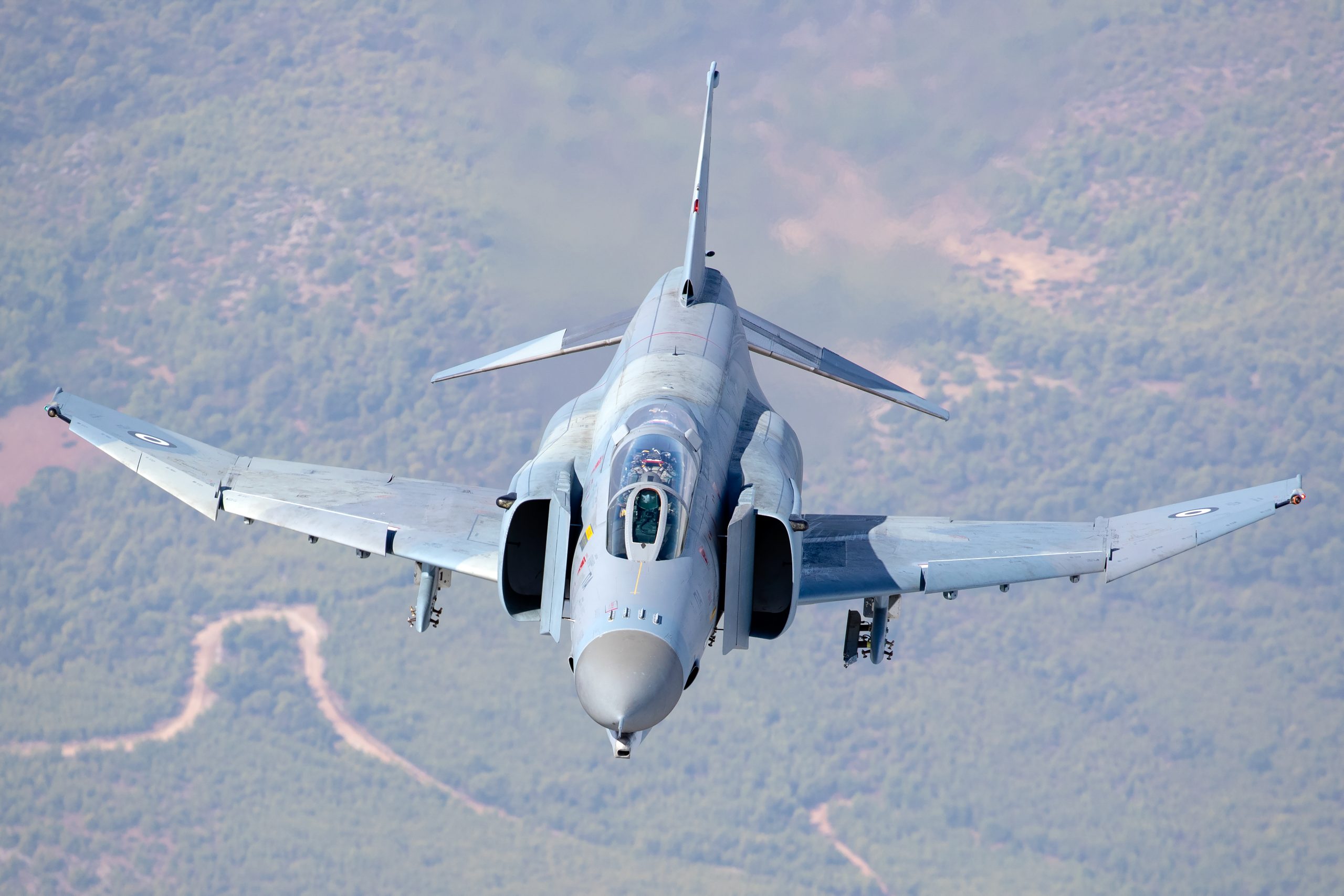
Few aircraft have carried as many contradictions as the McDonnell Douglas F-4 Phantom II. The F-4 Phantom II was a two-seat, twin-engined American fighter and fighter-bomber that first flew in 1958 and went on to serve the US Navy, Marine Corps and Air Force, as well as many allied nations, from Vietnam to the 1991 Gulf War. It was big, heavy and famously short on elegance, yet it set world records for speed and height that stood for years. It was designed as a missile-armed fleet defender with no gun, then spent its career proving that close-in fighting had not gone away. It flew for the United States Navy, the Marine Corps and the Air Force at the same time, the only aircraft to equip both the Thunderbirds and the Blue Angels, and it went on to serve a dozen other air arms from Britain to Iran. More than sixty years after its first flight, a handful are still flying.
This is the full story of the Phantom: how it came about, what made it work, where it fought, who flew it, and why it is still remembered with such affection by the crews who strapped into it. We have checked the dates, the production figures and the combat claims against museum, manufacturer and national air arm records, and where a figure is disputed we say so rather than pick the version that reads best.
What this guide covers
- Origins and development
- Design: what made the Phantom work
- Flying the Phantom
- Into combat: the Phantom over Vietnam
- Strike, not just air defence
- A carrier aeroplane
- The Phantom abroad
- Variants in brief
- Specifications: F-4E Phantom II
- The long goodbye: retirement and survivors
- Legacy
- Frequently asked questions
Origins and development
The Phantom began life not as a fighter at all but as an answer to a Navy requirement that kept changing. In the mid 1950s McDonnell Aircraft, based in St Louis, was looking for a successor to its F3H Demon carrier fighter. The company had already built the original FH-1 Phantom, a modest straight-winged jet of the late 1940s, which is why the new design became the Phantom II. Early proposals ran through a single-seat attack aircraft and an all-weather fighter before the Navy settled on what it actually wanted: a two-seat, twin-engined, long-range interceptor whose job was to defend the fleet by shooting down incoming bombers with guided missiles, well before they reached the carrier.
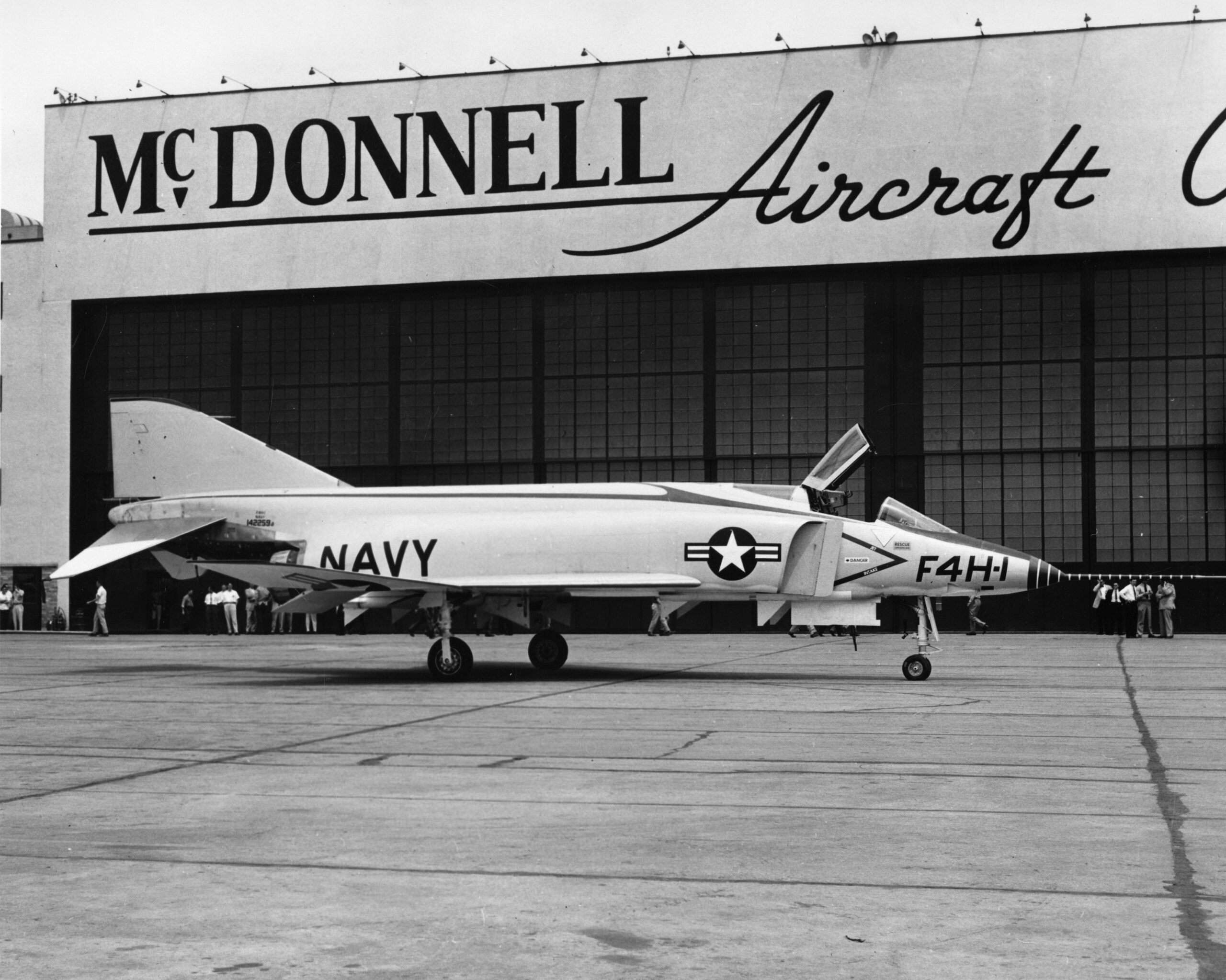
That requirement shaped almost everything about the aircraft. To carry a heavy radar and a back-seat operator to run it, the Phantom needed to be large. To reach threats quickly and at height it needed two powerful engines. To kill at range it was armed with the AIM-7 Sparrow, a radar-guided missile, with the shorter-range AIM-9 Sidewinder as a back-up. A built-in gun was left off entirely, because the thinking of the day held that missiles had made the dogfight obsolete. It was a reasonable assumption in 1955. It would look very different a decade later over North Vietnam.
First flight and a memorable shape
The prototype, designated XF4H-1, first flew on 27 May 1958 from Lambert Field in St Louis, with McDonnell test pilot Robert C. Little at the controls. The Phantom beat the rival Vought XF8U-3 Crusader III in a Navy fly-off, helped by the workload-sharing of its two-man crew, and went into production. It entered Navy service in 1961, and was soon adopted by the Marine Corps. The Air Force took it on as well, which was a real break with tradition: a service that built its own fighters adopting a Navy design. The decision was driven partly by cost and commonality under Defense Secretary Robert McNamara, and partly by the simple fact that in comparative trials the Phantom outflew the Air Force fighters of the day. The first Air Force version, the F-4C, flew in 1963.
The shape that emerged was unlike anything else. The outer wing panels were kinked sharply upward, while the all-moving tailplane drooped downward at a pronounced angle. Both features were fixes for stability problems found in testing rather than styling choices, and together they gave the Phantom its unmistakable, slightly awkward stance. Crews coined nicknames that were rude and affectionate in equal measure: the Double Ugly, the Flying Anvil, the Rhino. The aircraft also acquired a cartoon mascot, a small ghost called the Spook, drawn in 1958 by McDonnell technical artist Anthony Wong when the name Phantom was chosen. The Spook still turns up on squadron patches today.
A record-breaking debut
Before it had fired a shot in anger, the Phantom rewrote the record books. Between 1959 and 1962 it set a string of official world records for speed, altitude and time-to-height, and several of them stood until the F-15 Eagle arrived in the 1970s.
On 6 December 1959, during Project Top Flight, Commander Lawrence Flint took a Phantom to a zoom-climb altitude record of 98,557 feet, beating the previous mark held by a Soviet pilot. He accelerated to around Mach 2.5 in level flight, pulled up into a steep climb and coasted into the thin upper air with the engines throttled back to stop them overheating. In 1961, Operation Skyburner saw a Phantom average 1,606 mph over a straight course, and in May that year the LANA flights took three Phantoms coast to coast across the United States in under three hours to mark fifty years of US naval aviation. A further series of time-to-height records followed in early 1962, when Phantoms set marks for the climb to a string of altitudes from 3,000 to 30,000 metres. In all, the type took fifteen or sixteen recognised world records in this period, and several of them stood unbeaten until the F-15 Eagle arrived more than a decade later. These were not idle stunts. They were a deliberate sales campaign, putting the new fighter’s raw performance in front of the world’s air forces, and they worked. For an aircraft that would become a byword for brute reliability rather than glamour, it was a remarkable opening act, and it gave export customers an early reason to take the Phantom seriously.
Design: what made the Phantom work
Stripped of its legend, the Phantom was a study in trade-offs. It was not the most agile fighter of its day, and its crews never pretended otherwise. What it offered instead was a combination of power, payload, range and sheer adaptability that few aircraft of the era could match. It could be a fleet interceptor in the morning and a bomb truck in the afternoon, and that flexibility is the real reason it stayed in production for more than twenty years.
Two J79 engines and that trail of smoke
At the heart of the American Phantom were two General Electric J79 turbojets, each giving around 11,900 lb of dry thrust and close to 17,900 lb in afterburner in the later F-4E. That gave the aircraft a top speed beyond Mach 2.2 and a thrust-to-weight ratio that, when the fuel was burning down, edged toward one to one. It also gave the Phantom one of its most recognisable traits: a thick trail of black smoke at military power that could be seen for miles. In combat that smoke was a liability, marking the aeroplane out to enemy pilots long before they could see the airframe itself. Later refurbishment programmes fitted smokeless versions of the engine to some variants, including the Navy F-4S, to cure the problem.
A big radar and a second pair of eyes
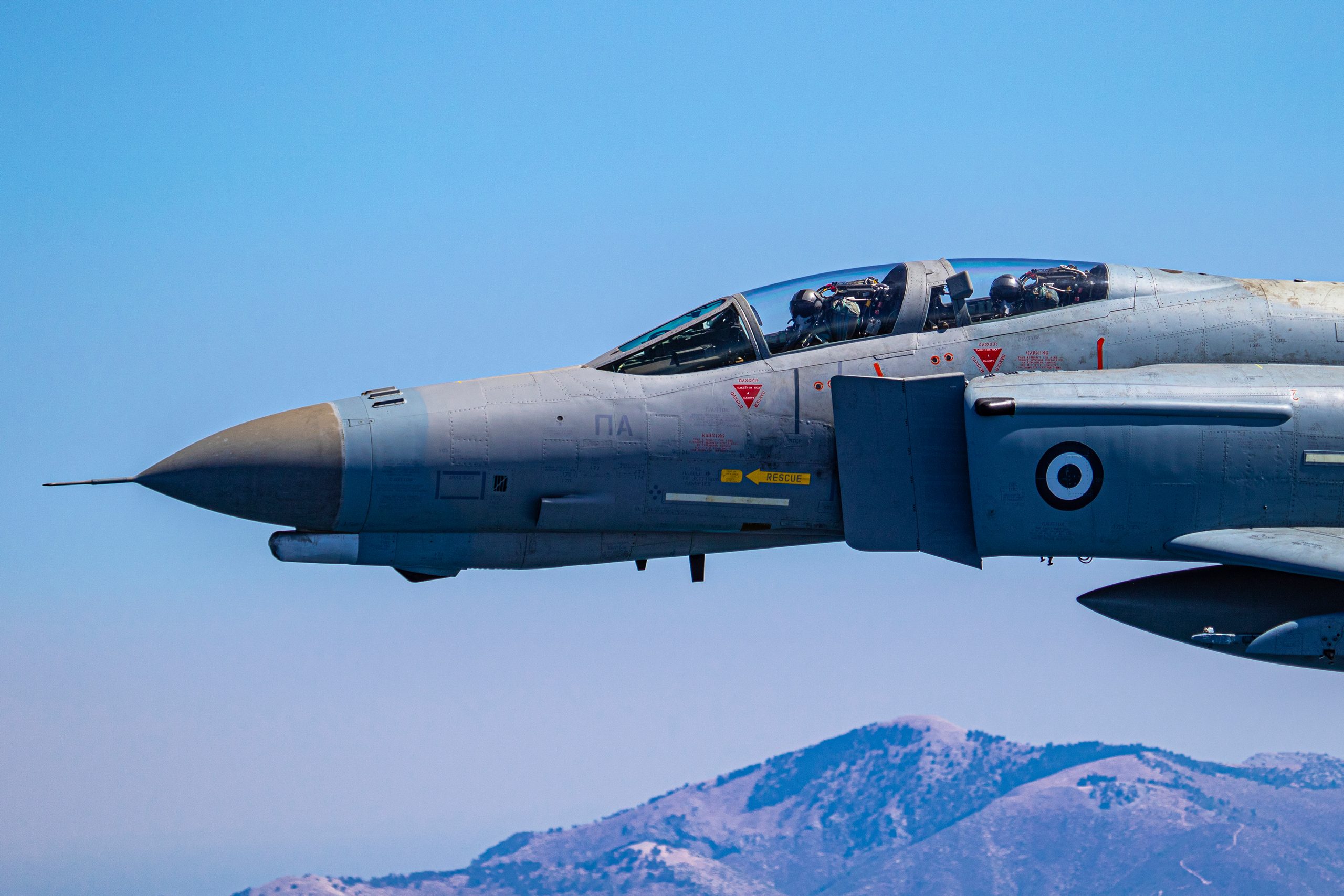
The Phantom always flew with two crew, a pilot in front and a back-seater behind. In Navy service the rear crewman was a Radar Intercept Officer; in Air Force service, after some early experiments with rated pilots in the back, he became the Weapon Systems Officer. The reason for the second seat was the radar. Intercepting bombers at range with the Sparrow demanded a powerful set and someone whose full attention was on running it, finding the target, locking it up and managing the missile shot. As the aircraft moved into the strike and reconnaissance roles, the back-seater took on navigation, electronic warfare and weapons duties as well. The two-man crew became part of Phantom culture, and many of the war’s highest-scoring teams were a pilot and a back-seater who flew together.
The missing gun
The decision that defined the Phantom’s early combat record was the one to leave out an internal gun. The F-4B, F-4C and F-4D all relied entirely on missiles. In theory this was modern thinking. In practice, the rules of engagement over Vietnam often required a pilot to identify a target visually before firing, which dragged the fight into close range where the radar-guided Sparrow was at its worst and where a gun would have been ideal. Early missile reliability was poor, and a Phantom that had emptied its missile rails had nothing left to fight with. Crews improvised by hanging gun pods under the fuselage, but a podded gun was less accurate than a built-in one. The lesson was eventually learned in metal. The F-4E, which first flew in 1967, carried an internal 20 mm M61 Vulcan cannon in a lengthened nose, and it became the most-produced version of all.
Strength and payload
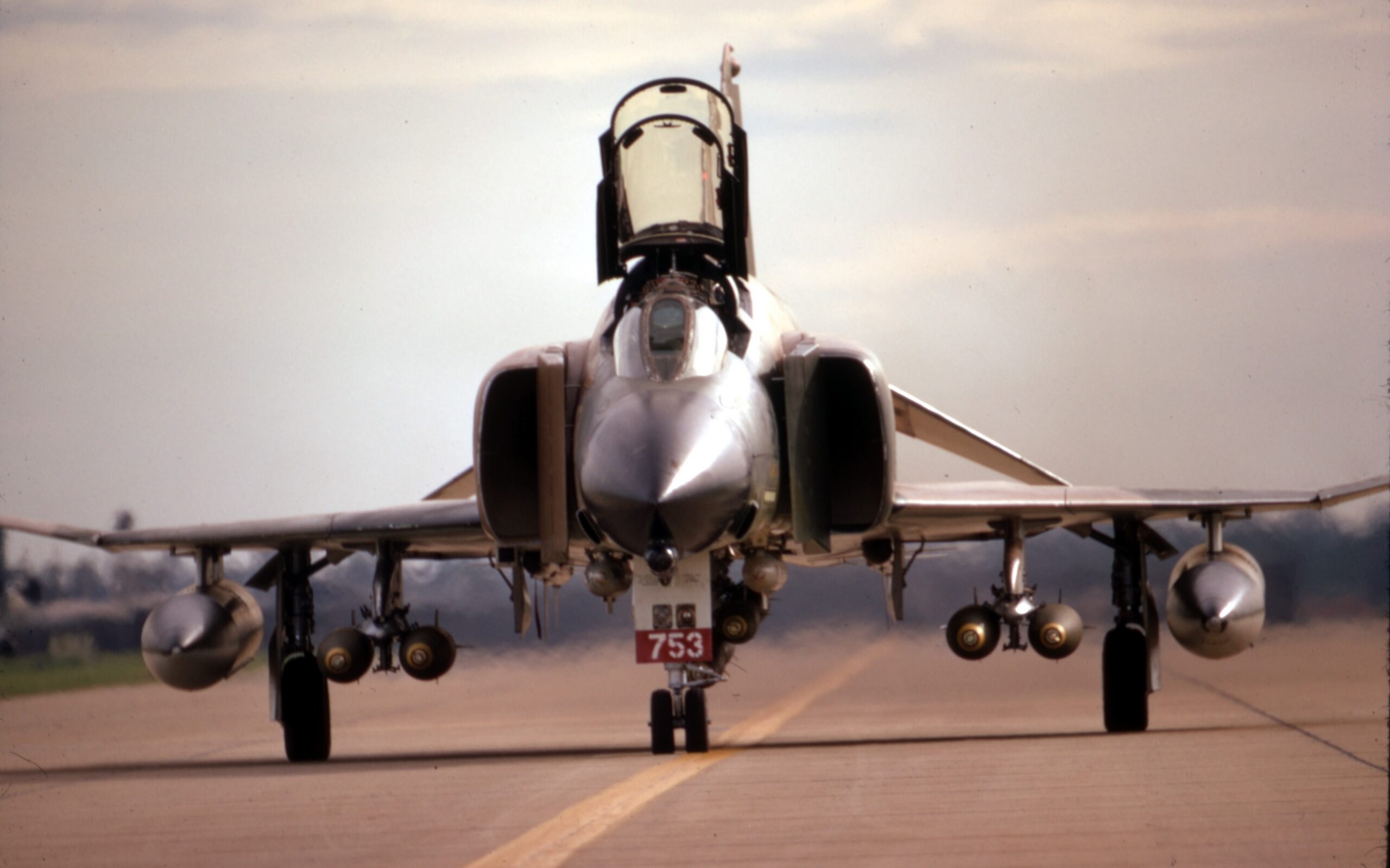
What the Phantom lacked in finesse it made up for in carrying capacity and toughness. It could lift more than 18,000 lb of ordnance across nine hardpoints, from Sparrow and Sidewinder missiles to iron bombs, rockets, gun pods and, later, precision-guided weapons and anti-radar missiles. The airframe was rugged enough to absorb damage and keep flying, a quality its crews valued more than any chart figure. It is telling that an aircraft conceived as a pure missile-armed interceptor ended up spending much of its career hauling bombs, flying reconnaissance and hunting radars, and doing all of it well enough to keep customers buying it for two decades.
Flying the Phantom
The Phantom rewarded crews who understood it and bit those who did not. Its most-discussed handling trait appeared at high angle of attack, the steep, slow, nose-high attitude reached in a hard turning fight. Push the aircraft there and rolling it with the ailerons could produce yaw in the wrong direction, the start of a departure from controlled flight that could end in a spin. The answer, drilled into every Phantom pilot, was to roll the aircraft with the rudder rather than the stick once the angle of attack rose, pressing the pedal in the direction you wanted to go. It was counter-intuitive to anyone trained on lighter aircraft, and it caught out the unwary. Crews who mastered it could wring a great deal out of the airframe; those who forgot it under pressure could lose control at exactly the wrong moment.
The other constant companions were power and noise. With both engines in afterburner the Phantom accelerated hard and climbed like few of its contemporaries, the same quality that produced all those early records. The trade was fuel: a Phantom in combat burned through its internal load quickly, and managing fuel was a permanent part of the job. None of this dented the affection crews felt for it. Ask a Phantom pilot or back-seater about the aeroplane and the word that comes back, again and again, is trust.
Into combat: the Phantom over Vietnam
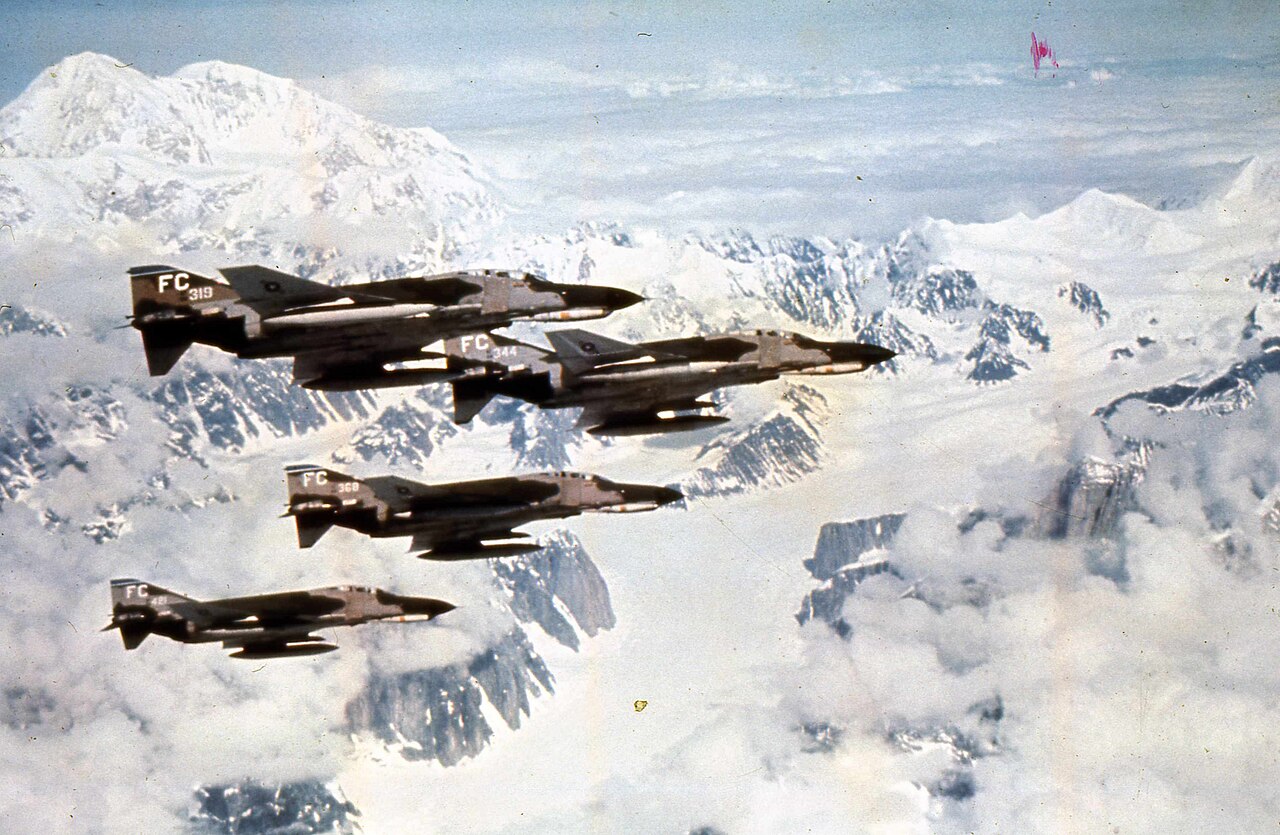
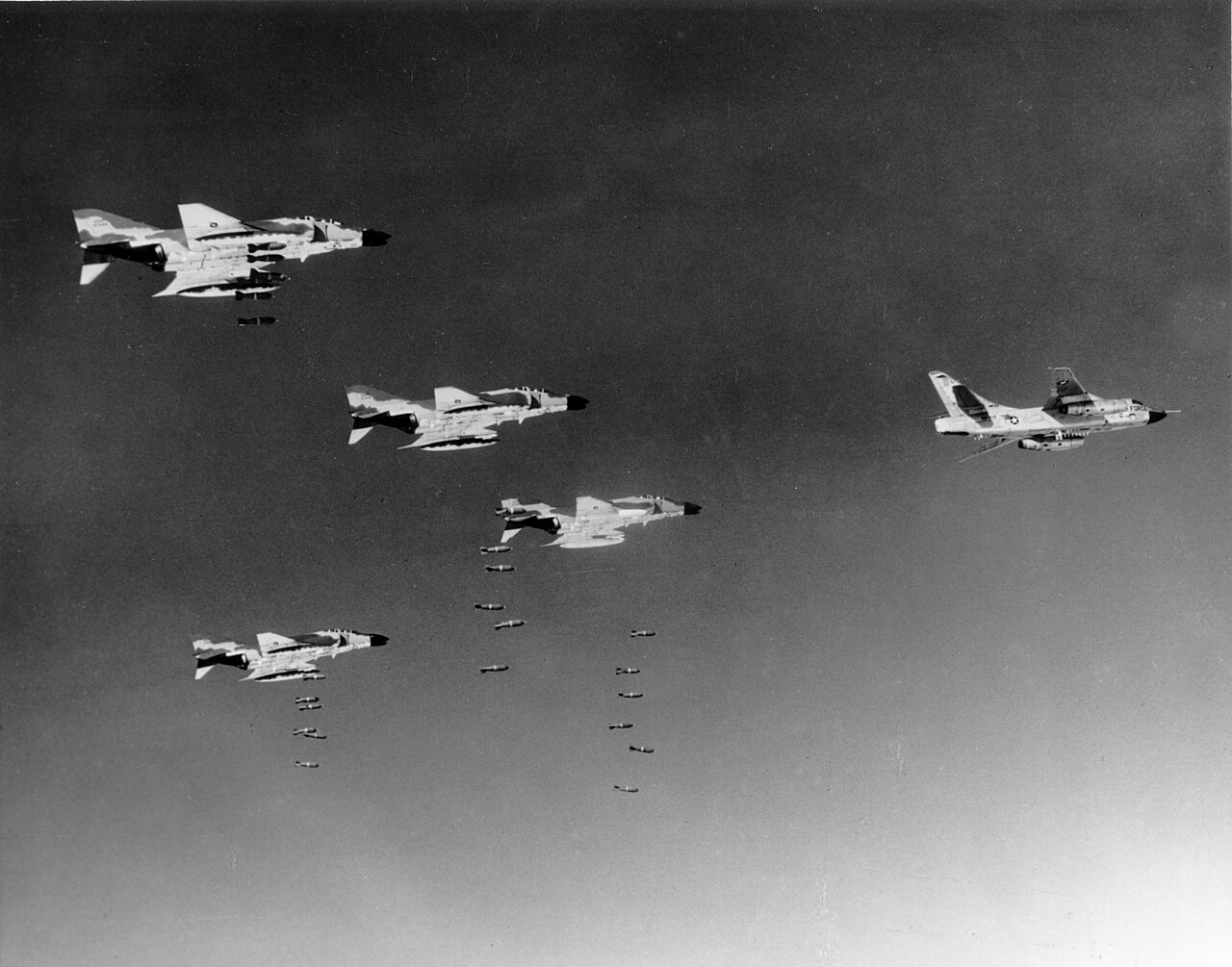
The Phantom’s war was Vietnam, and it is there that the aircraft made its name and learned its hardest lessons. It flew in every demanding role the conflict threw up: fleet defence, escort, ground attack, reconnaissance and, in time, the dangerous business of hunting enemy radar. Both the Navy and the Air Force flew it, and between them their crews accounted for the great majority of American air-to-air victories of the war.
First kills and an early shock
Navy Phantoms flying from USS Midway were credited with the first American MiG kills of the war in June 1965, and an F-4 from the same carrier is credited with the last American MiG kill of the war in January 1973. Between those bookends lay years of hard fighting. The early results were sobering. Against the small, light and nimble MiG-17 and the later MiG-21, the heavy Phantom and its temperamental missiles did not enjoy the easy superiority that pre-war doctrine had promised. Exchange ratios in the middle years of the war fell well below what American commanders expected, and the reasons came down to training, tactics, missile reliability and that absent gun.
Operation Bolo
The most famous single Phantom action of the war was a piece of deception. On 2 January 1967, Colonel Robin Olds and the 8th Tactical Fighter Wing flew a mission, codenamed Bolo, designed to lure North Vietnamese MiG-21s into battle. The Phantoms flew the routes, heights and radio patterns of slow, bomb-laden F-105 strike aircraft, hoping the MiGs would climb up to attack what they thought were vulnerable bombers. The trap worked. In a roughly twelve-minute engagement the wing’s crews shot down several MiG-21s, a sizeable fraction of North Vietnam’s operational fighter force, for no losses. The exact tally is usually given as seven. Bolo did not win the air war on its own, but it was a sharp demonstration of what well-led Phantom crews could do with surprise on their side.
Aces and the lesson of the gun
By the end of the war the Phantom had produced the conflict’s American aces, crews with five or more victories. On 10 May 1972, the Navy team of Lieutenant Randy Cunningham and Lieutenant junior grade William Driscoll, flying an F-4J, downed three MiG-17s in a single mission to become the first American aces of the war. In the Air Force, Captain Steve Ritchie became a pilot ace in 1972, and Weapon Systems Officer Captain Charles DeBellevue finished as the highest-scoring American of the war with six credited victories. USAF F-4 crews claimed in the order of 107 MiGs in Southeast Asia, while Navy and Marine Phantom crews added several dozen more.
The deeper lesson of those years was about training. The poor early results pushed both services to overhaul how they prepared aircrew for air combat. The Navy set up its Fighter Weapons School, soon universally known as Top Gun, to teach dissimilar air combat against aircraft that behaved like the enemy’s. Air Force aircrew training was reformed along similar lines. The results showed in the improved kill ratios of the war’s later phases, and the Phantom, gun and all in its F-4E form, was at the centre of that revival.
Wild Weasel and reconnaissance
Two specialised Phantom roles deserve their own mention. The first was the suppression of enemy air defences, the job of finding and killing the radar-guided surface-to-air missile sites that made the skies over North Vietnam so lethal. This Wild Weasel mission was among the most hazardous in the war, since it meant deliberately drawing the attention of the very systems you were trying to destroy. The dedicated F-4G Advanced Wild Weasel, a converted F-4E fitted with the AN/APR-38 radar-detection system and armed with anti-radar missiles, came later, rolled out in 1978. The F-4G had its finest hour long after the Phantom had left most front-line American units. In the 1991 Gulf War, F-4G crews flew suppression of enemy air defences over Iraq, hunting and killing the radars that threatened the coalition strike packages with high-speed anti-radiation missiles. It was demanding, dangerous work, and it kept the Phantom in American combat service into the 1990s, more than thirty years after the type first flew. The second specialised role was reconnaissance. The unarmed RF-4B and RF-4C carried cameras and sensors in a lengthened nose and flew fast, low and alone over hostile territory to bring back imagery, a role the type also performed for many export customers.
The trouble with the missiles
It is worth dwelling on why the Phantom’s early air-combat record was so disappointing, because it explains a great deal about the aircraft and the war. The radar-guided AIM-7 Sparrow, the weapon the whole design was built around, performed badly in practice. Its kill probability in Vietnam was under ten per cent. By one widely cited count, US crews fired several hundred Sparrows for only a few dozen kills. The missile suffered motor failures, erratic guidance and fuzes that detonated early, and the humid tropical climate made matters worse. The shorter-range Sidewinder did better but still demanded a firing position the Phantom could not always reach. By the end of the Rolling Thunder campaign in 1968, American crews were trading kills with the MiGs at close to one for one, the worst air-combat exchange in American history to that point.
What turned it round was not a new aircraft but better people and better information. The Navy’s Top Gun school taught crews to fight aircraft that flew like the enemy’s, and the improvement showed when the air war resumed in 1972. The Air Force, which had leaned more on technical fixes, introduced a real-time radar control system known as Teaball to warn crews of MiGs and feed them into good firing positions. Over the autumn of 1972 the Air Force exchange ratio climbed toward five to one. Same airframe, same missiles, very different result.
Strike, not just air defence
For all the attention paid to its MiG kills, the Phantom spent far more of the war carrying bombs than chasing fighters. During the Linebacker campaigns of 1972 it served as the backbone of the American tactical strike force over North Vietnam, hitting bridges, rail yards, supply dumps and airfields, often in the same formations that fought the MiGs on the way in and out. The Phantom was among the first aircraft to deliver the new generation of laser-guided bombs, which made targets like the notorious Thanh Hoa bridge, which had survived years of conventional attacks, vulnerable at last. A single airframe that could fight its way to a target, drop precision weapons and defend itself on the way home was a truly new kind of warplane, and the Phantom was the first to do all of it at once.
A carrier aeroplane
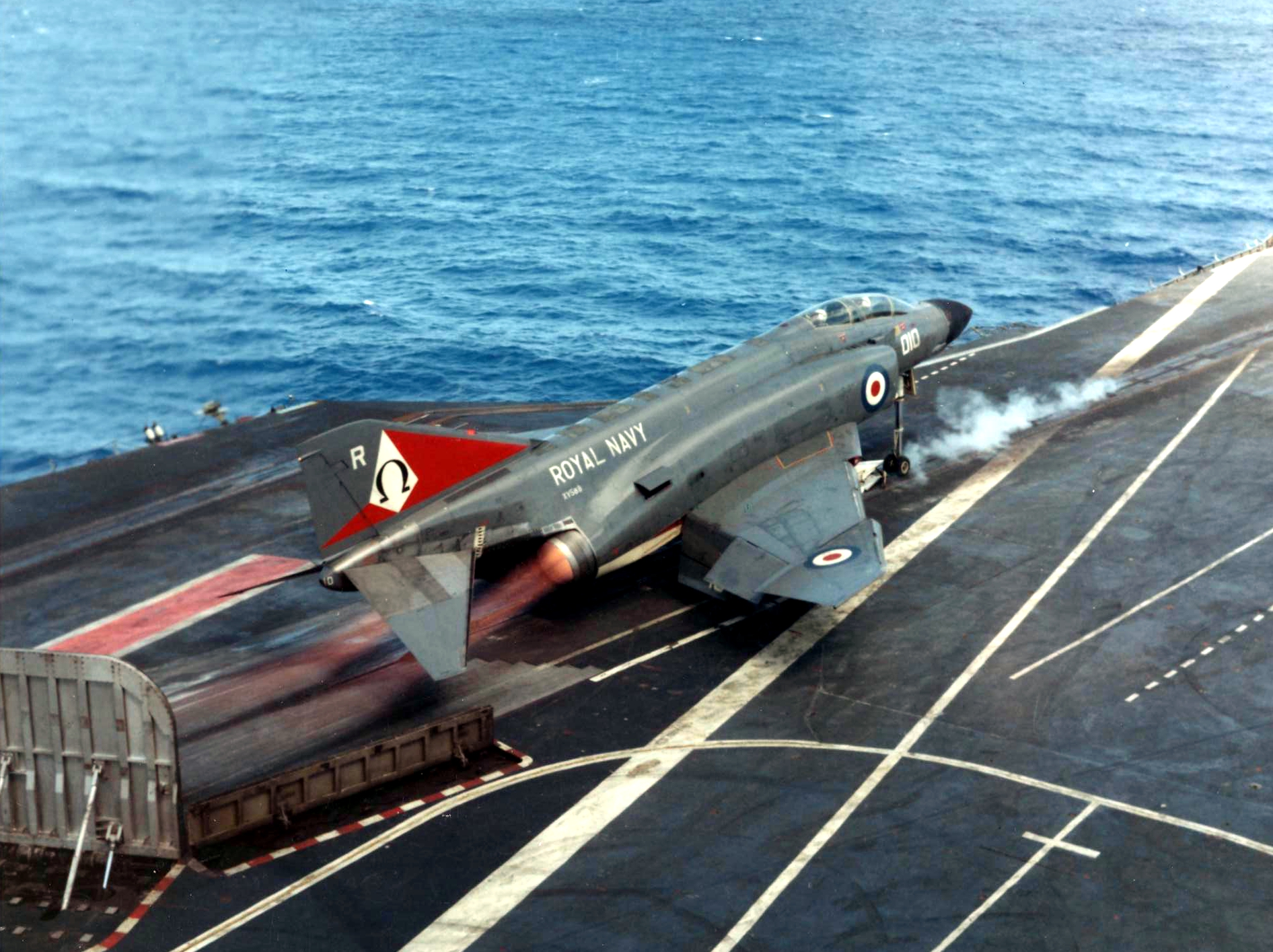
It is easy to forget, given how strongly the Phantom is associated with the Air Force, that it began as a naval aircraft and never stopped being one. The Navy and Marine Corps flew it from carrier decks throughout its front-line career, where its strong landing gear, arrester hook and folding wings were not afterthoughts but core parts of the design. Carrier operations demanded high sortie rates and unforgiving deck discipline, and the Phantom’s two-man crew and rugged structure suited that world well. The final development of the naval line, the F-4S, was a rebuild of earlier F-4J airframes with smokeless engines and other improvements, and Marine and Navy squadrons flew it into the 1980s. A Phantom made what is recorded as the type’s last US carrier landing aboard USS America in 1986.
The Phantom abroad
The Phantom was never just an American aircraft. With 5,195 built between 1958 and the end of US production, of which 5,057 came from McDonnell Douglas and 138 from Mitsubishi in Japan, it became the most-produced American supersonic military aircraft in history and one of the most widely exported fighters of the Cold War. It served with around a dozen air arms, and several of them flew it harder than the United States did.
British Phantoms: the Spey conversion
Britain’s Phantoms were a breed apart. To let the aircraft operate from the Royal Navy’s smaller carriers, and to support British industry, the UK aircraft were re-engined with the Rolls-Royce Spey turbofan in place of the J79. The Spey gave better low-speed thrust and range, but it was fatter than the American engine, which forced a redesign of the entire rear fuselage and air intakes. The Royal Navy version was the F-4K, in service as the Phantom FG.1, and the Royal Air Force version was the F-4M, in service as the Phantom FGR.2. Britain took 52 FG.1 and 118 FGR.2 aircraft, and later bought a batch of ex-US Navy F-4J airframes, kept close to American standard, to bolster home air defence in the 1980s. The first British Phantoms reached the Fleet Air Arm at Yeovilton in 1968. The RAF flew them in the strike, reconnaissance and air-defence roles, and No. 43 Squadron operated the FG.1 in the air-defence role for twenty years. British Phantoms also stood guard over the Falkland Islands after the 1982 war, where No. 1435 Flight flew four FGR.2s from Mount Pleasant until Tornado F3s took over the air-defence duty in 1992. UK Phantoms were retired from RAF service that same year.
Israel’s Kurnass
No air force used the Phantom more intensively than Israel’s. The first F-4Es, known in Israeli service as the Kurnass, meaning Sledgehammer, and the RF-4E reconnaissance version called Orev, or Raven, arrived in 1969 under the Peace Echo programme. They went into action almost at once during the War of Attrition, and scored their first aerial victory weeks after arriving when a Phantom downed an Egyptian MiG-21. The type bore the brunt of the fighting in the Yom Kippur War of October 1973, when Israeli Phantom crews flew repeated strikes against heavily defended targets and fought hard in the air, claiming a substantial share of their kills in the opening days while taking heavy losses to surface-to-air missiles. Israel later rebuilt and modernised its Phantoms extensively, keeping them in front-line use into the 1990s.
Other operators
The Phantom also served, among others, with West Germany, whose Luftwaffe flew the F-4F and the RF-4E and trained its crews in the United States. The German Phantoms guarded the inner border throughout the Cold War, were later upgraded to fire beyond-visual-range missiles, and were retired in June 2013 after the fleet had flown some 279,000 hours. Japan’s Mitsubishi-built F-4EJ guarded the home islands, and Australia leased F-4Es as a stopgap while it waited for its F-111s.
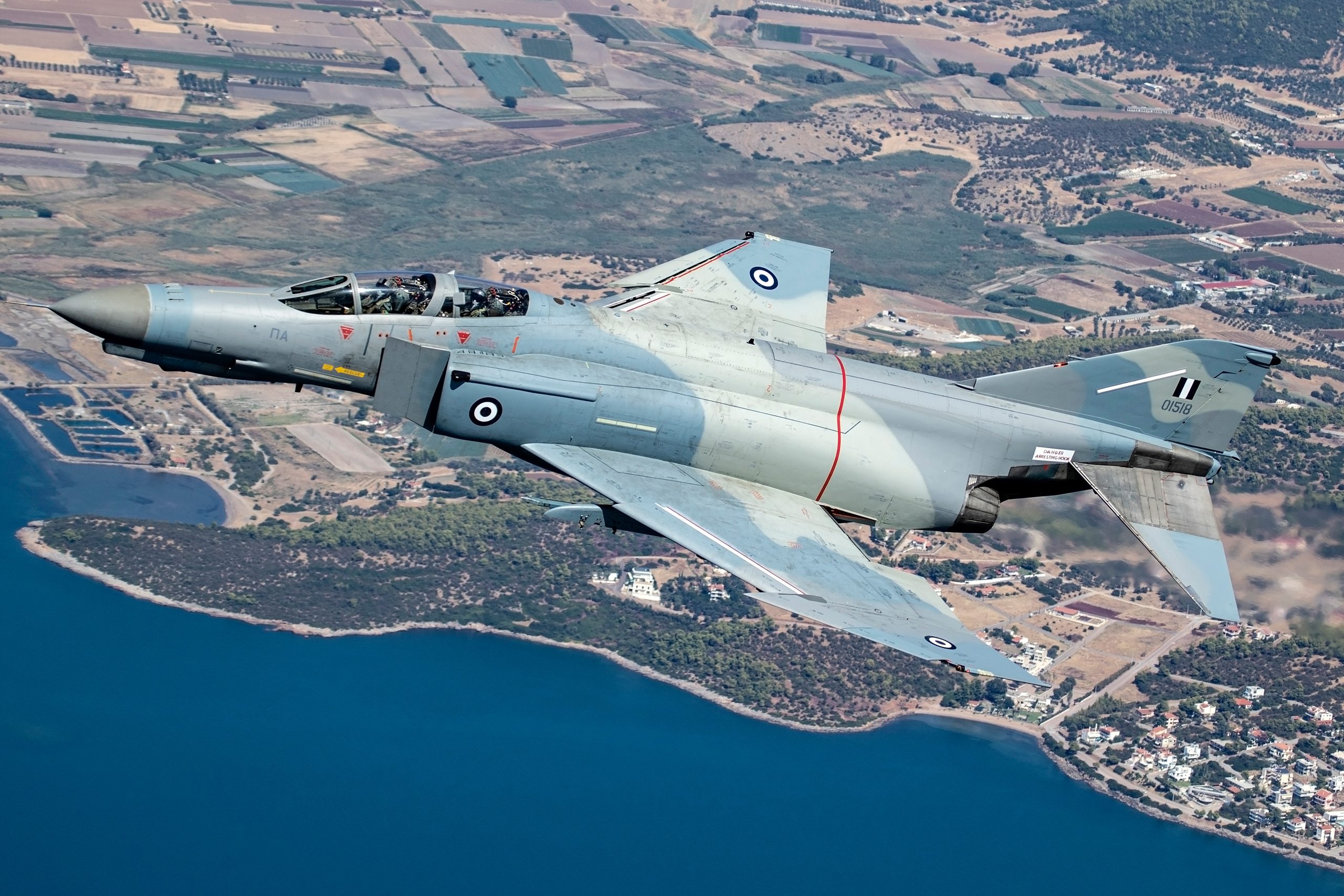
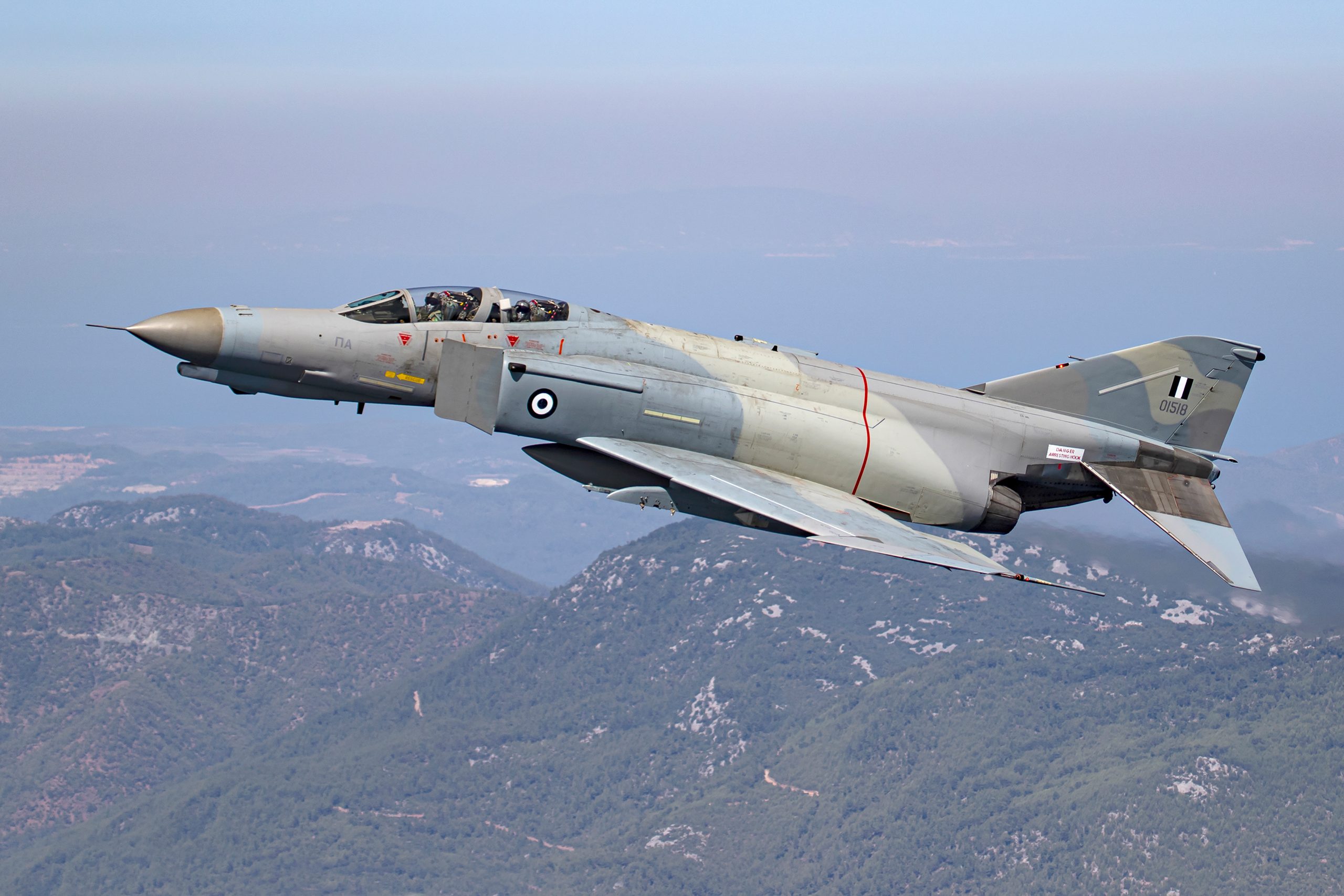
Iran was one of the Phantom’s most active export users. The Imperial Iranian Air Force received F-4D, F-4E and RF-4E aircraft in the 1970s, and after the 1979 revolution those same aircraft went to war against Iraq through the 1980s. Iranian Phantoms flew some of the most ambitious missions of that war, including a long-range strike against the H-3 air base complex in western Iraq in April 1981 and an early raid in the war’s opening days against Iraqi airfields around Baghdad. Greece, Turkey, South Korea, Spain and Egypt all operated the type as well. Several of these air arms kept their Phantoms flying far longer than anyone expected, which is why the aircraft was still on the front line in the 2020s.
Variants in brief
The Phantom family is large, and the alphabet soup of designations can be confusing. The broad pattern runs as follows. The Navy and Marine line began with the F-4B, was improved as the F-4J, and those airframes were later rebuilt as the F-4N and F-4S respectively. The Air Force line ran from the F-4C, through the improved F-4D, to the definitive gun-armed F-4E, with the F-4G Wild Weasel as its specialised defence-suppression offshoot. Reconnaissance was handled by the camera-nosed RF-4B, RF-4C and the export RF-4E. The British F-4K and F-4M, with their Spey engines, served as the Phantom FG.1 and FGR.2. The Japanese F-4EJ and the German F-4F were licence-influenced or locally adapted versions of the F-4E theme.
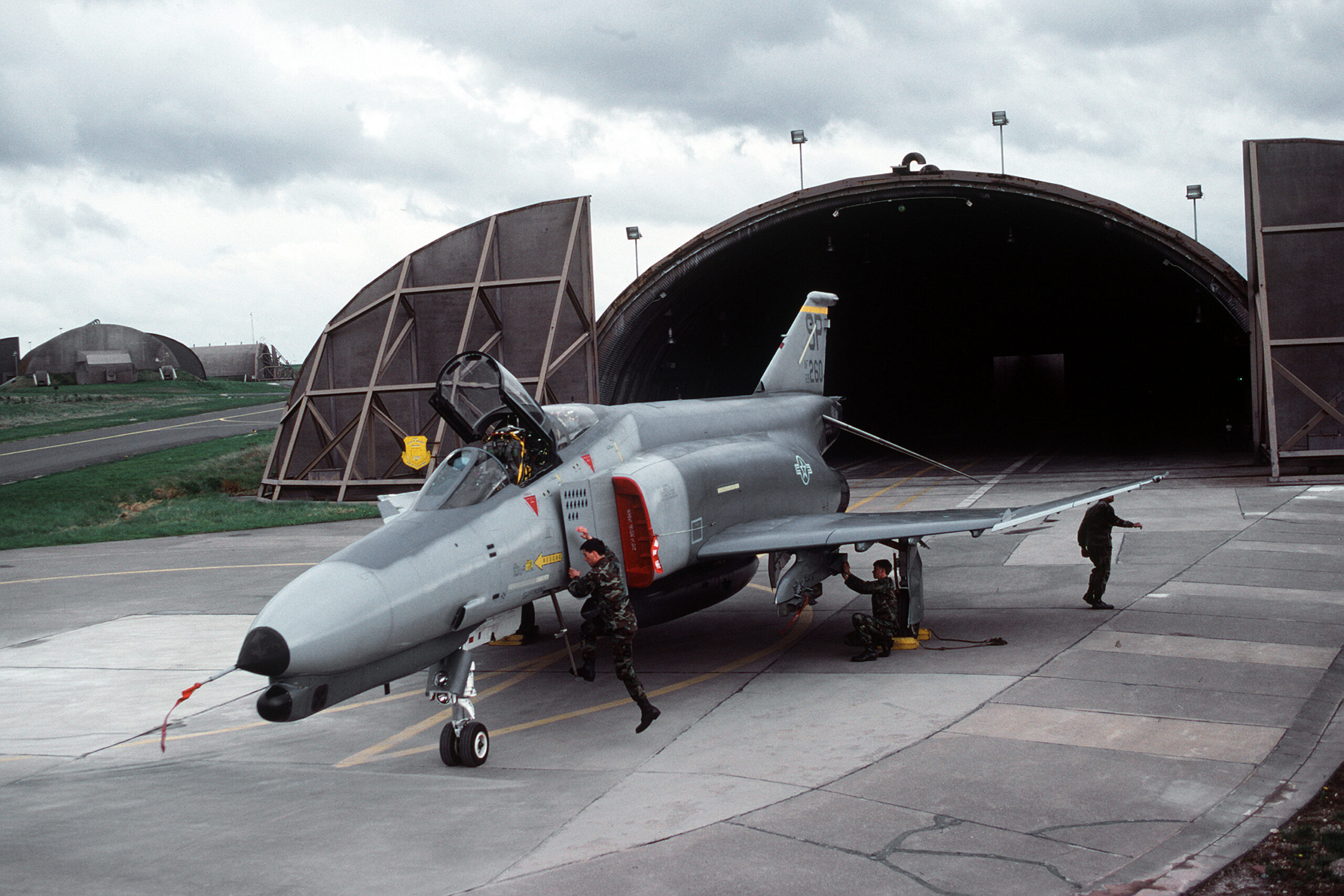
Specifications: F-4E Phantom II
The figures below are for the F-4E, the most numerous and arguably the definitive version of the Phantom. Other variants differ, sometimes considerably, with the Spey-engined British aircraft being the most distinct. Where sources vary slightly, the values here follow US Air Force and museum data.
| Characteristic | Detail |
|---|---|
| Crew | Two (pilot and weapon systems officer) |
| Length | 63 ft 0 in (19.2 m) |
| Wingspan | 38 ft 5 in (11.7 m) |
| Empty weight | about 30,300 lb (13,750 kg) |
| Maximum take-off weight | about 61,800 lb (28,030 kg) |
| Powerplant | Two General Electric J79-GE-17 afterburning turbojets |
| Thrust | about 11,900 lbf dry, 17,845 lbf with afterburner, each |
| Maximum speed | over Mach 2.2 at altitude |
| Service ceiling | about 60,000 ft (18,300 m) |
| Combat range | varies widely with load; ferry range around 1,800 miles |
| Internal gun | One 20 mm M61A1 Vulcan cannon (F-4E onward) |
| External load | up to about 18,000 lb (8,200 kg) on nine hardpoints |
| First flight (XF4H-1) | 27 May 1958 |
| Total built (all variants) | 5,195 |
The long goodbye: retirement and survivors
The Phantom’s withdrawal from American service was gradual. Front-line Air Force and Navy units gave it up through the 1980s as the F-15, F-16 and F/A-18 came in, but the F-4G Wild Weasel and the RF-4C reconnaissance aircraft soldiered on, and Wild Weasels flew in the 1991 Gulf War. After the type left manned US service, large numbers were converted into full-scale aerial targets under the QF-4 programme, flown unmanned or with a safety pilot to give missile crews a realistic radar target. The last unmanned QF-4 mission took place on 17 August 2016, when a drone Phantom was fired on by an F-35 and, as it happened, survived. The QF-4 was formally retired with a four-ship flight at Holloman Air Force Base in December 2016, closing out US military operation of the type after fifty-eight years.
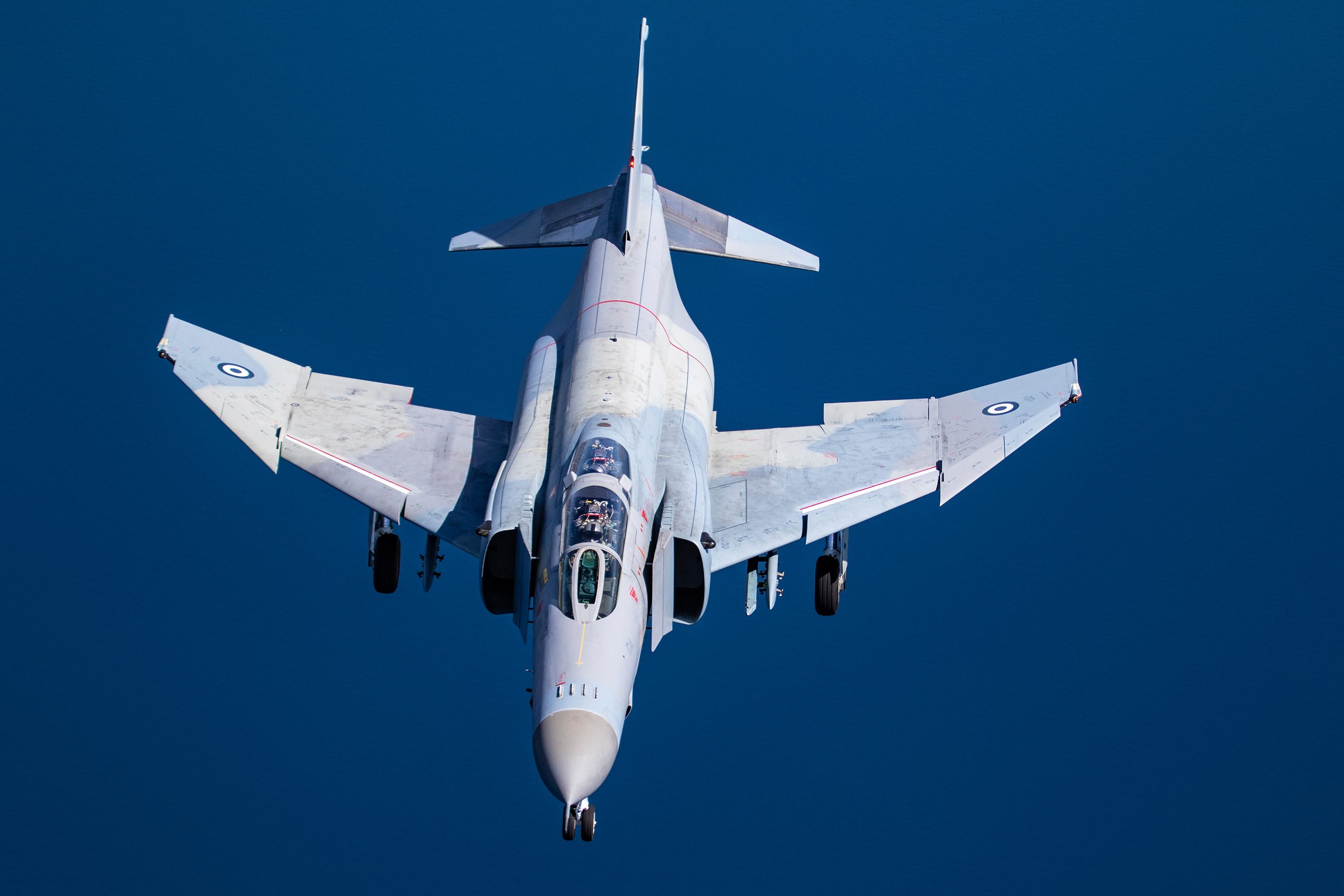
Foreign operators kept the Phantom flying well beyond that. Japan retired its last F-4EJ aircraft in 2020 and 2021 after nearly half a century of service. South Korea flew its F-4Es until June 2024. Greece has continued to operate upgraded F-4E aircraft, and Turkey plans to keep its modernised F-4E-2020, locally nicknamed the Terminator, flying toward 2030. Iran is also reported still to operate the type. That a 1950s design was still standing alert in the 2020s says a great deal about how much capability was built into the original airframe.
For those who want to see one on the ground, preserved Phantoms are common in aviation museums across the United States, Britain, Germany and beyond. The National Museum of the United States Air Force, the Smithsonian’s Udvar-Hazy Center, the National Naval Aviation Museum and many British collections all hold examples, and a number of combat-veteran airframes wearing their MiG-kill markings survive. In Britain the British Phantom Aviation Group keeps the type alive as a working restoration rather than a static exhibit. They are popular subjects for photographers, and many have appeared in front of our own cameras over the years. You can find Phantoms and their contemporaries in the Piemags archive galleries, and prints and editorial use are covered on our licensing page.
Legacy
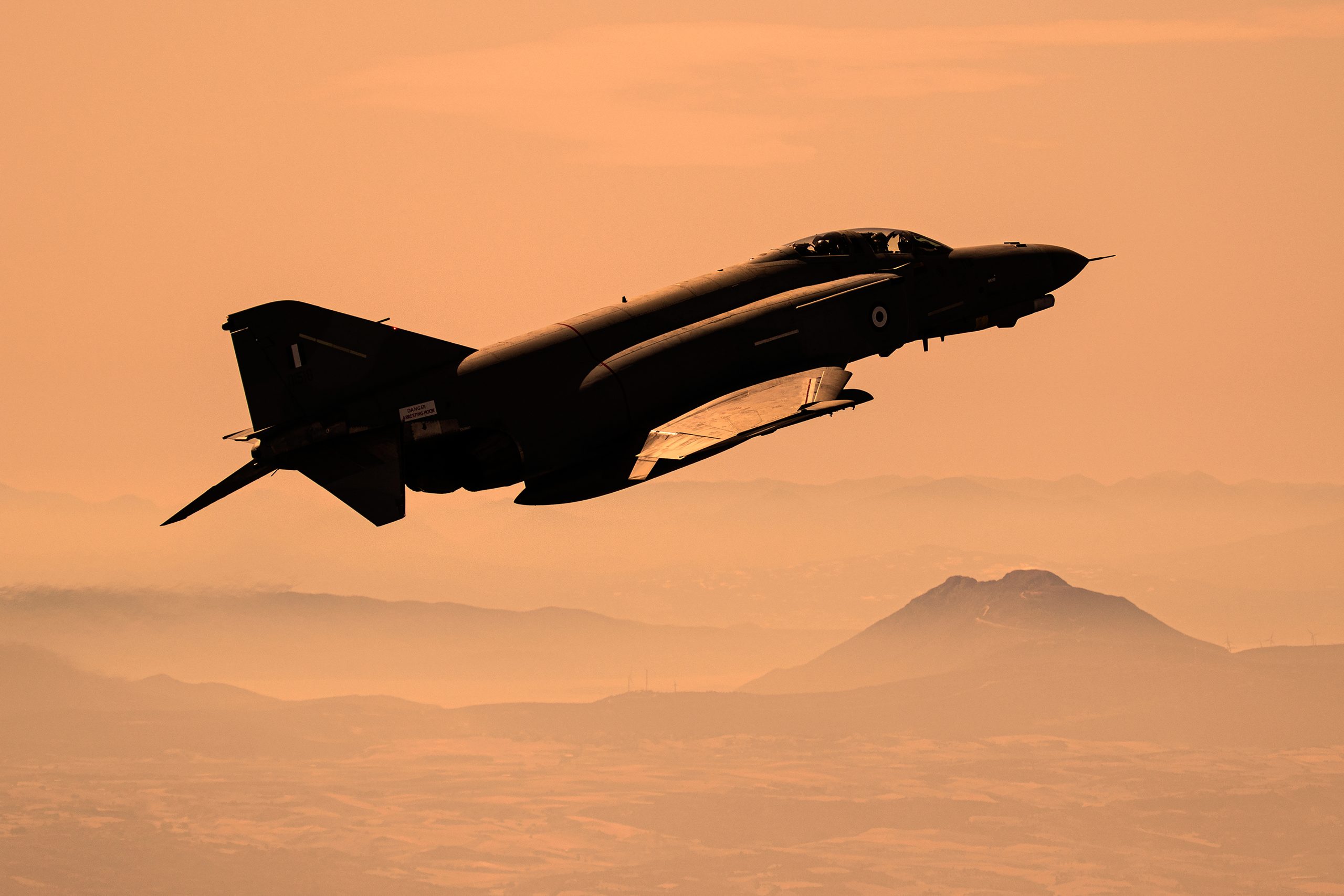
The Phantom matters for more than its long service and big production run. It marked the point at which the fast jet became a true multirole machine, able to switch between air defence, strike and reconnaissance rather than being built for one task alone. Almost every Western combat aircraft since, from the F-15 and F-16 to the Typhoon and the F-35, has followed that logic of one airframe doing many jobs well rather than one job perfectly. It also taught air forces an expensive lesson about the limits of technology: that a guided missile and a powerful radar do not, on their own, win air battles, and that training, tactics and a gun still matter. The reforms that flowed from the Phantom’s early struggles, above all the rise of realistic dissimilar air combat training, shaped how fighter crews have been prepared ever since.
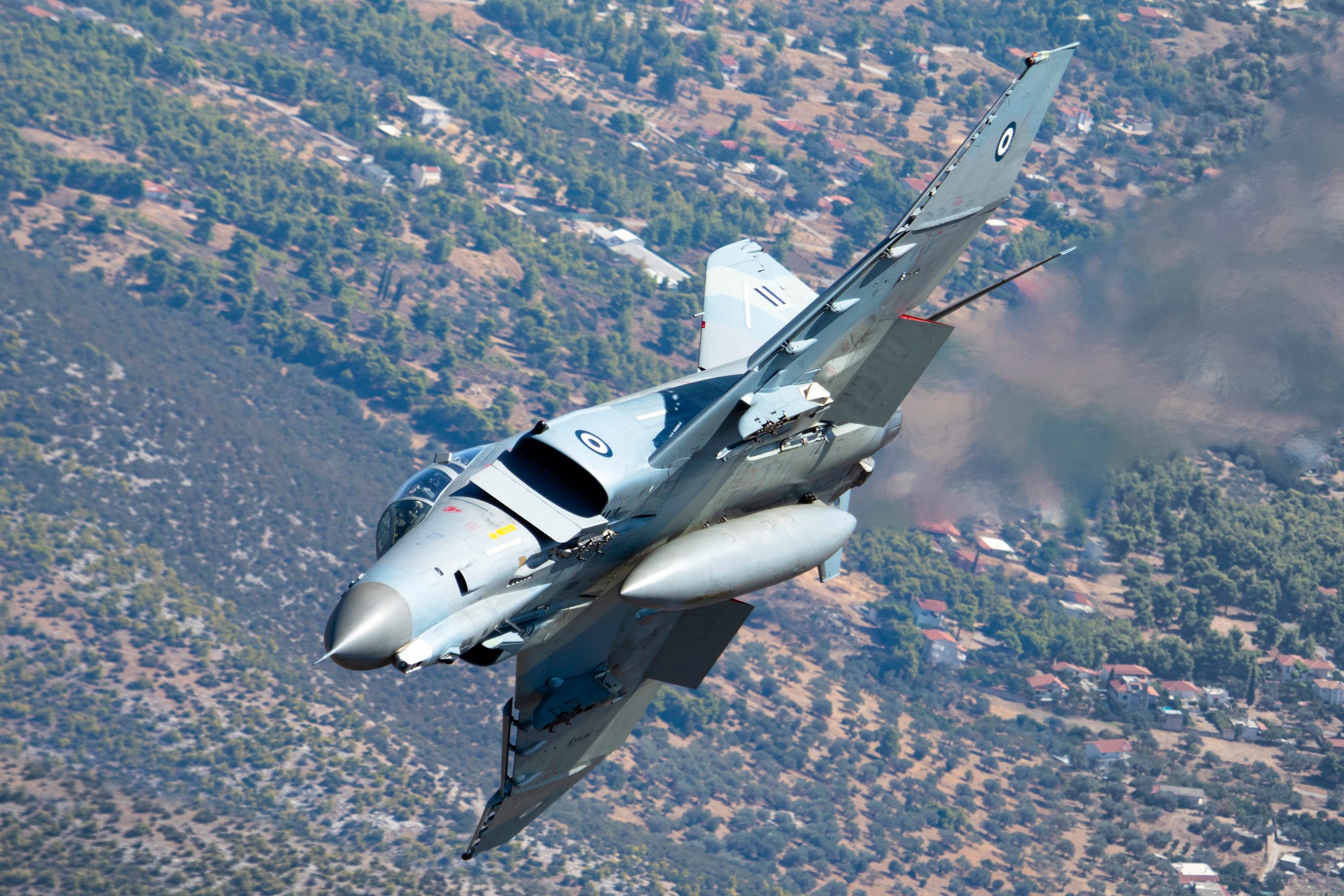
It earned an affection that cold specifications cannot explain. Crews loved it for its strength, its honesty and its sheer presence, smoke trail and all. It is the aircraft that taught a generation of pilots and back-seaters their trade, and the cartoon Spook on a squadron patch still means something to people who never flew it. The Phantom sits naturally alongside the other Cold War heavyweights we have profiled, from the Lockheed SR-71 Blackbird that flew higher and faster than anything else, to the Avro Vulcan that carried Britain’s deterrent. For an earlier generation of fighter design, the piston-engined North American P-51 Mustang tells the other half of the story. And if you want to photograph a surviving Phantom at an airshow, our guide to photographing fast jets covers the panning and tracking technique that brings a moving Phantom to life.
Frequently asked questions
Why was the F-4 Phantom built without a gun?
When the Phantom was designed in the mid 1950s, prevailing doctrine held that guided missiles had made the dogfight obsolete, so a gun was seen as dead weight. Combat over Vietnam proved otherwise, because rules of engagement often forced fights to close range where the radar-guided Sparrow worked poorly and a gun would have been ideal. The lesson was fixed in the F-4E from 1967, which carried a built-in 20 mm M61 Vulcan cannon.
How many F-4 Phantoms were built?
A total of 5,195 were built between 1958 and the end of production, 5,057 by McDonnell Douglas in the United States and 138 by Mitsubishi in Japan. That makes it the most-produced American supersonic military aircraft in history.
Is the F-4 Phantom still in service?
The United States retired its last Phantoms, by then unmanned QF-4 target drones, in 2016. Several foreign air arms kept the type flying much longer. As of the mid 2020s, modernised Phantoms remained in service with operators including Turkey, Greece and Iran, more than sixty years after the first deliveries.
What made the Phantom so successful?
Adaptability. It combined two powerful engines, a heavy radar with a dedicated operator to run it, long range and a large weapons load in one airframe, which let it serve as interceptor, strike aircraft and reconnaissance platform at the same time. That flexibility, along with a rugged airframe that could take damage and keep flying, is why it served so many air forces for so long.
Why were British Phantoms different?
British aircraft were re-engined with the Rolls-Royce Spey turbofan instead of the American J79, to suit the Royal Navy’s smaller carriers and to support British industry. The Spey was wider than the J79, so the entire rear fuselage and intakes had to be redesigned. The Royal Navy flew it as the Phantom FG.1 and the RAF as the Phantom FGR.2.
What were the Phantom’s nicknames?
Crews called it the Double Ugly, the Flying Anvil and the Rhino, all affectionate references to its size and unconventional looks. Its cartoon mascot, a small ghost called the Spook, was drawn in 1958 and still appears on squadron patches.
How fast could the F-4 Phantom fly?
The Phantom was a genuine Mach 2 aircraft, with a top speed of a little over 1,470 mph, around Mach 2.2, at altitude. In 1961 an F-4 set a world absolute speed record of 1,606 mph, and Phantoms also took records for altitude and rate of climb.
Did the F-4 Phantom fly with the Blue Angels and Thunderbirds?
Yes. Both American display teams flew the Phantom from 1969, the US Navy Blue Angels and the US Air Force Thunderbirds, making it the only aircraft used by both. They flew it into the mid-1970s, when the soaring fuel costs of the era pushed both teams onto smaller, more economical types.
What engines did the F-4 Phantom use?
Most Phantoms were powered by two General Electric J79 turbojets with afterburners. The heavy dark smoke trail the aircraft left at military power came from these engines, and crews later learned to run them in a way that cut the tell-tale smoke in combat.
The fighter designed to fix the Phantom’s Vietnam lessons gets the full treatment in our F-15 Eagle history.
The aircraft that took over the Phantom’s fleet defence duties aboard American carriers gets its own full profile in our history of the Grumman F-14 Tomcat.
The close air support lessons learned the hard way over Vietnam produced a very different machine: read the full story of the Fairchild Republic A-10 Thunderbolt II.
The Hellenic frames in this post come from a single remarkable expedition, told in full in Forty-Two Minutes with the Phantom, the story of Aviation Photo Crew’s Athens Flying Week 2019 sorties.
Licensing Phantom imagery for a book, feature or documentary? See our buyer’s guide to F-4 Phantom photographs.
