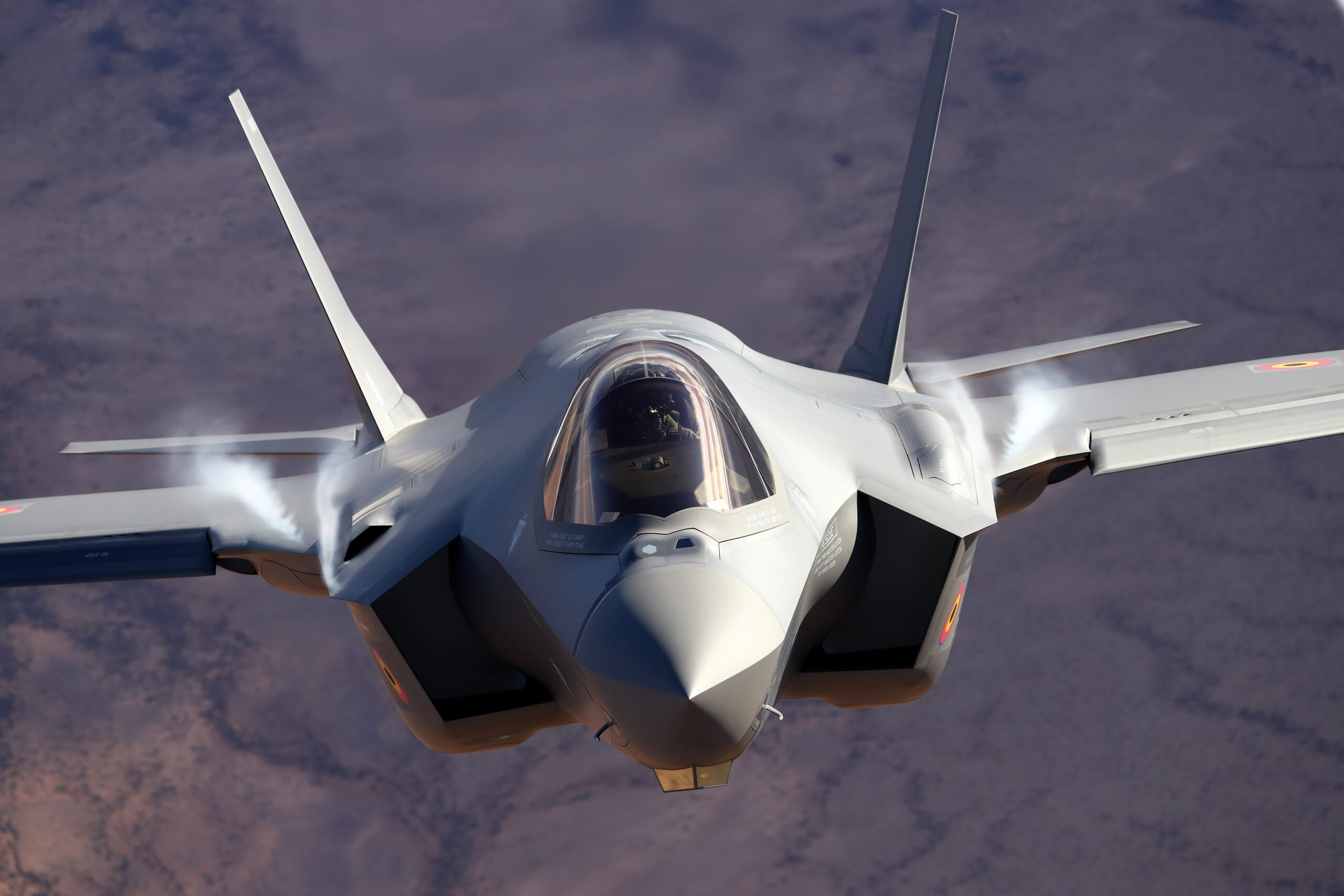
The Lockheed Martin F-35 Lightning II is the most produced fifth-generation fighter in history: a single-seat, single-engine stealth multirole family built in three variants for conventional runways, short take-off and vertical landing, and aircraft carriers, with past 1,300 aircraft delivered to a dozen air arms as of January 2026. It is also the most expensive weapons programme ever undertaken, and both halves of that sentence are the story.
No modern aircraft divides opinion like the F-35. To its operators it is a sensor-fused strike fighter that has redefined what a squadron can see and share; to its critics it is a two-trillion-dollar lesson in programme management. Both camps are working from real evidence, and this profile sets out the verified history: where the Lightning II came from, how it flies, who operates it, what it has done in combat, and where a photographer can actually find one.
What this guide covers
- Origins: JAST, the JSF competition and the X-35
- Development and testing: the long road to service
- Design and technology
- The three variants: F-35A, F-35B and F-35C
- Service and combat history
- Operators and production
- The UK Lightning Force
- Specifications
- Photographing the F-35 today
- Legacy: the stealth generation
- Frequently asked questions
Origins: JAST, the JSF competition and the X-35
The F-35 began as an act of consolidation. In late 1993 the Pentagon’s Bottom-Up Review cancelled two separate fighter programmes and created the Joint Advanced Strike Technology office, established in January 1994, to develop common technology for the next generation of strike aircraft across the US Air Force, Navy and Marine Corps. Congress then directed that a DARPA project into advanced short take-off and vertical landing fighters be folded in, preserving a STOVL variant for the Marines, and by the time final proposals were requested in March 1996 the effort had a new name: the Joint Strike Fighter. The ambition was unprecedented. One basic design would replace the F-16 and A-10 for the Air Force, complement the Super Hornet for the Navy, and take over from the AV-8B Harrier and F/A-18 for the Marines, while the United Kingdom, the programme’s only Tier One partner, needed a successor to the Sea Harrier and Harrier GR7.
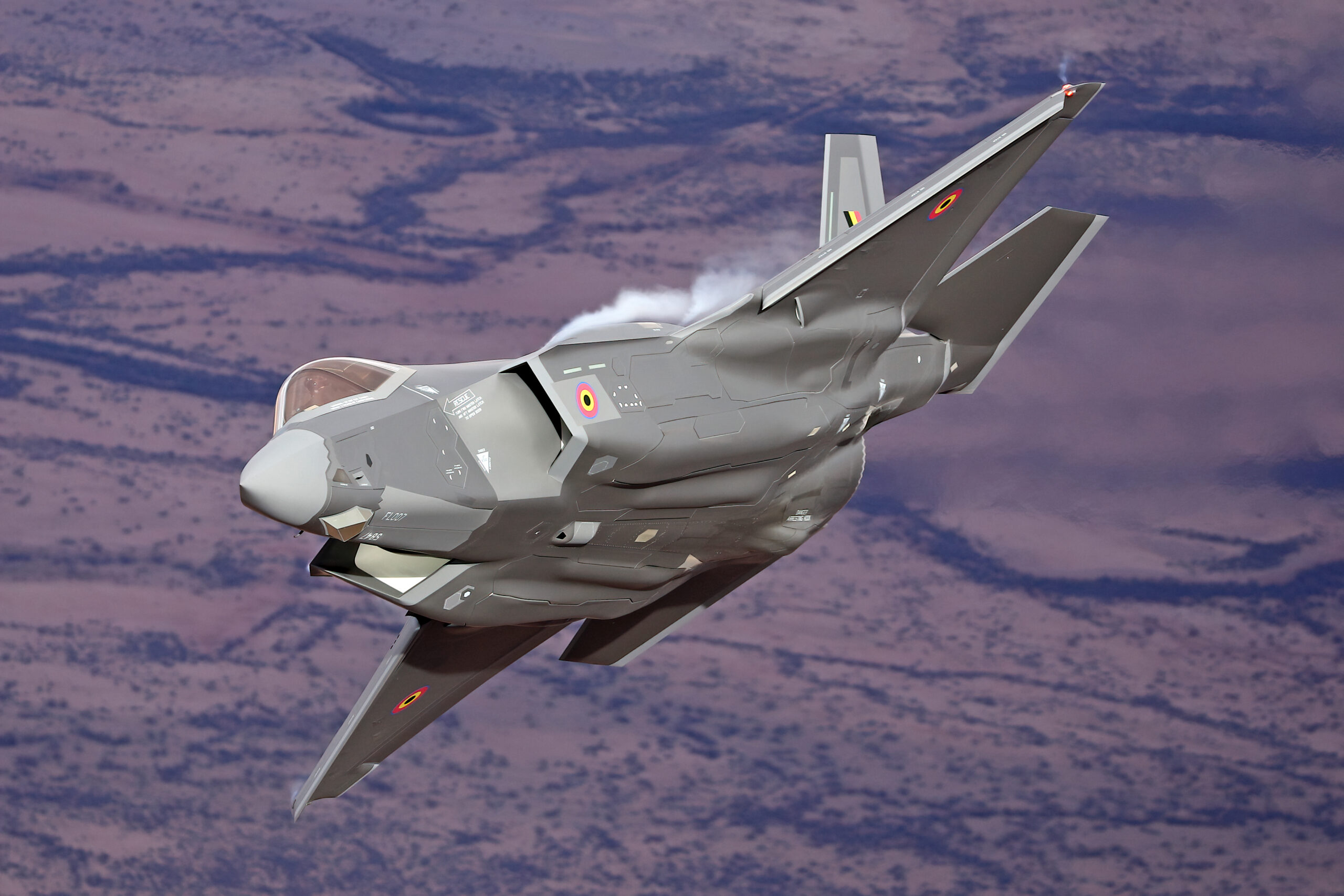
In November 1996 the Defense Department selected Boeing and Lockheed Martin to build competing demonstrators, each funded at roughly 750 million dollars, eliminating McDonnell Douglas and setting up the last great winner-takes-all fighter competition of the twentieth century. Boeing’s X-32 used a one-piece delta wing and direct lift, ducting engine thrust downwards for vertical flight. Lockheed Martin’s X-35 took a riskier route: a shaft-driven lift fan behind the cockpit, designed with Rolls-Royce, that turned engine power into a column of cool, high-mass-flow air. The distinction mattered because hot exhaust recirculating into an engine’s own intake had plagued every previous vertical-landing jet, and the lift fan sidestepped the problem entirely.
The X-35A first flew on 24 October 2000 from Palmdale with Lockheed test pilot Tom Morgenfeld at the controls, and the carrier-oriented X-35C followed that December. The X-35A was then converted into the X-35B by installing the lift fan, which is why no separate X-35A survives today. British involvement ran deep from the start: BAE Systems test pilot Simon Hargreaves flew the X-35B’s first vertical take-off and landing on 23 June 2001, and an RAF squadron leader, Justin Paines, was among the small cadre of STOVL test pilots. The defining moment came on 20 July 2001, when US Marine Corps Major Art Tomassetti flew Mission X: a short take-off, a level supersonic dash and a vertical landing in a single sortie, the first time any aircraft had done all three in one flight. Hargreaves repeated the feat six days later with aerial refuelling added. The X-32 could not match that combination in one configuration, and on 26 October 2001 the Pentagon announced that Lockheed Martin had won the System Development and Demonstration contract, worth 18.9 billion dollars for the airframe with a further 4.8 billion to Pratt & Whitney for the F135 engine. The programme was then valued at around 200 billion dollars, the largest defence contract in history at the time. The lift fan team’s work won the 2001 Collier Trophy, and both surviving demonstrators are now museum pieces: the X-35B at the Smithsonian’s Udvar-Hazy Center and the X-35C at the Patuxent River Naval Air Museum, where it sits alongside the Boeing X-32B it defeated.
Development and testing: the long road to service
Turning the demonstrator into the F-35 took far longer than anyone signed up for. The production design was named Lightning II in July 2006, honouring both the Lockheed P-38 and the English Electric Lightning, and the first F-35A flew from Fort Worth on 15 December 2006 with Jon Beesley at the controls. The F-35B followed on 11 June 2008, flown by former RAF Harrier pilot Graham Tomlinson, who also performed the type’s first vertical landing at Patuxent River on 18 March 2010, a day after its first hover. The F-35C carrier variant flew in June 2010, made its first shipboard arrested landing aboard USS Nimitz on 3 November 2014, and the F-35B’s first sea trials aboard USS Wasp in October 2011 racked up 72 short take-offs and 72 vertical landings.
The programme’s troubles are as much a part of its history as its milestones. The 2001 baseline put total acquisition at 233 billion dollars; by the March 2012 re-baseline that figure had grown to 395.7 billion, unit costs had roughly doubled, and full-rate production had slipped six years. A critical Nunn-McCurdy cost breach was declared in 2010, forcing the Pentagon to certify the programme as essential to national security to keep it alive. The root cause had a name: concurrency, the decision to build production aircraft while flight testing was still discovering problems, which meant early jets needed expensive retrofits. Frank Kendall, then the Pentagon’s acquisition chief, famously called it acquisition malpractice in February 2012. Yet the flight-test programme itself, completed in April 2018 after more than 9,200 sorties and 17,000 flight hours, finished without a single aircraft lost, and the type reached its operational milestones in sequence: the US Marine Corps declared the F-35B operational in July 2015, the US Air Force followed with the F-35A in August 2016, and the US Navy’s F-35C reached initial operational capability in February 2019. Formal approval for full-rate production only arrived in March 2024, and the US Government Accountability Office estimated in April 2024 that the programme will cost more than two trillion dollars to buy, fly and maintain through its planned life, which now stretches to 2088.
Sustainment has its own troubled subplot. The Autonomic Logistics Information System, the ground network meant to manage every spare part and maintenance action across the global fleet, became a byword for frustration and was replaced from 2020 by the cloud-based Operational Data Integrated Network, ODIN. Spares shortages have bitten hard at times, most visibly in early 2022 when dozens of US Air Force jets sat without serviceable engines awaiting F135 power modules, and the Government Accountability Office has tracked mission-capable rates around 55 per cent against goals in the eighties. These are the unglamorous numbers behind the fleet’s headline growth, and fixing them is as central to the programme’s next decade as any weapon integration.
Design and technology
The F-35’s shape is its first sensor defence. Low observability comes from planform alignment, internal fuel and weapons carriage, embedded antennas, a shielded engine face and radar-absorbent materials, and unlike earlier stealth types the coatings were designed for maintainability from the outset. Actual radar cross-section figures are classified, and the numbers that circulate publicly are unofficial estimates that vary with aspect and radar frequency, so this profile will not pretend otherwise. When the aircraft needs to be seen, on ferry flights or at airshows, it flies with bolt-on radar reflectors that deliberately spoil the stealth picture.
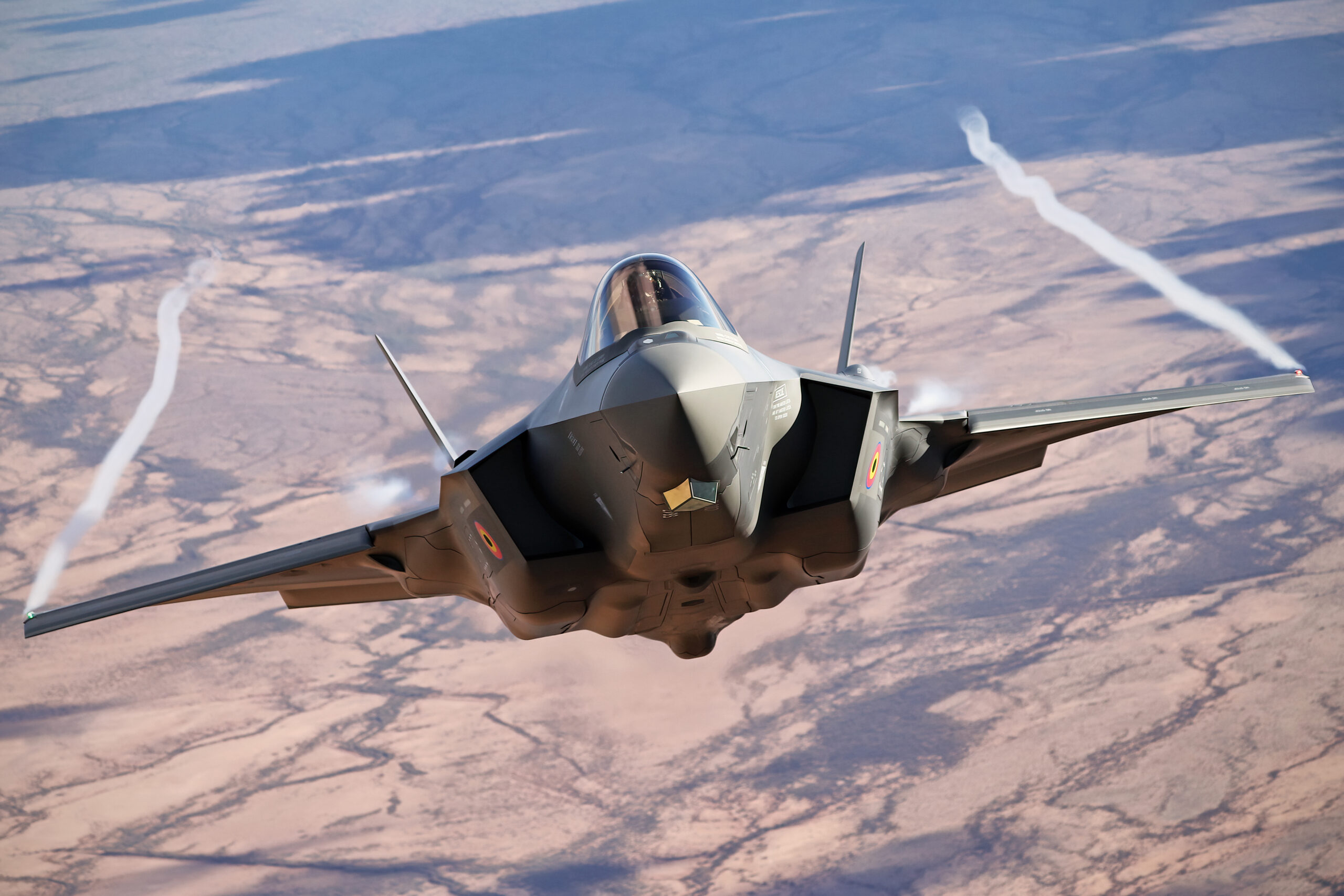
Power comes from the Pratt & Whitney F135, the most powerful fighter engine in service, rated in the 40,000-pound-thrust class with afterburner; Pratt & Whitney quotes more than 40,000 pounds, the US Air Force fact sheet says 43,000, and Lockheed’s own documents give figures between 38,000 and 40,000 depending on variant, so the honest statement is the class rather than a single number. In the F-35B the engine drives the Rolls-Royce LiftSystem: a driveshaft turns a 50-inch, two-stage counter-rotating lift fan absorbing up to 29,000 shaft horsepower, while a three-bearing swivel module vectors the main nozzle downwards through 95 degrees in two and a half seconds and roll posts under each wing keep the aircraft level. The combined system produces around 40,000 pounds of vertical lift, and its designers won the Collier Trophy for it.
What genuinely separates the F-35 from earlier fighters is the sensor suite and what the aircraft does with it. The Northrop Grumman AN/APG-81 active electronically scanned array radar is paired with the AN/AAQ-37 Distributed Aperture System, six infrared cameras giving the pilot spherical vision through the airframe, and the Electro-Optical Targeting System, the first sensor to combine a targeting FLIR and infrared search-and-track behind a stealth-compatible sapphire window. BAE Systems supplies the AN/ASQ-239 electronic warfare system. All of it is fused into a single picture presented on a panoramic touchscreen and a helmet-mounted display that replaces the head-up display entirely, making the F-35 the first tactical fighter in roughly half a century to fly without one. The aircraft was designed to fight as a network node, sharing its picture over a low-probability-of-intercept datalink, and pilots consistently describe situational awareness, not turn rate, as the type’s defining quality.
The current chapter is the Block 4 modernisation and its Technology Refresh 3 hardware, a processor and display upgrade that paused deliveries for a year from July 2023 and was still limiting combat capability on newly delivered jets into 2025 and 2026. Deliveries resumed with interim software, Lockheed cleared the parked backlog with a record 191 deliveries in 2025, and the rescoped Block 4 package is now expected to complete no earlier than 2031, with an engine core upgrade for the F135 following late in the decade. This is worth knowing because it explains a paradox the news cycle keeps rediscovering: the factory is running at record pace while auditors report that the newest jets are not yet fully combat capable.
The three variants: F-35A, F-35B and F-35C
The three variants share a cockpit, engine core, sensor suite and about the same fuselage, but they are built for three different runways. The F-35A is the conventional take-off and landing version, the lightest and most agile of the family, rated to nine g and the only variant with an internal gun, a 25 mm GAU-22/A behind a stealth door on the left shoulder with a magazine of around 180 rounds. It refuels by boom and makes up the overwhelming majority of orders worldwide.
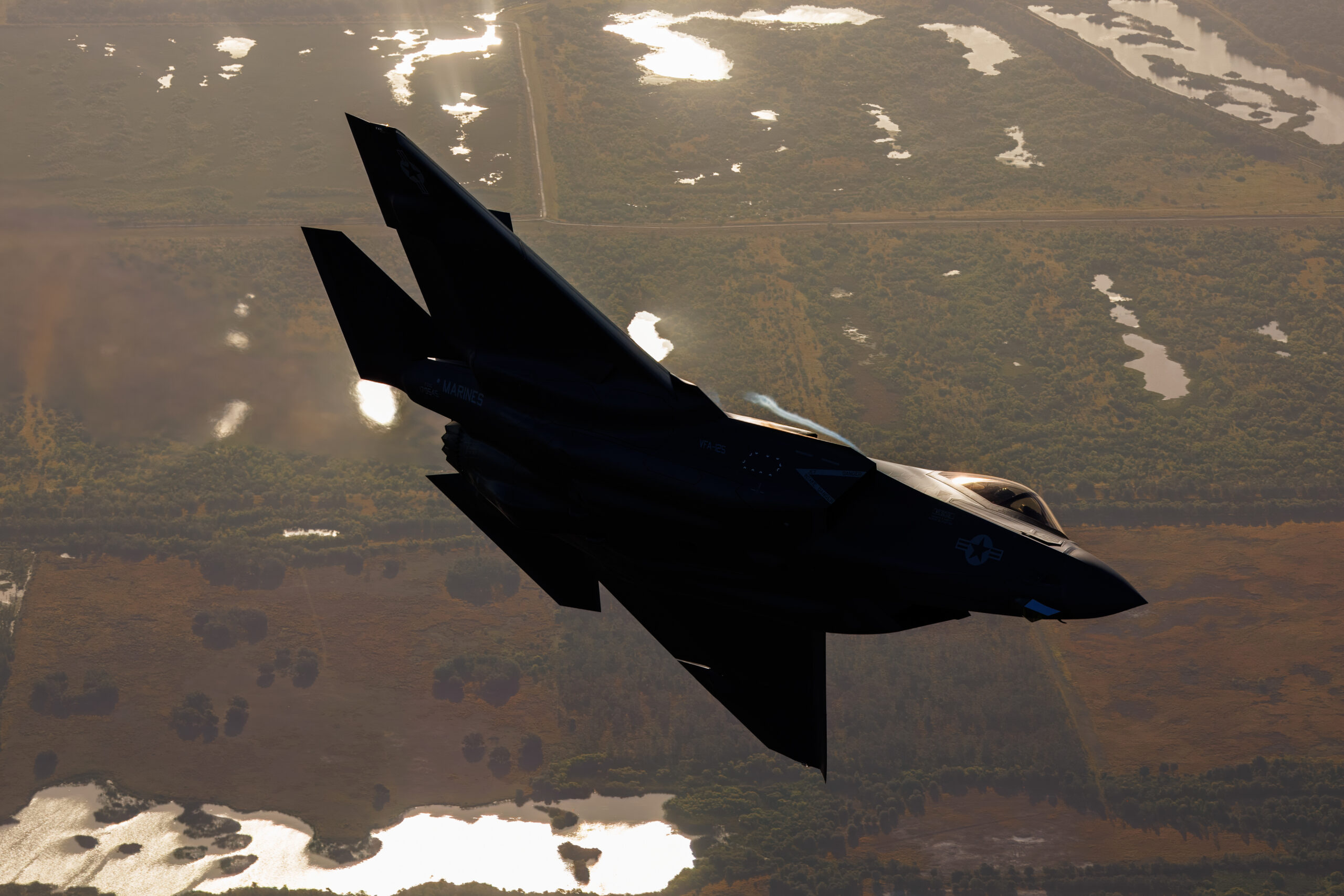
The F-35B is the short take-off and vertical landing variant, the one that carries the lift fan, and the compromises are visible in the numbers: it trades roughly a third of the A-model’s internal fuel, is limited to seven g, and its shortened weapons bays carry 1,000-pound-class bombs internally rather than the 2,000-pound weapons the other two variants swallow. It has no internal gun, using a centreline pod when needed, and refuels by probe and drogue. In exchange it operates from big-deck amphibious ships, austere strips and the Royal Navy’s carriers, a capability no other stealth aircraft on earth offers. The F-35C is the US Navy’s catapult-and-arrester version, with a visibly larger folding wing of 668 square feet against 460, beefed-up landing gear, a tailhook, the largest internal fuel load of the three and a 7.5 g limit. Its bigger wing gives the longest unrefuelled range in the family and a gentler approach speed for the boat.
Service and combat history
The Lightning II’s combat record opened not with an American squadron but with Israel. In May 2018 the commander of the Israeli Air Force announced that its F-35I Adir jets had already flown strikes, the type’s first acknowledged combat use anywhere. The US Marine Corps followed in September 2018 with an F-35B strike in Afghanistan flown from USS Essex, and the US Air Force’s F-35A made its combat debut in April 2019 against an Islamic State tunnel network in Iraq. British jets were blooded from the deck of HMS Queen Elizabeth in June 2021, flying Operation Shader sorties against Daesh during the CSG21 deployment, which also marked the first US combat missions flown from a foreign carrier since the Second World War.
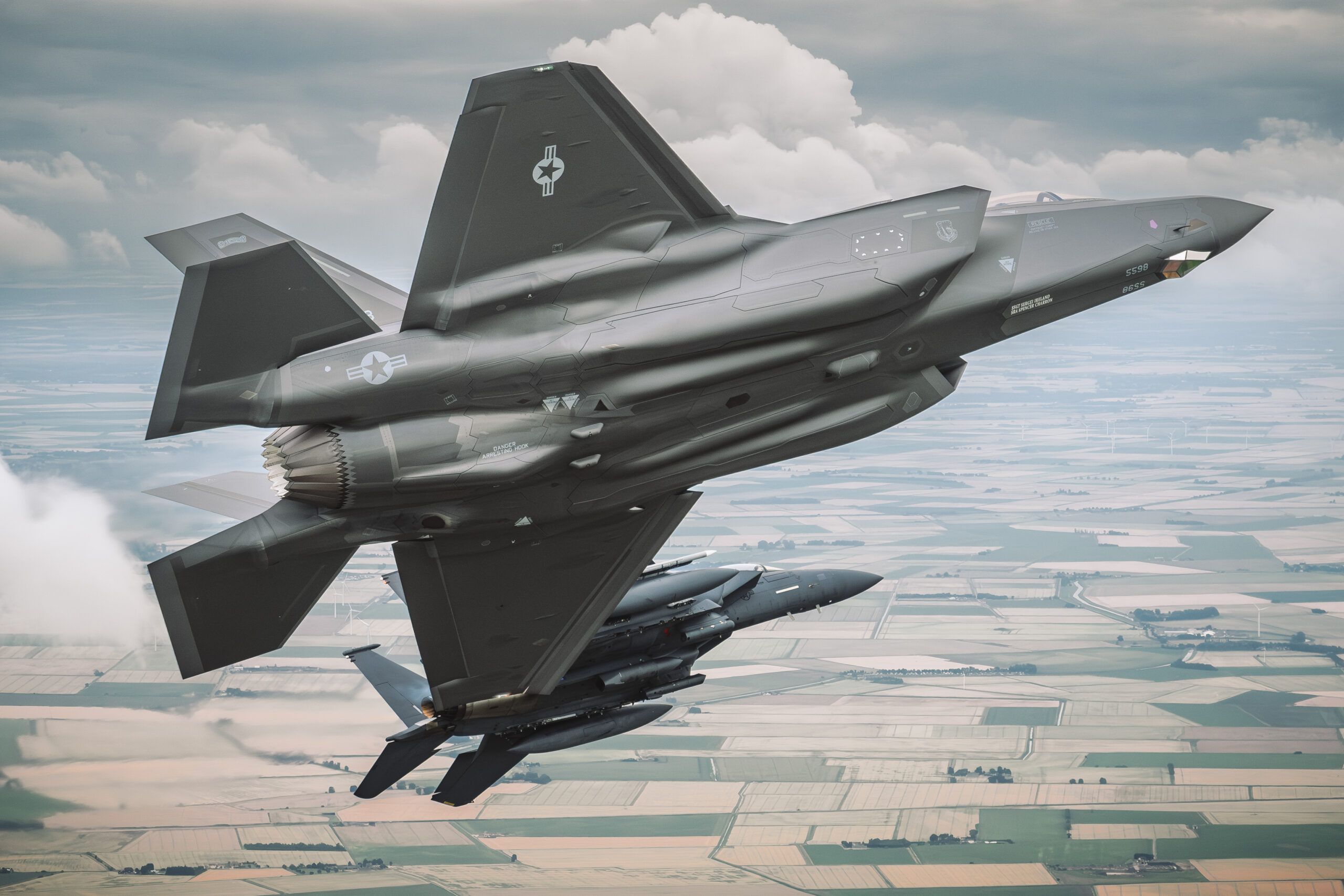
The tempo has only increased since. Israeli Adirs claimed the type’s first air-to-air kill in November 2023, downing a Houthi cruise missile, and have flown intensively over Gaza, Lebanon, Yemen and Iran, including the June 2025 air campaign in which Israel reported more than 1,400 sorties over Iran without losing a crewed aircraft; Israeli F-35s were also the first to carry external weapons in combat, the so-called beast mode, in 2025. In March 2026 the Israeli Air Force released footage it says shows an F-35 destroying an Iranian Yak-130 trainer, which would be the type’s first kill of a crewed aircraft; the claim rests on Israeli material alone and should be read as such. American F-35s have fought through the Red Sea campaign against the Houthis, where the F-35C made its combat debut from USS Abraham Lincoln in November 2024 and Navy jets downed attack drones, and in June 2025 USAF F-35As from the 388th Fighter Wing flew the suppression-of-air-defences escort, first in and last out of Iranian airspace, for the B-2 strikes on Iran’s nuclear sites in Operation Midnight Hammer. In September 2025 Dutch F-35s shot down Russian drones over Poland, the first NATO F-35 engagement in defence of allied territory.
The loss record deserves honest treatment because it is remarkably short for a fleet past a million flight hours. The first crash came in September 2018, a Marine Corps F-35B brought down in South Carolina by a faulty engine fuel tube, and the first fatality in April 2019, when a Japanese F-35A flew into the Pacific after its pilot succumbed to spatial disorientation. Britain lost ZM152 off HMS Queen Elizabeth in November 2021 when an intake blank was left in place for launch, an organisational accident the pilot survived. A US Navy F-35C went into the South China Sea after a ramp strike aboard USS Carl Vinson in January 2022 and was salvaged from nearly four kilometres down, and the 2023 South Carolina mishap in which an abandoned F-35B flew on unmanned for over sixty miles briefly made the type a global news story. More recent accidents at Eielson in January 2025, traced to frozen contaminated hydraulic fluid, and on the Nevada ranges in March 2026 remain the exceptions in a fleet of nearly 1,300.
Operators and production
As of January 2026 Lockheed Martin counts past 1,300 F-35s delivered, twelve nations operating the type and twenty committed to the programme, with the fleet past one million flight hours. Production at Fort Worth, supported by final assembly lines at Cameri in Italy and Nagoya in Japan, is sized for roughly 156 aircraft a year, and 2025’s 191 deliveries set the programme record as the parked TR-3 backlog cleared. The Lots 18 and 19 agreement finalised in September 2025 covers up to 296 aircraft for around 24.3 billion dollars, the largest production contract in the programme’s history, keeping the F-35A’s airframe price in the low eighty-million-dollar range excluding engine.
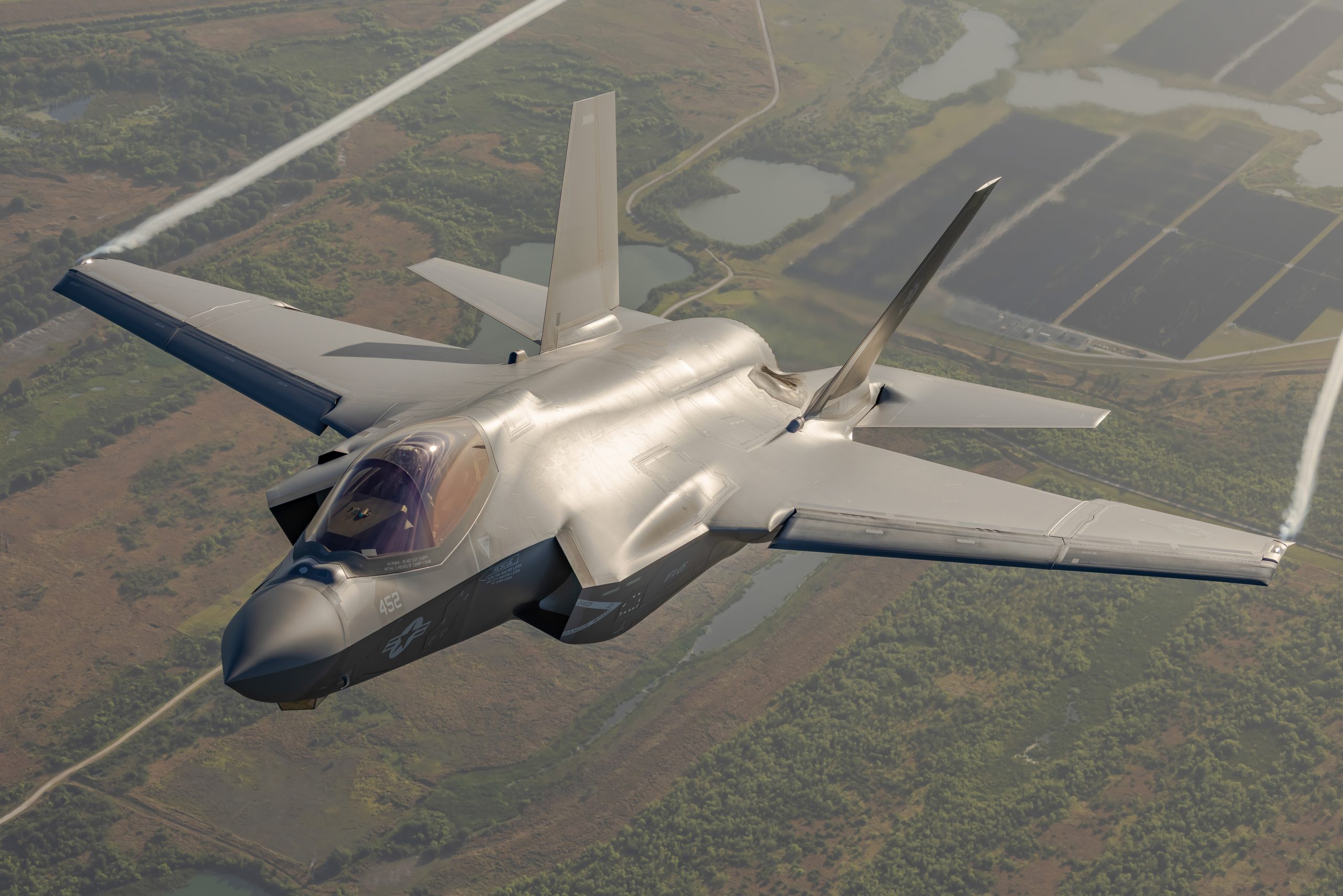
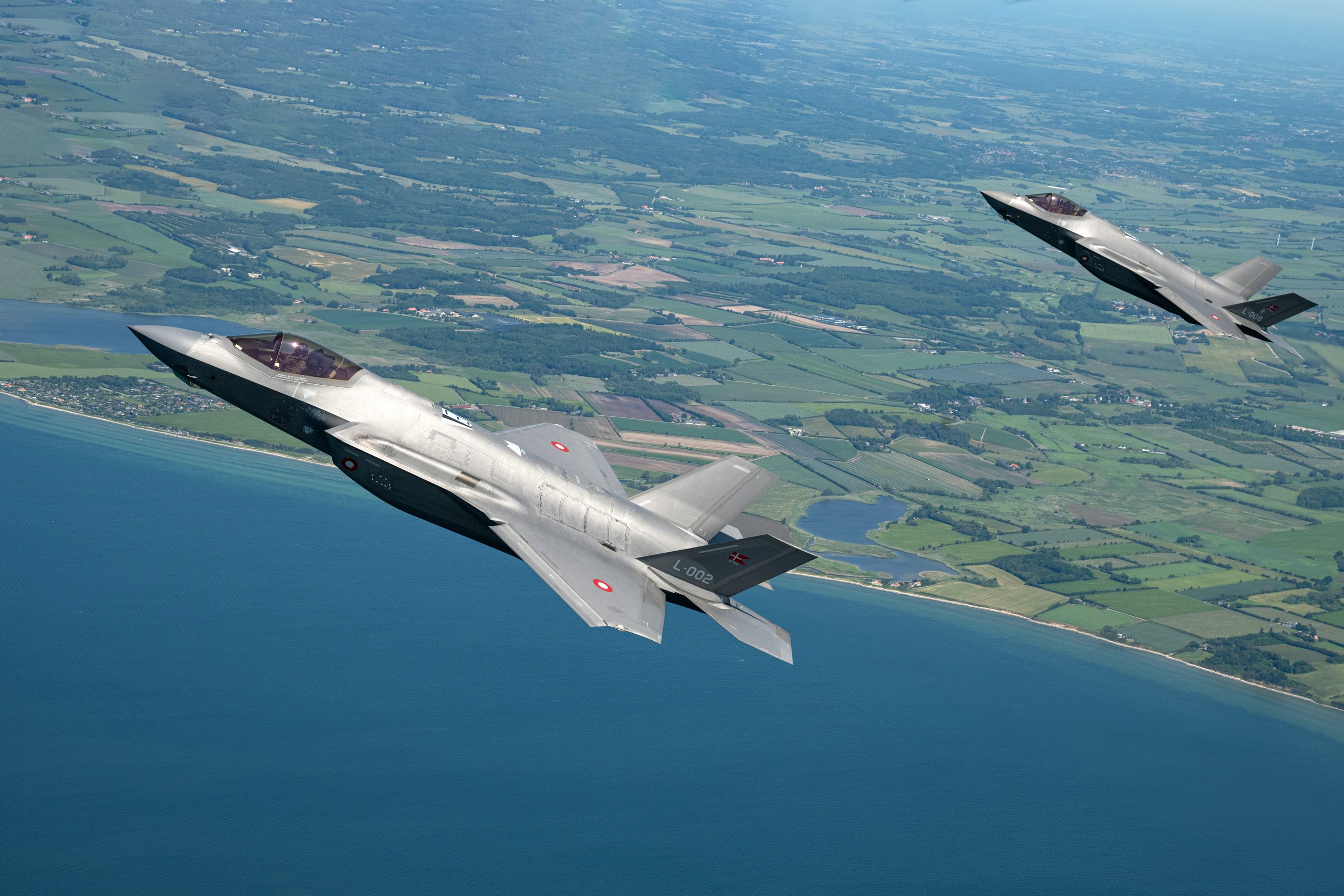
The original partnership comprised the United States with the United Kingdom, Italy, the Netherlands, Australia, Canada, Denmark and Norway; Turkey was a partner until July 2019, when it was expelled over its purchase of the Russian S-400 air defence system. Foreign military sales have since taken the type across three continents: Israel, Japan, South Korea, Belgium, Poland, Singapore, Finland, Switzerland, Germany, the Czech Republic and Greece, with Romania signing in November 2024 as the twentieth F-35 nation. The recent history is not a straight line of wins. Spain ruled the type out in 2025 in favour of Eurofighter and FCAS, Switzerland cut back its purchase after a dispute over a price rise on its supposedly fixed contract, and Canada, while contractually committed to its first sixteen jets, spent 2025 and 2026 publicly reviewing whether the remaining seventy-two of its planned eighty-eight will follow. Belgium’s first aircraft arrived at Florennes in October 2025, Norway has completed its full fifty-two-aircraft buy, and European F-35 numbers continue to climb regardless: the type has become, in effect, NATO’s standard fighter.
The UK Lightning Force
Britain is the programme’s only Tier One partner, a status bought with a two-billion-dollar commitment signed in January 2001, and BAE Systems builds the aft fuselage and tails of every F-35 at Samlesbury in Lancashire, giving the UK roughly 13 to 15 per cent of each aircraft by value. The UK operates the F-35B jointly between the RAF and Royal Navy from RAF Marham in Norfolk. 617 Squadron, the Dambusters, reformed on the type in April 2018 and brought the first four jets home to Marham that June; 809 Naval Air Squadron, the Immortals, recommissioned in December 2023; and 207 Squadron runs the operational conversion unit. The forty-eighth and final aircraft of the initial order was accepted in March 2026, keeping forty-seven on strength after the 2021 loss.
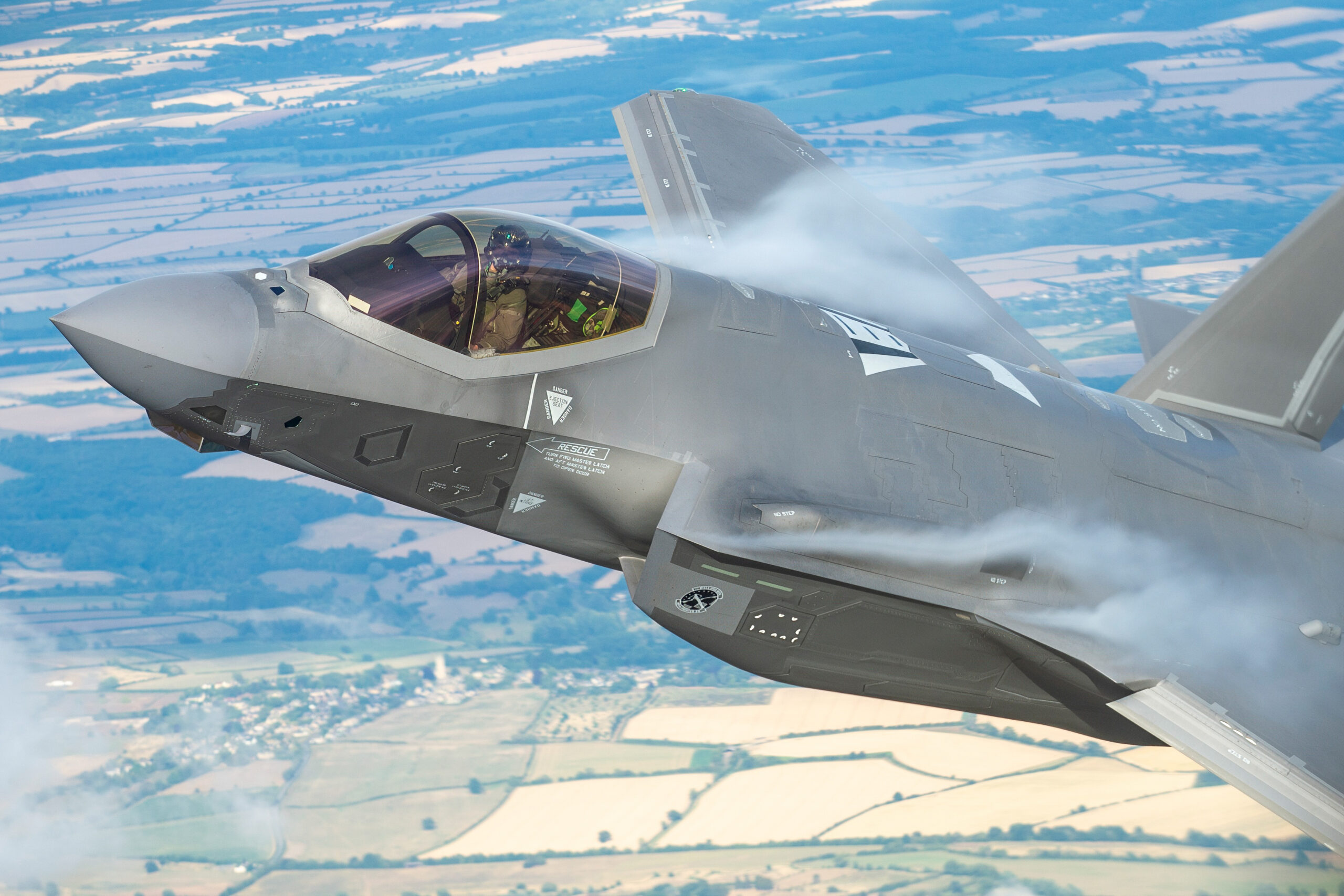
The carriers have defined the force’s first decade. CSG21 took eight UK jets and ten US Marine Corps F-35Bs aboard HMS Queen Elizabeth to the Indo-Pacific in 2021, flying combat sorties over the Middle East on the way. Operation Highmast in 2025 sent HMS Prince of Wales east for over seven months with up to twenty-four UK F-35Bs embarked across 617 Squadron and 809 NAS, the deployment on which the Lightning Force demonstrated full operating capability, and twenty-six jets rode the deck on the homeward leg; the deployment is probably best remembered by the public for one jet’s five-week weather diversion to Thiruvananthapuram in Kerala. The next chapter changes the force’s shape: at the NATO summit in June 2025 the government announced the purchase of twelve F-35As to join NATO’s nuclear dual-capable aircraft mission, returning the RAF to an air-delivered nuclear role for the first time since the WE.177 bomb retired in 1998. The stated programme ambition remains 138 aircraft over its life, with the next tranche of twenty-seven, fifteen B-models and the twelve As, still awaiting a firm order as of mid-2026.
Specifications
Figures below are from Lockheed Martin and US Air Force published data. Where official documents disagree, the table takes Lockheed’s Fast Facts figures; internal fuel in particular varies slightly between Lockheed’s own publications.
| Specification | F-35A | F-35B | F-35C |
|---|---|---|---|
| Role | Conventional take-off and landing | Short take-off, vertical landing | Carrier-based (catapult and arrester) |
| Length | 15.7 m | 15.6 m | 15.7 m |
| Wingspan | 10.7 m | 10.7 m | 13.1 m |
| Wing area | 460 sq ft | 460 sq ft | 668 sq ft |
| Empty weight | 13,290 kg | 14,650 kg | 15,785 kg |
| Internal fuel | 8,278 kg | 6,125 kg | 8,958 kg |
| Engine | One Pratt & Whitney F135, 40,000 lb thrust class with afterburner (F-35B with Rolls-Royce LiftSystem) | ||
| Maximum speed | Mach 1.6 with full internal load | ||
| Combat radius, internal fuel | Over 590 nmi | Over 450 nmi | Over 600 nmi |
| Service ceiling | 50,000 ft | ||
| g limit | 9.0 | 7.0 | 7.5 |
| Gun | Internal 25 mm GAU-22/A | External pod | External pod |
| Max weapons payload | 18,000 lb | 15,000 lb | 18,000 lb |
Two figures need honest footnotes. The Mach 1.6 top speed is carried with a full internal weapons load, which is the fair comparison against fourth-generation jets flying clean, but the B and C models carry time limits on sustained supersonic dash to protect their coatings. And no official ferry range with external tanks exists, because the F-35 does not carry them; the ranges above are on internal fuel alone, which exceeds an F-16’s internal fuel by a factor of roughly three in the A-model’s case.
Photographing the F-35 today
For UK photographers the Lightning is now a resident subject rather than an exotic visitor. RAF Marham is the home station, with no official viewing facility but a long spotting tradition on the perimeter; movements are busiest around exercise periods and carrier embarkation cycles. The Royal Navy’s carriers add a second venue, because HMS Prince of Wales and HMS Queen Elizabeth departures and homecomings at Portsmouth put F-35Bs on deck in front of thousands of cameras, as the December 2025 return from the Indo-Pacific demonstrated. Lakenheath’s resident USAF F-35As of the 48th Fighter Wing work the East Anglian ranges routinely, and the fast-jet technique in our guide to photographing fast jets applies directly: the F-35 is subtly larger than it reads in the viewfinder, its displays are flown tight and high-energy, and its grey-on-grey finish rewards strong light.
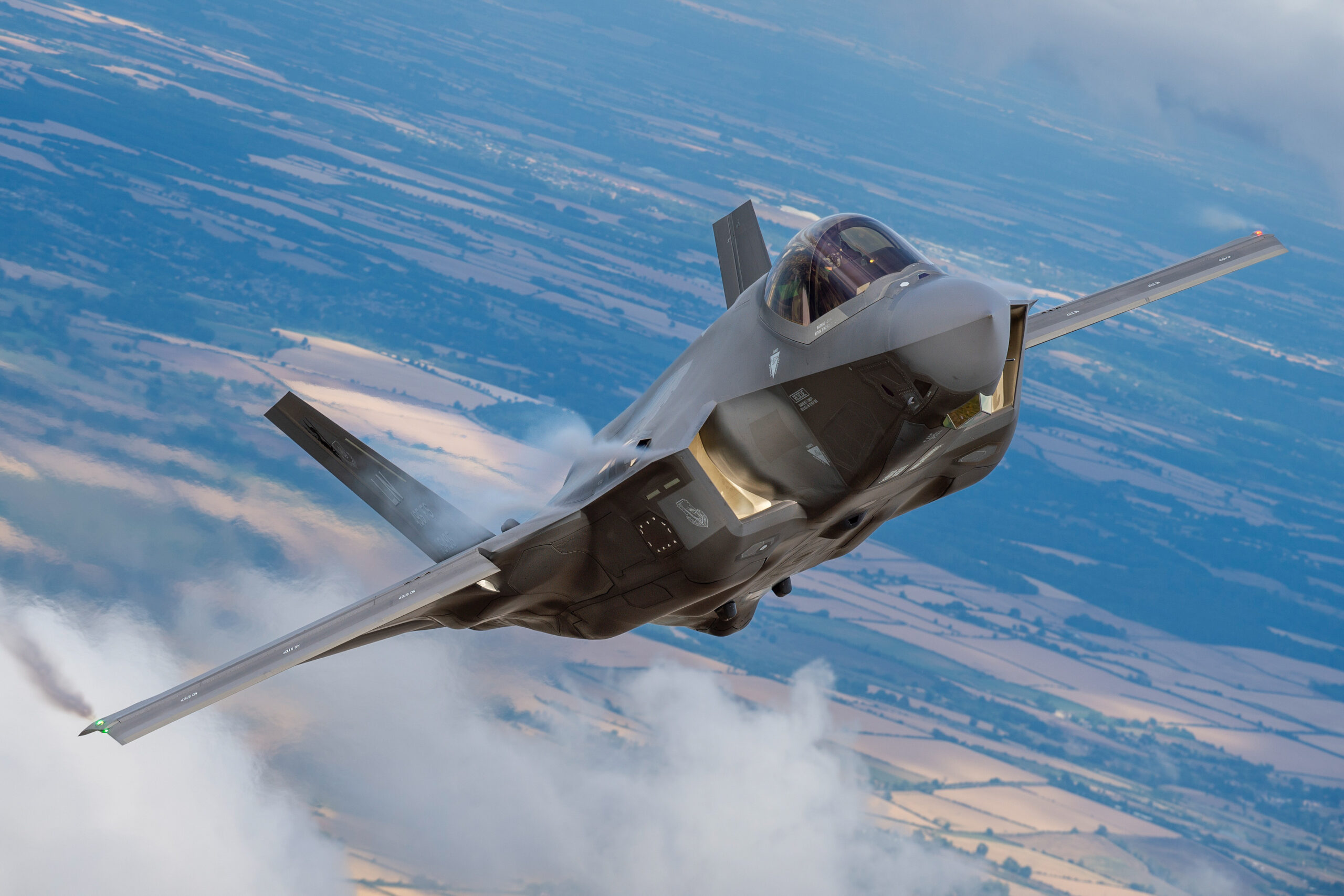
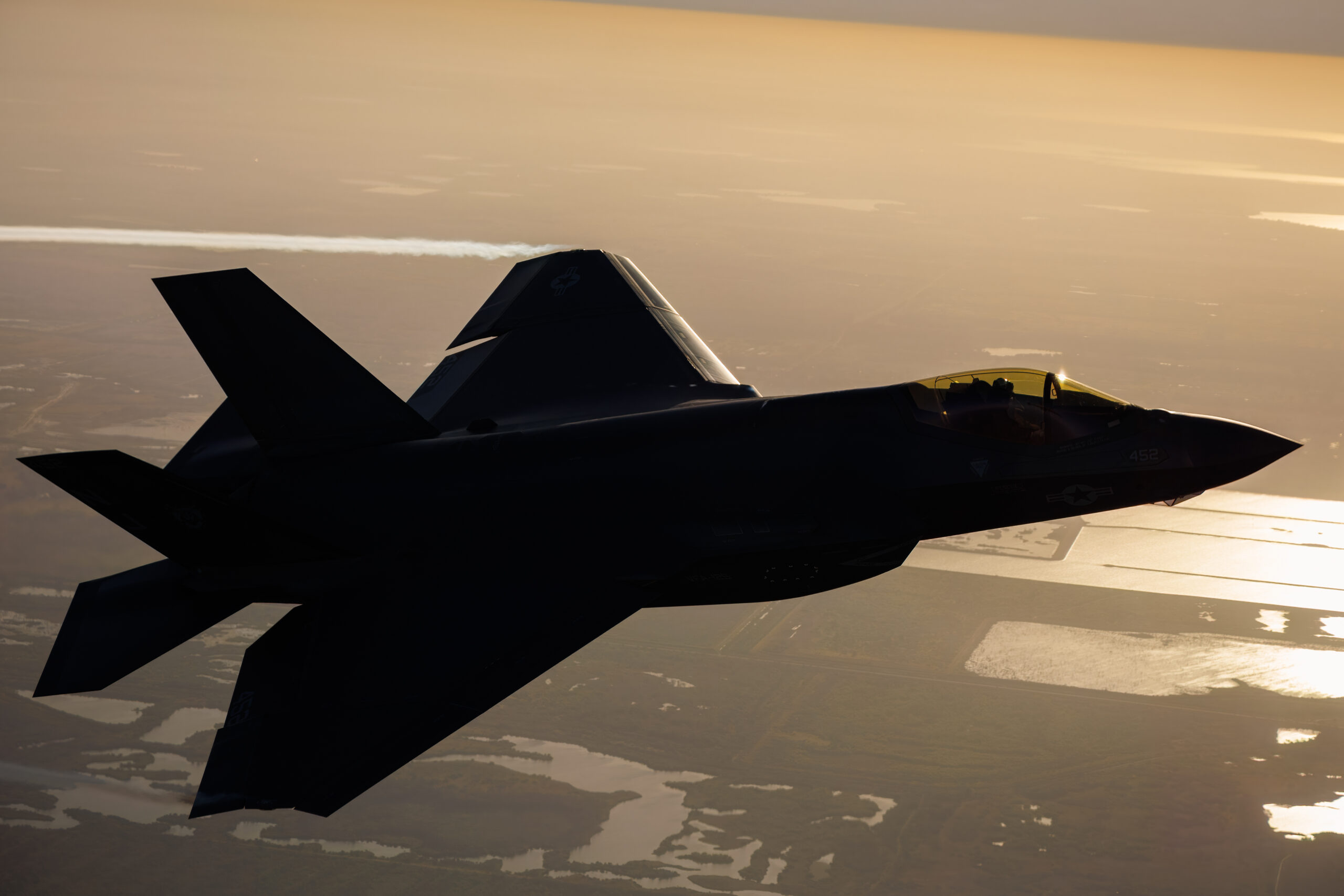
Technique notes specific to the type: the F-35 is a photographic subject of surfaces rather than shapes, and flat light kills it. Low sun brings out the sawtooth panel lines and the gold tint of the canopy, and the B-model hover is the one moment in modern airshow flying where you can drop the shutter speed and work the heat shimmer under the jet deliberately. Displays pull vapour readily off the leading-edge extensions in humid air, so track through the turns rather than the passes. On overcast days expose for the airframe and accept the sky, because the grey-on-grey scheme sits a stop darker than it looks; the metering approach in our bright-sky exposure guide transfers directly.
Updated July 2026: the airshow picture this season is unusual. RIAT 2026 was cancelled in May amid uncertainty over access to RAF Fairford, with the Air Tattoo returning on 16 to 18 July 2027; in 2024 and 2025 the show reliably produced RAF F-35B flying displays and USAF and Norwegian F-35As on static, so 2027 is the one to book for. The confirmed UK fix this year is the Farnborough International Airshow, 20 to 24 July 2026, where the USAF F-35A Demonstration Team is flying all five days. On the continent, the Royal Netherlands Air Force has a two-ship F-35 flypast confirmed for the Sanicole Airshow in Belgium on 13 September 2026, Belgian F-35As are now home at Florennes, and Italy’s air force flew both an F-35A demo and an F-35B hover at Rivolto in September 2025, a pattern worth watching for repeat bookings. Check organisers before travelling; military participation moves at short notice.
Legacy: the stealth generation
Whatever one thinks of its cost, the F-35 has already done something no other Western fighter of its generation managed: it survived, scaled and standardised. The programme outlived the F-22’s truncated production run, absorbed a decade of criticism, and emerged as the aircraft that a dozen allied air forces now organise themselves around. Its real legacy may be less about stealth than about information: a generation of pilots has learned to fight with fused sensors, shared pictures and a helmet that sees through the airframe, and every sixth-generation programme now in development, from GCAP to NGAD, takes those ideas as the starting point rather than the destination.
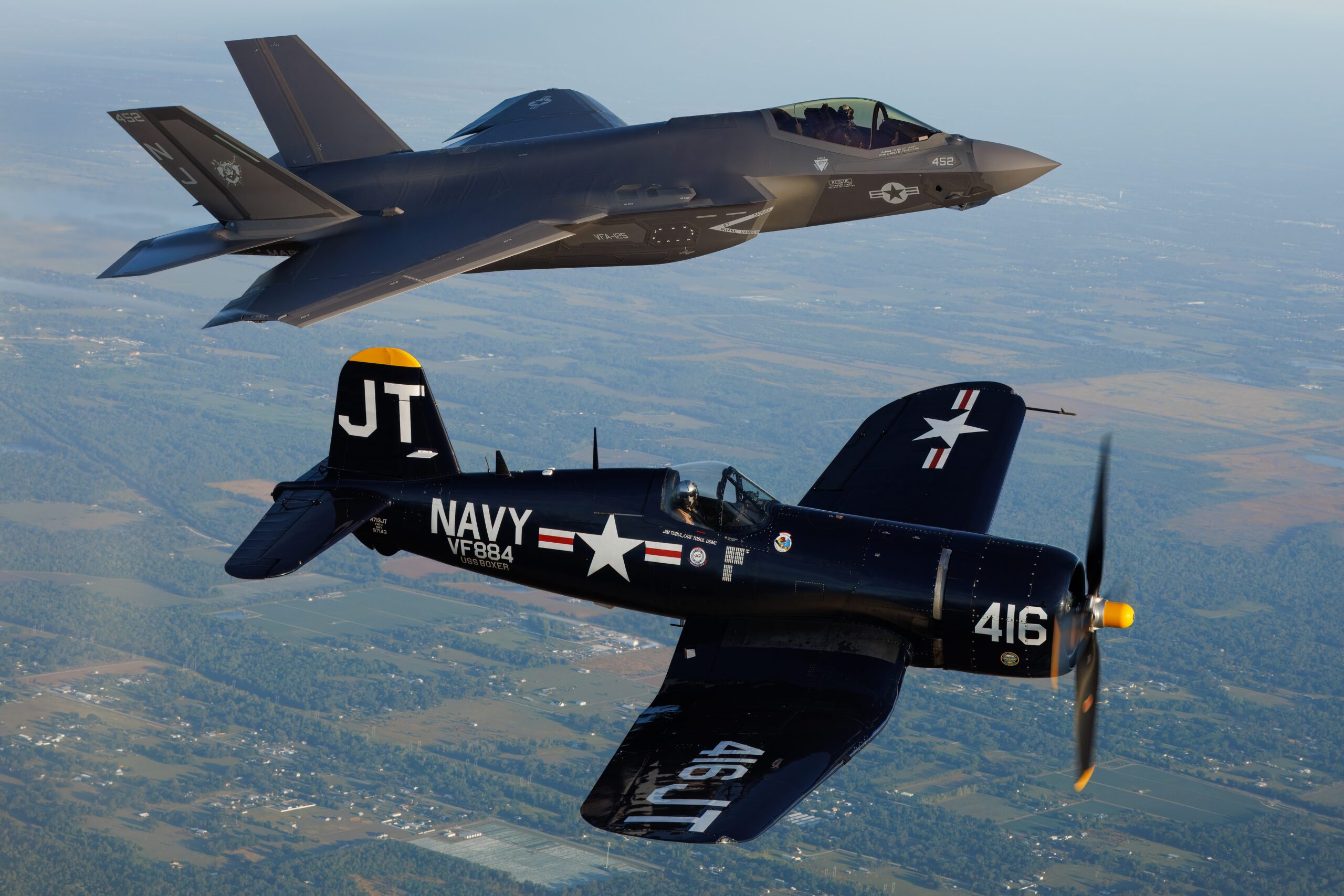
The ledger has two columns and both are real. The Government Accountability Office puts the whole-life cost above two trillion dollars and has documented mission-capable rates around 55 per cent against much higher goals, upgrade programmes years late, and jets delivered awaiting their full combat software; none of that is contested by the programme’s friends. Against it stands a combat record accumulating across three theatres without a single air-to-air loss, a production system delivering at rates no other Western fighter approaches, and the plain fact that nations keep joining. The aircraft the internet spent fifteen years calling a failure has become the yardstick its successors are measured against, and it is planned to fly until 2088, by which point the last Lightning II pilot has probably not yet been born. For a photographer, that longevity is the good news: the subject is not going anywhere, and the archive being built now, from Marham departures to carrier decks, is the record of the stealth generation finding its feet. You can browse our growing F-35 coverage in the Piemags aviation galleries, and our licensing page covers how to use the images. For the wider family history, see our profiles of the Harrier, whose STOVL lessons the F-35B inherited, the F-16 it is replacing across NATO, and the Eurofighter Typhoon it serves alongside in RAF service.
Frequently asked questions
Why is the F-35 called the Lightning II?
The name was announced on 7 July 2006 at the aircraft’s Fort Worth rollout, honouring two ancestors: the Lockheed P-38 Lightning of the Second World War and the English Electric Lightning, Britain’s Mach 2 interceptor. The choice deliberately recognised the UK’s role as the programme’s only Tier One partner.
How many F-35s have been built?
Almost 1,300 had been delivered as of January 2026, with 191 delivered in 2025 alone, the programme record. Production is sized for roughly 156 aircraft a year across Fort Worth and final assembly lines in Italy and Japan, and the fleet passed one million flight hours in 2025.
How much does an F-35 cost?
Under the Lots 18 and 19 agreement finalised in September 2025, covering up to 296 aircraft for around 24.3 billion dollars, the average airframe price is roughly 82 million dollars excluding the engine. The F-35B and F-35C cost more than the A. Whole-life programme cost, including operating the fleet to 2088, is estimated by the US Government Accountability Office at over two trillion dollars.
How fast is the F-35?
Mach 1.6, carried with a full internal weapons load, with a service ceiling of 50,000 feet. That is slower than a clean F-16 or Typhoon on paper, but the F-35 flies its combat profile with weapons and fuel inside, where a fourth-generation jet slows dramatically once armed. The B and C models carry time limits on sustained supersonic dash to protect their coatings.
Can the F-35 really hover?
The F-35B can hover, land vertically and take off in a few hundred feet, using a Rolls-Royce lift fan driven by up to 29,000 shaft horsepower plus a swivelling main nozzle, together producing around 40,000 pounds of vertical lift. The A and C variants cannot hover. British pilots also pioneered the shipborne rolling vertical landing, first flown aboard HMS Queen Elizabeth in October 2018.
What is the difference between the F-35A, F-35B and F-35C?
The F-35A is the conventional runway version with an internal gun and a 9 g limit. The F-35B is the short take-off and vertical landing version with the lift fan, less fuel, smaller internal bays and a 7 g limit. The F-35C is the carrier version with a much larger folding wing, a tailhook, the most internal fuel and a 7.5 g limit.
Which countries fly the F-35?
Twelve nations were operating the type as of January 2026, and twenty are committed to the programme, including the United States, United Kingdom, Italy, the Netherlands, Australia, Denmark, Norway, Israel, Japan, South Korea, Belgium, Poland, Finland, Germany and Greece, with Romania the twentieth to sign. Turkey was expelled in 2019 over its S-400 purchase.
Has the F-35 been used in combat?
Extensively. Israel flew the first strikes in 2018 and has used the type over Gaza, Lebanon, Yemen and Iran. US Marine Corps, Air Force and Navy jets have all flown combat missions, including the escort of the June 2025 strikes on Iranian nuclear sites, UK jets flew combat sorties over the Middle East in 2021, and Dutch F-35s downed Russian drones over Poland in September 2025.
What problems has the F-35 programme had?
Cost growth from 233 billion dollars at the 2001 baseline to a 485 billion dollar acquisition estimate, concurrency retrofits famously branded acquisition malpractice, mission-capable rates around 55 per cent against higher goals, and the Technology Refresh 3 upgrade that paused deliveries for a year from 2023 and left new jets awaiting full combat software into 2026. The programme’s scale has absorbed all of it, but the criticisms are documented and real.
How many F-35s does the UK have?
Forty-eight F-35Bs were delivered by March 2026, with forty-seven in service after the 2021 carrier launch accident. The announced next tranche is twenty-seven aircraft, fifteen Bs and twelve As, the latter joining NATO’s nuclear mission, and the stated programme-life ambition remains 138. They are flown jointly by the RAF and Royal Navy from RAF Marham.
What did the F-35 replace?
In US service it replaces the F-16 and A-10 for the Air Force and the AV-8B Harrier and classic Hornet for the Marines, and complements the Super Hornet for the Navy. In the UK it took over the strike role from the Harrier GR9, which flew its last sortie in December 2010, and stands alongside Typhoon following the Tornado GR4’s retirement in 2019.
Is the F-35 actually stealthy?
Yes, within honest limits. Low observability comes from shaping, internal weapons carriage and radar-absorbent materials, and real radar cross-section figures are classified; public numbers are unofficial estimates. Stealth is strongest against fire-control radars from the front, it is not invisibility, and when the aircraft wants to be tracked, at airshows or on ferry flights, it flies with bolt-on radar reflectors.

Leave a Reply