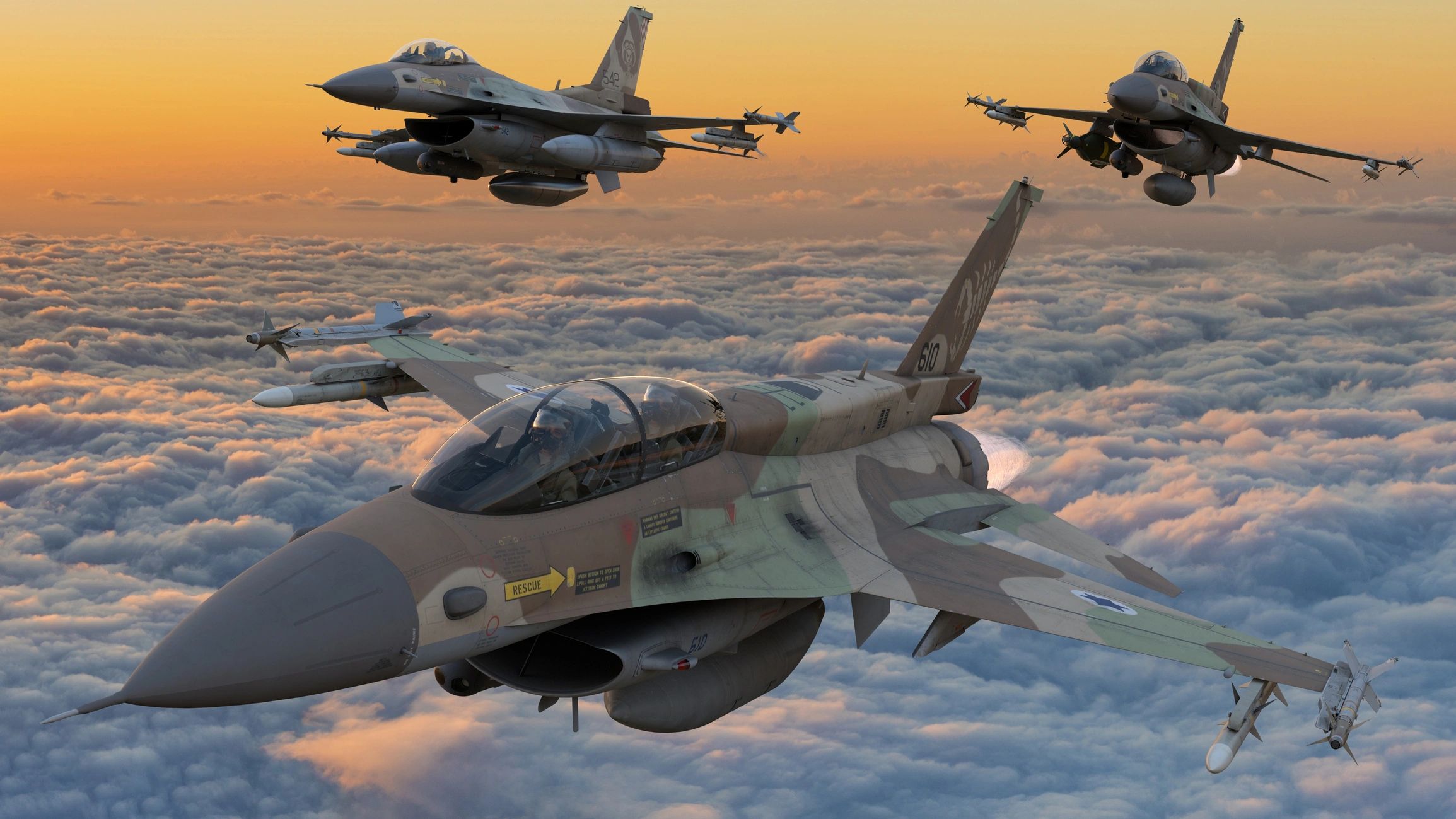
Few combat aircraft have done as much, for as many air forces, over as long a period as the General Dynamics F-16 Fighting Falcon. It began life as a small, cheap day fighter that the United States Air Force did not think it needed, flew for the first time by accident during a taxi test, and went on to become the most widely produced supersonic jet fighter in the Western world. More than four decades after it entered service the production line is still running, and the type remains the backbone of more than two dozen air forces.
The aeroplane that pilots almost universally call the Viper packed a string of firsts into one airframe: relaxed static stability, a digital fly-by-wire flight control system, a frameless bubble canopy and a side-mounted control stick. None of those features was obvious in 1972. Together they produced a fighter so agile and so adaptable that it outlived the heavyweight types it was meant to complement. This guide traces the F-16 from the Lightweight Fighter studies of the early 1970s through to the Block 70 jets rolling out today, and looks at the design, the variants, the combat record and the legacy.
What this guide covers
Origins and development
The F-16 was a reaction against the direction American fighter design had taken in the 1960s. Aircraft such as the F-4 Phantom II and the later F-15 Eagle were large, heavy and expensive, loaded with radar and missiles for beyond-visual-range combat. They were formidable, but a loose group of officers, engineers and analysts argued that the air force was buying fewer and fewer aircraft at ever higher cost, and that in a close-in turning fight a smaller, lighter, cheaper machine would have the advantage.
The argument was sharpened by recent experience. Air combat over Vietnam had not gone the way American planners expected. The exchange ratios against North Vietnamese MiGs were far less favourable than in earlier wars, and a good deal of the trouble was traced to aircraft and tactics built around long-range missiles that often failed to perform as advertised. Early F-4 Phantoms went into combat without an internal gun, on the assumption that missiles had made the dogfight obsolete, and learned the hard way that they had not. The lesson many drew was that close-in manoeuvring combat was alive, that pilots needed to see and out-turn their opponents, and that a fighter optimised for exactly that would be valuable.
That group became known, half in jest, as the Fighter Mafia. Its best known members were the fighter pilot and tactician John Boyd, the civilian analyst Pierre Sprey and the engineer Everest Riccioni. Boyd’s energy-manoeuvrability theory, developed in the 1960s, gave them a rigorous way to compare aircraft. It treated a fighter’s performance in terms of the energy it could gain or lose while turning, climbing or accelerating, and it suggested that a light airframe with a high thrust-to-weight ratio and a low wing loading would dominate the kind of dogfight that air combat over Vietnam had shown was far from obsolete.
There was a strategic argument behind the tactical one. The air force’s plan for the 1970s rested on the F-15 Eagle, a superb but costly air superiority fighter. Buying enough Eagles to fill every squadron would have been ruinously expensive, so the idea of a high-low mix took hold: a smaller number of expensive, long-range, radar-heavy aircraft at the top, paired with a larger number of cheaper, simpler fighters to make up the numbers. The Lightweight Fighter was pitched as the low end of that mix. Selling it inside the Pentagon meant promising that it would be affordable, and that constraint shaped the design as much as any aerodynamic theory.
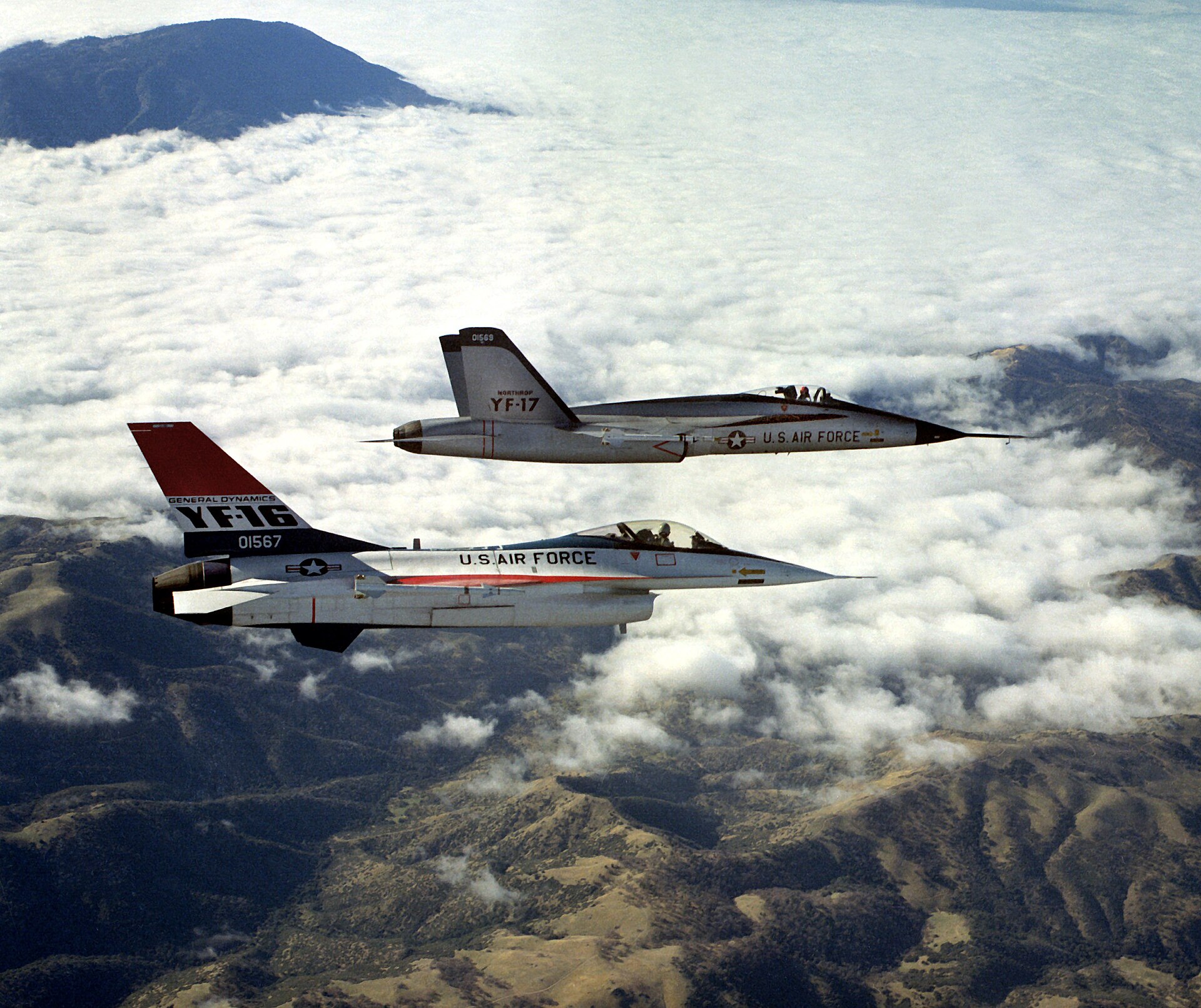
The idea found enough support inside the Pentagon to become a formal programme. The Lightweight Fighter request for proposals was issued on 6 January 1972, calling for a day fighter in the 20,000 pound class with excellent turn rate, acceleration and range. It was, at this stage, a technology demonstration rather than a promise to buy anything. Five companies responded. In April 1972 the air force selected two of them, General Dynamics and Northrop, to each build prototypes for a competitive fly-off. General Dynamics offered its Model 401, a single-engined design led by a team under Robert Widmer at Fort Worth, Texas. Northrop offered the twin-engined YF-17, which would later be developed into the United States Navy’s F/A-18 Hornet.
The General Dynamics design was unusually bold for its day. It used relaxed static stability, meaning the aircraft was deliberately made slightly unstable in pitch so that it would respond more quickly to control inputs, with a computer rather than the pilot constantly correcting it. It had a blended wing and body, a single engine fed by a simple fixed intake under the fuselage, and a wing fitted with leading-edge and trailing-edge flaps that moved automatically to keep the airflow attached in hard turns. The whole package was aimed squarely at winning the close-in fight that the Fighter Mafia cared about.
The fly-off and the YF-16
The first YF-16 was rolled out at Fort Worth on 13 December 1973. Its maiden flight was not planned for another few weeks, and when it came it was not planned at all. On 20 January 1974, during a high-speed taxi run at Edwards Air Force Base in California, test pilot Phil Oestricher found the aircraft beginning to roll from side to side. A wingtip missile fin and then a tailplane touched the runway, and with the nose pitching up and plenty of thrust still set, Oestricher judged it safer to take off than to try to keep the twitchy aircraft on the ground. He flew a careful circuit and landed. The episode, often described as the F-16’s accidental first flight, said a great deal about how lively the new control system was.
The official maiden flight, a 90 minute sortie, followed on 2 February 1974. The YF-16 went supersonic for the first time on 5 February, and the second prototype joined the programme on 9 May 1974. Northrop’s two YF-17 prototypes flew that summer. The fly-off was thorough: over the course of the evaluation the two YF-16s flew 330 sorties for around 417 flight hours, putting the design through the full range of manoeuvres it had been built for.
What had started as a pure technology demonstration changed character partway through. The air force recognised that a production version of the winner could fill a genuine need for a cheaper companion to the F-15, and the programme became the Air Combat Fighter competition. On 13 January 1975 the air force announced that the General Dynamics design had won. The decision was driven by the YF-16’s better acceleration, turn performance and range, and by the lower running cost of a single engine that shared its core with the F-15’s Pratt and Whitney F100.
Winning the fly-off was not the same as having a production aircraft. The YF-16 prototypes were lean demonstrators; the production F-16A had to be a usable combat aircraft with a real radar, full avionics and a longer fuselage to carry them. A batch of full-scale development aircraft was ordered to turn the concept into a fielded type, and over the following years the design gained weight and capability as the air force added the systems it wanted. The purists in the Fighter Mafia watched this with dismay, arguing that each addition eroded the lightness that had made the design special. They had a point, but the growth was also what turned a clear-weather dogfighter into an aircraft worth buying in thousands.
The deal of the century
The F-16’s commercial breakthrough came almost at once, and it came from Europe. Belgium, Denmark, the Netherlands and Norway were all looking to replace their ageing F-104 Starfighters and other types, and they wanted to buy as a group to share costs and industrial work. The competition pitted the F-16 against the Dassault Mirage F1 and the Saab Viggen, among others. In June 1975 the four nations, known as the European Participating Air Forces, chose the F-16. The press of the day called it the arms deal of the century.
The initial European order was for 348 aircraft, split as 116 for Belgium, 102 for the Netherlands, 72 for Norway and 58 for Denmark. Crucially, the deal brought industrial participation. Two European assembly lines were set up, one at Fokker’s Schiphol-Oost plant in the Netherlands and one at SABCA’s Gosselies factory in Belgium, while firms in Norway and Denmark produced parts and subassemblies. This spread the work, built local expertise and tied the four air forces tightly to the programme. It also set the pattern for the F-16’s later export success, in which licensed or co-produced assembly in countries such as Turkey and South Korea became part of the sales pitch.
From there the customer list grew quickly. Israel, Egypt, Pakistan, South Korea, Greece, Turkey and many others followed over the next two decades, each tailoring the aircraft to its own needs. By the time General Dynamics handed the programme to Lockheed in the early 1990s the F-16 had become the default Western fighter for any air force that wanted modern capability without the cost of a heavyweight type.
Design and technology
The F-16’s reputation rests on a handful of design choices that were truly new when they appeared together on one production fighter. The most important was the fly-by-wire flight control system. Instead of the pilot’s stick being linked to the control surfaces by rods and cables, the inputs were read electrically, processed by computers and turned into commands for the actuators. Because the airframe was deliberately given relaxed static stability, the computers had to make constant tiny corrections just to keep it flying straight. The pay-off was extraordinary responsiveness and the ability to pull hard turns without the aircraft trying to depart from controlled flight.
The cockpit broke with convention too. The pilot sat under a frameless bubble canopy that gave an almost uninterrupted view in every direction, a real advantage in a turning fight where seeing the opponent first often decides the outcome. The control stick was mounted on the right console rather than between the pilot’s knees, and at first it barely moved at all, sensing the pressure of the pilot’s hand rather than its travel. The ejection seat was reclined 30 degrees from vertical, which helped the pilot tolerate the high g-loads the aircraft could generate. The F-16 was stressed for 9 g, far beyond what most earlier fighters allowed.
Structurally the aircraft used a blended wing-body layout, where the fuselage and wing flow into one another to generate extra lift and reduce drag. Strakes along the forward fuselage created vortices that kept the wing flying at high angles of attack. A single engine, either the Pratt and Whitney F100 or, from the mid 1980s, the General Electric F110, sat behind a simple fixed intake under the fuselage. The standard gun was the 20 mm M61 Vulcan rotary cannon mounted in the port wing root. The aircraft carried missiles on wingtip rails and on a series of underwing and underfuselage hardpoints.
The radar tells the story of the aircraft’s growth as well as anything. The first F-16A carried the Westinghouse AN/APG-66, a capable but modest set sized for a light fighter. The C and D models introduced the more powerful AN/APG-68, which extended range and added the modes needed for beyond-visual-range missiles and precision ground attack. The current F-16V standard fits the Northrop Grumman AN/APG-83 active electronically scanned array, a fixed antenna with no moving parts that tracks many targets at once and is far harder to jam. Each step let the aircraft do more, and each added weight and electrical demand that the original design had to be stretched to accept. The weapons grew in step, from a handful of short-range Sidewinders and iron bombs to a wide range of guided air-to-air and air-to-ground missiles, anti-radiation weapons, laser and satellite-guided bombs and targeting pods.
One point worth keeping in perspective: the F-16 started as a clear-weather, short-range dogfighter with a simple radar. Almost everything that made later versions into all-weather, beyond-visual-range multirole aircraft, from the bigger radar to the precision strike systems, was added during its career. The basic airframe proved able to absorb decades of growth in weight, power and electronics that its designers never planned for.
Into service and the name
The United States Air Force accepted its first F-16A in 1978, and the 388th Tactical Fighter Wing at Hill Air Force Base in Utah became the first operational wing, receiving its first aircraft in January 1979 and working up to operational status over the following year. The 34th Tactical Fighter Squadron within that wing reached operational service in 1980.
The aircraft was officially named the Fighting Falcon in 1980. The name was never popular with the people who flew it. Crews preferred Viper, partly because the pointed nose and lean lines reminded them of a snake, and partly in tribute to the Colonial Viper fighters in the television series Battlestar Galactica, which was on air as the F-16 entered service. The nickname stuck so firmly that it is now used far more often than the official one, in squadrons and in print alike.
Early service was not without difficulty. A brand new flight control philosophy, a new engine and a host of new systems meant the usual teething troubles, and the type went through a steady programme of fixes and upgrades in its first years. But the fundamentals were sound, and as confidence grew the air force began to see the F-16 not merely as a cheap day fighter but as a platform that could be developed into something far more capable.
Variants and the block system
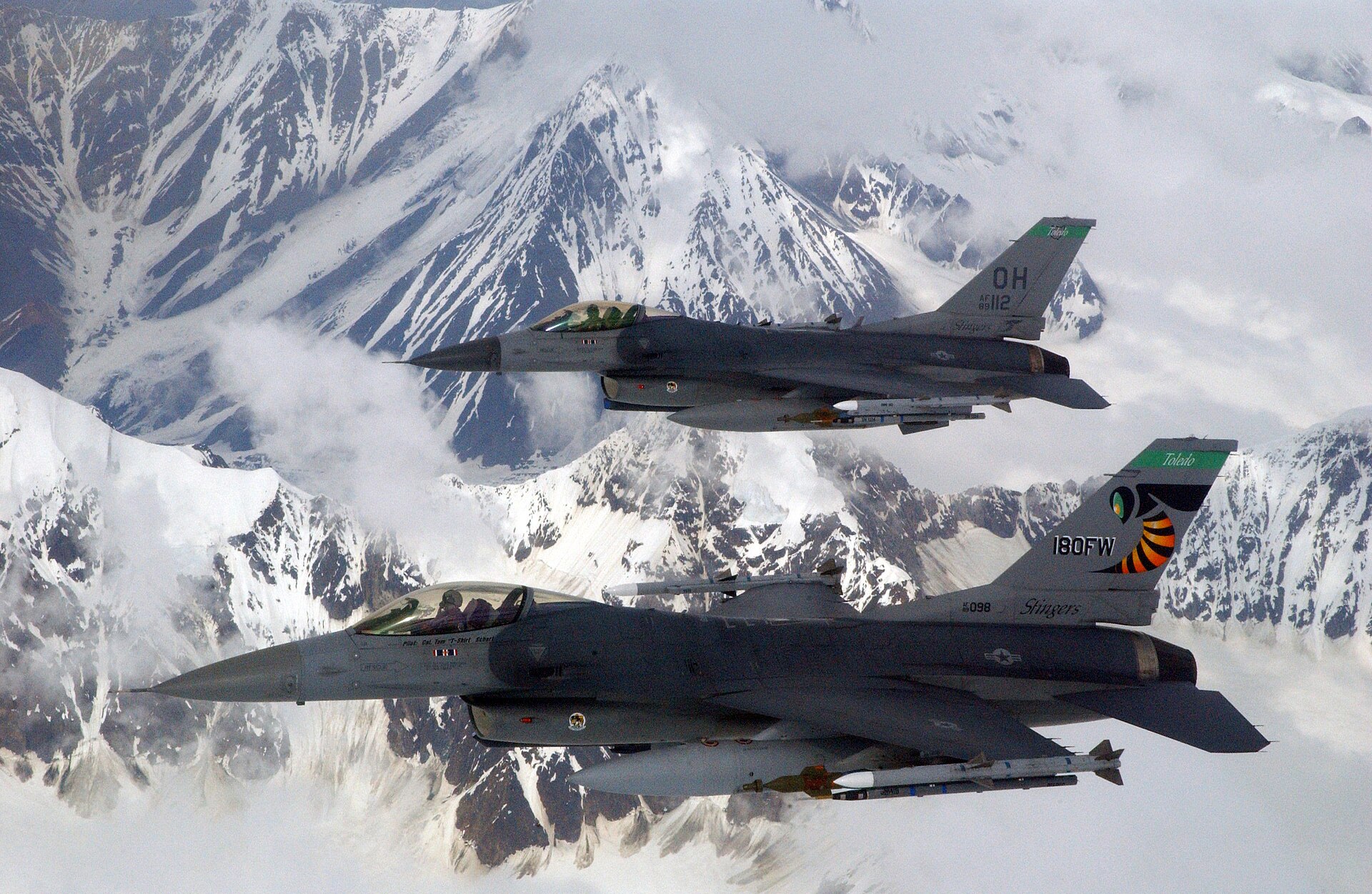
The F-16 has been built in a long sequence of versions. Single-seat aircraft carry odd-sounding suffixes only in the sense that the single-seater is the baseline and the two-seat trainer shares the same generation. The early A and B models gave way to the C and D from the mid 1980s, and these are tracked by block numbers, a system that groups together aircraft with a common standard of engine, radar and equipment.
F-16A and F-16B
The original production aircraft. The F-16A was the single-seater and the F-16B the two-seat conversion trainer with a slightly smaller fuel load. These early jets had the AN/APG-66 radar and were optimised for air-to-air work with a useful secondary ground-attack capability. Many were later rebuilt under the Mid-Life Update programme, which brought the European and other A and B fleets up to a far higher standard with new avionics and the ability to use modern weapons.
F-16C and F-16D
From 1984 the C and D models introduced the improved AN/APG-68 radar and a more capable cockpit. These are the versions tracked by the block system. Block 25, 30/32, 40/42 and 50/52 marked successive steps in radar, engine and weapons capability. The split numbers reflect the Alternative Fighter Engine programme, under which customers could choose between the General Electric F110 and the Pratt and Whitney F100. Block 40/42, sometimes called the Night Falcon, added the LANTIRN targeting and navigation pods for precision attack in darkness. Block 50/52 brought the most powerful engines and the ability to carry the AGM-88 anti-radiation missile in the defence-suppression role.
F-16E and F-16F (Block 60)
A heavily developed version produced for the United Arab Emirates, sometimes marketed as the Desert Falcon. It introduced an active electronically scanned array radar, conformal fuel tanks moulded to the upper fuselage for greater range, and the most powerful engine fitted to any F-16, the General Electric F110-GE-132. It was effectively a new-generation aircraft inside a familiar shape.
F-16V and Block 70/72
The current production standard, marketed as the Viper. It centres on the AN/APG-83 active electronically scanned array radar, a modern glass cockpit, a new mission computer and an improved electronic warfare suite. Existing aircraft can be upgraded to the F-16V configuration, and new-build Block 70 and 72 aircraft are being delivered to a range of customers. Production of these jets now takes place at Greenville, South Carolina.
F-16 ADF
The Air Defense Fighter was a late-Cold-War conversion aimed at a very specific job: defending North American airspace against Soviet bombers. Between 1989 and 1992 around 271 Block 15 aircraft, the great majority single-seat F-16As with a smaller number of two-seat F-16Bs, were modified at Ogden for the Air National Guard. The conversion upgraded the APG-66 radar for better detection of small, low-flying targets and added continuous-wave illumination so the aircraft could fire the radar-guided AIM-7 Sparrow, making the ADF the only American F-16 cleared for that missile. It also gained an identification system and a searchlight for night intercepts. The end of the Cold War removed much of the rationale almost as soon as the work was finished, and the ADF fleet was wound down through the 1990s, but it is a neat illustration of how the airframe was adapted to roles its designers never had in mind.
Special versions
A number of one-off and small-batch versions are worth noting. The F-16N was a stripped, lightened version used by the United States Navy as an aggressor aircraft to mimic agile threats in air combat training. The proposed F-16XL had a stretched fuselage and a large cranked-arrow delta wing that greatly increased internal fuel and weapons capacity; it lost a competition to the F-15E Strike Eagle for the air force’s deep-strike requirement, but the two prototypes went on to serve NASA as research aircraft studying laminar flow and supersonic flight. Earlier, the AFTI/F-16, an Advanced Fighter Technology Integration testbed, was used through the 1980s to trial digital flight controls, voice-activated systems and automatic ground-collision avoidance, technology that later filtered into production fighters. The NF-16D VISTA, later redesignated the X-62A, is a heavily modified two-seater used as an in-flight simulator that can mimic the handling of other aircraft, and more recently as a flying testbed for autonomous flight control and artificial-intelligence research.
Service and combat history
The F-16’s first taste of combat came not with the air force that designed it but with Israel, an early export customer. In the spring of 1981 Israeli F-16s scored the type’s first air-to-air victories, downing a Syrian Mil Mi-8 helicopter with cannon fire on 28 April 1981 and a Syrian MiG-21 fighter that July.
The most dramatic early mission was Operation Opera. On 7 June 1981 eight Israeli F-16As, escorted by F-15s, flew a long, low penetration into Iraq and bombed the Osirak nuclear reactor near Baghdad, which Israel believed was intended to produce weapons material. The reactor was wrecked. The raid was a demonstration of what a small single-engined fighter could do at long range with careful planning, and it cemented the F-16’s reputation as a strike aircraft as much as a dogfighter. The following year, during the fighting over Lebanon’s Bekaa Valley in 1982, Israeli F-16s and F-15s claimed a large number of Syrian aircraft in one of the most lopsided air campaigns of the jet age, although exact figures from that period are still debated.
The Gulf War and the 1990s
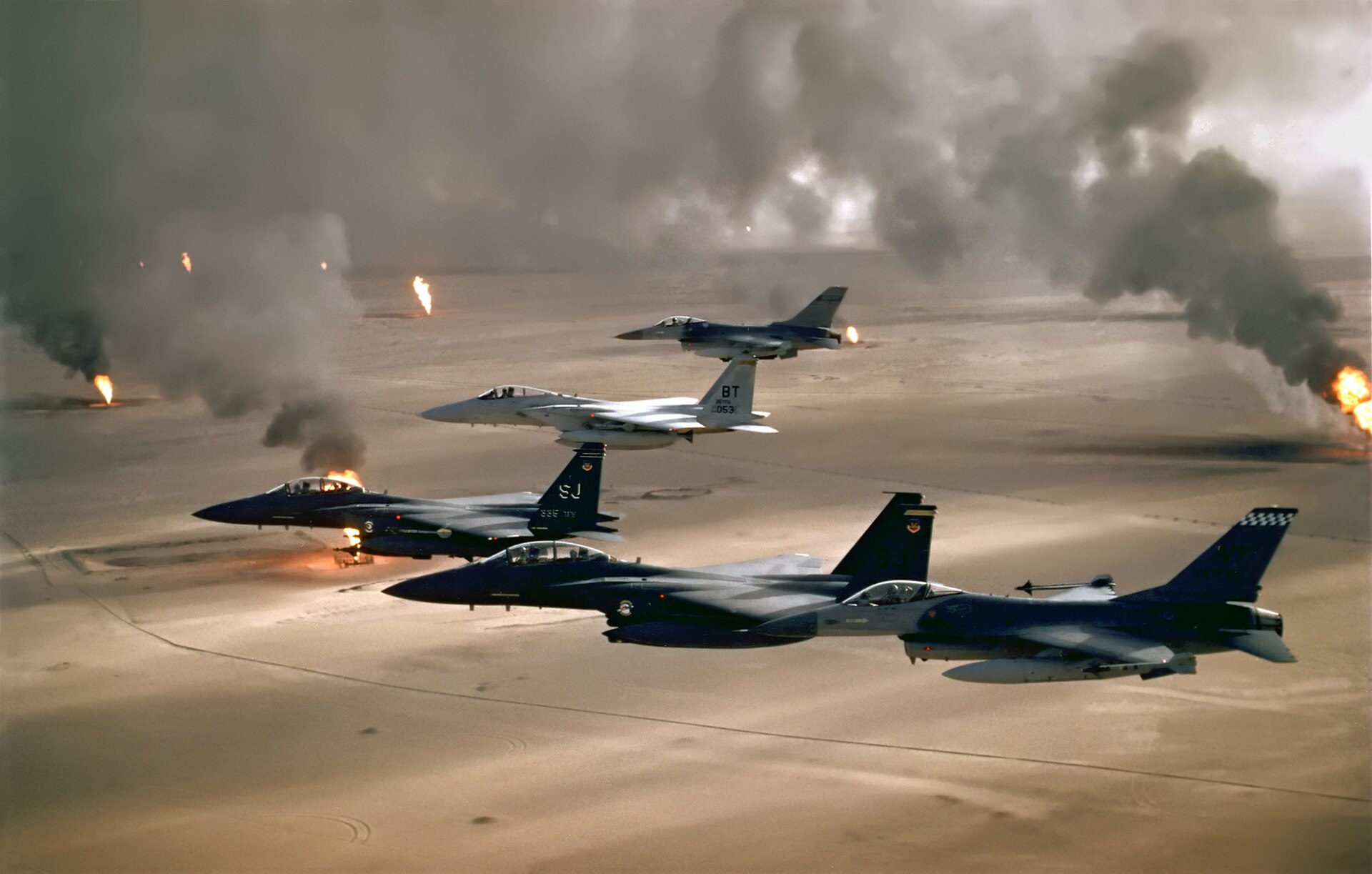
The 1991 Gulf War was the F-16’s largest deployment to that point. The United States sent around 250 aircraft, which flew more sorties than any other type in the coalition, striking airfields, military production sites, Scud missile launchers and fielded forces. The aircraft proved rugged and readily available, generating a high sortie rate day after day. The war also exposed the limits of the way most F-16s were then equipped. The bulk of their work was done with unguided bombs aimed visually, which meant accepting either lower accuracy or the risks of flying lower, and a number of aircraft were lost or damaged to anti-aircraft fire and missiles over heavily defended targets. Those lessons fed directly into the next decade of development, pushing the fleet towards targeting pods, guided weapons and the ability to attack accurately from medium altitude and at night, the capabilities that the Block 40 and 50 aircraft were built around.
The first American F-16 air-to-air victory came after the main war had ended. On 27 December 1992, while patrolling the no-fly zone over southern Iraq, a USAF F-16D shot down an Iraqi MiG-25 with an AIM-120 AMRAAM. It was both the first air-to-air kill by a US F-16 and the first combat kill scored by the AMRAAM missile.
Through the 1990s F-16s flew steadily over the Balkans. They enforced the no-fly zone over Bosnia under Operation Deny Flight, and one of the conflict’s most-followed episodes came in June 1995 when a USAF F-16 was shot down by a Serbian surface-to-air missile and its pilot, Captain Scott O’Grady, evaded capture for several days before being rescued. F-16s took a leading part in the Deliberate Force strikes that helped bring the Bosnian war to a close. During the 1999 Kosovo campaign, Operation Allied Force, F-16s flew large numbers of strike and patrol sorties, and American and Dutch F-16s shot down Serbian MiG-29s in air-to-air combat.
After 2001
Following the attacks of September 2001 the F-16 became a workhorse of the long campaigns in Afghanistan and Iraq, where it flew close air support and strike missions with precision weapons and targeting pods rather than dogfighting. It took part in the 2011 operation over Libya and in the air campaign against Islamic State in Iraq and Syria. Across these years the aircraft’s role had shifted almost entirely to precision attack, surveillance and support, a long way from the clear-weather knife fighter the Fighter Mafia had imagined.
Other operators in combat
The F-16 has seen combat in many other hands. Pakistan was an early and active user. It ordered its first F-16s in the early 1980s and took delivery from 1983, and within a few years the aircraft were flying combat air patrols along the border with Afghanistan during the Soviet war there. Pakistan formally credits its F-16 pilots with around ten kills from that period, including transport and strike aircraft that strayed across the frontier. Soviet and Russian records confirm a smaller number of those losses, so the exact tally is disputed, as is common with border engagements where both sides have reasons to differ. One Pakistani F-16 was itself lost during the period, in an incident widely attributed to friendly fire between two of the patrolling jets.
Turkish, Dutch, Belgian, Danish and Norwegian aircraft have flown in coalition operations over the Balkans, Afghanistan, Libya and the Middle East, and Greece, Israel, Egypt, South Korea, Poland and many other states operate large fleets. In 2024 Ukraine became a combat operator, receiving its first F-16s at the end of July 2024, publicly confirmed on 4 August and flying them within days, using donated European and American aircraft to strengthen its air defence against missiles, drones and Russian aircraft.
Across all these users the F-16 is often described as having scored more than 70 air-to-air victories, the great majority of them by the Israeli Air Force in the early 1980s. As with most combat tallies the precise figure depends on the source and on how disputed claims are counted, so it is best treated as an approximate measure of a strong record rather than an exact score.
Specifications
The figures below are for the F-16C Block 50, one of the most widely operated single-seat versions. Performance varies between blocks, engines and weapon loads, so these should be read as representative rather than absolute.
| Crew | 1 |
|---|---|
| Length | 15.06 m (49 ft 5 in) |
| Wingspan | 9.96 m (32 ft 8 in) |
| Height | 4.9 m (16 ft) |
| Wing area | 28 m² (300 sq ft) |
| Empty weight | 8,573 kg (18,900 lb) |
| Maximum take-off weight | 19,187 kg (42,300 lb) |
| Powerplant | 1 × General Electric F110-GE-129 turbofan, about 29,500 lbf (131 kN) with afterburner (Block 52 uses the Pratt and Whitney F100-PW-229) |
| Maximum speed | Mach 2.05 at 40,000 ft (about 2,178 km/h / 1,353 mph) |
| Combat radius | about 546 km (295 nmi) on a hi-lo-hi mission with four 1,000 lb bombs |
| Ferry range | about 4,217 km (2,277 nmi) with three drop tanks |
| Service ceiling | 15,000 m (50,000 ft) |
| g limit | +9 |
| Armament | 1 × 20 mm M61A1 Vulcan cannon; up to about 7,700 kg (17,000 lb) of stores on wingtip rails and underwing and underfuselage hardpoints |
| First flight | 20 January 1974 (YF-16); official first flight 2 February 1974 |
| Introduced | USAF, from 1978 |
| Number built | more than 4,600 (manufactured 1973 to 2017, with new production resumed at Greenville) |
Operators today and where to see one
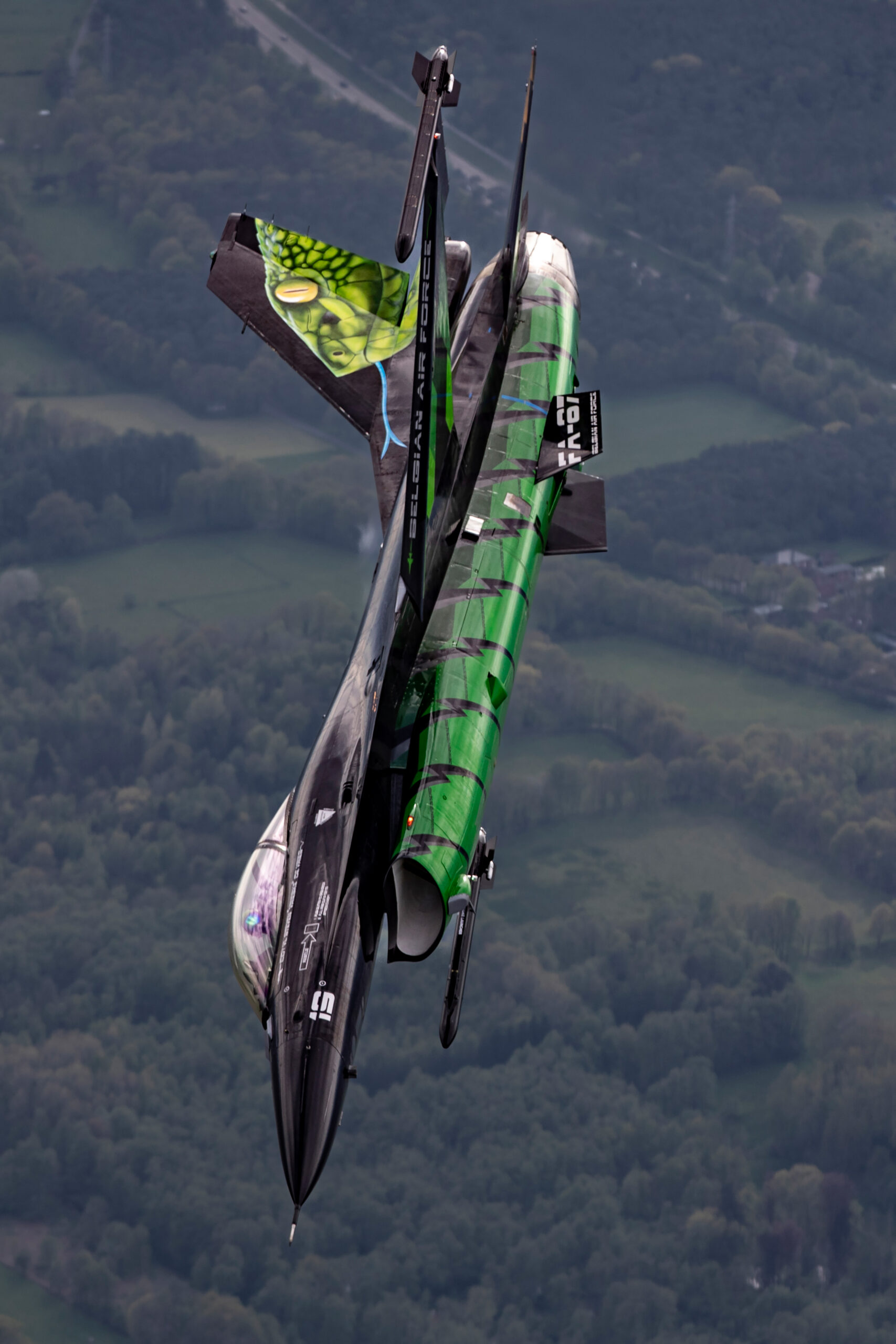
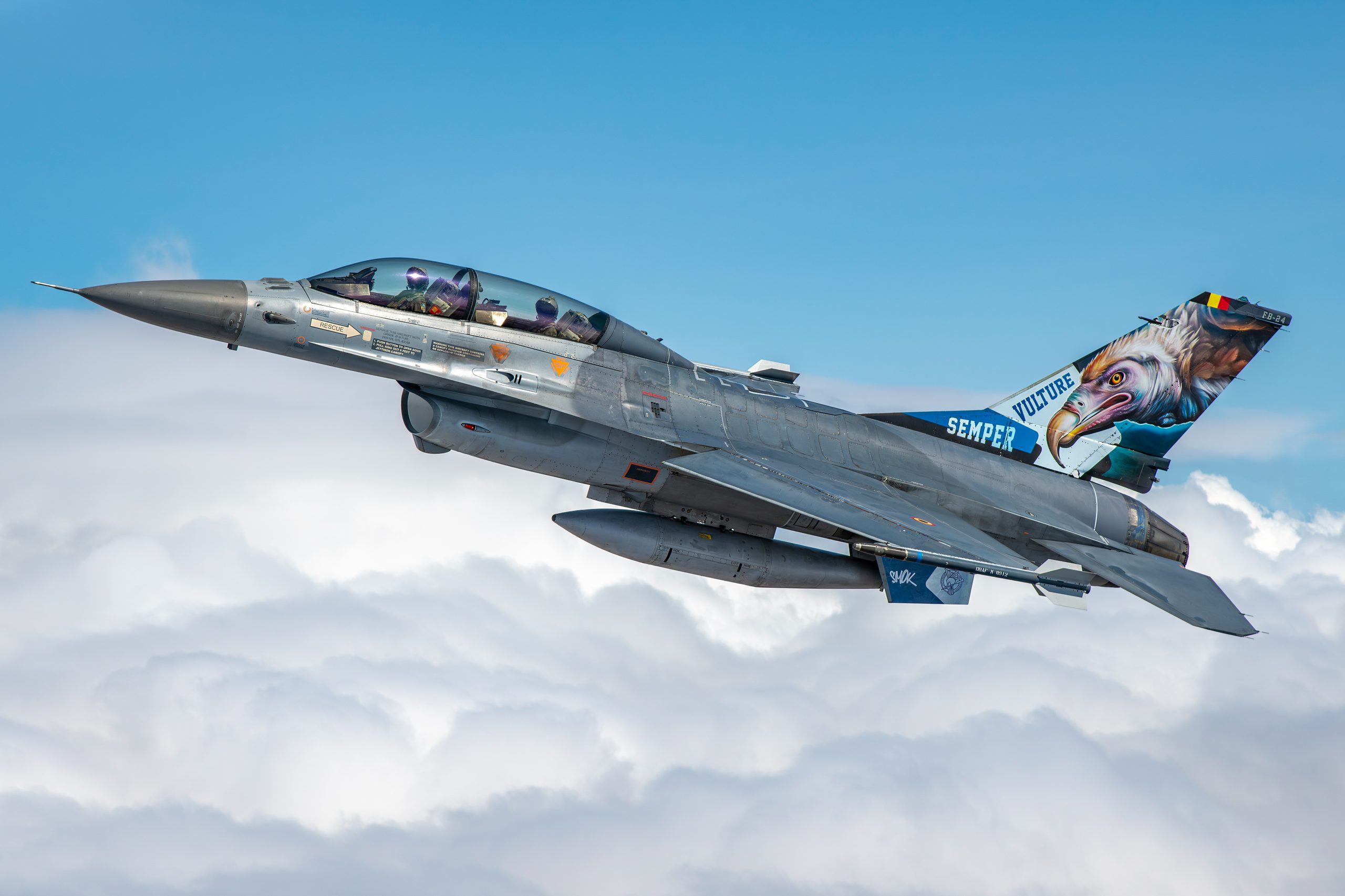
The F-16 remains one of the most numerous combat aircraft in the world. It is flown by the United States Air Force and by around 25 other air forces, including long-standing operators such as Israel, Turkey, Egypt, Greece, South Korea, Pakistan, Belgium, the Netherlands, Denmark, Norway and Poland, alongside newer customers receiving Block 70 aircraft. Several of the original European operators are now retiring their older F-16s as they receive the F-35, and many of those airframes are being passed on to other nations.
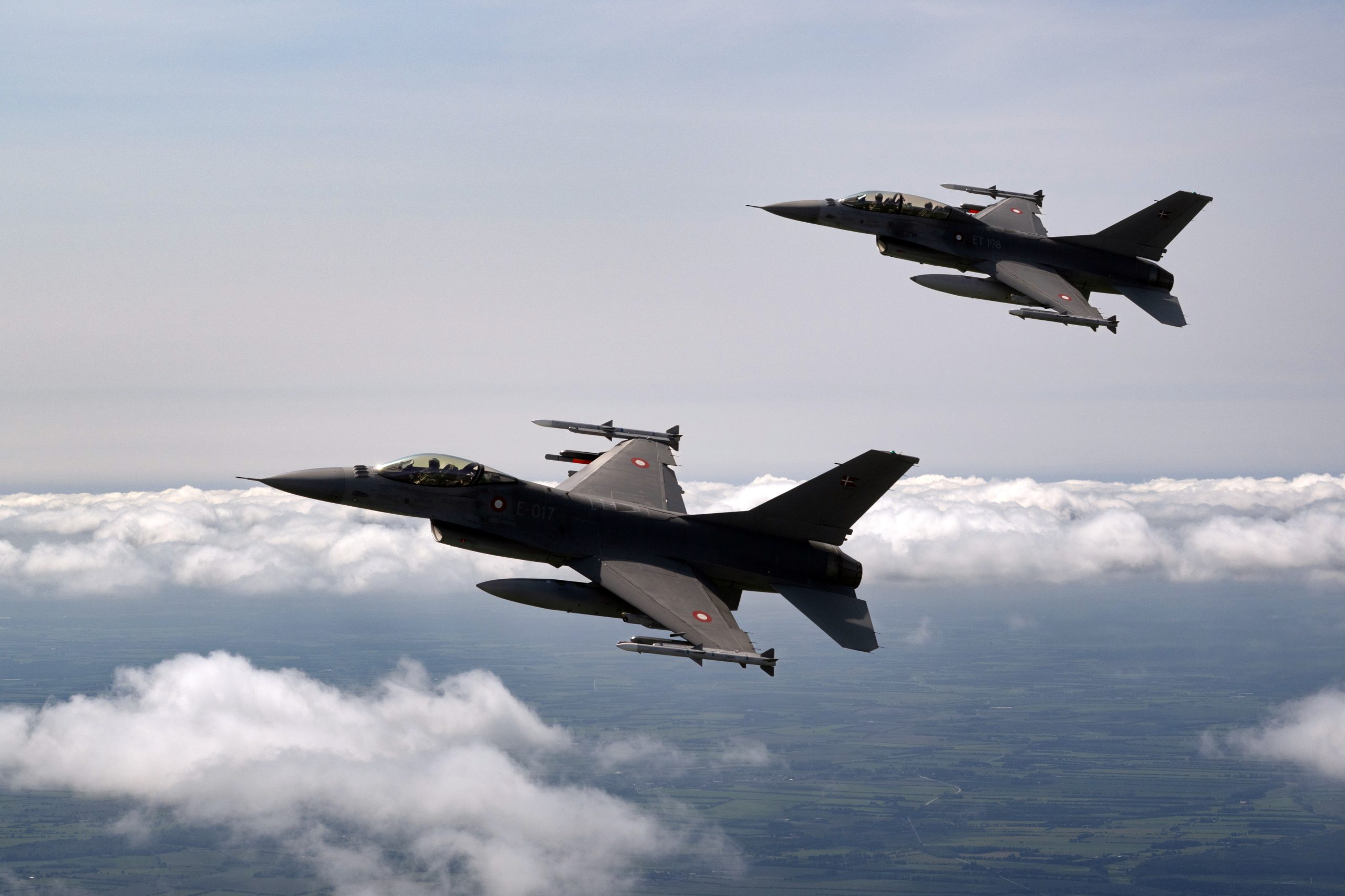
Part of the reason for that longevity is cost and ease of support. A single engine, a relatively simple structure and a very large worldwide fleet mean spares, training and upgrades are widely available, and the cost per flying hour is far below that of a heavyweight twin. That economy is also why the type keeps finding new buyers. Rather than design a new light fighter from scratch, several air forces have chosen to buy new-build Block 70 aircraft or to upgrade their existing jets to the F-16V standard, extending the airframe’s structural life and fitting modern radar and avionics. The decision by Lockheed Martin to open a fresh production line at Greenville, South Carolina, for these aircraft confirmed that demand for the type was far from over even as fifth-generation fighters entered service.
Because so many F-16s are still flying, the type is a regular sight at airshows and air bases, which makes it far easier to photograph in its element than the museum-bound veterans of earlier eras. Preserved examples do exist for those who want to study one on the ground: the second YF-16 prototype is held at the Fort Worth Aviation Museum in Texas, close to where the type was built, and retired early F-16s appear in air force and aviation museum collections in the United States and across Europe. Gate guardians and instructional airframes are common at bases that have operated the type.
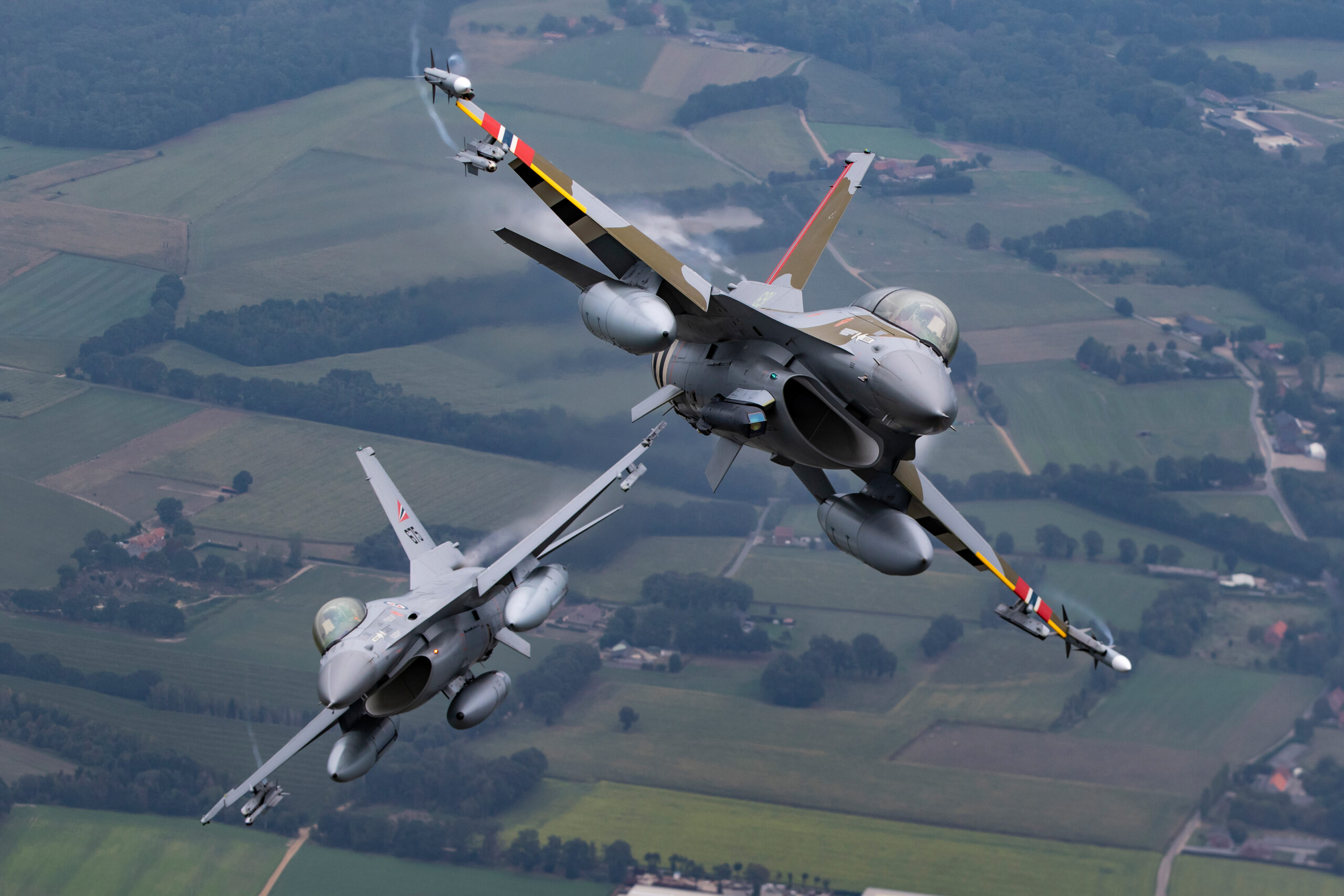
For photographers, the Viper is one of the most rewarding fast jets to shoot. Its small size and clean lines reward a long lens and a clean background, and its agility in the display circuit makes it a fine subject for practising panning. If you are planning to capture one in the air, our notes on how to photograph fast jets cover the shutter speeds and tracking technique that give sharp results on a moving display aircraft. For more on the aircraft that shaped the same era, see our histories of the Hawker Siddeley Harrier and the Lockheed SR-71 Blackbird.
Legacy
The F-16’s legacy is partly in the numbers. More than 4,600 built, service with more than two dozen air forces, and a production run that has outlasted almost every contemporary make it one of the most successful jet fighters ever produced. But the deeper legacy is in the ideas it proved. Relaxed static stability and digital fly-by-wire, once seen as risky, are now standard on every modern fighter. The bubble canopy and the side stick set conventions that later types followed. The blended wing-body and automatic manoeuvring flaps showed how much performance could be wrung from a modest airframe.
It also proved that a fighter conceived for one narrow job could grow into something its designers never intended. The Fighter Mafia wanted a light, cheap day fighter. What the air force and its export customers got was a multirole aircraft that could fight in the air, strike with precision, suppress enemy defences and reconnoitre, in all weathers, for forty years and counting. That adaptability, more than any single feature, is why the F-16 is still being built today and why it sits alongside aircraft such as the F-4 Phantom II and the English Electric Lightning as one of the defining fighters of the jet age.
The story is not over. The VISTA test aircraft, derived from a two-seat F-16, has flown experiments in autonomous flight control that point towards the next generation of combat aircraft. The airframe that flew by accident in 1974 is, half a century later, helping to work out how machines might fly themselves.
If you would like to see how the type has been captured over the years, the Piemags archive galleries hold a deep collection of military jet photography, and images are available for editorial and commercial use through our licensing page.
Frequently asked questions
Why is the F-16 called the Viper?
Although its official name is the Fighting Falcon, crews almost always call it the Viper. The nickname comes partly from the aircraft’s snake-like nose and lean shape, and partly from the Colonial Viper fighters in the television series Battlestar Galactica, which was on air when the F-16 entered service in the late 1970s. The name was never official but has stuck firmly within the community that flies and maintains it.
When did the F-16 first fly?
The YF-16 prototype made an unplanned first flight on 20 January 1974 during a high-speed taxi test at Edwards Air Force Base, when the test pilot judged it safer to take off than to keep the lively aircraft on the runway. The official first flight, a 90 minute sortie, followed on 2 February 1974.
How many F-16s have been built?
More than 4,600 F-16s have been built since the 1970s, making it the most-produced Western supersonic jet fighter. Production ran from 1973 to 2017 and has since resumed at Greenville, South Carolina, to build new Block 70 and 72 aircraft for export customers.
What is the difference between the F-16 blocks?
The block system groups aircraft by their standard of engine, radar and equipment. Broadly, the early A and B models had a simpler radar and an air-to-air focus; the C and D models from the mid 1980s introduced better radar and progressively added precision attack and defence-suppression capability through Blocks 25, 30/32, 40/42 and 50/52. The current F-16V, or Block 70/72, has an active electronically scanned array radar and a modern glass cockpit.
Is the F-16 still in service?
Yes. The F-16 remains in front-line service with the United States Air Force and around 25 other air forces, and new aircraft are still being built. Some early operators are retiring older jets as they receive the F-35, but the F-16 is expected to serve for decades to come, helped by ongoing upgrades to the F-16V standard.
What engines does the F-16 use?
The F-16 was designed around a single engine and can be fitted with either the Pratt and Whitney F100 or the General Electric F110, depending on the block and the customer’s choice under the Alternative Fighter Engine programme. Both produce around 29,000 pounds of thrust with afterburner in their later versions, and the General Electric F110-GE-132 fitted to the Block 60 is the most powerful engine used on the type.
How fast can the F-16 fly?
The F-16 has a top speed of around Mach 2.05, roughly 1,353 mph, at high altitude. Speed varies with the block, engine and weapon load, and in typical mission profiles pilots fly far slower to preserve fuel and range. It can also pull sustained turns at up to 9 g, which matters more in a close-in fight than outright straight-line speed.
How many countries fly the F-16?
The F-16 is operated by the United States Air Force and around 25 other air forces, including Israel, Turkey, Egypt, Greece, South Korea, Pakistan, Poland and several original European partners such as Belgium, the Netherlands, Denmark and Norway. Ukraine became a combat operator in 2024, and new customers have joined the list since. New-build Block 70 and 72 aircraft are still being delivered, so the operator list continues to grow.
Which display teams fly the F-16?
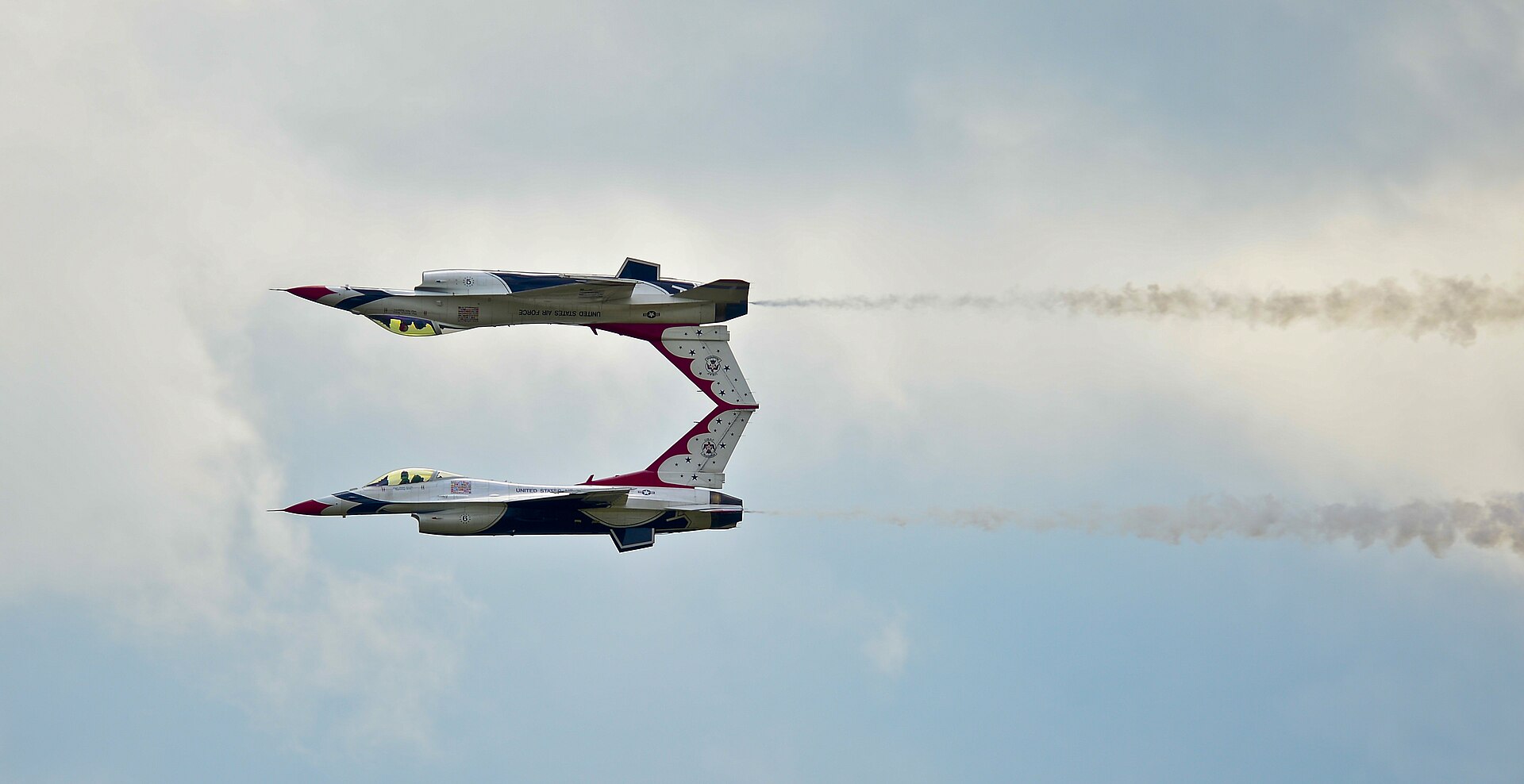
The best known is the United States Air Force Thunderbirds, who have flown the F-16 as their display aircraft since the 1983 season, currently flying a six-ship demonstration with Block 52 jets. Several other air forces have also used the type for solo and formation displays over the years. Its small size and agility make it a popular airshow performer.
The Viper’s big brother in the high-low mix has its own definitive profile in our F-15 Eagle history.
The lightweight fighter that was once slated to replace the Warthog never quite managed it: the A-10 Thunderbolt II story explains why the tank-buster outlasted every retirement plan until now.
The Viper’s successor across most of NATO is already on the ramp. Our profile of the Lockheed Martin F-35 Lightning II covers the aircraft replacing the F-16 squadron by squadron.
