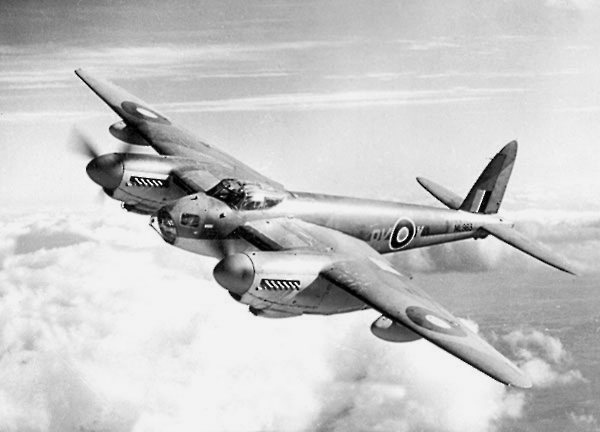
It was built of wood when the rest of the world was building fighters from aluminium, it carried no defensive guns on its bomber versions, and it was one of the fastest and most versatile aircraft of the Second World War. This is the story of the de Havilland Mosquito.
When de Havilland first proposed a fast, unarmed bomber made largely of plywood and balsa, the Air Ministry was unconvinced. Wood was old-fashioned. A bomber without gun turrets seemed reckless. Yet the aircraft that emerged, the DH.98 Mosquito, became one of the outstanding designs of the war. It flew as a bomber, a photo-reconnaissance platform, a night fighter, a maritime strike aircraft, a pathfinder and a trainer, and it did several of those jobs better than anything else in the sky. Crews called it the Wooden Wonder. The Germans, who struggled to catch it, had less affectionate names.
This is a complete history of the Mosquito: where it came from, how its remarkable wooden structure was made, the campaigns and pinpoint raids that made its name, the bewildering range of variants, what happened to it after the war, and where you can see the survivors today. Every date and figure here has been checked against reliable sources, and where the record is uncertain or contested it is flagged rather than smoothed over.
On this page
- Origins: the bomber nobody wanted
- Design and the wooden structure
- Into service: reconnaissance and bombing
- The pinpoint raids that made its name
- Night fighter and intruder
- Coastal Command and the maritime strike role
- Pathfinder and the Light Night Striking Force
- Development troubles and flying it
- Built across three continents
- The ball-bearing run to Sweden
- The Banff Strike Wing
- The variants explained
- Specifications
- After the war
- Survivors: where to see a Mosquito today
- What made it special
- Legacy
- Frequently asked questions
Origins: the bomber nobody wanted
The idea behind the Mosquito ran against the thinking of the late 1930s. The fashion was for heavily armed bombers bristling with gun turrets, able to fight their way to the target and back. De Havilland took the opposite view. The company argued that a bomber could be made so fast that no fighter could catch it, and that if it carried no guns and no gunners it would be lighter, faster still, and cheaper to build. Speed would be its armour.
There was a second argument, just as important in wartime Britain. De Havilland proposed to build the aircraft mainly from wood. That used materials and skilled labour, furniture makers, cabinet makers and piano builders, that were not in demand for other aircraft, which were competing for aluminium and metalworkers. A wooden aeroplane could be made by firms and workers outside the existing aviation supply chain.
The Air Ministry was sceptical on both counts. An unarmed bomber seemed to ignore hard lessons, and wood seemed a step backwards. The design team, led by chief designer R. E. Bishop under Geoffrey de Havilland, pressed on largely as a private venture through 1939 and 1940. Eventually the concept won enough support for a contract, initially framed around reconnaissance and fast bombing. The prototype was designed and built in secrecy at Salisbury Hall, near London Colney, in hangars put up in the grounds of the old house.
First flight
The prototype, given the serial W4050 and at first painted bright yellow, made its first flight on 25 November 1940 from Hatfield, with Geoffrey de Havilland Jr at the controls. The aircraft showed extraordinary performance almost at once. In testing it proved faster than the Spitfire then in service, and over its trials W4050 reached speeds of well over 400 mph, figures that astonished officials who had doubted a wooden bomber. That single prototype survives to this day, the only Mosquito prototype left and one of very few surviving British aircraft prototypes of the war.
Performance like that changed minds. Orders followed for reconnaissance, bomber and fighter versions, and the Mosquito was on its way from awkward proposal to one of the most important aircraft in the Royal Air Force.
Design and the wooden structure
The Mosquito’s wooden construction was not a crude fallback. It was a sophisticated piece of engineering that gave the aircraft a light, strong, smooth airframe, and it is the feature everyone remembers.
The sandwich fuselage
The fuselage was built as a monocoque shell in two halves, left and right, formed over large concrete or mahogany moulds. The shell was a sandwich: an inner and outer skin of birch plywood with a core of balsa wood between them. This plywood and balsa sandwich was light and stiff, and because the two fuselage halves were built separately the equipment, control runs and wiring could be fitted before the halves were glued and screwed together. It was an efficient way to build, and it suited dispersed production by firms with no metal aircraft experience.
Wings and glue
The wing was a one-piece structure built up from spruce and plywood, with the skins cemented to the spars. Early aircraft were assembled using casein glue. Later, after problems emerged with casein in hot and humid climates, production moved to a more durable synthetic formaldehyde-based adhesive (the Aerolite type), which stood up far better to weather and to tropical service. Thousands of small brass wood screws reinforced the glued joints. The result was an aerodynamically clean wing with very few rivets or external fasteners to disturb the airflow.
Why wood worked
The smoothness of the wooden skin, free of the rows of rivets found on metal aircraft, helped reduce drag, and the structure was light for its strength. Just as important strategically, the aircraft could be built by a network of woodworking firms across Britain and in Canada and Australia, drawing on skills and materials that the rest of the aircraft industry did not need. Furniture and cabinet-making companies produced major assemblies. This dispersal made the Mosquito hard to disrupt and quick to produce in quantity.
Wood had drawbacks too. It was vulnerable to damp and to rot if the glue or finish failed, which made maintenance in tropical theatres a real concern and makes preservation difficult today. But in the conditions of the European war it proved entirely practical, and the performance it bought was exceptional.
Two Merlins
Power came from a pair of Rolls-Royce Merlin engines, the same family that powered the Spitfire, Hurricane and Lancaster. Different marks of Mosquito used different Merlin versions as the engine developed through the war, with two-speed, two-stage superchargers on the higher-altitude variants giving strong performance well above 25,000 feet. Two Merlins on a light, clean airframe were what gave the Mosquito its speed, and that speed underpinned the entire concept. For more on the engine and the other aircraft it powered, see our histories of the Supermarine Spitfire, the Hawker Hurricane and the Avro Lancaster.
The crew of two
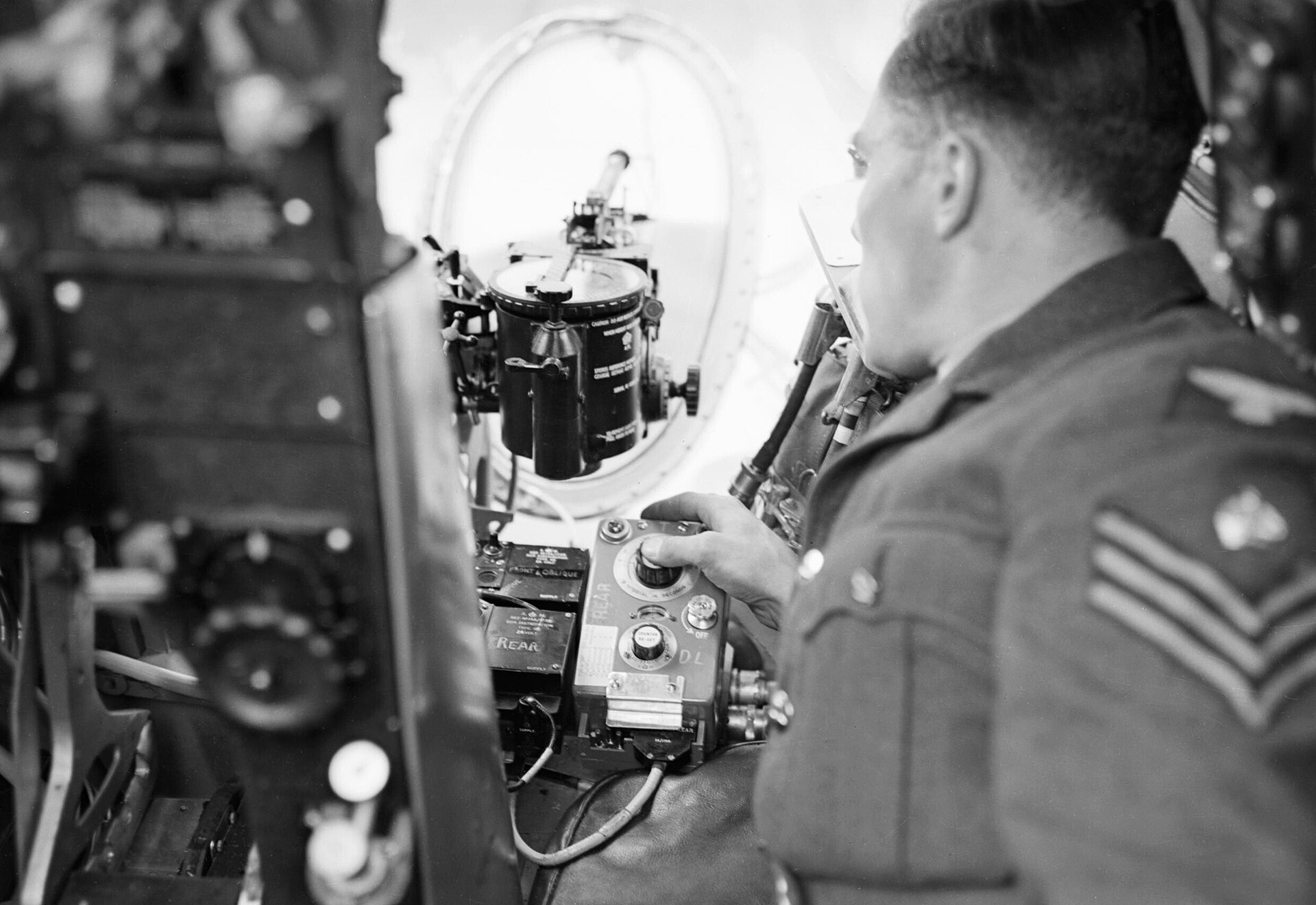
Most Mosquitoes were flown by a crew of two sitting side by side, pilot and navigator, in a compact cockpit in the nose. The arrangement was cramped but efficient, and the two-man crew kept weight down in keeping with the whole philosophy of the aircraft. Entry was through a hatch in the floor or side, and the side-by-side seating helped the two men work closely on navigation, bomb aiming or radar interception depending on the role.
Into service: reconnaissance and bombing
The Mosquito first proved itself not as a bomber but as a photo-reconnaissance aircraft, where pure speed and high-altitude performance were everything.
Photo-reconnaissance first
The first production photo-reconnaissance Mosquito, W4051, was delivered to No. 1 Photographic Reconnaissance Unit at RAF Benson in July 1941. The type’s first operational sortie was flown on 17 September 1941, when a PR Mk I reconnoitred the French coast around the Bay of Biscay. On that flight the pilot, Squadron Leader Rupert Clerke, was able to outrun Messerschmitt Bf 109s that tried to intercept him at altitude. That set the pattern for the unarmed Mosquito’s career: see the target, photograph it, and simply leave the fighters behind.
The unarmed bomber
No. 105 Squadron became the first bomber unit to equip with the Mosquito. The squadron got its first taste of the aircraft in November 1941, when Geoffrey de Havilland Jr flew one in to demonstrate it, and the B Mk IV bomber entered service with 105 Squadron in 1942. These bombers carried their load internally and relied on speed and low-level surprise rather than guns. The early B Mk IV typically carried a useful bomb load deep into enemy territory, and later bomb bay modifications allowed the aircraft to carry a single large 4,000 lb “Cookie” blast bomb, a remarkable load for so light an aeroplane.
Mosquito bombers ranged across occupied Europe and into Germany by day and night, hitting targets with a speed that made interception difficult. They became a constant nuisance to the German defences, fast enough to appear over a city, drop their bombs and be gone before an effective response could be mounted.
The pinpoint raids that made its name
The Mosquito earned its fame through a series of daring, low-level precision raids, the kind of operations that only a fast, accurate aircraft could attempt. These missions struck specific buildings in occupied cities, often to help the resistance or to disrupt the German security apparatus.
Oslo, 1942
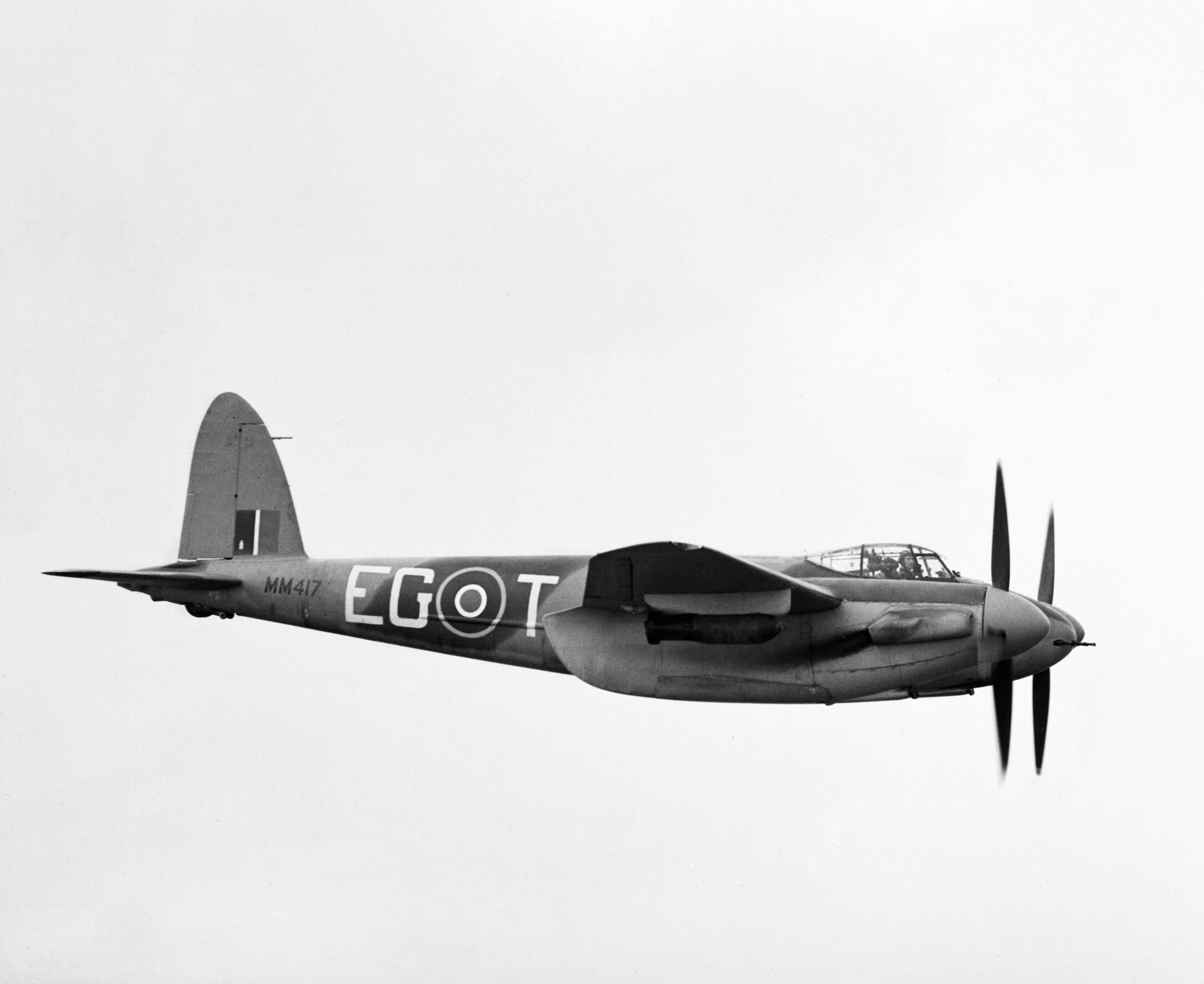
On 25 September 1942, four Mosquitoes of No. 105 Squadron flew at low level to Oslo to attack the Gestapo headquarters in the Victoria Terrasse building. The raid was a propaganda strike as much as a military one, timed to disrupt a Nazi rally in the Norwegian capital. The results were mixed and not all bombs struck home, but the sight of RAF bombers over Oslo in daylight had a real effect on morale in occupied Norway.
Operation Jericho: the Amiens prison raid, 1944
The best known Mosquito operation is Operation Jericho, the attack on Amiens prison in German-occupied France on 18 February 1944. The aim was to breach the prison walls and guardrooms so that resistance members and political prisoners held there could escape. Aircraft of No. 2 Group, drawn from squadrons including 487 Squadron RNZAF, 464 Squadron RAAF and 21 Squadron RAF, flew in at extremely low level to place their bombs precisely against the walls.
The raid breached the walls and many prisoners escaped, though the cost was high. A substantial number of prisoners were killed or wounded by the bombing itself, and the leader of the operation, Group Captain Charles Pickard, was killed when his Mosquito was shot down. The raid remains controversial: its planning, the exact intelligence behind it and the balance of those freed against those killed have been debated by historians ever since. What is not in doubt is that the precision required was only possible because of the Mosquito’s speed and handling at low level.
The Shellhus and Gestapo headquarters raids
The Mosquito carried out several more raids on Gestapo buildings in occupied cities, including the Aarhus raid in Denmark and, on 21 March 1945, the attack on the Shellhus in Copenhagen, the Gestapo headquarters for Denmark. That raid destroyed the building and Gestapo records and allowed prisoners to escape, but part of the force mistakenly bombed a nearby school, and many children and adults were killed. It is remembered both as a feat of precision flying and as a tragedy, and an honest account of the Mosquito’s career has to hold both of those facts together.
Night fighter and intruder
While the bombers grabbed the headlines, one of the Mosquito’s most important contributions was made in the dark. Fitted with airborne interception radar in the nose and a battery of cannon and machine guns, the night fighter Mosquito became the mainstay of Britain’s night air defence in the middle years of the war.
Night fighter versions carried four 20 mm cannon, usually with machine guns as well in the early marks, and the two-man crew worked the radar and the guns together: the navigator read the radar and guided the pilot onto the target until he could see it and open fire. These aircraft defended Britain against night raids, and later went on the offensive as intruders, ranging over enemy airfields to catch German aircraft taking off and landing.
As the bombing campaign over Germany grew, Mosquito night fighters also flew with the bomber stream as part of the effort to protect the heavy bombers from German night fighters. The combination of speed, a heavy forward-firing armament and good radar made the Mosquito one of the most effective night fighters of the war, and the type accounted for a large number of enemy aircraft and V-1 flying bombs.
Coastal Command and the maritime strike role
The fighter-bomber Mosquito, above all the FB Mk VI, was the most-produced version of the whole family and the workhorse of the type. Armed with four cannon and four machine guns in the nose and able to carry bombs or rockets, the FB VI served as a strike aircraft over land and sea.
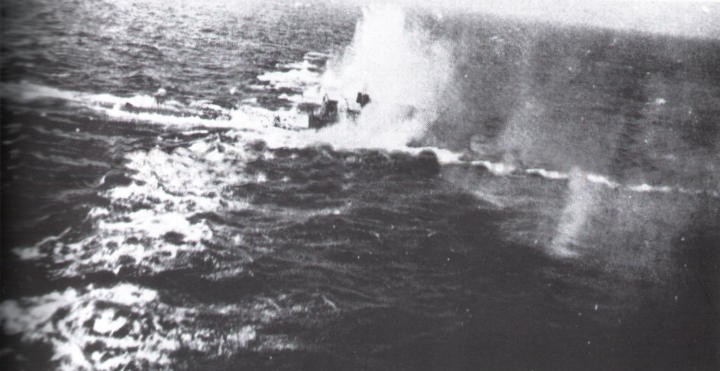
With Coastal Command, Mosquitoes attacked enemy shipping and submarines in the waters off occupied Europe, using cannon, rockets and bombs. One specialised version, the FB Mk XVIII sometimes nicknamed the Tsetse, carried a 57 mm Molins gun, a large quick-firing weapon developed from an anti-tank gun, intended for use against surfaced U-boats and ships. These anti-shipping Mosquitoes operated in strike wings that pressed home dangerous low-level attacks against well-defended convoys.
The rocket-armed and cannon-armed fighter-bombers also ranged over occupied Europe attacking transport, troops and targets of opportunity, a role they shared in spirit with single-engined fighter-bombers like the North American P-51 Mustang, though the twin-engined Mosquito brought heavier firepower and longer range to the job.
Pathfinder and the Light Night Striking Force
The Mosquito became central to Bomber Command’s Pathfinder Force, the units that flew ahead of the main bomber stream to find and mark targets with flares and target indicators so that the heavy bombers could aim accurately at night. Mosquitoes flew both halves of the most elaborate deception of 1943, the feint over Berlin and the reconnaissance that found the rockets, as told in our epic on the Peenemunde raid. The Mosquito’s speed and altitude made it ideal for this dangerous job, marking targets and then leaving quickly.
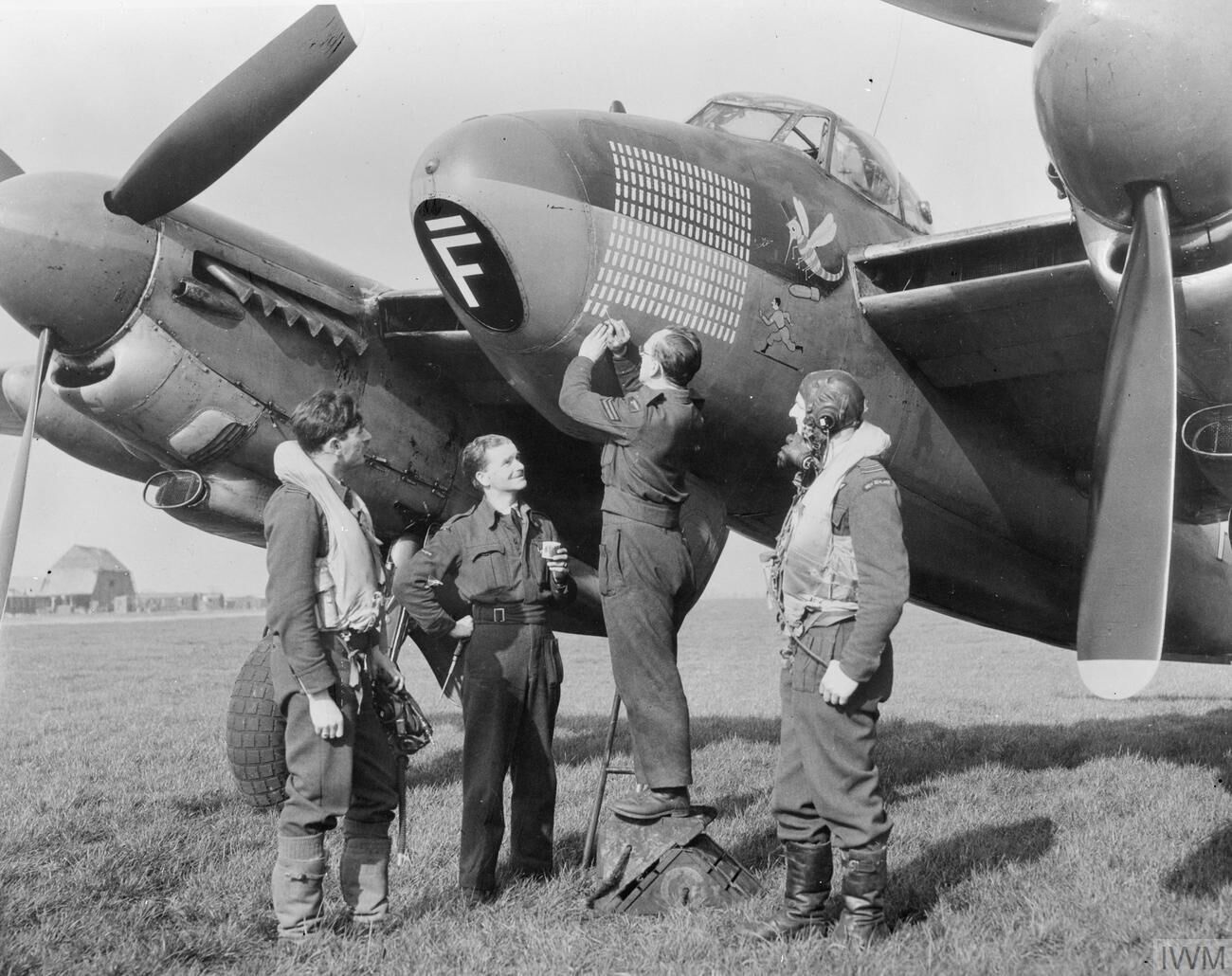
Beyond marking, Mosquito bombers formed the Light Night Striking Force, a fast bomber force that ran nuisance and harassing raids on German cities, including repeated trips to Berlin, carrying the 4,000 lb blast bomb. These raids kept German defences on edge for the loss of very few aircraft, because the Mosquito was so hard to catch. The contrast with the heavy bombers it worked alongside, aircraft like the Lancaster, shows how the Mosquito filled a role nothing else could.
Development troubles and flying the Mosquito
No new aircraft of this ambition arrived without problems, and the Mosquito had its share during testing. The prototype suffered tail buffeting in early high-speed trials in late 1940, which the team traced to airflow problems and cured with revisions to the airframe. The undercarriage, which used rubber-in-compression units rather than conventional oleo legs, needed development to behave well, and the wooden structure had to prove that it could take the stresses of combat flying, dives and the slamming of arrested or heavy landings. It did. Once the early issues were sorted, the airframe earned a reputation for strength.
Pilots who converted to the type generally loved it. It was fast, responsive and, for a twin, pleasant to handle. It was not, however, an aircraft for the careless. On one engine, particularly at low speed with a heavy load, it demanded respect, and engine failure on take-off was dangerous as it was on any high-powered twin of the era. Landing called for accuracy because the aircraft came in fast. Crews learned to fly it precisely, and in skilled hands it was supremely capable. The combination of speed, range and a stable platform is exactly what made it so good at the pinpoint work it became famous for.
Range and endurance
One of the Mosquito’s underrated qualities was its reach. Carrying fuel in the wings and able to take drop tanks, it could fly long-range sorties that took it deep into enemy territory and back, whether photographing targets, marking for the heavy bombers or striking shipping far out to sea. That range, married to speed, opened up missions that shorter-legged aircraft could not attempt.
Building the Mosquito across three continents
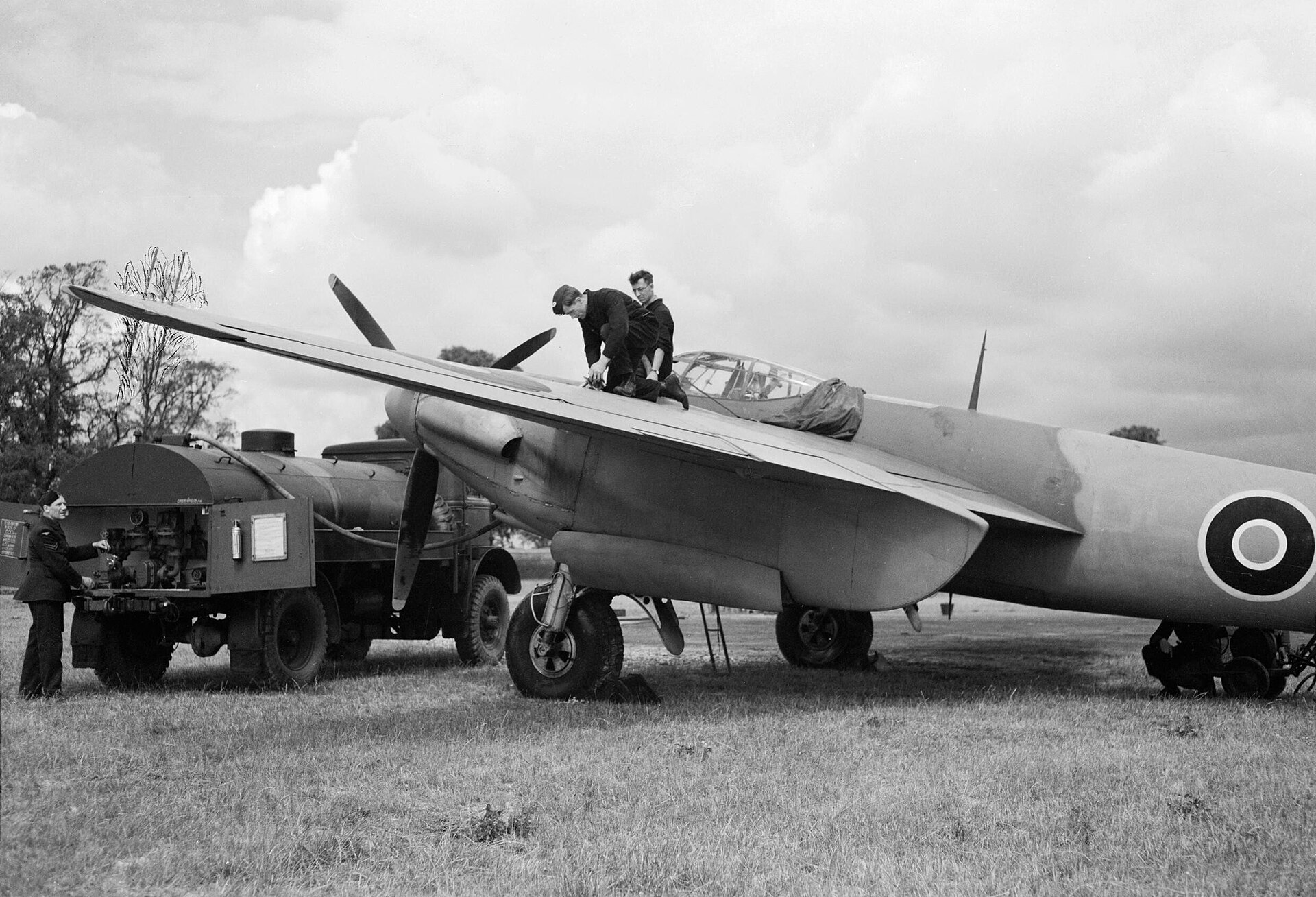
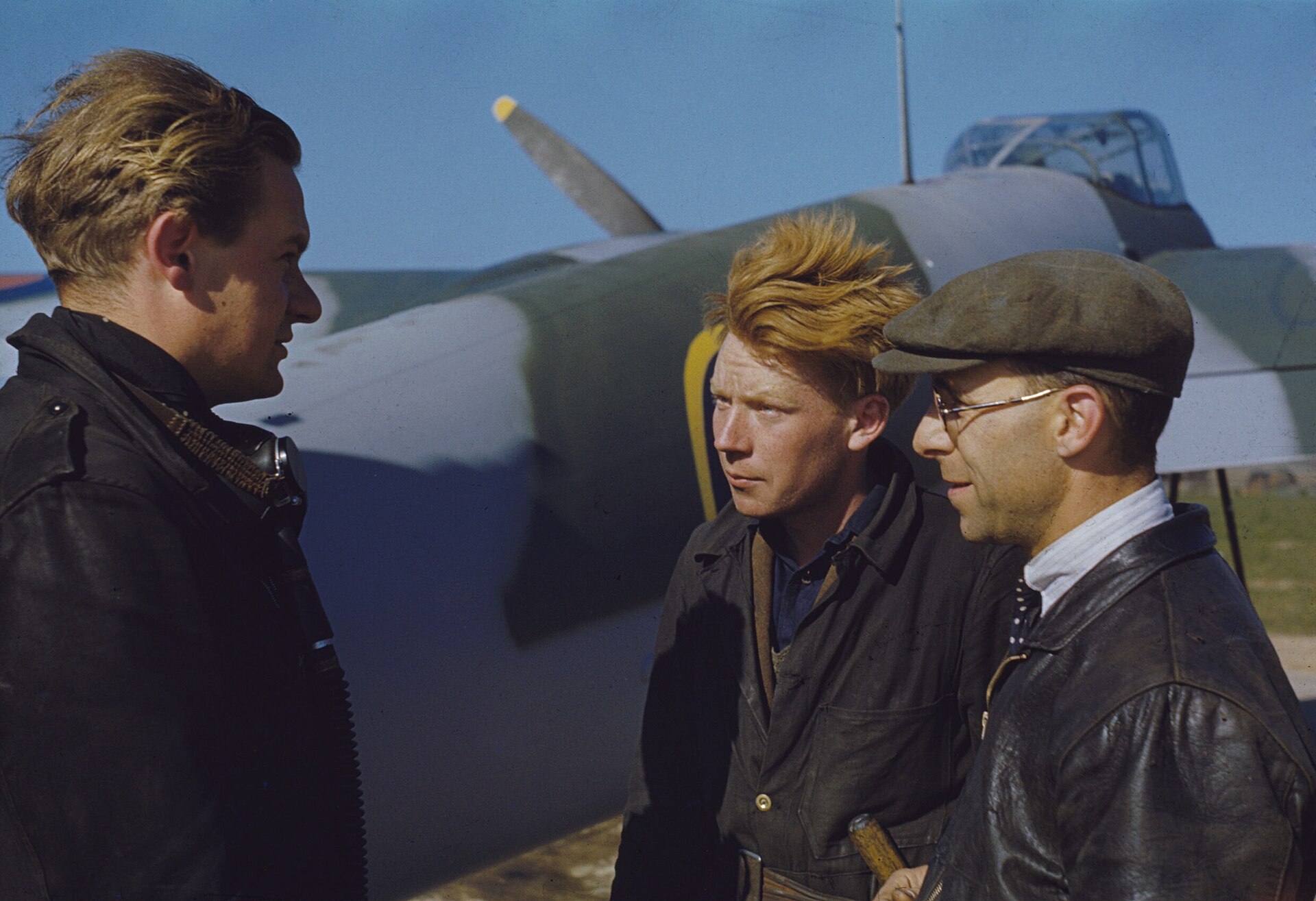
Production was spread far more widely than for most aircraft, which was part of the original plan. The main British production was centred on de Havilland at Hatfield and at Leavesden, but a large network of subcontractors, many of them furniture and woodworking firms, produced components and sub-assemblies around the country. This dispersal made the programme resilient and drew on a workforce the metal aircraft industry was not using.
The Mosquito was also built overseas. De Havilland Canada produced large numbers at Downsview near Toronto, many of which were ferried across the Atlantic for service in Europe, and de Havilland Australia built the type at Sydney for use in the Pacific theatre. Building a wooden aircraft in the heat and humidity of Australia exposed the glue problems that led to the change to a more weather-resistant synthetic adhesive, an important lesson for an aircraft expected to serve in tropical climates. Between the three countries, roughly 7,781 Mosquitoes were completed, a substantial total for so specialised a design.
The ball-bearing run to Sweden
One of the most unusual chapters in the Mosquito’s career was civilian. British Overseas Airways Corporation operated a small fleet of Mosquitoes on a fast courier service between Britain and neutral Sweden, flying high and fast across German-occupied airspace where slower transports could not survive. The aircraft carried urgent cargo, including precision ball bearings vital to British industry, and diplomatic mail, and on occasion carried a single passenger lying in the converted bomb bay, breathing through an oxygen supply for the high-altitude crossing. It was a dangerous run flown on the same principle as the bombers: go high, go fast, and rely on speed to get through.
The Banff Strike Wing and anti-shipping war
In the last year of the war, Mosquito fighter-bombers formed the core of strike wings that hunted German shipping along the coast of occupied Norway and in the North Sea. Operating from bases including Banff in Scotland, these wings flew long, low and dangerous sorties against well-defended convoys and vessels sheltering in the Norwegian fjords, attacking with cannon, rockets and bombs. Losses could be heavy because the targets were ringed with flak, but the strikes were effective, and they showed the Mosquito working at the limit of its range and at the most demanding end of low-level attack. These operations rounded out a combat record that already spanned bombing, reconnaissance, night fighting and pinpoint raids.
Against the flying bombs
When Germany launched the V-1 flying bomb against Britain in 1944, fast aircraft were needed to catch the small, quick missiles. The Mosquito night fighter was among the types pressed into the anti-V-1 campaign, using its speed to run down and destroy flying bombs over the approaches to London and the south east. It was one more job added to an already crowded record, and one more that suited an aircraft built around speed.
The variants explained
The Mosquito was produced in more than 30 marks across its bomber, fighter, reconnaissance and training roles, and the designations can be confusing. The aircraft was built in Britain, Canada and Australia, and roughly 7,781 were completed in total before production ended around 1950. The main families are easier to follow if grouped by role.
Photo-reconnaissance (PR)
The reconnaissance versions ran from the early PR Mk I through to the high-altitude PR Mk XVI and the late PR Mk 34, the latter a long-range, high-altitude aircraft that was among the fastest of all Mosquitoes. These unarmed aircraft relied entirely on speed and height, and they flew some of the most demanding sorties of the war, photographing targets deep inside enemy territory.
Bombers (B)
The bomber line ran from the B Mk IV, the first to enter service, through the B Mk IX and the much-improved B Mk XVI with a pressurised cabin and the bulged bomb bay for the 4,000 lb bomb, to the postwar B Mk 35. These were the unarmed fast bombers and Light Night Striking Force aircraft.
Fighters and night fighters (F, NF)
The fighter and night fighter marks, including the NF Mk II, NF Mk XII, NF Mk XIII and the later NF Mk 30 and postwar NF Mk 36, carried cannon armament and successive generations of airborne interception radar. They formed the backbone of RAF night defence and night intruder operations.
Fighter-bombers (FB)
The FB Mk VI was the single most numerous variant, a true multi-role strike aircraft with guns, bombs and rockets. The FB Mk XVIII added the 57 mm Molins gun for anti-shipping work. The fighter-bombers did much of the day-to-day fighting, from pinpoint raids to anti-shipping strikes and ground attack.
Trainers and target tugs (T, TT)
Dual-control T Mk III trainers prepared crews for the type, and after the war many airframes were converted to target-towing duties, which kept Mosquitoes in service well into the 1950s.
Specifications
The figures below are representative of the wartime Mosquito and, where a single mark is needed, the widely produced FB Mk VI fighter-bomber. Performance varied considerably between marks, and the high-altitude reconnaissance and late bomber versions were faster than the figures shown here. Exact numbers differ slightly between sources, so these are given as reliable round figures rather than false precision.
| Role | Multi-role: bomber, fighter-bomber, night fighter, photo-reconnaissance, pathfinder, trainer |
|---|---|
| Manufacturer | de Havilland Aircraft Company (also built in Canada and Australia) |
| First flight | 25 November 1940 (prototype W4050) |
| Crew | Two (pilot and navigator, side by side) |
| Powerplant | Two Rolls-Royce Merlin V-12 engines (mark varied by version) |
| Wingspan | About 16.5 m (54 ft 2 in) |
| Length | About 12.5 m (40 ft 11 in) |
| Maximum speed | Around 580 km/h (360 mph) for the FB VI at altitude; high-altitude PR and bomber marks exceeded 640 km/h (400 mph) |
| Armament (FB VI) | Four 20 mm cannon and four .303 in machine guns, plus up to 2,000 lb of bombs or rockets |
| Bomb load (bomber marks) | Up to a single 4,000 lb blast bomb in the bulged-bay versions |
| Construction | Plywood and balsa sandwich fuselage; spruce and plywood wing |
| Total built | Approximately 7,781 in all marks |
| Production period | 1940 to about 1950 |
After the war
The Mosquito did not retire when the war ended. Production continued into 1950, and the type went on serving in the Royal Air Force and many other air forces around the world through the late 1940s and into the 1950s. Reconnaissance, target-towing and second-line duties kept airframes flying long after the front-line fighters and bombers of 1945 had been scrapped.
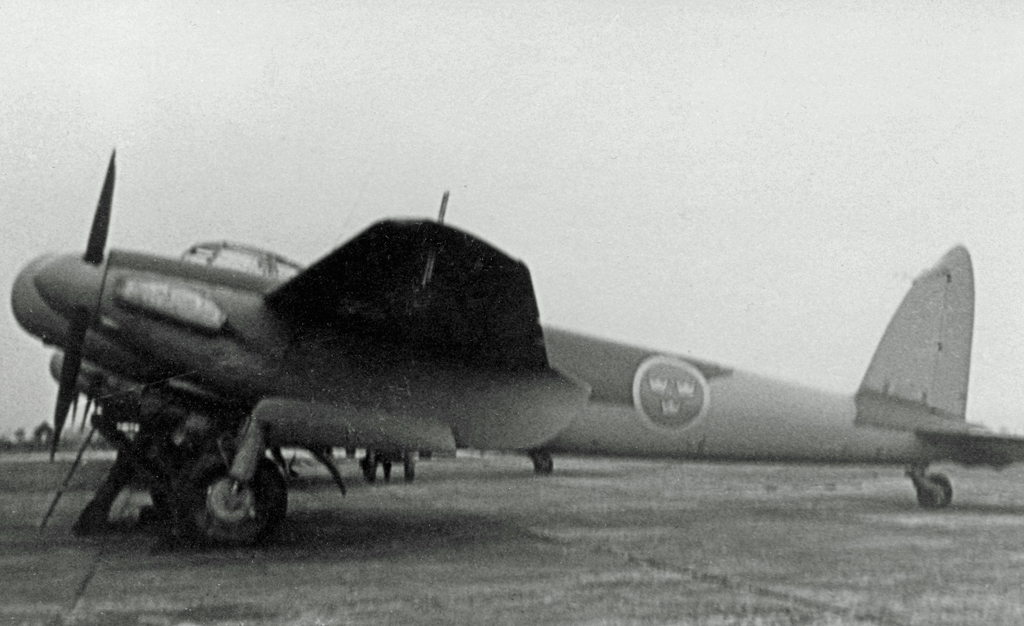
Photo-reconnaissance Mosquitoes flew operationally into the 1950s, including sorties during the Malayan Emergency, and the type served with air forces across Europe, the Commonwealth and beyond, in some cases well into the postwar decade. The aircraft also had a brief and glamorous civil career: a handful were used for fast mail and courier work and for high-speed communications during and just after the war, exploiting the same speed that had made the military versions so effective.
As jet aircraft matured, the piston-engined Mosquito was gradually retired from front-line work, but its career had been remarkably long for an aircraft first flown in 1940. Few wartime designs stayed useful for so long, and fewer still did so across such a range of jobs.
Survivors: where to see a Mosquito today
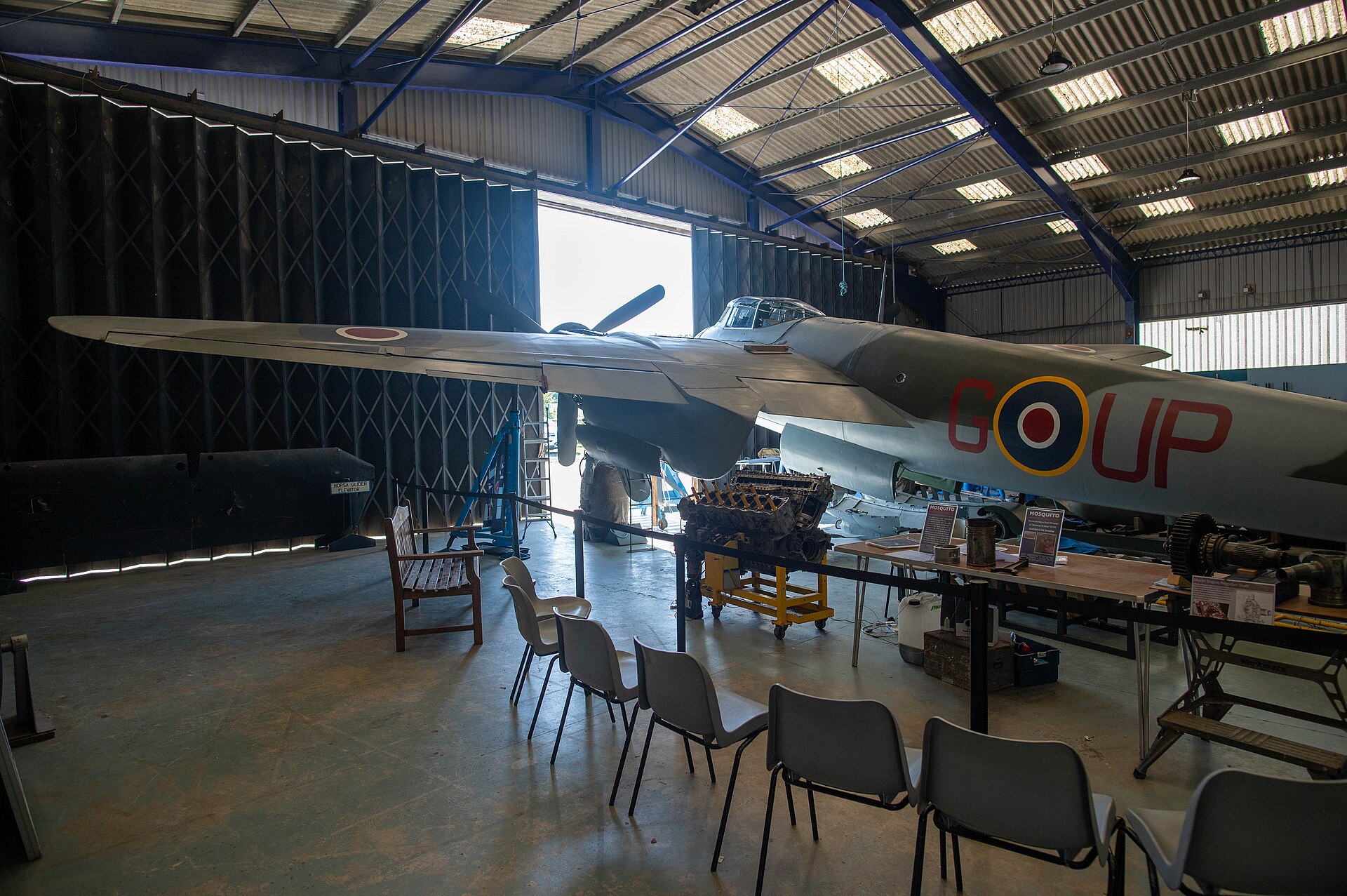
Because the Mosquito was built of wood, far fewer have survived than metal contemporaries like the Spitfire. Wood rots, glue fails, and an airframe left outdoors does not last. Of the roughly 7,781 built, about 30 aircraft survive today, and only a small number, around five, are airworthy. Several more are under long-term restoration.
The prototype, W4050
The most historically important survivor is the original prototype, W4050, preserved at the de Havilland Aircraft Museum at Salisbury Hall, London Colney, in Hertfordshire, the very site where it was designed and built. It is the only Mosquito prototype left and is regarded as one of the only surviving British wartime aircraft prototypes anywhere. The museum holds other Mosquitoes as well and is the natural place to start for anyone wanting to understand the type.
Airworthy aircraft
The handful of airworthy Mosquitoes are based in North America. Several were rebuilt to flying condition over the past two decades, with much of the specialist wooden restoration work carried out in New Zealand before the aircraft were delivered to their owners. Flying examples appear at air shows in the United States and Canada, where a Mosquito in the air remains a rare and special sight. Restorations continue, so the small flying population may slowly grow.
Museums
Static Mosquitoes can be seen in Britain at several major collections, in Canada and Australia where the type was built, and in the United States. Because the airframes are wooden, most are kept indoors in climate-controlled conditions to protect them. If you want to photograph one, an indoor museum aircraft calls for the kind of low-light, available-light technique covered in our guide to photographing warbirds, while a flying example at a show is a classic fast-mover subject.
Legacy
The Mosquito proved that an idea dismissed as old-fashioned could be one of the most modern aircraft of its day. By trusting speed instead of guns, and wood instead of metal, de Havilland produced an aeroplane that was faster, more versatile and in many roles more effective than the conventional designs it was supposed to imitate. It bombed, photographed, intercepted, hunted ships and marked targets, and it did all of those things at the top of its class.
Its influence ran on after the war. The concept of a fast, unarmed or lightly armed aircraft relying on speed and altitude pointed towards the jet bombers and reconnaissance aircraft that followed, and the Mosquito is often cited as a spiritual ancestor of later high-speed bombers. For aviation enthusiasts and photographers, the Wooden Wonder remains one of the most admired aircraft of the war, beautiful in line and remarkable in story. Its mix of elegance, ingenuity and sheer performance is exactly what draws people to wartime aviation in the first place, the same fascination explored across our other history guides on the Spitfire and the Lancaster.
Frequently asked questions
Why was the Mosquito made of wood?
Two reasons. Wood made for a light, strong, aerodynamically clean airframe that helped the aircraft go fast, and it let de Havilland build the aeroplane using furniture and cabinet-making firms and woodworking skills that were not needed for metal aircraft. That meant the Mosquito did not compete for scarce aluminium or metalworkers, an important advantage in wartime.
How fast was the de Havilland Mosquito?
It depended on the mark. The common FB Mk VI fighter-bomber managed around 360 mph at altitude, while the high-altitude photo-reconnaissance and late bomber versions exceeded 400 mph. In testing, the prototype reached even higher speeds. When it entered service the Mosquito was faster than most fighters that might try to catch it, which was the whole point of the design.
Did the Mosquito really carry no defensive guns?
The bomber and reconnaissance versions carried no defensive armament at all. They relied on speed to avoid interception rather than gun turrets to fight off attackers. The fighter, night fighter and fighter-bomber versions were heavily armed with forward-firing cannon and machine guns, but those guns were for attack, not defence against pursuers.
What was the most produced version of the Mosquito?
The FB Mk VI fighter-bomber was the most numerous variant. Armed with four cannon and four machine guns and able to carry bombs or rockets, it was the multi-role workhorse of the family and served in ground attack, anti-shipping and pinpoint raid roles.
How many Mosquitoes were built and how many survive?
Approximately 7,781 were built in Britain, Canada and Australia between 1940 and about 1950. Because the airframe was wooden, far fewer survive than metal aircraft of the period: around 30 remain today, of which roughly five are airworthy, with several more under restoration.
Where can I see a Mosquito?
The original prototype, W4050, is at the de Havilland Aircraft Museum at London Colney in Hertfordshire, the site where it was built. Other static examples are held by museums in Britain, Canada, Australia and the United States, and the small number of airworthy aircraft, based in North America, occasionally appear at air shows.
What did the Germans think of the Mosquito?
German commanders were exasperated by it, since their fighters struggled to catch it. Hermann Goering is often quoted complaining that the British could knock together a beautiful wooden aircraft that every piano factory over there could build, while he had nothing to match it. The Germans even tried to develop their own wooden night fighter in response, but it never became a serviceable rival.
Could the Mosquito really carry a 4,000 lb bomb?
Yes. Later bomber versions were fitted with a bulged bomb bay that allowed the aircraft to carry a single 4,000 lb blast bomb, known as the Cookie, a remarkable load for so light an aeroplane. Aircraft of the Light Night Striking Force used it on fast harassing raids, including repeated trips to Berlin, for the loss of very few aircraft.
How many crew flew in a Mosquito?
Most Mosquitoes were flown by a crew of two, a pilot and a navigator, sitting side by side in a compact cockpit in the nose. The arrangement was cramped but efficient, and it kept weight down in line with the whole philosophy of the aircraft. The two men worked closely together on navigation, bomb aiming or radar interception depending on the role.
Explore more
If you enjoyed this, read our other aircraft histories, including the Supermarine Spitfire, the Avro Lancaster, the Hawker Hurricane and the North American P-51 Mustang. You can browse wartime and modern aircraft images in the Piemags aviation galleries and the archive collections, and if you would like to use any image, the licensing options are here.