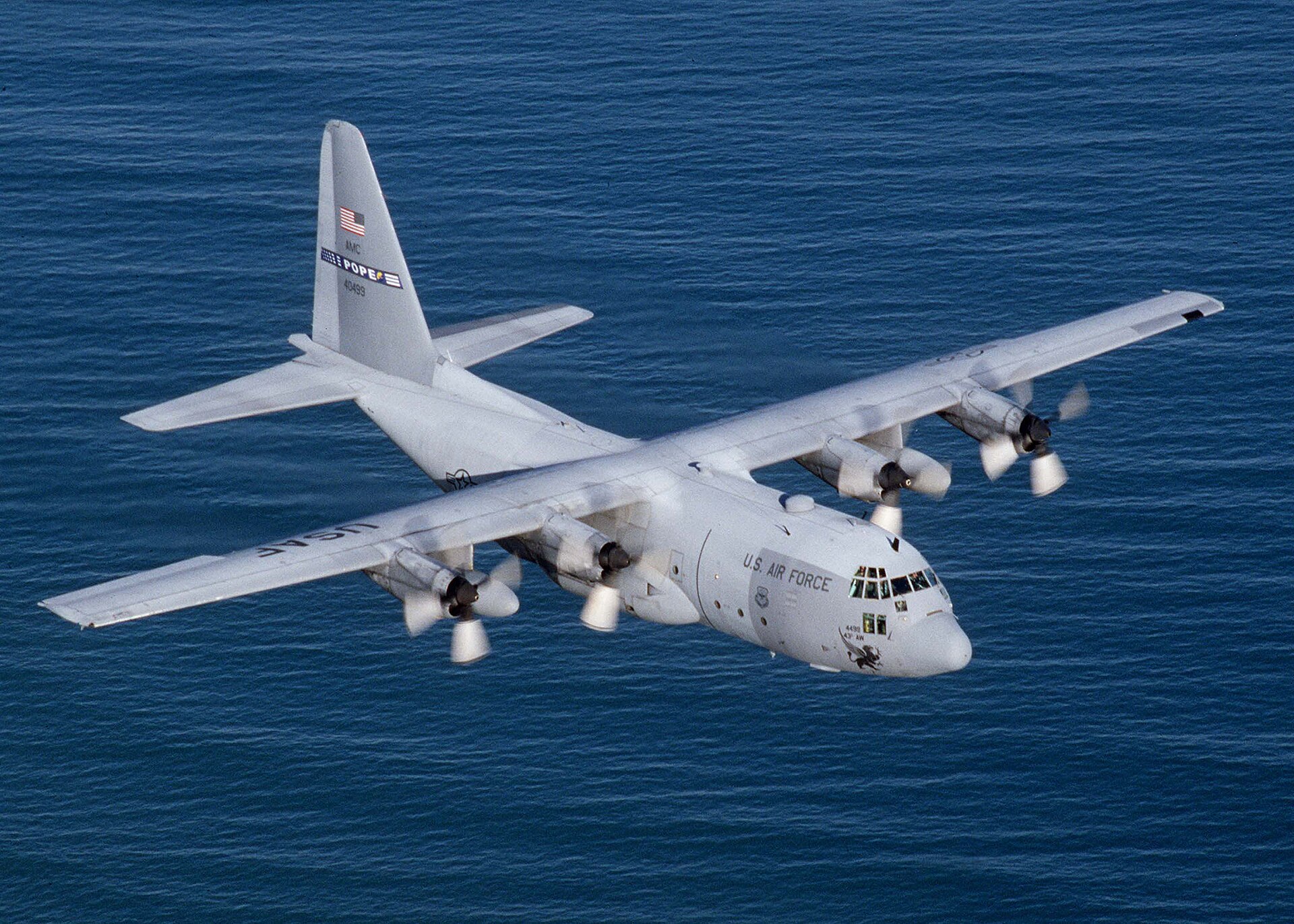
Some aircraft are famous for being fast, or deadly, or beautiful. The Lockheed C-130 Hercules is famous for something rarer: for being useful, everywhere, for longer than almost any other aircraft in history. It first flew in 1954, and it is still rolling off the production line today, which makes it the longest continuously produced military aircraft ever built. In between it has flown as a transport, a tanker, a gunship, a spy plane, a hurricane hunter, a firefighter and a search and rescue aircraft, in the service of more than seventy nations.
This guide tells the story of the aircraft everyone simply calls the Herc: where it came from, why its blunt, high winged shape has proved so hard to improve on, the famous missions it has flown from Khe Sanh to Entebbe, the huge family of specialised versions, and why, seventy years on, no one has managed to replace it.
Lockheed C-130 Hercules: key facts
- First flight: YC-130 prototype, 23 August 1954.
- Entered service: December 1956, with the United States Air Force.
- Builder: Lockheed, later Lockheed Martin, at Marietta, Georgia.
- Engines: four Allison, now Rolls-Royce, turboprops.
- Number built: more than 2,700, across over 40 variants.
- Record: the longest continuously produced military aircraft in history, in production for over 70 years.
- Operators: more than 70 nations around the world.
What this guide covers
- Origins and development
- Design and engineering
- Flying the Hercules
- The tactical airlift workhorse
- Records and remarkable feats
- Vietnam and the siege of Khe Sanh
- Entebbe: the raid of 1976
- The AC-130 gunship
- A family of specialists
- The C-130J Super Hercules
- Disaster relief and the odd jobs
- The Hercules in RAF service
- Specifications and key facts
- Operators and service
- Legacy
- Frequently asked questions
Origins and development
The Hercules was born out of the Korean War. That conflict showed the United States that its existing transport aircraft, many of them adapted from wartime designs, were not up to the job of supplying troops from rough forward airstrips. In 1951 the Air Force issued a requirement for a new tactical transport that could carry a useful load into and out of short, unprepared runways, drop paratroops and cargo, and survive hard use far from proper bases. It was a demanding specification, and it shaped a very practical aeroplane.
Lockheed won the contract, and its design team produced a shape that looked ungainly beside the sleek airliners of the day but suited the job perfectly. The first of two YC-130 prototypes made its maiden flight from Burbank, California, on 23 August 1954. The first production C-130A followed in 1955, and the type entered service with the United States Air Force in December 1956. Lockheed set up the production line at Marietta in Georgia, and it has never stopped. Seven decades later the line is still building the latest C-130J, which makes the Hercules the longest continuously produced military aircraft in history, with more than 2,700 built across more than forty distinct variants.
What is striking, looking back, is how little the basic aircraft has needed to change. The engineers who drew it in the early 1950s got the fundamentals so right that every later version, however much more capable, is recognisably the same aeroplane. Few designs in any field have aged so well, and fewer still have stayed in production long enough for the grandchildren of the first crews to fly essentially the same machine.
The design itself came from a Lockheed team led by Willis Hawkins, who set out to build not a graceful aircraft but a practical one, a flying truck for the battlefield. The story goes that Kelly Johnson, Lockheed’s legendary designer of sleek and secret aircraft, thought the ungainly transport beneath the company and warned that it might harm Lockheed’s reputation. He could hardly have been more wrong. The plain, businesslike Hercules went on to outsell and outlast almost everything Johnson’s own division produced, proving that in aviation, as elsewhere, usefulness can outlast glamour.
Design and engineering
Everything about the Hercules was shaped by the need to operate from rough, short strips with heavy loads. The wing was mounted high on top of the fuselage, which kept the propellers and engines well clear of debris and left the cargo hold low to the ground for easy loading. Four Allison T56 turboprops gave the power to lift heavy loads out of short fields and the reliability to keep flying in primitive conditions, while a rugged, tall undercarriage that retracted into blisters on the fuselage sides let the aircraft operate from dirt, sand, snow and steel matting.
The feature that did most to define the aircraft was at the back. The rear of the fuselage was formed into a large ramp and door that could be lowered to the ground for vehicles to drive straight in, or opened in flight to drop cargo and paratroops. The hold itself was a plain, square sided box, pressurised so it could carry troops or casualties in comfort at altitude, and big enough to swallow light vehicles, artillery, pallets of supplies or rows of stretchers. That simple, practical cargo box, loaded through the rear ramp, became the template for military transport aircraft the world over.
Just as important was what the design left out. There was nothing clever or delicate about the Hercules. It was built to be flown hard, fixed quickly and kept going with limited support, and that toughness is a large part of why it has been so popular with air forces that cannot afford anything more demanding. A Hercules can be turned around on a strip of desert by a small crew with basic tools, and that has mattered as much as any performance figure across seventy years of service.
Inside, the flight deck sat high at the front above the cargo floor, giving the pilots a commanding view over the blunt nose, which helped when picking out a rough strip. The whole fuselage was pressurised, unusual for a tactical transport, which let the Hercules carry troops and casualties in comfort at height and fly above bad weather on long legs. Small touches like these, combining the toughness of a battlefield transport with the comfort and range of an airliner, are a large part of why the design proved so adaptable.
Flying the Hercules
To the crews who fly it, the Hercules is honest, hard working and full of character. The flight deck of the older models sat a crew of four or five: two pilots up front, a flight engineer watching the systems, a navigator, and in the back a loadmaster who managed the cargo and the ramp. It is not a fast or a glamorous aircraft, cruising along on the steady drone of its four turboprops, but it is stable, strong and forgiving, and it will go places few other large aircraft would dare.
Much of the flying is anything but routine. Hercules crews practise landing on short, rough strips, dropping loads and paratroops, flying low to avoid detection, and operating in the dust, heat and thin air of the world’s worst airfields. Tactical arrivals can involve steep, spiralling descents to stay clear of ground fire, and take offs from surfaces that would wreck an airliner. It is demanding work that rewards skill and teamwork, and generations of transport crews have learned their trade on the Herc and come to love it for its ruggedness and reliability.
The C-130J changed the cockpit out of all recognition, replacing the old dials and the flight engineer and navigator with computer displays and a crew of two, but the essential character of the aircraft survived. It is still an aeroplane that will carry a heavy load into a bad place and bring its crew home again, and that, more than any refinement, is what its crews value most.
The tactical airlift workhorse
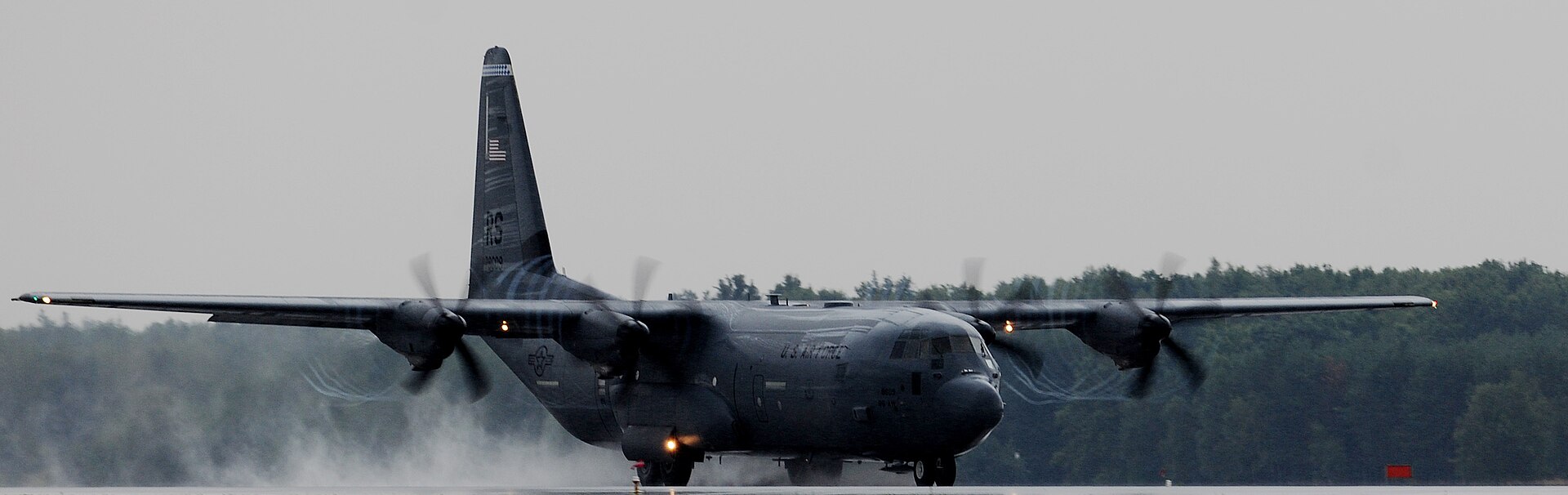
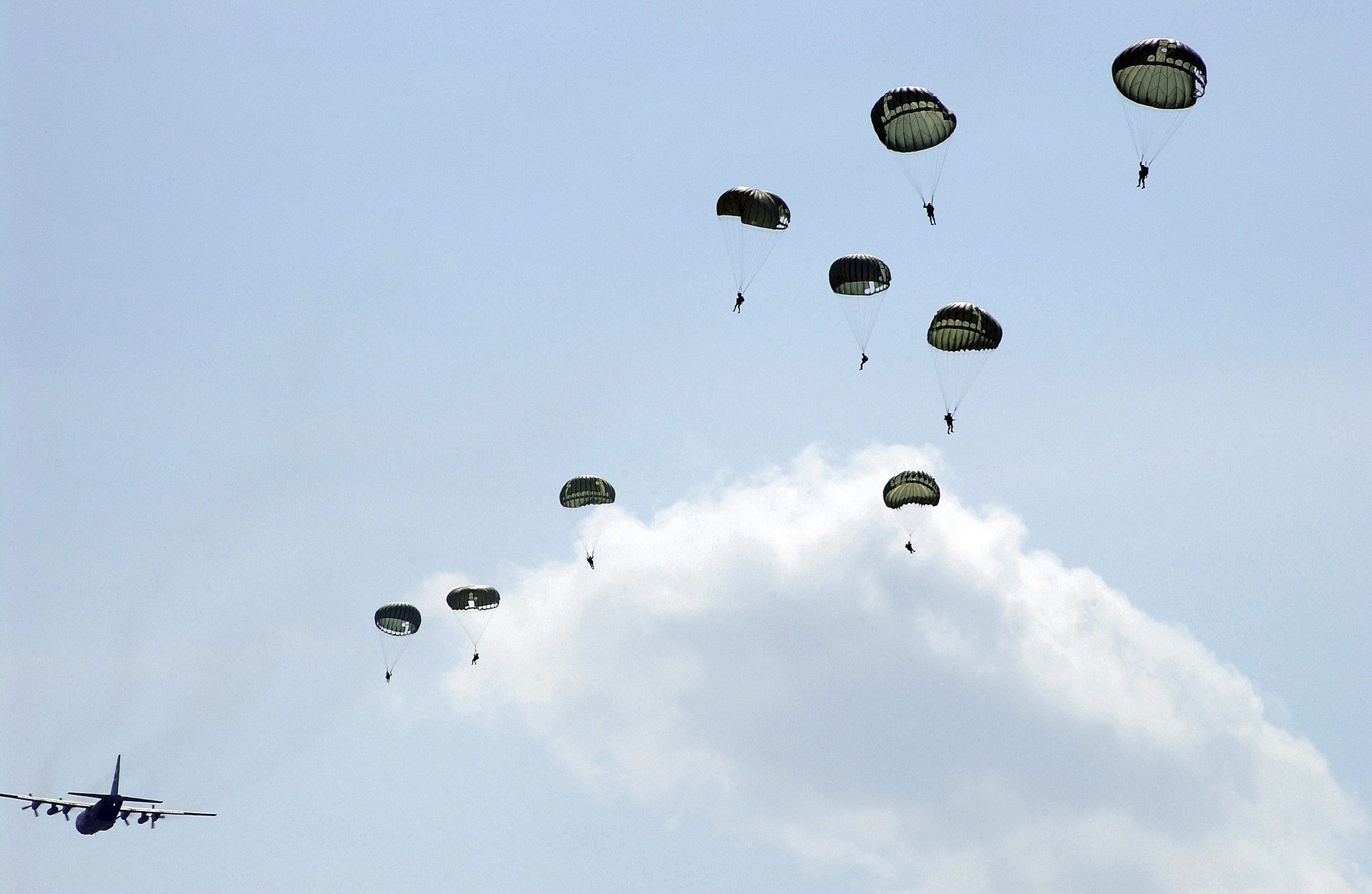
At its heart the Hercules is a tactical transport, the aircraft that carries troops and supplies the last stage of the journey into a battle zone or a disaster area. It can land on a short, rough strip, disgorge its load through the rear ramp and be gone again in minutes, and where it cannot land it can deliver its cargo by other means. Paratroops jump from its side doors, and heavy loads are dropped by parachute from the open ramp.
The aircraft can also perform some remarkable delivery tricks. Using the low altitude parachute extraction system, known as LAPES, a Hercules can fly a few feet above the ground while a parachute drags a palletised load straight out of the back, letting it deliver heavy cargo without landing or climbing to drop height. For getting out of very short fields it can use rocket assisted take off, bottles of solid propellant that give a brief, dramatic boost. These are not everyday techniques, but they show how far the design can be pushed, and they have been used in earnest when there was no other way to get supplies where they were needed.
Most of this work is far less dramatic than a raid or a siege, and that is rather the point. Day in and day out, in peacetime and war, Hercules crews fly the routine sorties that keep armies and relief efforts moving: ferrying spare parts and mail, carrying troops between bases, bringing home the injured, and moving whatever needs to go wherever the roads run out. It is this quiet, ceaseless usefulness, rather than any single famous mission, that has made the aircraft indispensable to so many air forces, and to so many aid agencies, for so long.
Records and remarkable feats
For such a practical aircraft, the Hercules has a surprising number of records to its name. The most extraordinary came in 1963, when the United States Navy wanted to know whether a large transport could operate from an aircraft carrier to resupply ships at sea. A Hercules was flown out to the carrier USS Forrestal and, without any arrester gear or catapult, made a series of landings and take offs from the deck. It remains the largest and heaviest aircraft ever to operate from an aircraft carrier, a feat no one has cared to repeat.
The aircraft has also carried loads it was never designed for. During the fall of Saigon in 1975 a South Vietnamese Hercules, desperate to escape the advancing forces, took off with more than four hundred and fifty people crammed aboard an aircraft built to carry a small fraction of that number, one of the most heavily loaded flights in aviation history. From carrier decks to overloaded evacuations, from the ice of Antarctica to the eye of a hurricane, the Hercules has again and again done things that ought not to be possible, and its reputation rests as much on these feats as on its daily work.
The aircraft is also famous for the rocket assisted take off, or JATO, in which bottles of solid propellant strapped to the fuselage give a short, spectacular boost off very short runways. Fat Albert, the display Hercules, thrilled airshow crowds for years with dramatic JATO departures, climbing away almost vertically on a trail of smoke, until the supply of the old rockets finally ran out. Few sights better captured the surprising agility of an aircraft most people think of as a lumbering freighter.
Vietnam and the siege of Khe Sanh
The Hercules came of age in Vietnam, where it flew the endless, unglamorous work of moving men and supplies around a country with few good roads and fewer safe ones. Its finest hour came in the early months of 1968 at Khe Sanh, where a United States Marine base was cut off and besieged by North Vietnamese forces. With the runway under constant fire and the base surrounded, almost everything the defenders needed had to come by air, and the Hercules delivered it.
Flying into a strip raked by mortars and anti aircraft fire, C-130 crews used every technique they had. Some aircraft landed, taxied and took off again as fast as possible while shells fell around them; others never landed at all, dropping their loads by parachute or extracting them at low level with LAPES so they never had to stop. It was dangerous work and aircraft were lost, but the Hercules kept the base supplied through the worst of the siege, and Khe Sanh became a byword for what tactical airlift could achieve under fire.
The Hercules was there at the end in Vietnam as well as through the long middle of the war. When Saigon fell in 1975, C-130s flew in the chaotic evacuation, lifting refugees and staff out of the collapsing country in scenes that became some of the enduring images of the war. It was a fittingly hard task for an aircraft that had spent a decade doing the unglamorous, essential work of keeping a war supplied, and it showed once again how much could be asked of the type when there was no other way.
Entebbe: the raid of 1976
If Khe Sanh showed the Hercules as a workhorse, Entebbe showed it as the enabler of one of the most daring operations in military history. In June 1976 an airliner was hijacked and flown to Entebbe airport in Uganda, where the hostages were held far beyond the reach of any obvious rescue. Israel’s response depended entirely on the Hercules.
On the night of 3 to 4 July 1976 a small fleet of Israeli Air Force C-130s flew some four thousand kilometres from Israel to Entebbe, without refuelling in the air, carrying the assault force, its vehicles and its equipment. They landed in darkness, the troops stormed the terminal and freed the hostages, and the Hercules flew them out again. The raid succeeded almost completely, and it would have been impossible without an aircraft that could carry a self contained raiding force that far and land it, unannounced, on a hostile airfield. Entebbe remains the most famous single demonstration of what the Hercules makes possible.
The raid was not without cost. The Israeli assault force lost its commander, killed in the fighting at the terminal, along with several of the hostages. But the operation succeeded where almost everyone had thought success impossible, and it became a model studied by special forces the world over. At its heart was the simple fact that the Hercules could carry a self contained rescue force thousands of miles and land it on a hostile runway in the dark, a capability that changed the calculations of governments faced with hostage crises ever after.
The AC-130 gunship
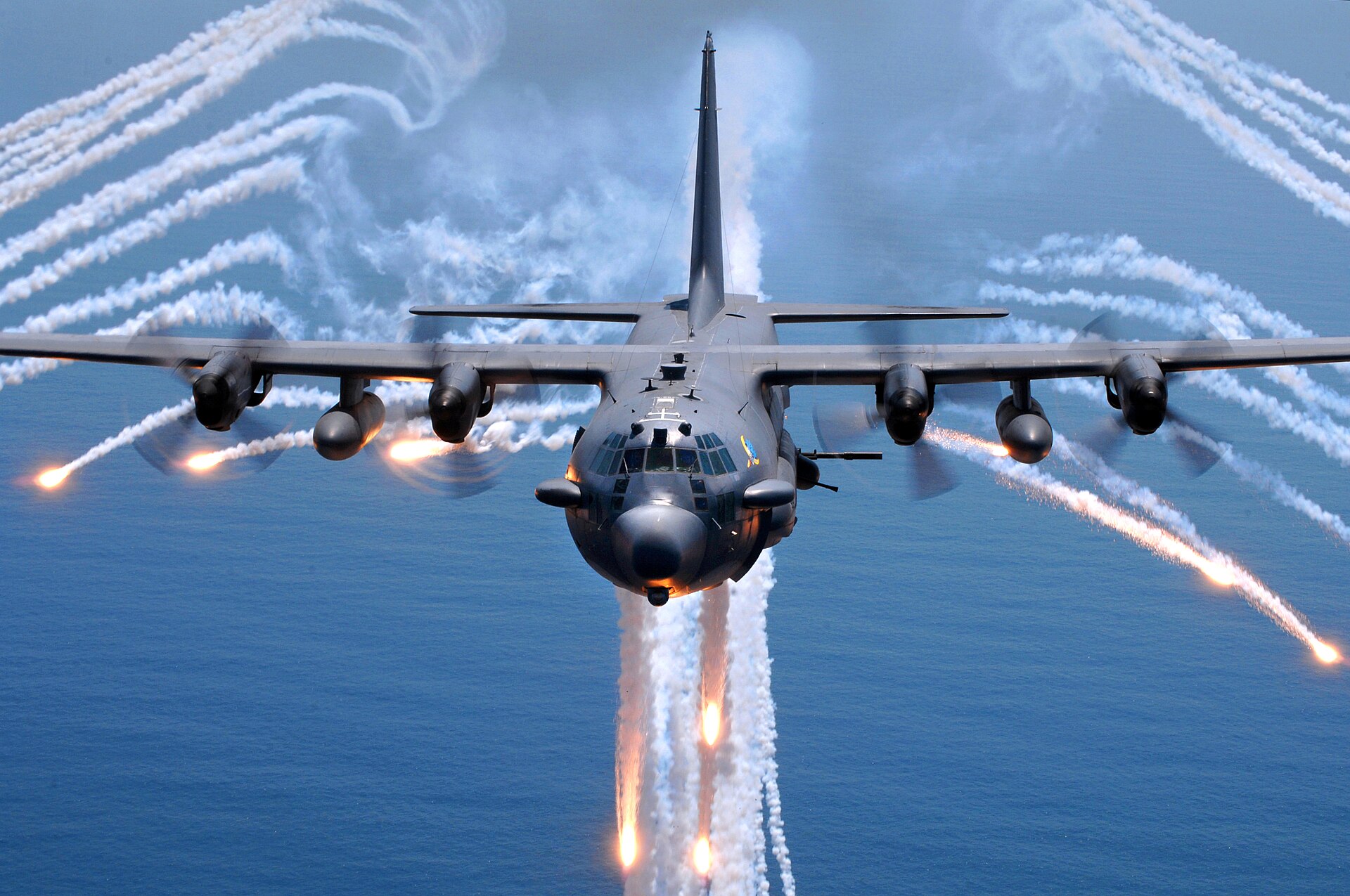
One of the most unexpected turns in the Hercules story was its conversion into a heavily armed gunship. The idea, developed during the Vietnam War, was to fit a transport aircraft with side firing guns and let it circle over a target, pouring accurate fire onto the ground below while it flew in a slow, banked turn. The roomy Hercules, with its endurance and load carrying, was the natural choice.
The result was the AC-130, which grew over the years into one of the most fearsome ground attack aircraft in service. Successive versions, known as Spectre, Spooky and now Ghostrider, have carried an extraordinary array of weapons, at various times including 20mm and 25mm cannon, a 40mm Bofors gun and even a 105mm howitzer, all firing from the left side and aimed through sophisticated sensors and fire control. Because its size and low operating height make it vulnerable, the gunship works mainly at night, using its sensors to find and strike targets while remaining unseen. It is a startling role for what began as a cargo aircraft, and it has become a specialised tool of American special operations, flown by no other nation.
The gunship has been in near constant demand in recent decades. Over Afghanistan and Iraq, AC-130s orbited above troops in contact, using their sensors and heavy guns to break up attacks and cover withdrawals, and their ability to loiter for hours and deliver precise, sustained fire made them prized by ground forces. The latest Ghostrider adds precision guided missiles and bombs to the guns, keeping the basic idea, a transport turned flying battery, thoroughly up to date.
A family of specialists
The AC-130 is only the most dramatic member of a huge family. Because the Hercules is essentially a flying box with power and endurance to spare, it has been adapted to an astonishing range of tasks. The KC-130 is an aerial tanker, trailing hoses to refuel other aircraft, and the United States Marine Corps operates the world’s largest KC-130J tactical tanker fleet. The HC-130 and MC-130 support search and rescue and special operations, flying long range missions deep into hostile territory. The EC-130 carries electronic warfare and communications equipment, in versions ranging from broadcasting propaganda to relaying orders to submarines.
Other versions are stranger still. The WC-130 is a hurricane hunter, flown deliberately into tropical storms to gather weather data, and the LC-130, fitted with skis, operates from the ice in Antarctica and Greenland in support of scientific research. There have been drone carriers, aerial firefighters and flying command posts. A civilian version, the L-100, has carried freight for commercial operators. Few aircraft have ever been asked to do so many different jobs, and fewer still have done them all well from essentially the same airframe.
The C-130J Super Hercules
By the 1990s the basic Hercules was decades old, and rather than design a wholly new aircraft Lockheed Martin chose to rebuild the Hercules around modern technology. The result was the C-130J Super Hercules, whose prototype first flew on 5 April 1996. From the outside it looks much like its predecessors, but almost everything inside is new. It is powered by more efficient Rolls-Royce AE 2100 turboprops driving distinctive six bladed composite propellers, and it is flown from a modern glass cockpit by a crew of two, where earlier models needed a flight engineer and a navigator as well.
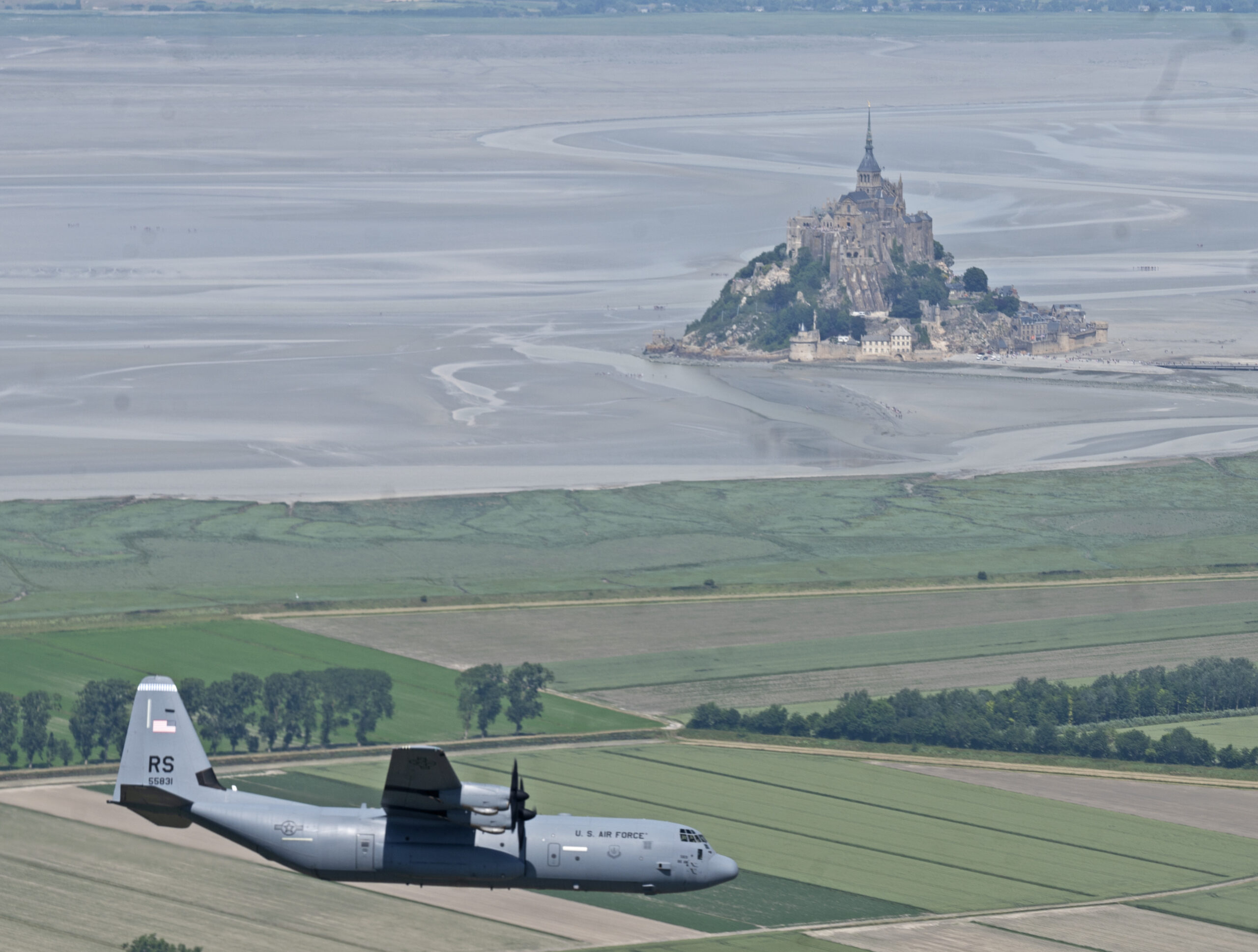
The J model flies faster, higher and further than the aircraft it replaced, carries more, and costs less to operate, and a stretched version, the C-130J-30, adds a longer fuselage for even greater capacity. It has been bought by the United States and by many allied air forces, and it is the version keeping the production line busy today. That a design first flown in 1954 could be updated so thoroughly, rather than replaced, says everything about how sound the original was.
The stretched C-130J-30, with its longer fuselage, has become the most common version in new production, and the J has been ordered by a long list of air forces including the United States, Britain, Australia, India and many others. Each new customer extends the production run further and pushes the likely end of Hercules manufacture deeper into the future, an outcome that would have astonished the aircraft’s first designers.
Disaster relief and the odd jobs
For all its military uses, the Hercules is just as often a force for good. When an earthquake, flood or famine strikes somewhere in the world, the Hercules is very often the first heavy aircraft into the disaster zone, able to land on damaged runways or drop supplies where none exist. Air forces and aid agencies rely on it to move tents, food, water, medical teams and rescue equipment quickly over long distances, and it has saved countless lives in places whose names never make the headlines.
Its odd jobs are legion. The ski equipped versions keep the scientific stations of Antarctica and Greenland supplied through conditions that would ground almost anything else. The hurricane hunters fly into the heart of tropical storms so that forecasters can track them. And for millions of airshow visitors the Hercules is a familiar friend in the shape of Fat Albert, the Blue Angels support aircraft flown by a United States Marine Corps crew, which puts on a spirited display of its own between the fast jets. A newer C-130J, once flown by the RAF, took over the Fat Albert role in 2020, keeping the Hercules in front of the crowds.
The list of relief operations the Hercules has flown reads like a history of modern disasters. It carried aid into Ethiopia during the great famine of the 1980s, brought help to the survivors of earthquakes and tsunamis across Asia, and flew supplies to flooded and storm struck regions on every continent. For many people in the worst moments of their lives, the drone of a Hercules overhead has been the first sign that help was on its way, and that humanitarian record is as much a part of the aircraft’s story as anything it has done in war.
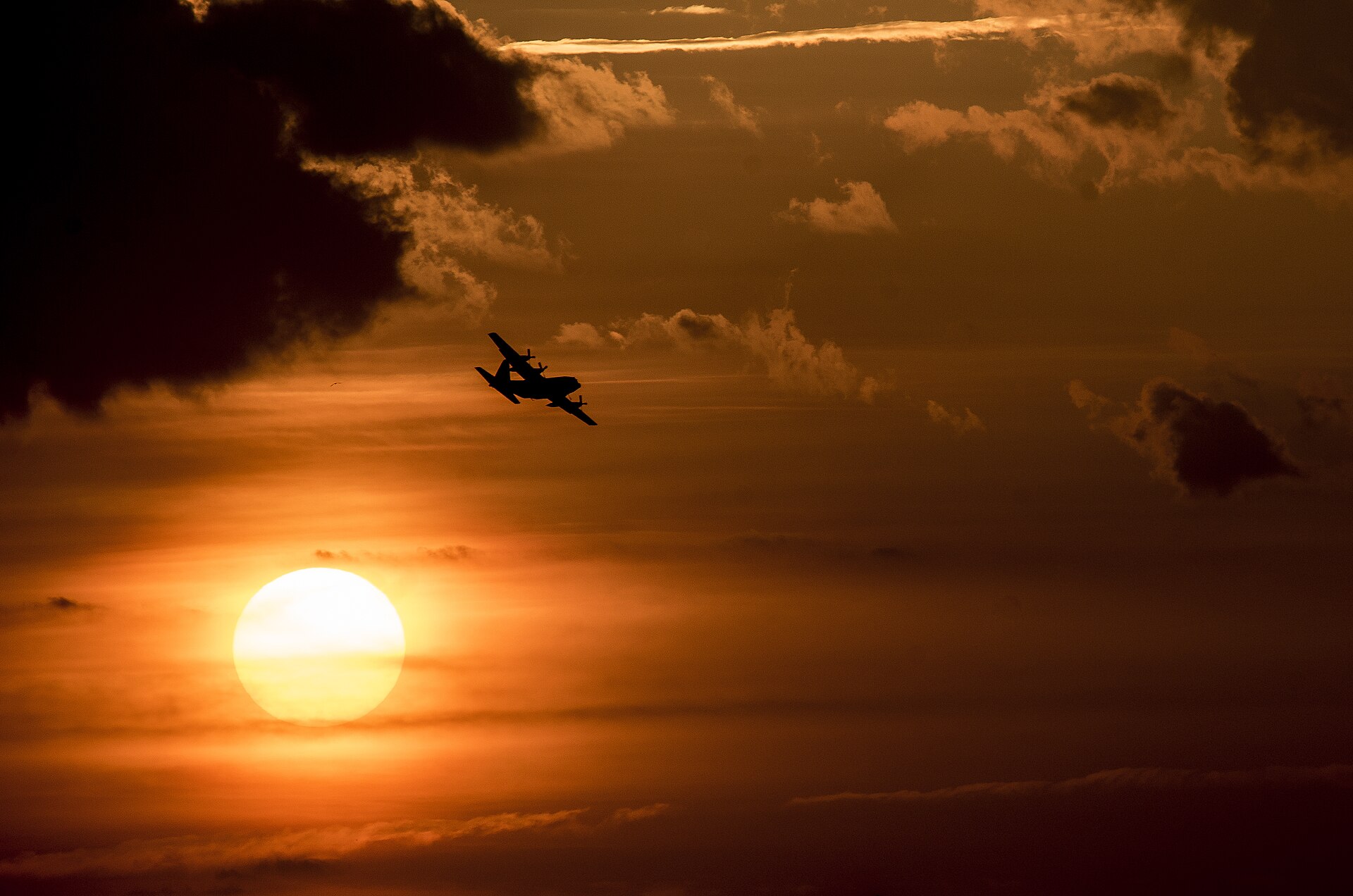
The Hercules in RAF service
The Royal Air Force was one of the Hercules’ most important operators, and for British readers its long career in RAF colours is a story in itself. The RAF took delivery of its first Hercules, a version known as the C-130K, from 1967, and quickly made the aircraft the backbone of its tactical air transport force. Many were later stretched to carry more, and they served in every kind of operation the RAF was called to, from routine supply flights to the evacuation of civilians from trouble spots around the world.
Their most celebrated work came in the 1982 Falklands campaign. With the islands eight thousand miles from Britain and only a single airfield at Ascension in between, RAF Hercules flew some of the longest airdrop missions ever attempted, refuelled in the air on the way, to parachute supplies and men to the task force in the South Atlantic. Some sorties lasted the best part of a day. It was a feat of endurance for crews and aircraft alike, and it showed how far the type could be stretched at need. The RAF finally retired its last Hercules in 2023, after fifty six years of service, handing the role to the newer A400M, and the familiar sight of a Hercules in RAF markings passed into history.
Specifications and key facts
| Crew | Typically 4 to 5 (2 in the C-130J) |
|---|---|
| First flight | YC-130 prototype, 23 August 1954 |
| Entered service | December 1956 |
| Powerplant | 4 x Allison T56 turboprops (Rolls-Royce AE 2100 on the C-130J) |
| Length | About 29.8 m (97 ft 9 in) |
| Wingspan | About 40.4 m (132 ft 7 in) |
| Maximum payload | Around 19,000 kg (about 42,000 lb) |
| Cruising speed | Around 540 km/h (about 335 mph) |
| Number built | More than 2,700 (all variants, 1954 to the present) |
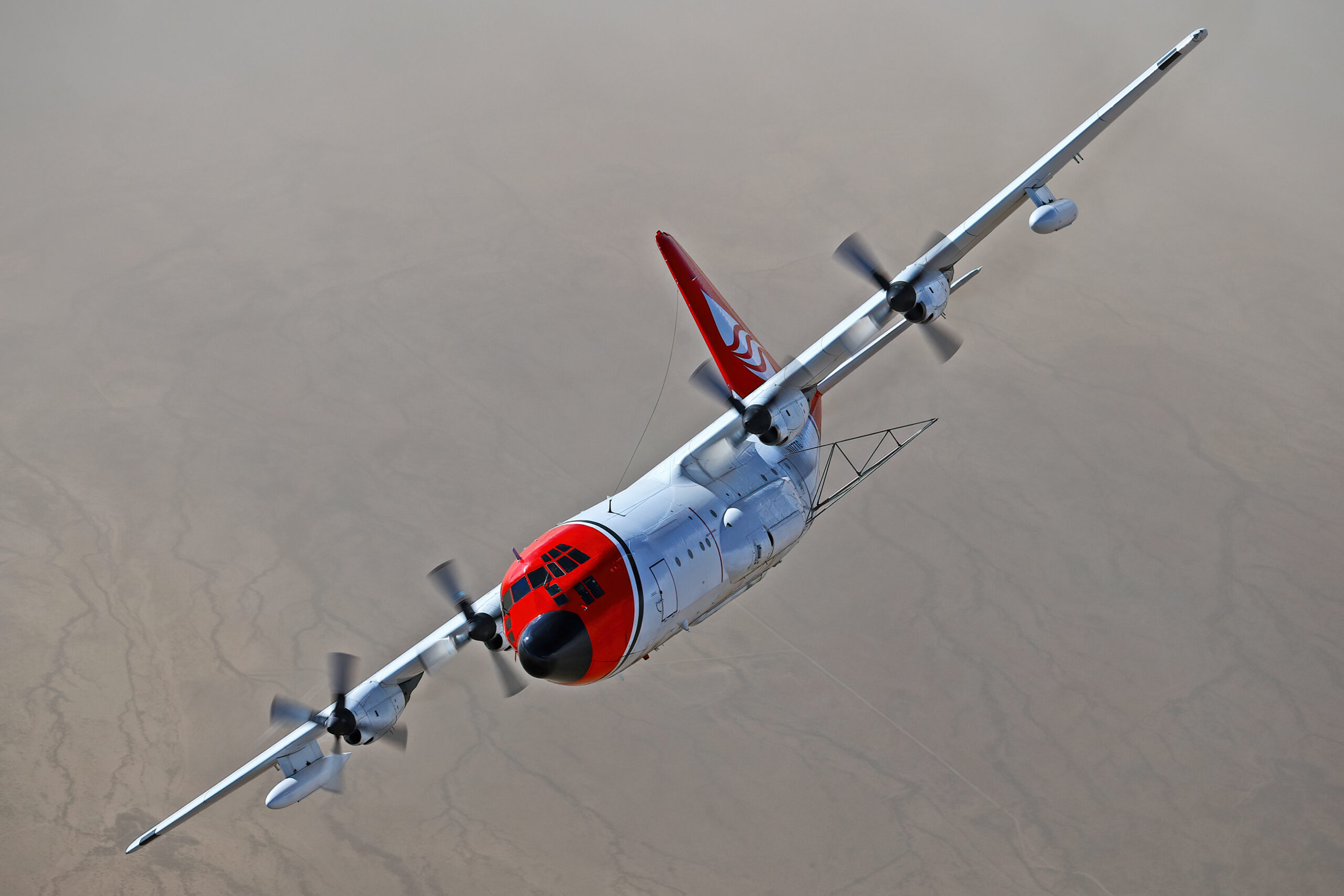
The Hercules is a favourite subject at airshows, its size and character making it a rewarding aircraft to photograph, and you will find plenty of transports and heavy metal in the Piemags archive galleries. Print and usage terms are on the licensing page.
Operators and service
The Hercules has been flown by more than seventy nations, from the great air forces to small states that operate only a handful, and it has become the standard tactical transport of the Western world and much of the rest. In many countries it has served for so long that it has become part of the national furniture, the aircraft that turns up whenever there is a crisis, a rescue or a relief effort to be flown.
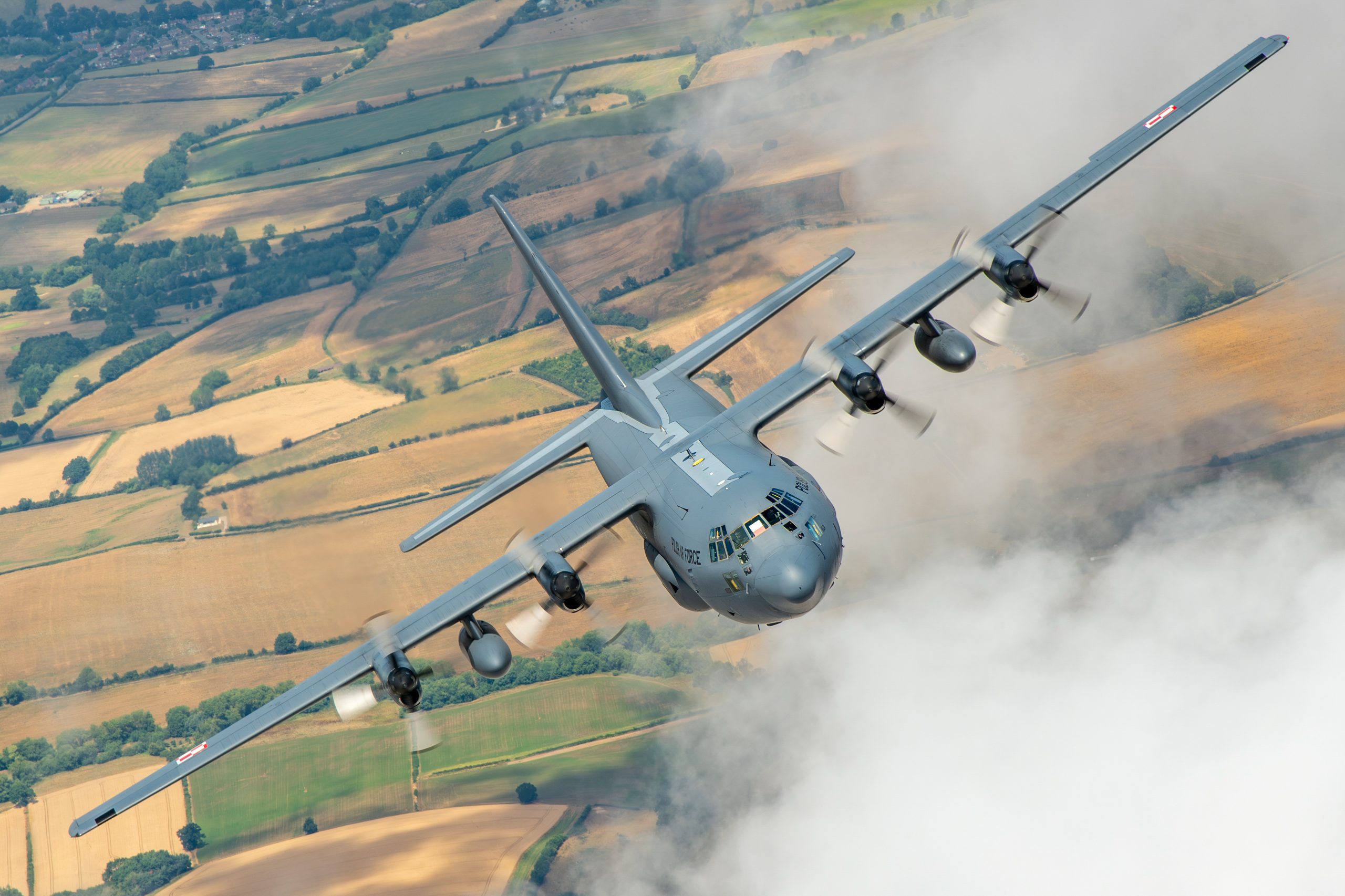
The Royal Air Force is a good example. It flew the Hercules for more than half a century, from the late 1960s until it finally retired its last examples in 2023, replacing them with newer types. American use continues on a huge scale, and the C-130J is being delivered to new customers around the world even now. For an aircraft that first flew when propeller airliners still ruled the skies, to be entering service with new air forces in the 2020s is a remarkable achievement, and one no other military aircraft can match.
Replacing the Hercules has proved surprisingly hard. Newer transports such as the European A400M offer more speed and capacity, and they have taken over some of the work, including in the RAF. But they are larger and more expensive, and they complement the Hercules rather than truly replacing it, leaving the smaller, cheaper, endlessly adaptable Herc still very much in demand. For many air forces the C-130J remains exactly the right size of aircraft for the widest range of jobs.
Legacy
The legacy of the Hercules is simply that it works, and that nothing has managed to replace it. Newer transports have come along, some faster, some larger, but none has offered the same combination of ruggedness, versatility and value, and so the Hercules has kept flying while its intended successors have come and gone. It is the aircraft that defined what a tactical transport should be, and every rival has been measured against it.
More than that, it has quietly been present at an extraordinary range of human events, carrying soldiers to war and aid to the starving, supplying scientists at the poles and hunting hurricanes, freeing hostages and dropping paratroops, for seventy years and counting. Few machines of any kind have done so much for so long, and the Hercules seems set to keep doing it for decades yet. It is one of the great aircraft, not because it is glamorous, but because whenever something needs carrying somewhere difficult, it is still, more often than not, the aeroplane the world reaches for.
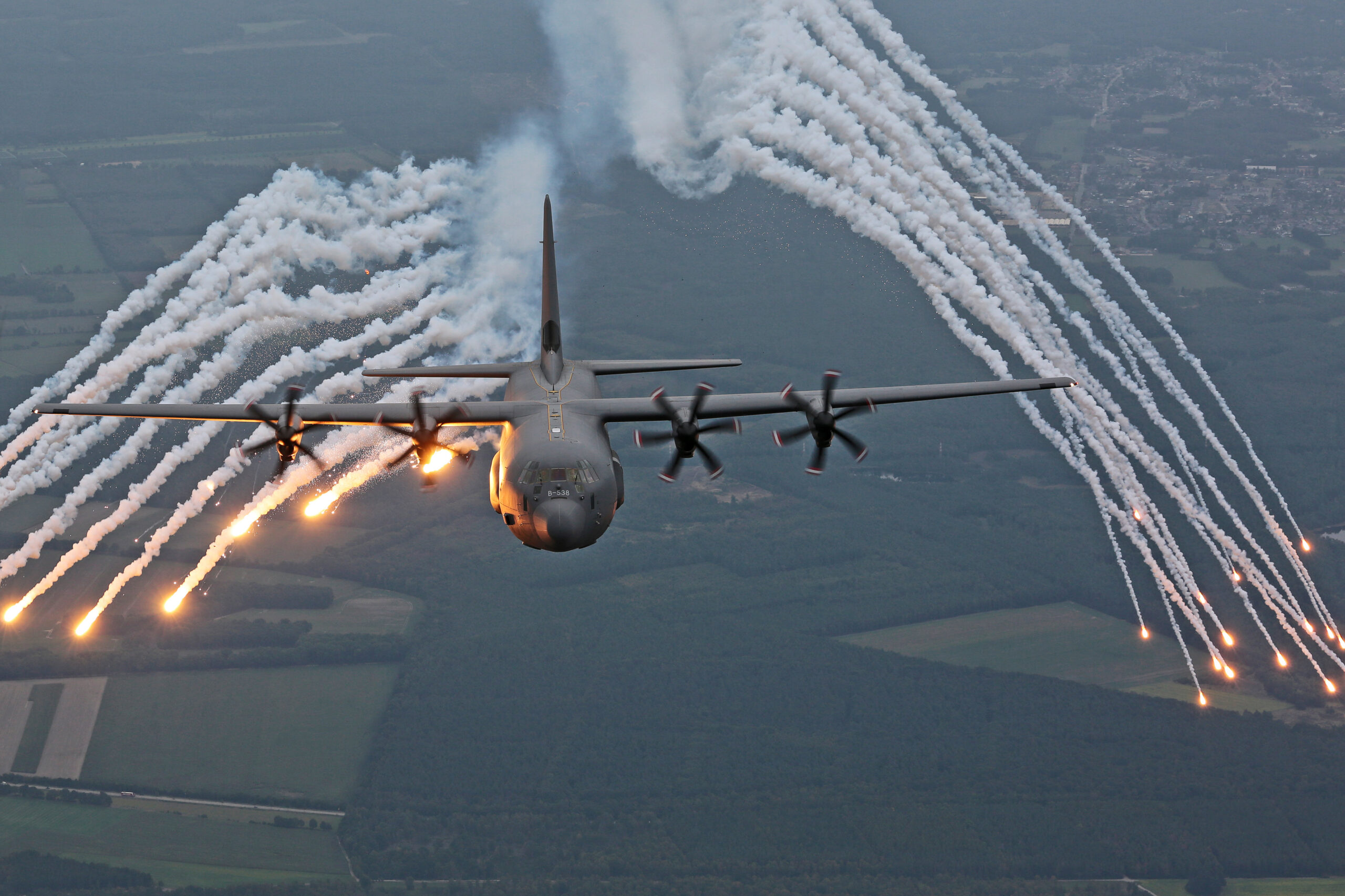
Along the way the Hercules has become one of the most recognisable aircraft in the world, its blunt nose, high wing and four turning propellers familiar from news footage of every war and disaster of the past seventy years. It has appeared in films, carried heads of state on occasion, and become a symbol of help arriving in bad places. For an aircraft designed to be purely practical, it has earned a genuine affection that few far more glamorous machines can match.
For more on aircraft with similar staying power, see our histories of the Boeing B-52 Stratofortress and the Avro Vulcan, and the swing wing Panavia Tornado that served alongside it in the RAF. If you want to photograph aircraft like these, our guide to air-to-air photography is a good place to start.
Frequently asked questions
When did the C-130 Hercules first fly?
The first YC-130 prototype flew on 23 August 1954, and the Hercules entered service with the United States Air Force in December 1956. It has been in continuous production ever since.
How many C-130s have been built?
More than 2,700 Hercules have been built across over 40 variants since 1954. It is the longest continuously produced military aircraft in history, having passed 70 years of production in 2024.
Is the C-130 still in production?
Yes. Lockheed Martin still builds the latest C-130J Super Hercules at Marietta, Georgia, and it is being delivered to air forces around the world, making the Hercules production line the longest running of any military aircraft.
What is the C-130J Super Hercules?
The C-130J is the modern version of the Hercules, first flown in 1996. It has new Rolls-Royce engines and six bladed propellers, a glass cockpit and a crew of two, and it flies faster and further and carries more than earlier models.
What is the AC-130 gunship?
The AC-130 is a heavily armed version of the Hercules that circles over a target firing side mounted guns and cannon, at times including a 105mm howitzer. Developed in Vietnam, it is a specialised ground attack aircraft flown only by the United States.
What was the Entebbe raid?
The Entebbe raid was an Israeli rescue mission in July 1976, when C-130 Hercules flew a raiding force some four thousand kilometres to Entebbe in Uganda to free hostages held after a hijacking. The operation would have been impossible without the Hercules.
How many countries use the C-130?
More than seventy nations have flown the C-130 Hercules, making it one of the most widely used military aircraft in the world. Operators range from major air forces to small states with only a few aircraft.
What engines does the C-130 use?
Most Hercules are powered by four Allison T56 turboprops. The latest C-130J uses more powerful and efficient Rolls-Royce AE 2100 turboprops driving distinctive six bladed composite propellers.
What can the C-130 carry?
The Hercules can carry around 19,000 kg of cargo, roughly 42,000 lb, including light vehicles, artillery, pallets of supplies, paratroops or stretchers, loaded through its rear ramp. It can also drop cargo and troops by parachute.
Why is the C-130 called the Hercules, and what is a Herc?
Lockheed named the aircraft Hercules after the hero of Greek myth famed for strength, a fitting choice for a rugged lifter of heavy loads. Crews and enthusiasts almost always shorten it affectionately to the Herc.
What is Fat Albert?
Fat Albert is the C-130 that supports the United States Navy Blue Angels display team, carrying their equipment and crew and flying a display of its own at airshows. The current aircraft is a C-130J that once served with the RAF.
Can the C-130 land on rough or short runways?
Yes. The Hercules was designed from the start to operate from short, rough and unprepared strips of dirt, sand, snow or matting, which is one of the main reasons it has remained so useful for military and disaster relief work.
What is LAPES?
LAPES, the low altitude parachute extraction system, is a technique in which a Hercules flies just above the ground and a parachute drags a heavy load straight out of the open rear ramp, delivering cargo without the aircraft having to land.
What are the main C-130 variants?
The main transport variants ran from the C-130A through to the C-130H and the modern C-130J. Specialised versions include the AC-130 gunship, the KC-130 tanker, the HC-130 and MC-130 for rescue and special operations, the EC-130 for electronic warfare, the WC-130 hurricane hunter and the ski equipped LC-130.
How long will the C-130 stay in service?
With the C-130J still in production and being delivered to new customers, the Hercules is expected to remain in service for decades to come, comfortably beyond a century after its first flight in 1954.
Did a C-130 really land on an aircraft carrier?
Yes, and it remains the largest and heaviest aircraft ever to do so. In 1963 the US Navy wanted to know whether a big transport could resupply carriers at sea, so a Hercules made a series of landings and take-offs from the deck of USS Forrestal without any arrester gear or catapult. The crew completed 21 full-stop landings and 21 unassisted take-offs at varying weights, a feat that earned the pilot a Distinguished Flying Cross and that no one has cared to repeat.
What did RAF Hercules do in the Falklands campaign?
With the Falklands some 8,000 miles from Britain and only the airfield at Ascension in between, RAF Hercules flew some of the longest airdrop missions ever attempted, refuelled in the air, to parachute supplies and men to the task force in the South Atlantic. Some sorties lasted the best part of a day. It was a punishing feat of endurance for crews and aircraft alike, and it showed how far the type could be stretched when there was no other way to reach the fleet.
How fast is a C-130 and how high can it fly?
The Hercules is a turboprop transport, not a fast aircraft; typical cruising speed is around 335 mph, with a maximum a little higher. Its service ceiling is in the region of 30,000 to 33,000 feet, and the fuselage is pressurised so it can carry troops and casualties in comfort on long legs above bad weather. Speed was never the point: the design traded outright pace for the ability to lift heavy loads into short, rough strips.
Before the Hercules there was the airlift that proved the concept. For how transport aircraft fed a city from the air, see our account of the Berlin Airlift.
