The Mikoyan-Gurevich MiG-15 was the Soviet Union’s first really successful swept-wing jet fighter, flown for the first time on 30 December 1947 and thrown into the Korean War in November 1950, where its speed, high-altitude performance and heavy cannon armament came as a severe shock to United Nations air forces and forced the rushed deployment of the North American F-86 Sabre. Cheap, rugged and built in enormous numbers by the Soviet Union and its allies, it is usually described as the most-produced jet aircraft in history, and examples served as fighters and trainers for more than four decades.
Few aircraft have arrived with such abrupt effect. Before the MiG-15 appeared over the Yalu River, the Western powers assumed a comfortable technical lead in jet fighters. Within days that assumption was gone. This is the full story of where the aircraft came from, how it was designed, what it did in combat, the many versions built across the Eastern Bloc and China, and where you can find the survivors today.
What this guide covers
- Origins and development
- Design
- From the Nene to the VK-1
- Flying the MiG-15
- Service and combat over Korea
- The defection that handed the West a MiG
- Variants
- The MiG-15 and the bomber war
- Service beyond Korea
- How many were built
- Specifications
- Where the survivors are today
- Photographing the MiG-15 today
- Legacy
- Frequently asked questions
Origins and development
The MiG-15 grew out of a late-1940s Soviet requirement for a high-altitude interceptor able to catch and destroy the new generation of jet bombers. The Mikoyan and Gurevich design bureau, OKB-155, had studied the swept-wing aerodynamic research that fell into Allied and Soviet hands at the end of the Second World War, and the aircraft that emerged, internally designated the I-310, carried a wing swept back at 35 degrees, a slim fuselage and a high tailplane. It looked utterly different from the straight-winged fighters that had ended the war only two years earlier.
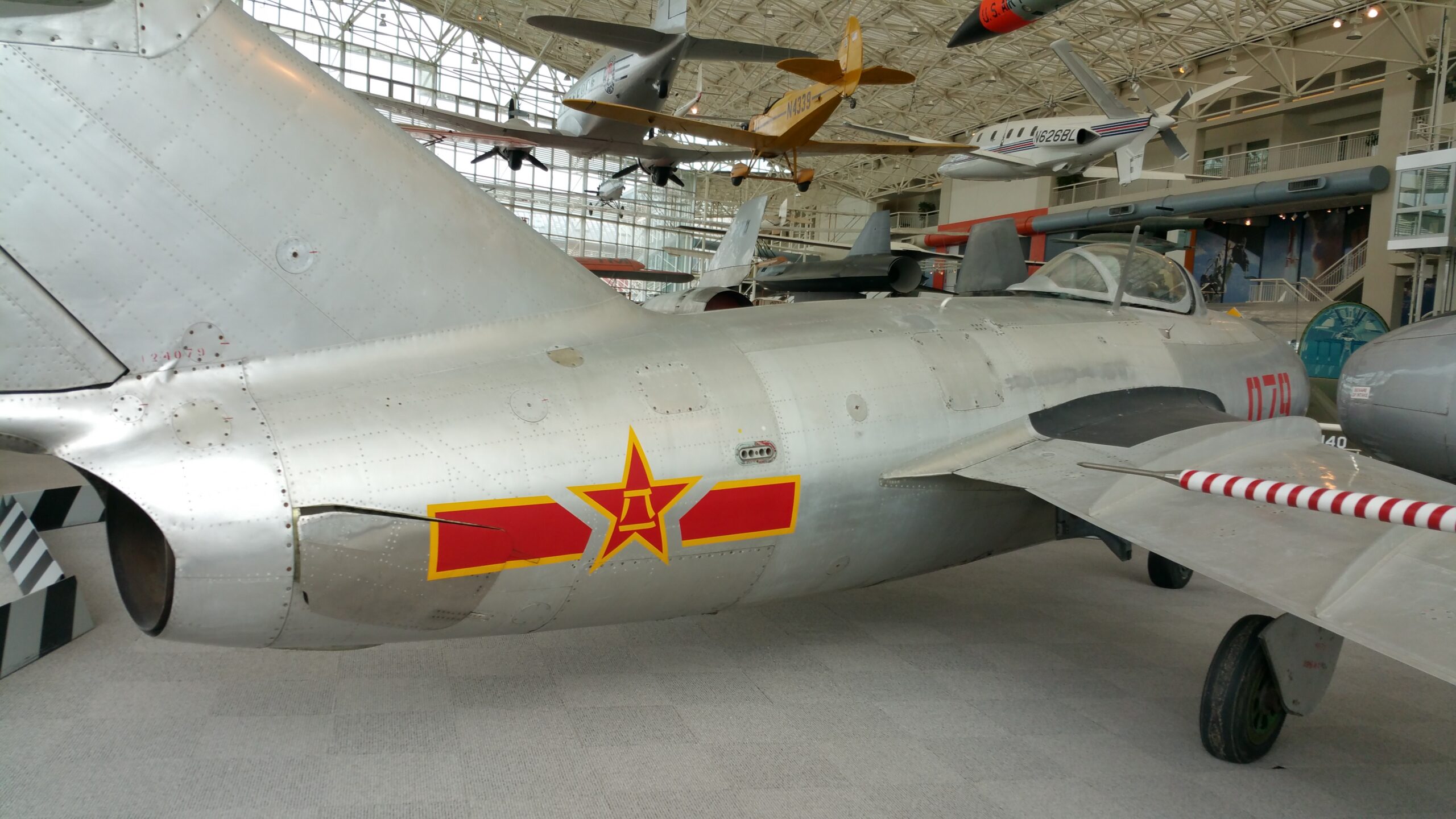
The one thing the Soviet designers lacked was a suitable engine, and that gap was closed by a decision the British came to regret. In 1946 and 1947 the United Kingdom government agreed to sell the Soviet Union examples of the advanced Rolls-Royce Nene centrifugal-flow turbojet, one of the best engines in the world at the time. The Nene powered the I-310 prototypes and was then reverse-engineered under Vladimir Klimov and put into production as the RD-45, and later developed into the more powerful VK-1 that defined the definitive MiG-15bis. The first prototype, the S-01, flew on 30 December 1947, production followed through 1948, and the type entered Soviet service in 1949. In the space of a few years the Soviet Union had gone from having no modern jet fighter to fielding one of the most capable in the world.
The choice of a sharply swept wing was the decisive one. Straight-winged jets ran into a wall of compressibility as they approached the speed of sound, with rising drag and worsening control, and the swept wing pushed that wall back and let the aircraft fly faster before the problems bit. The Soviet designers were not alone in reaching that conclusion, and the MiG-15 emerged at almost the same moment as the American F-86 Sabre, another swept-wing fighter drawing on the same wartime research. That the two would meet in combat within three years, and prove so closely matched, was in a sense written into their shared aerodynamic starting point.
Design
The MiG-15 was a small, light aircraft built around a simple idea: get high, get fast, and carry enough gun to knock down a bomber. The 35-degree swept wing, fitted with prominent boundary-layer fences to control the airflow, gave it excellent high-altitude and high-speed performance for its day. It could out-climb and out-turn the early straight-wing jets it first met in combat, and its service ceiling put it above many of the aircraft sent to intercept it.
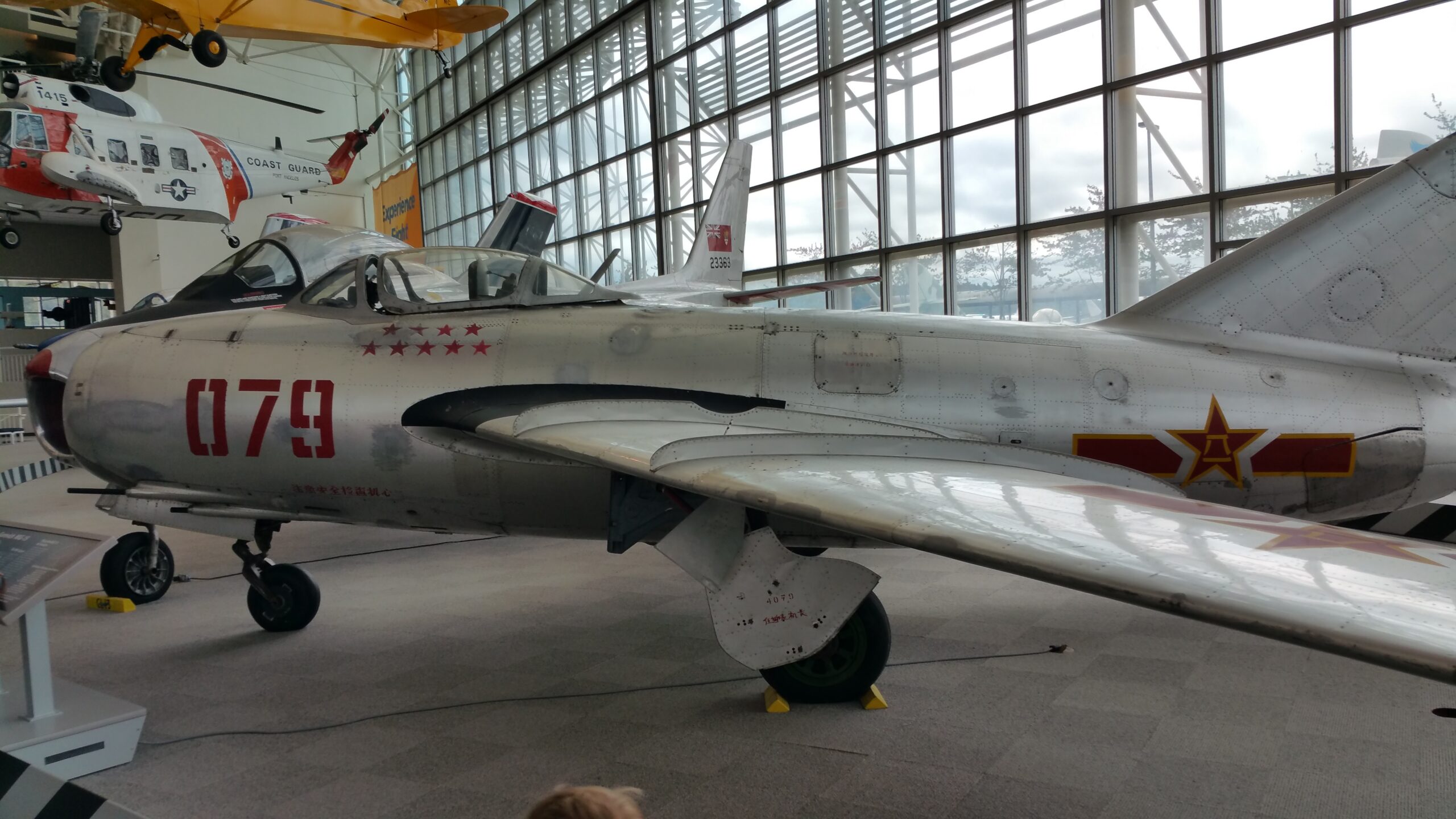
The armament reflected its bomber-killing purpose. Instead of a battery of machine guns or light cannon, the MiG-15 carried one Nudelman N-37 37-millimetre cannon and two 23-millimetre cannon (the NS-23 on the first MiG-15s, replaced by the faster-firing Nudelman-Rikhter NR-23 on the MiG-15bis), all mounted on a tray that could be winched down from the fuselage as a single unit for rapid rearming. That combination was devastating against a large target like a bomber, where a single 37-millimetre strike could be fatal, but the guns had a low rate of fire and a low muzzle velocity that made hitting a small, fast-jinking fighter much harder. The cockpit was pressurised and fitted with an ejection seat, both advanced features for the late 1940s. The aircraft was not without vices: it had a tendency to spin and could depart controlled flight in a hard dive, and its conventional tailplane gave it less control authority near the speed of sound than the all-flying tail that the F-86 would later adopt.
The rest of the airframe was built for the same blend of performance and simplicity. Large airbrakes on the rear fuselage let the pilot slow quickly for a firing pass, a bubble canopy over the pressurised cockpit gave a reasonable view, and the wide-track undercarriage retracted into the fuselage and wing roots. Internal fuel was carried in the fuselage, with provision for drop tanks under the wings to extend range, and the whole aircraft was stressed to be maintained and repaired by conscript ground crews in the field rather than by specialists. Nothing about it was delicate, and that ruggedness mattered as much as any single performance figure when the type was fielded in enormous numbers by air forces of very different means.
From the Nene to the VK-1
No part of the MiG-15 story is more revealing than its engine. At the end of the Second World War the Soviet Union led the world in some areas of aerodynamics but lagged badly in jet propulsion, and its early jets relied on captured or copied German engines of modest power. The gap was closed by a British political decision. In 1946 and 1947 the government in London approved the sale to the Soviet Union of the Rolls-Royce Nene, a centrifugal-flow turbojet that was among the most powerful and reliable engines of its type anywhere.
The Nene was reverse-engineered under the direction of Vladimir Klimov and put into series production as the RD-45, giving the first MiG-15s a really competitive powerplant almost overnight. It was then developed further into the Klimov VK-1, which produced more thrust and powered the definitive MiG-15bis. The centrifugal-flow layout was heavier and bulkier than the axial engines that would later dominate, but it was tolerant, dependable and well suited to mass production by an industry that needed engines in huge numbers, and that reliability was one reason the aircraft could be built and operated so widely. The episode is still cited as one of the Cold War’s more consequential technology transfers, because it helped give a potential adversary a front-rank fighter engine at a stroke.
Flying the MiG-15
To the pilots who met it, the MiG-15’s defining qualities were its climb and its ceiling. It could get high quickly and fight at altitudes where many of its early opponents struggled, and in a sustained climb it could often leave a pursuer behind. That advantage was built in deliberately, because the aircraft had been conceived to intercept high-flying bombers, and it shaped the way the type was used in combat: MiGs would hold height, dive to attack, and climb away again rather than mix in a prolonged turning fight at low level.
The weaknesses were as real as the strengths. The cannon armament that made the MiG-15 so dangerous to a bomber was awkward against a nimble fighter. The 37-millimetre and 23-millimetre guns fired at different velocities, so their shells followed different trajectories, which made it hard to hit a small, jinking target with all three weapons at once, and the overall rate of fire was low. The aircraft had a genuine tendency to spin and could depart controlled flight in a hard, high-speed dive, a trait later confirmed by American test pilots. Its conventional tailplane gave less precise control near the speed of sound than the all-flying tail of the F-86, and it lacked some of the systems that helped Sabre pilots, including a radar-ranging gunsight and, for much of the fighting, the physiological edge of a well-developed anti-g suit. In the hands of an experienced pilot it was a formidable machine; in the hands of a novice its vices could be fatal.
Service and combat over Korea
The MiG-15 made its combat debut over Korea on 1 November 1950, when aircraft flying from bases in Manchuria crossed the Yalu River to challenge United Nations aircraft. The effect was immediate. The straight-winged American types then in theatre, the F-80 Shooting Star, the F-84 Thunderjet and the Navy’s F9F Panther, were simply outclassed in speed, climb and altitude. The bombers they were meant to escort, above all the B-29, suddenly found themselves vulnerable in daylight, and the United States Air Force was forced to rush its own swept-wing fighter, the F-86 Sabre, to Korea to restore the balance.
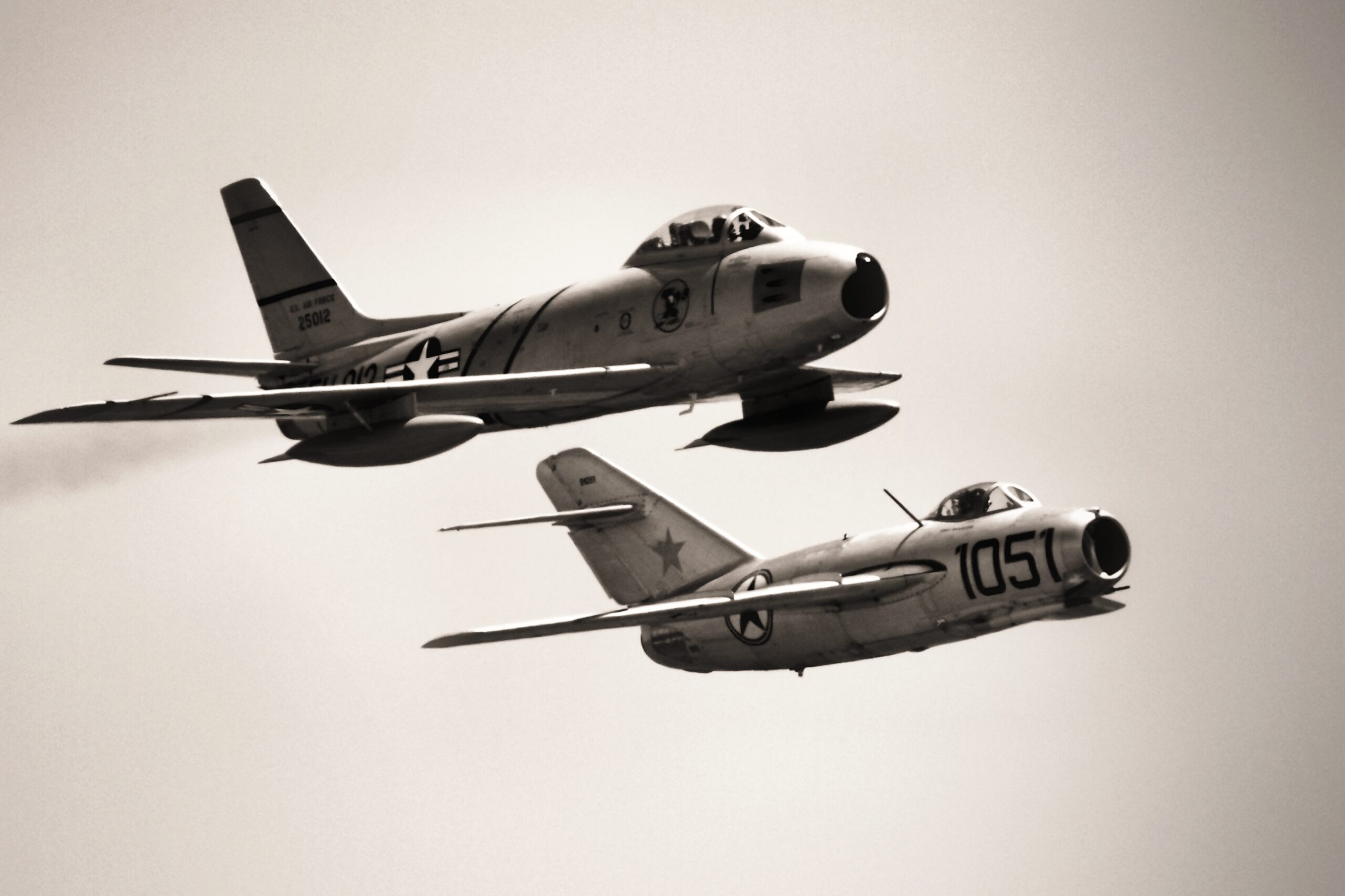
The region of north-western Korea where the Sabres and MiGs fought became known as MiG Alley. What the West did not fully know at the time was who it was fighting. Many of the MiG-15s were flown not by North Korean or Chinese pilots but by Soviet airmen of the 64th Fighter Aviation Corps, operating in secret, with their aircraft wearing Chinese or North Korean markings and their pilots forbidden to fly over the sea or near the front line for fear of being shot down and captured. Soviet records opened after the Cold War credit the 64th Corps with tens of thousands of sorties.
The scoreline of that fight has been argued over ever since. For decades the United States Air Force cited a victory-to-loss ratio of around ten to one in the Sabre’s favour, a figure briefed to Congress and repeated in most Western histories. Modern scholarship drawing on Soviet and Chinese archives has revised that sharply downward. Researchers now put the ratio far lower, with credible estimates clustering somewhere between about two to one and six to one depending on which sorties, losses and pilots are counted, and the gap narrowed further against the most experienced Soviet veterans of the Second World War. The honest summary is that the Sabre generally held the advantage, especially in pilot training and in the crucial matter of the all-flying tail, but that the old ten-to-one claim is now widely regarded as inflated. What is not in dispute is that the MiG-15 proved the Soviet Union could build a front-rank jet fighter, and that it did so in numbers. For the wider air war of which it was part, see our account of the aircraft that came before it in the Gloster Meteor, Britain’s first jet fighter.
The fight in MiG Alley was also shaped by politics as much as by performance. The MiGs operated from bases in Manchuria, north of the Yalu River, which United Nations aircraft were forbidden to attack, giving the communist pilots a sanctuary they could climb into and out of at will. The Soviet pilots, in turn, were kept under tight restrictions, banned from flying over the sea or too far south for fear that one might be shot down and captured, exposing the scale of Soviet involvement. Both sides therefore fought with one hand tied, and the geography of the Yalu did as much to define the daily pattern of combat as the aircraft themselves.
The defection that handed the West a MiG
For all the intelligence effort spent studying the MiG-15 from gun-camera film and wreckage, the West did not get its hands on a complete, flyable example until a North Korean pilot delivered one. On 21 September 1953, a few weeks after the armistice, Lieutenant No Kum-Sok flew his MiG-15bis south and landed at Kimpo Air Base near Seoul. He touched down unchallenged, partly because the base radar was down for maintenance, and taxied in to the astonishment of the Americans on the ground.
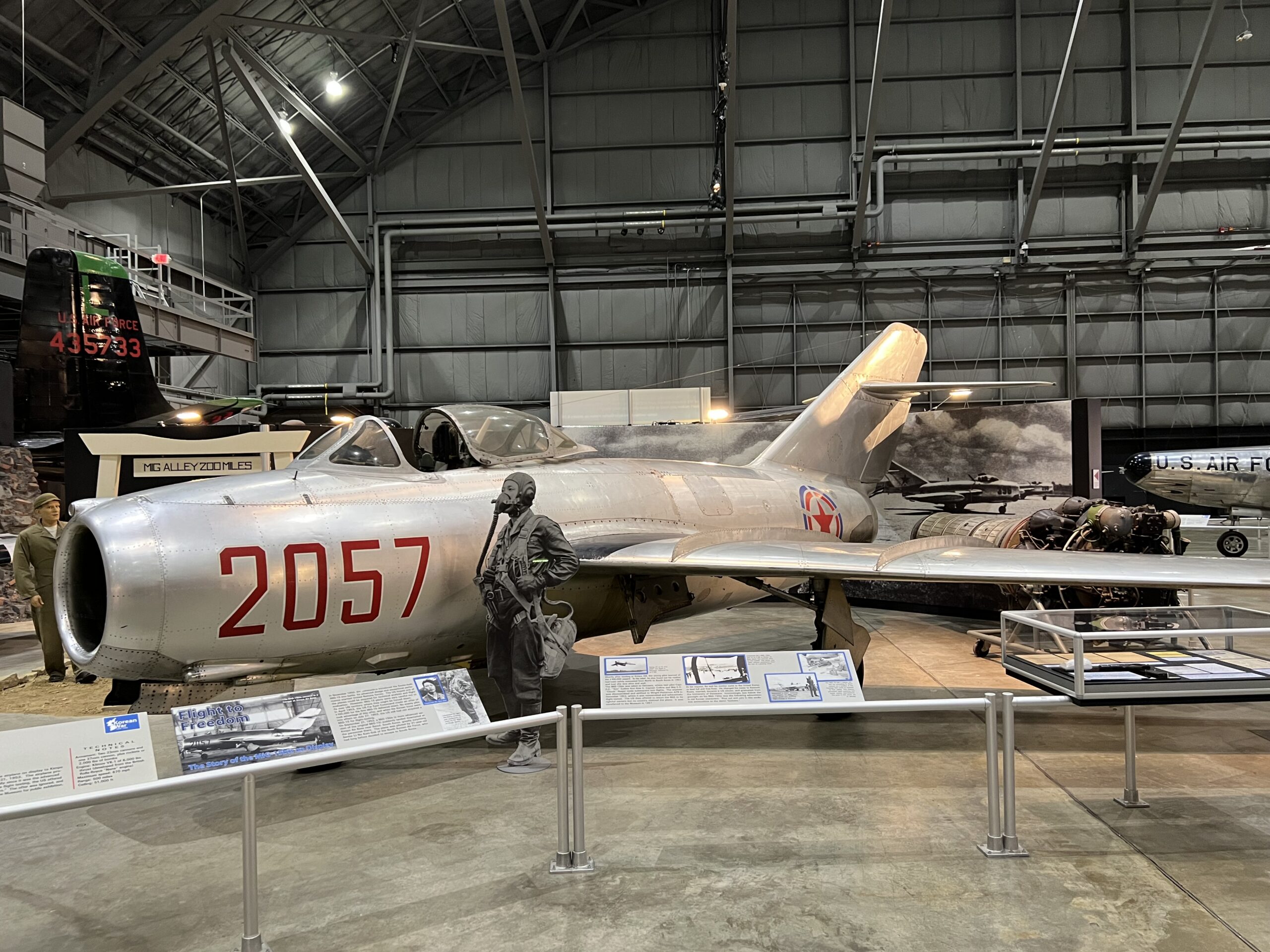
No Kum-Sok said afterwards that he had defected to escape the North Korean regime and had not known about Operation Moolah, an American scheme authorised earlier that year that offered 100,000 US dollars and asylum to any pilot who delivered an intact MiG. He was nonetheless given the reward. His aircraft was shipped to Okinawa and then to the United States, where it was flight-tested by American pilots including Major Chuck Yeager, who confirmed the handling flaws that Western analysts had suspected, including the spin tendency and the loss of control in dives. The United States offered to return the aircraft to its rightful owners; the offer was ignored, and the machine was eventually transferred to the National Museum of the United States Air Force, where it survives to this day. No Kum-Sok became an American citizen and an aeronautical engineer, and lived until December 2022.
Variants
The MiG-15 was built in a family of versions and then copied across the Eastern Bloc and China, which is a large part of why the total production run became so enormous. The original MiG-15 used the RD-45 engine derived from the Nene. The improved MiG-15bis, from 1950, introduced the more powerful Klimov VK-1 and hydraulically boosted ailerons, and became the definitive single-seat fighter version.
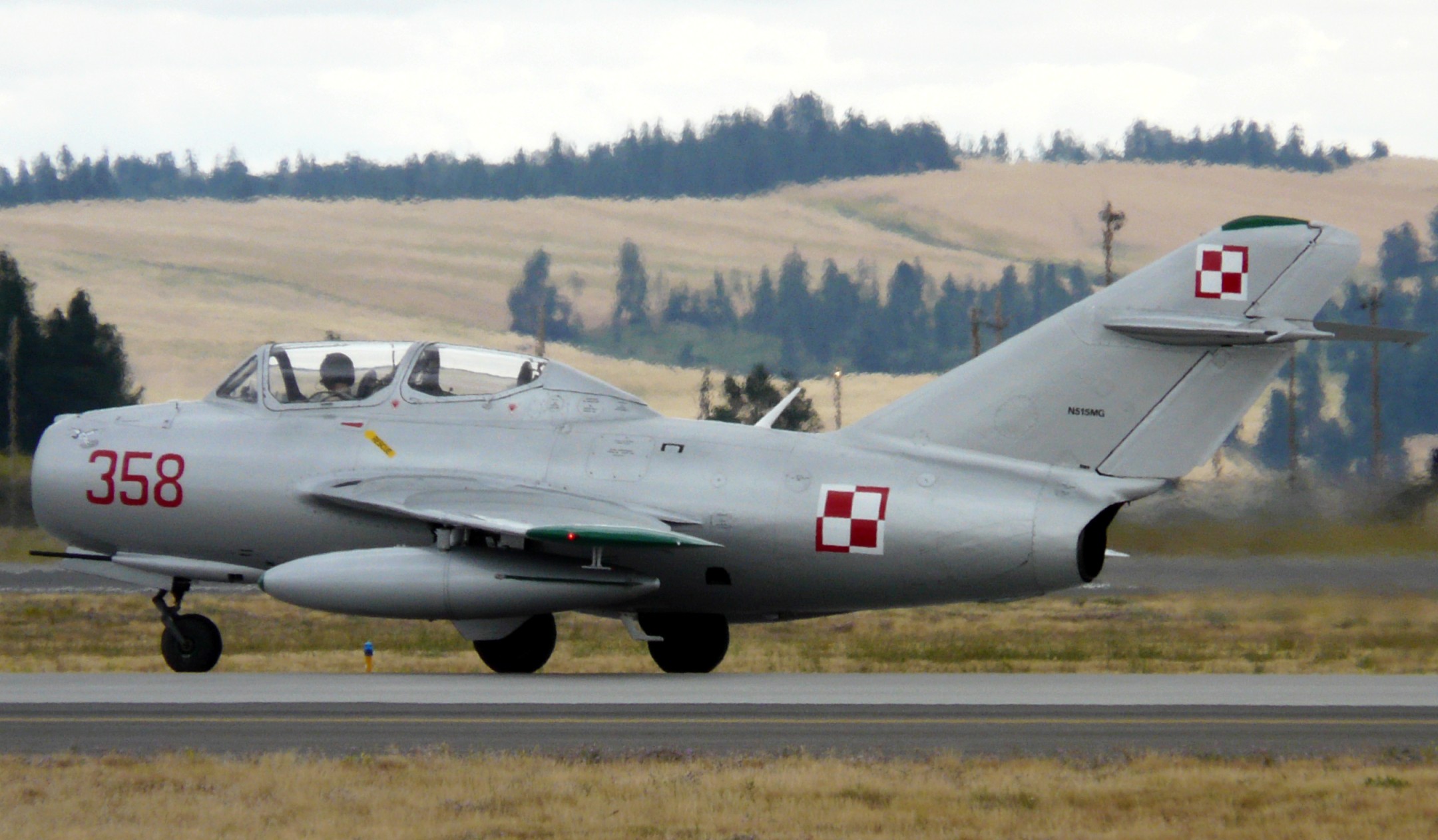
The single most important variant in terms of longevity was the two-seat MiG-15UTI trainer, known to NATO as the Midget. Once the single-seat fighters had been superseded by later types, the UTI carried on for decades as an advanced jet trainer across the Soviet Union and its allies, and it was the longest-serving member of the family, although the single-seat MiG-15bis was built in far larger numbers. Beyond the Soviet Union the aircraft was built under licence in Czechoslovakia as the S-102 and S-103 with the two-seat CS-102 trainer, in Poland as the Lim-1 and Lim-2 with the SBLim trainers, and in China as the J-2 fighter and JJ-2 trainer. There were also reconnaissance and specialist high-altitude sub-variants. The exact production figures for each licence line vary between sources and are best treated as approximate, but the scale of the effort was vast. In China the aircraft had a particularly long and important second life, both as a licence-built fighter and trainer and as the foundation on which the Chinese aviation industry learned to build jets, a lineage that fed directly into later Chinese designs. For the aircraft that succeeded the MiG-15 in Soviet service, see our history of the Mikoyan-Gurevich MiG-21.
The MiG-15 and the bomber war
The MiG-15’s greatest single effect on the Korean air war was what it did to the bomber. The B-29 Superfortress had roamed almost at will earlier in the conflict, but the arrival of a fast, high-flying, heavily armed interceptor changed the arithmetic of daylight bombing. In a series of clashes in late 1951, one of which became known to American crews as Black Tuesday, B-29 formations suffered losses heavy enough that the United States Air Force largely shifted its heavy bombing to the cover of darkness. That was exactly the outcome the aircraft had been designed to produce, and it happened within a year of the type entering combat.
Against fighters the record was more even, and it turned above all on training and tactics. Where Soviet units were led by experienced Second World War veterans they fought the Sabres close to a standstill; where the MiGs were flown by less experienced Chinese, North Korean or newly posted Soviet pilots, the better-trained American squadrons had the upper hand. The fight in MiG Alley was therefore never a simple matter of one aircraft being better than the other, and reading it that way is how the old, inflated victory ratios took hold.
Service beyond Korea
Korea made the MiG-15 famous, but the aircraft’s working life was far longer and far wider than that one war. As newer fighters arrived, the single-seat MiG-15s were passed down to second-line duties and to the many air forces of the Warsaw Pact and the wider Soviet client network, while the two-seat UTI trainer soldiered on for decades teaching pilots to fly jets. Licence production in Czechoslovakia, Poland and China put the type into service across eastern Europe and Asia, and export deliveries spread it to air arms in the Middle East, Africa and beyond.
In that long second career the MiG-15 served as an interceptor, a ground-attack aircraft, a trainer and a reconnaissance platform, and it saw combat in a number of regional conflicts through the 1950s and 1960s, often qualified in the records by uncertainty over exactly which side flew which airframe. By the time the last examples were retired from front-line and training use, the aircraft had been in service, in one role or another, for the better part of half a century. That endurance, as much as the drama over Korea, is why the MiG-15 occupies the place it does in aviation history.
How many were built
The MiG-15 is routinely described as the most-produced jet aircraft in history, and the claim is broadly supported, though the precise total depends entirely on how you count. Figures for Soviet production alone are usually given as more than 13,000 aircraft. Once the licence-built machines from Czechoslovakia, Poland and China are added, the totals cited rise to somewhere between roughly 15,000 and 18,000 or more. No single figure can be stated as definitive, because different sources draw the line in different places and some wartime and licence records are incomplete. What is safe to say is that the aircraft was built in the tens of thousands, that it outnumbered any other jet fighter of its era, and that it equipped the air forces of dozens of nations. That combination of numbers and reach is why, three-quarters of a century later, MiG-15s still turn up in museums on every continent.
Specifications
The figures below are for the definitive MiG-15bis with the Klimov VK-1 engine. Published performance and weight figures vary slightly between reference sources, so these are best read as representative rather than exact to the last unit.
| Characteristic | Metric | Imperial |
|---|---|---|
| Crew | 1 (2 in the MiG-15UTI trainer) | |
| Length | 10.1 m | 33 ft 2 in |
| Wingspan | 10.08 m | 33 ft 1 in |
| Height | 3.7 m | 12 ft 2 in |
| Wing area | 20.6 m² | 221 sq ft |
| Empty weight | 3,681 kg | 8,115 lb |
| Max take-off weight | 6,105 kg | 13,461 lb |
| Powerplant | 1 × Klimov VK-1 turbojet, approx. 26.5 kN (5,950 lbf) | |
| Maximum speed | approx. 1,075 km/h | approx. 668 mph |
| Service ceiling | approx. 15,500 m | approx. 50,850 ft |
| Rate of climb | approx. 51 m/s | approx. 10,000 ft/min |
| Armament | 1 × 37 mm N-37 and 2 × 23 mm NR-23 cannon | |
Where the survivors are today
Because so many were built, the MiG-15 is one of the more common Cold War jets in preservation, and complete examples are on display around the world. The most historically significant of all is the actual MiG-15bis that Lieutenant No Kum-Sok delivered to Kimpo in 1953, which is preserved in the Korean War gallery of the National Museum of the United States Air Force at Dayton, Ohio, carrying the serial it was given for evaluation.
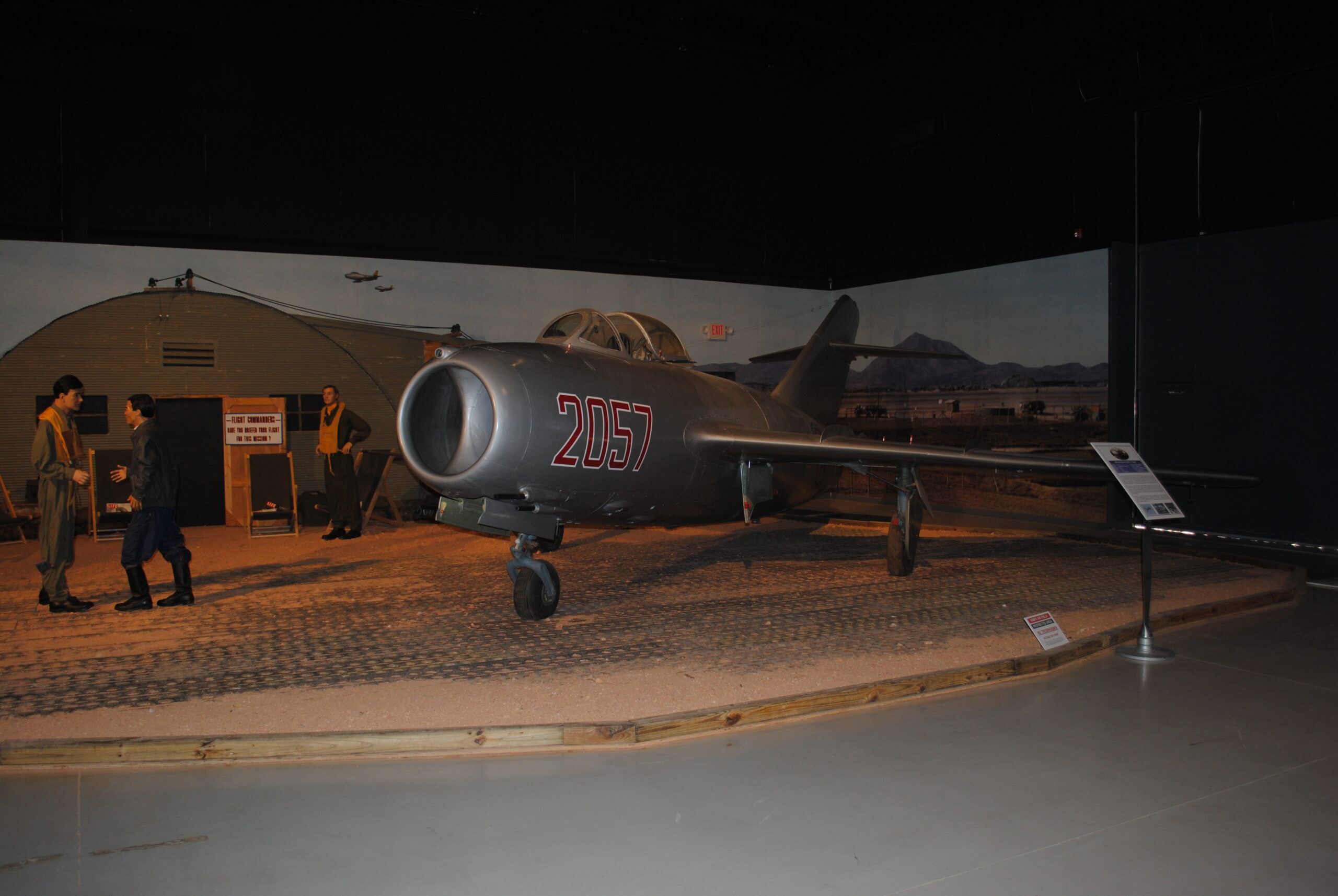
Other examples are widely spread. The Museum of Flight in Seattle holds a MiG-15, the Southern Museum of Flight in Birmingham, Alabama has one on display, and single-seat fighters and two-seat UTI trainers can be found in aviation museums across Europe, including examples in Poland, the Czech Republic, the Baltic states and Russia, reflecting the countries that built and flew them. In Britain the RAF Museum has held a MiG-15bis in its Cold War collection. A number of MiG-15 and MiG-15UTI airframes, many of them Polish or Czech-built, have also been restored to airworthy condition and appear on the warbird circuit, particularly in the United States and central Europe, so it is still possible to see one fly.
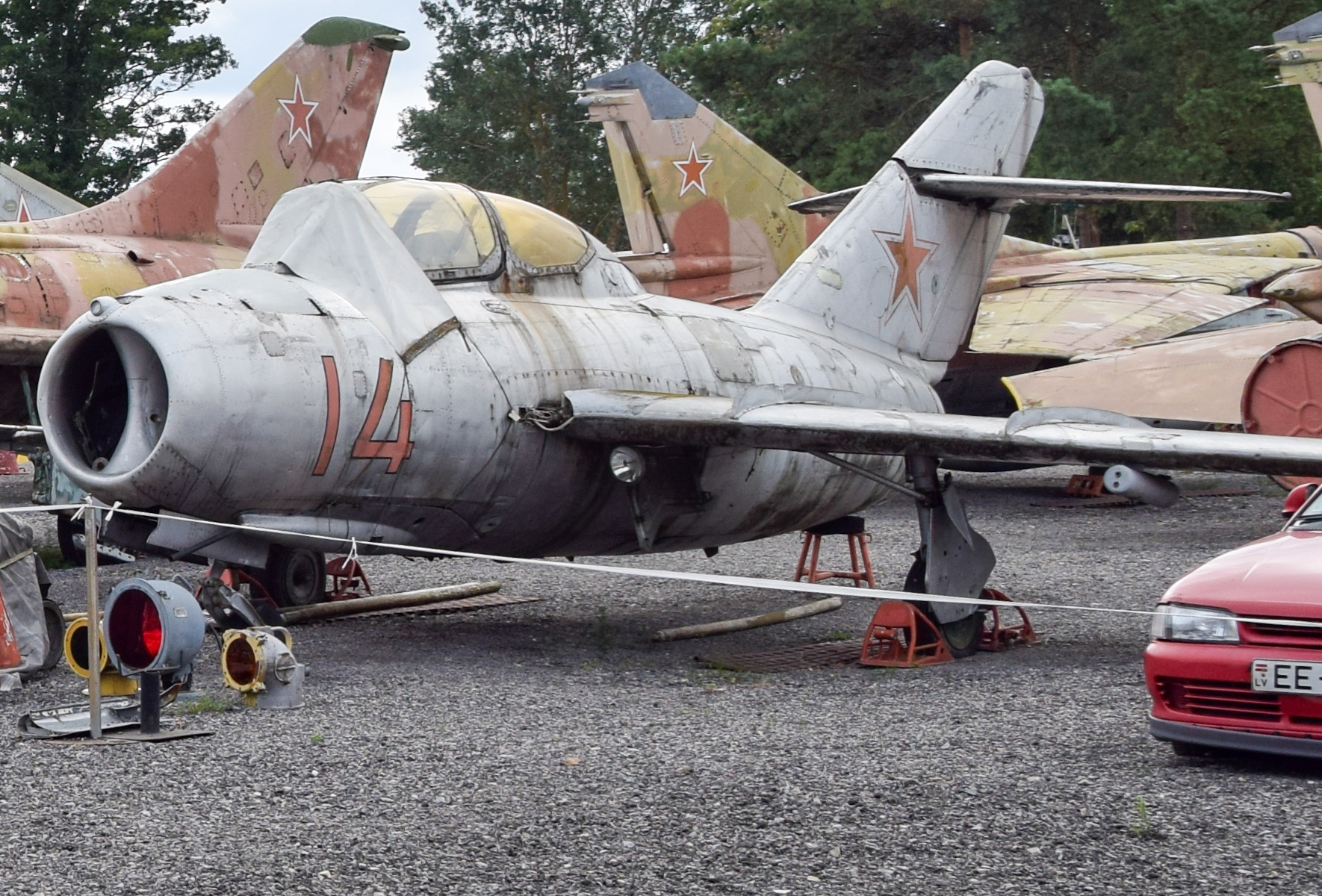
Identifying a preserved MiG-15 accurately can take a little care, because so many were built under licence and then passed between air forces. An airframe wearing Soviet or North Korean colours may in fact be a Polish-built Lim or a Czech-built S-series machine, and a two-seat trainer in one country’s markings may have started life in another. Serial numbers, construction plates and the details of the canopy and gun installation all help to pin down what a particular aircraft really is, which is worth doing if you intend to caption a photograph of it properly.
Photographing the MiG-15 today
For an aviation photographer the MiG-15 is an accessible subject, because most of the survivors sit in museums where you can work at your own pace, and a handful still fly at airshows. On a static aircraft, the swept wing and the tall fin reward a low three-quarter angle that shows the sweep of the wing and lets the shape read against the background, while the winch-down gun tray and the pressurised cockpit repay close detail work when the light is even.
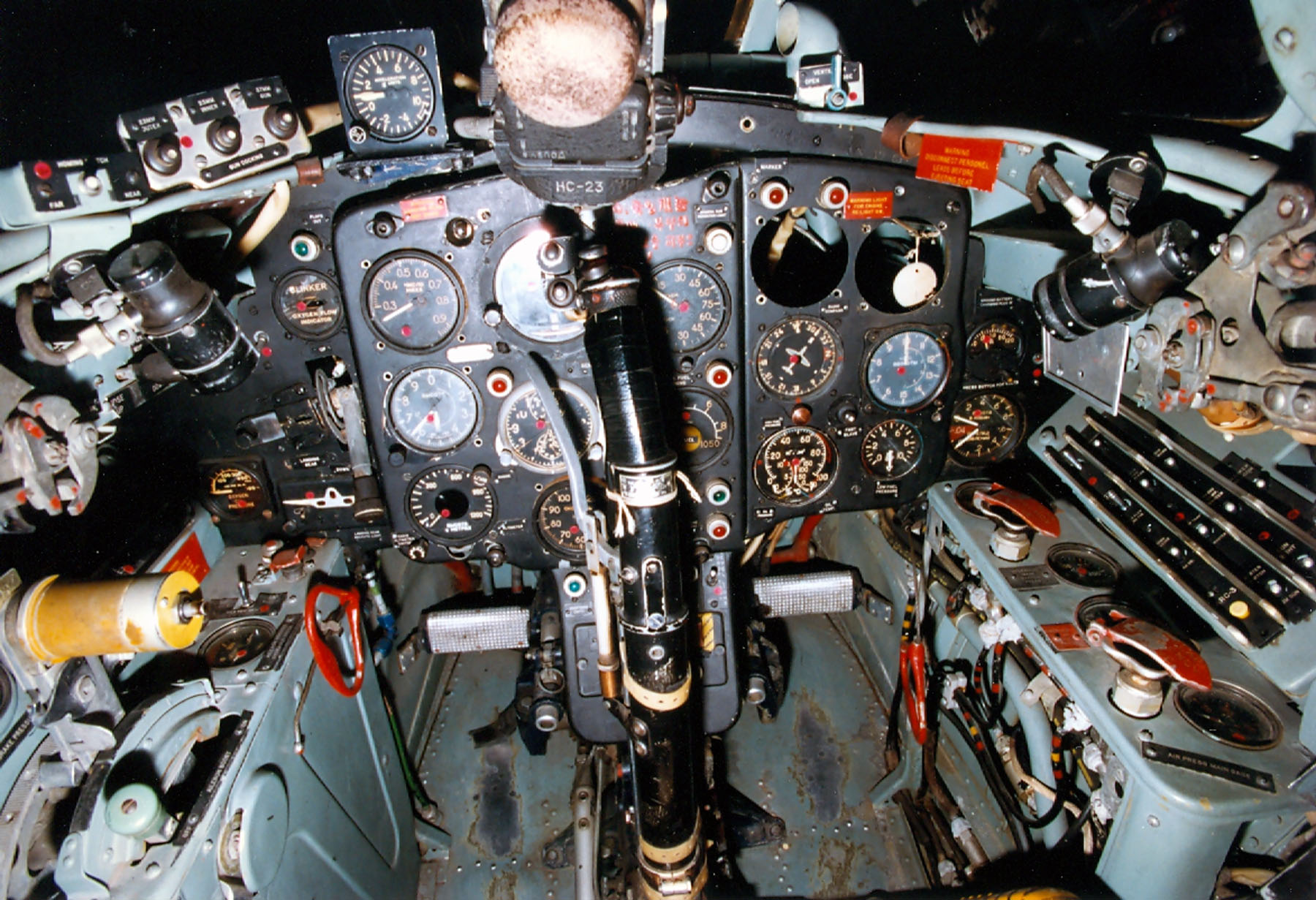
When one of the airworthy examples flies, the technique is the same as for any early jet: a shutter speed fast enough to freeze the airframe cleanly, careful tracking through the pass, and an eye for the moment the aircraft banks to show its planform. Our guide to photographing fast jets covers the panning and autofocus technique in detail, and the approach to preserved warbirds is set out in our warbird photography guide. If you photograph a MiG-15 at a museum or a show, it is worth recording its exact identity, because many carry the markings of one air force while having been built by another, and the caption is a chance to tell that story accurately.
Indoors, the usual museum problems apply. Mixed and often dim lighting, cramped halls and other exhibits crowding the frame all work against a clean shot, so it pays to look for an angle that isolates the aircraft against a plain wall or a dark background, to steady the camera or raise the ISO rather than fight camera shake, and to watch for reflections coming off the polished metal skin. A wide lens exaggerates the sweep of the wing from close in, while a longer focal length from across the hall compresses the shape and can be more flattering. Where a MiG-15 is displayed outdoors or flies at a show, the low, warm light of early morning or late afternoon does far more for that bare-metal finish than the flat glare of midday, the same principle that governs almost all aircraft photography.
Legacy
The MiG-15 changed the shape of the Cold War in the air. It proved that the Soviet Union could design and mass-produce a jet fighter the equal of anything in the West, it shocked the United States into accelerating its own swept-wing and all-flying-tail development, and it became a symbol of early Cold War parity that spread to air forces across Asia, Africa, the Middle East and eastern Europe. Its direct successor, the MiG-17, was a development of the same basic airframe with a thinner, more sharply swept wing and much improved handling near the speed of sound, and that lineage led on through the supersonic MiG-19 to the MiG-21 that would become one of the most-produced jet fighters of all.
The aircraft also has a poignant footnote in the history of spaceflight. On 27 March 1968 Yuri Gagarin, the first human being to fly in space, was killed in a MiG-15UTI trainer near the village of Novosyolovo, together with his instructor Colonel Vladimir Seryogin. The precise cause of the crash has been debated ever since, with theories ranging from a sudden manoeuvre to avoid another aircraft to wake turbulence from a jet passing nearby, and the official findings and later reconstructions do not entirely agree. That the world’s first spaceman died in the cockpit of a MiG-15 says something about how completely the type had woven itself into Soviet aviation, still training pilots two decades after its first flight. Few combat aircraft of any era have been so numerous, so widely copied or so long-lived, and fewer still arrived with such an abrupt shift in the balance of power. The MiG-15 was not the most refined fighter of its generation, but it was one of the most important, because it announced that the jet-age contest between East and West would be a close one. For the wider story of the swept-wing fighters this aircraft helped to launch, our history of the Messerschmitt Bf 109 traces the piston-engined generation that came before, and the Piemags aviation galleries and licensing pages hold further Cold War jet imagery.
Frequently asked questions
What was the MiG-15?
The MiG-15 was the Soviet Union’s first successful swept-wing jet fighter, designed by the Mikoyan and Gurevich bureau as a high-altitude bomber interceptor. It first flew in December 1947, entered service in 1949, and became famous for its performance over Korea. It is generally regarded as the most-produced jet aircraft in history.
When did the MiG-15 first fly?
The first prototype, the S-01, flew on 30 December 1947. Production aircraft followed through 1948 and the type entered Soviet service in 1949, a remarkably fast development for a fighter of its capability.
Did the MiG-15 really use a British engine?
Yes, indirectly. In 1946 and 1947 the British government sold the Soviet Union examples of the Rolls-Royce Nene turbojet, which powered the prototypes and was then reverse-engineered as the Klimov RD-45 and developed into the VK-1. The decision to export one of the best engines of the day is often cited as a serious Cold War mistake.
How did the MiG-15 compare with the F-86 Sabre?
The two were closely matched. The MiG-15 could generally climb higher and carried heavier cannon, while the F-86 Sabre had better high-speed control thanks to its all-flying tail, a gunsight better suited to fighter-versus-fighter combat, and, crucially, better-trained pilots on average. Which aircraft held the advantage depended heavily on the skill of the men flying them.
Who actually flew the MiG-15s over Korea?
Many of the MiG-15s in the fiercest fighting were flown by Soviet pilots of the 64th Fighter Aviation Corps, operating in secret with their aircraft in Chinese or North Korean markings. Chinese and North Korean pilots flew the type as well, but the Soviet involvement was deliberately concealed at the time.
Was the MiG-15 really shot down ten to one by the Sabre?
The old claim of a ten-to-one victory ratio in the Sabre’s favour is now widely regarded as inflated. Modern studies using Soviet and Chinese archives put the figure much lower, with credible estimates ranging from roughly two to one up to about six to one depending on how the losses are counted. The Sabre generally held the edge, but not by the margin once claimed.
How did the United States get a MiG-15 to test?
On 21 September 1953 a North Korean pilot, Lieutenant No Kum-Sok, flew his MiG-15bis to Kimpo Air Base and defected. The aircraft was evaluated by American test pilots including Chuck Yeager, and it is now preserved at the National Museum of the United States Air Force. No Kum-Sok said he had not known about Operation Moolah, the American reward scheme, but was paid the bounty anyway.
How many MiG-15s were built?
The exact total is uncertain, but it runs into the tens of thousands. Soviet production alone is usually put at more than 13,000, and once licence-built aircraft from Czechoslovakia, Poland and China are added the figures cited rise to somewhere between about 15,000 and 18,000 or more, making it the most-produced jet aircraft in history.
What was the MiG-15UTI?
The MiG-15UTI, known to NATO as the Midget, was the two-seat dual-control trainer version. It was the longest-serving member of the family, remaining in use as an advanced jet trainer for decades after the single-seat fighters had been retired, although the MiG-15bis was built in greater numbers.
How fast was the MiG-15?
The definitive MiG-15bis had a maximum speed of around 1,075 kilometres per hour, roughly 668 miles per hour, and a service ceiling of about 15,500 metres, close to 51,000 feet. That high-altitude performance was one of its greatest advantages over the early straight-wing jets it first met in combat.
Where can I see a MiG-15 today?
Complete examples are on display worldwide. The most significant is No Kum-Sok’s defected aircraft at the National Museum of the United States Air Force in Dayton, Ohio. Others are held at the Museum of Flight in Seattle, the Southern Museum of Flight in Alabama, museums across Europe and the former Eastern Bloc, and a number of airworthy examples still fly at airshows.
Is it true Yuri Gagarin died in a MiG-15?
Yes. Yuri Gagarin, the first human in space, was killed on 27 March 1968 in a MiG-15UTI trainer, together with his instructor Colonel Vladimir Seryogin. The exact cause of the crash remains debated, with several competing explanations and no complete agreement between the original findings and later reconstructions.
