The Dambusters Raid, Operation Chastise, was flown on the night of 16 and 17 May 1943. Just before half past midnight on 17 May 1943, a Lancaster bomber flew straight and level at sixty feet above a moonlit German reservoir while every gun on the dam ahead fired at it. Under its belly, a four-ton steel drum was spinning backwards at five hundred revolutions per minute. Released at around 230 miles an hour, it skipped across the water like a flung stone and burst against the dam wall in a column of white water. Four more Lancasters followed, and the fifth mine tore a hole in what had been, when it was built, the largest dam in Europe. Before dawn two great dams were broken, a third was cracked, floodwater was moving through the Ruhr valley at the pace of a running man, fifty-three of the one hundred and thirty-three young men who flew the raid were dead, and the Royal Air Force had acquired the most famous single operation in its history. This is the full story of Operation Chastise, the Dambusters Raid: where it came from, what happened mile by mile and minute by minute, what it cost on both sides of the water, what it truly achieved, and how it echoes down to a squadron that flies today.
Operation Chastise, the Dambusters Raid, was the RAF attack of 16 and 17 May 1943 in which nineteen modified Lancasters of 617 Squadron used Barnes Wallis’s bouncing Upkeep mine to breach the Möhne and Eder dams and damage the Sorpe. More than eighty years on, the raid sits somewhere between history and folklore, simplified by a beloved film and a march everyone can hum. The real story is stranger and harder than the legend: a weapon that was nearly cancelled and worked three days before it was used; a squadron thrown together in weeks that was nothing like the hand-picked elite of myth; a night of astonishing courage attended by astonishing loss; and a result that historians have argued about ever since, not least because most of those drowned by the floods were not Germans at all, but Hitler’s prisoners. The legend deserves respect. The truth deserves telling.
- The problem: water, steel and the Ruhr
- Barnes Wallis and a marble across a water butt
- Upkeep: the physics of a bouncing bomb
- The science of the skip
- Twenty-three special Lancasters
- Squadron X: the myth of the hand-picked elite
- Sixty feet by spotlight: the training
- The plan and the targets
- The northern route: a wave destroyed
- The Möhne: five runs and a breach
- The Eder: flying into a hole in the hills
- The Sorpe: ten runs along the crest
- The reserve wave: into the small hours
- The nineteen: every Lancaster, every crew
- The men: portraits from the squadron
- Myths and the record
- Reading the raid’s photographs
- The cost: fifty-three airmen, and the people in the valleys
- The German night
- What the Dambusters Raid actually achieved
- The argument: was it worth it?
- Decorations, and what became of Gibson
- 617 Squadron after the dams
- Wallis after the dams
- Writing the legend
- The film, the march and the Death Star
- Memory: the last Dambuster and the grave at Scampton
- Today: F-35s, flypasts and the dams themselves
- Visiting the raid today
- The anniversary clock
- Licensing the imagery of the Dams Raid
- Frequently asked questions
- Sources and further reading
Operation Chastise: key facts
- Date: the night of 16 to 17 May 1943.
- Unit: No. 617 Squadron, RAF Scampton, formed 21 March 1943.
- Aircraft: 19 modified Avro Lancaster B III (Special), each carrying one Upkeep mine.
- Weapon: Upkeep, a 9,250 lb cylindrical mine designed by Barnes Wallis, spun backwards at about 500 rpm and released at 60 feet.
- Targets: the Möhne, Eder and Sorpe dams, with the Lister, Ennepe and Diemel as secondaries.
- Result: the Möhne and Eder were breached; the Sorpe, an earth dam, was damaged but held.
- Losses: 8 of 19 Lancasters failed to return. 53 of the 133 aircrew were killed, 3 became prisoners of war.
- Commander: Wing Commander Guy Gibson, aged 24, awarded the Victoria Cross.
- German casualties: estimates range from the contemporary German count of 1,294 dead to at least 1,650 in modern research, more than half of them prisoners of war and foreign forced labourers, most of them women from the occupied Soviet Union.
The problem: water, steel and the Ruhr
The idea of attacking Germany’s dams was older than the war itself. British air planners had studied the Ruhr’s water system in the late 1930s and understood the arithmetic: the Ruhr valley was the forge of German heavy industry, the forge ran on water, and the water came from a handful of great reservoirs in the hills to the east. Steelmaking consumed staggering quantities of it. The Möhne reservoir alone held some 130 million cubic metres, feeding the rivers, canals, drinking supplies and industrial plants of the most concentrated armaments region in Europe. Break the dams, the theory ran, and you did not merely flood a valley; you turned off the tap that made the steel that made the guns.
The difficulty was that dams were close to invulnerable with the weapons of 1940. A gravity dam like the Möhne was forty metres of masonry, massively thicker at the base than the top, designed by Wilhelmine engineers to hold back a lake forever. Bombs of the day, dropped from altitude, could not hit it reliably and could not hurt it if they did; torpedoes were defeated by the heavy anti-torpedo nets strung across the reservoirs. The Air Ministry filed the dams under desirable but impossible, and there the matter rested until a middle-aged aircraft designer with no official standing in weapons development began flicking marbles across a tin bath in his garden.
Barnes Wallis and a marble across a water butt
Barnes Neville Wallis was assistant chief designer at Vickers-Armstrongs, already respected for the geodetic airframes of the Wellesley and the Wellington. From 1940 he had been worrying at the problem of attacking Germany’s power sources, and by April 1942 he had circulated a paper with the unpromising title “Spherical Bomb, Surface Torpedo”. Its central insight was borrowed from a children’s game and from naval gunnery of the age of sail: a projectile skipped across water clears everything beneath the surface. A bomb that ricocheted over the torpedo nets could arrive touching the dam itself, and Wallis’s earlier experiments had proved that contact was everything.
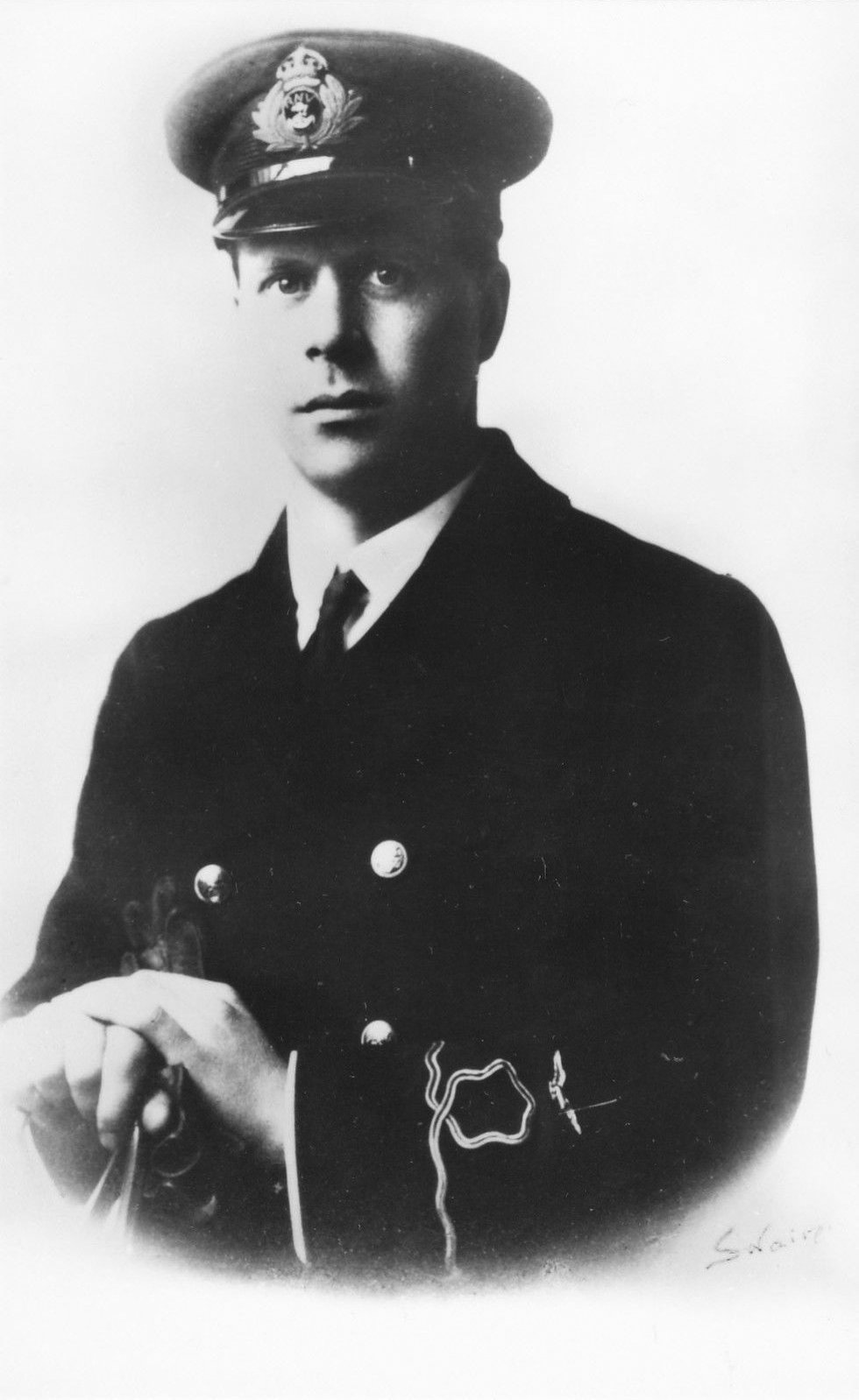
The proof had come at a small disused dam at Nant-y-Gro in the Elan Valley of Wales. On 24 July 1942, a scaled charge detonated in contact with the dam wall breached it outright, where earlier stand-off explosions had merely splashed. The lesson was decisive: an explosion touching the masonry, deep under water where the lake itself would tamp the blast, needed only a fraction of the explosive that a near-miss demanded. The problem was no longer how big a bomb must be. It was how to deliver a modest one to a point on a defended dam wall, under water, at night, with an accuracy measured in feet. Marbles across a water tub at home, then golf balls, then test spheres in the ship tanks at Teddington: the bounce was the answer, and the backspin was the trick that made the bounce behave.
Upkeep: the physics of a bouncing bomb
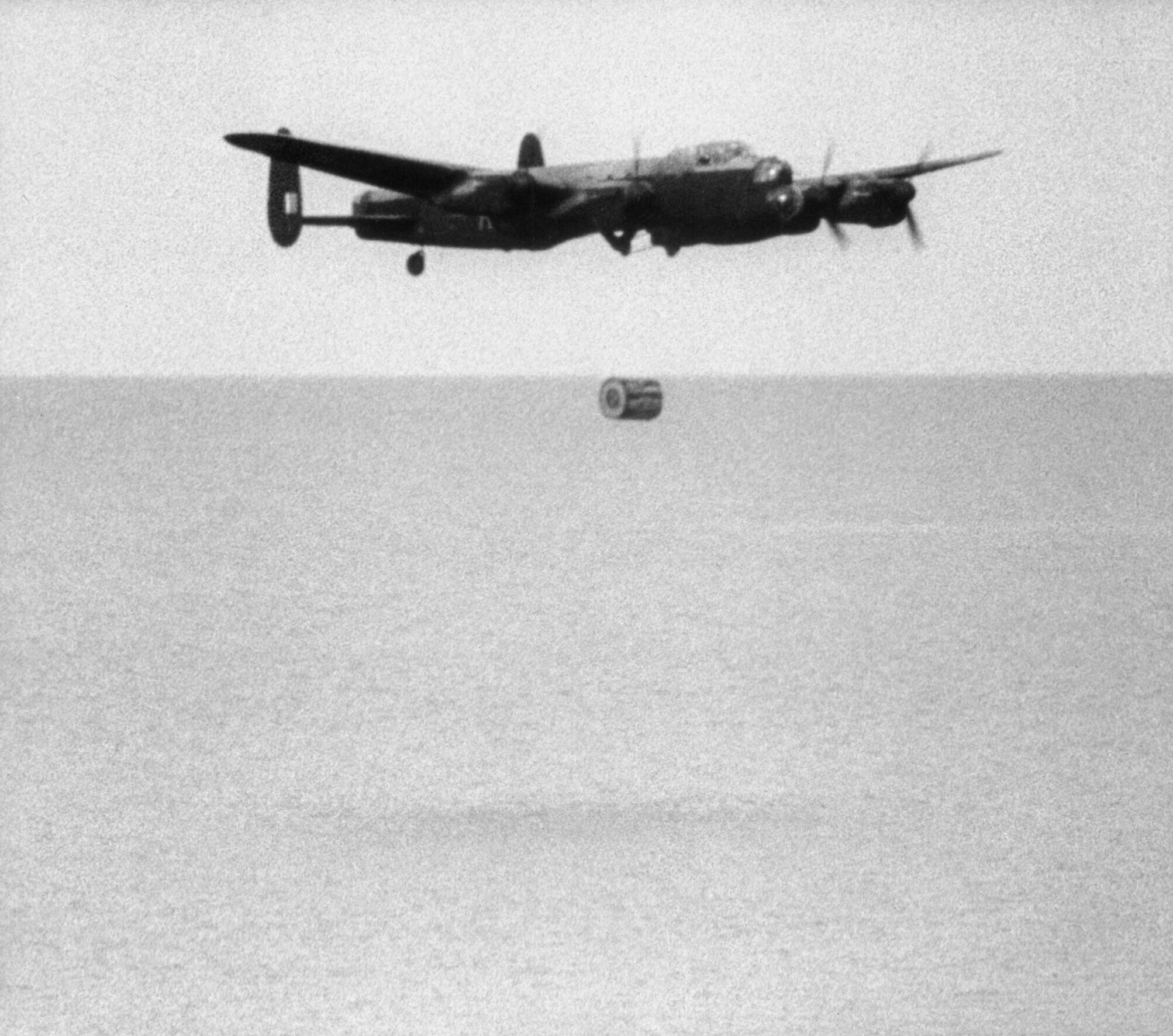
The weapon that emerged, codenamed Upkeep, was not a bomb in any conventional sense but a depth charge taught to skip. In its final form it was a steel cylinder five feet long and just over four feet in diameter, weighing 9,250 pounds of which 6,600 pounds was Torpex explosive. Ten minutes before release, a belt drive from a hydraulic motor in the Lancaster’s fuselage spun the cylinder backwards to about five hundred revolutions per minute. Dropped at the right height and speed, the spinning drum skipped across the reservoir in shortening hops, shed its speed, met the dam, and then, this was the backspin’s second gift, crawled down the wet face of the wall as it sank, hugging the masonry. At thirty feet of depth, hydrostatic pistols fired the charge against the dam with the whole weight of the lake behind it.
Every number in that sequence was unforgiving. Release height: sixty feet, no more, no less. Speed: about 230 miles an hour over the ground, sources differ slightly between 232 and 240. Range at release: roughly 400 to 500 yards from the wall. Get any of them wrong and the weapon porpoised, dived, shattered or bounced clean over the top. The trials were a catalogue of instructive failure. Off Chesil Beach in December 1942 a modified Wellington dropped the first test stores; at Reculver in Kent through April and May 1943 the full-size weapon repeatedly burst its spherical wooden casing on impact, until the sphere was abandoned altogether and the bare cylinder flew instead. The final proving drop, in which the store ran some 800 yards in seven clean bounces, came on 13 May 1943. The raid flew three days later. Rarely in the history of warfare has a weapon gone from not working to war-winning legend inside a single week.
A sister weapon deserves its footnote here: Highball, a smaller spherical version intended for use against ships, developed in parallel and never used in anger. Two were raised from a Scottish loch in 2017 and conserved. Upkeep itself was never used again after the night of the dams. The weapon and the raid are the same story, complete in one operation, which is part of why the tale has such a beginning-middle-and-end perfection to it.
The science of the skip
Every child who has skimmed a stone across a pond has performed the experiment that sat at the heart of Operation Chastise. A flat stone thrown low and fast, with a flick of spin, will strike the water at a shallow angle and rebound from it, because water at speed behaves less like a liquid than like a firm, slightly yielding surface. Wallis’s insight was that the trick could be scaled up by four orders of magnitude, and that a weapon which skipped could do what no torpedo could: pass clean over the double torpedo nets the Germans had strung across their reservoirs, arrive touching the dam, and sink down its face to explode in contact with the masonry, where the Nant-y-Gro trial had shown a modest charge would do the work of a monster.
The spin was the subtle part. Upkeep was spun backwards, against its direction of flight, at up to 500 revolutions per minute before release, and the backspin did several jobs at once. In the air and at each touch of the water it invoked what physicists call the Magnus effect, the same phenomenon that makes a sliced golf ball climb and a spinning cricket ball swerve: a rotating body drags a thin layer of air or water around with itself, so the flow past one side speeds up and the flow past the other slows down, and the pressure difference pushes the body sideways, in this case upwards. That gentle lift flattened the trajectory between bounces and stretched the run. The spin also acted as a gyroscope, holding the drum steady in the yawing, buffeting seconds after release, and it kept the leading face from digging in and burying the store on first impact. Best of all was what it did at the end. When the slowing cylinder nudged the dam and began to sink, the backspin, now rubbing against the wall, made the drum crawl down the face rather than rebound and drift out into open water. The spin that carried it over the nets also pressed it against the stone at the moment of detonation, which was the entire point.
Behind that elegant finish lay two years of patient arithmetic. From late 1940 a one-fiftieth scale model of the Möhne, built at the Building Research Station and tested there and at the Road Research Laboratory at Harmondsworth, absorbed repeated tiny stand-off charges and cracked but held. The breakthrough was accidental: a contact charge fired against an already damaged model dam flung debris yards away, and A. R. Collins and his colleagues realised that touching the wall changed everything. The disused Nant-y-Gro dam in the Elan Valley then supplied the full-dress proof. A stand-off charge fired several feet from the wall in May 1942 merely cracked it; on 24 July a charge of about 280lb, hung in contact with the wall some ten feet down, blew a gap sixty feet wide. Explosive effects scale with the cube root of charge weight, and when the researchers ran the numbers up from Nant-y-Gro to the Möhne the answer came out at roughly 7,500lb of explosive detonated deep against the wall: brutal, but comfortably within what one Lancaster could carry. A charge that had to be dropped at a distance would have needed to be ten times larger than any aircraft could lift.
Getting the charge to the wall was rehearsed at every scale. Wallis began by catapulting marbles across a water tub in his garden at Effingham, then moved in June 1942 to the long ship-testing tanks of the National Physical Laboratory at Teddington, where hundreds of runs with small spheres, fired down the glassy water at varying speeds, spins and angles, mapped the geometry of the bounce. From December 1942 a Wellington dropped prototype spheres off Chesil Beach in Dorset; the first casings smashed on impact, though the trials proved the ricochet worked, and at Reculver the following spring the wooden and steel spheres went on shattering while the cylindrical core inside skipped happily on without them. The sphere, it turned out, had been a refinement too far. The bare drum, presenting a flat rolling face to the water, was stronger, simpler and more predictable, and it was adopted with weeks to spare.
The fusing was borrowed and adapted from the Navy: three hydrostatic pistols of the depth-charge type, fired by water pressure at thirty feet, with a self-destruct fuse timed at about ninety seconds so that no intact Upkeep would be left for German engineers to study. What could not be engineered away was the release problem, an unforgiving triangle of height, speed and range. Drop too high and the store shattered or bounced wild; too low and the splash could cripple the aircraft; too fast or too far out and it sank short; too close and it leapt the parapet. Only the exact sixty feet, a release speed of about 230mph, with sources putting the figure between 232 and 240, and a range of 400 to 500 yards would deliver the drum, spinning, to the wall.
Upkeep had a smaller sister, Highball, a spherical anti-ship store of about 1,280lb carried in pairs by Mosquitoes of 618 Squadron, intended above all for the Tirpitz. It was tested exhaustively, more than 200 rounds going into Loch Striven in Argyll, and never used in anger. In July 2017 divers of the East Cheshire Sub-Aqua Club, working with Royal Navy clearance divers, lifted two of them from the loch bed after seventy years; one is now at Brooklands, the other at the de Havilland Aircraft Museum, the only complete examples of their kind on public display anywhere.
Twenty-three special Lancasters
No standard Lancaster could carry a four-ton spinning drum, so Avro produced a special batch, the Type 464 Provisioning, of which some twenty-three were built. The bomb doors went, replaced by fairings around a gap in the fuselage floor; the mid-upper turret went too, saving weight and a gunner. In their place came two side-mounted calliper arms that gripped the Upkeep by its axle, the hydraulic motor and belt drive to spin it, and the release gear to let it go clean. The result looked like a Lancaster that had been asked to carry a cement mixer, and flew, by all accounts, surprisingly well.
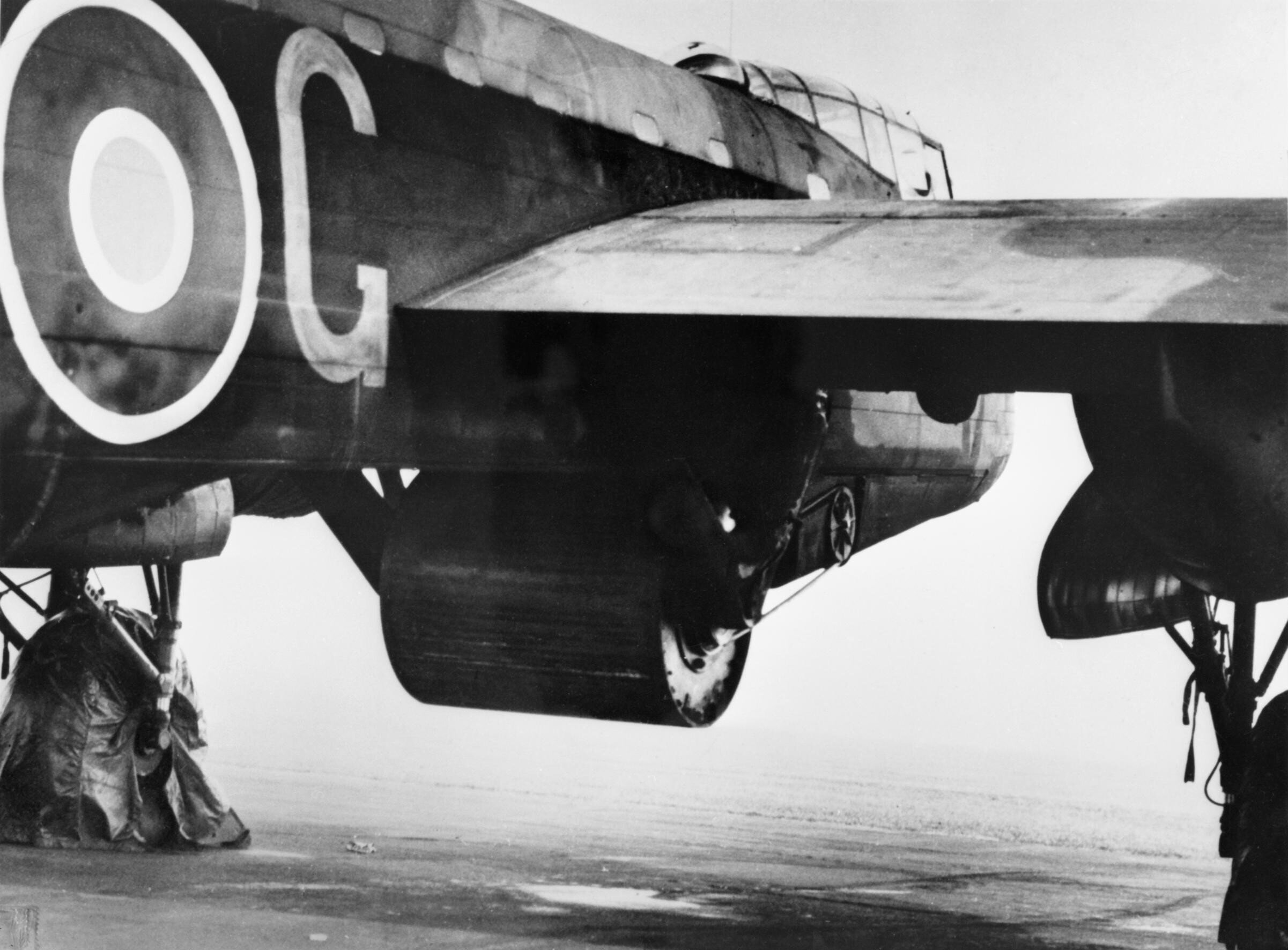
Two more modifications mattered as much as the weapon mounts. The first solved the height problem. No barometric altimeter could hold a night-flying crew at exactly sixty feet over black water, so two spotlights were fitted, one in the nose and one aft, angled so that their beams converged into a single figure-of-eight on the surface at precisely sixty feet. The navigator watched the lights on the water and called the pilot up or down. The idea is credited to the Ministry of Aircraft Production side of the operation, with antecedents going back to the First World War; the film’s version, in which Gibson has the idea watching theatre spotlights, is good cinema and doubtful history. The second was aiming: for the Möhne, a hand-made wooden sight used the dam’s two towers as a rangefinder, though several bomb aimers preferred their own arrangements of string and chinagraph marks on the perspex. Sixty feet, 230 miles an hour, 425 yards, at night, under fire: the instruments were plywood, string and light on water.
Squadron X: the myth of the hand-picked elite
In late March 1943, a new unit formed at RAF Scampton in Lincolnshire under the temporary name Squadron X, soon numbered 617. Its commanding officer was Wing Commander Guy Gibson, twenty-four years old and already the veteran of more than 170 operational sorties as a bomber and night-fighter pilot, holder of the DSO and Bar and DFC and Bar. Gibson was brave to the point of recklessness, driven, prickly, worshipped by some of his men and disliked by others, and he was given less than eight weeks to make a squadron capable of the most precise heavy-bomber operation ever attempted, without being told, at first, what the target was.
The legend says every crew was hand-picked from the elite of Bomber Command. The record says otherwise, and the truth is more interesting. Gibson personally recruited a core of men he knew and trusted, John Hopgood and David Shannon among them, but much of the squadron arrived by ordinary posting: whole crews at the end of tours, crews between tours, and some men with strikingly thin experience. Vernon Byers, who would die at the Dutch coast before reaching Germany, had flown only a handful of operations. The research of John Sweetman and of the crew-by-crew historians who followed him has dismantled the all-veteran myth comprehensively. What 617 actually was, in April 1943, was a cross-section of Bomber Command, Britons, Canadians, Australians, New Zealanders and one New York-born American named Joe McCarthy, welded into something exceptional not by selection but by training.
Sixty feet by spotlight: the training
For six weeks the squadron flew low. Cross-country routes at a hundred feet by day, then by night; then lower. Crews flew with blue celluloid over the cockpit glazing and yellow goggles on, a trick that turned daylight into passable moonlight, and they learned to navigate at map-reading height where a church steeple arrives every few seconds. The reservoirs of England stood in for the Ruhr: the Derwent dam in Derbyshire, whose twin towers were conveniently like the Möhne’s; Eyebrook near Uppingham; Abberton in Essex; the lake at Bala. Locals complained about thunder at midnight. The Lancasters came back with leaves in their radiators, and at the Reculver practice drops two aircraft limped home battered by the towering splash of their own mines.
The spotlight technique was drilled until navigators could talk a pilot down onto sixty feet and hold him there through a full attack run. The bomb aimers rehearsed their wooden sights against the Derwent towers. The gunners learned that at sixty feet there is no such thing as a safe direction. And through all of it, nobody below squadron command knew what the target was. The guesses ran to the Tirpitz and the U-boat pens; the security held. Only on 15 and 16 May, at briefings that started with the models coming out from under their sheets, did the crews learn they were going to Germany that night to attack dams whose names most of them had never heard.
The plan and the targets
The plan committed nineteen Lancasters in three waves against the water system of the Ruhr and Weser. The first wave, nine aircraft in three loose vics led by Gibson, would take the southern route to the Möhne, breach it, then take surviving Upkeeps on to the Eder. The second wave, five aircraft flying singly on a longer northern route timed to cross the coast simultaneously with the first, was aimed at the Sorpe. The third wave of five was an airborne reserve, taking off after midnight to be directed wherever the night demanded. Everything flew at extreme low level, under the German radar and between the flak belts, along routes threaded past known gun positions with the precision of men who knew that at a hundred feet there is no parachute escape worth the name.
The targets themselves dictated everything. The Möhne and the Eder were masonry gravity dams, curved, massive, and vulnerable to Upkeep’s contact charge. The Sorpe was different: an earthen embankment with a concrete core, immune to the skipping attack, to be bombed instead by a Lancaster flying along the dam’s crest and dropping an unspun Upkeep to roll down the water face. Wallis doubted the Sorpe could be broken at all with what they had, and some historians have argued the planners knew as much, a point to which this story returns. Beyond the big three lay secondary targets, the Lister, the Ennepe, the Diemel, for whatever the reserve wave had left.
The northern route: a wave destroyed
By the accident of routing, the second wave took off first, from 21:28 on the evening of 16 May, and the night began going wrong almost at once. Norman Barlow, an Australian, flew into high-voltage electricity pylons near Haldern, a few miles inside Germany; all seven aboard died, and his Upkeep, thrown clear and unexploded, presented German intelligence with the entire secret of the weapon before the first dam had been attacked. Vernon Byers strayed over the guns of the Frisian islands and was shot into the Waddenzee; seven more dead. Les Munro’s aircraft was raked by flak crossing the Dutch coast, losing its radio and with it any ability to coordinate an attack; he turned back with his mine. Geoff Rice, at wave-top height over the sea, touched the water itself; the impact tore the Upkeep off the aircraft and he too turned for home, lucky to be alive.
Of the five aircraft of the Sorpe wave, one remained: Joe McCarthy, the big American, who had started late in the spare aircraft after his own went unserviceable and was now flying alone into Germany, behind schedule, with no company but his crew. The plan for the Sorpe, such as it was, now rested entirely on him.
The Möhne: five runs and a breach
Gibson’s wave lost an aircraft on the way in, Bill Astell, into cables near Marbeck, all seven killed, and arrived over the Möhne reservoir a little after midnight to find the dam exactly as briefed: two towers, a sleeping lake, and light flak that came awake immediately. Gibson attacked first, his run textbook, his Upkeep exploding just short of the wall in a column of white water. Then John Hopgood, whose aircraft had been hit by flak on the way in across Germany, began his run. The gunners on the dam had his measure now; M-Mother was hit and burning before release, the mine bounced over the parapet and destroyed the power station below the dam, and the Lancaster clawed for height beyond the far bank before it came apart. Two of his crew, blown or dragged clear impossibly low, survived as prisoners. The rest died with him.
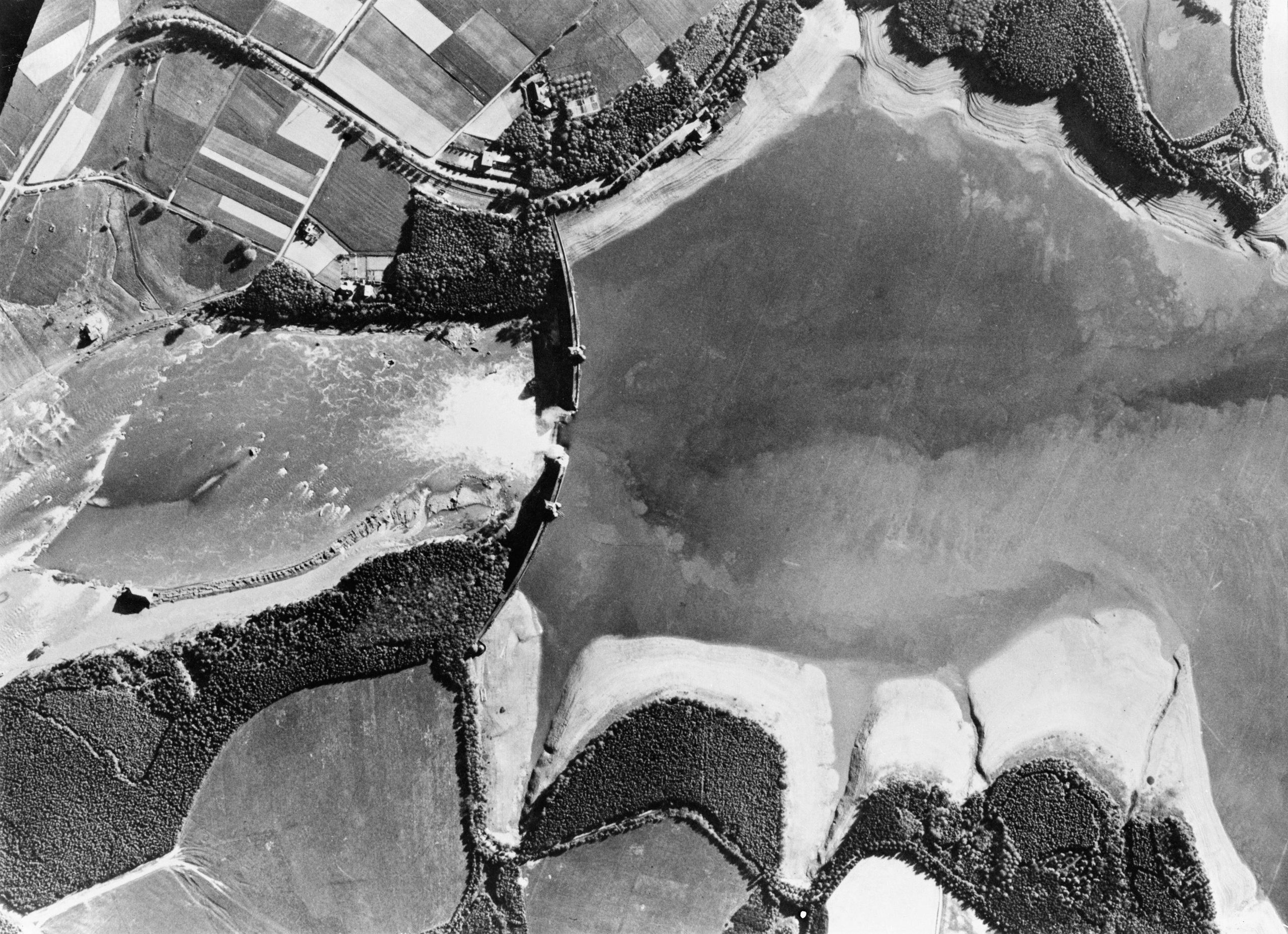
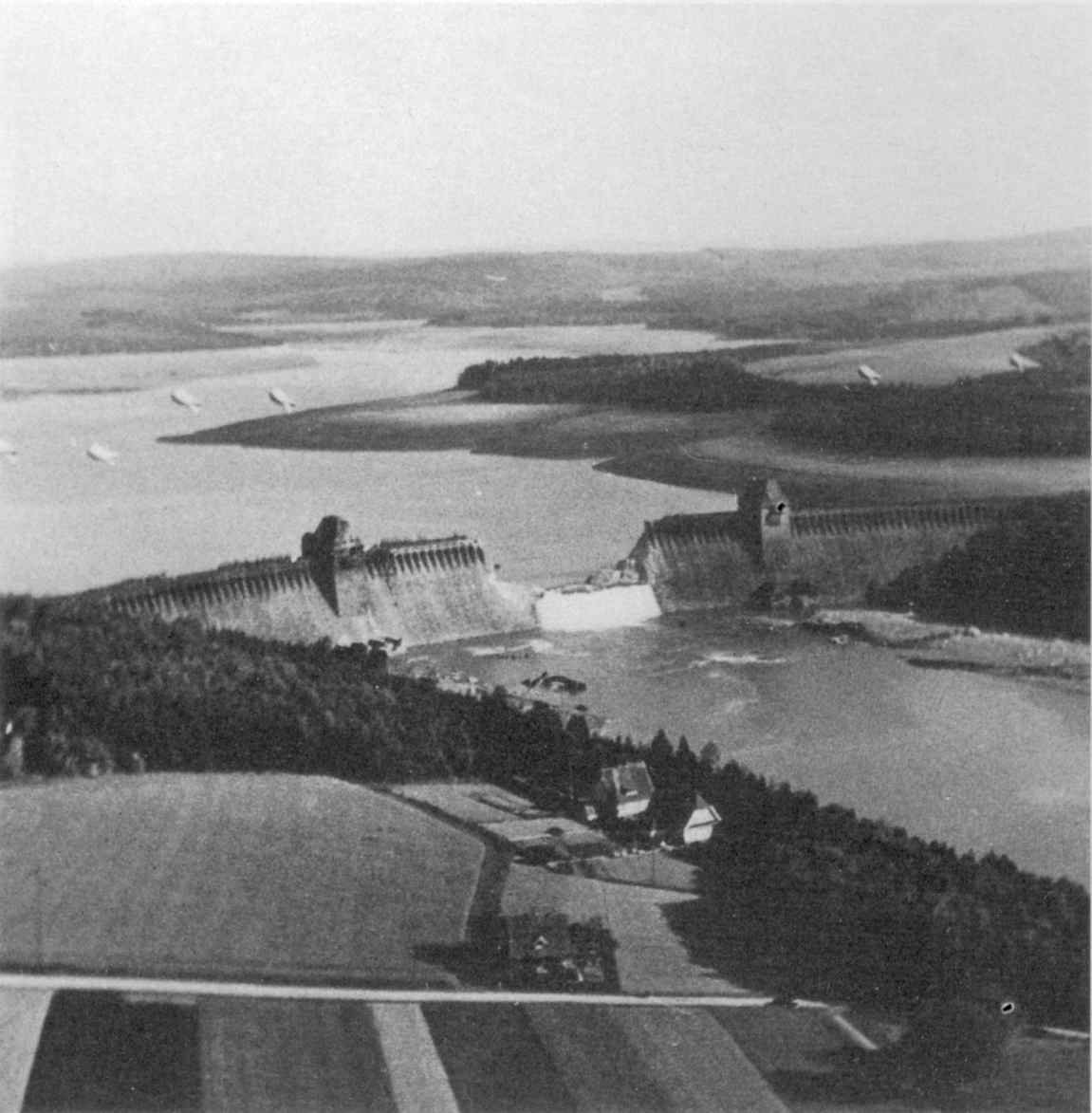
What happened next put Gibson into the Victoria Cross register. As Mick Martin began the third run, Gibson flew his own aircraft back across the dam, lights on, to split the gunners’ attention; on the fourth run, Dinghy Young’s, Gibson and Martin both flew as decoys. Martin’s mine ran true but veered; Young’s ran dead centre, and observers thought the wall shivered. David Maltby’s, the fifth, hit the same wounded spot. The dam did not so much explode as give way, a section of masonry some seventy-seven metres wide folding out under the weight of 130 million tonnes of water. Gibson’s wireless operator tapped out the codeword for a breach, and at Grantham, where Wallis and Harris waited, the room came off its feet.
The Eder: flying into a hole in the hills
The Eder had no flak at all, and needed none. The dam sits at the end of a twisting reservoir sunk between steep, fog-filling hills, and the attack run demanded a diving turn from a spur ridge, a violent drop to sixty feet, a few seconds of level flight, and an immediate full-power climbing turn away from a rock face. David Shannon made dummy run after dummy run before he was satisfied, and finally placed his mine well. Henry Maudslay’s went horribly wrong: his Upkeep struck the parapet and detonated almost under his own tail. The damaged aircraft answered radio calls faintly and turned for home; German flak finished it near the Dutch border, and all aboard died. It fell to the last mine of the first wave, Les Knight’s, an Australian flying N-for-Nut, to break the Eder at 01:52. The second codeword went out. Two of the three great dams were open, and behind the second stood a reservoir even larger than the Möhne’s.
The price of the Eder was still being paid on the way home. Dinghy Young, whose mine had opened the Möhne, was caught by flak at the Dutch coast, at almost the last defended mile of the route, and went into the North Sea with all his crew. Young had twice survived ditchings earlier in the war, hence the nickname. There was no third rescue.
The Sorpe: ten runs along the crest
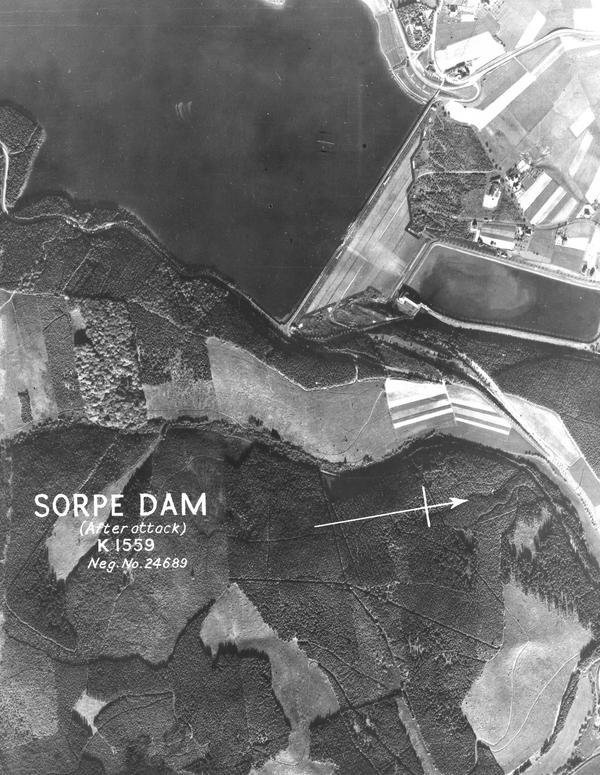
Joe McCarthy reached the Sorpe alone at a quarter past midnight and found the hardest target of the night guarded not by guns but by geography: a sleeping village at one end of the run, a steep hill at the other, and mist filling the valley. The attack profile here was unique, flying along the dam’s crest rather than at its face, dropping the unspun mine to roll down the waterside slope. McCarthy and his bomb aimer, a Lincolnshire sergeant named George Johnson whom the world would much later know as Johnny, the last of all the Dambusters, made run after run and refused to release until it was right. On the tenth pass Johnson called it, the mine went down the face and burst, and the crest of the dam crumbled along a section without breaking the core. Hours later Ken Brown of the reserve wave, arriving through worsening fog, did it all again, run after run through the murk before release, and cracked the crest further. The earth dam sagged, held, and forced the Germans to lower the reservoir while the crest was repaired. It never broke.
The reserve wave: into the small hours
The five reserve Lancasters took off into a night already half-decided, and their stories are the raid in miniature. Warner Ottley was shot down minutes after being redirected, near Hamm; the tail gunner, Fred Tees, was thrown clear in the crash and survived, badly burned, as a prisoner, the only man of seven. Lewis Burpee, a Canadian, drifted over the defended airfield at Gilze-Rijen and was killed with all his crew by its guns. Ken Brown fought through to the Sorpe as told. Cyril Anderson, with a jammed rear turret and the fog thickening, could not find a target and brought his Upkeep home, a decision for which Gibson removed him from the squadron, and about which historians have been kinder than Gibson was. And Bill Townsend, directed to the Ennepe dam, made his attack through mist against, quite possibly, the wrong dam: his report says the Ennepe, later analysis argues persuasively for the neighbouring Bever. Whichever it was, it did not break, and Townsend flew home into the gathering daylight, hedge-hopping across Holland with the sun rising behind him, to land last of all at 06:15.
The nineteen: every Lancaster, every crew
No account of the raid is complete without the roll. Of the first wave: Gibson in AJ-G attacked the Möhne and came home; Hopgood in AJ-M was shot down attacking it, five killed, two prisoners; Martin in AJ-P attacked and came home; Young in AJ-A attacked, and died with all his crew off the Dutch coast on the way back; Maltby in AJ-J broke the dam and came home; Shannon in AJ-L attacked the Eder and came home; Maudslay in AJ-Z was fatally damaged by his own weapon’s blast at the Eder and shot down near the border, all killed; Astell in AJ-B flew into cables on the way in, all killed; Knight in AJ-N broke the Eder and came home.
Of the second wave: Barlow in AJ-E flew into pylons, all killed, his intact Upkeep gifting the secret to Germany; Munro in AJ-W was shot up over the islands and turned back; Byers in AJ-K was shot into the Waddenzee, all killed; Rice in AJ-H struck the sea, lost his mine and turned back; McCarthy in AJ-T attacked the Sorpe and came home. Of the reserve: Ottley in AJ-C was shot down near Hamm, six killed, one prisoner; Burpee in AJ-S was shot down over Gilze-Rijen, all killed; Brown in AJ-F attacked the Sorpe and came home; Townsend in AJ-O attacked the Ennepe, or perhaps the Bever, and came home last; Anderson in AJ-Y turned back with turret trouble and fog. Nineteen aircraft out, eleven home, and three of those eleven had brought their mines back or lost them to the sea. The whole result of the most famous raid in RAF history rests on eleven Upkeeps released, of which perhaps seven ran as the designers intended. That arithmetic, more than anything, is the measure of how hard the thing was.
The men: portraits from the squadron
One hundred and thirty-three men flew Operation Chastise, and it is easy, at this distance, to let them blur into a single composite airman, young, grinning, scarf tucked into battledress. They deserve better. They were a strikingly mixed company: Australians, Canadians, New Zealanders, an American, sergeants and public schoolboys, a rowing blue and a farm foreman’s son, and the closer one looks the more distinct they become. What follows is not a roll of honour but a set of portraits, an attempt to see a few of them as their friends saw them in the spring of 1943.
Guy Gibson was twenty-four, and had been at war without meaningful pause since September 1939. By his own count he had flown more than 170 operational sorties across bombers and night fighters, a total almost without parallel in the RAF of 1943, and the strain of it was written on him: colleagues noticed the lines around his eyes, the shortness of temper, the sense of a man running on will. His childhood had been unhappy, born in Simla in 1918 to a family that came apart when he was six, his mother sliding into alcoholism and dying terribly after a fire. In November 1940 he married Eve Moore, an actress and dancer seven years his senior, but the marriage was distant almost from the start, two people leading separate wartime lives. As a commanding officer he divided opinion sharply. Fellow pilots, especially the decorated veterans of his own stamp, found him excellent company, quick, funny, ferociously professional. Ground crews and NCOs often found him high-handed and cold, and coined unflattering nicknames for him, among them the Boy Emperor. George Johnson, the squadron’s last survivor, remembered him with a mixture of resentment at his manner and unqualified admiration for his leadership over the Möhne, where Gibson repeatedly flew alongside other men’s attack runs to share the flak meant for them. The Victoria Cross he received was for precisely that, and no one who flew with him that night ever grudged it.
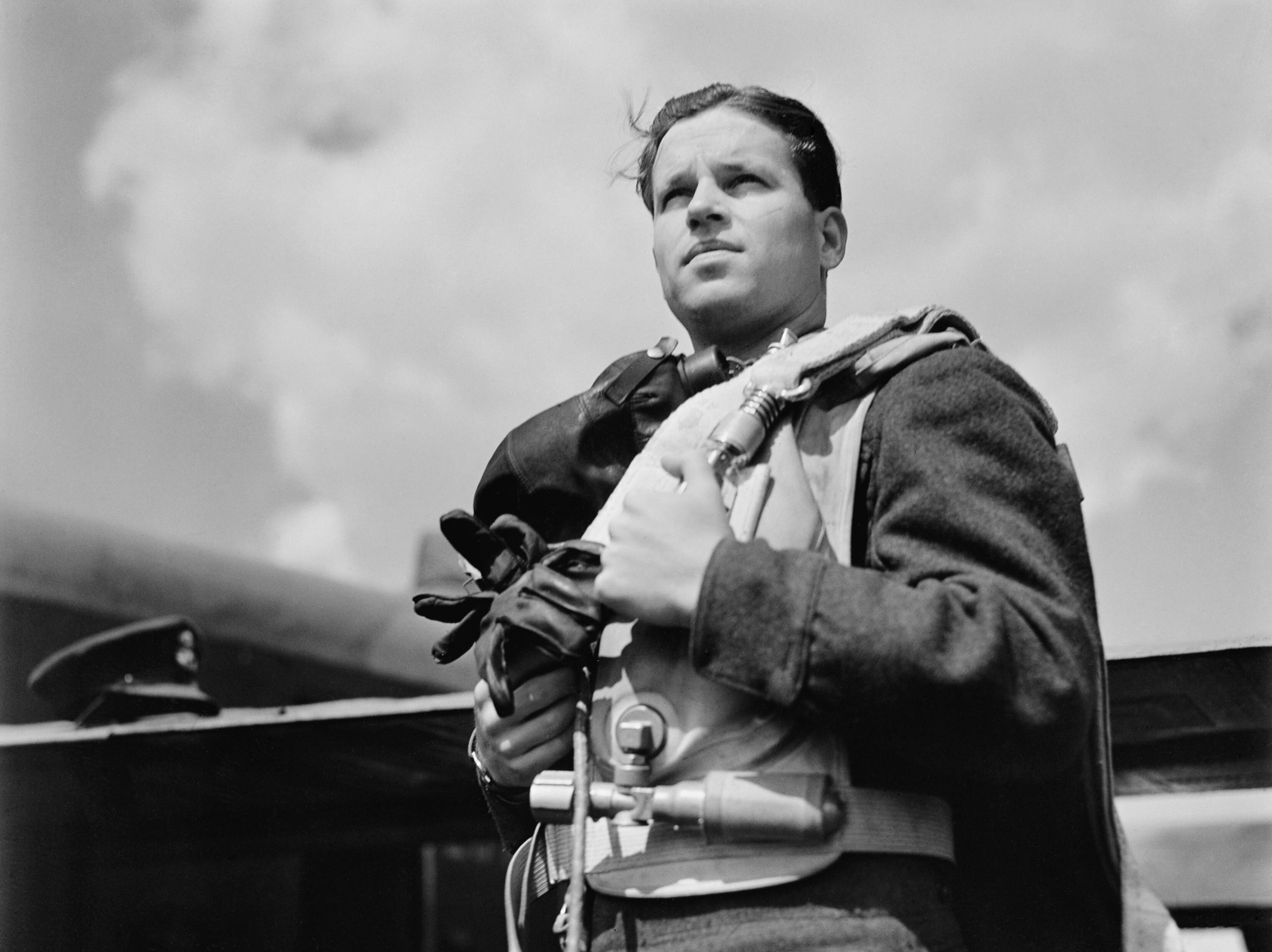
John Hopgood, Hoppy to everyone, was the man Gibson trusted most. He was twenty-one, a Marlborough schoolboy who would have gone up to Cambridge had the war not intervened, and he had flown with Gibson at 106 Squadron, where it was Hopgood, already fluent on the Lancaster, who taught his new commanding officer to fly the type. He was serious beneath the mess-bar cheerfulness, and he seems to have known what was coming. In a quiet moment before take-off he told David Shannon that he did not expect to return from this one. Over Germany his aircraft was hit and Hopgood wounded in the head long before the target, and he pressed on regardless, telling his crew they had a job to finish. At the Möhne, second to attack into gunners now fully awake, his Lancaster was set ablaze, his mine bounced over the dam, and in his last seconds he hauled the burning aircraft upward to give his crew a chance to jump. Two of them, John Fraser and Tony Burcher, survived as prisoners because of that climb. He was the raid’s most complete act of self-sacrifice, and he was still twenty-one.
Harold Martin, Mick to the RAF and Micky to the press, was the artist of the squadron, an Australian from New South Wales who had made low flying a private science, studying how to hug ground and water until fighters and flak could find no angle on him. Gibson, who had never met him before 1943, knew him by reputation and wanted that skill at the heart of the operation. At the Möhne he attacked third, took hits through the starboard wing, dropped his mine and then, unbidden, flew alongside the later runs to help draw the gunners’ fire. Alone among the surviving pilots of the first wave he went on to a full postwar career in the RAF, and what a career: temporary command of 617 itself after George Holden’s death, then Mosquito operations with 515 Squadron, and after the war a steady rise through the service until he retired in 1974 as Air Marshal Sir Harold Martin, having served as Commander-in-Chief of RAF Germany. The most instinctive low-level pilot of his generation died in London in November 1988.
Melvin Young carried the incongruous nickname Dinghy with complete good humour, having earned it the hard way: twice forced down into the sea earlier in the war, twice saved by his inflatable dinghy. He was the squadron’s elder statesman at twenty-seven, the son of an English father and an American mother, educated on both sides of the Atlantic, a Trinity College, Oxford man who had rowed in the winning Boat Race crew of 1938. Married to an American, Priscilla, only the previous summer, he was Gibson’s senior flight commander and did much of the unglamorous administrative labour that actually built 617 Squadron in its frantic eight weeks of life. At the Möhne his mine ran true and battered the dam to its breaking point, so that Maltby’s strike a few minutes later completed what Young had begun. He never knew it. On the way home, crossing the Dutch coast in the first grey of morning, his Lancaster was caught by flak and fell into the sea, the raid’s last loss, killing all seven men aboard.
David Maltby, who delivered that final blow at the Möhne, was twenty-three, a Sussex-born headmaster’s son and, like Hopgood, a Marlborough boy, who had been training as a mining engineer when the war claimed him. Photographs show a big, easy, pipe-smoking young man, well liked and entirely without side. His mine cracked the dam open, the wall of the reservoir slumped into the valley, and Maltby flew home to a DSO and four more months of life. He was newly married, and his son was still a baby when, on the night of 14/15 September 1943, returning over the North Sea from an aborted attack on the Dortmund-Ems Canal, his Lancaster went into the water with the loss of all aboard; a collision with a returning Mosquito is one theory, but the cause was never established. He was the first of the Möhne’s victors to follow the men he had watched die there.
David Shannon looked so young that he grew a moustache in self-defence. He was twenty at the time of the raid, a South Australian with unruly fair hair and, in the words of those who knew him, the unblemished face of a teenager, who had nevertheless completed a full bomber tour and won the DFC before his twenty-first birthday. At the Eder, in that murderous steep-sided valley, he made pass after patient pass before placing his mine against the dam. He had fallen for Ann Fowler, a WAAF officer, who accepted his proposal on one firm condition: the moustache went. They were to be married on 18 September 1943 with David Maltby as best man, and Maltby’s death three days before the wedding meant Shannon stood at the altar with his best man newly dead and half the squadron in mourning. He flew on with 617 through the Cheshire era, sixty-nine operations in all, finished the war garlanded with two DSOs and two DFCs, and lived in Britain until April 1993, dying just weeks before the fiftieth anniversary reunion at which he was to have been a guest of honour.
Henry Maudslay was the squadron’s quiet man. Born in Leamington Spa in 1921 into a famous engineering dynasty, descended from the great machine-tool pioneer whose name he carried, he had been a formidable athlete at Eton, winning the mile and the steeplechase year after year and rowing in the school’s first eight. Everyone who served with him reached for the same words: courteous, modest, conscientious. He was twenty-one and a flight commander. At the Eder his mine was released a fraction late, struck the parapet and detonated beneath his own aircraft, and though his voice was heard afterwards on the radio, faint but alive, the damaged Lancaster was caught by flak near Emmerich on the way home and destroyed with all his crew. Of all the raid’s deaths his seems among the cruellest: a young man of exceptional promise, killed by the narrowest of margins in timing.
Les Knight, the man who actually broke the Eder with the first wave’s last mine, was another Australian, twenty-two, and about as far from the hard-drinking colonial stereotype as it was possible to be: a teetotal, non-smoking, mild-mannered young man who had been studying accountancy, and who by most accounts had never even learned to drive a car. What he could do was fly a Lancaster with cold precision, and his single run at the Eder, threading the spur of hillside that had defeated others, put his mine exactly where Wallis needed it. Four months later, on the low-level Dortmund-Ems Canal raid of 15/16 September 1943, the squadron’s blackest night since the dams, Knight’s aircraft clipped trees in fog. With both port engines gone he held the crippled bomber straight and climbing just long enough for all seven of his crew to bale out, five of whom evaded capture and got home. Then, attempting a forced landing near Den Ham in the Netherlands, he was killed when the aircraft struck a ditch and burned. His crew never stopped saying it plainly: he died so that they could live.
Joe McCarthy supplied the squadron’s transatlantic legend. Born on Long Island in 1919 and raised in New York City, a champion swimmer who had worked as a lifeguard at Coney Island, he was six feet three of blond, booming American who had tried three times to join the US Army Air Corps, heard nothing, and in May 1941 simply crossed the border with his friend Don Curtin and joined the Royal Canadian Air Force instead, telling the Ottawa recruiters to take them that day because they could not afford the fare to come back. On the night of the raid his own aircraft went unserviceable and he stormed into the spare, delayed and furious, flew to the Sorpe alone of his wave, and made ten runs along the dam’s crest before his bomb aimer was satisfied. He stayed in uniform after the war, became a Canadian citizen to remain in the RCAF, and served on until 1968, dying in Virginia in September 1998. The adjutant Harry Humphries remembered him as a massive, gentle giant of a man, and both halves of that description were true.
Three of the nineteen captains were flight sergeants, not officers, a fact the legend usually forgets; Cyril Anderson’s luckless night is told above, and the other two ended theirs with medals. Ken Brown, a twenty-two-year-old from Moose Jaw, Saskatchewan, had endured a scratchy relationship with Gibson, who found him insufficiently deferential; the raid settled the account. Brown brought his Lancaster through the reserve wave’s grim night to the Sorpe, found the valley filling with mist, and made run after run until he could place his mine, which crumbled the crest without breaking the dam, then fought his way home through flak at wave-top height. Bill Townsend, brought up in Chepstow and schooled at Monmouth, had won the DFM with 49 Squadron and captained the last aircraft home, attacking the Ennepe, or possibly, as the navigation evidence discussed earlier suggests, the Bever, and then crossing a waking, daylight Germany so low that his gunners were firing upwards at flak towers. Both men received the Conspicuous Gallantry Medal, the non-commissioned equivalent of the DSO and a far rarer decoration. Brown was commissioned later and lived until December 2002; Townsend became a quietly self-effacing civil servant in Worcestershire who seldom spoke of any of it, and died in 1991.
Les Munro’s portrait is one of discipline rather than glamour. A farmer’s son born near Gisborne, New Zealand, in 1919, he had taught himself the mathematics he needed for aircrew selection by correspondence course. Over the island of Vlieland his Lancaster was hit by flak that destroyed the intercom, and Munro made the coldest decision of the night: without communication the attack could not be flown, and he turned back with his mine aboard, knowing exactly how it might look. Nobody who understood the operation ever faulted him. He flew on to complete some sixty operations, spoofing the German radar off the Normandy beaches on D-Day among them, and went home to farm, to serve nearly two decades as mayor of his district, and to become the raid’s last surviving pilot. When he resolved in 2015 to sell his medals to fund the upkeep of the Bomber Command Memorial in London, a donation allowed them to stay in New Zealand instead. He died that August, aged ninety-six.
And then there was George Johnson, Johnny, who outlasted them all. Born in November 1921 in the hamlet of Hameringham in Lincolnshire, the sixth child of a farm foreman, his mother dead before he was four, his childhood hard and short of affection, he escaped through a charity boarding school and volunteered for the RAF in 1940. He was the bomb aimer lying in the nose of McCarthy’s Lancaster through all ten runs at the Sorpe, and he had very nearly missed the raid for the best of reasons: his wedding to Gwyn Morgan was set for early April 1943, leave had been cancelled for training, and his imposing American skipper made sure it was restored. Johnson took the DFM home to his bride, finished his tour, spent the rest of his working life as a schoolteacher, and in old age became the raid’s living memory, patient with every interviewer, unsentimental about every myth, appointed MBE in 2017 after a long public campaign. He died on 7 December 2022, aged 101, the last of the Dambusters.
These are thirteen faces from nineteen crews, and behind each captain sat six other men, wireless operators and gunners and engineers whose stories are no less real for being harder to recover. The sortie-by-sortie record of all nineteen aircraft, and of every man who flew in them, appears earlier in this piece, and repays reading slowly.
Myths and the record
Eighty years of retelling have barnacled the raid with myths worth scraping off. The squadron was not a hand-picked elite, as we have seen. The spotlight altimeter was not Gibson’s theatre epiphany; the film needed a moment and invented one. The crews did not know the targets until the eve of the raid, so weeks of saloon-bar guessing about the Tirpitz were, for once, wrong in the right direction. Harris did not believe in the operation beforehand and remained ambivalent afterwards, whatever the newsreels implied; the raid was forced upward past him as much as commanded downward through him. Townsend’s target may not have been the dam in his logbook. Even the dog’s death is dated differently in different accounts, the night before or the day of the raid; the balance of recent scholarship favours the night before. None of this diminishes the raid. A story strong enough to shed its myths and still stand is the rarest kind.
And one myth needs replacing with a harder truth: the water did not choose its victims. The largest single group of the dead were not the industrial workers of the propaganda imagination but enslaved women from the East, drowned in a camp their captors had sited on a flood meadow. Modern German memorial work has restored their names to the story, and any serious English telling now carries them too.
Reading the raid’s photographs
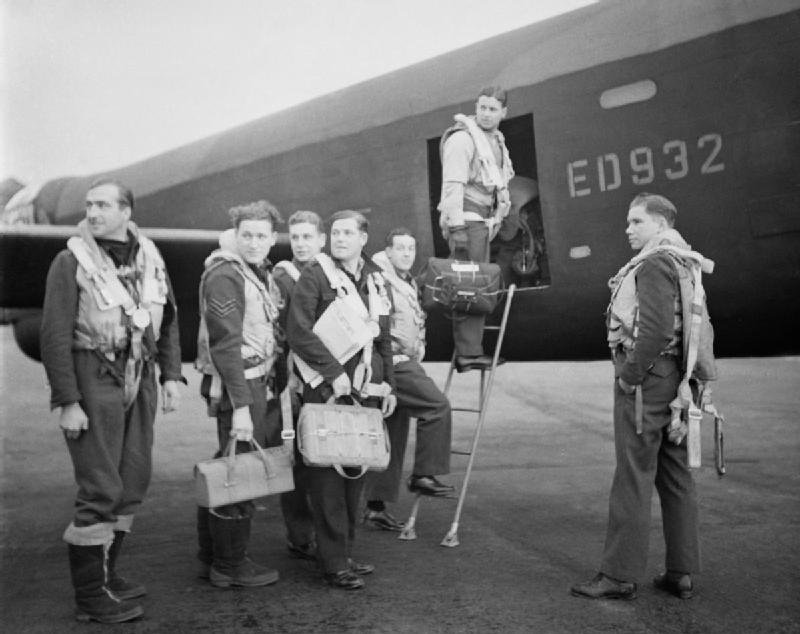
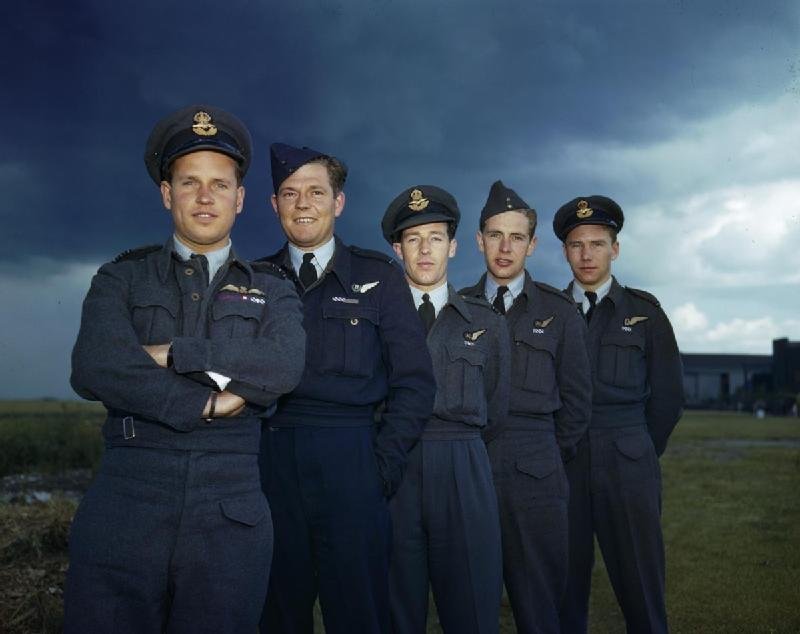
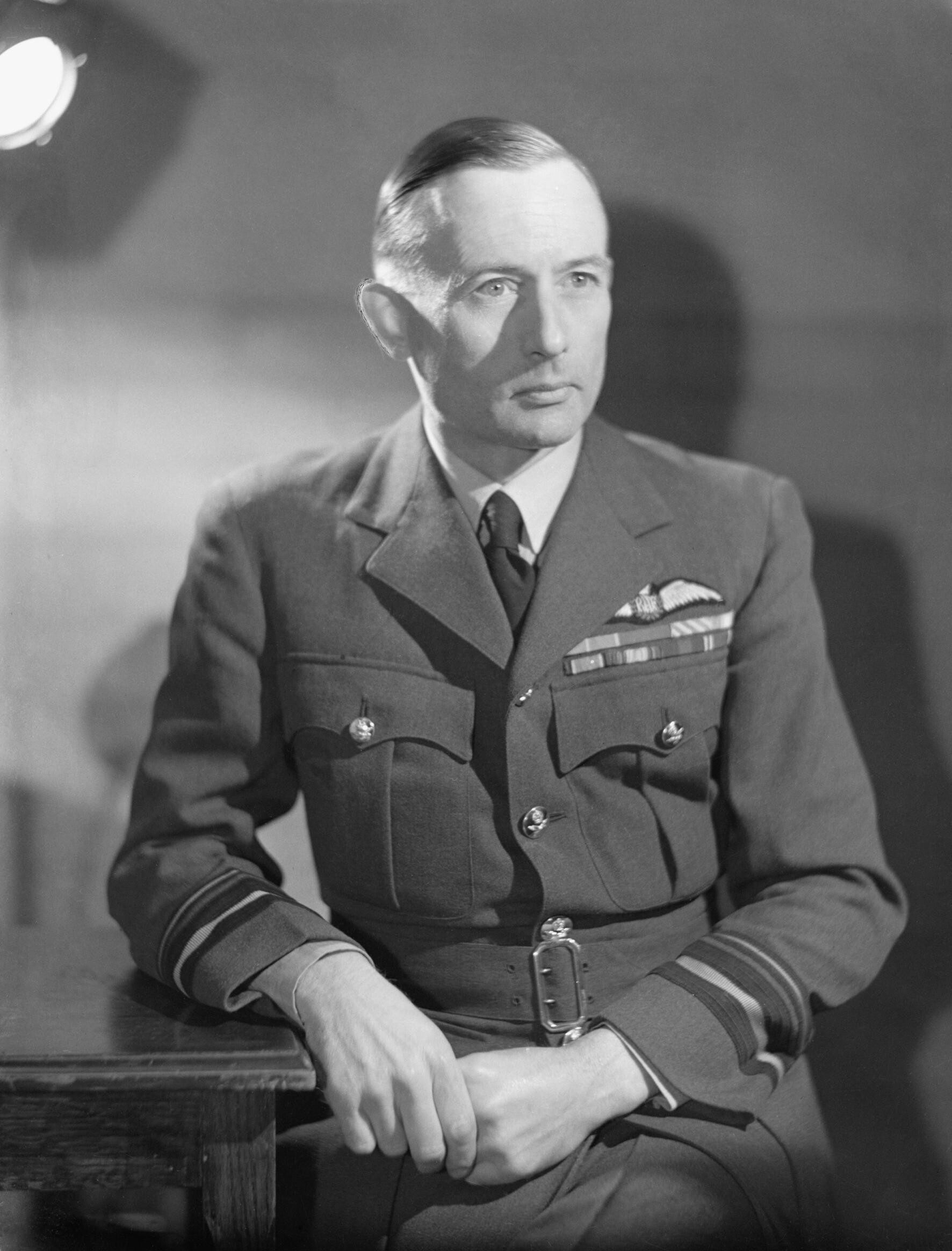
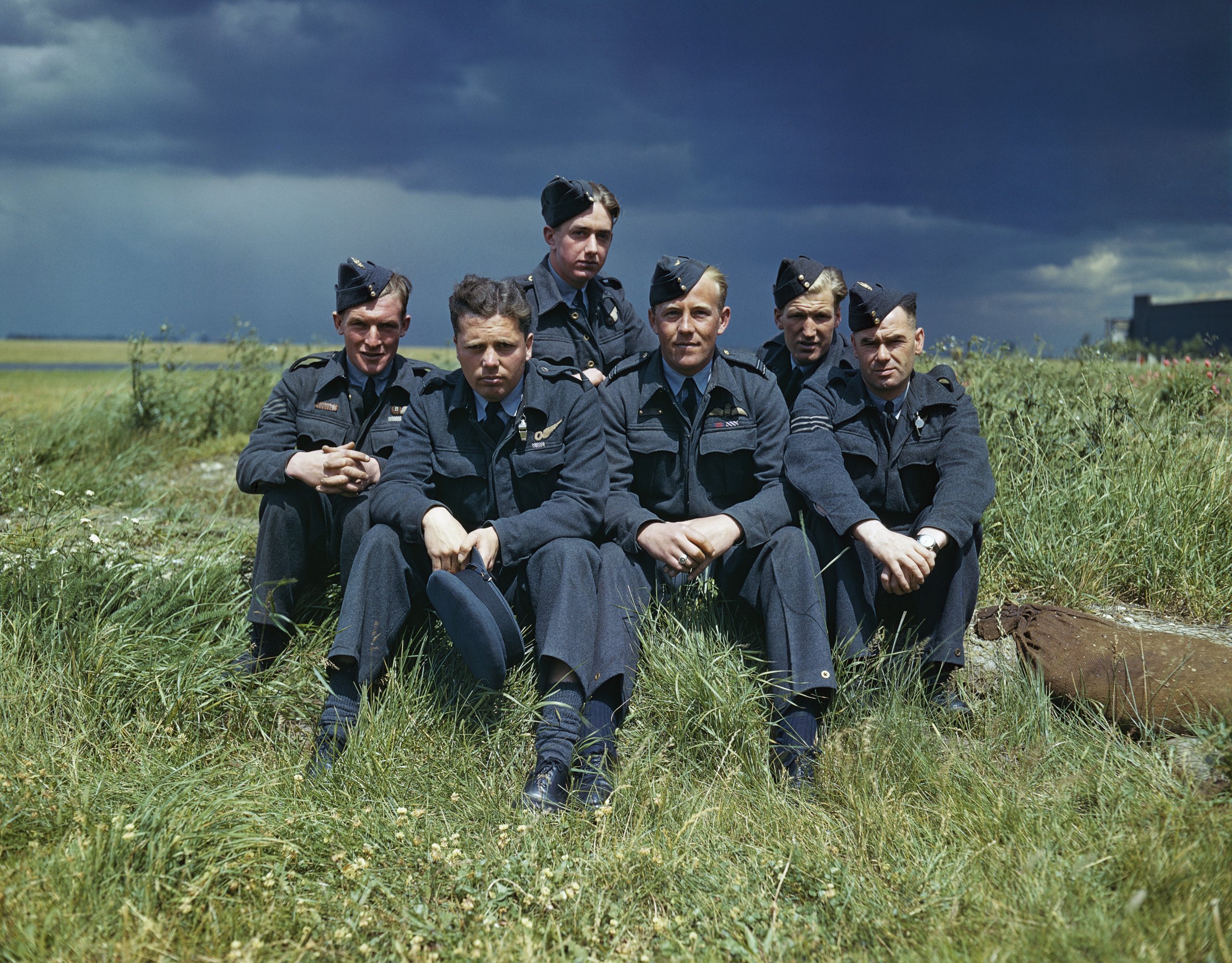
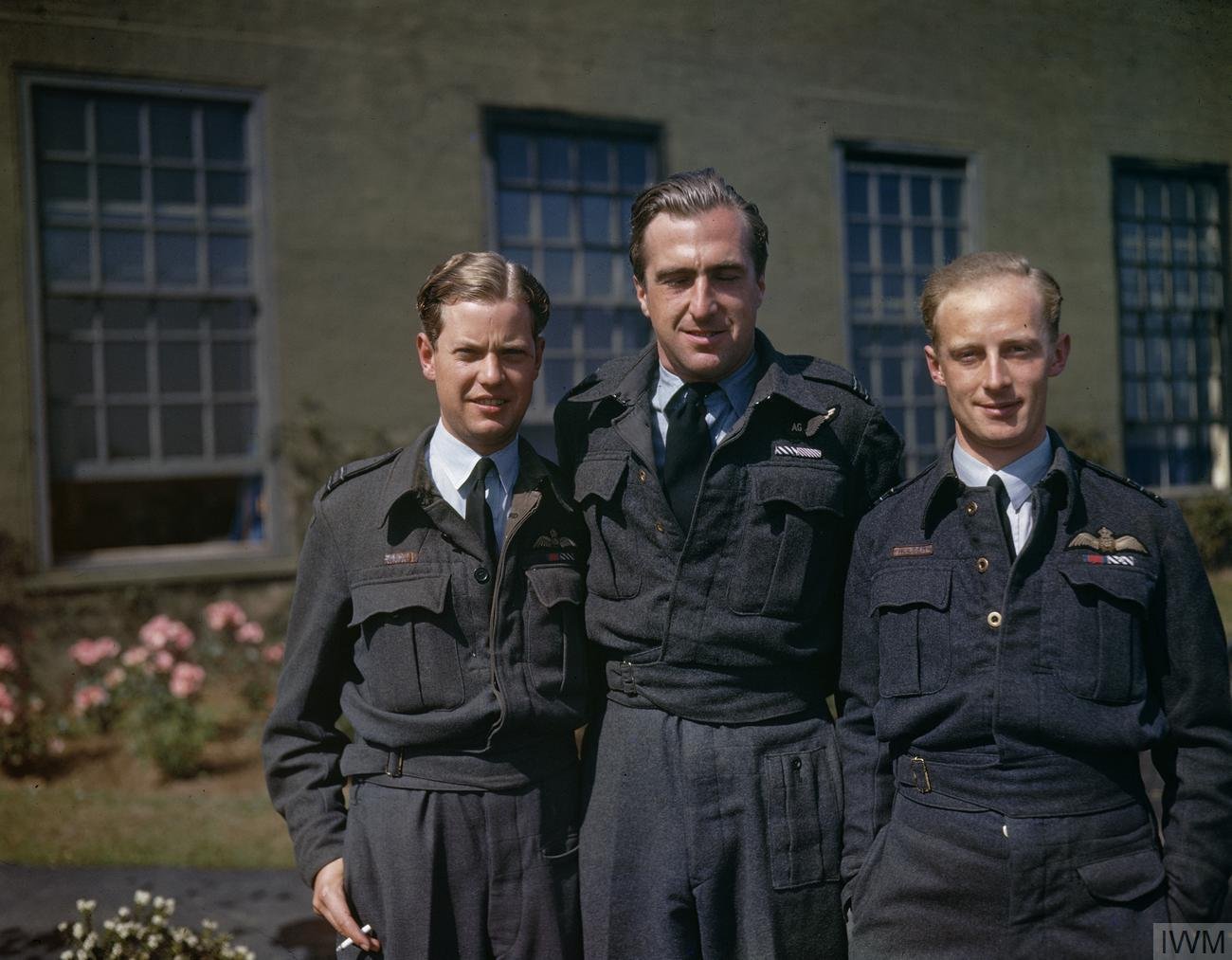
The Dams Raid is unusual among 1943 operations in how well it was photographed, and the images repay close reading. The crew-boarding photograph at the top of this piece was taken in the last daylight of 16 May; within twelve hours, the aircraft in the frame was famous and one in three of the squadron’s men were dead, which is why that casual, cigarette-lit scene carries the weight it does. The reconnaissance frames of the breached Möhne, flown that morning by a Spitfire pilot who found the valleys still emptying, were on front pages within days and remain the raid’s visual signature. The colour portrait sessions at Scampton in July 1943, Gibson by the flowerbeds, McCarthy’s crew on the grass under a storm-light sky, exist because the RAF knew it had a legend on its hands and, for once, spent colour film on it. Photographs like these are why the raid never left the public imagination: it arrived already illustrated.
The cost: fifty-three airmen, and the people in the valleys
Eight of the nineteen Lancasters did not come back. Of 133 aircrew, fifty-three were killed and three became prisoners of war, a loss rate of forty per cent in a single night, borne disproportionately by the Canadians, who lost fourteen men, thirteen of them serving with the RCAF. Bomber Command was accustomed to arithmetic like this spread across a hundred nights; concentrated into one operation by one squadron, it stunned even Scampton. Barnes Wallis, who watched the empty dispersals fill with morning light, was inconsolable, and said in later life that he could never think of the raid without grief for the young men it consumed.
Below the dams, the night was of a different order entirely, and no honest account of Chastise can look away from it. The Möhne flood moved down the valley as a wave metres high, taking bridges, farms, streets and factories in the dark. The town of Neheim, first in the water’s path, suffered worst, and among its dead were the women of a labour camp on the low meadows by the river: at least 493 forced labourers from the Soviet Union, most of them Ukrainian women, drowned where the Reich had penned them. The contemporary German count for the raid was 1,294 dead; the modern research of the historian Ralf Blank puts it at not fewer than 1,650, of whom more than a thousand were prisoners of war and forced workers. Max Hastings, whose 2019 account puts the toll at up to 1,400, makes the essential point in a sentence: more of the people the Dambusters drowned were Hitler’s slaves than Hitler’s citizens. The men in the Lancasters knew nothing of the camps below the dams. The tragedy belongs to the war, not to them; but it belongs to the story.
The German night
Seen from the dam itself, the raid began not with sirens but with engine noise. The Möhne’s entire defence that night was a single detachment, the 3rd Battery of light Flak-Abteilung 840, with around half a dozen 20mm guns disposed along the dam and its approaches, some of them mounted on the two sandstone towers that gave the wall its castle silhouette. There were no searchlights, no balloons, no smoke generators; those had been stripped away in earlier years for fronts that seemed to need them more. The gunners, among them Corporal Karl Schütte on the north tower, found themselves firing at four-engined bombers coming straight up the lake at chimney height, spotlights burning on the water, so low and so steady that the duel was almost personal. They hit Hopgood’s Lancaster and watched it climb away burning before it fell; they kept firing through drop after drop, guns jamming and ammunition running low, until the wall under their feet gave way and the lake began to pour through a gap that widened to some seventy-seven metres.
What followed in the valleys was a catastrophe of communication as much as of water. The control centre at Soest was supposed to telephone warnings down the Möhne and Ruhr valleys, but lines went down in the attack, and the warnings that did get through were disbelieved, garbled or fatally late. In Günne, just below the dam, houses went at once. At the little monastery of Himmelpforten the priest, who had feared this exact night for years, died with parishioners as the flood took the church. The wave, initially perhaps ten to twelve metres high and moving at some twenty kilometres an hour, reached Neheim around 01:20. On the meadows by the river stood a camp holding foreign forced labourers, most of them Ukrainian women, and it lay directly in the water’s path; the barracks were simply swept away in the dark. At least 493 of the women died there, and some reckonings run higher. Neheim as a whole lost more than 800 people, the worst single toll of the night, most of them not Germans but the foreign workers the regime had brought there against their will.
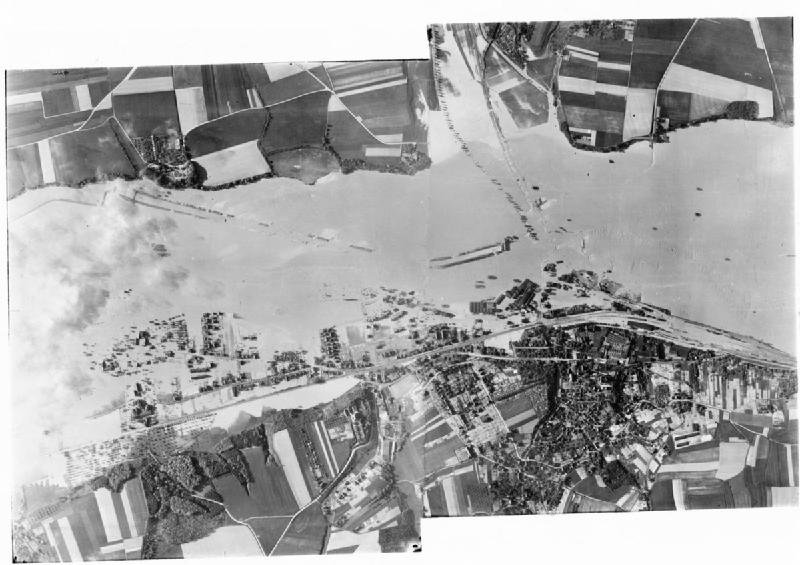
Down the Ruhr the flood ran on hour by hour. Wickede, a town of a few thousand, was almost entirely inundated around two in the morning, with well over a hundred dead. Fröndenberg took the wave at about three, still some four metres high; warnings had arrived, but many people could not believe a flood on that scale was possible and stayed in low-lying houses. Schwerte, fifty kilometres from the dam, was reached around a quarter past five, with water standing house-high in the old town, and the surge pushed on through the Hengsteysee near Hagen and was still doing damage at Hattingen and as far downstream as the eastern edge of Essen. Behind it lay wrecked waterworks and power stations, dozens of road bridges and a string of railway bridges gone, factories flooded and around a thousand buildings destroyed or badly damaged. The dead were pulled from meadows and treetops for weeks. The contemporary official count reached 1,294; the historian Ralf Blank’s later research puts the true figure at not fewer than 1,650, the majority of them forced labourers and prisoners.
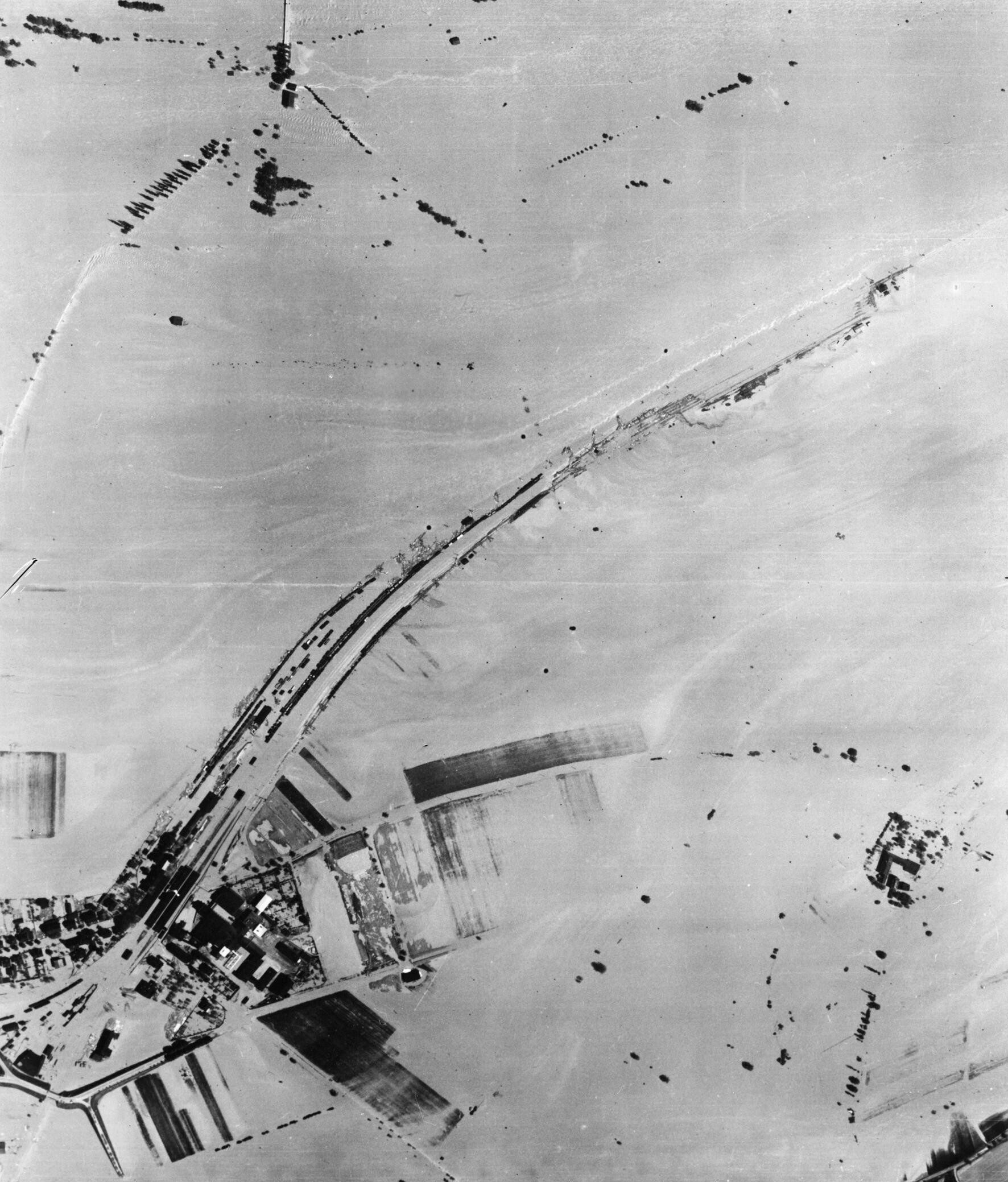
The Eder flood, released at about 01:52, ran the other way, east and north towards Kassel. The villages immediately below the dam, Hemfurth, Affoldern and Bergheim among them, took the full force, and the airfield at Fritzlar was put under water, but the Eder valley is broader and emptier than the Ruhr’s, and the wave had flattened and slowed by the time it reached Kassel’s outskirts some thirty-five kilometres away. Perhaps seventy people died along its course, a fraction of the Möhne’s toll, though the loss of the reservoir that fed the Weser navigation and guarded the region against summer drought was felt for a year.
The German response was immediate and, on its own terms, formidable. Albert Speer flew over the flooded valleys at first light on 17 May and was at the dams within hours, and out of his visit came a dedicated reconstruction command for the Ruhr. Workers of the Organisation Todt were pulled off the Atlantic Wall in France, a transfer of labour Speer himself put at 7,000 men, and driven in shifts through the summer of 1943 to close the breaches before the autumn rains, the one deadline that mattered if the reservoirs were to refill over winter. They met it: the Möhne’s gap was sealed by late September, under the eyes of Allied reconnaissance aircraft that photographed the work and were never followed by bombers, an omission at which Speer marvelled for the rest of his life.
There was, however, no undoing the raid’s quietest achievement. From 17 May 1943 until the end of the war, every major dam in Germany had to be defended as if the Lancasters might come back tomorrow night. Heavy 8.8cm batteries, light flak, searchlights, smoke generators, balloons and reinforced nets went up at the Möhne, the Eder, the Sorpe and their sisters, and thousands of men and guns that were desperately wanted elsewhere stood guard, year after year, over water. The second attack they were waiting for never came.
What the Dambusters Raid actually achieved
The material damage was real and enormous. Some 330 million tonnes of water swept out of the two breached reservoirs. Eleven small factories and nearly a hundred houses were destroyed outright, a thousand more buildings damaged, twenty-five road and rail bridges gone, power stations wrecked, and the electricity grid of the region disrupted for a fortnight. Ruhr coal production dropped by hundreds of thousands of tonnes in May; German records attributed a sharp fall in regional steel output to the water crisis, though the figures are entangled with the wider Battle of the Ruhr then raging and historians treat them cautiously. Fields along the valleys were stripped or buried; the Möhne valley’s topsoil took years to recover.
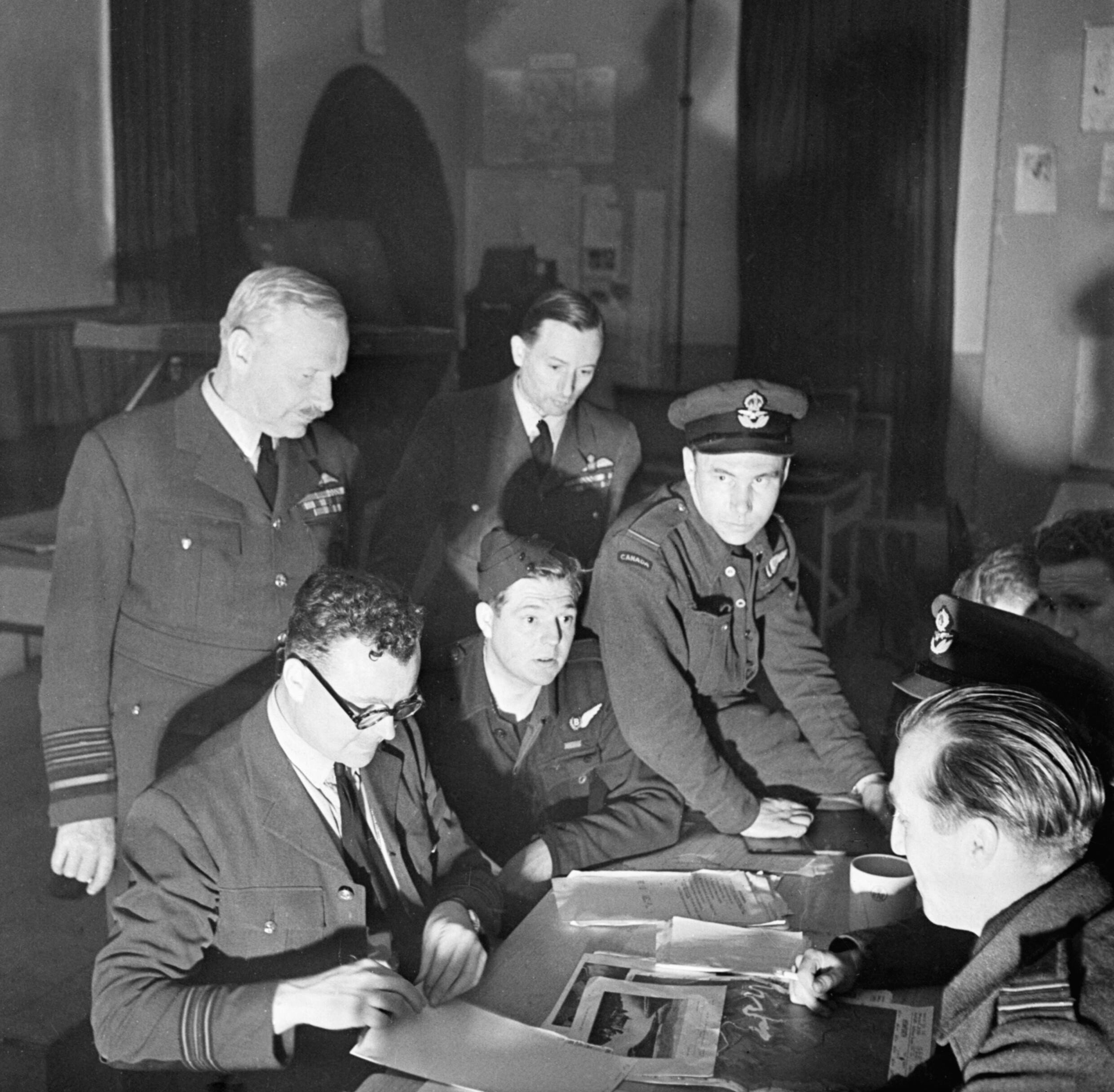
Yet the system healed faster than anyone in Britain hoped. The Germans threw thousands of workers at the breaches, Albert Speer’s figure is seven thousand, popular accounts run far higher, many redeployed from the Atlantic Wall, and the Möhne was repaired before the autumn rains, with full industrial production restored around September. Speer himself paid the raid a backhanded and famous compliment: that with a few dozen bombers the British had come closer to a decisive blow against war production than the thousand-bomber raids had ever managed, and then, to his open astonishment, never came back to bomb the exposed repair works. The greatest what-if of the Dams Raid is not the night itself but the follow-up that never flew.
The argument: was it worth it?
The debate began within the RAF and has never ended. The sceptics’ case is strong on its own terms: the Sorpe, arguably the dam whose loss the Ruhr could least afford, survived because Upkeep was the wrong weapon for an earth embankment, and some historians argue the planners understood that from the start. The breached dams were repaired in months. Measured in tonnes of steel forgone, the raid bought weeks, not years, at the cost of a third of a uniquely trained squadron. Harris, never a believer in what he called panacea targets, remained privately caustic about the whole affair even while publicly celebrating it.
The defenders’ case has grown stronger with distance. The raid forced Germany to garrison every major dam in the Reich with flak and manpower for the rest of the war; it pulled thousands of workers off the Atlantic Wall in the summer before the invasion year; it handed Allied morale and propaganda a victory of pure gold at the mid-point of the war, one set of photographs doing duty on every front page from London to Washington; and it proved, at a moment when Bomber Command’s whole doctrine was area attack by night, that precision was possible, a proof from which 617 Squadron’s entire later career flowed. James Holland’s verdict, that the raid was well worth its cost, and Hastings’s, that its triumph was moral and psychological rather than economic, are both defensible readings of the same evidence. What no serious historian defends is the tidy legend in which the dams broke and the Ruhr simply stopped. Wars are not won in a night, even that night.
Decorations, and what became of Gibson
Thirty-four decorations were gazetted within days, and the investiture on 22 June 1943 was the picture of the wartime RAF at its zenith. Gibson received the Victoria Cross, for the attack itself and above all for the deliberate, repeated use of his own aircraft as a decoy over the Möhne while others ran in. Five DSOs, ten DFCs with four Bars, two Conspicuous Gallantry Medals and eleven DFMs with a Bar went to the men around him. The King and Queen had already visited Scampton; the photographs from that summer, some in rare colour, show young men on Lincolnshire grass wearing the ribbons of what is often called the most decorated single operation of the war.
Gibson never flew with 617 again. Sent on a publicity tour of North America, received by Roosevelt, set to writing the memoir that became Enemy Coast Ahead, he pushed relentlessly to return to operations, and on the night of 19 September 1944 he flew as master bomber against Rheydt in a Mosquito he barely knew. It came down at Steenbergen in the Netherlands, killing Gibson and his navigator Jim Warwick. The cause has never been settled: fuel mismanagement on an unfamiliar type, flak, and even a tragic friendly-fire claim have all been argued, and the honest verdict remains open. He was twenty-six. The people of Steenbergen tend the grave to this day.
617 Squadron after the dams
The squadron the raid created spent the rest of the war proving that precision had been the point all along. After a bloody, costly failure against the Dortmund-Ems canal in September 1943 that killed Gibson’s successor and, across two nights, five more crews, 617 was rebuilt under Leonard Cheshire into Bomber Command’s precision instrument. With Barnes Wallis’s next inventions, the 12,000-pound Tallboy from June 1944 and the 22,000-pound Grand Slam from March 1945, the Dambusters broke the Saumur railway tunnel ahead of the Normandy battle, sealed U-boat pens, felled viaducts, and finally, on 12 November 1944, with No. IX Squadron, capsized the battleship Tirpitz in a Norwegian fjord. Cheshire’s VC made two for the squadron in little more than a year. No unit in the RAF carried, or carries, a heavier legend.
Wallis after the dams
Barnes Wallis was at Grantham through the night of the operation, and at Scampton the following morning when the arithmetic of the raid became human: eight aircraft gone, fifty-three men dead, three prisoners. Those who saw him recorded a man in tears, inconsolable amid the celebrations, and he said in later life that had he understood what the raid would cost the crews he could never have brought himself to begin it. The grief did not fade into anecdote. It shaped how he spoke of the operation for the remaining thirty-six years of his life, and it shaped what he did with the rewards that eventually came his way.
Professionally, the dams opened doors that had been closed in his face. In 1940 and 1941 the Air Ministry had rejected his proposals for a ten-ton deep-penetration bomb and the giant Victory Bomber to carry it, judging both a fantasy. After Chastise the fantasy was recommissioned in stages: Tallboy from the summer of 1944 and Grand Slam in the final spring of the war did precisely what his early papers had promised, transmitting their blast through earth to shake viaducts, tunnels, U-boat pens and battleships to pieces from below. The vindication was complete, and Wallis, characteristically, was already somewhere else. From 1945 he led a research department for Vickers at Brooklands and gave the last two decades of his working life to variable geometry: Wild Goose in the late 1940s and then the elegant Swallow of the mid 1950s, tailless swing-wing designs flown as large models on the cliffs at Predannack in Cornwall. Government funding was withdrawn in the defence retrenchment of the later 1950s, the research was shared with the Americans, and how much of it flowed into the swing-wing aircraft that others later built is still argued over. Wallis, who had watched his airship, his bombers and now his wings taken up, cut down or carried off by other hands, felt the pattern keenly.
The money tells its own story. In 1951 the Royal Commission on Awards to Inventors granted him £10,000 for his wartime work, a substantial fortune at the time. He kept none of it. The record is consistent that he gave the whole sum to found the RAF Foundationers’ Trust at Christ’s Hospital, the school that had educated him as a boy, so that the children of RAF personnel killed or injured in service could be educated there in their turn. It was as direct an answer as he could devise to the debt he felt to the men of the Dams Raid, and the trust’s foundationers continued to pass through the school for decades afterwards.
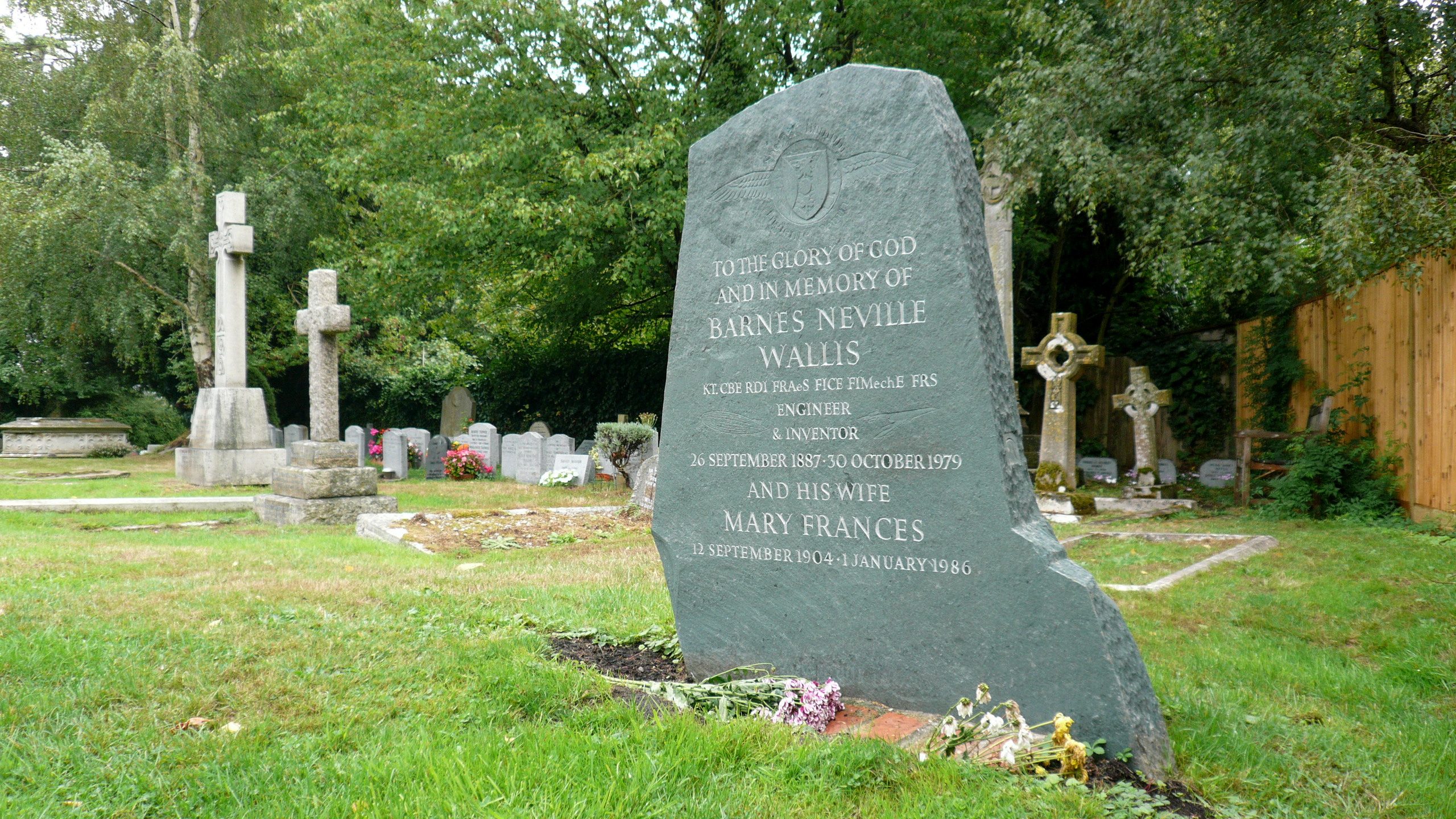
The honours arrived slowly and late. He had been elected a Fellow of the Royal Society in 1945; the knighthood came only in 1968, when he was eighty. He worked on at Brooklands until 1971, a tall, white-haired figure pursuing ideas about cargo submarines and long-range airliners with undimmed stubbornness, and he remained rooted in the Surrey village of Effingham, where he had lived since 1930 and where he and his wife Molly had raised their family. He died on 30 October 1979, aged ninety-two, and was buried at St Lawrence church in Effingham; Molly was laid beside him in 1986. His gravestone carries a Latin line from Horace, Spernit Humum Fugiente Penna, he spurns the earth on soaring wing, which is as close as an English churchyard comes to a summary of the man.
Writing the legend: Enemy Coast Ahead, Brickhill and the historians
The Dams Raid was a story before the survivors had slept. Within hours the reconnaissance photographs of the emptied reservoirs were on desks in Whitehall, within days they were in the newspapers, and the operation began its second life, the one it has led ever since, as a narrative. It is worth tracing how that narrative was built, because few military operations have been so thoroughly shaped by the books written about them, and few sets of books so clearly mirror the changing decades in which they were written.
The first author was Gibson himself. Grounded after his North American publicity tour and parked in staff appointments he loathed, he spent much of 1944 writing the memoir that became Enemy Coast Ahead, an account of his whole war from the first night of hostilities to the morning after Chastise. He wrote it as a serving officer under Air Ministry oversight, which meant the text passed through censors who removed operational secrets, softened judgements and struck out names, and it has been argued ever since how much of the published book is purely his. Some early readers doubted that a twenty-five-year-old pilot could have written so fluent a book at all, and suspicions of ghost-writing have circulated for decades. Richard Morris, who examined the surviving drafts while researching his biography, concluded that the voice is recognisably Gibson’s own, vivid, opinionated, sometimes careless with detail, though the text was certainly worked over by other hands before print. Gibson never saw it published. Serialised in the Sunday Express in the winter of 1944 to 1945, after his death at Steenbergen, the book appeared in 1946 to wide acclaim, and it remains one of the outstanding first-person accounts of the bomber war. Not until 2003 did an uncensored edition restore what the wartime blue pencil had cut, including Gibson’s blunter opinions of colleagues, commanders and tactics.
The legend proper, though, was the work of Paul Brickhill. An Australian journalist turned Spitfire pilot, Brickhill had been shot down over Tunisia in March 1943, two months before the raid he would one day immortalise, and spent the rest of the war in Stalag Luft III, where he helped with the preparations for the mass tunnel escape of March 1944 but was kept off the escape list because of claustrophobia. That experience produced The Great Escape in 1950, and the following year Evans Brothers published The Dam Busters, his history not just of Operation Chastise but of 617 Squadron’s whole war, through Cheshire, Tallboy, Grand Slam and the Tirpitz. It was a phenomenon, selling more than a million copies over the following half century and never falling out of print, and it fixed the raid in the popular imagination: Wallis the disregarded genius, Gibson the boyish hero, the squadron of hand-picked veterans. It was also, inevitably, flawed. Brickhill wrote while the weapon itself was still classified, so the first edition could not even say that the bomb bounced; he relied heavily on survivors’ memories and official handouts; he smoothed the squadron’s formation into the elite-selection myth demolished earlier in this piece; and his warm, novelistic method left little room for the drowned of the Möhne and Eder valleys. His book, together with Gibson’s, supplied the raw material for the 1955 film discussed elsewhere on this page, and between them the three fixed the raid’s public shape for a generation.
The scholars arrived later. In 1982 John Sweetman published Operation Chastise: The Dams Raid, Epic or Myth, expanded in 1990 as The Dambusters Raid, and the subtitle of the first edition announced the project: to test the legend against the archives. Sweetman worked through the planning papers, the minutes, the squadron records and the German documentation, and the raid that emerged was in many ways more impressive than the myth, a feat of improvisation under absurd time pressure, but also more complicated: a squadron containing many inexperienced crews, a weapon that nearly did not work, results that fell short of the hopes invested in them. Nearly every serious account since stands on Sweetman’s foundations. Richard Morris’s Guy Gibson, written with Colin Dobinson and published in 1994, did for the man what Sweetman had done for the operation, replacing the film’s clipped paragon with a far more interesting figure: the abandoned child, the driven and often difficult commander, the exhausted celebrity who could not stop, a portrait sympathetic precisely because it withheld nothing.
The twenty-first century has rewritten the raid twice more. James Holland’s Dam Busters: The Race to Smash the Dams, 1943, published in 2012, retold the story for a new generation as a race against time, restoring the engineering drama and the sheer administrative audacity of conjuring a squadron, a weapon and a tactic in eight weeks, and giving fuller voice to the surviving aircrew he was able to interview before they were gone. Seven years later Max Hastings’s Chastise: The Dambusters Story 1943 struck a darker balance. Hastings admired the flying as much as anyone, but he put at the centre of his book what earlier accounts had kept at the margin: the floodwater rolling through Neheim in the dark, and the hundreds of forced labourers, many of them young women brought from the occupied Soviet Union, who drowned behind barbed wire below the Möhne. He asked, more insistently than any British writer before him, what the raid’s real achievement had been and who had paid for it. In this he was drawing on German scholarship, above all that of the historian Ralf Blank, whose archival work on the Ruhr’s wartime catastrophe raised the death toll from the contemporary count of 1,294 to at least 1,650, most of them prisoners and forced workers of the very regime the raid was aimed at. In the dam villages themselves the night of 16/17 May 1943 has always been remembered as the Möhnekatastrophe, a flood with a body count, and the two national memories have only recently begun to speak to one another.
Looked at in sequence, the books chart the changing needs of their readers as much as the events of one May night. The 1940s wanted testimony; the 1950s, with the Empire ebbing and austerity biting, wanted consolation, proof that British ingenuity and nerve had counted for something immense; the 1980s and 1990s wanted the record corrected and the hero humanised; our own century wants the moral ledger completed, the drowned counted alongside the decorated. That the story has survived every revision is the surest sign of its power. Strip away the myths and there remains a true event of almost unbearable narrative perfection: a weapon that should not have worked, nineteen aircraft flying at hedge height through the dark, three minutes of moonlit judgement over black water, two great dams falling, fifty-three young men dead before breakfast, and a valley full of the innocent and the enslaved dead beneath the flood. Each generation retells it because each generation finds in it the question that will not settle: what such skill and such courage are worth, and what they cost. There is no final edition of a story like that.
The film, the march and the Death Star
The legend’s second life began in 1955 with Michael Anderson’s film The Dam Busters, Richard Todd as Gibson, Michael Redgrave as a gentle, grieving Wallis, and a screenplay by R. C. Sherriff drawn from Paul Brickhill’s book and Gibson’s own memoir. Four real Lancasters flew for the cameras at a hire cost that consumed a healthy slice of the budget, and Eric Coates’s Dam Busters March became, in effect, the second national anthem of British aviation. It was the biggest film at the British box office that year and it fixed the raid’s grammar, the spotlights converging, the towers in the bombsight, the wall letting go, in the national imagination permanently.
Its influence runs further than most people realise. When George Lucas needed a template for the climactic attack on the Death Star, he lifted the Dam Busters trench run almost shot for shot, dialogue included, and hired Gilbert Taylor, who had photographed the film’s special effects, as his Star Wars cinematographer. Every fictional desperate low-level run at an impossible target since owes the Möhne a royalty. A long-promised remake, for years attached to Peter Jackson, remains unmade, perhaps because the original said what needed saying.
One element of the story asks for care, and it is best handled plainly. Gibson’s much-loved black Labrador, the squadron’s mascot, was killed by a car outside Scampton’s gates as the raid drew near, and was buried at midnight as his master attacked the Möhne. The dog’s name was Nigger, common enough as a dog’s name in the Britain of 1943 and rightly understood today as a deeply offensive racial slur; it was also chosen as the codeword to signal the Möhne breached, which is how it entered the official record of the raid. History keeps the name, and this account records it once, in context. Modern retellings handle it in different ways: broadcasters edit or re-dub it, and in 2020 the RAF replaced the headstone on the dog’s grave at Scampton with one that omits the name, a decision that has itself been argued over ever since. The dog, the grave and the word all belong to the story as it happened.
Memory: the last Dambuster and the grave at Scampton
The Dambusters aged as all squadrons do, into reunions, then anniversaries, then obituaries. The last of the pilots, Les Munro, died in 2015; the last man of the raid itself, George “Johnny” Johnson, McCarthy’s stubborn bomb aimer at the Sorpe, died on 7 December 2022 at the age of 101, and with him the raid passed finally from memory into history. The eightieth anniversary in May 2023 was the first with no one left who had been there: the flypasts went over Lincolnshire and the Derwent anyway, because the point of the thing had long since outgrown any single lifetime.
Scampton itself, the raid’s home, ceased to be an RAF station in 2022, and as of 2026 West Lindsey District Council is pursuing acquisition of the site, and the fate of its heritage buildings, Gibson’s office among them, has been argued through planning documents ever since; anyone writing about accessing the site should check its current status before travelling. The squadron’s memory is better anchored at the 617 memorial in Woodhall Spa and the International Bomber Command Centre at Lincoln, and in Germany, memorials at Neheim and along the Möhne name the flood’s dead, including the Soviet women of the Möhnewiesen camp.
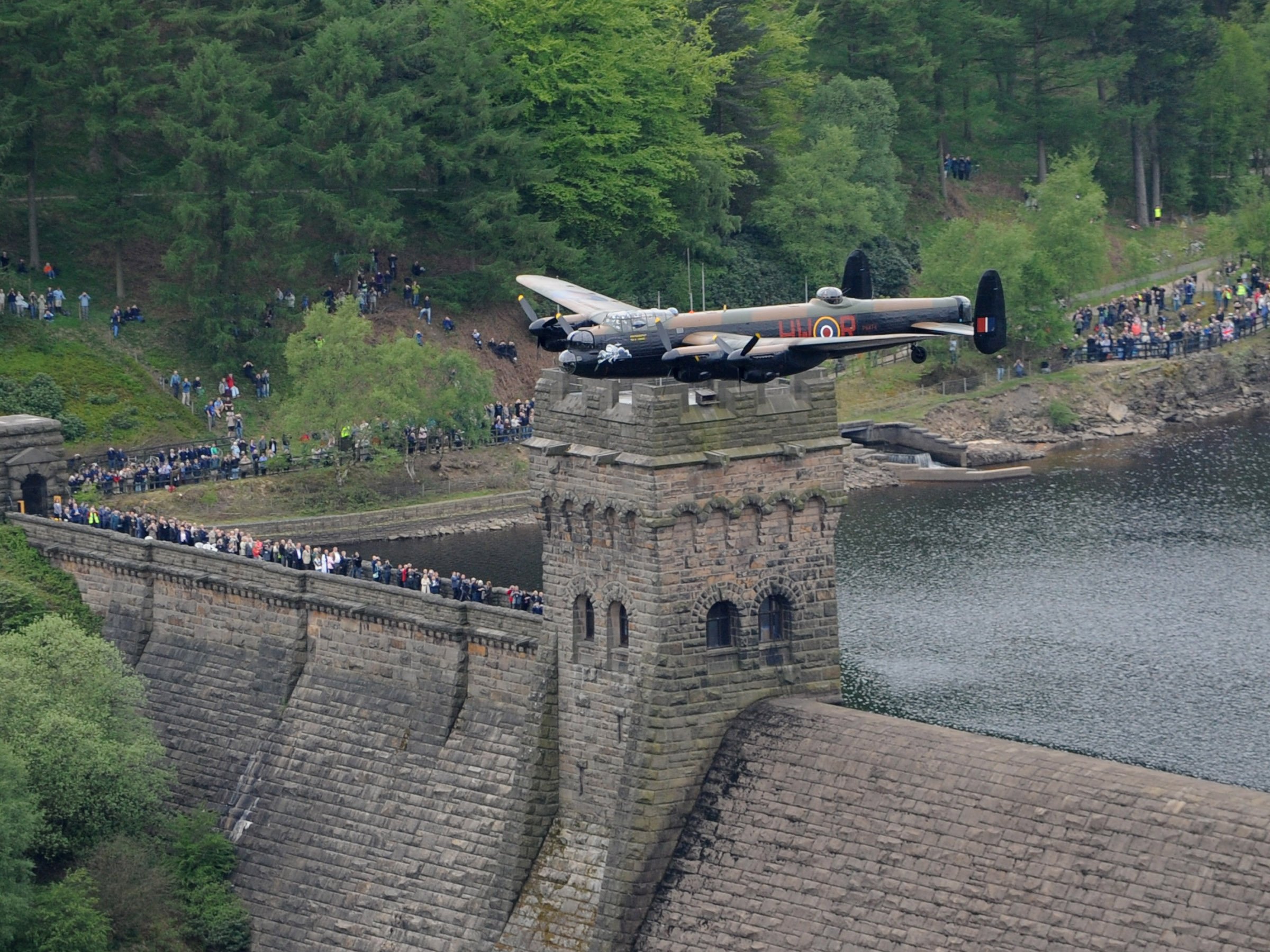
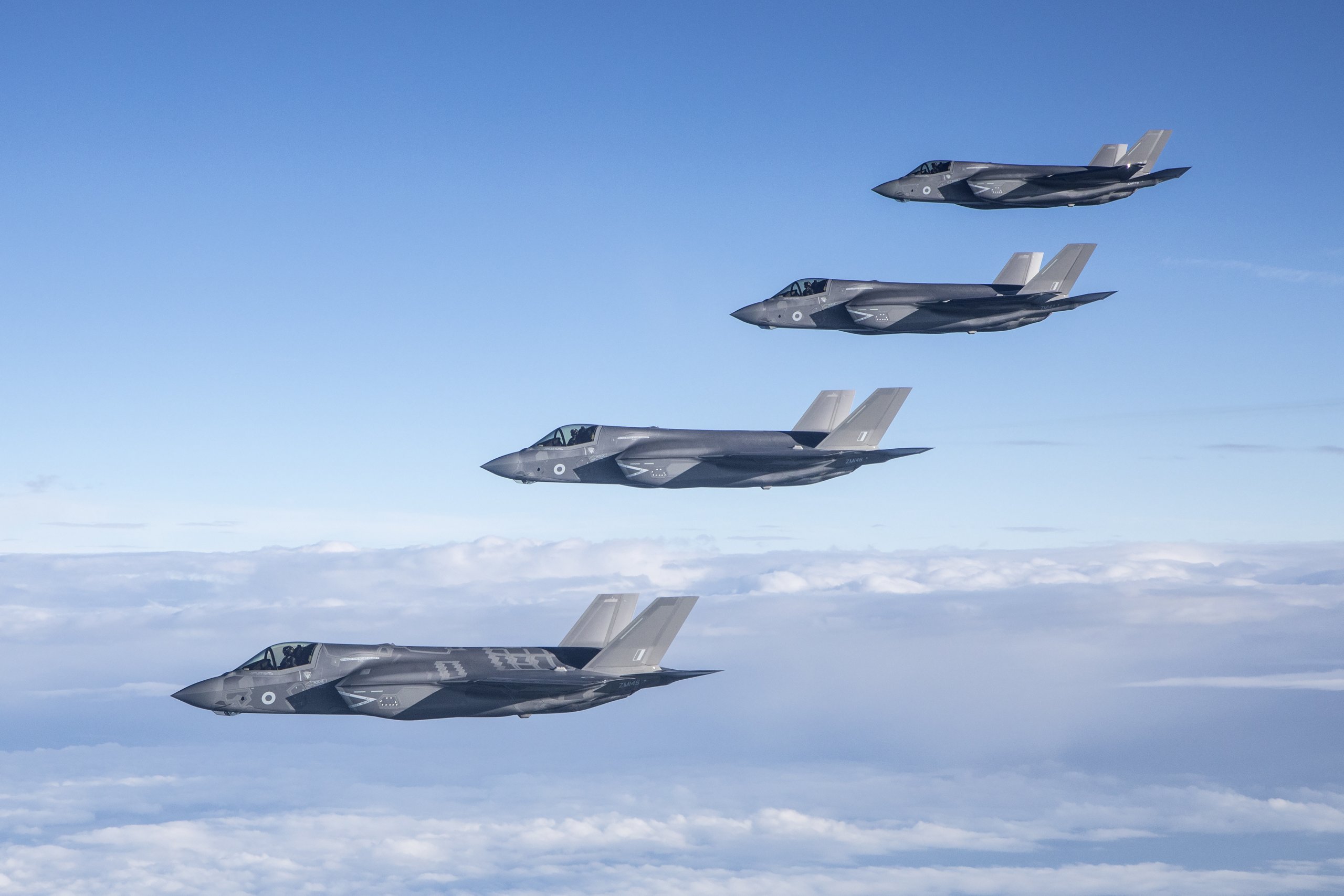
Today: F-35s, flypasts and the dams themselves
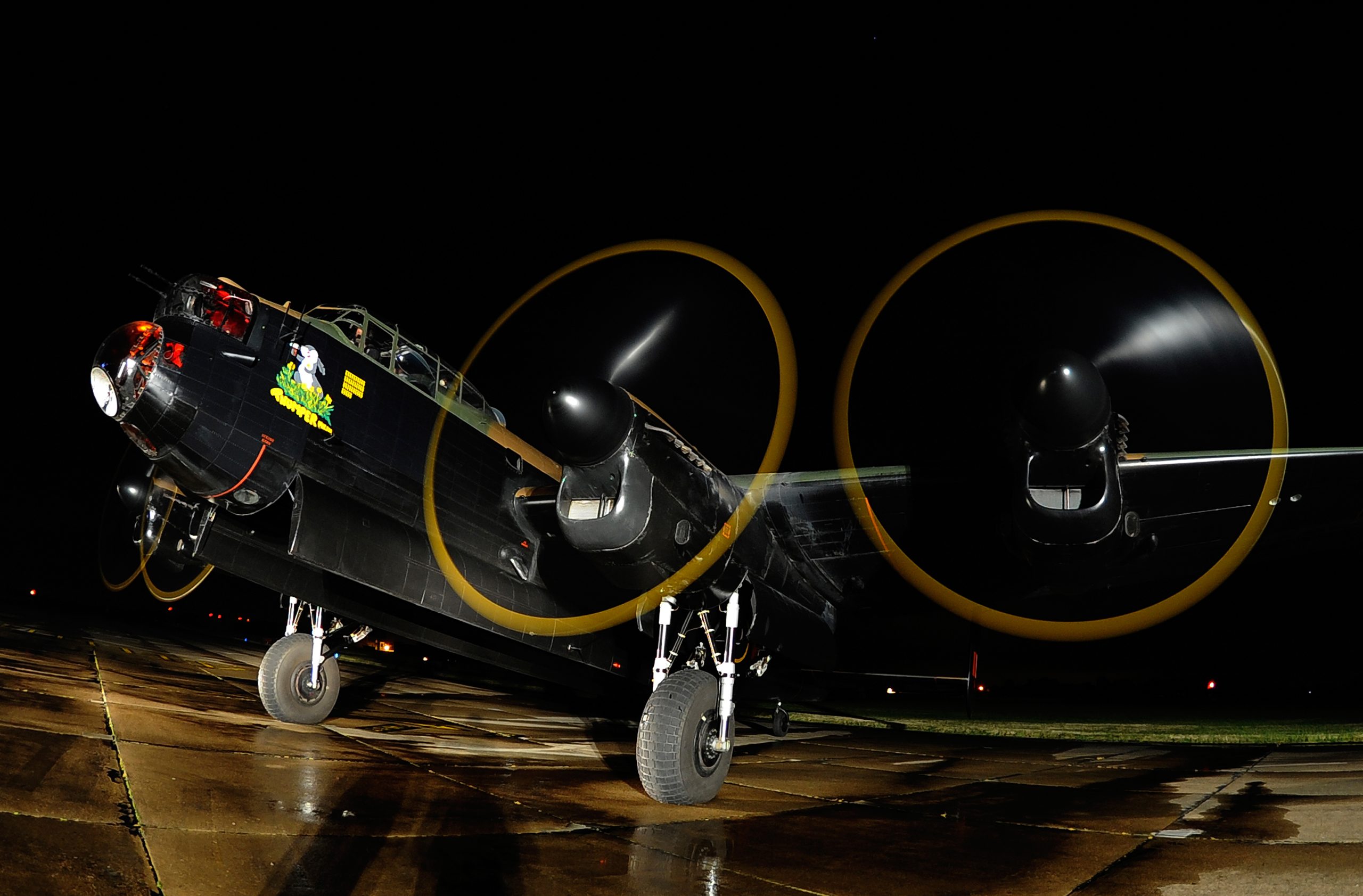
617 Squadron flies today, and the badge still carries the broken dam and the motto Après moi le déluge. Reformed in 2018 after a spell disbanded, the Dambusters are now the RAF’s first F-35B Lightning squadron, flying from RAF Marham and embarking in the Royal Navy’s carriers: a stealth jet squadron whose name means a wooden bombsight and sixty feet over dark water. The Battle of Britain Memorial Flight’s Lancaster PA474, one of only two Lancasters in the world kept in airworthy condition, is currently grounded: it flew to Duxford in October 2025 for an eighteen-month major overhaul and will not fly during 2026. Its Derwent dam flypasts on the great anniversaries had become pilgrimages, photographers ten deep on the banks where the practice runs once rattled the windows.
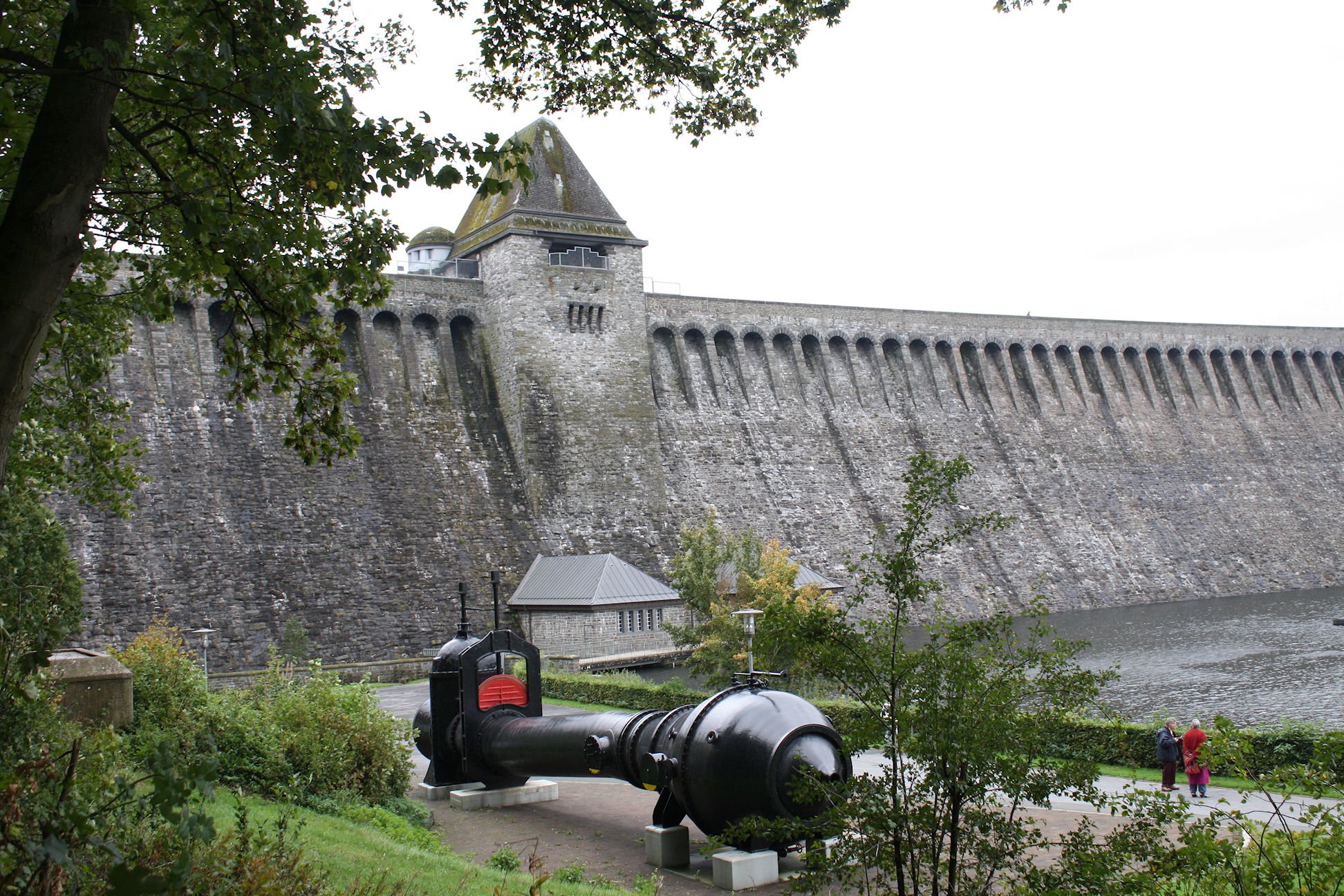
The dams were rebuilt long ago and hold their lakes still. The Möhne’s masonry shows the repaired section to a knowing eye; the Eder’s crest carries a road and a viewing point; the Sorpe’s green embankment gives no sign it was ever touched. Upkeep survivors, inert trial stores mostly recovered from the seabed off Reculver, sit in museums from Duxford and Brooklands to East Kirkby and Newark, dented drums that changed the war less than the legend says and more than the sceptics allow.
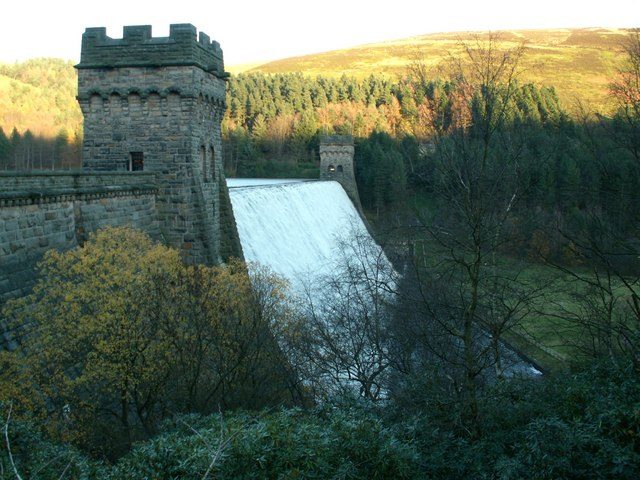
Visiting the raid today
The raid left an unusually walkable trail, scattered across two countries and both ends of England, and most of it can be seen in a handful of unhurried days. The natural starting point is the Upper Derwent Valley in Derbyshire, where 617 Squadron practised in the spring of 1943. The Derwent dam, with its twin gritstone towers so like the Möhne’s, still holds back its reservoir at the head of Ladybower, and a plaque on the western tower remembers the squadron. Park at the visitor centre at Fairholmes, below the dam, and walk the lane along the water; on major anniversaries a Lancaster of the Battle of Britain Memorial Flight has swept low along the reservoir and over the towers, and on those days the dam wall, the surrounding hillsides and every verge for miles fill up hours in advance. Flying is never guaranteed and arrangements change year to year, so check before travelling.
Lincolnshire holds the human heart of the story. In Royal Square Gardens at Woodhall Spa stands the 617 Squadron memorial, built in the shape of a breached dam and carrying the names of the squadron’s dead from the whole war; it is the place where veterans gathered for as long as there were veterans. A few minutes away is the Petwood Hotel, the requisitioned country house that served as the officers’ mess from January 1944, where the Squadron Bar keeps its memorabilia and non-residents can usually call in for tea, though it is wise to check before travelling. On Canwick Hill outside Lincoln, the International Bomber Command Centre sets the raid in its harder context, with a spire flanked by walls bearing the names of the Command’s dead and a view across to the cathedral that guided crews home. At East Kirkby, the Lincolnshire Aviation Heritage Centre keeps the Lancaster NX611, Just Jane, which runs its four Merlins and taxis on selected days; places for taxi runs book out well ahead, so check dates and availability before travelling. Scampton itself, the station the raid flew from, ceased flying as an RAF station in the 2020s and its future has been contested ever since; the hangars and Gibson’s office survive on the site, but access arrangements have varied and may change again, and anyone hoping to see it should confirm the current position before setting out.
Kent holds the proving ground. At Reculver, on the north coast east of Herne Bay, the twelfth-century twin towers of the ruined church look down on the very shingle where the trial stores were dropped through April and May 1943, and it takes little imagination, standing on the beach at low tide, to see the Lancasters coming in off the sea. Trial stores dug out of these sands and shallows in later years are now in museums, including a recovered bomb core at The Seaside Museum in Herne Bay. And at Brooklands in Surrey, alongside one of the surviving inert Upkeeps, Brooklands’ permanent Barnes Wallis exhibition sets his work in context, a display that repays a long pause.
Germany asks for a different frame of mind. The Möhne dam, rebuilt to its old profile, carries a public walkway along its crest, and to stand at the centre of the wall, above the compensating basin, is to stand on the repaired breach itself; memorials at the dam and in the villages below mark the night, and in Neheim a memorial honours the flood’s dead, among them the hundreds of Ukrainian women from the camp on the meadows. The lake is now a place of sailing boats and cafés, which is its own kind of monument. The Eder, in the wooded hills of northern Hesse, is best seen first from above, from Schloss Waldeck on its crag, before walking the crest of the dam at Hemfurth; the scale of the valley explains at a glance why the breach emptied with such violence. The Sorpe at Langscheid, the great earth embankment that shrugged off its bombs, is the quietest of the three, a long grass-covered ridge with a road along the top and almost nothing to say it was ever attacked, which is precisely its eloquence. Opening arrangements for crest walkways and viewpoints can vary with works and water levels, so check before travelling.
The last stop is in the Netherlands. In the small Brabant town of Steenbergen, Guy Gibson and his navigator Jim Warwick, killed when their Mosquito came down on the night of 19 September 1944, lie side by side in the Roman Catholic cemetery. The town has never let go of them: streets named Gibsonstraat and Warwickstraat meet near a memorial marking the crash, and flowers appear on the graves without any anniversary to prompt them. After the dams, the noise and the argument, it is a fittingly quiet place to end.
The anniversary clock
For publishers and programme makers, the Dams Raid runs on a dependable calendar: every 16 and 17 May brings commemorations, and the round years bring commissioning cycles. The eightieth, in 2023, filled schedules; the eighty-fifth falls on 16 and 17 May 2028, and the planning for books, documentaries and features around it will begin long before. Expect flypast applications, museum programmes and, on current form, another round of remake rumours; treat all specifics as expectations until the RAF confirms them, because flypasts are weather and serviceability all the way down. What is certain is that the demand for the raid’s imagery, wartime and modern, rises on schedule every May.
Licensing the imagery of the Dams Raid
Which brings this story to its practical end. The historic photographs in this article are drawn from the great wartime collections, and high-resolution, print-ready scans of many of the raid’s defining images, the crews in colour at Scampton, the practice drops at Reculver, the briefing model of the Möhne, the pre-war dam, the flooded Eder valley, the surviving captains on the Scampton grass, portraits of Gibson and of Wallis, and rarities like the official record of Gibson’s estate, are available for licensing today from the Piemags collections on Alamy, under the contributor names Piemags, Piemags/ww2archive, Piemags/AN24 and Historic Collection. A selection is linked from the captions above; the full holdings are searchable on Alamy, and enquiries for publishing, broadcast and exhibition use can also come direct through piemags.com, where pricing is negotiable, and we will match or beat what you pay other agencies for comparable historical imagery.
The same archive behind this piece supplies the modern era too: Aviation Photo Crew’s air-to-air photography of the warbird and front-line fleets, from the last flying Lancasters’ stablemates to the F-35s that carry 617’s number now, all licensable through professionalaviationphotography.com with terms on the licences page. For the wider context of sourcing aviation imagery, period and modern, start with our guide to aviation picture research and the companion piece on licensing early aviation photographs; the bomber war’s aircraft are told in our histories of the Avro Lancaster and the Handley Page Halifax.
Our own air-to-air photography of the surviving Bomber Command types, including the Lancaster, is collected in the warbirds gallery and is available to license. Picture researchers working on the raid may also find our guide to aviation picture research useful, and our history of the Avro Lancaster covers the aircraft itself in full.
617 Squadron’s other great capital ship operation came eighteen months later, when Tallboy replaced Upkeep and the target was a battleship rather than a dam. The full account is in the guide to the three year air campaign against Tirpitz.
Frequently asked questions
What was the Dambusters Raid?
Operation Chastise, flown on the night of 16 to 17 May 1943 by 19 Lancasters of the RAF’s newly formed 617 Squadron, attacked the great dams of the Ruhr and Weser with Barnes Wallis’s spinning Upkeep mine. The Möhne and Eder dams were breached, the Sorpe was damaged, and the raid became the most famous single operation in RAF history.
How did the bouncing bomb actually work?
Upkeep was a four-ton steel drum spun backwards at about 500 rpm and released at a briefed 60 feet and about 230 mph, sources differing between 232 and 240, roughly 400 to 500 yards from the dam. The backspin made it skip over the water and the torpedo nets, then crawl down the dam face as it sank, where hydrostatic pistols fired 6,600 lb of Torpex at 30 feet depth, using the lake itself to tamp the blast.
Who led the raid?
Wing Commander Guy Gibson, aged 24, who had already flown more than 170 operational sorties. He attacked the Möhne first and then repeatedly flew across the dam as a decoy to draw its guns from the following crews, for which he received the Victoria Cross. He was killed in a Mosquito crash in September 1944, aged 26.
How many aircraft and men were lost?
Eight of the 19 Lancasters were lost. Of 133 aircrew, 53 were killed and three became prisoners of war, a 40 per cent loss rate in one night. Fourteen of the dead were Canadian, thirteen of them serving with the RCAF, and two Australian.
How many people died in the floods?
Estimates range from the contemporary German count of 1,294 to modern research suggesting at least 1,650. More than half the victims were prisoners of war and forced labourers, including at least 493 Soviet, mostly Ukrainian, women drowned in a camp at Neheim below the Möhne. Any honest account gives the range rather than a single figure.
Did the raid cripple German industry?
Not for long. The damage was severe, with water, power and transport disrupted across the region and thousands of workers diverted to repairs, but the Möhne was rebuilt before the autumn rains and production largely recovered by September 1943. Historians still debate whether the raid’s real value was industrial, moral or strategic, and the RAF never bombed the exposed repair works.
Why was the Sorpe dam not breached?
The Sorpe was an earth embankment with a concrete core, a structure the skipping Upkeep could not burst. It was attacked along the crest with unspun mines by Joe McCarthy, whose bomb aimer Johnny Johnson insisted on ten runs before releasing, and later by Ken Brown. The crest was cracked but the dam held, and some historians argue the planners always knew it would.
Were the Dambusters really a hand-picked elite?
Partly myth. Gibson personally recruited some trusted crews, but much of 617 Squadron arrived by ordinary posting, including men with very little operational experience. What made the squadron exceptional was six weeks of intense low-level night training rather than selection.
Where can I see a Dambusters Lancaster or an Upkeep today?
No Type 464 Lancaster survives, but the Battle of Britain Memorial Flight’s Lancaster PA474, one of only two Lancasters in the world kept airworthy, has flown Derwent dam anniversary flypasts, though it is grounded through 2026 for a major overhaul at Duxford. Inert Upkeep trial stores are displayed at museums including IWM Duxford, Brooklands, East Kirkby and Newark, and 617 memorials stand at Woodhall Spa and the International Bomber Command Centre, Lincoln.
What does 617 Squadron fly now?
The Dambusters reformed in 2018 as the RAF’s first F-35B Lightning squadron, flying from RAF Marham and embarking in the Royal Navy’s aircraft carriers. The squadron badge still shows a breached dam with the motto Après moi le déluge.
When is the next major Dambusters anniversary?
The 85th anniversary of the raid falls on 16 and 17 May 2028. The 80th in 2023 was the first with no surviving participant, after the last Dambuster, Sqn Ldr George “Johnny” Johnson, died in December 2022 aged 101. Publishers and programme makers typically begin commissioning for round-number anniversaries a year or more ahead.
Where can I license Dambusters photographs for publishing?
High-resolution scans of many defining Dams Raid images, including the colour crew portraits at Scampton, the Reculver practice drops, the Möhne briefing model and reconnaissance of the flooded valleys, are licensable from the Piemags collections on Alamy (contributor names Piemags, Piemags/ww2archive, Piemags/AN24 and Historic Collection), with direct enquiries via piemags.com, where pricing is negotiable and we will match or beat comparable agency rates.
The RAF’s dam raid had an American cousin a year earlier, sixteen bombers flying off a carrier deck with no way back: read our companion epic on the Doolittle Raid.
The other great precision operation of 1943 ended with a mistake by a mile and a half and an argument that has never settled: read our full epic on the Peenemunde raid.
Sources and further reading
- Imperial War Museums: the story of the Dambusters Raid
- RAF Museum: 617 Squadron and the Dams Raid
- Charles Foster’s Dambusters Blog (crew-by-crew research)
- John Sweetman, The Dambusters Raid; James Holland, Dam Busters (2012); Max Hastings, Chastise (2019); Guy Gibson, Enemy Coast Ahead (1946)

