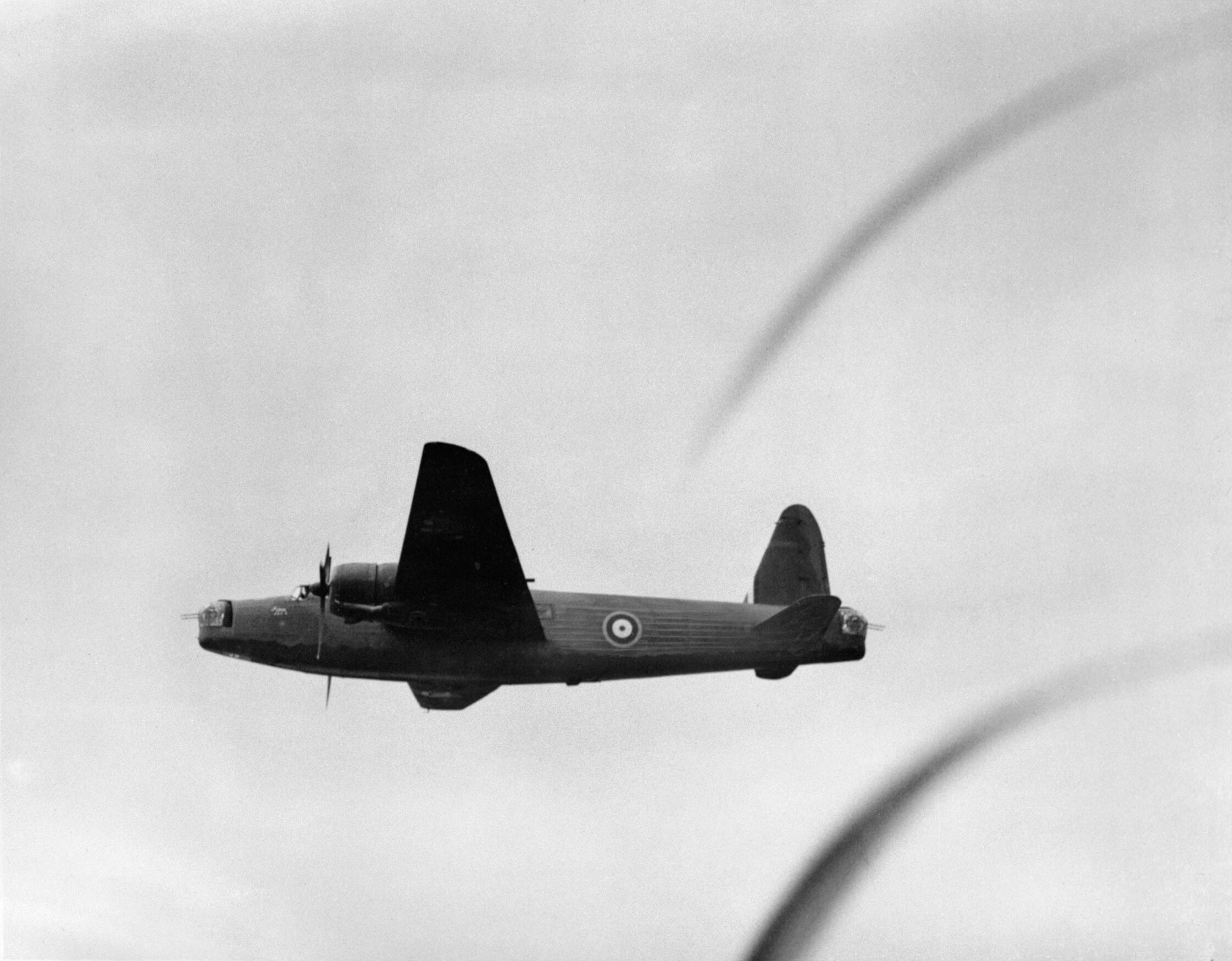
The Vickers Wellington is the bomber that history keeps filing under “also served”, and it deserves far better. It flew the RAF’s first bombing raid of the Second World War, carried the night offensive against Germany almost alone until 1942, hunted U-boats by searchlight, exploded magnetic mines with a giant hoop, and was still in RAF service in 1953. More Wellingtons were built than any other British bomber, before or since. And it did all of this on a structure unlike anything else in the sky: a woven metal basket designed by Barnes Wallis that could take a battering no conventional airframe would survive.
What this guide covers
- Origins and development
- The geodetic design
- Building the Wellington
- Service and combat history
- Coastal Command and the war at sea
- The Mediterranean and the Far East
- Variants
- Specifications
- Where the survivors are today
- Photographing the Wellington today
- Training the bomber force
- Legacy
- Frequently asked questions
Origins and development
The Wellington began, as so many British aircraft of its generation did, with an Air Ministry piece of paper. Specification B.9/32, issued in the middle of 1932, asked for a twin-engined day bomber with better performance than anything then in RAF service. The same requirement produced the Handley Page Hampden, and the Armstrong Whitworth Whitley followed shortly afterwards to Specification B.3/34, the two aircraft alongside which the Wellington would go to war seven years later. Of the three, only the Vickers design would still be in production when the war ended.
The work was led at Brooklands in Weybridge, Surrey, by Rex Pierson, chief designer of Vickers-Armstrongs and a man whose name deserves to be far better known. Pierson had designed the Vimy, the bomber that made the first non-stop Atlantic crossing in 1919, and he would go on to lay out the Viking airliner after the war. For the new bomber he made a decision that defined the aircraft: the structure would use the geodetic system that Barnes Wallis, the firm’s structures specialist, had developed for the Wellesley single-engined bomber. Wallis handled the structural design; Pierson shaped the aeroplane around it.
The design went through substantial change during development. Weight limits written into the original specification lapsed, performance requirements grew, and the engine changed more than once. Vickers considered the Bristol Pegasus and Armstrong Siddeley Tiger radials and the liquid-cooled Rolls-Royce Goshawk before the Pegasus won out. The prototype, K4049, known to the factory as the Type 271, first flew from Brooklands on 15 June 1936 with Vickers chief test pilot Joseph “Mutt” Summers at the controls, accompanied by Wallis himself and Trevor Westbrook. Ten days earlier the type had briefly been given the name Crecy, and it was publicly shown under that name, but the Air Ministry settled on Wellington. Like the Wellesley before it, the aircraft honoured Arthur Wellesley, the first Duke of Wellington. Crews, with the affectionate irreverence of their trade, promptly renamed it after J. Wellington Wimpy, the hamburger-eating character from the Popeye cartoons, and “Wimpy” it remained for the rest of its life.
The production Wellington Mk I that followed was substantially a new aeroplane: a lengthened nose with a turret and bomb aimer’s position, a deepened fuselage for a bigger bomb load, a crew grown from four to five, a retractable tailwheel and constant-speed propellers. The first production aircraft flew in December 1937, and No. 99 Squadron took delivery of the RAF’s first Wellingtons at Mildenhall in October 1938. A parallel design to a heavy bomber specification, the Vickers Warwick, shared around 85 per cent of its structural components with the Wellington, and the two were developed side by side.
By the outbreak of war the Wellington was outnumbered in service by the Hampden and Whitley. It would outlast both of them in production and in front-line service, and by a distance that nobody in 1939 would have predicted.
The geodetic design
Everything unusual about the Wellington flows from its structure. Barnes Wallis had worked on the R100 airship, where light weight and large unbraced spaces were everything, and he brought that thinking to aeroplanes. In a geodetic airframe, the fuselage and wings are formed from a lattice of duralumin members that spiral around the structure in opposing directions, crossing each other like the weave of a basket. Each member follows a geodesic curve, the shortest path across the curved surface, and the loads in any one member are balanced by the members crossing it. The Wellington’s fuselage alone was built up from about 1,650 of these elements, W-section duralumin beams joined into a continuous metal net. Wooden battens were screwed along the lattice and the whole aircraft was then covered in Irish linen, doped until it was drum-tight.
The system had three great virtues. It was light for its strength, which gave the Wellington long range and a bomb load out of proportion to its size: the Mk I could lift 4,500 lb of bombs, more than a fifth of its 21,000 lb all-up weight. It left the interior of the wings and fuselage largely free of internal bracing, so each wing could carry three fuel tanks in clear space between the spars. And, most famously, it was extraordinarily tolerant of battle damage. Because every load had an alternative path through the lattice, a Wellington could lose whole bays of structure on one side and remain flyable. Crews came home with the fabric burned away and the bare bones of the lattice showing, in aircraft that by any conventional reckoning should have broken up. Photographs of these survivors built the aircraft’s reputation for being close to indestructible, and no other RAF bomber inspired quite the same faith among its crews.
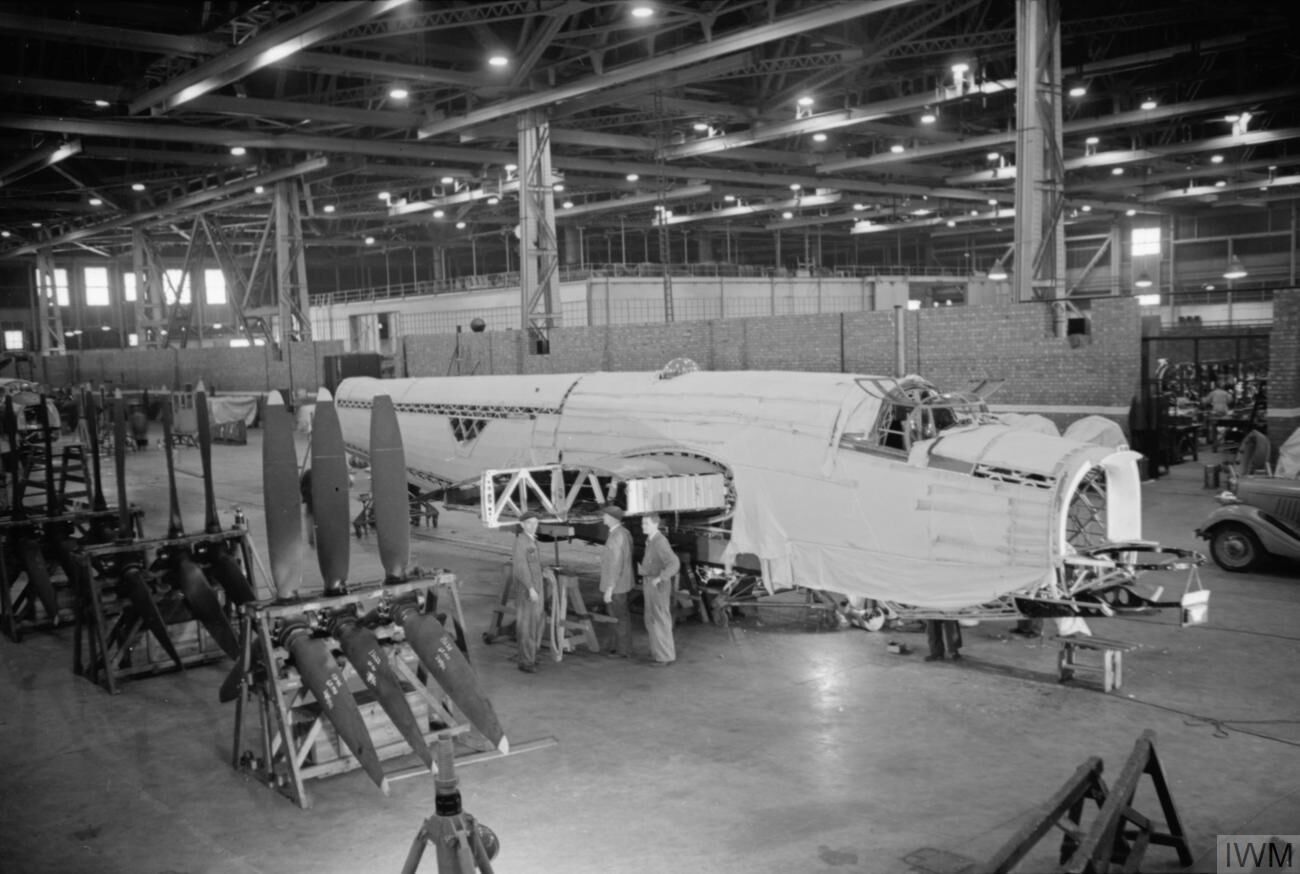
There were costs. The lattice was more complex to build than a conventional stressed-skin structure, and it did not lend itself to the sort of simple jigging that American production lines favoured, though Vickers solved that problem comprehensively, as we shall see. The fabric covering limited diving speed and demanded constant care. And the structure had limited stiffness along its length: when Wellingtons were fitted with attachments for towing troop-carrying gliders, the fuselage visibly “gave” and stretched slightly under the load. Geodetics also sat awkwardly with the coming generation of pressurised, high-speed aircraft, which is one reason the idea died with the Wellington’s siblings rather than founding a dynasty.
None of that mattered much in 1939. What mattered was that the RAF possessed a bomber that could carry a real load a long way and absorb punishment that would destroy a Hampden or a Blenheim, and whose crews believed the aeroplane would get them home.
Building the Wellington
The Wellington was built in greater numbers than any other British bomber in history: 11,461 or 11,462 aircraft depending on which company records you follow, a figure that includes every mark from the first Mk I to the last trainer conversion. Production ran continuously from 1936 until the final aircraft rolled out on 13 October 1945, making the Wellington the only British bomber to remain in production for the entire war.
Three factories carried the load. The parent plant at Weybridge built the prototypes and early marks and kept building throughout the war. A shadow factory at Broughton, near Chester, and another at Blackpool joined it, and between them the three sites delivered Wellingtons at a rate that peaked in the hundreds per month. A typical Wellington took around 60 hours of assembly time.
That figure produced one of the great propaganda set pieces of the war. In October 1943 the workforce at Broughton set out to build a Wellington, LN514, against the clock in a single weekend shift. The aircraft was assembled in 23 hours and 50 minutes and was airborne 24 hours and 48 minutes after the first part was laid down, beating a 48-hour record held by an American factory. The Ministry of Information filmed the whole attempt for the newsreel Worker’s Week-End, which was shown in Britain and America. It remains one of the most remarkable demonstrations of wartime production ever staged, and it was done with a geodetic airframe that sceptics had once called too complicated for mass production.
Service and combat history
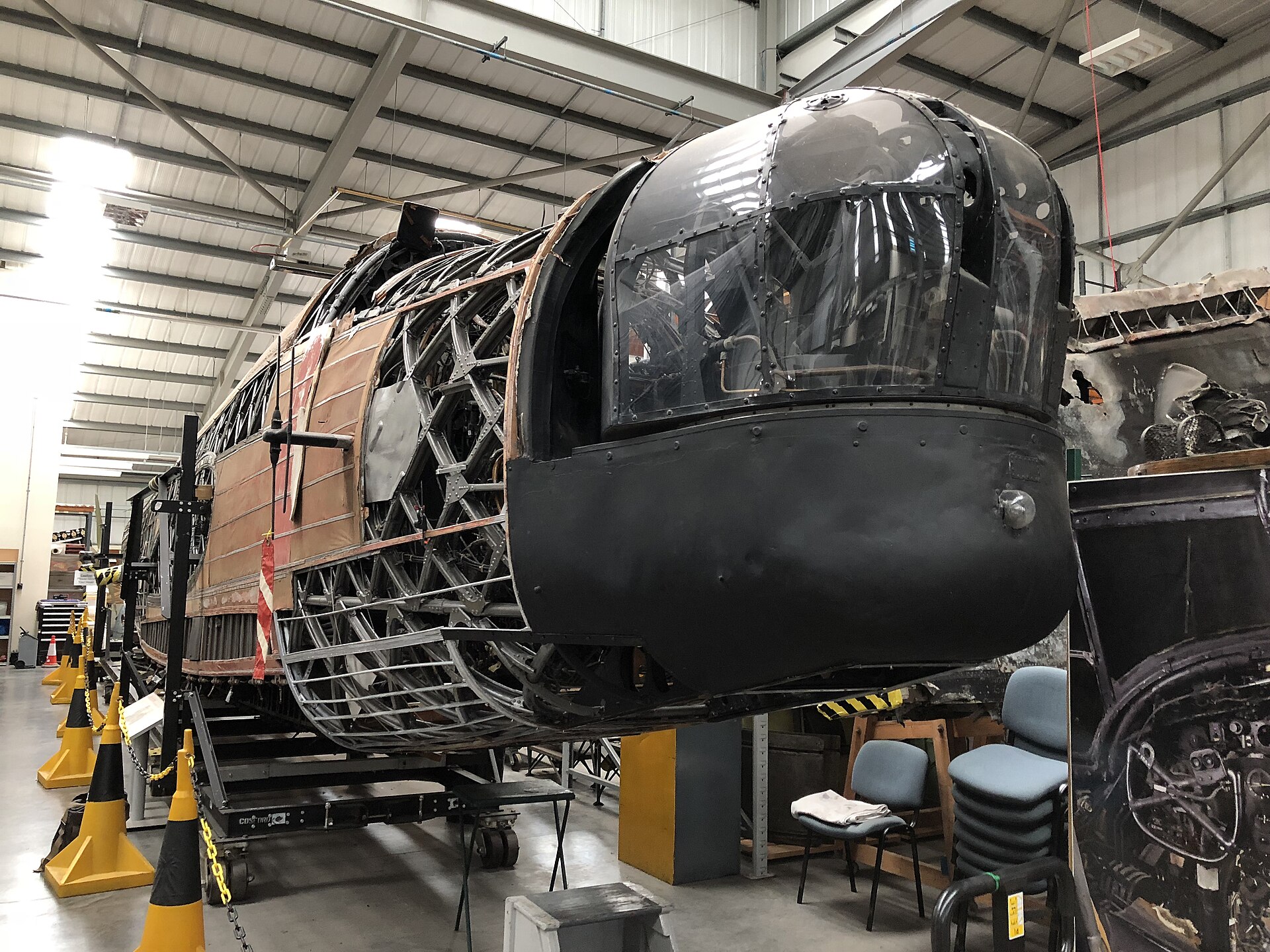
MF628, Royal Air Force Museum. Built at Broughton as a B Mk X and delivered into storage at RAF Tinwald Downs, Dumfries, on 11 May 1944, MF628 missed the war but earned distinctions of its own. Converted to a T.10 trainer in March 1948 with its front turret removed, it appears taking off in the 1955 film The Dam Busters, and in January 1955 it made the very last flight by a Wellington, from Aston Down to Wisley. The museum later refitted a front turret to return it to bomber configuration, and in 2010 the aircraft moved to the Michael Beetham Conservation Centre at Cosford for a painstaking conservation lasting more than a decade, including re-covering the geodetic structure with Irish linen in the traditional way, completed in 2023 when the aircraft went on public display.
The first raids and a hard lesson
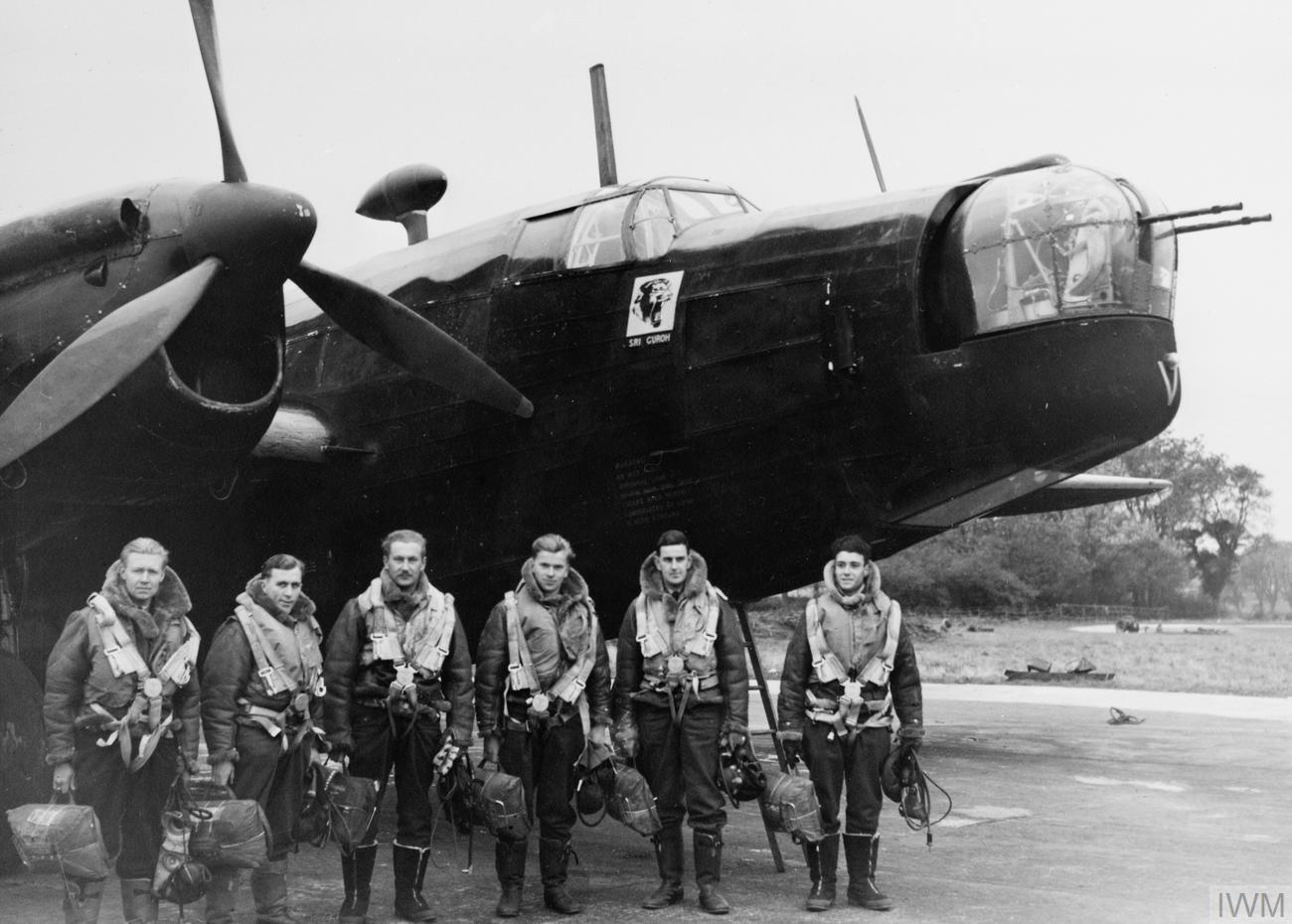
When Britain declared war on 3 September 1939, No. 3 Group of Bomber Command in East Anglia had six front-line Wellington squadrons, Nos 9, 37, 38, 99, 115 and 149, plus two in reserve. They did not wait long. On 4 September 1939, less than 24 hours into the war, fourteen Wellingtons of Nos 9 and 149 Squadrons joined Bristol Blenheims in an attack on German warships at Brunsbüttel, the first RAF bombing raid of the war. The War Cabinet had forbidden bombing the harbour itself for fear of killing civilians, the weather was poor, the flak was heavy, and two Wellingtons were lost, the first RAF aircraft to fall on the Western Front.
Through the autumn the Wellington squadrons probed the German coast in daylight, operating under a doctrine that held that a tight formation of bombers with power-operated turrets could fight its way to a naval target unescorted. On 3 December 1939 a force of 24 Wellingtons attacked German warships near Heligoland and came home intact, which seemed to prove the theory. On 14 December, twelve aircraft of No. 99 Squadron attacked shipping in the Schillig Roads at low level and lost five of their number to flak and fighters, with a sixth crashing near base.
Then came 18 December 1939, and the Battle of the Heligoland Bight. Twenty-four Wellingtons of Nos 9, 37 and 149 Squadrons swept towards Wilhelmshaven in good clear weather. German radar, whose existence the RAF had not seriously reckoned with, tracked them in, and the fighters were waiting. The ships were in harbour, so the bombers could not attack under the rules of engagement, and the Messerschmitts harried the formation most of the way home. Twelve Wellingtons were destroyed and three more badly damaged, against four German fighters shot down. The German pilots had found the weak points precisely: the Wellington had no self-sealing fuel tanks, and its nose and tail turrets left it blind and defenceless against attacks from the beam and above.
The Heligoland disaster changed the course of the RAF’s war. Unescorted daylight bombing was abandoned, self-sealing tanks became urgent, and Bomber Command turned to the night. Nearly everything that followed, the whole vast night offensive against Germany, traces back to the lessons bought by those Wellington crews in December 1939.
Night bomber over Germany
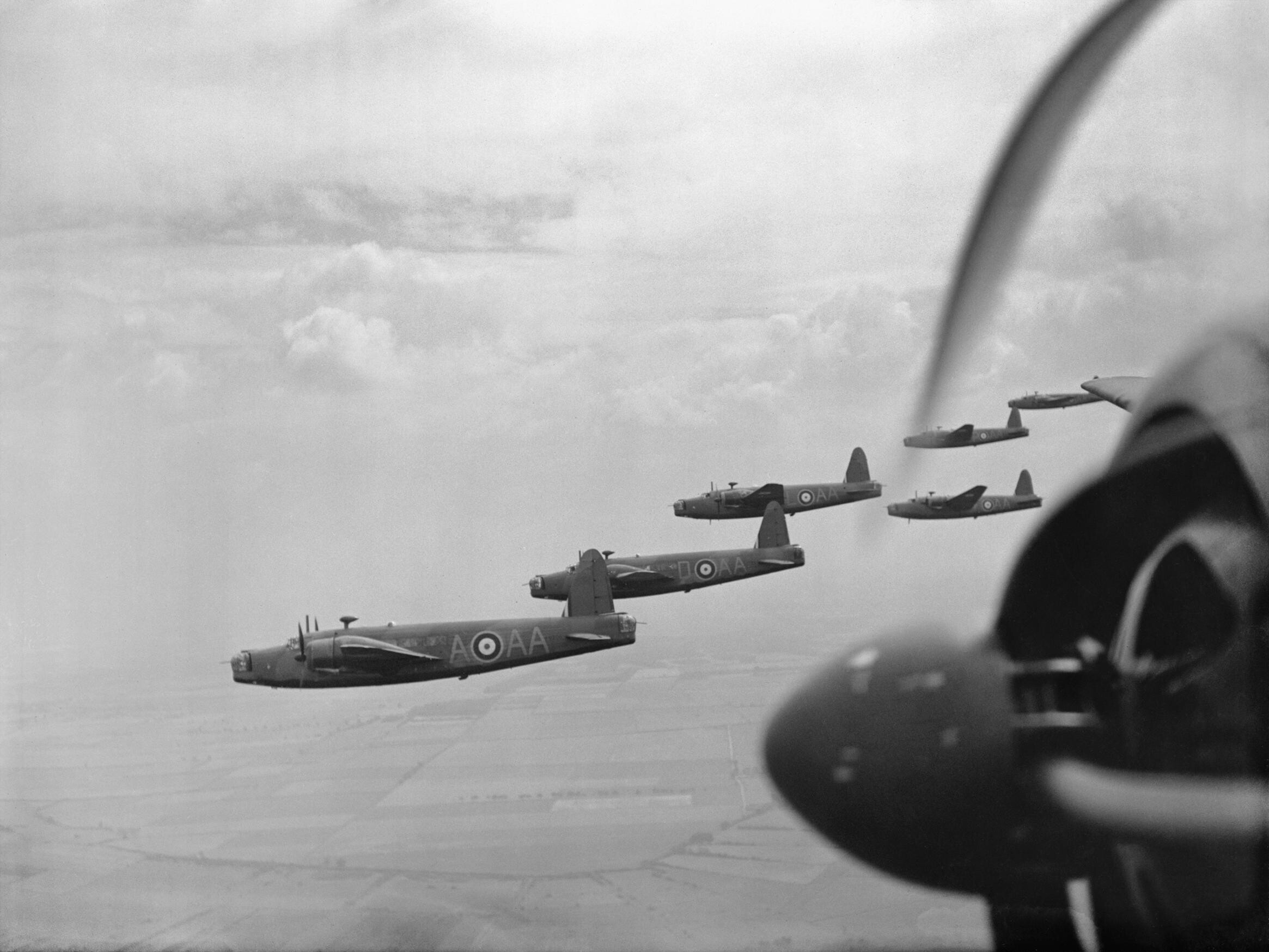
The Wellington took to the dark and made it its own. On 25 August 1940 Wellingtons flew in the first RAF raid on Berlin. As the Whitley and Hampden faded from the front line, the Wellington became the backbone of Bomber Command’s Main Force, equipping British, Polish, Czechoslovak, Australian, Canadian and New Zealand squadrons across the eastern counties. When Bomber Command staged Operation Millennium, the first thousand-bomber raid, against Cologne on the night of 30 May 1942, 599 of the 1,046 aircraft dispatched were Wellingtons, and 101 of those were flown by Polish crews. The types that history remembers as the great night bombers, the Lancaster and the Halifax, were only beginning to arrive; it was the Wimpy that filled the sky over Cologne.
The aircraft’s toughness became the stuff of squadron legend, and one story stands above the rest. On the night of 7 July 1941, a Wellington of No. 75 (New Zealand) Squadron was attacked by a Messerschmitt Bf 110 night fighter on the way home from Münster, and a fire took hold at the rear of the starboard engine, fed by a split fuel line. The second pilot, Sergeant James Allen Ward, climbed out of the astrodome and onto the wing in flight, kicking holes in the doped fabric for handholds and footholds, and smothered the burning wing covering. He climbed back in, and the aircraft landed safely. Ward was awarded the Victoria Cross, the only one ever won on a Wellington, and the story is unimaginable on any other aircraft: only a geodetic bomber had a structure you could kick holes in and climb along.
The cost of the night war was immense all the same. Flying with Bomber Command, Wellingtons logged 47,409 operational sorties and dropped 41,823 tons of bombs, and 1,332 of them were lost in action. By 1943 the four-engined heavies had taken over the German night, and the Wellington flew its final bombing operations with Bomber Command in October 1943, though No. 300 (Polish) Squadron kept its Wellingtons on front-line minelaying work until March 1944. That was nothing like the end of the Wimpy’s war.
Coastal Command and the war at sea
Exploding mines with a hoop
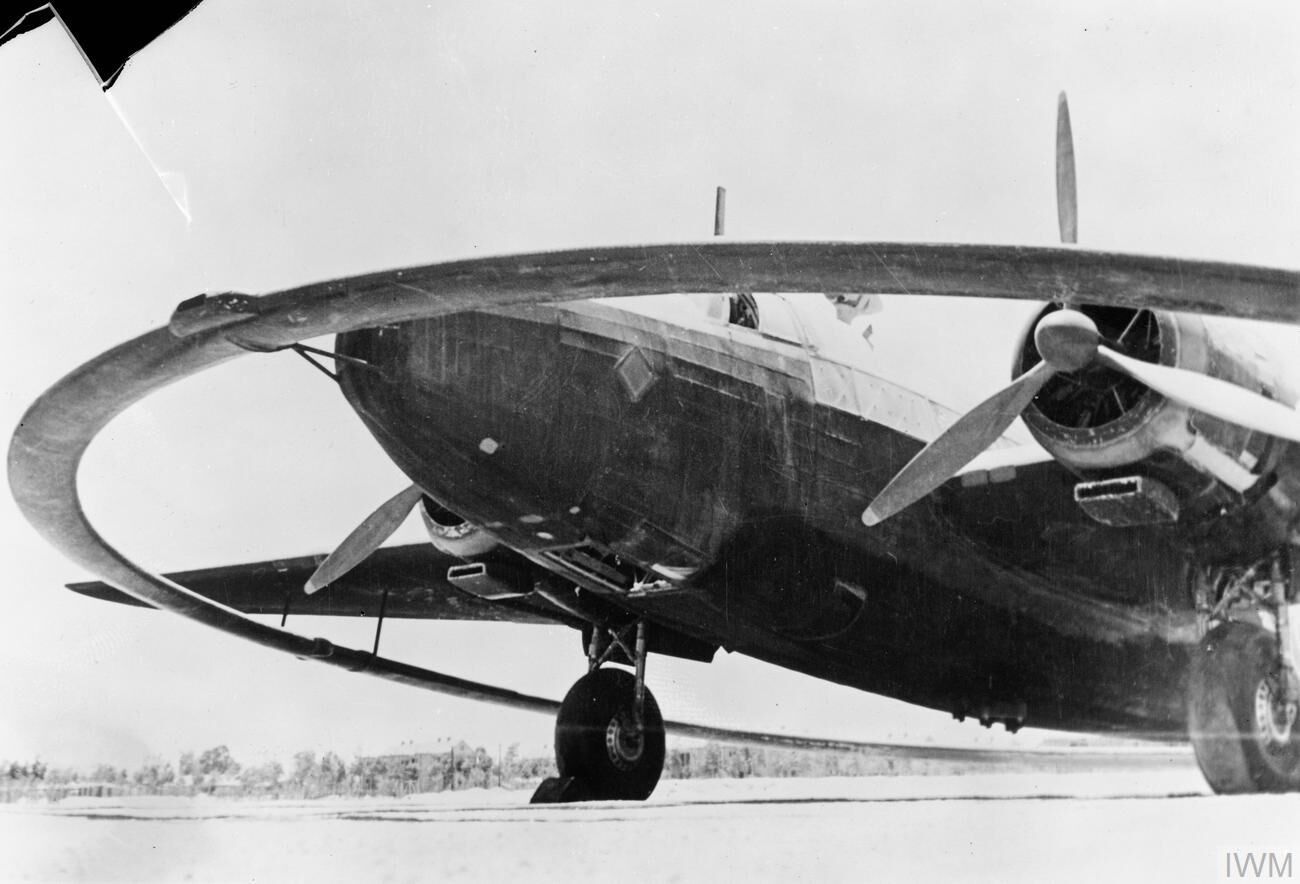
The Wellington’s second career began with one of the strangest aircraft of the war. In late 1939 Germany’s magnetic mines were sinking ships in Britain’s coastal channels, and the Admiralty needed a way to clear them fast. The answer was the Wellington DWI, its designation a deliberately misleading cover name, Directional Wireless Installation, for what was really a flying electromagnet. A 48 ft diameter aluminium coil in an aerodynamic balsa fairing was hung beneath the aircraft, and the Wellington flew low along the swept channels generating a magnetic field strong enough to detonate the mines below. The first successful detonation came on 8 January 1940; in a second success five days later the aircraft flew below the notional safe height of 35 ft and was caught in its own mine’s blast, but this being a Wellington it remained flyable. The turrets were faired over and every unnecessary pound removed, and Blenheim fighters escorted the unarmed aircraft during the Battle of France. DWI units cleared British waters, then moved out to Egypt to sweep the Suez Canal and, as the North African campaign advanced, the ports along the coast.
The Leigh Light and the U-boat war
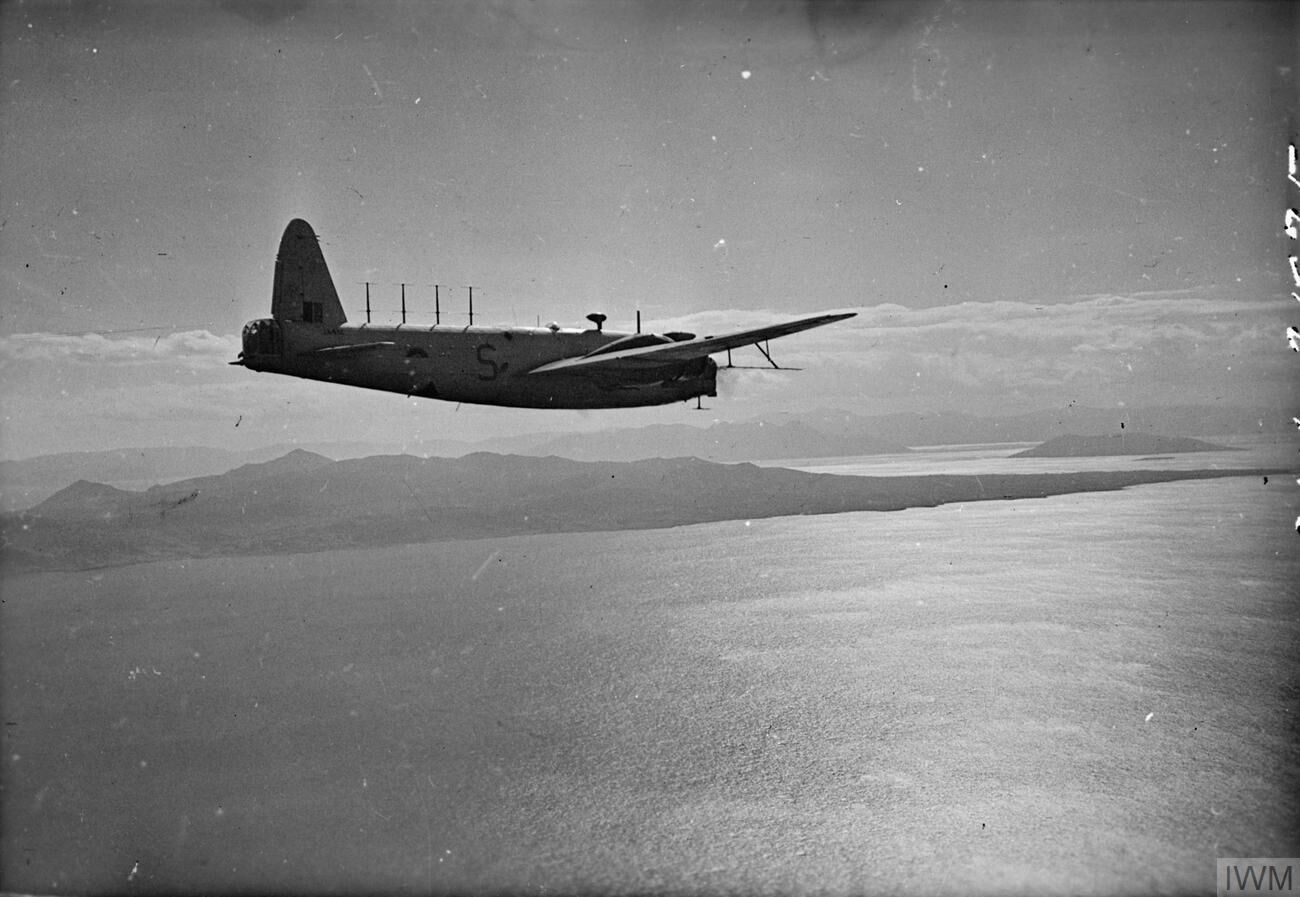
The Wellington’s greatest maritime contribution came in the Battle of the Atlantic. By 1941 Coastal Command’s aircraft could find surfaced U-boats at night by radar, but the ASV radar lost the target in the clutter of the sea at close range, exactly when the crew needed to see the boat to attack it. Wing Commander Humphrey de Verd Leigh’s answer was a powerful searchlight, developed and tested from January 1941 in the ventral turret position of a DWI Wellington. The combination worked like a trap: the Wellington ran in on radar, holding 50 ft on its radar altimeter, and at around half a mile, just as the radar picture dissolved into sea returns, the Leigh Light snapped on and pinned the U-boat in its beam for the depth-charge run. A Coastal Command Wellington sank its first enemy vessel on 6 July 1942, and the light robbed the U-boats of the freedom of the surfaced night crossing of the Bay of Biscay. The Mark IC in Coastal Command service had an endurance of over ten hours at a cruising speed of 125 knots carrying 1,500 lb of bombs or depth charges, and the dedicated maritime marks that followed carried steadily better radar and weapons until the war’s end.
The maritime Wellingtons also went hunting on the surface. In 1942 torpedo-carrying Wellingtons began night attacks on Axis supply shipping in the Mediterranean, crews nicknaming the torpedo aircraft “Fishingtons” and the radar-equipped aircraft that guided them onto their targets “Snoopingtons”. No. 38 Squadron flew anti-shipping detachments from Malta through 1942, part of the campaign that helped strangle Rommel’s supply lines. And in late 1944 a radar-equipped Wellington XIV was modified for the RAF’s Fighter Interception Unit to orbit over the North Sea directing a Mosquito and a Beaufighter against Heinkel He 111s launching V-1 flying bombs, work that would today be called airborne early warning and control, done from a bomber designed in 1936.
The Mediterranean and the Far East
Long after the four-engined heavies displaced it over Germany, the Wellington remained a first-line bomber everywhere else. In the Middle East and the Mediterranean it formed a core part of the RAF’s striking force through the desert war and into the Italian campaign, bombing ports, airfields and supply lines. Wellingtons were still flying operations from Italian bases in March 1945, bombing targets and dropping supplies to partisans across southern Europe. Coastal Command Wellingtons went to Greece in 1944 during the British intervention in the Greek Civil War, and a few were later operated by the Hellenic Air Force.
In the Far East, Wellingtons of Nos 99 and 215 Squadrons arrived in India in 1942 as the RAF’s first long-range bombers in the theatre, flying against Japanese targets for two years until Liberators replaced them in the summer of 1944. Others flew maritime patrols over the Indian Ocean, and Wellingtons of No. 26 Squadron SAAF and the Free French No. 344 Squadron hunted submarines off the West African coast from Takoradi and Dakar. It is difficult to name a theatre of the war in which the Wellington did not serve.
A bomber of many nations
The Wellington’s squadron rolls read like a map of the Allied cause. New Zealand’s connection began before the war: aircraft ordered by the New Zealand government were transferred to the RAF at the outbreak and equipped No. 75 (New Zealand) Squadron, the unit in which James Allen Ward won his Victoria Cross. Polish airmen made the type their own, with several Polish-manned squadrons flying Wellingtons in Bomber Command; No. 300 (Masovian) Squadron kept theirs in front-line service longer than any other bomber unit. No. 311 Squadron, manned by Czechoslovak crews, flew Wellingtons over Germany and later against U-boats with Coastal Command, and its exploits later reached the cinema in the Czech film Riders in the Sky. Australian and Canadian squadrons flew the type in Europe and the Mediterranean, South African crews hunted submarines off West Africa, Free French crews flew from Dakar, and the Fleet Air Arm and the Hellenic Air Force both operated the type before the end. Few aircraft of the war carried so many nations’ airmen.
Variants
Sixteen wartime variants and two post-war trainer conversions came off the lines, and the mark numbers tell the story of the whole aircraft in miniature: first the search for power, then the split into night bomber and submarine hunter.
The bomber marks
The Mk I (183 built) introduced the Bristol Pegasus XVIII of 1,000 hp and Vickers turrets; the Mk IA (187 built) swapped to Nash and Thompson turrets. The Mk IC, the first truly mass-produced version, added waist guns and a crew of six, and 2,685 were built. The Mk II (401 built) took the 1,145 hp Rolls-Royce Merlin X, insurance against Bristol engine supply, while the Mk III (1,519 built) settled on the 1,425 hp Bristol Hercules and became a Bomber Command mainstay from 1941. The Mk IV (220 built) flew with American 1,200 hp Pratt and Whitney Twin Wasps and equipped, among others, two Polish squadrons. The oddest of the family was the pressurised, long-span Mk VI (63 built), designed for very high altitude with two-stage Merlins and a remotely sighted tail turret; overtaken by events, most served with No. 109 Squadron or as Gee navigation trainers, but the mark’s engine work helped push Rolls-Royce towards the two-stage Merlin 60 series that transformed the Spitfire. The definitive bomber was the Mk X, of which 3,803 or 3,804 were built, more than any other mark, on the strength of the 1,675 hp Hercules XVIII and a structure improved with new light alloys.
The maritime marks
Coastal Command’s general reconnaissance line began with the GR VIII (394 built), a Mk IC development produced as a torpedo bomber with ASV Mk II radar, as a Leigh Light anti-submarine aircraft, and in day reconnaissance form. The GR XI and GR XII followed from the Mk X with improved radar, and the GR XIII (844 built) and Leigh Light-equipped GR XIV (841 built) carried the family to the end of the war, by which time centimetric ASV Mk III radar in a chin radome had replaced the early “Stickleback” masts. Transport conversions, the C XV and C XVI, were unarmed conversions of the Mk IA and IC.
Trainers
The T.10 conversion of the Mk X kept the Wellington working long after the war, training navigators and aircrew with the front turret removed and faired over. The RAF retired its last Wellingtons from this duty in March 1953, seventeen years after the prototype’s first flight.
Specifications
Figures below are for the Wellington Mk IC night bomber, with the definitive Mk X noted where it differed significantly.
| Specification | Wellington Mk IC |
|---|---|
| Crew | Five to six |
| Length | 64 ft 7 in (19.69 m) |
| Wingspan | 86 ft 2 in (26.26 m) |
| Empty weight | 18,556 lb (8,417 kg) |
| Engines | 2 × Bristol Pegasus XVIII radial, 1,000 hp each (Mk X: 2 × Bristol Hercules XVIII, 1,675 hp) |
| Maximum speed | 235 mph (378 km/h) at 15,500 ft (Mk X: about 255 mph) |
| Range | 2,550 miles (4,100 km) |
| Service ceiling | 18,000 ft (5,500 m) |
| Armament | 6 to 8 × 0.303 in Browning machine guns in nose and tail turrets and waist positions |
| Bomb load | 4,500 lb (2,000 kg) |
| Total built (all marks) | 11,461 or 11,462 |
Where the survivors are today
Of 11,461 or more aircraft built, exactly two complete Wellingtons survive, which says everything about the fate of fabric-covered bombers in the scrapyard years. Happily, the two are complementary: one is a combat veteran of the early war, the other a late-production aircraft, and both are in Britain within easy reach of each other.
N2980, “R for Robert”, Brooklands Museum, Surrey. The only surviving Weybridge-built Wellington and the only survivor with wartime operational service, N2980 first flew on 16 November 1939 with Mutt Summers, the same pilot who had taken the prototype up in 1936, at the controls. It flew operationally as a Mk IA before passing to training duties. On 31 December 1940, on a training flight with No. 20 Operational Training Unit from RAF Lossiemouth, an engine failed in a blizzard and the crew ditched in Loch Ness. Eight men got out; the rear gunner died when his parachute failed. The aircraft sank into the loch and lay on the bottom for 45 years until a team led by Robin Holmes raised it in September 1985. Restored through the late 1980s and 1990s, it is now the centrepiece of a dedicated exhibition at Brooklands, displayed with sections of its geodetic frame deliberately left uncovered, on the very site where it was built. There is no better place in the world to understand what Barnes Wallis’s lattice actually was.
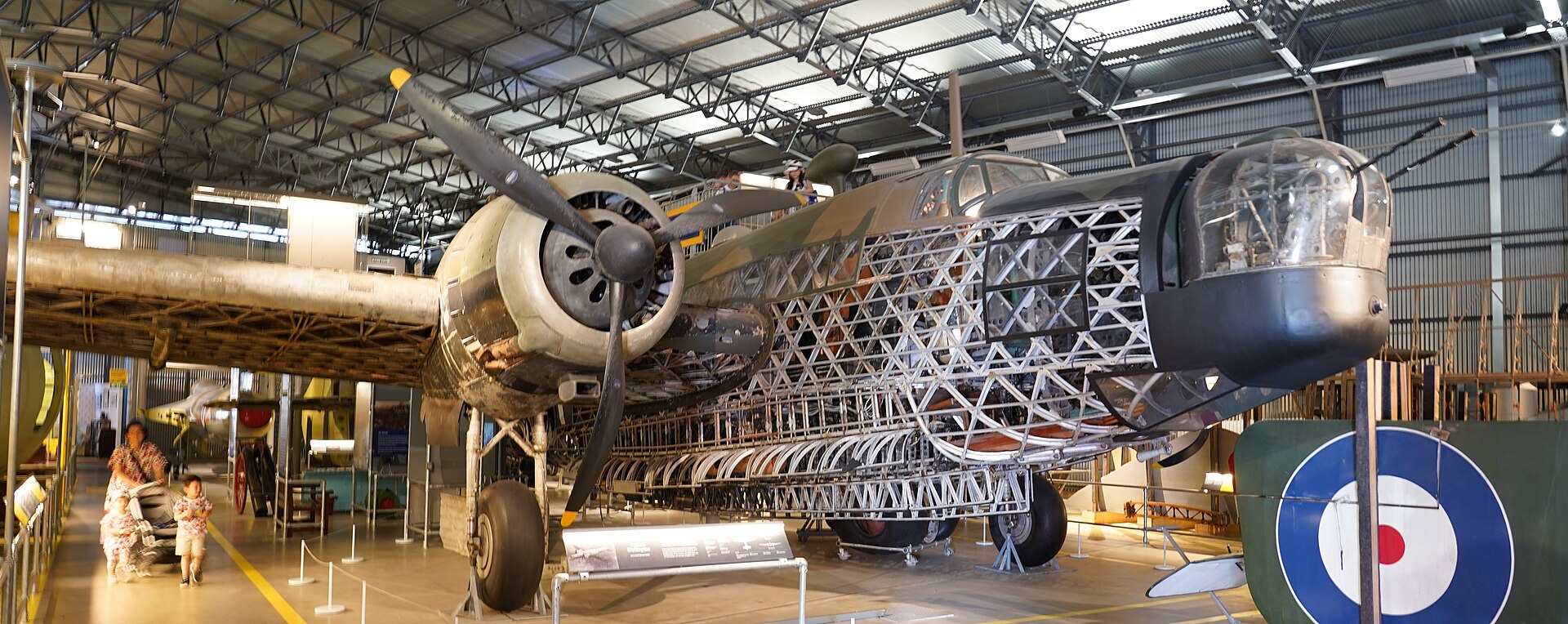
Beyond the two complete aircraft, substantial Wellington sections survive in several collections, and recovered wreckage from crash sites appears in museums across Europe. But if you want to stand under a whole Wimpy, it is Brooklands or the RAF Museum.
Photographing the Wellington today
With no airworthy example anywhere in the world, Wellington photography is museum photography, and that brings its own craft. Both survivors live indoors under mixed artificial light, so set your white balance deliberately rather than trusting auto, shoot RAW, and lean on a fast prime or image stabilisation instead of flash, which most halls forbid and which flattens the very texture you have come for.
The Wellington rewards the detail photographer more than almost any other bomber. At Brooklands, N2980’s exposed lattice is the picture: work close and diagonal, let the geodetics lead the eye, and expose for the highlights on the duralumin. A short telephoto isolates the weave of the structure against the doped fabric beautifully. Frame the nose turret head-on and you get the whole early-war bomber story in one image. Our guide to composition for aviation photography covers the leading-line and detail techniques that suit this subject, and if you want to decode the serials, codes and roundels on the airframes before you caption your shots, see how to read military aircraft markings.
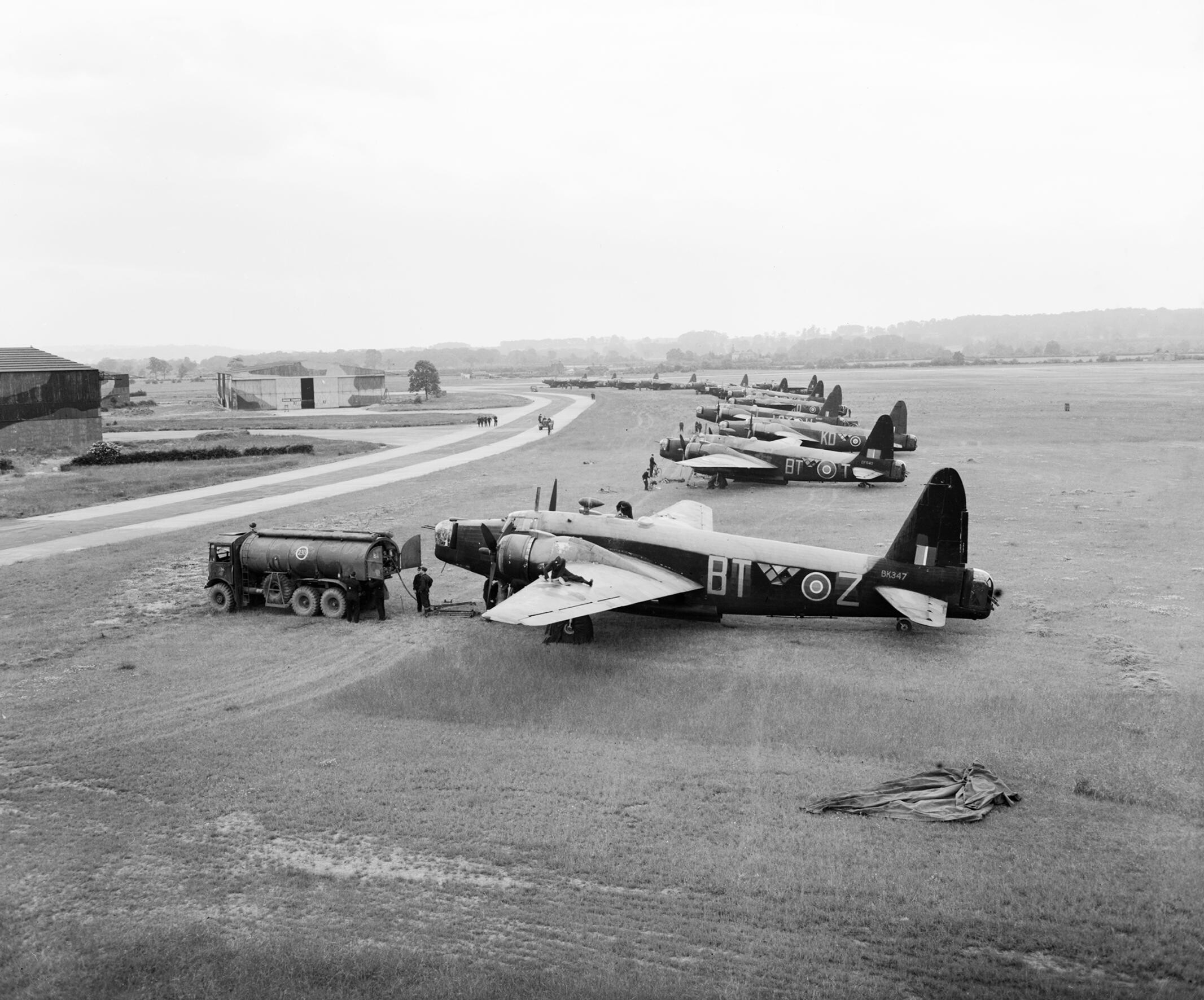
Period Wellington photography is another rich seam: wartime press and RAF official images of the type, like several used in this article, are in the public domain, and curated collections are available for licensing in the Piemags archive galleries. Details of usage terms are on our licensing page.
Training the bomber force
One Wellington role rarely gets the attention its scale deserves: teacher. From 1940 onwards, Operational Training Units across Britain used Wellingtons to turn freshly qualified pilots, navigators, wireless operators and gunners into bomber crews, and for tens of thousands of airmen from Britain and the Commonwealth the Wimpy was where a crew first “crewed up” and learned to work as one. The thousand-bomber raids of 1942 could only be assembled by throwing the training organisation into the line: instructors and pupils from the OTUs flew operationally alongside front-line squadrons, in Wellingtons, to make up the numbers over Cologne.
Training flying was dangerous in its own right, done in worn aircraft, in bad weather, by crews learning their trade. N2980, the Loch Ness survivor at Brooklands, was lost on exactly this kind of flight, ditching in a blizzard during a navigation exercise from RAF Lossiemouth on the last day of 1940. After the war the type carried on in the same vein: hundreds of Mk Xs were converted to T.10 standard and trained the RAF’s post-war navigators until March 1953, which is why the last Wellingtons wore trainer yellow rather than night-bomber black.
Legacy
The Wellington’s legacy runs in several directions at once. In numbers, it stands alone: no British bomber has ever been built in greater quantity, and none is likely to be again. In doctrine, the disaster over the Heligoland Bight in December 1939 pushed Bomber Command into the night, setting the shape of the British bombing campaign for the rest of the war; the crews who paid for that lesson flew Wellingtons. In technology, the type’s wartime career reads like a catalogue of firsts and oddities: the flying electromagnet, the Leigh Light that turned the Bay of Biscay hostile to U-boats, the pressurised Mk VI that helped push the Merlin to its two-stage flowering, and a 1944 radar picket that anticipated the AWACS aircraft of today.
The geodetic idea itself proved a magnificent dead end. It went on into the Warwick, which shared most of the Wellington’s structure, and the Windsor bomber that never reached service, and its wing carried the post-war Vickers Viking airliner before stressed-skin construction closed the book. But its designer’s story was only beginning: the reputation Barnes Wallis earned with the Wellington gave him the standing to pursue the bouncing bomb of the Dams Raid and the Tallboy and Grand Slam earthquake bombs. The aircraft that history remembers him for, the Avro Lancaster, delivered those weapons, but the aircraft that made Wallis’s name was the Wellington.
And in the memory of the men who flew it, the Wimpy occupied a place no statistics capture. It was the aircraft that got you home: fabric burning, lattice showing through, one engine out, and still flying. James Allen Ward’s Victoria Cross, won walking on the wing of a burning Wellington over the North Sea, could not have been won on any other aircraft. The Mosquito was faster and the Lancaster carried more, but no bomber was trusted more completely by its crews. Even Silverstone remembers: the Wellington Straight at the British Grand Prix circuit is named for the bombers that flew from the airfield the track was built on.
Frequently asked questions
How many Vickers Wellingtons were built?
Company records support a total of 11,461 or 11,462 aircraft, built between 1936 and 13 October 1945 at Weybridge, Broughton near Chester and Blackpool. That makes the Wellington the most-produced British bomber in history, and it was the only British bomber in continuous production for the whole of the Second World War.
Why was the Wellington called the Wimpy?
Crews named it after J. Wellington Wimpy, the hamburger-loving character in the Popeye cartoons. The official name honoured the first Duke of Wellington, following the Vickers convention set by the earlier Wellesley.
What was special about the geodetic structure?
Barnes Wallis’s geodetic system built the fuselage and wings as a criss-crossing lattice of duralumin members, covered with doped Irish linen. Because loads could travel through many alternative paths, a Wellington could absorb damage that would destroy a conventional airframe, and aircraft regularly returned with large areas of structure shot away and fabric burned off.
Are there any surviving Wellingtons?
Two complete aircraft survive. Mk IA N2980, ditched in Loch Ness in December 1940 and recovered in 1985, is displayed at Brooklands Museum in Surrey, where the type was designed and first flown. T.10 MF628, the aircraft that made the type’s last flight in January 1955 and appeared in The Dam Busters, is displayed at the RAF Museum Midlands at Cosford, where it went on public view in 2023 after a decade-long conservation.
Did the Wellington fly for the whole of the war?
Yes, and beyond. It flew the RAF’s first bombing raid on 4 September 1939, was Bomber Command’s principal night bomber until 1942, then served with Coastal Command and overseas commands to the war’s end. Bomber Command Wellingtons alone flew 47,409 sorties and dropped 41,823 tons of bombs, for the loss of 1,332 aircraft. The RAF retired its last Wellington trainers in March 1953.
What engines did the Wellington use?
Most marks used Bristol radials, the 1,000 hp Pegasus XVIII in early versions and the Hercules in the Mk III and definitive Mk X. The Mk II flew with the Rolls-Royce Merlin X and the Mk IV with the Pratt and Whitney Twin Wasp, giving the RAF insurance against any single engine supply failing.
Who was James Allen Ward and what did he do on a Wellington?
James Allen Ward was a New Zealand sergeant pilot with No. 75 (New Zealand) Squadron who won the only Victoria Cross ever awarded to a Wellington crew member. On the night of 7 July 1941, with an engine fire spreading along the starboard wing after a night fighter attack, he climbed out through the astrodome and onto the wing in flight, kicking holes in the doped fabric for handholds, and smothered the burning covering. He climbed back in and the aircraft landed safely; he was killed on operations two months later.
How fast was the Wellington and how far could it fly?
The Mk IC managed around 235 mph at altitude, while the later Hercules-engined Mk X was a little quicker at roughly 255 mph. Range was the aircraft’s strong suit for its size, with the Mk IC able to reach about 2,550 miles, which is what allowed it to carry the night offensive so deep into Germany. It was never a fast aircraft, but the geodetic structure gave it useful reach and load for a twin-engined medium bomber.
What was the Wellington DWI and how did it clear mines?
The DWI was a specialised minesweeping Wellington fitted with a large aluminium coil, about 48 ft across, slung beneath the fuselage in a balsa fairing. Flying low along swept channels, the coil generated a magnetic field strong enough to detonate German magnetic mines on the seabed below. The cover name Directional Wireless Installation disguised what was in effect a flying electromagnet, and DWI aircraft cleared British waters before moving out to sweep the Suez Canal.
