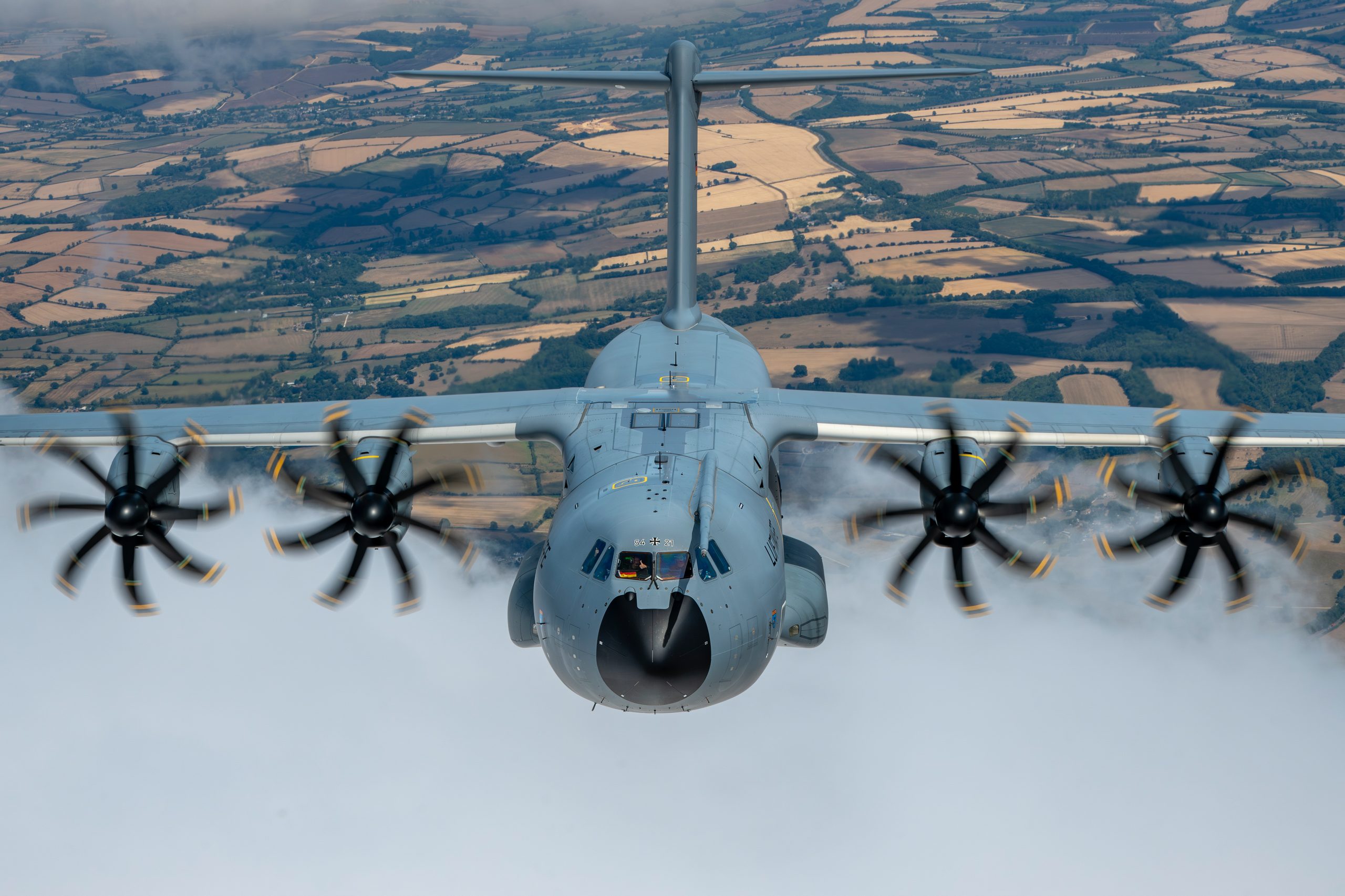
Fast jets get the crowds, but ask any picture editor at a defence title which images are hardest to source and the answer is rarely a Typhoon in the vertical. It is a well-lit, well-composed frame of a C-17 taxiing at dusk, a Hercules with full prop discs at fifty feet, or an A400M photographed air-to-air with a tanker. Military transport photography is a discipline of its own, with different shutter speeds, different light problems and a different market, and the photographers who take it seriously find themselves with portfolios that sell. This guide covers the whole workflow: the aircraft you will meet, the prop discipline that separates a professional frame from a frozen-blade snapshot, how to convey the sheer size of these machines, where to find them in the UK and Europe, and how to turn the results into licensed, earning images.
- Why Transports and Heavies Reward the Photographer
- Knowing Your Subjects
- Prop Discipline: Shutter Speeds for Turboprops
- Scale and Perspective
- Airshow Opportunities
- Air-to-Air with Heavies
- Bases, Spotting and Traffic
- Light, Weather and Haze
- Settings and Gear Recap
- Processing and Selling the Results
- Frequently asked questions
Why Transports and Heavies Reward the Photographer
The case for pointing a long lens at a transport aircraft starts with character. A C-130 on short finals, flaps hanging, four discs turning, has a presence that no clean-winged fighter can match. These are working aeroplanes, streaked with exhaust stain and hydraulic weep, flown by crews who operate into rough strips and hostile weather. That texture photographs beautifully. Where a display jet is polished for the crowd, a Hercules back from an exercise wears its history on the airframe, and buyers respond to that authenticity.
Size is the second draw. There is a compositional drama in a machine with a wingspan of fifty or sixty metres that simply does not exist at fighter scale. A C-5M kneeling to load, its visor nose raised, is an event. A Chinook flaring into its own dust cloud is a picture before you have even considered the light. The challenge, which we will come to, is making that size read in a two-dimensional frame, but when it works the results stop people scrolling.
Third, and commercially decisive, is rarity. The internet is saturated with sharp images of fast jets at major airshows, because thousands of capable photographers shoot the same display from the same crowd line. Excellent transport imagery is scarce. Comparatively few photographers put in the hours at Brize Norton or Ramstein, fewer still shoot heavies air-to-air, and almost nobody does both with consistent prop discipline and clean editorial captioning. When a defence magazine needs an A400M feature illustrated, or an airlift contractor needs imagery for a bid document, the pool of usable material is shallow and the photographers who own it get paid.
Demand comes from a wider spread of buyers than most photographers expect. Defence and aerospace media are the obvious customers, but manufacturers, MRO companies, freight forwarders, simulation developers, book publishers and the air arms themselves all license transport imagery. Strategic airlift is permanently newsworthy, from humanitarian relief flights to exercise deployments, and every news cycle that touches military logistics sends editors looking for stock. A tight, well-keyworded transport portfolio is one of the most dependable earners in aviation photography, precisely because so few people bother to build one.
Knowing Your Subjects
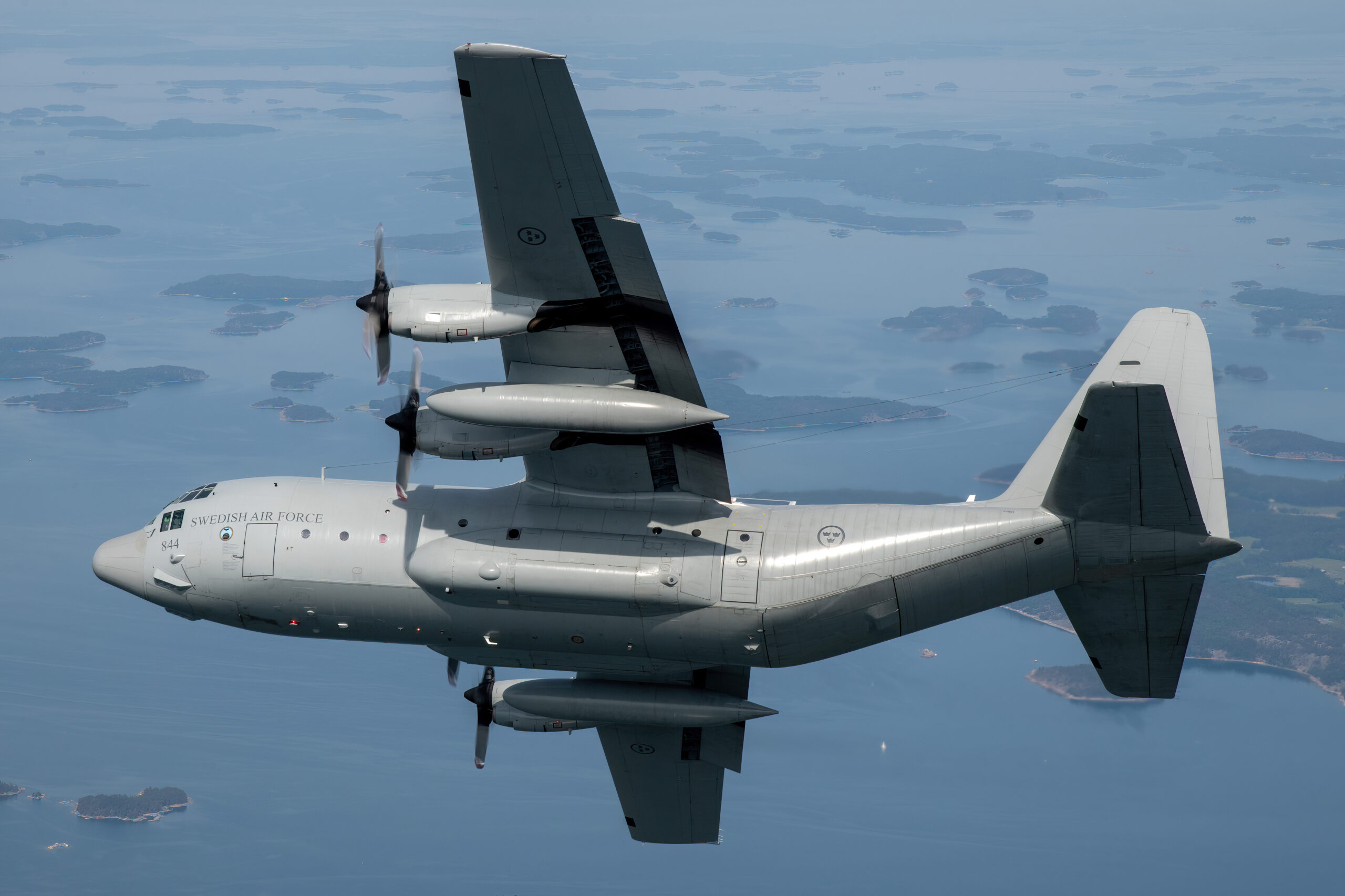
Good transport photography starts with recognition, because knowing what you are looking at tells you what the picture is. The C-130 Hercules is the foundation subject. First flown in 1954 and still in production, it exists in generations that matter photographically. Legacy E and H models carry four-blade propellers, while the current C-130J Super Hercules runs six-blade composite Dowty props with distinctive scimitar tips, a longer visual signature in the disc and different blur behaviour at slow shutter speeds. Dozens of air arms fly the type, so it is the heavy you will practise on most, and stretch and standard fuselage variants, tanker and special-mission conversions all add caption value if you can identify them. For the type’s seventy-year story, see our C-130 Hercules history; the trade these aircraft ply is as old as the Berlin Airlift.
The Airbus A400M Atlas is the modern European counterpart, powered by four TP400 turboprops of around 11,000 shaft horsepower driving eight-blade props, with the pairs on each wing rotating in opposite directions. It is a hugely photogenic machine, all bulged fuselage and enormous spinners, and operators including the RAF, France, Germany and Spain mean it is a regular sight across Europe. The C-17 Globemaster III is the jet workhorse: four big turbofans, T-tail, winglets, flown by a crew of two pilots and a loadmaster. Production ended in 2015, so every operator, from the USAF and RAF to the NATO-managed unit at Pápa in Hungary, is flying a finite fleet, which quietly raises the long-term value of good C-17 imagery.
The C-5M Super Galaxy remains the giant of the American fleet, re-engined with CF6-derived turbofans and instantly recognisable by its high T-tail, upward-hinging visor nose and kneeling undercarriage. It is a rare catch in Europe and worth rearranging a day for. The RAF’s A330 Voyager, operated from Brize Norton through the AirTanker arrangement, is both a transport and the service’s tanker, refuelling by hose and drogue only, and it photographs like the airliner it is derived from, which makes dramatic light essential. The Antonov An-124 can still be seen in the West, with Antonov Airlines operating its surviving Ukrainian-flagged fleet from Leipzig, while the Il-76 has become a rarity in western European skies and is worth shooting whenever the chance appears. The C-27J Spartan, Leonardo’s twin, shares its engine and six-blade propeller family with the C-130J and has been rolled and looped by company test pilots at major shows, a reminder that tactical transports are far more agile than their outlines suggest.
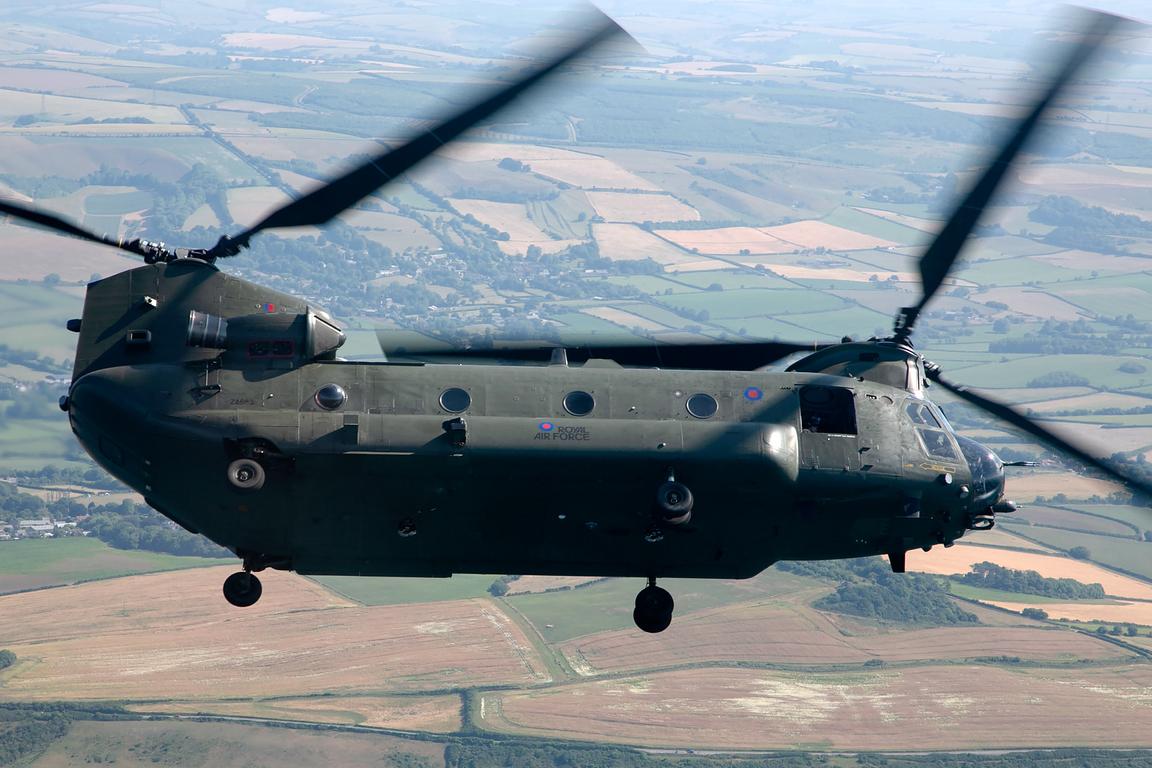
Finally, treat heavy helicopters as honorary heavies. The tandem-rotor Chinook, the CH-53 family and the colossal Mi-26 share the transport mission, the utilitarian character and the slow-shutter discipline, and they produce environmental images, dust, spray and downwash-flattened grass, that fixed-wing types cannot.
Prop Discipline: Shutter Speeds for Turboprops
Nothing separates professional transport photography from the rest as cleanly as propeller discipline. A turboprop with frozen blades looks broken. The image reads as a model suspended on wires, and no picture editor will run it. Buyers expect full discs, those complete circles of blur that say the aircraft is alive, and full discs demand shutter speeds that feel reckless the first time you try them.
On a Hercules, work between 1/60 and 1/125 of a second. At 1/125 a four-blade legacy Herc gives you generous arcs approaching a full disc, and the six-blade J-model fills the circle even sooner because more blades sweep through the exposure. At 1/80 the disc is complete and glassy. The A400M’s eight-blade props reward you earlier still, and you can often hold 1/160 and keep a convincing disc, useful in poor light or when the aircraft is manoeuvring hard. Helicopters follow the same logic with slower rotors: a Chinook’s main rotors turn at roughly 225 rpm, so meaningful blade blur needs 1/125 or below, and the sweetest results live down at 1/60.
Those speeds are only usable with committed panning technique. Set the focal length, then plant your feet facing the point where you will release the shutter, wind your torso back towards the approaching aircraft, and unwind smoothly through the pass, following through after the last frame exactly as a shotgun shooter would. Keep both eyes open, drive the pan from the hips rather than the arms, and shoot bursts through the sweet spot of the arc. Expect a low keeper rate at first; two or three critically sharp frames from a fifty-frame pass is normal at 1/80, and the rate climbs quickly with practice. Image stabilisation set to its panning mode helps, and a monopod steadies the vertical axis while leaving the pan free.
Practise where the pressure is low. Taxiing aircraft are the ideal training subject, moving slowly enough that 1/60 is achievable within a session or two, and ground runs let you rehearse without any panning at all. Be aware that propeller speeds vary with power setting on some types, so a disc that was full at 1/100 on approach may show blade tips at the same speed during a low-power taxi. Check your results on the rear screen at one hundred per cent early in the day, adjust, and remember that a partially frozen disc is the one failure that cannot be rescued later. When in doubt, go slower and accept the lower keeper rate.
Jets are the easy day off. A C-17 or C-5M has no visible rotating machinery, so you can shoot at 1/1000 or 1/1600 and concentrate purely on composition and timing, which is why mixed transport ramps demand constant attention to the mode dial. The one refinement worth keeping even on jets is a slower pan, around 1/250 to 1/320, for take-off and landing frames, because streaked runway and blurred grass verges give a fifty-metre aeroplane the sense of motion that a frozen background steals from it.
Scale and Perspective
The central creative problem with heavies is that a photograph flattens them. A C-5M shot side-on with a long lens against a plain sky can look like a desktop model, and the dreaded model-kit effect has ruined more transport images than bad light ever has. Scale does not survive in a frame automatically. You have to build it in.
The most reliable tool is a human figure or a vehicle. A marshaller waving a C-17 onto stand, a fuel bowser dwarfed under a Voyager wing, groundcrew walking beneath an An-124’s raised nose: each gives the eye a ruler. Position yourself so the figure overlaps or stands close to the airframe, because a person separated from the aircraft by empty tarmac does not anchor the comparison. At airshows, the crowd line itself can serve, with a wall of heads in the foreground and the fin towering behind.
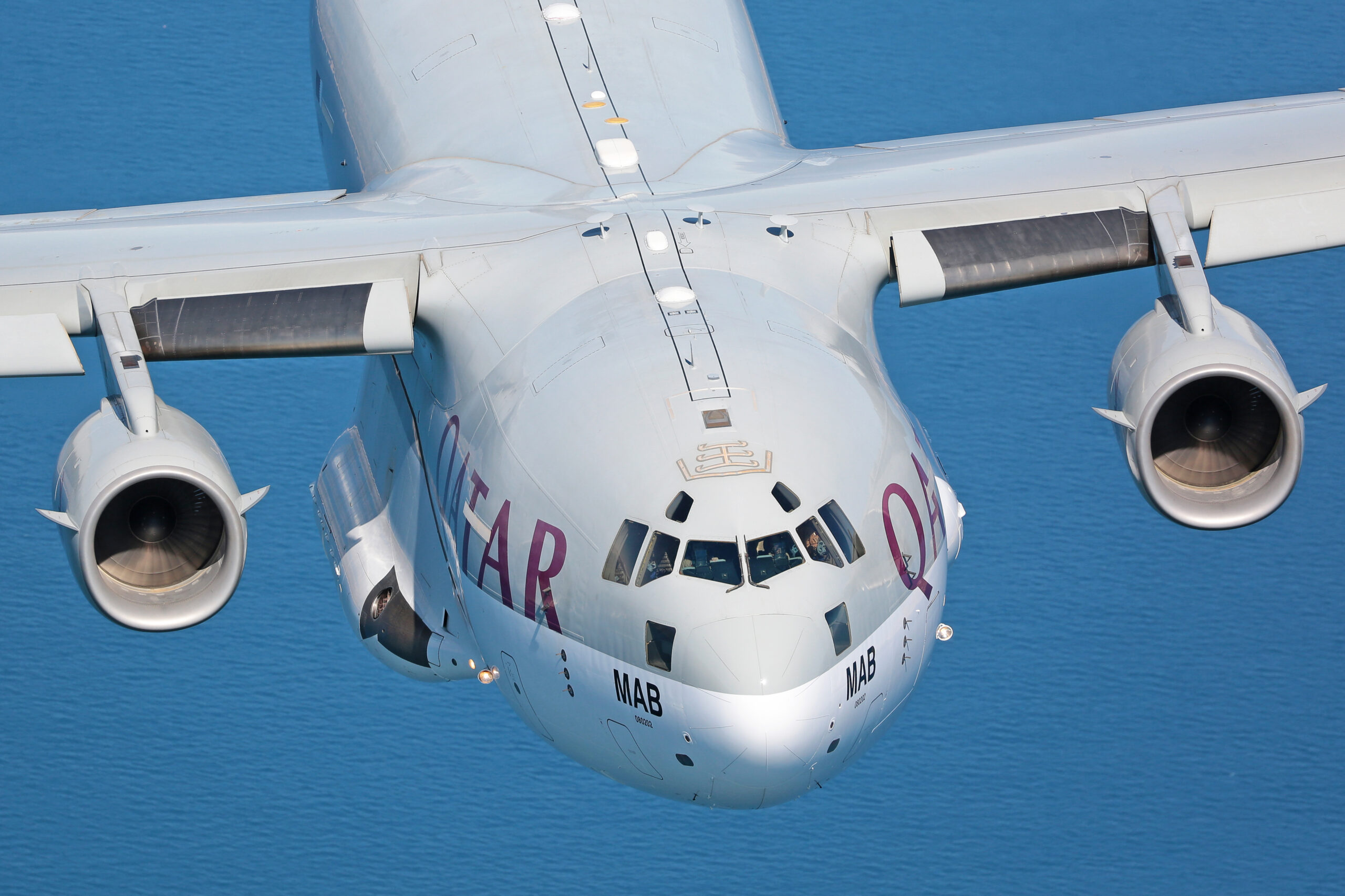
Perspective is your second instrument. Wide-angle lenses used close exaggerate size: at 16-24mm beneath a wingtip or off the nose quarter, the near parts of the airframe loom and the fuselage recedes dramatically, which is how those cavernous static-park images are made. Long-lens compression does the opposite job just as well, stacking a departing Atlas against hangars, airliners or terrain so the viewer can measure it against known objects. A 400mm frame of a C-17 rotating with a control tower compressed behind it says more about size than any specification table.
Angles matter too. Dead side-on profiles at mid-distance are the model-kit danger zone, useful for recognition guides and little else. Shooting slightly up at a heavy on approach emphasises bulk and wing area; shooting down from a hill or terrace onto a taxiing aircraft shows the plan-view sprawl that ground-level viewers never see. Fill the frame deliberately or leave deliberate space, but avoid the timid middle distance where the aircraft is neither monumental nor contextualised. And watch the undercarriage: heavies look heaviest at the moment of touchdown, tyres smoking, bogies splayed, spoilers rising, and that instant, shot from ahead of the touchdown zone at 1/1000 for a jet or 1/125 for a turboprop, is often the strongest single frame of a day.
Airshow Opportunities
Airshows offer transport photographers chances that base fences never will, provided you plan around the right items. Tactical demonstrations are the prize. A transport flown to its limits, steep climbing departures, tight wingovers, maximum-effort short landings with reverse thrust and full ground spoilers, produces angles of these aircraft that are otherwise unphotographable. The A400M’s display has surprised crowds for years with agility that seems impossible for its size, with steep approaches and banking passes that show the full topside, and Airbus has flown it at events such as the Royal International Air Tattoo. Topside passes are your moment for the classic banked frame, so hold 1/125 through the turn and trust your panning.
The US Navy’s Fat Albert, the Blue Angels’ support C-130J and an ex-RAF airframe, shows what a Hercules display can be, flat passes at low level, aggressive pitch-ups and short-field arrivals, and any air arm’s tactical Herc demo follows a similar shape. Watch the display schedule for the transport slots, which often come early or mid-afternoon when casual visitors are at the catering vans, leaving the crowd line thinner and your angles cleaner.
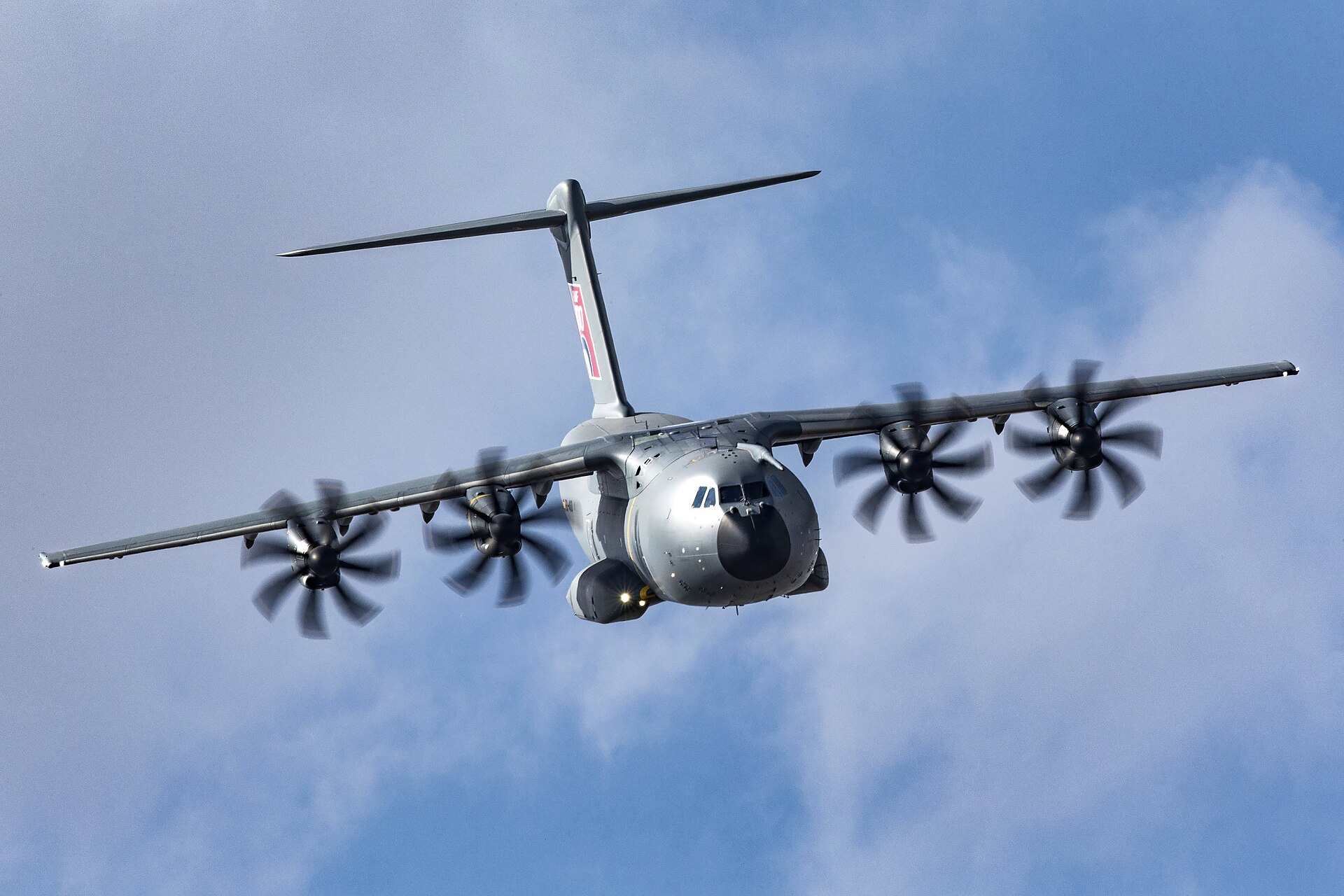
Two problems need managing. The first is khaki bounce, the flat, colour-sapping way camouflage greys and greens render in harsh overhead light. Matt tactical paint swallows midday sun and returns a lifeless sludge, so shoot transports early and late in the show day whenever the schedule allows, and on grey days lean into the softness rather than fighting it. Expose carefully, because dark airframes against bright sky will fool matrix metering into silhouettes; add between two thirds and a full stop of positive compensation and check the histogram against the airframe, not the sky.
Static parks reward the photographer who arrives at gates-open or stays past the departure of the crowds, when the light is lower and the tarmac is empty of picnic chairs. Many larger shows now run enthusiast packages or photo evenings with access before the public day, and transports are usually the stars of these sessions because crews will open ramps, run auxiliary power units and position steps for cockpit visits. Night shoots, where organised, suit heavies superbly, since a floodlit Hercules with its ramp down is a tripod subject full of atmosphere, and the aircraft do not move. Bring the wide zoom, work the details, and treat the static aircraft as a location rather than a single picture.
The second issue is that display flying is a small part of the opportunity. Arrival and departure days are frequently better than the show itself. Aircraft arrive in stream, land on a known runway, taxi close to fences and hold short in photogenic clusters, all without a display line’s distance or five deep of crowd. Departure days add heavyweight take-offs at working weights. Park the airshow mindset, research the arrivals slots, and treat the whole week as the event.
Air-to-Air with Heavies
Air-to-air is where transport photography becomes properly commercial, because the images are close to impossible for anyone else to replicate. There are two classic scenarios. The first is formation photography from a camera ship, with the transport flying a briefed position off your aircraft while you shoot through an open door, ramp or optically clean panel. The second is tanker work, shooting receivers on the hoses from inside a Voyager or an equivalent, or shooting the tanker itself from a receiver. Both produce imagery that defence media, manufacturers and the operating units themselves value highly, and both are earned through process rather than luck.
Everything hangs on the brief. Before engines turn, every participant agrees the formation positions, the join-up procedure, altitudes, radio calls, light angles, manoeuvre sequence and the breakout plan if anything goes wrong. As the photographer you attend that brief with a shot list and a sun diagram, because the pilots can put the subject anywhere you ask, but only if you ask before take-off. Request positions that show the aircraft’s character: slightly high and aft for topside frames as it banks, low and forward to set the machine against cloudscape, and close enough on the perpendicular that the airframe fills the frame at 70-200mm. Heavies hold formation with real stability, which is a gift, but they also need more room to manoeuvre than a fighter, so position changes are slow and each one must count.
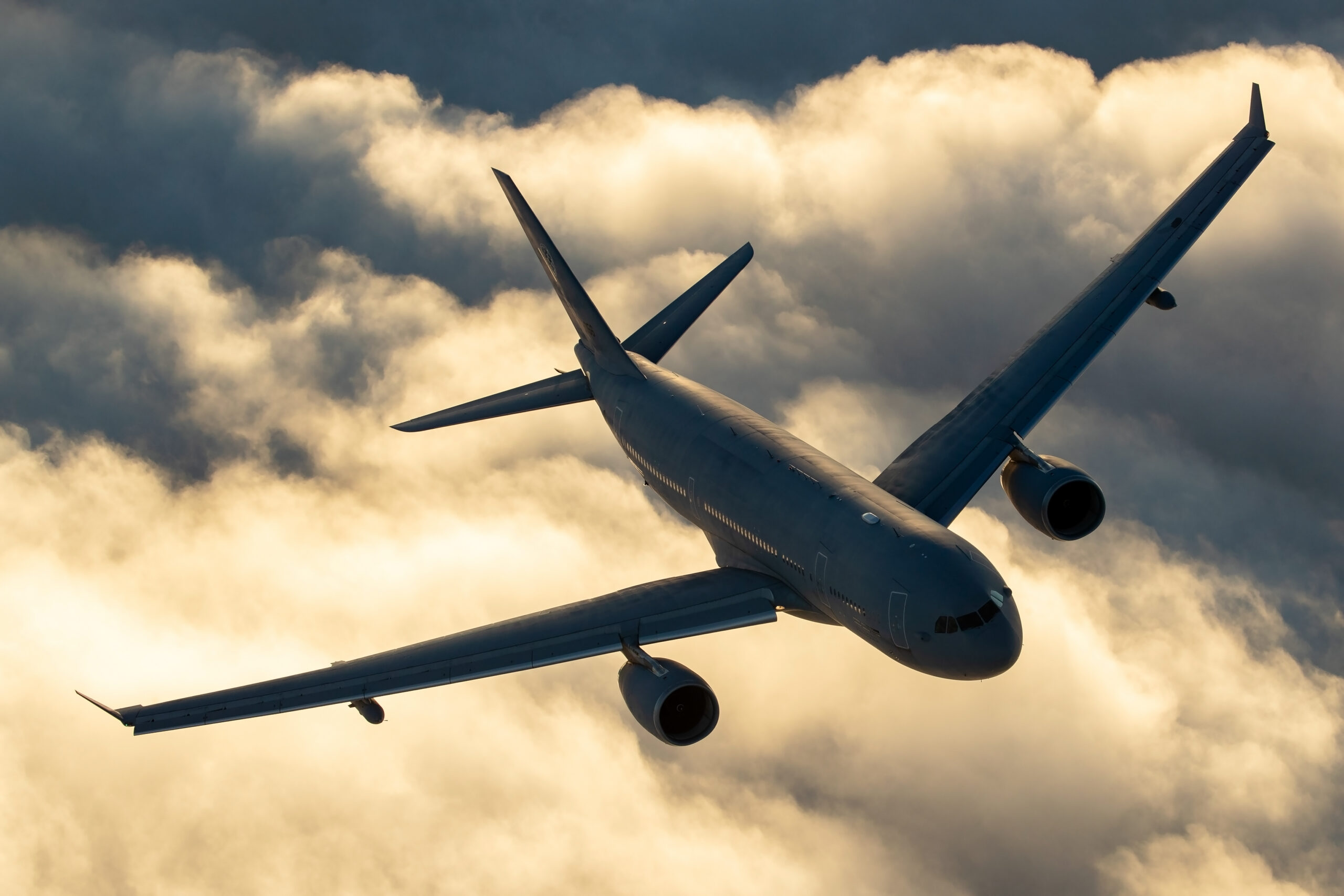
Shooting from an open ramp, a Hercules or A400M tail with the ramp level and the subject in trail, is the signature experience of this work. You will be harnessed to the airframe with every item tethered, from bodies to lens caps, briefed on the restraint system and working in wind blast and cold. Turboprop subjects still demand slow shutters, and 1/125 from a vibrating, moving platform is a serious test, so brace against the strop rather than the airframe, keep stabilisation on and shoot generous bursts. For jets, 1/500 and upwards buys latitude.
None of this happens without clearances. Military air-to-air runs through official channels, unit public affairs, defence ministries or organised events with established camera-ship operators, and civilian camera ships need formation-qualified pilots, insurance and often a specific approval to open doors in flight. Build the relationships, accept the lead times, and never freelance a join-up. The paperwork is exactly why agencies pay properly for this material: the barrier to entry is the value.
Bases, Spotting and Traffic
Consistent transport photography means going where the traffic is. In the UK, RAF Brize Norton in Oxfordshire is the centre of gravity, home to the Voyager, A400M Atlas and C-17 fleets, with visiting allied heavies regularly in the pattern. RAF Mildenhall in Suffolk delivers American types, its resident tanker and special-operations aircraft joined by a steady flow of transiting C-17s and C-130s, while in Germany, Ramstein Air Base functions as the great trans-Atlantic funnel, with based C-130Js and a near-daily parade of strategic airlift. Leipzig deserves a specific mention as the operating home of Antonov Airlines’ surviving An-124 fleet, giving European photographers realistic access to the type. Eindhoven, Zaragoza, Orléans and Pisa all host A400M or C-130 units, and any large NATO exercise will concentrate airlift somewhere for a fortnight.
Timing multiplies your returns. Exercise seasons, the big spring and autumn NATO serials and national deployments, generate waves of movements at otherwise quiet fields, and deployments announce themselves through NOTAMs, published exercise schedules and the flight-tracking sites, many of which show military transponders. Transports are unusually trackable compared with fast jets, since they often fly with ADS-B on, file recognisable callsigns and cruise at airliner levels, so an evening’s research can tell you which fence to stand at by 0900. Local spotting communities are worth their weight; long-standing groups around Brize, Mildenhall and Ramstein share movement information generously with people who behave well.
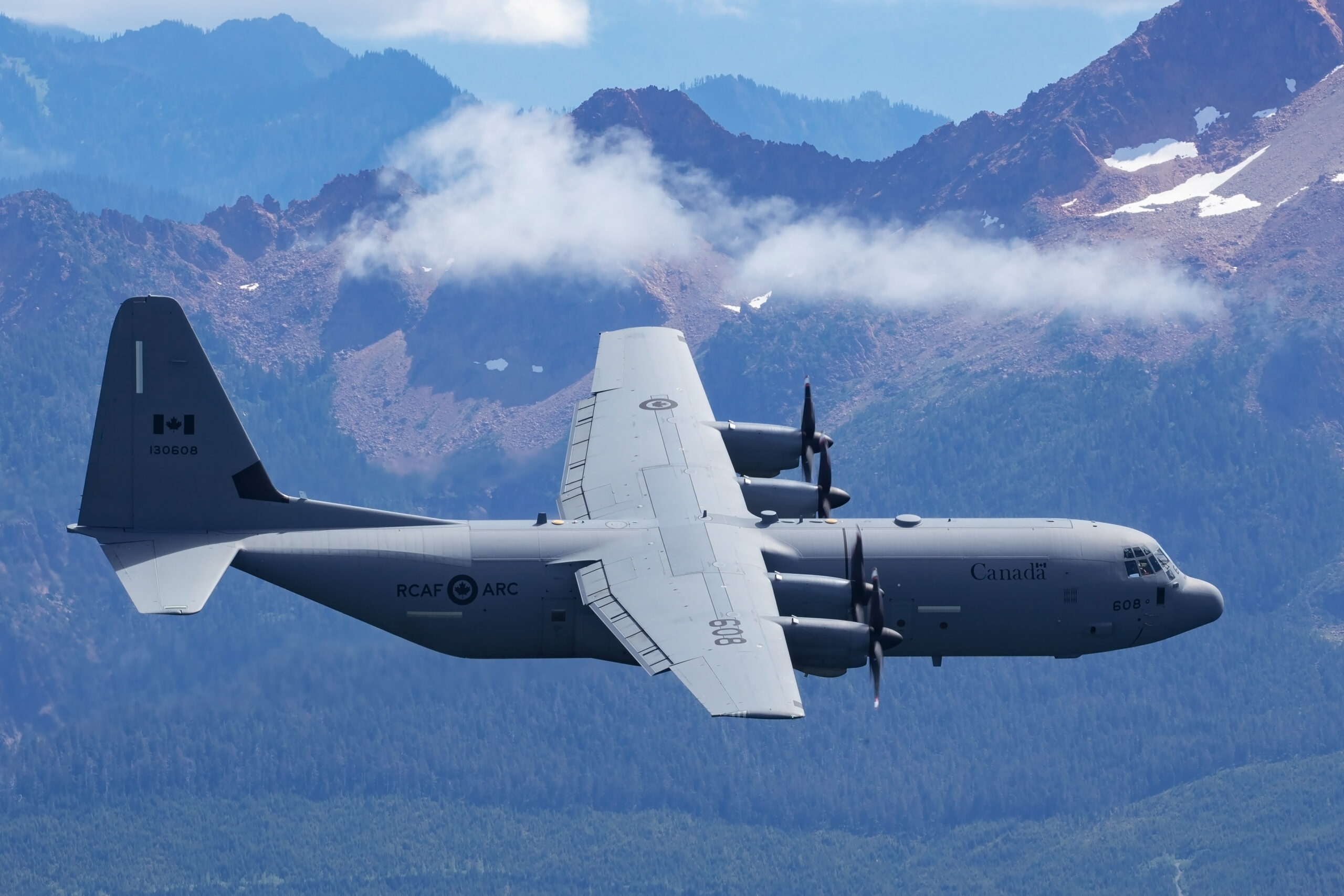
Weekdays beat weekends almost everywhere, since military flying follows the working week, and mornings are usually busier than afternoons for launches. Keep an eye on weather elsewhere too, because heavies divert, and a fog-bound hub can push interesting metal into airfields that never normally see it. Civil airports with cargo or trooping contracts are an underrated supplement: charter flights, air-mobility passenger runs and freight movements bring military and quasi-military heavies to fences with far better public access than any base perimeter.
Behaving well is not optional. Photograph only from public land or recognised viewing locations, and learn each base’s tolerated spots before you travel, because they differ enormously. Never climb, lean over or attach anything to fencing, never photograph guardposts or security infrastructure, and comply immediately and politely if police or base security ask questions, keeping identification handy. In some countries photographing military installations is legally restricted even from public roads, so research national rules before crossing borders with a 600mm lens. The transport-spotting community has maintained access to superb locations for decades precisely because most of its members are scrupulous, and every photographer who cuts a corner spends everyone else’s goodwill.
Light, Weather and Haze
Heat haze is the heavy photographer’s defining enemy. Every long-lens frame across a runway travels through hundreds of metres of air shimmering off sun-warmed concrete, and because transports are large, distant subjects shot at 400-600mm, they suffer worse than anything else on the airfield. The mush is not fixable in software; detail that the atmosphere destroyed never reached the sensor. Manage it instead. Shoot early morning before the surface heats, or in the last two hours of light when it has released its warmth. Favour cooler, breezier days when the air mixes. Get closer whenever access allows, since halving the distance more than halves the degradation, and prioritise moments when the aircraft is airborne above the boiling surface layer, on approach or just after rotation, rather than rolling through the thick of it. Overcast days, unloved by casual photographers, often deliver the stillest, cleanest air of the summer.
When the light is good, big airframes repay it like nothing else. Early and late sun rakes across acres of fuselage, picking out every frame line, rivet run and panel lap, and giving grey paint a warmth it never shows at noon. A C-17’s tail catching first light while the fuselage sits in shadow is a study in form. Side-lighting reveals the surface topography that head-on light flattens, and backlighting turns prop discs luminous and exhaust plumes visible, a superb look for engine-start and taxi frames. Plan positions around sun angle as rigorously as around runway direction; the two together dictate everything.
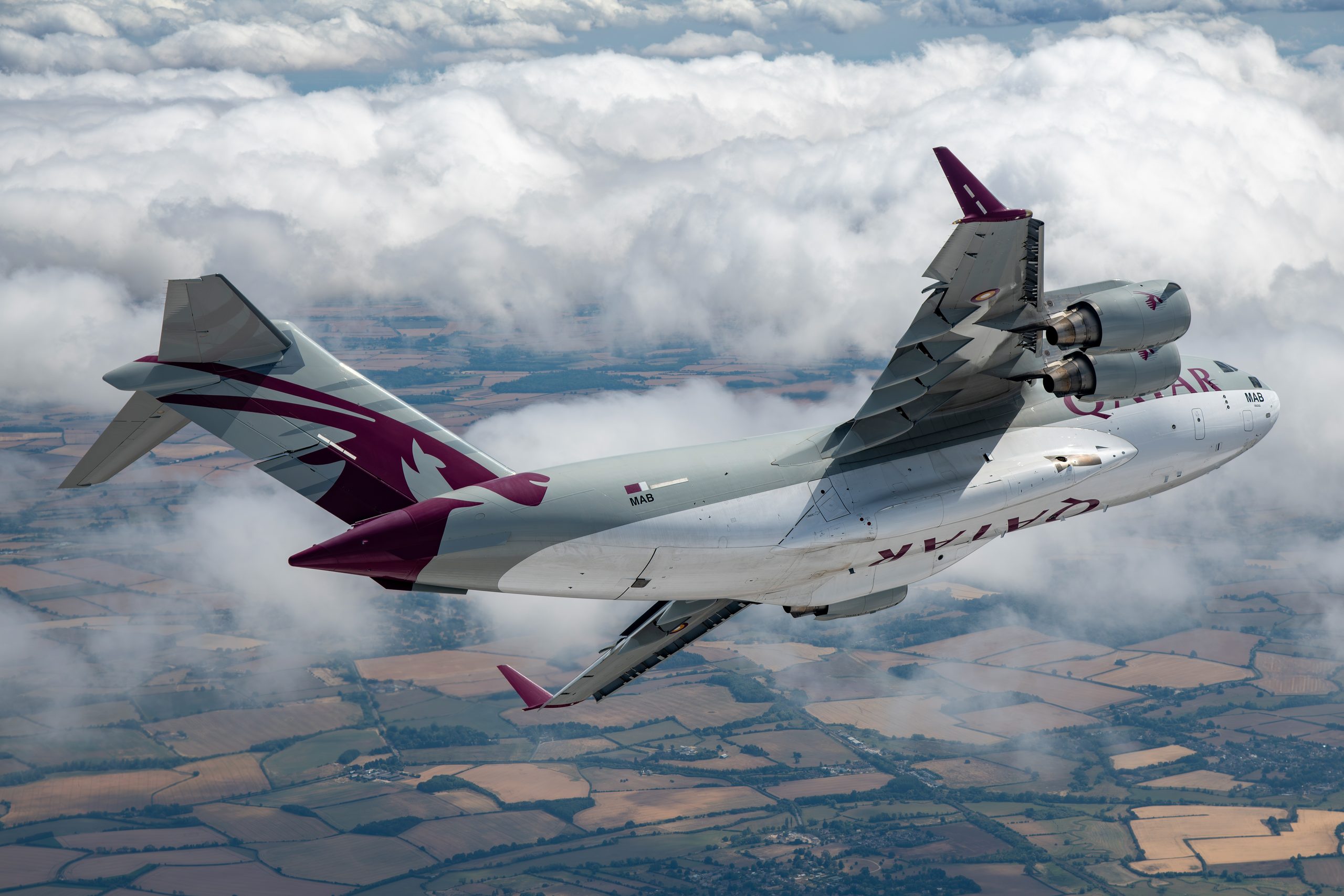
Do not write off dull weather. Flat, bright overcast is a giant softbox that suits matt military paint perfectly, eliminating the harsh speculars and dense shadows that plague camouflage schemes in sun. Detail work thrives in it: cockpit close-ups, nose art, weathering, loading operations and ramp scenes all render with beautifully even tone. Rain adds reflection and atmosphere, low cloud forces aircraft down into photogenic murk, and a Hercules emerging from grey scud with props glowing is worth a hundred clean blue-sky profiles. The discipline is matching subject to conditions: reserve the epic wide shots for epic light, and spend the grey days harvesting the detail library that stock buyers quietly consume.
Settings and Gear Recap
The kit list for transports is mercifully sane. Any current body with competent subject tracking will do the job, because heavies fly predictable lines at modest angular speeds; what matters more is a second card slot for paid work and sensible high-ISO behaviour for dawn and dusk sessions. Two bodies save lens changes on dusty ramps, one wearing the long zoom and one a 24-70mm for statics and scale work.
For glass, the 100-400mm and 150-600mm class zooms are the natural tools, covering everything from full-frame approach shots to distant taxiway compression, and their variable apertures are rarely limiting on subjects this large in daylight. A fast 300mm or 400mm prime buys autofocus speed and low-light margin at a cost in weight and flexibility, and earns its place mostly for night operations and winter evenings. For air-to-air, a 24-70mm and a 70-200mm f/2.8 cover practically every briefed position. A monopod is the transport specialist’s friend, supporting a 600mm zoom through the long waits between movements while leaving panning free, and a folding stool and weather cover acknowledge that this discipline involves standing at fences for hours.
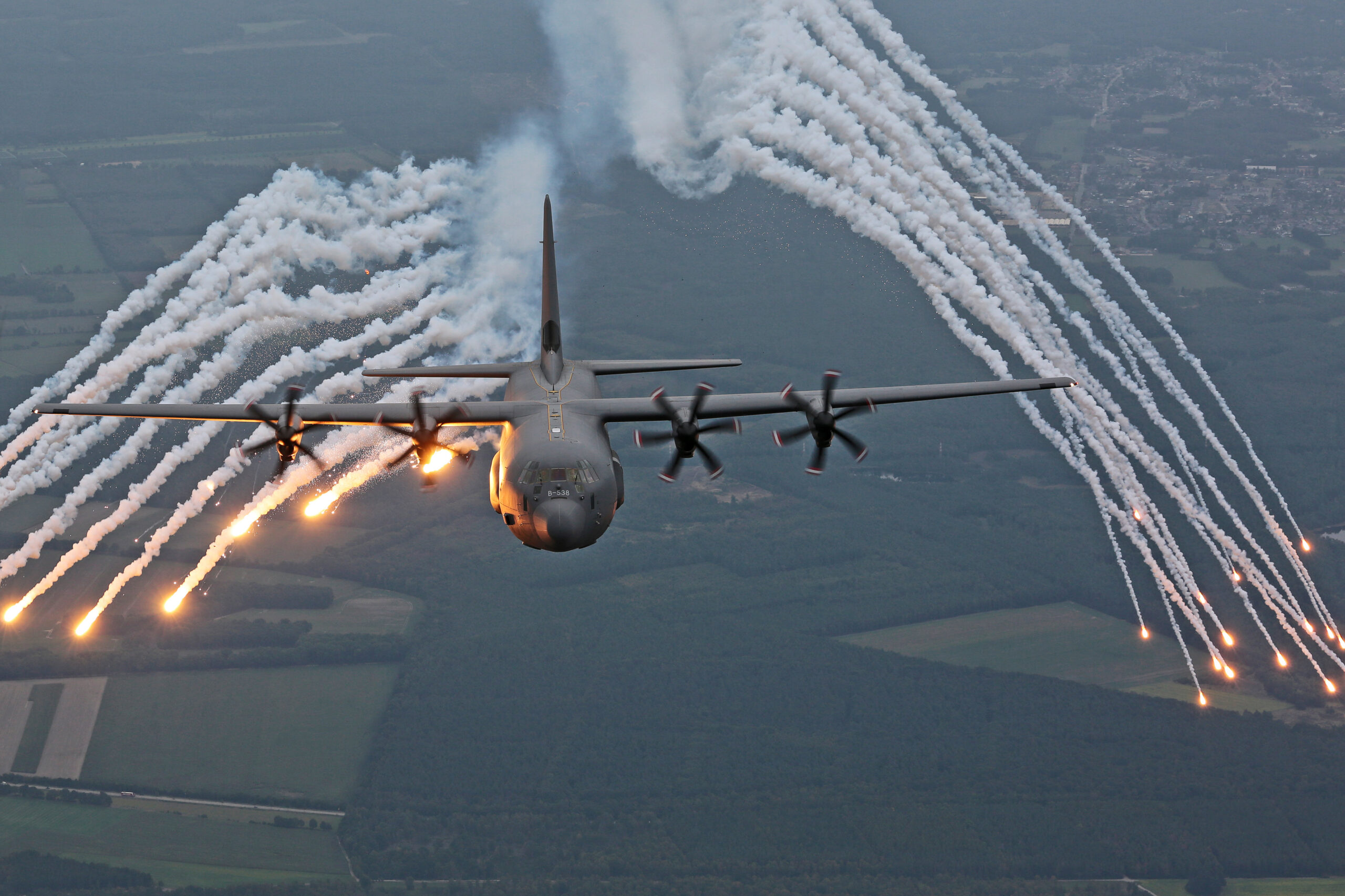
Settings are about deliberate control. Shoot manual with auto-ISO or shutter priority, because shutter speed is the creative decision: 1/60-1/125 for turboprops and helicopters, 1/250-1/320 for panned jet movements, 1/1000 and up for airborne jets and touchdown action. Keep stabilisation in panning mode, autofocus in continuous tracking with a flexible zone, and bursts at a moderate rate to keep editing survivable.
Exposure deserves its own paragraph, because grey-on-grey is the transport photographer’s daily problem. A grey C-17 against a grey sky will be underexposed by most meters, which see the bright sky and pull down, so dial in plus one third to plus one stop of compensation and verify against the airframe’s histogram. On dark green or grey camouflage against bright cloud the correction can reach a stop and a third. Shoot RAW without exception, since the latitude to lift shadowed camouflage while holding sky is exactly what the format exists for, and let highlight-weighted metering or zebras guard the clouds while you protect the subject.
Processing and Selling the Results
Processing transport imagery is a restraint exercise. Buyers in the defence and editorial markets want accurate, believable frames, so keep white balance honest, lift shadows enough to reveal camouflage detail without flattening the image, and resist heavy clarity or saturation moves that turn military grey into science fiction. Sharpen with a light hand, because haze-softened files punished with aggressive sharpening develop halos along fuselage edges that any picture desk will spot. Crop with intent, clean the sensor spots that vast expanses of sky expose mercilessly, and be transparent about any manipulation beyond tonal work, since editorial licensing depends on trust.
The metadata is where the money is. A transport image without caption data is nearly unsellable, however good the light, because researchers search by facts. Every file should carry the type and variant, registration or serial, operating unit and air arm, location, date and context, so a caption reads as a complete editorial sentence: which aircraft, whose, doing what, where and when. Keyword the registration and serial explicitly, because researchers hunt specific airframes, and add unit numbers, base names, exercise titles and mission descriptors such as tactical airlift, air-to-air refuelling or strategic transport. This is another reason to log details in the field; the note you make at the fence about a special-marks tail becomes licensing revenue two years later when that airframe makes news.
Routes to market reward patience. Specialist aviation and defence agencies place transport imagery with magazines, newspapers and publishers, and the same rarity that makes the material hard to shoot keeps demand steady, with retirements, anniversaries, deployments and procurement stories all sending editors searching for exactly the airframes you have filed. Direct licensing to manufacturers, operators and MRO firms pays better still for photographers willing to do the outreach. Air-to-air material sits at the top of the value pyramid, commanding the strongest fees because so few frames of heavies in formation exist at all.
Our own archive reflects everything this article preaches. Aviation Photo Crew’s air-to-air transport photography, shot from ramps and camera ships alongside tankers, Hercules, Atlas and heavier metal, is available for licensing, and you can browse the collection in our galleries and review terms on our licences page. Editorial, commercial and advertising use are all catered for, pricing is negotiable, and we will match or beat what you pay other aviation agencies. If you need a specific type, unit or angle that you cannot see in the archive, ask, because the brief you have in mind may already be in the files, and if it is not, it might become our next sortie.
Frequently asked questions
What shutter speed do I need for C-130 propellers?
Work between 1/60 and 1/125 of a second. At 1/125 a legacy four-blade Hercules shows generous blade arcs, while the six-blade C-130J fills the disc sooner. Drop to 1/80 or 1/60 for complete, glassy discs, pan smoothly from the hips and shoot bursts through the sweet spot. Expect a low keeper rate at first; it improves quickly with practice, and a full disc is worth the discarded frames.
What is the best lens for military transport photography?
A 100-400mm or 150-600mm class zoom covers most fence and airshow work, and the variable aperture rarely hurts on subjects this large in daylight. Add a 24-70mm for statics, ramps and scale shots with people. For air-to-air, a 70-200mm f/2.8 handles nearly every briefed position. Fast primes earn their weight mainly for night operations and poor winter light.
Where should I stand for heavy departures?
Position ahead of the rotation point rather than at the threshold, because transports at working weights use a lot of runway and lift off well along it. Check the wind to predict runway direction, then choose the side that puts sun behind you. A spot slightly off the extended centreline gives a three-quarter view of the climb-out, which flatters big airframes far more than a dead-astern silhouette.
How do I deal with heat haze on the airfield?
You cannot fix haze in software, so avoid it at capture. Shoot early morning or the last two hours of light, favour cool or breezy days, and get as close as legal access allows, because halving the distance more than halves the damage. Prioritise moments when the aircraft is above the boiling surface layer, on approach or just after rotation, and treat still overcast days as prime long-lens weather.
How do I get air-to-air access to military transports?
Through official channels and patience. Approach unit public affairs teams or defence ministry media offices with a portfolio and a clear editorial purpose, or join organised air-to-air events run by established camera-ship operators. Civilian sorties need formation-qualified pilots, proper insurance and approvals for open doors. Attend the brief with a shot list and sun diagram, and never improvise a join-up in the air.
How do I tell a C-17 apart from a C-5?
The C-17 Globemaster III is the smaller of the two, with winglets, four engines mounted close under a supercritical wing and a shorter, deeper fuselage. The C-5M Super Galaxy is far larger, has no winglets, carries a high T-tail atop a towering fin and loads through both an upward-hinging visor nose and rear doors. On the ground, the C-5’s kneeling stance and sheer length settle any doubt.
Can I photograph military transports at night?
Yes, and floodlit ramps at photo events suit them perfectly, since a parked Hercules with its ramp down is a tripod subject full of atmosphere. Use base ISO, small apertures and long exposures for statics. For live night movements, modern bodies at ISO 6400-12800 with a fast prime can hold taxiing aircraft, though expect motion blur and use it creatively rather than fighting it.
Is there real licensing demand for transport imagery?
Yes, and it is steadier than fast-jet demand. Defence and aviation media, manufacturers, MRO firms, publishers and operators all license transport images, while comparatively few photographers supply them well. Airlift is permanently newsworthy through exercises, deployments and relief flights, and retirements or procurement stories send editors hunting specific airframes. Accurate captions with registrations and units are what convert good frames into sales.
Is the A400M display really worth planning a trip around?
Yes. The type’s tactical demonstrations show agility that surprises people, with steep climbing departures, tight wingovers and short landings that reveal the full topside of the aircraft. Airbus has displayed it at major events including the Royal International Air Tattoo. Hold 1/125 through the banked passes to keep the eight-blade discs full, and arrive early for a crowd-line position near display centre.
How should I expose a grey aircraft against a grey sky?
Meters see the bright sky and underexpose the airframe, so add between one third and one full stop of positive compensation, more for dark camouflage against bright cloud. Judge the histogram against the aircraft rather than the sky, use zebras or highlight warnings to protect the clouds, and shoot RAW so shadowed detail lifts cleanly in processing without wrecking the highlights.
Is it legal to photograph near military bases?
In the UK, photographing aircraft from public land outside the fence is generally tolerated at established viewing spots, but rules differ by country and some states restrict photographing military installations even from public roads. Research each location first, never climb or lean over fencing, avoid photographing guardposts or security infrastructure, and cooperate politely with any police or security enquiry. Local spotting communities know each base’s accepted locations.
Should I use a monopod or shoot handheld?
A monopod is the transport specialist’s best support. It carries the weight of a 150-600mm zoom through long waits between movements, steadies the vertical axis at slow shutter speeds and still allows a free, smooth pan. Tripods hinder panning and are best kept for night statics. Handheld works for short sessions and air-to-air, where you brace against your harness instead.
