The biplanes of the First World War turned the aeroplane from an unarmed scout into a fighting machine, and in barely four years they created the fighter, the bomber and the whole discipline of air combat that shapes air forces to this day. When war broke out in 1914 the aircraft was a fragile novelty used for looking over the next hill; by the Armistice in 1918 it was a weapon of war with its own tactics, aces and industries.
Few periods in aviation moved so fast. In 1914 pilots waved at each other across the lines and carried a pistol as an afterthought. Within a year they were shooting through their own propellers with synchronised machine guns. Within two they were flying in disciplined formations built around written tactical doctrine. Within four the aeroplane had reshaped how nations fought and how they thought about the sky above them. The wood-and-canvas biplanes that did all this look impossibly delicate now, but they were the crucible in which air power was forged.
This guide traces that transformation: how the aeroplane went to war, how it was armed, the great fighters that fought over the Western Front, the engines that carried them, the aces who became household names, and the legacy the biplane era left for every air force that followed. If you photograph the survivors and reproductions that still fly today, our warbird photography guide covers the technique.
What this guide covers
- Aviation goes to war in 1914
- Arming the aeroplane: the problem of the propeller
- The birth of air combat tactics
- The great fighters of the war
- The engines that powered them
- The aces
- Bloody April and the swing of advantage
- Life and death in the cockpit
- The birth of strategic air power
- Legacy: what the biplane war left behind
- Photographing WWI aircraft today
- Frequently asked questions
Aviation goes to war in 1914
When the armies of Europe marched in August 1914, the aeroplane was barely a decade old. The Wright brothers had flown in 1903, and powered flight was still a fairground marvel as much as a serious tool. Generals were sceptical. Cavalry, not aircraft, was supposed to be the eyes of an army. The machines available were slow, unreliable and unarmed, built of wood, wire and doped fabric, and they were used for one job above all others: reconnaissance.
That first job mattered more than anyone expected. Aircraft spotting from above gave commanders a view of enemy movements that no cavalry patrol could match. Reconnaissance aircraft helped detect the German First Army wheeling south east of Paris in September 1914, a warning that fed into the Allied counterstroke on the Marne. Once both sides understood the value of what the other could see from the air, the logic of air combat followed at once. If your reconnaissance was priceless, so was stopping the enemy from carrying out his.
The first, clumsy fights
The earliest aerial fights were almost improvised. Crews carried rifles, pistols, even bricks and grappling hooks, and tried to bring down opposing aircraft by any means to hand. Some two-seaters mounted a machine gun for the observer, but firing it forward was impossible without hitting the propeller or the pilot. These encounters were rare and mostly ineffective, yet they established the principle that the air over the battlefield was contested ground. The aeroplane had to be able to fight if it was to do its work at all.
Arming the aeroplane: the problem of the propeller
The single greatest obstacle to a true fighter was mechanical. The obvious way to aim a gun in an aircraft is to point the whole machine at the target and fire straight ahead, so the pilot aims by flying. But on a tractor aeroplane, with the engine and propeller at the front, a forward-firing gun would shoot its own propeller to splinters. Solving that problem created the fighter.
Garros and the deflector wedges
The first workable answer was crude. In early 1915 the French pilot Roland Garros, working with the designer Raymond Saulnier, fitted steel deflector wedges to the propeller blades of his Morane-Saulnier so that the few bullets that struck the blades were knocked aside rather than shattering them. It was wasteful and dangerous, but it let Garros fire forward through the propeller arc, and he shot down several German aircraft in a matter of weeks. Then, on 18 April 1915, he was forced down behind German lines by ground fire and captured before he could destroy his machine.
Fokker and the synchronisation gear
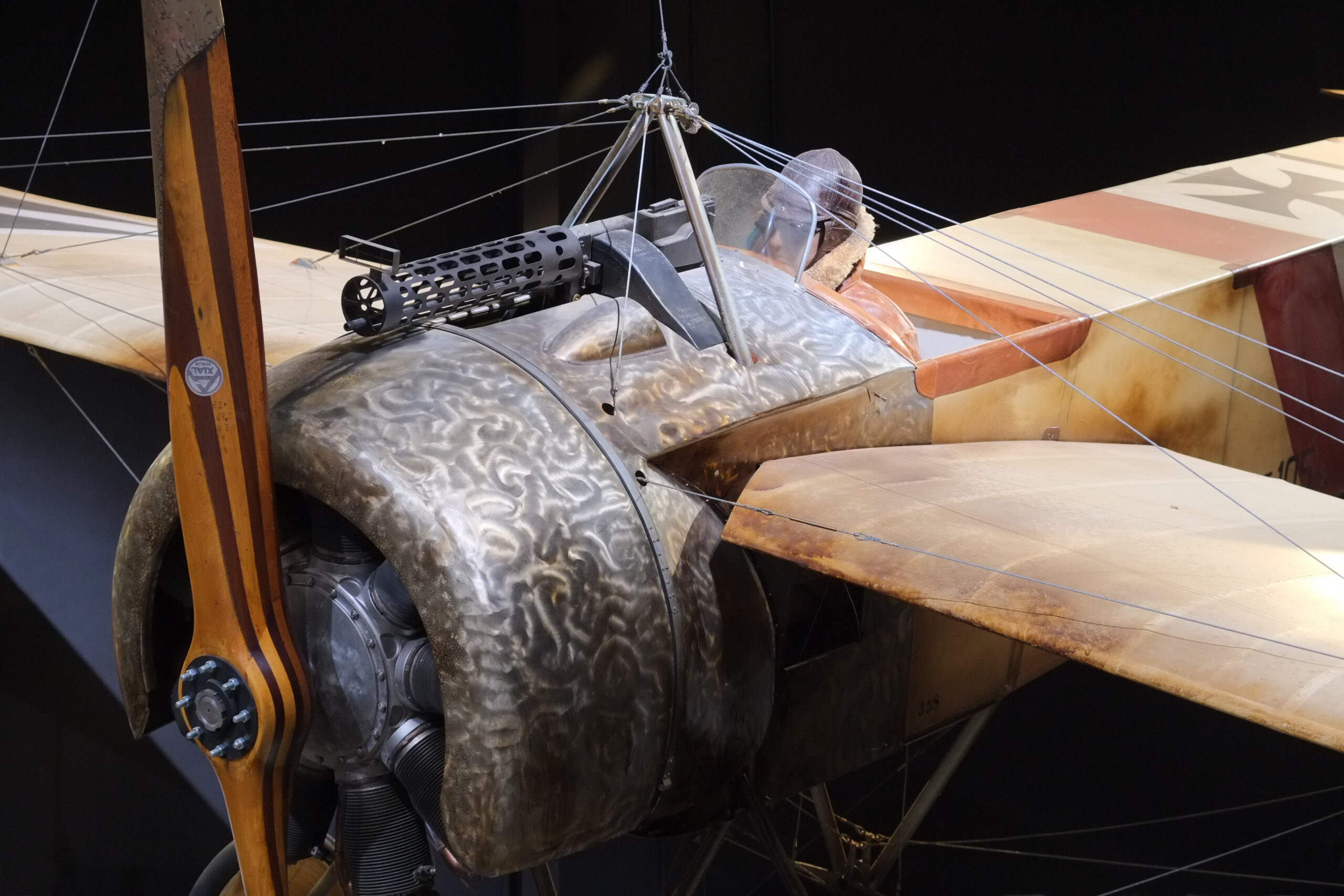
The Germans examined Garros’s propeller and turned to the Dutch designer Anthony Fokker. Rather than copy the crude deflectors, Fokker’s team produced a synchronisation gear, also called an interrupter gear, a mechanical linkage that timed the gun to fire only when a propeller blade was clear of the muzzle. Fitted to the Fokker Eindecker, a monoplane scout, it gave German pilots a gun that fired cleanly through the spinning propeller and was aimed simply by pointing the aircraft. This was the moment the modern fighter was born, even though the aircraft that first carried it was a monoplane rather than a biplane.
The Fokker Scourge
The advantage was dramatic. From the summer of 1915 into the spring of 1916, the Eindecker gave Germany a period of air superiority that the British called the Fokker Scourge. Allied reconnaissance crews, flying stable but defenceless machines, were shot down in numbers by pilots who could now aim their whole aircraft at a target. German aces such as Max Immelmann and Oswald Boelcke built their early reputations in this period. The lesson was absorbed on both sides: whoever held the technical edge in the air held a real and measurable advantage, and that edge would change hands repeatedly over the next three years.
The birth of air combat tactics
A gun that fired forward was only half the story. Pilots had to learn how to use it, and in 1915 and 1916 nobody knew how. The men who worked out the answers laid down principles that fighter pilots still recognise today.
Oswald Boelcke and the Dicta Boelcke
The most important of these thinkers was Oswald Boelcke. A calm, analytical German pilot who became one of the first great aces, Boelcke was asked to set down what he had learned, and in mid-1916 he produced the Dicta Boelcke, a short list of rules that became the world’s first tactical manual for aerial combat. Its advice was blunt and practical: secure the advantages of height and sun before attacking, always carry through an attack once begun, fire only at close range and only when the enemy is squarely in your sights, never turn your back and try to flee, and attack in groups of four or six so that no pilot fights alone.
These rules sound obvious now precisely because Boelcke was right. He also pioneered the idea of the fighter squadron as a hunting unit rather than a collection of lone individuals, forming and training the Jasta system of dedicated fighter squadrons. Among the young pilots he personally selected and taught was Manfred von Richthofen, who would become the highest-scoring ace of the war. Boelcke was killed in October 1916 in a mid-air collision with one of his own men during a dogfight, with 40 victories to his name, but his ideas outlived him on both sides of the lines.
Immelmann and the manoeuvres
The other early German star, Max Immelmann, gave his name to a combat manoeuvre, the Immelmann turn, a climbing reversal used to convert speed into height and a new attacking position. Whether the manoeuvre flown today exactly matches what Immelmann did is debated, but the naming captures how these first aces became identified with the very moves of air fighting. Tactics, formations and named manoeuvres all arrived in these two years, turning a chaotic scramble into a craft that could be taught.
The great fighters of the war
The fighters themselves evolved at a furious pace. A front-line design might dominate for a few months and then be outclassed by the enemy’s next machine. A handful of types stand out for their influence and their fame.
Fokker Eindecker
The Eindecker was not a great aircraft in itself. It was slow and its controls were awkward. What made it matter was the synchronised gun, which turned an ordinary monoplane scout into the first practical fighter and handed Germany the initiative in late 1915. It is the ancestor of every fighter that followed.
Nieuport and the Allied reply
The Allied answer came partly from the French Nieuport series, light and nimble sesquiplane biplanes, wings of unequal size, that could out-turn the Eindecker. The Nieuport 11 and later the Nieuport 17 helped break the Fokker Scourge in 1916, and they equipped French, British and other Allied squadrons. Their agility set the template for the classic dogfighting biplane.
Albatros D.III and D.V
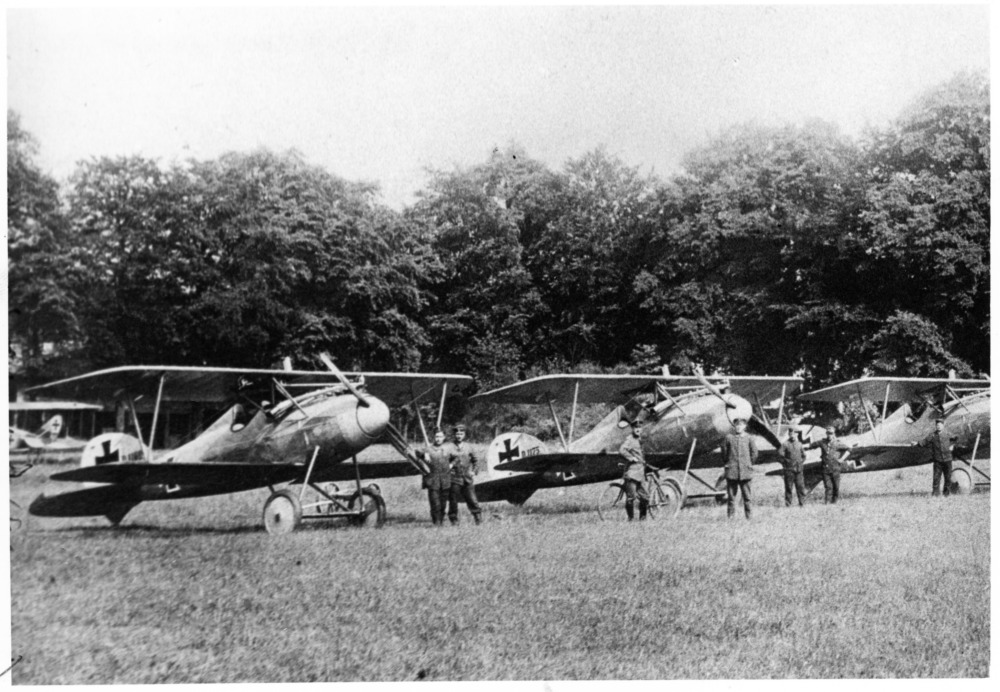
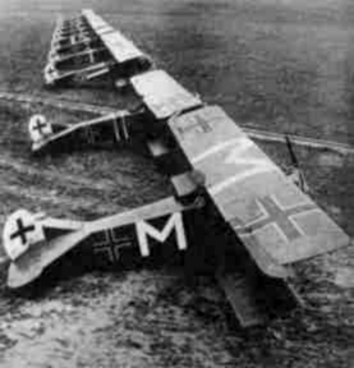
Germany regained the advantage with the Albatros D-series. The Albatros D.III and D.V were sleek, shark-nosed machines with a plywood monocoque fuselage and twin synchronised guns, and through 1917 they gave the German Jastas a decisive edge. It was the Albatros, above all, that made the spring of 1917 so costly for the Royal Flying Corps.
Sopwith Pup and Camel
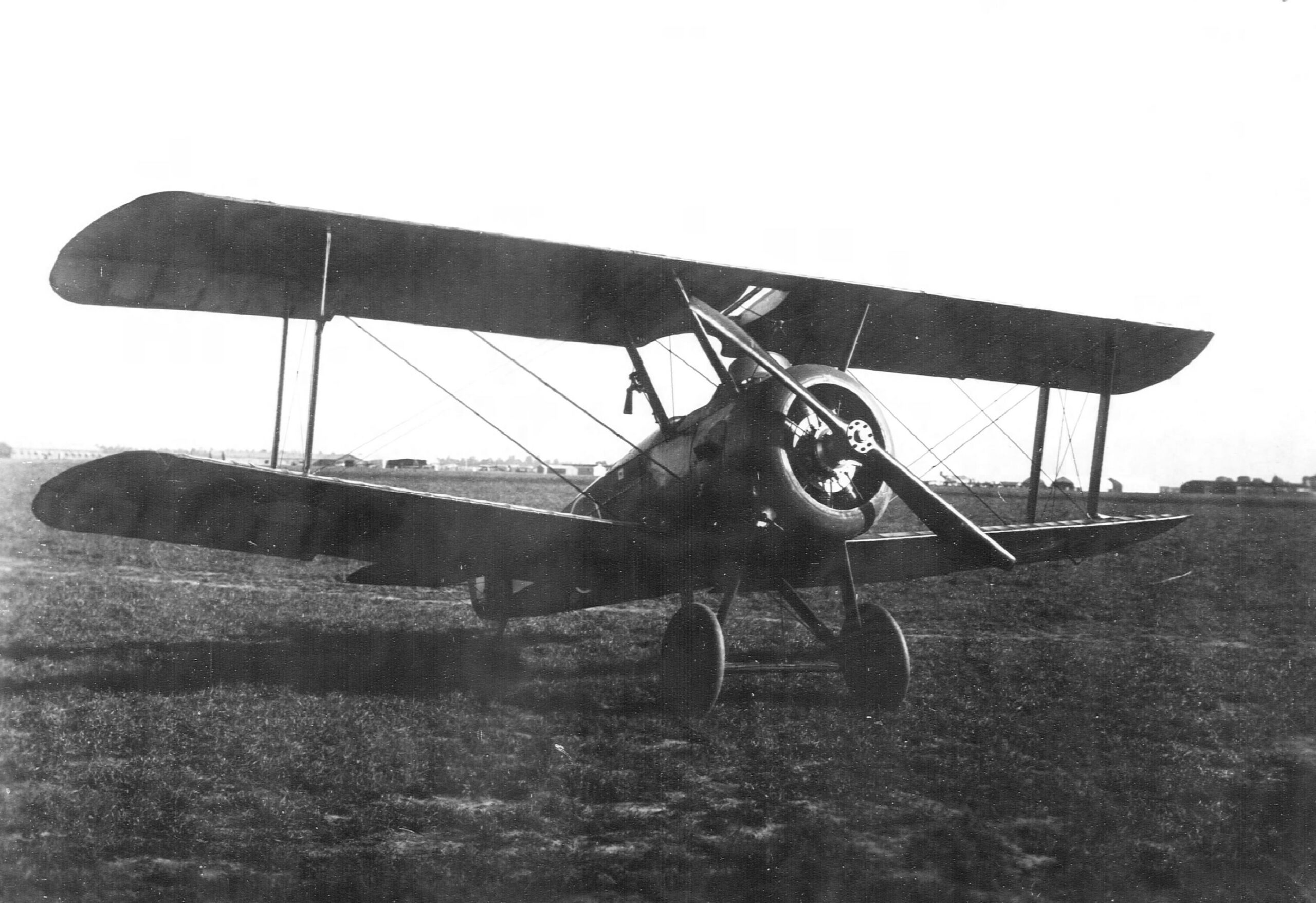
Britain’s Sopwith company produced two of the war’s most loved fighters. The Sopwith Pup was a delightful, forgiving machine that pilots adored. Its successor, the Sopwith Camel, was the opposite: a vicious little aircraft whose engine torque made it tricky and unforgiving, prone to spinning in an instant. Yet that same twitchiness made it astonishingly manoeuvrable in trained hands, and the Camel was credited with 1,294 enemy aircraft destroyed, more than any other Allied fighter of the war. Around 5,490 were built. It carried two synchronised Vickers guns and a 130 horsepower Clerget rotary, and it managed about 117 miles per hour.
SPAD XIII and S.E.5a
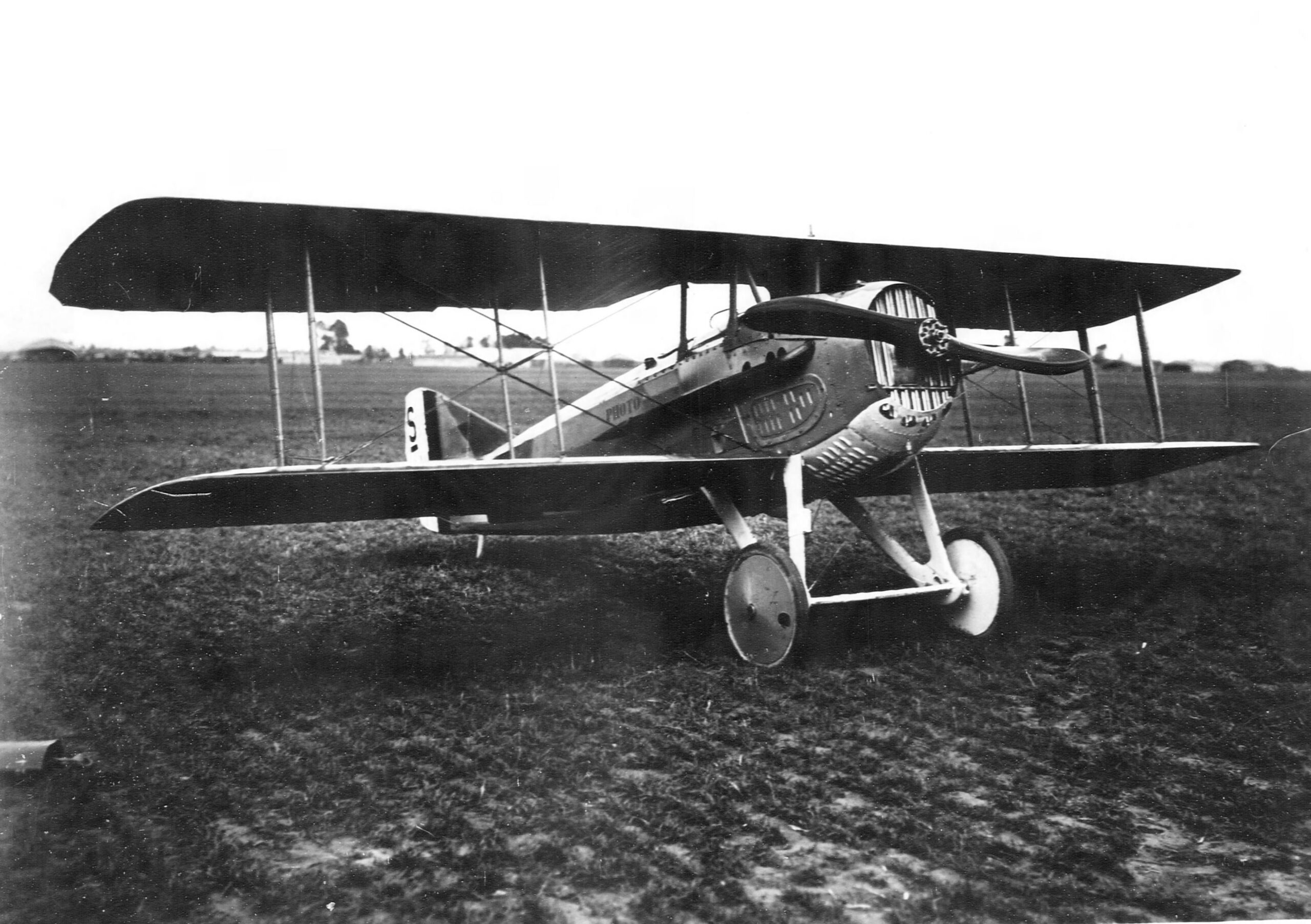
Where the Camel turned, the French SPAD XIII and the British S.E.5a preferred to fight fast and straight. Both were sturdy, stable gun platforms built around powerful engines, less agile than the Camel but faster and better in a dive, and both were superb at the hit-and-run tactics that won fights in the last eighteen months of the war. The SPAD XIII was built in huge numbers, some 8,472 aircraft, and equipped French and American squadrons alike. The S.E.5a, with around 5,205 built, carried the leading British and Commonwealth aces of 1917 and 1918.
Fokker Dr.I triplane
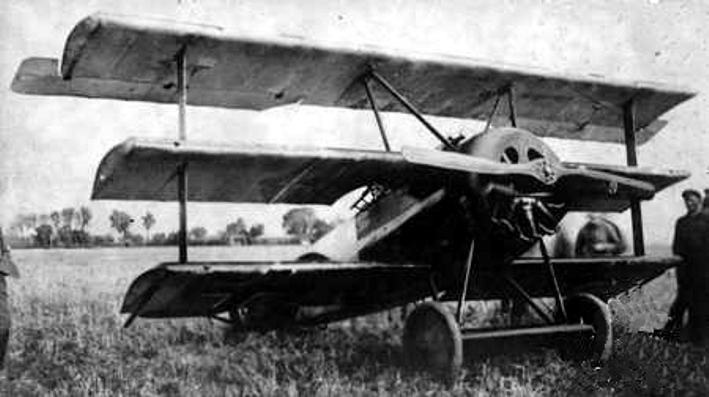
The Fokker Dr.I triplane is the most famous German fighter of the war, thanks entirely to its association with Richthofen, who scored his final victories in one and was flying a Dr.I when he was killed. With three short wings it climbed and turned superbly, though it was slow and structurally troubled, and only about 320 were built. Its fame is out of all proportion to its numbers, a reminder that legend and production figures rarely match.
Fokker D.VII
The finest German fighter of the war arrived too late to change its course. The Fokker D.VII, in service from the spring of 1918, was fast, strong and forgiving, able to hang on its propeller and fire upward at an enemy above. Nearly 3,300 were built. It was rated so highly that the Armistice terms specifically named the D.VII among the war material Germany had to surrender, the only aircraft type ever singled out that way.
| Aircraft | Nation | Engine | Top speed | Armament | In service | Built |
|---|---|---|---|---|---|---|
| Sopwith Camel F.1 | Britain | 130 hp Clerget rotary | ~117 mph | 2x Vickers .303 | 1917 | ~5,490 |
| Royal Aircraft Factory S.E.5a | Britain | ~200 hp Hispano-Suiza / Viper | ~138 mph | 1x Vickers, 1x Lewis | 1917 | ~5,205 |
| SPAD S.XIII | France | ~220 hp Hispano-Suiza | ~135 mph | 2x Vickers | 1917 | ~8,472 |
| Nieuport 17 | France | ~110 hp Le Rhone rotary | ~110 mph | 1x Lewis or Vickers | 1916 | thousands |
| Albatros D.V / D.Va | Germany | ~180 hp Mercedes D.IIIa | ~116 mph | 2x Spandau | 1917 | ~2,500 |
| Fokker Dr.I triplane | Germany | ~110 hp Oberursel rotary | ~115 mph | 2x Spandau | 1917 | ~320 |
| Fokker D.VII | Germany | ~180 hp Mercedes / BMW | ~120 mph | 2x Spandau | 1918 | ~3,300 |
The two-seaters that also fought
Not every fighting aircraft was a single-seat scout. The two-seater, with a pilot and a rear observer, did the bulk of the reconnaissance, artillery spotting and photography that justified having an air service at all, and some of these machines could fight hard when they had to. The British Bristol F.2B Fighter is the outstanding example. Handled at first like a lumbering two-seater, it suffered badly, but once crews learned to fly it aggressively like a single-seater, using the pilot’s forward gun as the main weapon and the observer’s gun to guard the tail, it became one of the most effective and respected combat aircraft of the war. Workhorse observation types such as the R.E.8 and the DH.4 were less glamorous, but the patient, dangerous work they did over the lines was the real reason the fighters existed, since the whole point of air superiority was to protect your own reconnaissance and deny the enemy his.
The engines that powered them
Behind every fighter stood an engine, and the story of the air war is partly a story of engine development. Two very different types dominated.
Rotary engines
Many of the early and mid-war fighters used rotary engines, an ingenious and now-forgotten design in which the whole engine, cylinders and all, spun around a fixed crankshaft with the propeller bolted to it. Rotaries such as the French Gnome, Le Rhone and Clerget, and the German Oberursel, were light for their power and air-cooled by their own rotation, which suited small, agile fighters. The spinning mass also produced a powerful gyroscopic effect, and it was this that gave the Sopwith Camel its fierce right-hand turn and its reputation for killing careless pilots. Rotaries had drawbacks too. They guzzled castor oil, which sprayed back over the pilot, they could not easily be throttled, and they hit a ceiling of power that limited how far the design could go.
Inline and V engines
As the war went on, water-cooled inline and V-form engines took over the front rank. The German Mercedes D.III, the French and British Hispano-Suiza, and later the BMW IIIa delivered more power and could be built larger, and they powered the fast, heavy fighters of 1917 and 1918 such as the Albatros, the SPAD XIII, the S.E.5a and the Fokker D.VII. The shift from rotary to inline mirrors the shift in tactics, from the light turning fighter to the fast diving one. Engine power, more than any single factor, set the pace of fighter development throughout the war.
The aces
The public on both sides needed heroes, and the fighter pilot supplied them. The idea of the ace, a pilot credited with five or more victories, gave the anonymous slaughter of the trenches a human face, and the top scorers became international celebrities.
Manfred von Richthofen
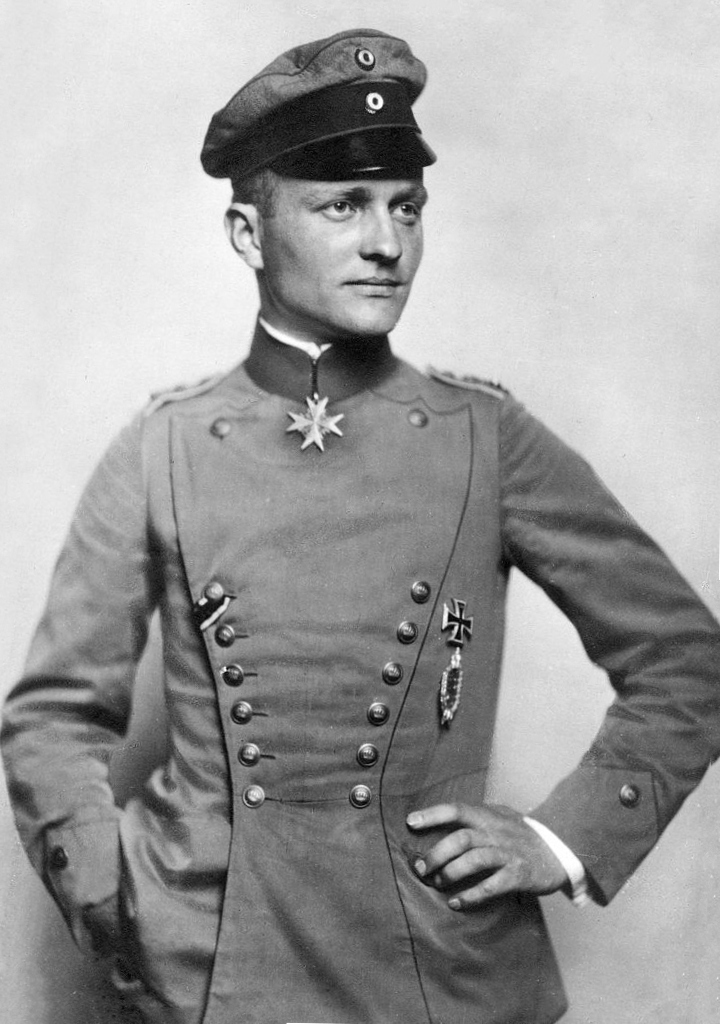
The most famous of them all was Manfred von Richthofen, the Red Baron, who painted his aircraft red and led the fighter wing nicknamed the Flying Circus. He was credited with 80 confirmed victories, the highest total of any pilot in the war, before he was shot down and killed over the Somme in April 1918. Exactly who fired the fatal round, an Australian gunner on the ground or a Canadian pilot in the air, has been argued ever since, and the modern consensus leans toward ground fire, but the debate itself shows how large his legend loomed.
Rene Fonck and the Allied aces
The highest-scoring Allied pilot was the Frenchman Rene Fonck, credited with 75 confirmed victories and, by his own claim, many more unconfirmed. A precise, almost clinical marksman, Fonck survived the war, unlike so many of his rivals. Britain and the Commonwealth produced their own stars: Edward Mannock, Billy Bishop and James McCudden all scored heavily, while the young Albert Ball became an early British hero before his death in 1917. France celebrated Georges Guynemer, who vanished on a patrol that year and was mourned as a national martyr. When the United States entered the war, Eddie Rickenbacker emerged as its leading ace. Each nation found in these men a way to make sense of the air war.
The truth behind the glamour
The reality was harsher than the legend. Victory tallies were counted differently by different air services and were often impossible to confirm, so the neat numbers carry real uncertainty. Most pilots never became aces at all; many were killed within weeks of reaching the front. The glamour of the ace sat atop a grim attrition that consumed ordinary aircrew in enormous numbers.
The Flying Circus and the fighter wing
As tactics matured, the fighter squadron gave way to something larger. In mid-1917 the Germans grouped several Jastas into a single fighter wing, Jagdgeschwader 1, under Richthofen’s command. It was designed to be moved quickly to wherever the fighting was heaviest, its aircraft and tents loaded onto trains and its brightly painted machines pitching camp at a new airfield within a day. The vivid colours and the travelling, canvas-town way of life earned it the nickname the Flying Circus. The idea behind it was sound and modern: concentrate your best fighters and throw them as a mass against a chosen point to win local air superiority, rather than spreading them thinly along the whole front. The Allies developed their own large formations in response, and the lone duellist of the early war increasingly gave way to big, coordinated patrols of a dozen or more aircraft fighting as a unit. By 1918 a dogfight might involve fifty or more machines swirling through the same patch of sky, a very long way from the pistol-waving encounters of 1914.
Bloody April and the swing of advantage
No episode shows the seesaw of technical advantage more starkly than April 1917, remembered as Bloody April. The air campaign supporting the British ground offensive at Arras fell in a month when the German Albatros fighters outclassed most of what the Royal Flying Corps could put up, and when German pilots were, on the whole, better trained.
The result was carnage. During April 1917 the British lost somewhere between 245 and 275 aircraft, with 211 aircrew killed or missing and more than a hundred taken prisoner, against German losses of around 66 aircraft. Under Richthofen’s leadership his squadron, Jasta 11, claimed on the order of 89 victories in that single month, a large share of the British total. New RFC pilots were arriving at the front with only a few hours of solo flying and were being killed before they learned the trade.
Bloody April was a low point, but it was not the end of the story. The Allies answered with better aircraft, the S.E.5a and the Camel, with improved training, and with growing numbers, and by the last year of the war the advantage had swung back. The pattern of the whole air war is written into that single month: an edge in machines or training could be decisive, and it never stayed with one side for long.
Life and death in the cockpit
It is easy to romanticise the biplane war, with its images of knights of the air dueling in the sunshine. The daily reality for aircrew was cold, dangerous and often short.
No parachutes for the Allies
For most of the war Allied aircrew flew without parachutes. The equipment existed and was used by balloon observers, but Allied commanders resisted issuing it to pilots, partly from a misplaced fear that it would tempt men to abandon repairable aircraft. German aircrew began receiving parachutes late in the war. A pilot whose aircraft caught fire, and the fabric and dope of these machines burned fiercely, often faced a choice between burning and jumping without a parachute. It is one of the grimmest facts of the era.
The conditions of flight
Open cockpits meant bitter cold at altitude, with pilots smearing whale grease on their faces and layering fur and leather against temperatures that could fall well below freezing. Engines were unreliable, structures could fail in a hard dive, and there was no radio to call for help. Castor oil from rotary engines sprayed back constantly, with predictable effects on the digestion. Navigation was by map, compass and eyesight over a landscape churned beyond recognition.
The scale of loss
Training was often rushed, and a large proportion of casualties came not from combat but from accidents in worn-out or poorly understood machines. Life expectancy at the front, in the worst periods, was measured in weeks. The aces who survived long enough to build up scores were the exception; the rule was the young pilot who did not last a month. Any honest account of the biplane war has to hold the glamour and the attrition together.
The birth of strategic air power
The fighter was not the only weapon the war created. Alongside the dogfights over the trenches, the aeroplane grew into something that could strike far behind the lines, and the idea of strategic air power was born in these years.
From artillery spotting to bombing
Aircraft had begun the war spotting for the guns, and that role only grew, with two-seaters directing artillery fire by wireless and photographing enemy positions in ever greater detail. Aerial photography became a science of its own, and the interpretation of those images fed directly into the planning of ground offensives. Reconnaissance, not glory, remained the aeroplane’s most valuable contribution to the war throughout.
The bombers arrive
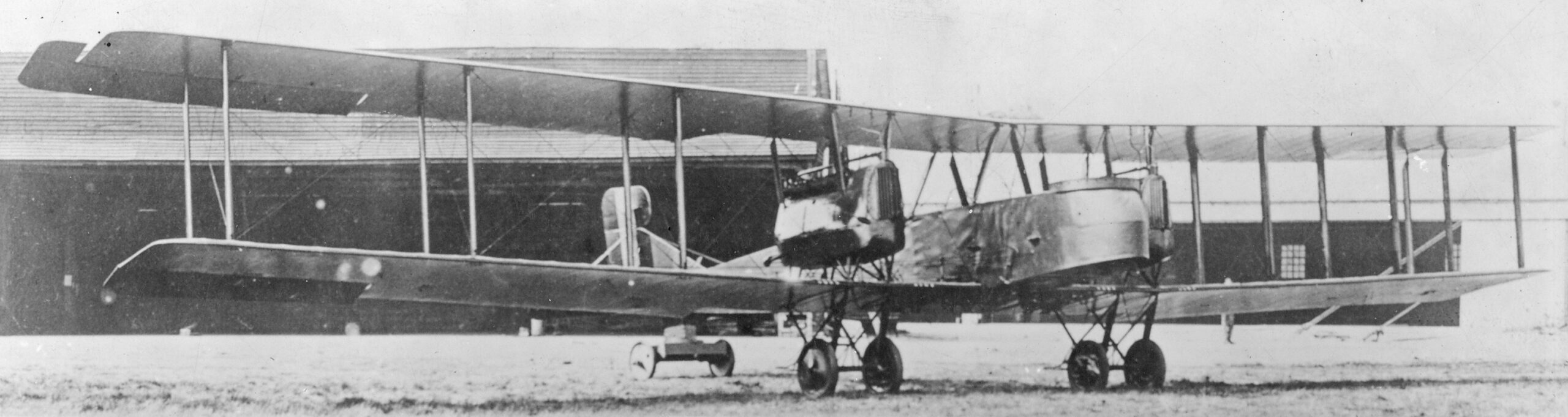
Both sides developed dedicated bombers. Germany sent Zeppelin airships and then large Gotha and Giant bombers against British cities, and the Gotha raids on London in 1917 caused public alarm out of proportion to the physical damage and forced Britain to divert fighters to home defence. Britain and France built their own bombing forces, and by 1918 the Allies were planning long-range raids into Germany. The two-seater and multi-engined bomber, carrying its bombs to targets far from the front, pointed directly toward the air wars of the future.
The Royal Air Force is founded
The clearest sign that air power had come of age was organisational. On 1 April 1918 Britain merged the Royal Flying Corps and the Royal Naval Air Service into the Royal Air Force, the world’s first independent air service, answerable to its own ministry rather than to the army or the navy. The creation of a separate air arm was an admission that the aeroplane was now a strategic instrument in its own right, not merely a support for the older services. Every independent air force in the world traces its lineage to that decision.
The first carrier air strike
The war also saw the first stirrings of naval air power. On 19 July 1918 seven Sopwith Camels took off from the deck of HMS Furious and attacked the German airship base at Tondern, then part of Germany, destroying the Zeppelins L54 and L60 in their sheds. It was the first attack launched by landplanes flying from a carrier’s deck, and although Furious could not yet reliably recover its aircraft, so the pilots were expected to ditch alongside a destroyer, the raid pointed straight at the carrier warfare that would dominate the next war. The Royal Navy even sponsored a shipboard version of the Camel, the 2F.1, for the role. In a war remembered for mud and trenches, the aeroplane had already reached out from the deck of a ship to strike a target on land.
Legacy: what the biplane war left behind
The war ended in November 1918, and within a few years the wood-and-wire fighters were obsolete. Yet almost everything about modern air power began in those four years.
The fighter aircraft, the bomber, the reconnaissance platform, the synchronised or otherwise cleverly mounted forward-firing gun, the fighter squadron as a trained hunting unit, written combat doctrine, aerial photography, home air defence and the independent air force all took shape between 1914 and 1918. The seesaw of technical advantage taught a lesson that has never gone away: air superiority is won by staying one step ahead in machines, training and tactics, and it can be lost as quickly as it is gained.
The aircraft themselves fed directly into what followed. The Sopwith company evolved into Hawker, whose fighters would defend Britain in 1940, a lineage traced in our history of Hawker aircraft. The engine makers, the airframe firms and the doctrine all carried forward. When the next generation of fighters fought the Battle of Britain just over two decades later, they did so using tactics and organisations whose roots lay in the biplane war, and the aircraft that fought it grew from companies such as Supermarine whose stories also began in this era. The monoplane fighters of 1940 flew faster and higher, but the questions their pilots faced, how to gain height and sun, when to commit, how to fight as a team, had been asked and answered over the Western Front.
Photographing WWI aircraft today
Very few original First World War aircraft survive, and fewer still fly. Most of the machines you will see in the air are faithful reproductions, built to original drawings and often fitted with period or period-style engines, while a small number of genuine originals are preserved in museums such as the Royal Air Force Museum, the Imperial War Museum, the Smithsonian National Air and Space Museum and the Musee de l’Air. In Britain the Shuttleworth Collection at Old Warden flies both original airframes and reproductions from its grass strip, and it is one of the best places anywhere to photograph these aircraft actually flying.
Technique for wood-and-canvas aircraft
These aircraft are slow, and that changes how you photograph them. A rotary or vintage inline turns a wooden propeller that looks wrong when frozen solid by a fast shutter, so the single most important habit is to slow down and let the propeller blur into a disc. That means shutter speeds well below what you would use for a jet, often in the region of 1/125 to 1/250 of a second, panning smoothly with the aircraft to keep the fuselage sharp while the propeller turns to a soft arc. Our guide to propeller blur and the right shutter speed covers the exact settings, and the broader warbird photography guide deals with capturing vintage aircraft in the air.
Making the most of the setting
Grass airfields, period hangars and the low light of an evening display suit these aircraft far better than a hard modern apron. Watch the background, keep the horizon level, and use the slower speeds of a vintage display to work on clean panning. You can see how these aircraft are photographed in the field across the Piemags aviation galleries, and if you want to use aviation images commercially the licensing page sets out the options.
Frequently asked questions
When did aerial combat begin in the First World War?
Air combat grew out of reconnaissance in 1914 and 1915. The first fights were improvised, with crews firing rifles and pistols at each other, but true fighter combat began in mid-1915 when the Fokker Eindecker, fitted with a gun that fired through the propeller, gave German pilots a practical way to shoot forward and aim by pointing the aircraft.
What was the best fighter plane of the First World War?
There is no single answer, because the best aircraft changed month by month, but the Fokker D.VII of 1918 is widely regarded as the finest all-round fighter of the war. It was fast, strong and forgiving, and the Armistice terms specifically named it among the war material Germany had to surrender, the only aircraft type singled out that way. The Sopwith Camel, SPAD XIII and S.E.5a were the standout Allied fighters.
Who was the top ace of the First World War?
Manfred von Richthofen, the German Red Baron, was the top-scoring ace with 80 confirmed victories before his death in April 1918. The highest-scoring Allied pilot was the Frenchman Rene Fonck with 75 confirmed victories. Victory tallies were counted differently by different air services, so the exact figures carry some uncertainty.
How did WWI planes shoot through the propeller?
Early attempts used steel deflector wedges on the propeller blades to knock aside any bullets that struck them. The lasting solution was the synchronisation or interrupter gear, developed by Anthony Fokker’s team, which timed the machine gun to fire only when a propeller blade was clear of the muzzle. This let the pilot aim simply by pointing the whole aircraft at the target.
How fast were WWI fighter planes?
Front-line fighters were slow by modern standards, typically reaching between about 110 and 140 miles per hour. The Sopwith Camel managed around 117 mph, while the faster SPAD XIII and S.E.5a reached roughly 135 to 138 mph. Speed rose steadily through the war as engines grew more powerful.
Did WWI pilots have parachutes?
For most of the war Allied aircrew flew without parachutes, even though the equipment existed and was used by balloon observers. German aircrew began to receive parachutes late in the war. A pilot whose aircraft caught fire often faced a choice between burning and jumping without one, which is among the grimmest facts of the era.
Can you still see WWI aircraft fly today?
Yes, though most flying examples are faithful reproductions rather than originals. A small number of genuine airframes are preserved in museums such as the Royal Air Force Museum, the Imperial War Museum and the Smithsonian. In Britain the Shuttleworth Collection at Old Warden flies both original aircraft and reproductions from a grass strip, making it one of the best places to photograph them airborne.
Why were most WWI fighters biplanes?
With the low-powered engines of the day, designers needed a lot of wing area to generate enough lift, and two shorter wings braced together with wire and struts formed a light, strong structure that was easier to build than a single large cantilever wing. The biplane layout gave the strength and lift needed at the weight and power available, which is why it dominated until engines and materials improved.
