Planning an airshow photography day comes down to six things: confirm the show is actually running, buy the ticket that puts you where you want to be, work out which way the crowd line faces so the sun is behind you rather than in your lens, get the flying programme and mark the acts you care about, arrive early enough to claim a clear piece of the fence, and know how you are getting in and out before you set off.
Almost every disappointing airshow day I have had was decided before I got the camera out of the bag. Stuck in a queue on a B road with the Reds already smoking overhead. Standing in the one part of the crowd line where a marquee blocks the topside of every pass. Facing directly into a mid-afternoon sun because I never checked which way the runway ran. None of that is a camera problem, and no amount of shutter speed fixes it.
This guide is about everything that happens before you press the shutter: tickets, timings, travel, parking and the business of choosing where to stand. It does not cover panning, autofocus modes or exposure. That is a separate job, and it is already covered in detail in our guide to airshow photography tips and how to photograph aircraft at an airshow. Read that for the shooting. Read this for getting yourself into a position where the shooting is worth doing.
What this guide covers
- What planning actually buys you
- Check the show is actually running
- Choosing the right ticket
- Reading the flying programme before you commit
- Working out the light before you go
- The crowd line, the display line and the 230 metre rule
- Where to stand: choosing your spot on the fence
- Getting there: parking, park and ride and trains
- Timings for the day, gate to gate
- Weather and what it does to the display
- Enclosures, flightline walks and press access
- Two-day shows, camping and the second-day advantage
- A worked plan for a single show day
- Common planning mistakes
- The planning checklist
- Frequently asked questions
What planning actually buys you
Photographers tend to think of an airshow as a shooting problem. It is mostly a logistics problem with about four hours of shooting hidden inside it. On a typical UK show day you will spend more time travelling, queueing, walking and standing than you will spend with the camera at your eye. The flying might run for six or seven hours at a big military show, but any single act is in front of you for eight to twelve minutes, and the ones you actually care about might total forty minutes of usable time across the whole day.
That is the number that matters. Forty minutes. Everything you do in the fortnight beforehand is about protecting those forty minutes from things that have nothing to do with photography: a car park two miles from the fence, a food queue that swallows the Typhoon slot, a spot on the crowd line where the sun is directly behind the aircraft on every pass.
Planning buys you three specific things.
Position
Position is the single biggest lever you have on the quality of your images, and it is decided by two things: which ticket you bought and what time you arrived. Neither is a skill. Both are decisions you make weeks before. A photographer with a modest 100-400mm standing in the right place will beat a photographer with a 600mm f/4 standing behind a catering unit, every single time.
Time
The second lever is having enough slack in the day that you are not making rushed decisions. If you arrive fifteen minutes before the first display you will spend the first hour flustered, in the wrong place, with the wrong lens on and no idea what is coming next. If you arrive two hours early you can walk the crowd line, look at the light, watch where the practice or arrivals traffic goes, eat before the queues build, and be settled with a shot list in your head before anything worth shooting happens.
Certainty
The third is knowing what is going to happen. Airshow programmes are published in advance. Display orders get posted. Aircraft get confirmed and, quite often, cancelled. If you know that the display you travelled for is on at 15:20 and lands back at 15:34, you can plan your whole day around it instead of hoping.
Check the show is actually running
This used to be a formality. It is not any more, and 2026 is the year that made the point.
The Royal International Air Tattoo, the biggest military airshow in the country and the anchor of most UK photographers’ summers, did not take place in 2026. The organisers cancelled it and confirmed that RIAT returns to RAF Fairford on 16 to 18 July 2027, with ticket holders offered a rollover, a refund or the option to donate the value to the RAF Charitable Trust. If you had booked accommodation in Gloucestershire on the assumption that a show that has run for decades would run again, you found out the hard way.
The Bournemouth Air Festival, for years the biggest free seafront show in the country, is in a similar position. Bournemouth, Christchurch and Poole Council withdrew the funding subsidy, and the council-run event did not return for 2026. There have been proposals for an independently funded revival, but at the time of writing that depends on raising the money privately rather than on a confirmed schedule. Do not book a hotel on the strength of a proposal.
Meanwhile, shows do carry on and do change their names. RAF Cosford ran on Sunday 14 June 2026, and it was announced during the show that from 2027 it becomes the Royal Air Force Air Show, with the next one on Sunday 13 June 2027. If you search for “Cosford Air Show 2027” next spring and find nothing, that is why.
What this means for your planning
Treat the show’s own website as the only source that counts. Aggregator sites, forum posts and last year’s article are all out of date the moment something changes, and the ones that rank well in search are often the least maintained. Before you book anything that costs money, open the official site and look for a dated announcement.
Three practical habits are worth building.
Sign up to the show’s mailing list. Cancellations, on-sale dates and programme changes go out by email first, usually well before anyone writes an article about them. It costs you nothing and it is the fastest signal you will get.
Book refundable accommodation where you can. If you are travelling to a show and staying over, the extra ten or fifteen pounds for a flexible rate is cheap insurance against a cancellation or a washout. Airshow-weekend hotel prices near a big military base are inflated anyway, so the premium for flexibility is proportionally small.
Check again the week before. Not for cancellation this time, but for the display list. Aircraft drop out constantly. If the entire reason you are going is one specific type, look at the confirmed participants list a few days out and be honest with yourself about whether the day still stands up if that aircraft does not appear.
Choosing the right ticket
Airshow tickets are not a single product. At a big show you are choosing between four or five quite different experiences, and the differences matter far more to a photographer than they do to a general visitor.
| Ticket type | What you get | Photographic verdict |
|---|---|---|
| General admission | Entry to the showground, the full flying display and the static park. You stand wherever you can find room on the public crowd line. | Perfectly good, and what most excellent airshow photography is shot from. Your position depends entirely on how early you arrive. |
| Advance vs gate | The same ticket, bought early and cheaper. Many shows now sell out or close gate sales entirely. | Always buy in advance. It is cheaper, it guarantees entry, and at some shows the gate option no longer exists. |
| Hospitality or enclosure | A reserved area, usually with seating, food, toilets and sometimes a raised platform. Sold at a large premium. | Mixed. The view can be excellent and the toilets are a genuine benefit on a ten-hour day, but you are locked into one position and some enclosures sit behind the general crowd. |
| Grandstand or raised viewing | Elevated seating on or near the crowd line. | Height helps with clean backgrounds and topside on level passes, but check whether it is central to the display line before paying for it. |
| Park and view | A vehicle space outside the showground, usually at the end of the runway, with a view of arrivals, departures and part of the display. No showground access. | Underrated. Great for departures and arrivals, and often the best angle for take-off shots, but you will miss the static park entirely. |
| Two-day or weekend | Entry on both days, sometimes at a discount. | The best value a photographer can buy at a two-day show, for reasons covered below. |
The enclosure trap
Every year photographers pay a large premium for a hospitality package and come away frustrated, because they bought comfort rather than position. Before you spend the money, ask three questions. Where exactly is the enclosure on the showground plan, relative to the display centre point? Is it in front of the public crowd line or behind it? Can you leave and return freely, or does it commit you to one spot?
An enclosure that sits centrally and puts you at the front of the crowd is worth every penny on a long day. An enclosure that is a nice tent set forty metres back from the fence is worth nothing at all with a camera in your hand. The showground plan on the official site will usually tell you, and if it does not, email and ask.
When general admission is the right answer
For most photographers, most of the time, it is. The public crowd line at a well-run show is on the fence, dead level with the display line, and if you arrive early you can stand exactly where you want. Spend the money you saved on the enclosure ticket on a two-day ticket instead, or on the fuel to reach a better show.
Reading the flying programme before you commit
The flying programme is the document that turns a day out into a plan. Most shows publish a provisional participants list months ahead and a running order either in the show programme on the day or, increasingly, in an app or on social media the night before.
Participants list versus display order
These are two different things and people conflate them constantly. The participants list tells you what is coming. The display order tells you when. The participants list is useful for deciding whether to go at all. The display order is what you use on the day to decide when to eat, when to change lenses and when to be back at the fence.
A participants list is always provisional. Military aircraft get pulled for operational reasons with no notice. Warbirds go unserviceable. Foreign teams cancel. At Cosford in 2026 several aircraft dropped out late for operational reasons and the organisers backfilled the gaps, ending up with a longer display than originally planned. That cuts both ways: the type you came for can vanish, and something unexpected can appear.
Static versus flying
Look carefully at whether an aircraft is listed as flying or static. A rare type in the static park is a completely different photographic proposition from the same type in the air: you are shooting it parked, in harsh light, surrounded by fencing, barriers, cones and crowds. That can still be worth the trip, but plan for it differently. It means an early arrival to shoot the static park before the crowds build, and a wider lens than you would otherwise pack.
Marking up your day
Once the running order appears, do this properly. Print it, or screenshot it, and mark three categories.
Must-shoot. The reason you came. Be at the fence, in position, lens on, ten minutes before. Not five.
Would-like. Shoot if you are there, but do not build the day around them.
Ignore. Every show has acts that are wonderful to watch and photographically thin. Use those slots to eat, use the toilets, change cards, top up batteries and walk the static park. A twelve minute act you do not need is twelve minutes of queue-free catering.
Working out the light before you go
This is the part most people skip, and it is the part that decides whether your images are keepers or record shots.
At an airshow you cannot move. The crowd line is fixed, the display line is fixed, and the sun does what it does. Your only decision is which show to go to, on which day, and where along a fixed line to stand. That decision is worth making with a map rather than with hope.
The two facts you need
First, the orientation of the display line. That is almost always parallel to the main runway, and you can read the runway heading straight off the runway number. Runway 06/24 runs roughly 060 to 240 degrees, which is to say from north-east to south-west. Runway 09/27 runs east to west. Runway 18/36 runs north to south.
Second, which side of it the crowd stands. That is on the showground plan.
Put those together and you know which way you will be facing all day. If the crowd is on the north side of an east-west runway, you are looking south, into the sun, for most of a British summer day. If the crowd is on the south side, you are looking north, with the sun behind you, and the light is on the aircraft rather than behind it.
The Duxford example
Duxford is the case study every UK photographer learns eventually. The airfield’s main runway is 06/24 and the public are on the north-western side, which means that for a good part of the day you are shooting towards the sun rather than with it. Early afternoon is the difficult period, with the sun more or less in front of the crowd line and aircraft dropping into silhouette on the far passes. As the afternoon runs on the sun moves round to your right and the light improves considerably, which is one reason a lot of experienced photographers there treat the first half of the display as reconnaissance and the second half as the real work.
That is not a criticism of Duxford, which puts on some of the best warbird flying in Europe. It is simply the geometry, and knowing it in advance changes what you do. If you know the light is hard at 14:00 and good at 17:00, you shoot topside and silhouettes early and you save your best expectations for late.
Tools
You do not need anything exotic. Open the airfield in a satellite map, note the runway heading, then use any sun-position app to see where the sun sits at the times the display runs. PhotoPills and The Photographer’s Ephemeris both do this, but a free sun-path calculator and a compass bearing get you 90 per cent of the way there.
One further wrinkle worth knowing: shows that run into the evening, like the Shuttleworth evening displays at Old Warden, hand you low, warm, side-on light that no midday show can match. If the light is what you care about, an evening show at a small grass field can be worth more to you than a full day at a big military base. Our guide to shooting aviation in low light and at golden hour goes into what to do with that light once you have it.
The crowd line, the display line and the 230 metre rule
Understanding the geometry of a UK display explains most of what you will experience on the day, including why your 400mm feels short.
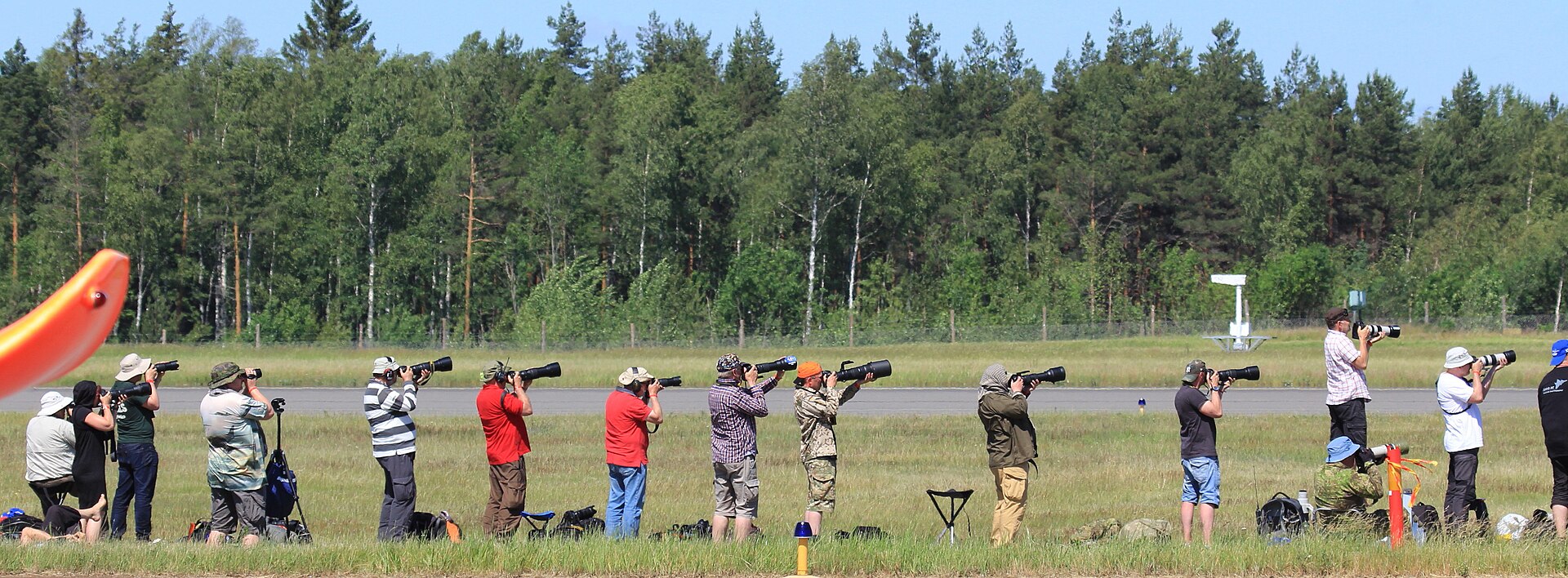
UK flying displays are regulated by the Civil Aviation Authority under CAP 403. The core of it, for our purposes, is separation. There is a crowd line, which is where you stand, and a display line, which is the line the aircraft must not cross towards you. The normal minimum separation between the two is 230 metres. For aircraft manoeuvring at high speed, above 300 knots, that separation is extended, and it can be reduced for slower traffic such as helicopters and light aircraft.
| Aircraft category | Typical minimum separation | What that means for you |
|---|---|---|
| Standard display aircraft | 230 metres | The closest an aircraft will normally be on a pass. A 400mm lens on a full-frame body fills a useful part of the frame with a fighter-sized aircraft at this distance. |
| Fast jets manoeuvring above 300 knots | Extended beyond the standard distance | Fast passes are further away than they feel. This is why fast jet work rewards longer glass and why so many people come home with small aircraft in big skies. |
| Helicopters and light aircraft | Can be reduced below the standard distance | The most likely acts to really fill your frame. Do not put the long lens on and then find a Chinook is far too close for it. |
Two consequences follow, and both are planning consequences rather than technique ones.
You are always further away than you think. The aircraft on the far side of a display line at a big base can be 400 metres or more from you at the top of a manoeuvre and considerably more than that at the far end of the display axis. Bring the longest lens you own, and read our guide to the best lenses for aviation photography before you decide what to carry.
The centre point matters enormously. Displays are flown to a datum, a display centre point, usually in front of the commentary box or the show centre. Aircraft turn around it, pull towards it and present to it. Stand near the centre and you get the aircraft at its closest, with the pilot presenting the aircraft to you. Stand 400 metres down the line and you are photographing the same aircraft further away, at a worse angle, often going away from you.
Where to stand: choosing your spot on the fence
You have your ticket, you know which way the light falls, and you know where the display centre is. Now you have to pick a piece of ground and defend it for eight hours.
Walk the line first
Do not take the first gap you find. Walk the length of the accessible crowd line before you settle. It takes twenty minutes and it is the most valuable twenty minutes of your day. Look for four things.
An unobstructed foreground. Fences, barriers, marquees, catering units, first aid tents, flagpoles, speaker towers, portaloos and the big inflatable arch all appear in your frame at the bottom of a low pass. Some of them will be erected after you arrive, which is why the empty patch of grass at 07:30 is not always the empty patch of grass at 11:00. If there is a marked-out rectangle of ground in front of you with tape around it, something is going in there.
A clean background. This matters more than most people realise. At a base show, the far side of the runway might be trees, a treeline of hangars, a control tower or open sky. What sits behind an aircraft on a low pass at 200 feet is the thing that makes the shot look professional or messy. A dark treeline can be your friend, isolating a bright aircraft. A row of white hangars is not.
Room to move. Panning a long lens through 120 degrees needs elbow space, and you will be doing it repeatedly. Being wedged between two families with picnic chairs is not a spot, however good the view is.
The sun. Where is it now and where will it be at 16:00. Sometimes moving 200 metres along the line changes the angle to the sun on the crucial passes.
The first row is not always the best row
Front row on the fence gives you a clean low angle, but it also gives you the fence itself, and often a rope, a barrier and a line of people’s heads if the ground rises behind. If you have any height available, a bank, a slope, a raised viewing area, use it. Being two metres higher can lift you clear of everything in front and give you a cleaner background on level passes. Our guide to shooting through airfield fences covers the technique for those times when the fence is unavoidable.
Left of centre, right of centre
Standing exactly on the display datum sounds ideal and is often the busiest and most contested spot on the airfield. In practice, being 50 to 150 metres to one side of it is frequently better. You still get the aircraft close, you get a slightly angled view rather than a flat side-on one, and you have a much better chance of a topside as aircraft bank around the datum. Which side to choose comes back to the sun: pick the side where the aircraft is turning towards the light rather than away from it.
The static park is a different job
If you want static shots, get them at opening. Static aircraft are crowded from mid-morning onwards and by lunchtime there is a queue for the cockpit, a family in front of the nose and a barrier round everything. First hour, wider lens, low angle, and you have the thing to yourself. Then put the long lens on and do not touch the statics again.
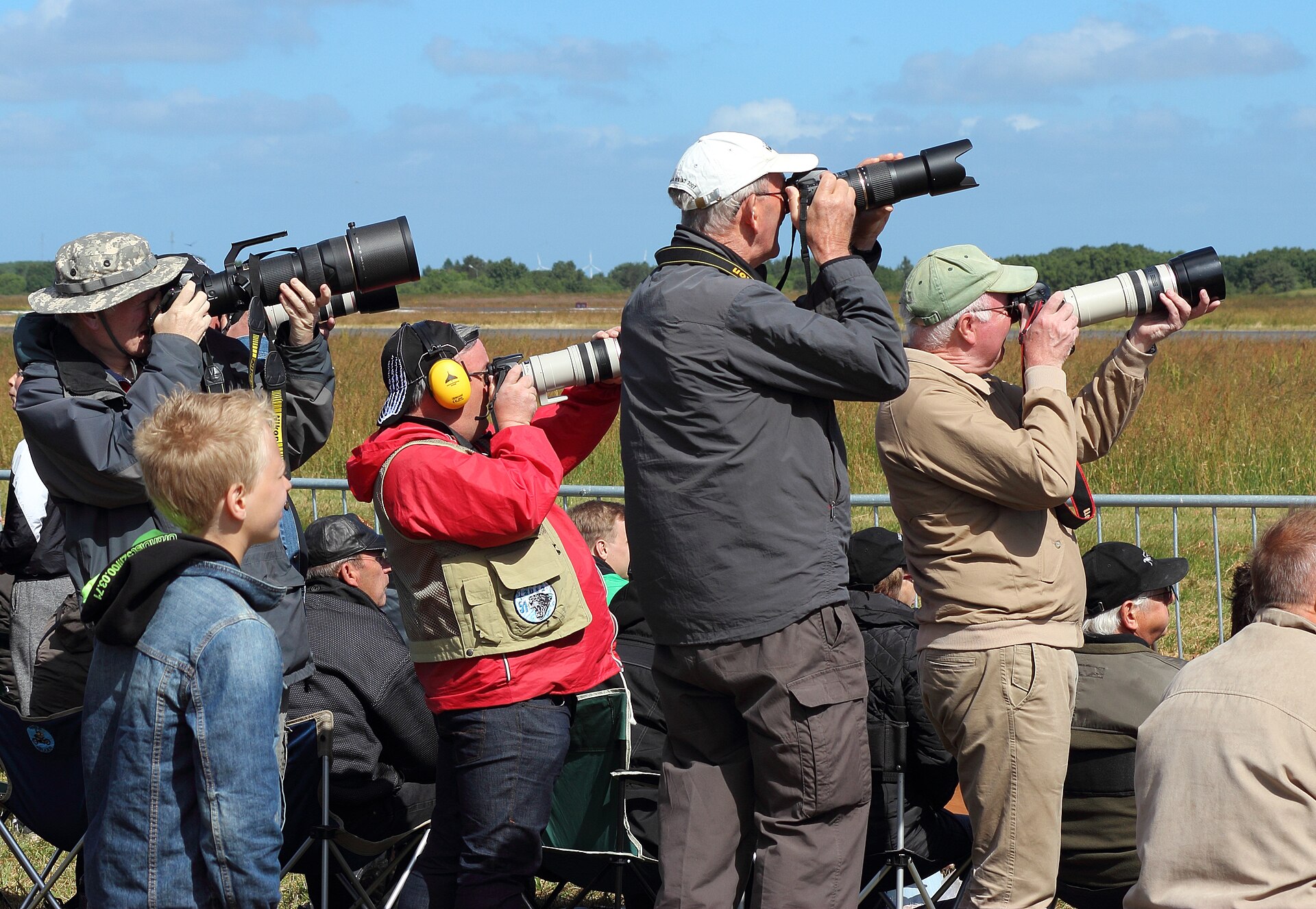
Getting there: parking, park and ride and trains
The journey in and out of a big airshow is a seriously hard logistics problem, because thirty or forty thousand people are trying to reach a rural military base down two country lanes at roughly the same time. Do not treat it as an afterthought.
Understand what you are buying
Most large UK shows now separate the show ticket from the parking. You may be buying a car park pass, a park and ride seat or a coach seat as a separate line item, and there is often a colour-coded car park system where the colour on your pass dictates which approach road you must use. If you turn up on the wrong road you will be sent round, and “round” at a rural airfield can be forty minutes.
Some shows now offer a fast-track park and ride where all the security checks are done at the remote car park, so that the bus takes you straight onto the showground rather than depositing you into a search queue. If that is offered, take it. The queue you skip is the one at the pedestrian gate, and it is the one that eats your morning.
Read the traffic plan, not just the postcode
The single most common mistake is putting the airfield postcode into a satnav. The postcode will route you to the main gate, which will be closed to public traffic, on a road that is closed to public traffic, and you will end up in the queue you were trying to avoid. Every big show publishes a traffic plan with specific approach routes, signposted from a specific junction. Use that, not the satnav’s idea of the shortest route.
Times
As a rule of thumb for a major military show: whatever time you think you should leave, leave an hour earlier. The queues do not build gradually, they build suddenly, and being in the first third of arrivals rather than the middle third can be the difference between twenty minutes and two hours. Photographers have an advantage here in that we want to be there early anyway.
Getting out again
Leaving is the part nobody plans, and at a big base it can be brutal. There are three strategies and you should choose one before you arrive.
Leave early. Walk out during the penultimate act. You lose the finale and you gain two hours of your life. If the finale is the Red Arrows, and you have photographed the Reds before, this is far more tempting than it sounds. Our guide to photographing the Red Arrows is worth reading before you decide what you would actually be giving up.
Leave very late. Stay put, let the car parks drain, eat what is left of your lunch, sort your cards, and drive out an hour and a half after everyone else into an empty road. This is my preference and it costs almost nothing.
Sit in the queue. Perfectly valid, but bring water and accept it.
The one strategy that does not work is leaving with everybody else at the moment the last aircraft lands.
Trains and shuttles
Where a show offers a shuttle bus from a nearby town, station or racecourse, it is often the least stressful option, and it removes the car park exit problem entirely. Check the last shuttle time before you rely on it. If the last bus is at 18:30 and the display runs to 18:00, you have a fifteen minute walk and no margin for error, which is not what you want when you are carrying nine kilos of glass.
Timings for the day, gate to gate
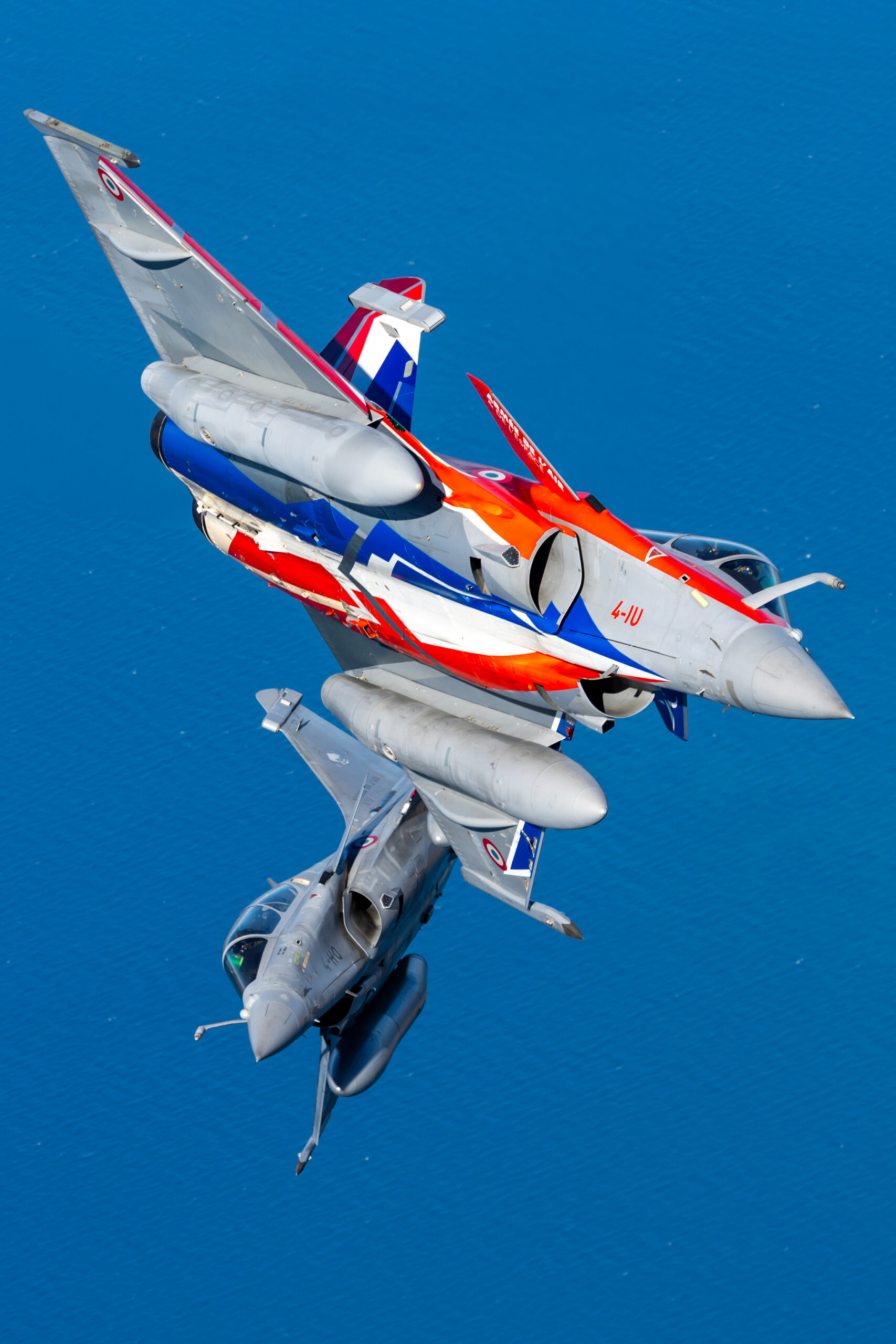
Here is a realistic timeline for a large single-day UK military show with a display running from roughly midday to early evening. Adjust for your own show, but the shape holds.
| Time | What is happening | What you should be doing |
|---|---|---|
| Two weeks out | Participants list firming up, tickets on sale | Buy tickets and parking. Book accommodation if staying over. Check the runway orientation and sun path. |
| The night before | Display order often published | Charge every battery. Format every card. Mark the running order. Pack the bag and put it by the door. |
| Gates open, often 07:30 to 09:00 | Crowds arriving, static park empty, traders setting up | Be in the first wave through the gate. Claim your spot, or shoot the static park while it is clear. |
| Two to three hours before flying | Arrivals traffic, practice, position flights | Some of the best and least-photographed material of the day. Visiting display aircraft arrive and often break into the circuit. |
| One hour before flying | Crowd line filling fast | Be in position. Eat now. Use the toilets now. Both queues triple once flying starts. |
| Flying display | The reason you came | Shoot your must-list. Use the acts you do not need for rest, cards and batteries. |
| Last hour | Crowd thinning, light improving | The best combination of the day: fewer heads in front of you and lower sun. Stay. |
| After the display | Departures, car park chaos | Either leave during the penultimate act or stay put for ninety minutes and shoot departures. |
Two lines in that table deserve emphasis, because they are the ones photographers most often waste.
Arrivals. At any show where visiting aircraft fly in on the morning of the display, the two hours before the show officially starts can produce better images than the show itself: aircraft in the circuit, gear down, close, slow, in good morning light, with almost nobody watching. If you are already at the fence claiming your spot, you get this for free.
Departures. The reverse, at the end. If you have decided to sit out the car park queue anyway, you may as well have the camera up while the visiting aircraft leave.
Weather and what it does to the display
Weather does not just change your exposure. It changes the display itself, and knowing how is a planning skill rather than a shooting one.
Cloud base decides the shape of the show
Display pilots fly to a set of routines calibrated to the cloud base, because they must not disappear into cloud at the top of a manoeuvre. The Red Arrows are the clearest published example. With a cloud base above 5,500 feet the team fly the full display, loops and all. Between 2,500 and 5,500 feet they fly the rolling display, substituting rolls and wing-overs for the loops. Below 2,500 feet they fly the flat display, which is a sequence of flypasts and steep turns.
| Cloud base | Display flown | What you get |
|---|---|---|
| Above 5,500 ft | Full display | Loops and vertical work. Aircraft high in the frame, often against blue. The full repertoire. |
| 2,500 to 5,500 ft | Rolling display | Rolls and wing-overs instead of loops. Plenty of topside as they roll. Very good for photography. |
| Below 2,500 ft | Flat display | Flypasts and steep turns. Aircraft stay low and close, against grey. Harder light, but big in the frame. |
Other display teams and solo pilots work to the same principle even if the exact numbers differ. The practical point is that a grey day does not cancel the display, it changes it, and a flat display can actually be a gift: the aircraft stay low, they stay close, and they stay large in your frame. What you lose is the blue sky. What you gain is size.
The grey day is not a wasted day
Photographers who only shoot in sunshine come home with half a portfolio. Grey skies mean flat, even light with no harsh shadow on the underside of an aircraft, and they mean an aircraft’s markings and shape read cleanly. The problems are exposure, because a bright sky will fool a meter into underexposing the aircraft, and colour, because everything goes blue. Both are solvable, and we deal with the first in our guide to metering for bright skies and avoiding silhouetted aircraft.
Rain
Rain suspends flying but rarely cancels the whole day, and a wet showground produces spray, reflections and dramatic light when the front clears. It also means your gear is out in it for hours. A rain cover for the camera and lens, a dry cloth in a sealed bag and something to sit on is the minimum. The full list is in our airshow photography gear checklist.
Heat
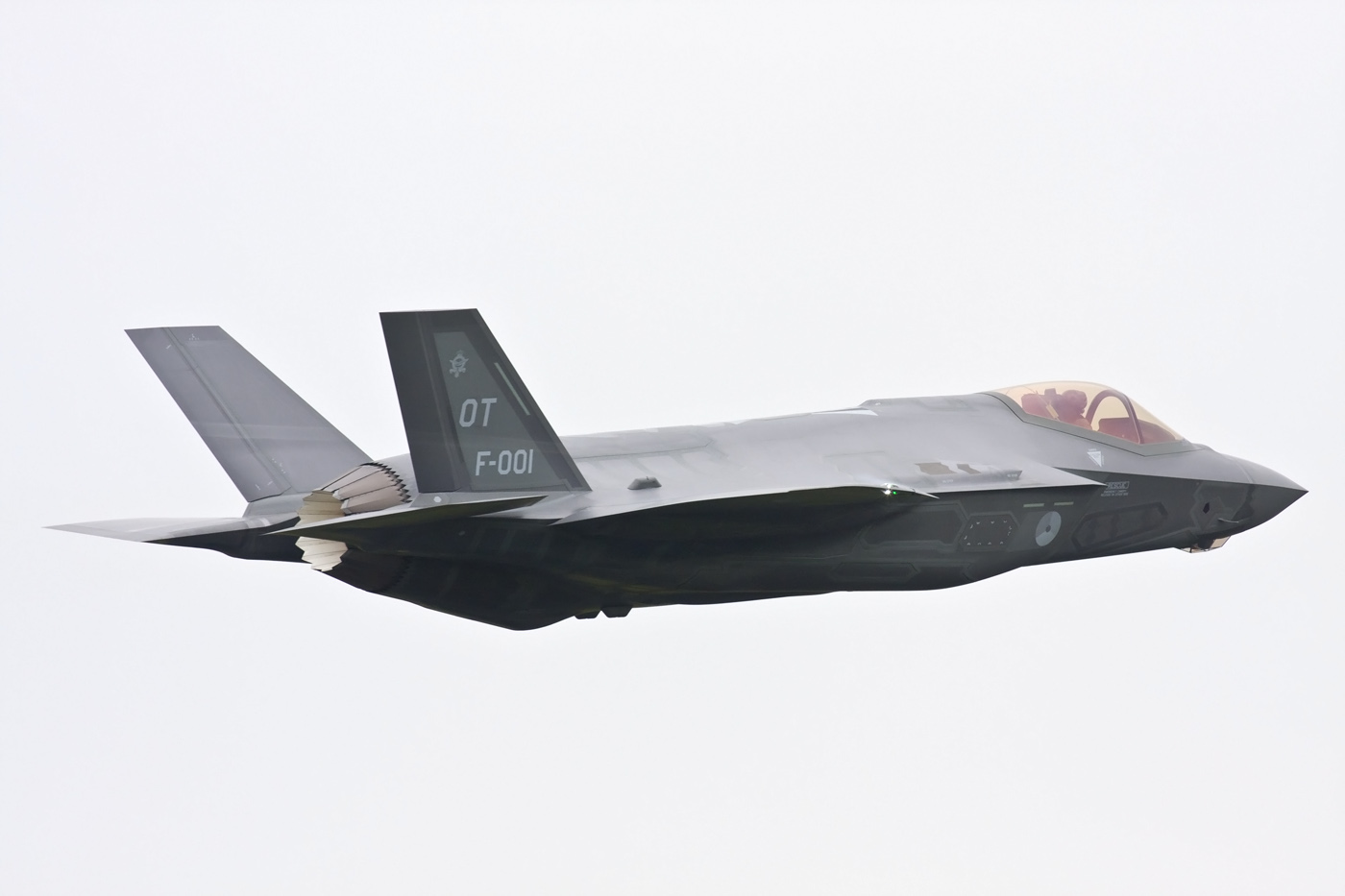
A hot, still day over a concrete runway produces heat haze, which softens everything at long focal lengths and cannot be sharpened out afterwards. It is worst in the middle of the day, worst over hard surfaces, and worst on the far side of the airfield. If the forecast is 28 degrees and cloudless, expect your longest lens to underperform between roughly 12:00 and 16:00, and plan to do your critical work early and late.
Wind
Wind direction sets the runway in use, which sets which way aircraft take off and land, and therefore which end of the crowd line gets the take-off run. If you care about rotation shots, it is worth checking the forecast wind the night before and being at the appropriate end.
Enclosures, flightline walks and press access
Flightline walks
Several shows now sell a flightline walk: a timed, paid ticket that takes a limited number of people onto the airfield side of the crowd line, among the static aircraft, usually early in the morning or in the evening. Shuttleworth run these on selected shows for a modest fee, and they sell out quickly. For a photographer they are excellent value, because you get clean, close, uncluttered access to aircraft that will be surrounded by barriers and people for the rest of the day. If a show you are attending offers one, book it the moment it goes on sale.
Press accreditation
The honest answer is that press access at the big UK shows is hard to get and often less useful than people imagine. Duxford in particular is notoriously difficult, and experienced photographers who have had both will tell you the press positions are frequently no better than the public crowd line. Unless you have a genuine commission and a publication history, your time is better spent arriving two hours early than chasing a pass.
Enclosure with a raised platform
The one hospitality product that is reliably worth the money for a photographer is a truly elevated, truly central viewing platform. Height solves the crowd problem, height cleans up your backgrounds, and height gives you topside on level passes. If a show sells that, and it is central, it is the one upgrade worth paying for.
Two-day shows, camping and the second-day advantage
If a show runs on both Saturday and Sunday, and you can only afford one day, consider going on both anyway with a cheaper ticket rather than upgrading a single day.
The reason is simple. Day one is reconnaissance you cannot get any other way. You learn where the display centre really is rather than where the plan says it is. You learn where the sun is at 15:00 and which end of the line it favours. You learn which acts are worth your attention and which are not. You learn where the crowd is thinnest and where the marquee blocks the low passes. Then on day two you turn up knowing exactly where to stand, exactly when to be there and exactly what to expect, and you shoot with all of that in hand.
You also get a second roll of the dice on weather, which in Britain is not a small thing.
Camping
Big shows increasingly offer official camping on or near the site. For photographers the advantage is not the campsite, it is the removal of the two worst parts of the day: the morning approach and the evening exit. You walk in. You walk out. You are also on site for early morning arrivals and late departures with no traffic problem at all.
The trade-off is your gear. A tent is not a secure place for several thousand pounds of glass, and you will spend the show either carrying everything or worrying about it. If you camp, take what you can carry, and take less than you think.
A worked plan for a single show day
Here is how a plan looks when it is done properly. This is a composite, not a specific show, but every step is real.
Four weeks out
Check the official site and confirm the show is running and the date has not moved. Buy the advance ticket and the correct car park pass. Note the approach route and the car park colour. Book accommodation if needed, refundable.
Two weeks out
Look at the confirmed participants list. Decide plainly whether it justifies the trip. Open a satellite map, find the runway, note its heading, work out which side the crowd is on, and run a sun path for the display hours. Write down one sentence: “crowd faces north-west, sun behind us until about 14:00, then round to the left.” That sentence is your plan.
The week before
Check for aircraft withdrawals. Check the weather trend, not the detail, because the detail will change. Decide your lens strategy: one body and a long zoom is the honest default, and the case for two bodies is covered in the gear checklist.
The night before
Charge everything. Format cards in the camera, not the computer. Look for the published running order and mark it up. Pack, and put the bag by the door with the car keys on top of it. Set the alarm an hour earlier than feels reasonable.
The morning
Leave early. Follow the traffic plan and not the satnav. Park, walk in, and do not stop at the first food van. Walk the crowd line end to end before you commit to a spot. Then commit, and stay.
The display
Shoot your must-list. Rest on the acts you do not need. Keep drinking water. Watch the light change and be honest about when it is good.
Afterwards
Stay for departures or leave during the penultimate act. Do not do the thing in between. Back up your cards before you sleep. Then work through the take properly, which is a whole discipline of its own and one covered in our practical Lightroom workflow for aviation photos.
Common planning mistakes
Trusting last year’s information
Dates move, shows get renamed, shows get cancelled. RIAT did not run in 2026. Cosford becomes the Royal Air Force Air Show from 2027. Bournemouth’s future is unresolved. The official website, checked recently, is the only source worth acting on.
Using the postcode instead of the traffic plan
Covered above, and worth repeating because it is the mistake that costs the most time. Show traffic plans exist because the roads cannot take the volume. Ignore them and you join the queue you were trying to avoid.
Buying the expensive ticket without checking the map
Hospitality is comfort. Position is photography. They are sometimes the same thing and often are not. Look at the showground plan before you spend.
Arriving at the same time as everyone else
If the gates open at 08:00 and the flying starts at 12:30, arriving at 11:00 feels sensible and is not. You will get the spot nobody wanted, you will queue for everything, and you will miss the arrivals.
Not knowing where the sun will be
Fifteen minutes with a map and a sun app, done at home, changes your entire day. Almost nobody does it.
Packing for the photography and not for the day
Ten hours standing in an open field in British weather is a physical event. Water, food, sun cream, a hat, waterproofs, something to sit on, and shoes you can stand in all day are not optional extras. The full list is in the gear checklist, and the settings you should have dialled in before the first act are in our guide to the best camera settings for airshows.
Planning to shoot everything
Seven hours of continuous shooting produces four thousand frames, exhaustion and a culling nightmare. Choose your acts. Rest between them. You will shoot better and enjoy it more.
Treating a big show as the only option
Big military shows are spectacular and they are hard: huge crowds, huge distances, long queues and often difficult light. A small evening show at a grass airfield gives you low sun, close aircraft, room to move and thirty people on the fence. If it is images you want rather than an event, the small show frequently wins. For the largest show of the lot, and what to do about all of the above at scale, see our RIAT photography guide.
The planning checklist
Work down this list in order. If you can answer every question, you are ready.
Before you book
Is the show confirmed on its own website, this year, with a date? Which aircraft are listed, and does the day still work if the headline act withdraws? Is it one day or two, and is a two-day ticket available?
Tickets and parking
Have you bought in advance rather than at the gate? Have you bought parking separately if it is a separate product? Do you know your car park colour and your approach road? If you have bought hospitality, have you looked at where it sits on the showground plan?
Light and position
What is the runway heading? Which side of it is the crowd? Which way will you be facing? Where is the sun at the start of the display and at the end? Which end of the crowd line does that favour? Where is the display centre point?
The day
What time do the gates open, and what time will you actually arrive? Do you know the running order, and have you marked your must-shoot acts? What is your plan for food and toilets before the flying starts? What is your exit strategy?
Gear and body
Batteries charged, cards formatted, bag packed the night before. Water, food, sun protection, waterproofs, seat. Long lens as the primary, and a decision made about whether a second body is worth carrying.
Afterwards
Where are you backing up tonight? Do you know how you are going to cull and process what you shot, and how you would license it if a shot turns out to be worth licensing? If that is a question you have not thought about, our licensing page sets out how it works in practice, and you can see what a full season of this kind of planning produces in the Piemags aviation galleries and the archive collections.
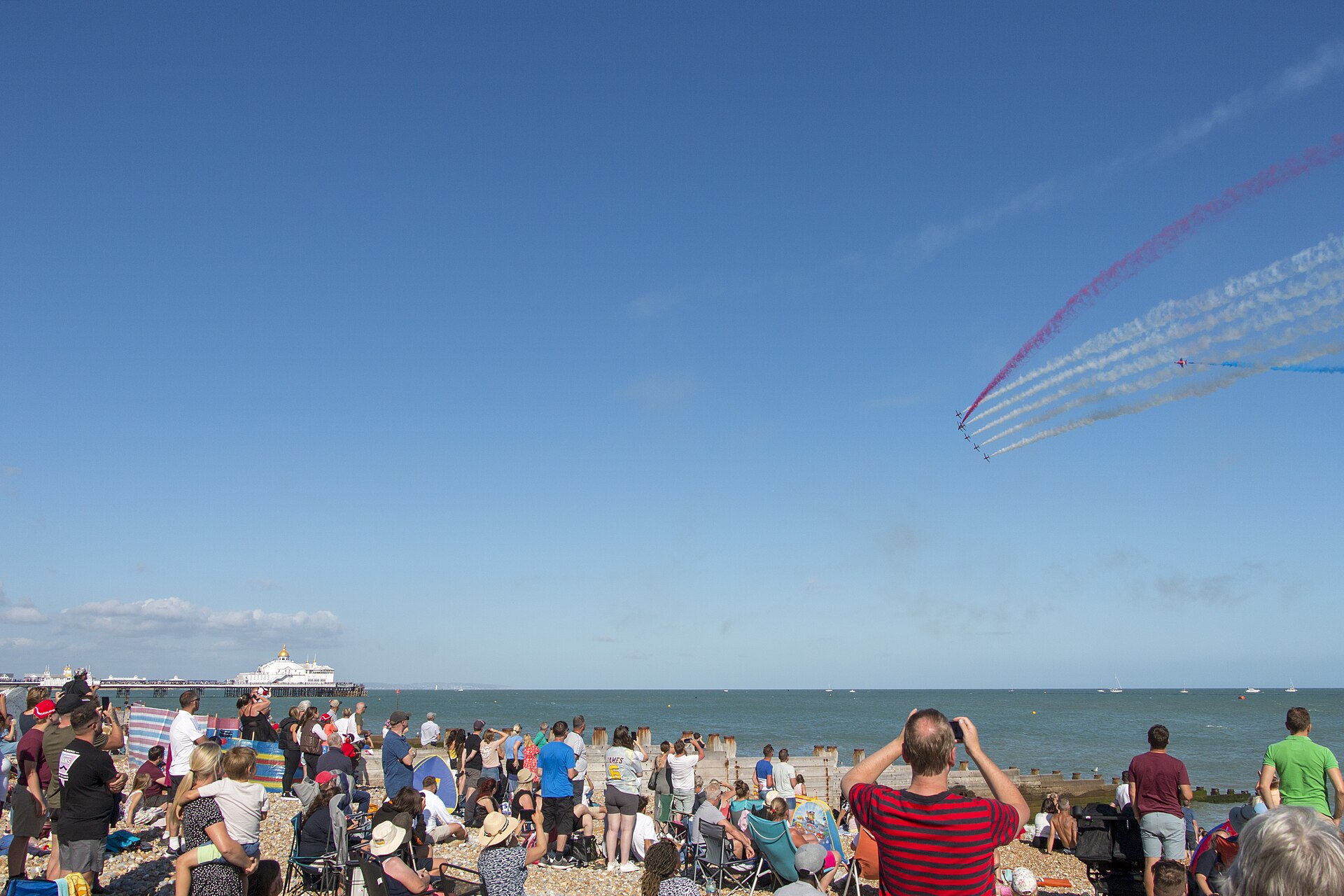
Planning a coastal show adds one variable an airfield never has, which is the tide. The guide to seafront airshow photography covers why low water costs you reach at Eastbourne and how to plan around it.
Frequently asked questions
What time should I arrive at an airshow to get a good photography spot?
Be through the gate within the first thirty minutes of opening, which at a large UK show usually means arriving between 07:30 and 09:00 for a display that starts around midday. That gets you a clear choice of position on the crowd line, an empty static park to photograph, and the visiting aircraft arriving in good morning light. It also puts you ahead of the traffic, which builds suddenly rather than gradually on the approach roads.
How far away are the aircraft at a UK airshow?
UK displays are regulated under CAP 403, and the normal minimum separation between the crowd line and the display line is 230 metres. That distance is extended for aircraft manoeuvring above 300 knots and can be reduced for helicopters and light aircraft. In practice this means fast jets are further away than they look, which is why a 400mm lens or longer is the working standard for airshow photography.
Is it worth paying for a hospitality or enclosure ticket?
Only if the enclosure is truly central to the display line and truly in front of the public crowd, and ideally raised. A raised, central platform solves the crowd problem and improves your backgrounds, which is real photographic value. A comfortable tent set back behind the general crowd is worth nothing with a camera in your hand, however good the catering. Check the showground plan before you spend the money.
Which side of the crowd line has the best light?
Work it out from the runway heading and the crowd’s side of it. If the crowd stands on the south side of an east to west runway you are facing north with the sun behind you, which is ideal. If the crowd is on the north side, as at Duxford where the public are on the north-western side of runway 06/24, you are shooting into the sun for much of the day and the light improves as the afternoon runs on. Fifteen minutes with a satellite map and a sun-position app answers this before you leave the house.
Do airshows still go ahead in bad weather?
Usually, in a reduced form. Display teams have routines calibrated to the cloud base. The Red Arrows fly the full display above 5,500 feet, the rolling display between 2,500 and 5,500 feet and the flat display below 2,500 feet, and other acts work to the same principle. Heavy rain suspends flying temporarily, but a grey day is not a lost day, and a flat display keeps the aircraft low and large in your frame.
Is the Royal International Air Tattoo running this year?
RIAT did not take place in 2026. The organisers cancelled the show and confirmed it returns to RAF Fairford on 16 to 18 July 2027, with 2026 ticket holders offered a rollover to 2027, a refund, or the option to donate the value to the RAF Charitable Trust. Tickets for 2027 were due to go on sale later in the summer of 2026, so check airtattoo.com directly rather than relying on secondhand listings.
What is a park and view ticket and is it any good for photography?
A park and view ticket gives you a vehicle space outside the showground, usually near the end of the runway, with a view of arrivals, departures and part of the flying display, but no access to the showground or the static park. For a photographer it can be excellent value if take-off, landing and circuit work is what you want, since you are much closer to the runway than the crowd line allows. It is a poor choice if you want the static aircraft or the full display sequence.
How do I find out the display running order?
Most shows publish a provisional participants list months ahead and the actual running order either the night before or in the printed programme on the day, and many now use an official app or their social media channels. Treat the participants list as an indication only, because military aircraft withdraw at short notice for operational reasons and warbirds go unserviceable. Check again in the last few days before you travel.
Should I go on both days of a two-day show?
If you can, yes, and prefer two standard days over one upgraded day. The first day tells you where the display centre actually is, how the light behaves at each hour, which acts deserve your attention and where the crowd is thinnest. On the second day you use all of that, and you also get a second chance at the weather, which in Britain is worth having.
What is the best way to leave an airshow without sitting in traffic?
Pick one of two strategies before you arrive: walk out during the penultimate act and get ahead of the crowd, or stay put for at least ninety minutes after the last landing, photograph the departing aircraft, and drive out when the car parks have drained. The one option that reliably wastes your evening is joining the exit queue at the exact moment the display finishes.
