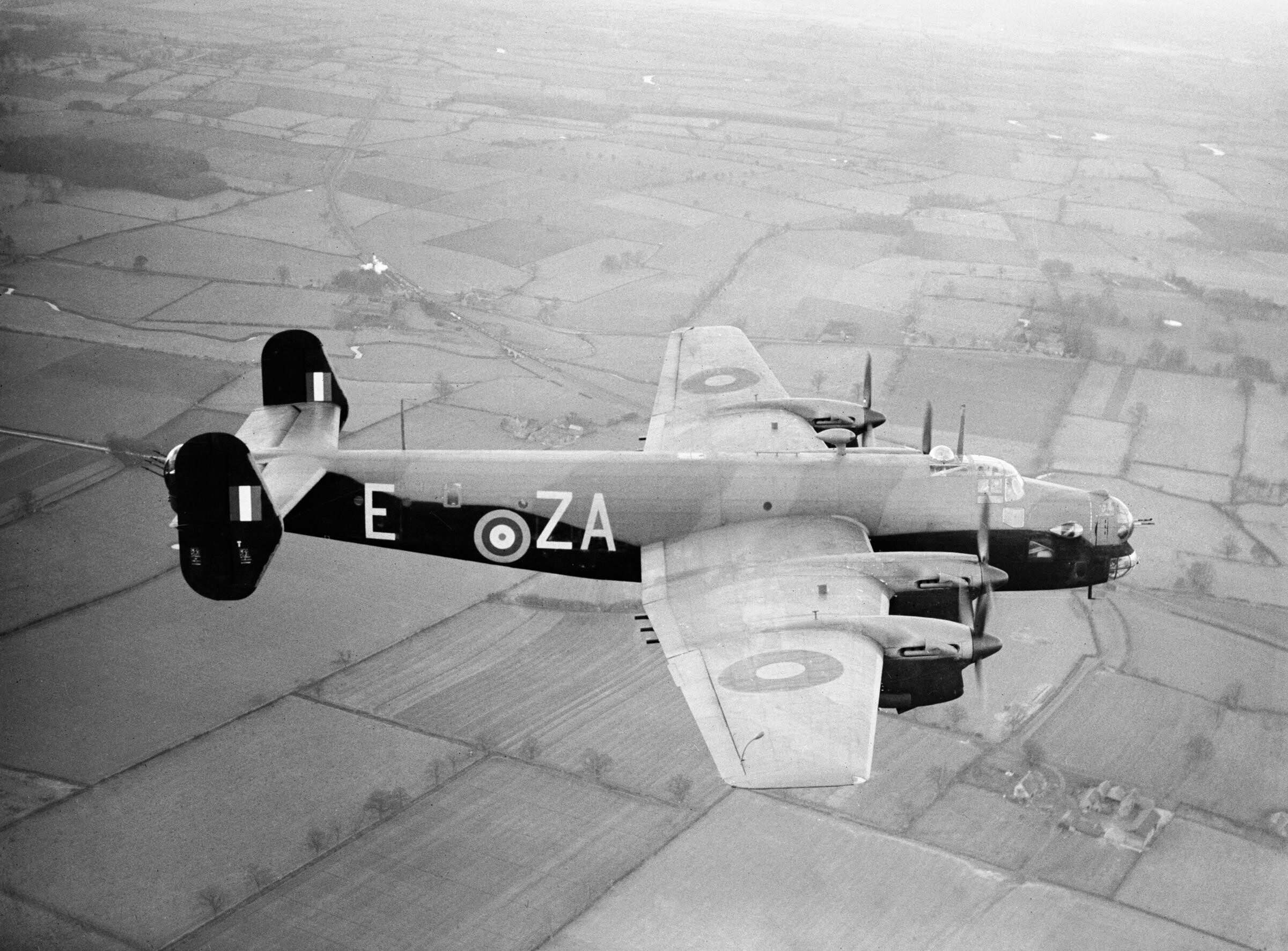
The Handley Page Halifax flew more than 75,000 sorties with RAF Bomber Command, towed the gliders that opened D-Day, hunted U-boats over the Atlantic, dropped agents into occupied Europe and kept flying for the RAF until 1952. It was built in greater numbers than any British bomber except the Wellington and the Lancaster, and it was flown by tens of thousands of aircrew who trusted it with their lives. Yet it has spent eighty years in the shadow of the Lancaster, remembered mostly as the other British heavy. The full story is far more interesting than that.
Ask most people to name a British four-engined bomber of the Second World War and one word comes back: Lancaster. The Halifax entered service more than a year earlier, flew operationally in more roles, and stayed in RAF service longer, but it lost the battle for public memory almost before the war ended. Part of that was earned. The early Halifax had genuine and dangerous flaws, and the man who ran Bomber Command never forgave it for them. Part of it was simply bad luck in timing, because the definitive version of the Halifax arrived in the same period that the Lancaster legend was being written over the Ruhr and Berlin.
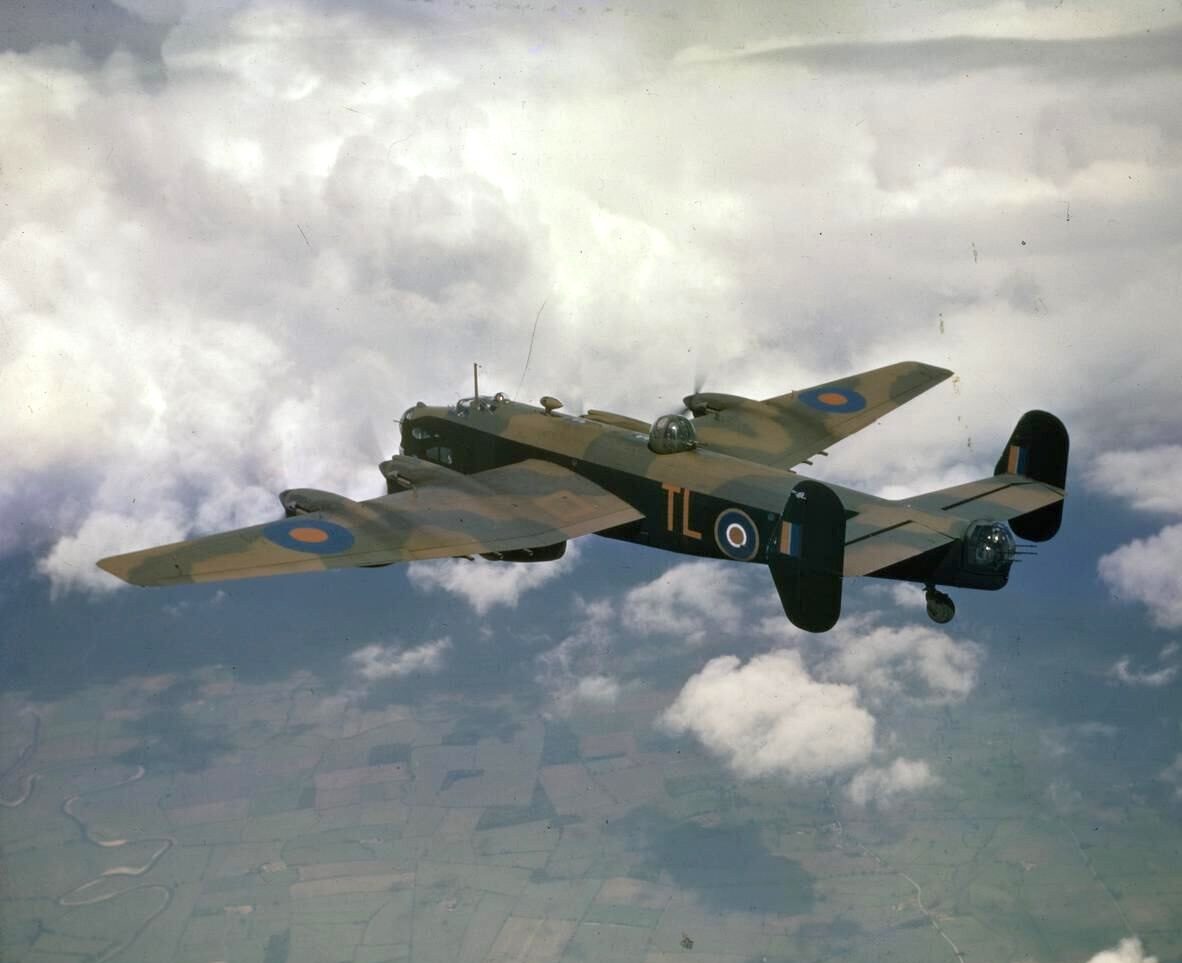
This is the story of an aircraft that started badly, was very nearly cancelled by its own commander-in-chief, and was then transformed by a change of engines into one of the most versatile heavies of the war. It is also the story of the men who flew it, from a 22-year-old pilot who earned a posthumous Victoria Cross holding his crippled bomber straight for the target, to the crew of a battered Yorkshire veteran named Friday the 13th that came home 128 times. And it is a story you can still stand next to today, in three museums on two continents, even though not a single Halifax remains in flying condition anywhere in the world.
- Origins and design: from twin to four
- Into service: promise and problems
- Harris and the Halifax
- The Hercules transformation: the Mk III
- Operations with Bomber Command
- Halifax country: Yorkshire and the Canadians
- The crews: Barton’s VC and Friday the 13th
- Beyond the bomber stream
- Production and specifications
- The survivors: three Halifaxes, no fliers
- Photographing the Halifax today
- Frequently asked questions
- Sources and further reading
Origins and design: from twin to four
The Halifax began life as a different aircraft entirely. In 1936 the Air Ministry issued Specification P.13/36 for a twin-engined medium bomber powered by the Rolls-Royce Vulture, an ambitious 24-cylinder engine then in development. Handley Page’s design team answered with the HP56. Avro answered with the aircraft that became the Manchester. Both companies were betting their designs on an engine that did not yet work, and only one of them hedged.
Handley Page grew doubtful about the Vulture early, and in 1937 the company reworked the HP56 into a larger aircraft carrying four Rolls-Royce Merlins instead of two Vultures. The revised design, the HP57, was ordered from the drawing board. It was a decision that looks prescient in hindsight, because the Vulture proved a failure in service and dragged the Manchester down with it. Avro would rescue its own reputation by performing the same surgery later, stretching the Manchester into the four-Merlin Lancaster. The Halifax got there first.
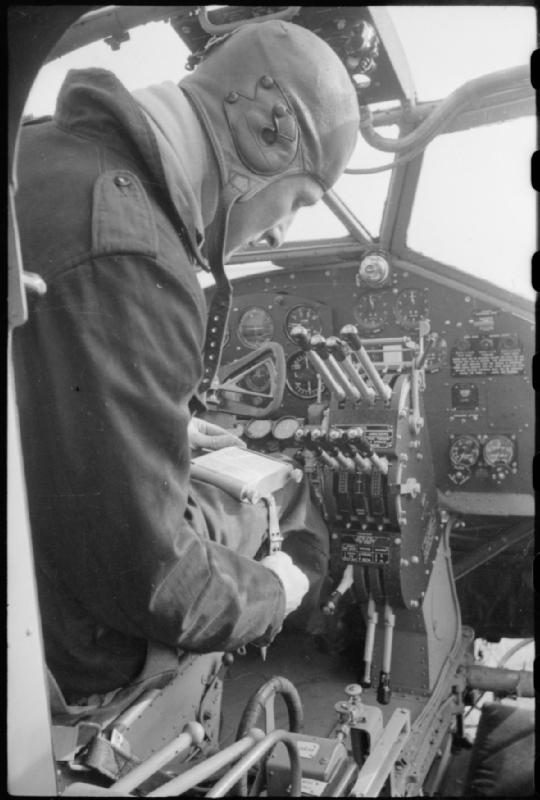
The prototype Halifax made its first flight on 25 October 1939, seven weeks into the war, from RAF Bicester with Handley Page’s chief test pilot Jim Cordes at the controls. It was a big, purposeful machine: a mid-wing monoplane with a slab-sided fuselage, twin fins, and a crew of seven. The name followed the RAF convention of christening heavy bombers after towns, and Halifax in the West Riding of Yorkshire was a fitting choice for an aircraft that would come to be flown overwhelmingly from Yorkshire airfields by No. 4 Group and, later, the Canadians of No. 6 Group.
Production was organised on a scale Britain had not attempted before. Handley Page’s own factories at Cricklewood and Radlett could never build the aircraft in the quantities required, so the Halifax became the centrepiece of one of the war’s great industrial collaborations. English Electric at Samlesbury, which built more Halifaxes than Handley Page itself, was joined by Rootes Securities at Speke, Fairey Aviation at Stockport and, remarkably, the London Passenger Transport Board, which led the London Aircraft Production Group building bombers in converted bus works and tram depots. At the programme’s peak a Halifax was leaving the factories roughly every working hour.
Into service: promise and problems
No. 35 Squadron at Leeming, and then Linton-on-Ouse, took the first Halifaxes in November 1940, and flew the type’s first operation on the night of 10 to 11 March 1941 against Le Havre. The Halifax was only the second four-engined bomber to join Bomber Command, after the Short Stirling, and on paper it represented an enormous leap over the Whitleys and Wellingtons it replaced: twice the bomb load, power-operated turrets, and the range to reach deep into Germany.
The reality was more complicated. The early Merlin-engined Halifax Mk I and Mk II were underpowered for their weight, and weight kept growing as operational equipment was piled on. Worse, the aircraft had a genuine aerodynamic vice. The original triangular fins could stall at large rudder angles, causing rudder overbalance: the rudders could lock hard over and hold the aircraft in a spiral dive that was beyond the strength of the pilot to correct. In an aircraft flown by crews fresh from training units, often at night, in cloud or under attack, it was a killer. Handley Page eventually cured it with the larger rectangular fins that became standard on later marks, but the cure took time the crews did not have.
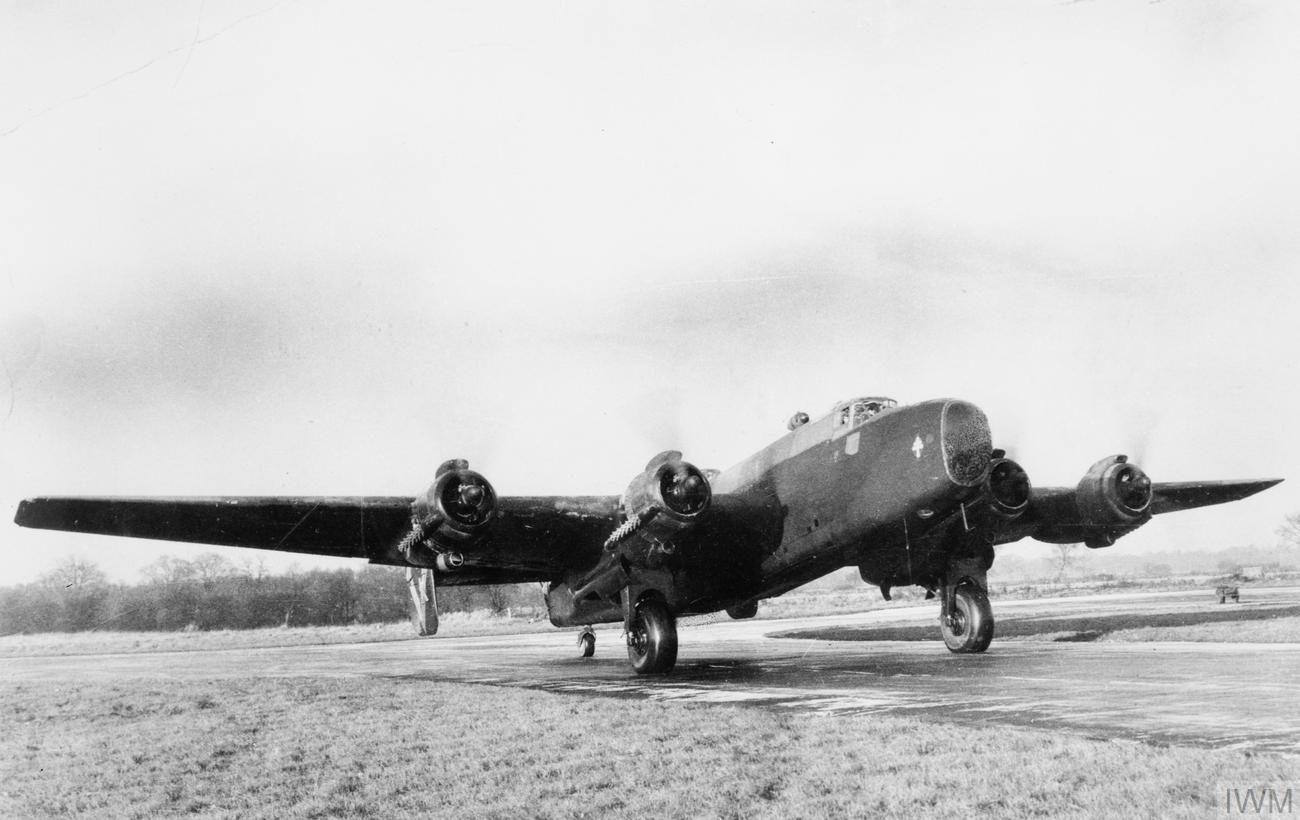
Drag was the other enemy. Early Halifaxes carried a large two-gun nose turret and a mid-upper turret, plus a thicket of aerials, fuel jettison pipes and ill-fitting engine cowlings, and the type’s performance suffered accordingly. Loaded to operational weight, early marks struggled to the heights where the Lancaster cruised with relative ease, and height was survival over Germany. The lower a bomber flew, the longer it spent in range of the flak and the easier it was for night fighters to find it against the clouds. Successive cleaned-up versions clawed back some of the losses, deleting the nose turret in favour of a streamlined Perspex fairing, fitting moulded cowlings, and trading drag for precious feet of altitude.
The crews, meanwhile, got on with it. The Halifax earned an affectionate nickname, the Halibag, and a reputation as a roomy, solidly built aircraft that could absorb punishment. Its fuselage was deep enough to move around in, a small mercy on an eight-hour trip that the Lancaster’s cramped interior never offered, and one that would matter terribly when the time came to bale out. But affection could not mask the arithmetic of the loss rates, and by mid 1942 the aircraft’s future was being argued at the very top of the Royal Air Force.
Harris and the Halifax
Air Chief Marshal Sir Arthur Harris took over Bomber Command in February 1942, and he came to regard the early Halifax as a waste of factories, fuel and, above all, crews. His views were not private. In a letter of 2 June 1942 to the Chief of the Air Staff, Harris attacked Handley Page and its chairman personally, and pressed for Halifax production to be converted to Lancasters. His central argument was arithmetic: comparing the two types, he reckoned an average Lancaster would drop roughly 154 tons of bombs in its service life against roughly 100 tons for a Halifax, and he wanted the factories building the aircraft that delivered more.
The conversion never fully happened, in part because retooling the sprawling Halifax production groups would have cost months of output at the very moment the bomber offensive was expanding. The Halifax factories kept building Halifaxes, and the argument settled into an uneasy truce: the Lancaster took the glamour and, increasingly, the deepest penetrations into Germany, while the Halifax carried a huge share of the campaign’s daily burden and absorbed a share of criticism that the later marks no longer deserved. Harris’s hostility to the early Halifax was grounded in real deficiencies and real loss rates. What is often forgotten is that the aircraft he condemned in 1942 and the aircraft crews flew from 1944 were different machines in almost every way that mattered.
The Hercules transformation: the Mk III
The turning point was an engine change. The Halifax B Mk III, which reached squadrons in late 1943, replaced the Merlins with four Bristol Hercules XVI radials of 1,615 hp each, driving through cleaned-up cowlings on a strengthened airframe with the enlarged rectangular fins. The transformation was immediate. The Mk III was faster, climbed better, handled more predictably with the new tail, and its air-cooled radials shrugged off battle damage that would have drained a Merlin’s coolant in minutes. Later aircraft added extended, rounded wingtips that lifted the span to 104 feet and bought more height. Crews who converted from the Mk II described the difference in the way soldiers describe relief.
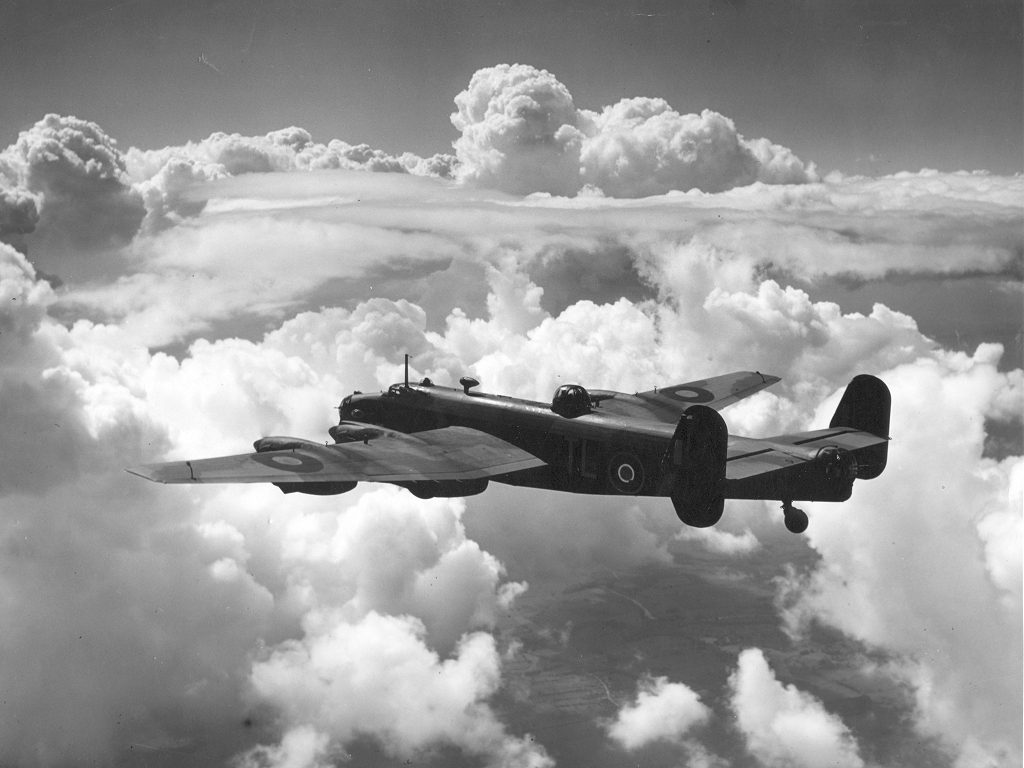
The Mk III also had a virtue that mattered more to aircrew than any performance figure, and it is one the statistics still argue about. The Halifax was widely believed to be an easier aircraft to escape from when it was going down. Its escape hatches were more accessible than the Lancaster’s notoriously awkward forward hatch, and post-war analyses popularised by Halifax veterans, including the figures quoted by Tom Iveson and the historian Brian Milton, put survival rates for crews of shot-down Halifaxes at around 25 per cent against roughly 15 per cent for the Lancaster. Those percentages are drawn from samples that historians still debate, and they should be treated as indicative rather than precise, but the underlying pattern is accepted: if the worst happened, you wanted to be in a Halifax.
From early 1944 the Mk III and the later Hercules-engined Mk VI and Mk VII carried the type through the great battles of the war’s final phase. The Halifax force flew heavily in the Battle of Berlin’s supporting raids, through the costly Nuremberg raid of March 1944, in the pre-invasion campaign against French railways, and then, increasingly by daylight under fighter escort, against oil and transport targets in the Ruhr until the last weeks of the war.
Operations with Bomber Command
The scale of the Halifax’s war with Bomber Command is hard to take in. Published totals for the type’s sorties with the Command range from about 75,500 to about 82,700 depending on what is counted and by whom, with 1,833 Halifaxes lost on operations. It flew its share of every major campaign from 1941 onwards: the Ruhr, Hamburg, the long winter road to Berlin, the tactical campaign over Normandy, and the final destruction of Germany’s oil industry. By 1944 the Command’s Halifaxes were concentrated in No. 4 Group, flying from the Vale of York, and No. 6 Group, the Royal Canadian Air Force’s own bomber group, whose squadrons flew Halifaxes from airfields across County Durham and North Yorkshire.
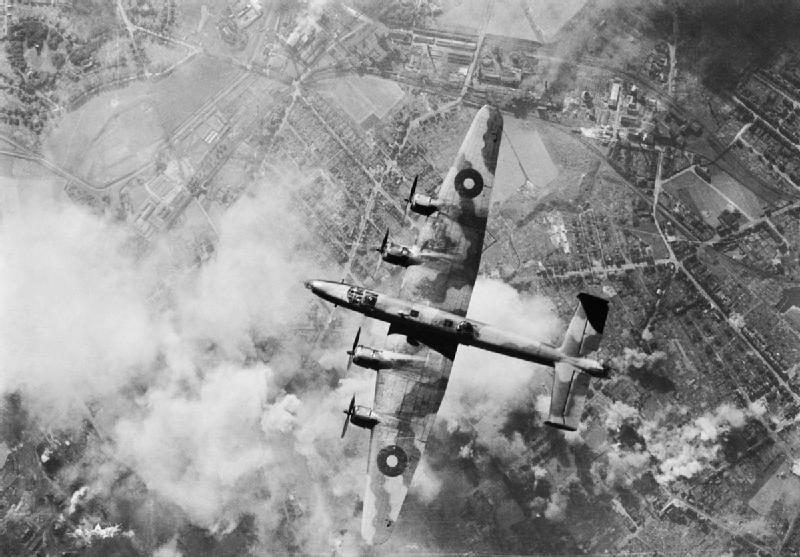
The Halifax’s operational record also carries a share of the Command’s tragedies. On the Nuremberg raid of 30 to 31 March 1944, Bomber Command’s worst night of the war, the Halifax squadrons suffered grievously alongside the Lancasters in a running battle that cost 95 bombers. The same night produced the Halifax’s Victoria Cross, and one of the most quietly devastating stories of the bomber war, told in the next section.
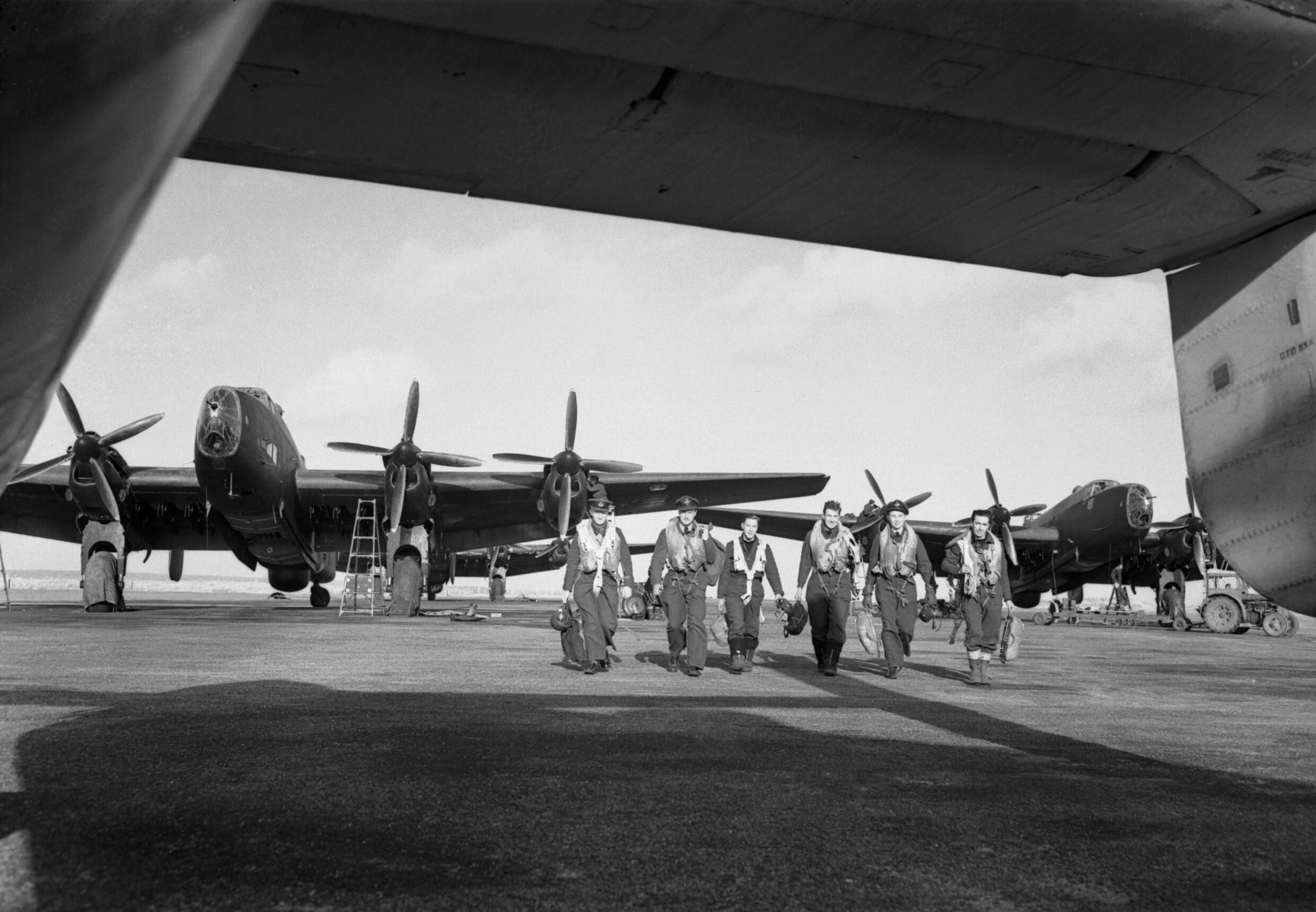
It is worth pausing on what these sorties actually asked of a crew. A Halifax operation to the Ruhr meant five to six hours in darkness, in an unpressurised, unheated aircraft, navigating by dead reckoning and radio aids through a defended sky, with a seven-man crew whose average age was somewhere in the early twenties. The pilot flew the whole trip by hand. The flight engineer juggled fuel between tanks. The gunners sat isolated in their turrets, scanning blackness for a fighter they would usually never see before it fired. Multiply that by a tour of thirty operations, and then by the 1,833 Halifaxes that did not come back, and the numbers begin to mean something.
Halifax country: Yorkshire and the Canadians
If the Lancaster belonged to Lincolnshire, the Halifax belonged to Yorkshire. No. 4 Group flew the type from a necklace of airfields across the Vale of York, from Elvington and Pocklington to Breighton, Lissett and Snaith, and the aircraft’s name, taken from a West Riding town barely forty miles from its bases, was more apt than the Air Ministry could have planned. For four years the sound of Hercules radials climbing out over the Wolds was the sound of the county at war, and the connection endures: the region’s memorials, its pub walls and its air museum at Elvington are Halifax territory to this day.
North of the Vale flew the Canadians. No. 6 Group, formed on 1 January 1943, was unique in Bomber Command: a complete bomber group of the Royal Canadian Air Force, paid for by Canada, commanded by Canadians and manned overwhelmingly by them, operating under Bomber Command control from airfields in County Durham and North Yorkshire. Its squadrons flew the Halifax in greater proportion than any other type for most of the war, and Canadian crews took some of the group’s worst losses in the Mk II era before the Mk III arrived. The group’s experience is one reason the most completely restored Halifax in the world stands today not in Britain but at Trenton, Ontario, and why Canadian veterans drove the recovery of a Halifax from a Norwegian lake fifty years after the war. For Canada, the Halifax is not the other heavy bomber. It is the bomber.
The French, too, flew the Halifax from Yorkshire: the two Free French heavy bomber squadrons, Nos. 346 and 347, operated from Elvington from 1944, the only French heavy bomber units of the war. Australians, New Zealanders and Poles filled Halifax crews across both groups. The aircraft that British memory filed under also-ran was, for several nations, the machine in which their bomber war was fought.
The crews: Barton’s VC and Friday the 13th
Pilot Officer Cyril Barton of No. 578 Squadron was 22 years old on the night of the Nuremberg raid. Seventy miles from the target his Halifax, LK797, was attacked repeatedly by night fighters. The intercom was shot away, one engine was crippled, and in the confusion of a misunderstood signal three of his crew, the navigator, bomb aimer and wireless operator, baled out. Barton pressed on to the target with no navigator and no means of talking to his remaining crew, bombed, and then flew the crippled aircraft home across the North Sea by guesswork and starlight. Over County Durham the fuel ran out. Barton held the aircraft steady long enough for his three remaining crewmates to brace, put it down in the only space available, and was killed in the crash. All three of the men in the rear survived. His Victoria Cross, the only one awarded to a Halifax pilot, was gazetted that June.
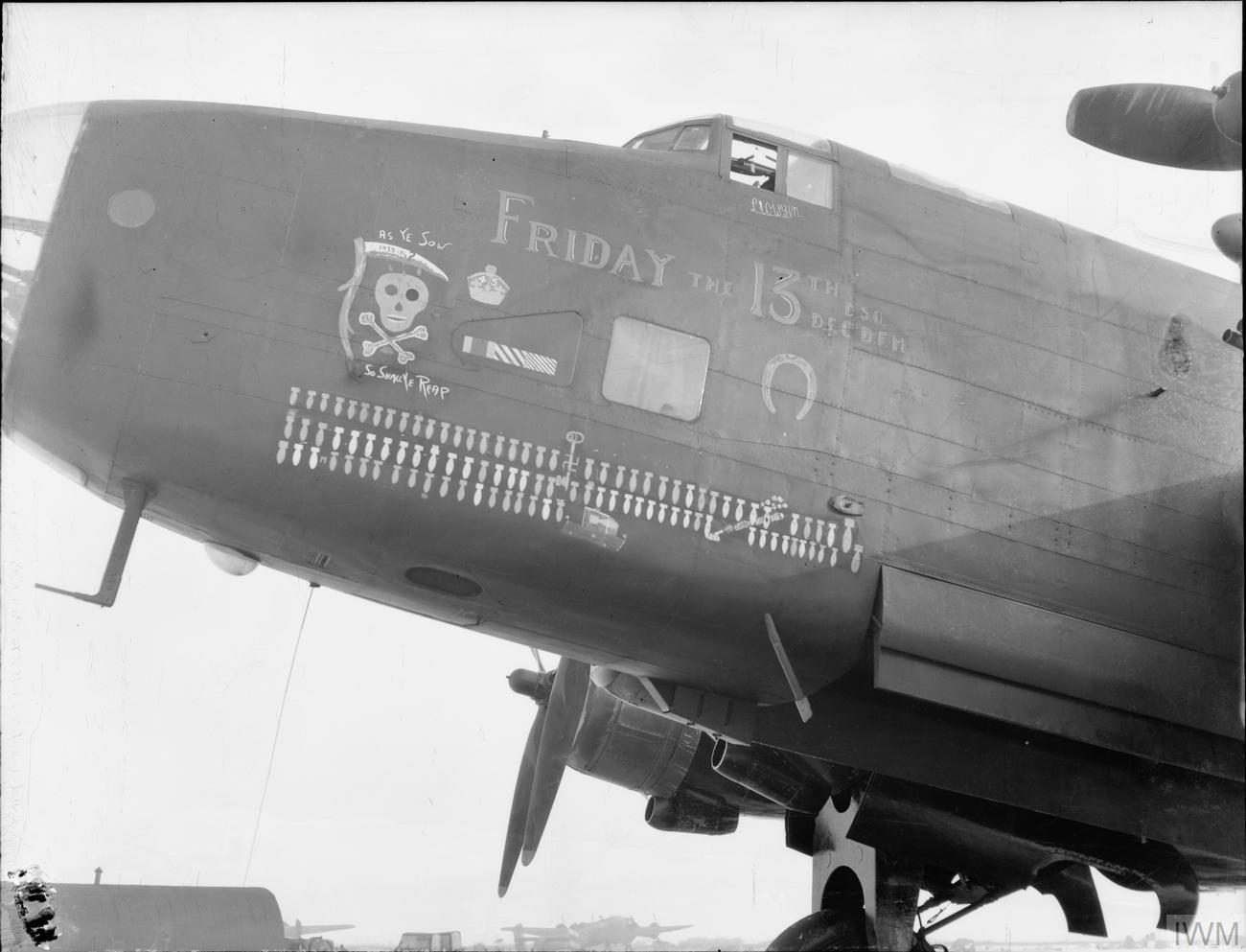
At the other end of fortune’s scale stood a Halifax with a name chosen in defiance of superstition. LV907 of No. 158 Squadron at Lissett in East Yorkshire was christened Friday the 13th after its predecessors of the same code letter were lost in quick succession, and its crews decorated the nose with a skull and crossbones, an inverted horseshoe and a grim reaper’s scythe. The aircraft then proceeded to survive everything the Luftwaffe could throw at it, completing 128 operations by the war’s end, one of the highest totals of any Bomber Command heavy. After VE Day it was put on public display in London before being scrapped, a fate that says everything about how quickly Britain wanted to forget its bombers in 1945, and one reason the Halifax survivor story, told below, is so unusual.
Beyond the bomber stream
What separates the Halifax from almost every other heavy bomber of the war is what it did when it was not bombing. The Lancaster was, by design and by Harris’s insistence, kept almost exclusively for the main force. The Halifax went everywhere else. Coastal Command flew Halifaxes on meteorological flights and very long range anti-submarine patrols over the Bay of Biscay and the Atlantic, where the type’s endurance and roomy fuselage made it a natural fit. No. 100 Group used Halifaxes stuffed with jamming equipment in the radio war against the German night fighter defences.
The Special Duties squadrons, Nos. 138 and 161 at Tempsford, flew Halifaxes deep into occupied Europe by moonlight, parachuting agents and containers of weapons to resistance movements from Norway to the Balkans. These were some of the loneliest operations of the air war: single aircraft, low level, navigating by rivers and railway lines to a torch-lit field, with no bomber stream for cover and capture meaning interrogation rather than a prison camp for the passengers in the fuselage.
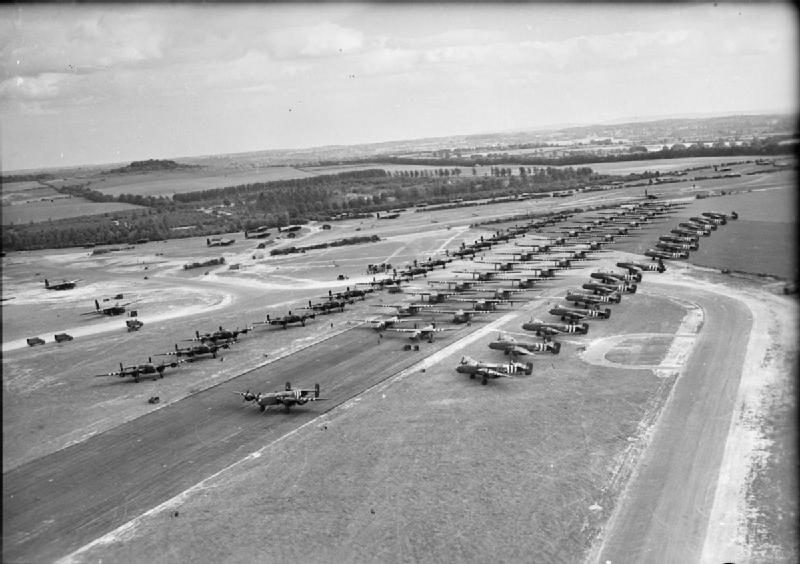
Then there were the gliders. The Halifax was the RAF’s premier heavy glider tug, the only aircraft used operationally to tow the giant tank-carrying Hamilcar. In the early hours of D-Day, Halifaxes of Nos. 298 and 644 Squadrons from Tarrant Rushton towed the six Horsa gliders whose troops seized the bridges over the Caen Canal and River Orne, the coup de main at what became Pegasus Bridge, arguably the most precise airborne operation of the war. Halifaxes towed again at Arnhem and on the Rhine crossing, hauling Horsas and Hamilcars into the biggest airborne assaults ever mounted.
The type’s service did not end with the war. Transport and paratroop variants, the Mk VIII and Mk IX, served on into the late 1940s, and civil conversions and the freighter derivative, the Handley Page Halton, flew cargo into Berlin during the Airlift of 1948 to 1949, where dozens of war-surplus Halifaxes and Haltons in civilian hands carried everything from flour to diesel. The last Halifaxes in RAF service were the meteorological Mk VIs of No. 224 Squadron’s neighbouring met flights, and the type’s final RAF flight was made from Gibraltar in March 1952. From first flight to last, the despised early bomber had outlasted the war in Europe by seven years.
Production and specifications
Halifax production totalled 6,176 aircraft plus two prototypes, built by Handley Page, English Electric, Rootes, Fairey and the London Aircraft Production Group. It is a total exceeded among British bombers only by the Wellington and the Lancaster, and it was achieved by a workforce, much of it women who had never touched an aircraft before 1940, spread across factories, bus depots and dispersed workshops from Liverpool to London. The figures below are for the definitive B Mk III; earlier and later marks differ, and published sources disagree on some values, notably service ceiling, where wartime data for a loaded aircraft sits around 24,000 feet.
- Type: seven-crew heavy bomber
- Engines: four Bristol Hercules XVI radials, 1,615 hp each
- Span: 104 ft with extended wingtips; length 71 ft 7 in
- Maximum speed: around 282 mph at 13,500 ft
- Service ceiling: around 24,000 ft loaded
- Range: around 1,860 miles with typical bomb load
- Bomb load: up to 13,000 lb
- Defensive armament: nine 0.303 in machine guns in nose, dorsal and tail positions
The survivors: three Halifaxes, no fliers
Of 6,178 Halifaxes built, not one flies today, and only three substantially complete aircraft exist anywhere in the world. Post-war Britain scrapped its bomber force with astonishing speed and completeness, and the Halifax, lacking the Lancaster’s postwar service career, vanished almost entirely. Every complete Halifax you can see today is either a recovery from a crash site or a painstaking reconstruction, and each of the three tells a different kind of survival story.
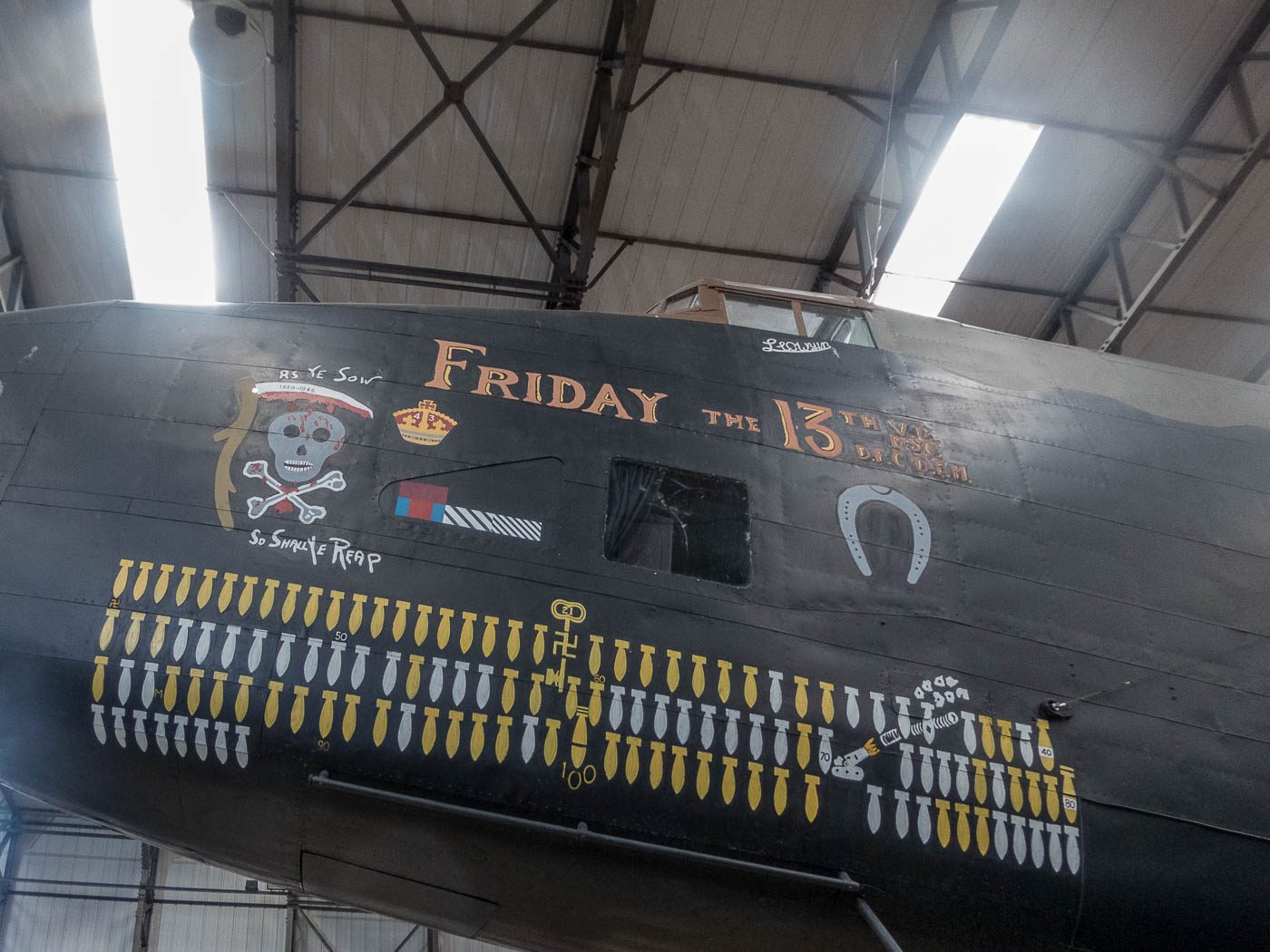
The Yorkshire Air Museum at Elvington, itself a wartime Halifax station, displays the reconstruction painted as LV907 Friday the 13th. It was assembled over more than a decade around the fuselage of Halifax HR792, recovered from the Isle of Lewis where it had served as a hen house, married to wings built from a Hastings and parts gathered from crash sites across Europe. Purists note that it is a composite; the museum has never claimed otherwise, and as the only Halifax displayed in Bomber Command’s own Yorkshire heartland it carries the memory of the thousands of Halifax crews who flew from the surrounding fields.
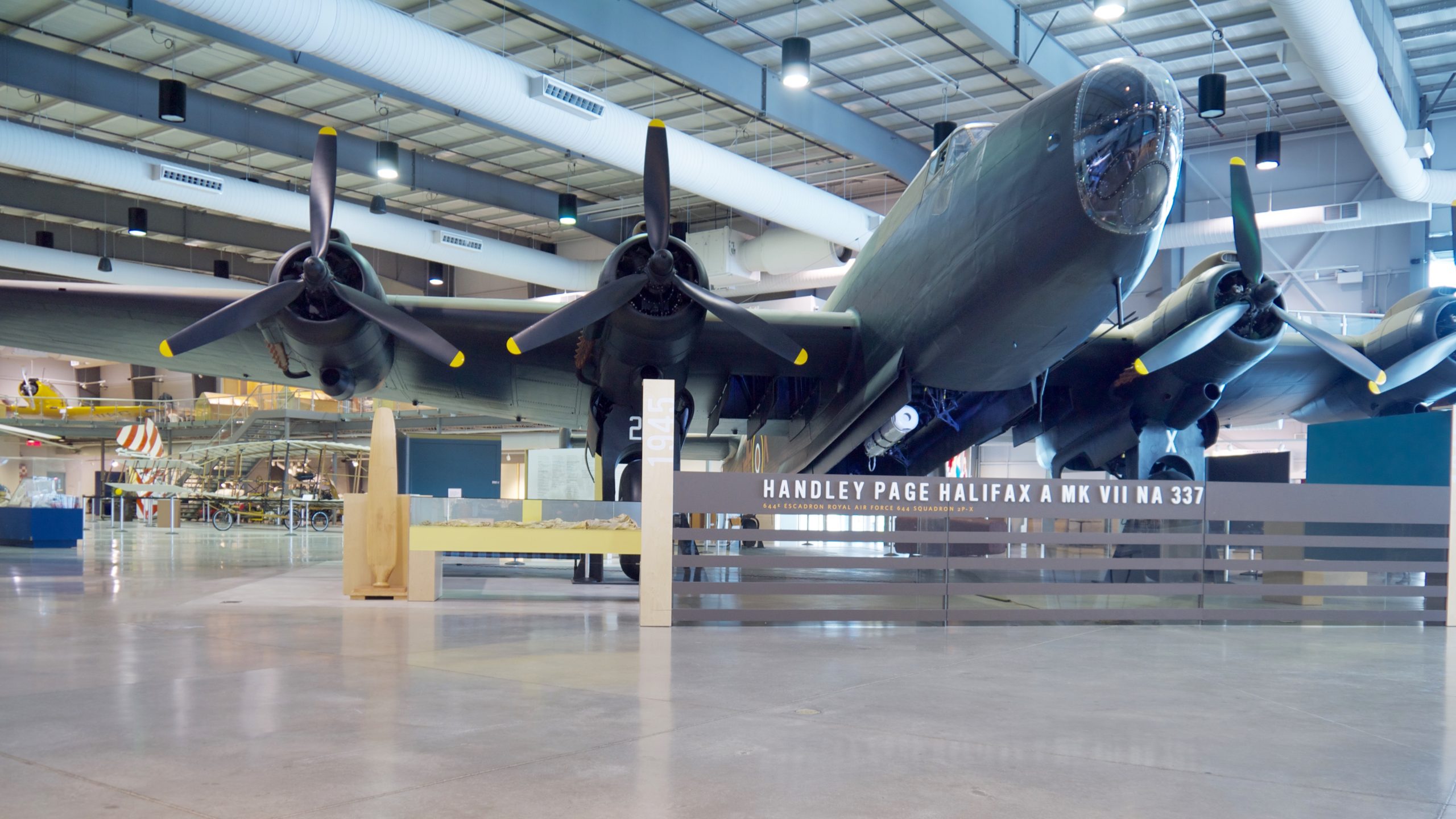
The National Air Force Museum of Canada at Trenton, Ontario, holds NA337, an A Mk VII lost on a special duties operation over Norway in April 1945 and raised from 240 metres down in Lake Mjøsa in 1995. Its restoration, completed in 2005, was driven by Canadian Halifax veterans of No. 6 Group who wanted the aircraft their country had flown in such numbers remembered at home, and it stands today as the most completely restored Halifax in existence.
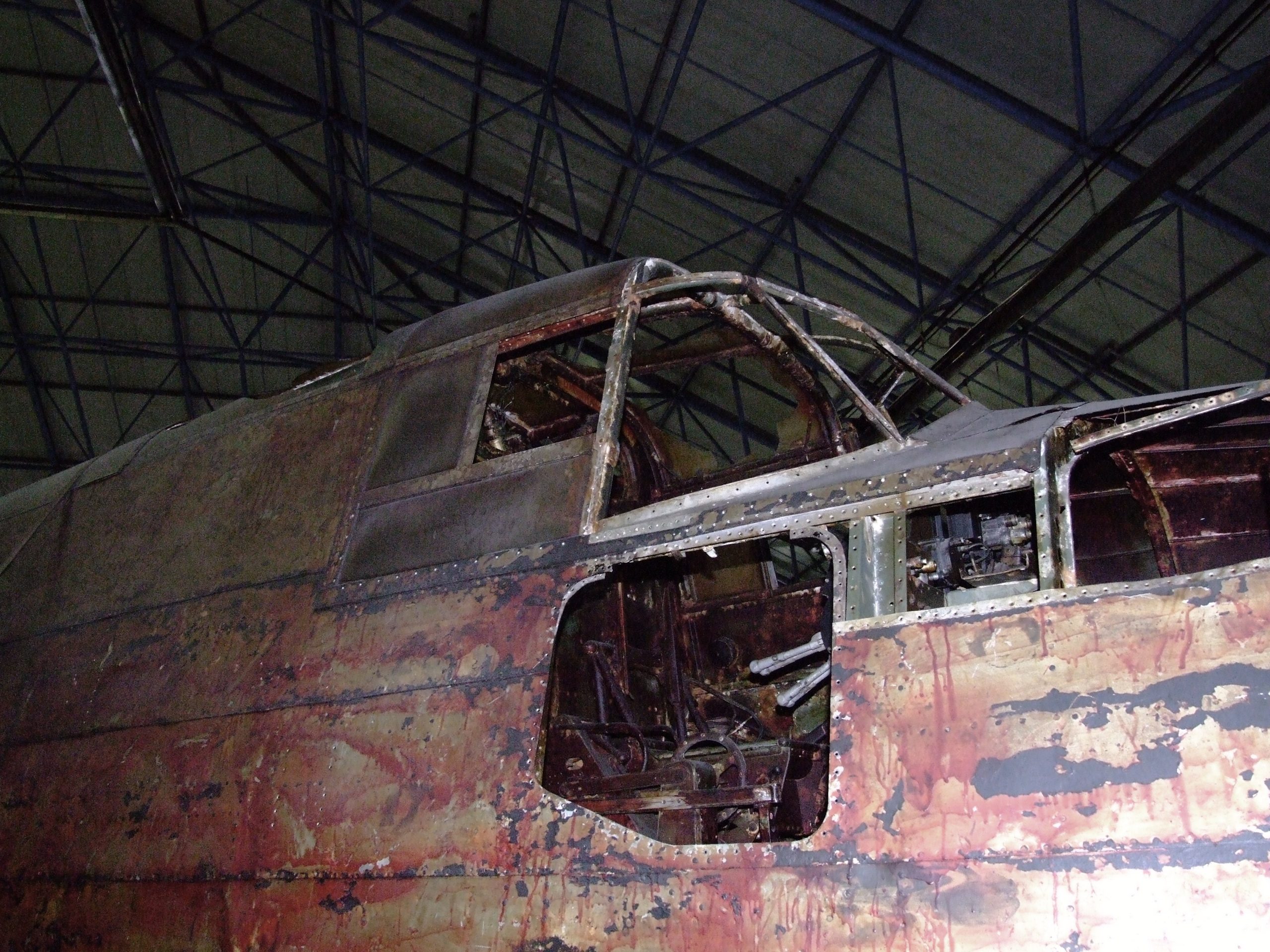
The Royal Air Force Museum in London displays W1048, a Merlin-engined Mk II that force-landed on the frozen surface of Lake Hoklingen in Norway during an attack on the battleship Tirpitz in April 1942, sank through the ice, and was raised in 1973. The museum took the brave decision to conserve rather than restore it, and the aircraft is shown in as-recovered condition, paint worn, metal scarred, one undercarriage leg still folded. Between the three of them, Elvington, Trenton and Hendon offer a reconstruction, a restoration and a relic: three different, equally honest answers to the question of how you preserve an extinct aircraft.
Photographing the Halifax today
With no airworthy example anywhere in the world, the Halifax is a museum subject, and photographing one is an exercise in working with fixed positions and museum light. All three survivors reward the same discipline: arrive early or stay late for thinner crowds, shoot wide for context and long for detail, and let the surfaces tell the story, from the YAM aircraft’s freshly painted nose art to the fifty years of lakebed corrosion on W1048’s skin. Museum lighting is mixed and often dim, so a fast wide prime and clean high-ISO performance earn their keep, and it is always worth asking the museum about photography days or access events.
Elvington deserves a special note, because the Yorkshire Air Museum periodically runs engine-running and night-shoot events with its Halifax, and a floodlit Halifax on a wartime dispersal, props turning, is the closest anyone will ever come to photographing the type as its crews knew it. Places at these events sell out quickly and access rules change year to year, so check the museum’s events calendar directly. At Hendon, W1048’s low, dramatic lighting rewards patience with a tripod where permitted, and at Trenton the museum’s open hall gives the cleanest walk-around angles of any surviving Halifax.
Our own archive at Piemags does not currently include the Halifax, but the wider Bomber Command story is well covered, from the Avro Lancaster to the de Havilland Mosquito, and our galleries of airworthy warbirds photographed air to air are at professionalaviationphotography.com. For editorial and commercial licensing of aviation imagery, see piemags.com or our licensing guide.
Halifax squadrons flew the first attacks on Tirpitz in her Norwegian anchorages in 1942, and one of those aircraft, W1048, is the airframe now displayed at the RAF Museum. The campaign is covered in the guide to the Tirpitz raid.
Frequently asked questions
How many Handley Page Halifaxes were built?
Halifax production totalled 6,176 aircraft plus two prototypes, built between 1939 and 1946 by Handley Page, English Electric, Rootes Securities, Fairey Aviation and the London Aircraft Production Group. Among British bombers only the Wellington and the Lancaster were built in greater numbers.
When did the Halifax first fly?
The prototype Handley Page Halifax made its first flight on 25 October 1939 from RAF Bicester, seven weeks after the outbreak of the Second World War. The type entered squadron service with No. 35 Squadron in November 1940 and flew its first bombing operation against Le Havre in March 1941.
Was the Halifax better or worse than the Lancaster?
The early Merlin-engined Halifax was inferior to the Lancaster in speed, ceiling and bomb load, and suffered from a dangerous rudder overbalance problem. The Hercules-engined Mk III of late 1943 closed much of the gap and was better suited to many roles beyond bombing. The Lancaster remained the superior pure bomb carrier, but crews had a better chance of escaping a stricken Halifax.
Why did Arthur Harris dislike the Halifax?
Air Chief Marshal Sir Arthur Harris regarded the early Halifax as wasteful of factories and crews. In a letter of 2 June 1942 he argued that an average Lancaster would deliver roughly 154 tons of bombs in its service life against about 100 tons for a Halifax, and pressed unsuccessfully for Halifax factories to switch to building Lancasters.
What engines did the Halifax use?
Early marks used four Rolls-Royce Merlin liquid-cooled engines. The definitive B Mk III and later Mk VI and Mk VII switched to four Bristol Hercules XVI air-cooled radials of 1,615 hp each, which transformed the aircraft’s performance, reliability and resistance to battle damage.
How many operations did the Halifax fly with Bomber Command?
Published totals range from about 75,500 to about 82,700 sorties depending on how they are counted, with 1,833 Halifaxes lost on operations. The type also flew thousands of additional sorties with Coastal Command, the special duties squadrons and the airborne forces as a glider tug.
Was a Victoria Cross ever awarded to a Halifax pilot?
Yes, one. Pilot Officer Cyril Barton of No. 578 Squadron was awarded a posthumous Victoria Cross for the Nuremberg raid of 30 to 31 March 1944, when he pressed on to the target after night fighter attacks had crippled his aircraft and three of his crew had baled out, then died holding the aircraft steady in a forced landing that saved his three remaining crewmates.
What was Friday the 13th?
Friday the 13th was Halifax B Mk III LV907 of No. 158 Squadron at Lissett, East Yorkshire, named in defiance of superstition after earlier aircraft with the same code letter were lost. It completed 128 operations, among the highest totals of any Bomber Command heavy bomber, and was scrapped after the war. The Yorkshire Air Museum’s Halifax reconstruction is painted in its markings.
What role did the Halifax play on D-Day?
Halifaxes of Nos. 298 and 644 Squadrons from RAF Tarrant Rushton towed the six Horsa gliders that captured the Caen Canal and River Orne bridges in the opening minutes of D-Day, the operation remembered as Pegasus Bridge. Halifaxes were the only aircraft used operationally to tow the giant Hamilcar tank-carrying glider and towed again at Arnhem and on the Rhine crossing.
Are there any flying Halifaxes today?
No. Not one of the 6,178 Halifaxes built remains airworthy. Only three substantially complete aircraft survive: the reconstruction painted as Friday the 13th at the Yorkshire Air Museum, Elvington; the restored NA337 at the National Air Force Museum of Canada, Trenton; and the unrestored W1048 at the RAF Museum, London.
When did the Halifax leave RAF service?
The Halifax outlasted the war by seven years. After post-war service as a transport, glider tug and meteorological aircraft, and civil freight work during the Berlin Airlift as the Handley Page Halton, the type’s final RAF flight was made from Gibraltar in March 1952.
Where can I license aviation photography of RAF bombers?
Piemags and Aviation Photo Crew license air-to-air and airshow photography of airworthy warbirds and modern military aircraft directly through professionalaviationphotography.com, with simple editorial and commercial terms at piemags.com. The Halifax itself survives only in museums, but related types including the Lancaster story are covered on this blog.
Two hundred and eighteen Halifaxes went to the Baltic on the night of 17 August 1943: read the full account of the Peenemunde raid.


