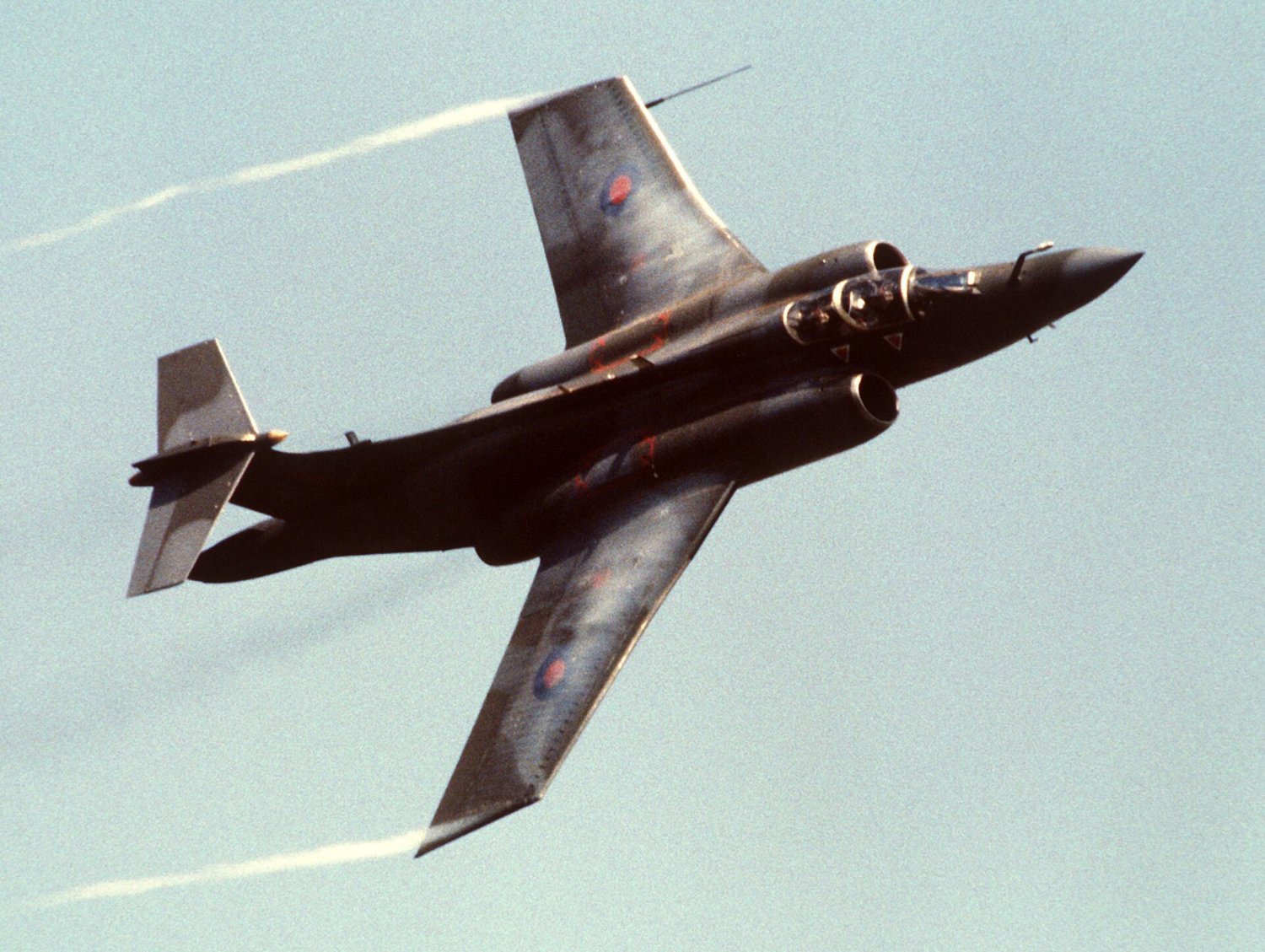
The Blackburn Buccaneer was a British two-seat, twin-engined strike aircraft built to attack ships and land targets at very low level and high speed, entering Fleet Air Arm service in 1962 and serving with the Royal Air Force until 1994. Designed to sprint in beneath enemy radar at around 100 feet and deliver conventional or nuclear weapons, it earned a reputation as one of the finest low-level strike aircraft ever flown, and it flew its first and only combat missions in the 1991 Gulf War, more than two decades after it entered service.
This is the complete story of the Buccaneer: why the Royal Navy needed it, how Blackburn’s engineers solved the brutal problem of flying fast and low, the difference the Rolls-Royce Spey made, its long service at sea and then over land with the RAF and the South African Air Force, its late blooming as a laser-bombing “Sky Pirate” over Iraq, and where you can still see one today. Every date, figure and claim below has been checked against museum and reference sources, and where the record is really contested this guide says so rather than picking a tidy answer.
What this guide covers
- Origins: the Sverdlov threat and NA.39
- Design: flying fast and low
- Power: from Gyron Junior to Spey
- Variants: S.1 to S.50
- Service with the Fleet Air Arm
- Torrey Canyon and the Beira Patrol
- Into Royal Air Force service
- The Gulf War: the Sky Pirates
- South African service
- Retirement
- Specifications
- Where to see a Buccaneer today
- Photographing the Buccaneer today
- Legacy
- Frequently asked questions
Origins: the Sverdlov threat and NA.39
The Buccaneer was born from a specific fear. In the early 1950s the Soviet Navy began commissioning the Sverdlov class, fast and well-armed light cruisers that threatened to break out into the Atlantic and prey on shipping. Rather than answer cruiser with cruiser, an expensive and slow response, the Royal Navy decided the cheaper and quicker counter was a carrier-borne aircraft that could find these ships and hit them hard before their anti-aircraft defences could react. The way to do that was to come in low and fast, below the horizon of the enemy’s radar, and attack from a direction they were not watching.
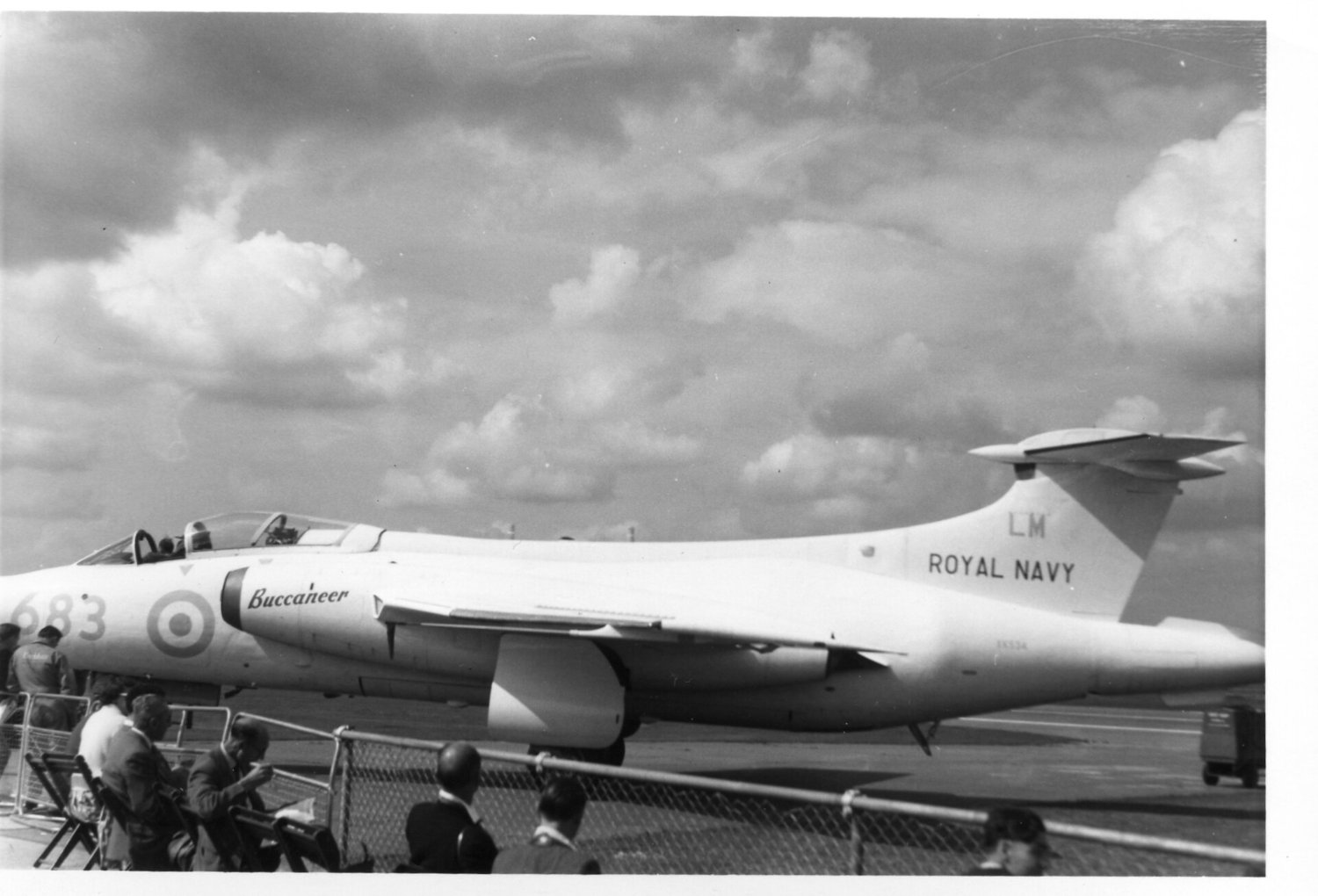
That requirement was written up as Naval Staff Requirement NA.39, issued in the early 1950s, with the associated Ministry of Supply specification M.148T. The dates are worth a note of caution, because sources differ: some give the requirement as June 1952 and others as 1953. What is not in doubt is what it asked for. The Navy wanted a two-seat aircraft with folding wings for carrier stowage, the ability to carry a substantial weapons load including a nuclear bomb, and above all the performance to cross the sea at very high speed at extremely low level. Blackburn Aircraft of Brough in Yorkshire won the competition in 1955 with its in-house design, the B.103.
The chief designer was Barry Laight, Blackburn’s technical director, leading a team that included the engineer Roy Boot, who is sometimes wrongly credited as the sole designer. Their aircraft first flew as the prototype XK486 from the Royal Aircraft Establishment at Bedford on 30 April 1958, and it was shown to the public at the Farnborough air show that year. The low-level concept it embodied was demanding in a way that is easy to underestimate. Flying at 500 knots a hundred feet above the sea leaves no room for error, subjects the airframe to constant heavy buffeting, and requires an aeroplane that is both immensely strong and aerodynamically clever. The Buccaneer was both.
The way the Buccaneer was meant to deliver a nuclear weapon shaped the whole design. Rather than fly over a heavily defended target, the aircraft would approach at very low level and then pull up sharply to toss the bomb upward and forward in a lofting manoeuvre, releasing it on the climb so the weapon continued to the target while the Buccaneer turned hard away and dived back down to the deck, putting distance between itself and the blast. This loft delivery, combined with the low approach, was how a subsonic aircraft was expected to survive a nuclear strike and still get its crew home.
Design: flying fast and low
To make an aeroplane that could live in the punishing world of high-speed, low-level flight, Blackburn’s team reached for several advanced ideas at once. The most visible in profile is the area-ruled fuselage, waisted in the middle like a Coke bottle where the wings add cross-sectional area, which reduces drag as the aircraft approaches the speed of sound. It is a design signature the Buccaneer shares with other transonic aircraft of the era, and it helped the aeroplane stay efficient at the high speeds its mission demanded.
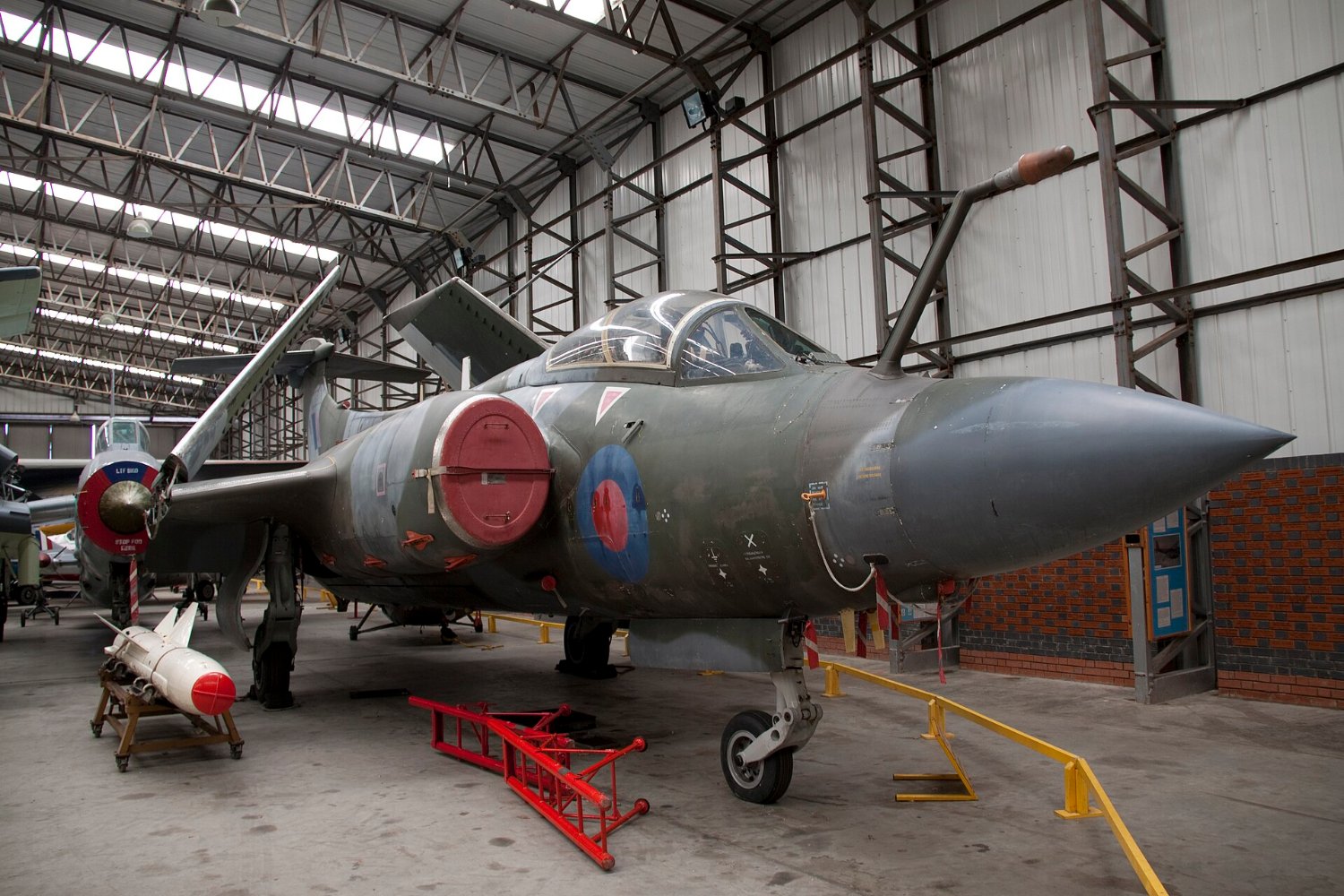
The cleverest feature is harder to see. Carrier aircraft must fly slowly enough to land on a deck, yet the Buccaneer’s small, thin wing was optimised for speed, not slow flight. The answer was boundary layer control, usually called blowing. High-pressure air bled from the engines was blown through fine slits over the wing’s leading and trailing edges and over the tailplane, energising the airflow so it stayed attached at low speed and generated far more lift than the wing could manage on its own. This let the Buccaneer approach a carrier at a manageable speed without fitting the usual clutter of leading-edge slats. The catch was that blowing only works with the engines running fast, so the aircraft needed a way to add a lot of drag on approach to balance the high thrust, which is where the tail comes in.
The rear of the fuselage forms a large split airbrake, a tail cone that opens like two clamshell petals to slow the aircraft sharply. On a carrier approach it let the pilot fly with the engines spooled up for blowing while the airbrake killed the excess speed, and on a missed approach it could be closed instantly to convert that thrust into acceleration. Above it sits the tailplane, mounted high to keep it clear of the airbrake and the wing’s wake.
Then there is the bomb bay. Conventional bomb doors that hinge down into a 500-knot airstream would create enormous drag and buffet, so Blackburn gave the Buccaneer a rotating bomb bay: a section of the lower fuselage that revolves about its long axis, carrying the weapons on the inner face of the door and turning them out into the airflow only at the moment of release. The main reason was drag reduction and smooth, economical flight, with a reduced radar signature as a useful side effect rather than the driving purpose. The whole airframe was built to survive its environment, with wing spars milled from solid steel forgings and much of the structure machined from billet for strength, though it would be wrong to call it fatigue-proof, as later stress problems showed.
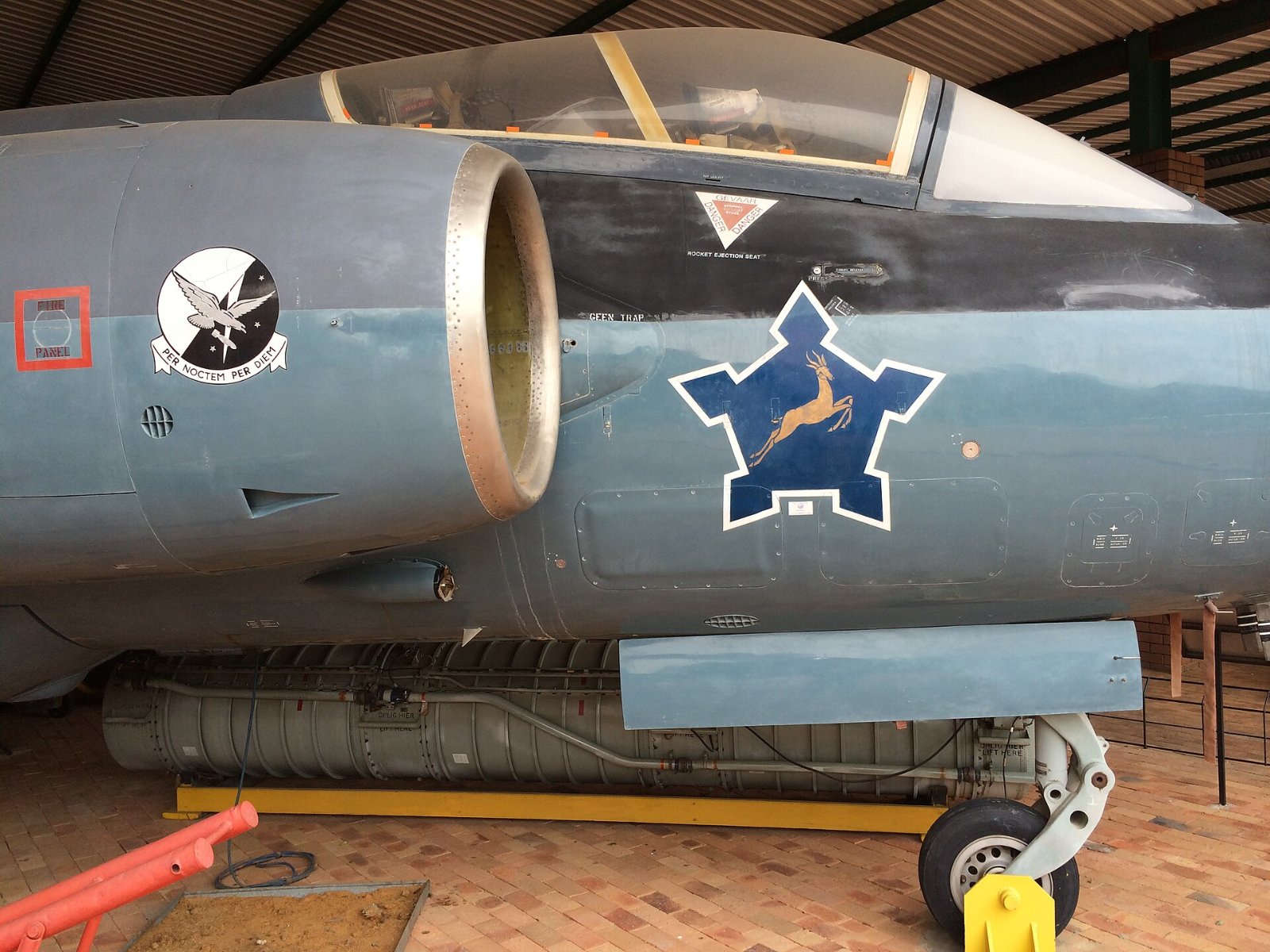
The crew of two sat in tandem under a long canopy, the pilot in front and the observer, the naval term for the navigator, behind and slightly raised for a better view forward. In an age before satellite navigation and moving-map displays, the observer’s skill at low-level navigation and weapons aiming was central to the aircraft’s effectiveness. The cockpit was cramped and the workload high, but crews came to regard the Buccaneer with real affection, respecting an aeroplane that was viceless at the low levels where others became dangerous.
Behind the two crew sat the aircraft’s systems. The Buccaneer found its way and aimed its weapons with a search radar in the nose and a strike sight for the pilot, and the observer managed the navigation and the attack by hand in an age before moving maps and satellite fixes. A retractable flight-refuelling probe extended the aircraft’s already long reach, and the Buccaneer could itself carry a refuelling pod to act as a tanker for other aircraft, a role it filled throughout its career. The blowing system was markedly more effective than the schemes fitted to rival designs, adding roughly half as much lift again as the wing could manage alone, with most of the blown air directed over the flaps, and it was this that let so fast an aeroplane operate from a carrier deck at all.
Power: from Gyron Junior to Spey
The Buccaneer’s early career was held back by its engines. The first production version, the S.1, was fitted with two de Havilland Gyron Junior turbojets of around 7,100 pounds of thrust each. On paper that was adequate, but in practice the Gyron Junior left the aircraft badly underpowered, particularly because so much of its output was bled away for the blowing system just when the aircraft needed thrust most, on take-off and approach. A fully fuelled and armed S.1 often could not launch from a carrier under its own power and had to be topped up with fuel from an airborne tanker straight after take-off. The engine was also unreliable, prone to surging, and its shortcomings were a constant frustration.
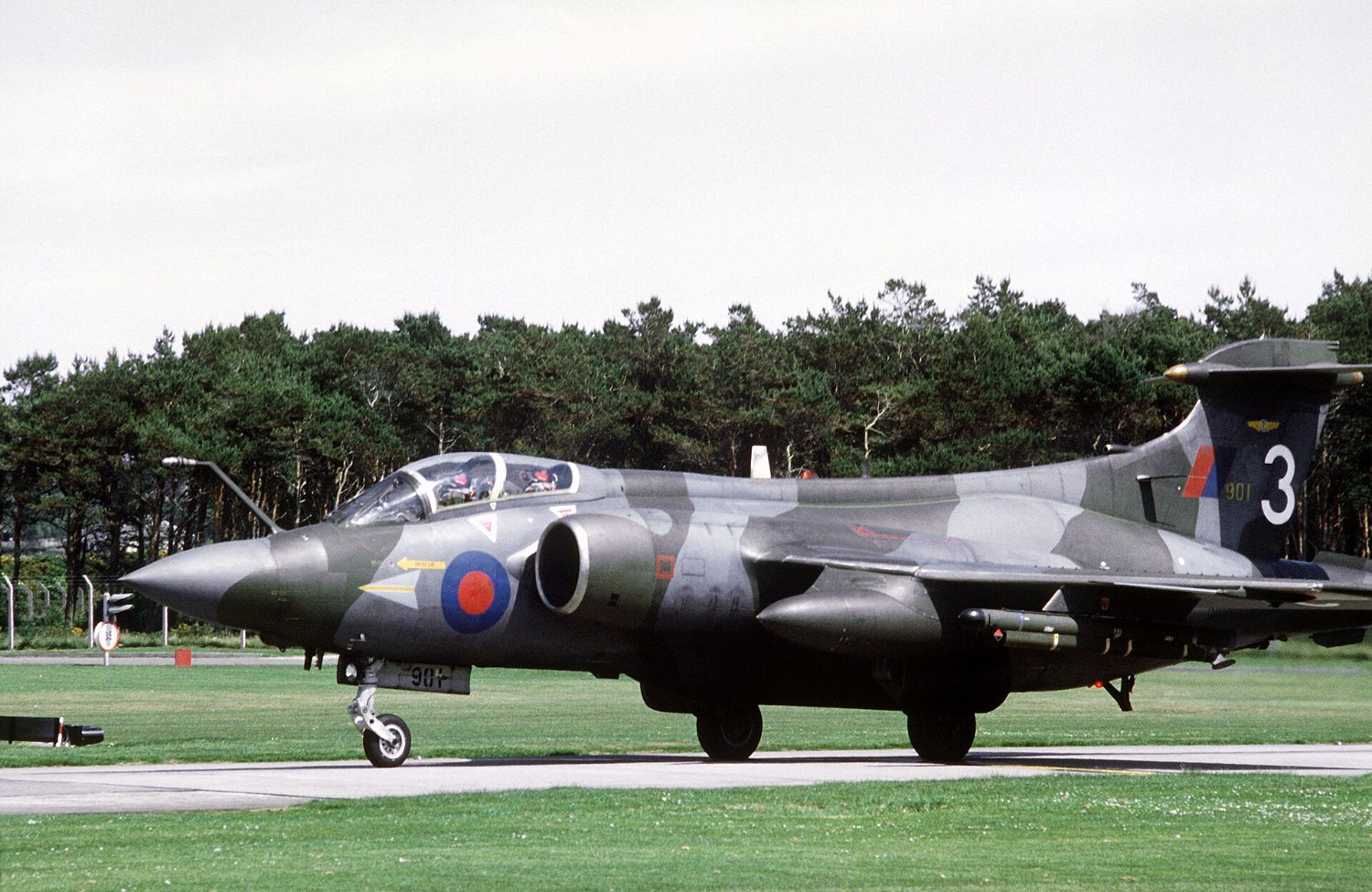
The transformation came with the S.2 and the Rolls-Royce Spey. This turbofan produced around 11,000 to 11,100 pounds of thrust each, roughly forty per cent more than the Gyron Junior, and it burned less fuel, which gave the aircraft considerably greater range. It is worth being precise about one thing: the Buccaneer’s Spey had no afterburner. Figures of fifteen thousand pounds of thrust that sometimes appear belong to the reheated Spey used in the Phantom, not to the Buccaneer’s version. Even with blowing switched on, which reduced usable thrust, the Spey gave the S.2 the performance and the reliability the aircraft had always deserved, and it is the reason the Buccaneer went on to serve for another thirty years.
Variants: S.1 to S.50
The Buccaneer family is simple once the two basic marks are clear. Everything begins with the engine change, and the later letters mostly describe weapons and avionics upgrades.
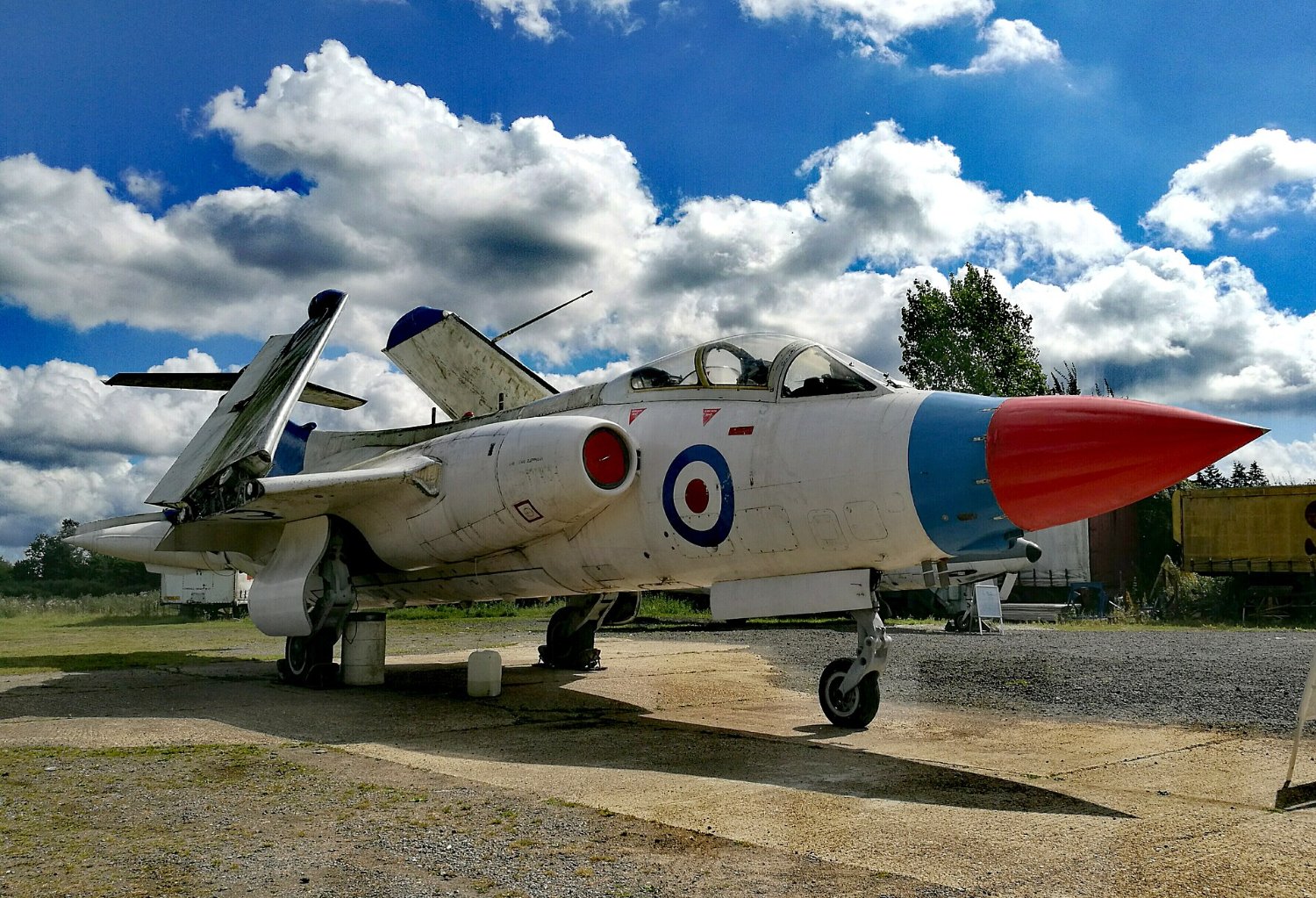
The S.1 was the Gyron Junior version for the Royal Navy, with circular engine intakes, and around forty were built. The S.2 introduced the Spey, with larger oval intakes and a redesigned centre fuselage, and it became the basis for every later variant. When Royal Navy S.2s were transferred to the Royal Air Force they became S.2A, with partial capability for the Martel missile, while new-build RAF aircraft with full Martel capability and a bulged bomb-bay door carrying extra fuel were designated S.2B. The Royal Navy’s own upgraded aircraft were the S.2C, broadly equivalent to the S.2A, and the S.2D, broadly equivalent to the S.2B with Martel, which was the final naval mark. The precise avionics split between C and D is described only in relative terms in the sources, so it is best not to over-specify it.
For weapons, the Buccaneer carried up to four 1,000 pound bombs in its rotating bay and more on four underwing pylons, along with rocket pods and, in the guided era, the Martel anti-radar and television-guided missiles. From the mid-1980s the Sea Eagle anti-ship missile replaced Martel in the maritime squadrons, and in the Gulf War the aircraft carried Paveway laser-guided bombs. From the outset it was designed for tactical nuclear strike, carrying the early Red Beard weapon and later cleared for the WE.177. The one export version was the S.50 for the South African Air Force, an S.2 derivative with manually folded wings and, initially, rocket-assisted take-off gear for hot-and-high African airfields, which was later found unnecessary and removed.
One structural detail had lasting consequences. The S.2 introduced slightly extended wingtips, and a change to the way the wing was attached later produced fatigue cracking that, combined with the stresses of years of low flying, caused a fatal accident in 1980 and the grounding of the whole Royal Air Force fleet while every aircraft was inspected and repaired. It was a sharp reminder that even an airframe milled from solid steel had a finite life when flown hard and low for decades.
Service with the Fleet Air Arm
The Buccaneer entered Royal Navy service at the start of the 1960s. The trials unit, 700Z Naval Air Squadron, formed at RNAS Lossiemouth in 1961, and the first operational squadron, 801 Naval Air Squadron, received its first S.1s in July 1962 and embarked in the carrier HMS Victorious the following year. Over the decade the type equipped further squadrons and served aboard the fleet’s fixed-wing carriers, including HMS Victorious, Eagle, Ark Royal and Hermes, in the maritime strike role for which it had been designed.
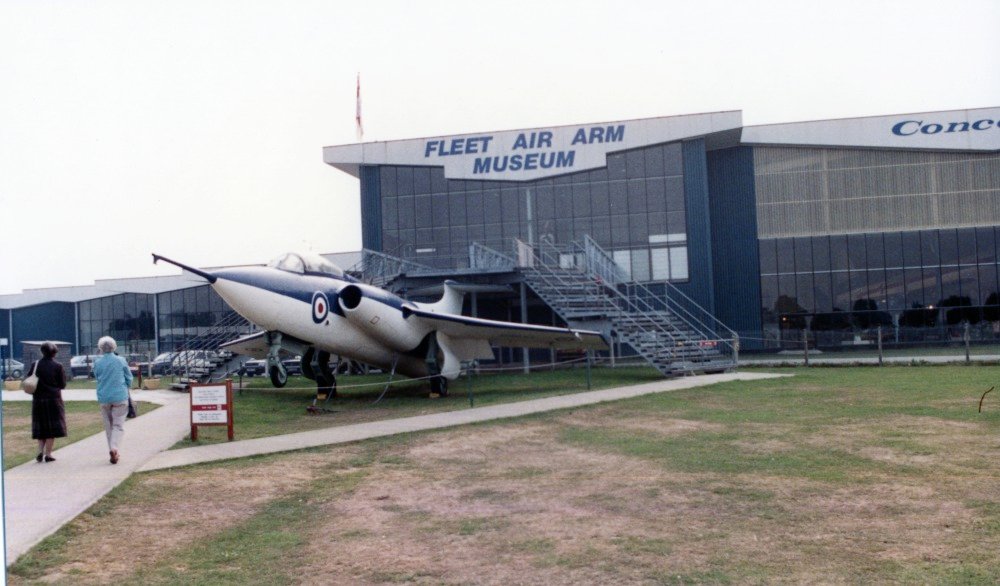
At sea the Buccaneer did the job it was built for, training relentlessly to find and sink shipping at low level with conventional or nuclear weapons. The arrival of the Spey-powered S.2 in the mid-1960s finally gave the Fleet Air Arm the aeroplane it wanted, with the range and reliability to reach out across a wide stretch of ocean. As the Royal Navy’s conventional carriers approached the end of their lives, the Buccaneer’s naval career wound down through the 1970s, and the final chapter came when HMS Ark Royal paid off in 1978 and the last naval Buccaneer squadron disbanded, its aircraft passing to the Royal Air Force.
Torrey Canyon and the Beira Patrol
Although the Buccaneer did not fire a shot in anger until 1991, it did fly two notable early operations. In 1966 aircraft of 800 Naval Air Squadron aboard HMS Eagle flew long-range maritime reconnaissance as part of the Beira Patrol, the blockade intended to stop oil reaching landlocked Rhodesia through the Mozambique port of Beira, a task that showed off the type’s endurance and reach.
The more dramatic episode came in 1967. The supertanker Torrey Canyon ran aground off the Cornish coast on 18 March, spilling a vast quantity of crude oil, and the government decided to bomb the wreck to burn off the slick. On 28 March Fleet Air Arm Buccaneers, flying from Lossiemouth, dropped 1,000 pound bombs on the stricken tanker, after which RAF Hunters dropped fuel to feed the flames. The Buccaneers were the primary bombers in an operation that was, in effect, the type’s combat debut against a stationary target, even if the enemy was a shipwreck rather than a warship.
The Torrey Canyon bombing was a strange footnote to the Buccaneer’s early years, an operation improvised in days to deal with an environmental disaster rather than an enemy. Between them the Fleet Air Arm’s Buccaneers and Sea Vixens and the Royal Air Force’s Hunters dropped bombs, fuel and napalm on the wreck over several days to burn off as much oil as they could, with mixed results as the sea kept putting the fires out. For the Buccaneer crews it was at least a rare chance to drop live weapons on a real target.
Into Royal Air Force service
The Buccaneer reached the Royal Air Force by a roundabout route. The RAF had pinned its hopes on the advanced BAC TSR-2 and then on an order for American F-111K aircraft, and when both were cancelled in the mid-1960s the service was left short of a strike aircraft. The Spey-powered Buccaneer, already proven with the Navy, was the obvious answer, and an order for the RAF followed in 1968. Over the years that followed the RAF took a total of around 108 Buccaneers, some new-build S.2Bs and the rest transferred from the Fleet Air Arm as the carriers retired.
No. 12 Squadron became the first RAF Buccaneer unit in October 1969, flying the maritime strike role from RAF Honington in Suffolk and moving north to Lossiemouth in 1980. In Germany, Nos. 15 and 16 Squadrons flew the aircraft in the overland strike role from RAF Laarbruch, part of NATO’s front line against the Warsaw Pact, until they converted to the Tornado in the mid-1980s. No. 208 Squadron flew the maritime role and later carried the Sea Eagle missile, and the training and laser-designation tasks fell to 237 Operational Conversion Unit. A serious setback came in 1980 when fatigue cracking, traced to a design change at the wing, caused a fatal accident and led to the temporary grounding of the entire fleet while the aircraft were inspected and repaired, a reminder that even so robust an airframe had its limits.
Life on a Buccaneer squadron revolved around low flying. Crews trained constantly at heights that would alarm most pilots, threading through valleys and across the sea at a hundred feet and more, and the aircraft’s stability and strength down there became legendary. When Royal Air Force Buccaneers took part in the American Red Flag exercises in the Nevada desert they made a lasting impression, flying lower and attacking more accurately than aircraft fitted with far more modern systems, and holding their own against defences designed to catch much newer types.
The Gulf War: the Sky Pirates
The Buccaneer’s only shooting war came right at the end of its career. By 1991 it was a maritime strike aircraft based at Lossiemouth, but it carried something the RAF’s Tornados urgently needed over Iraq: the Pave Spike laser designator pod, which could mark a target for laser-guided bombs. When it became clear that the Tornado force needed reliable laser designation, Buccaneers were sent to the Gulf.
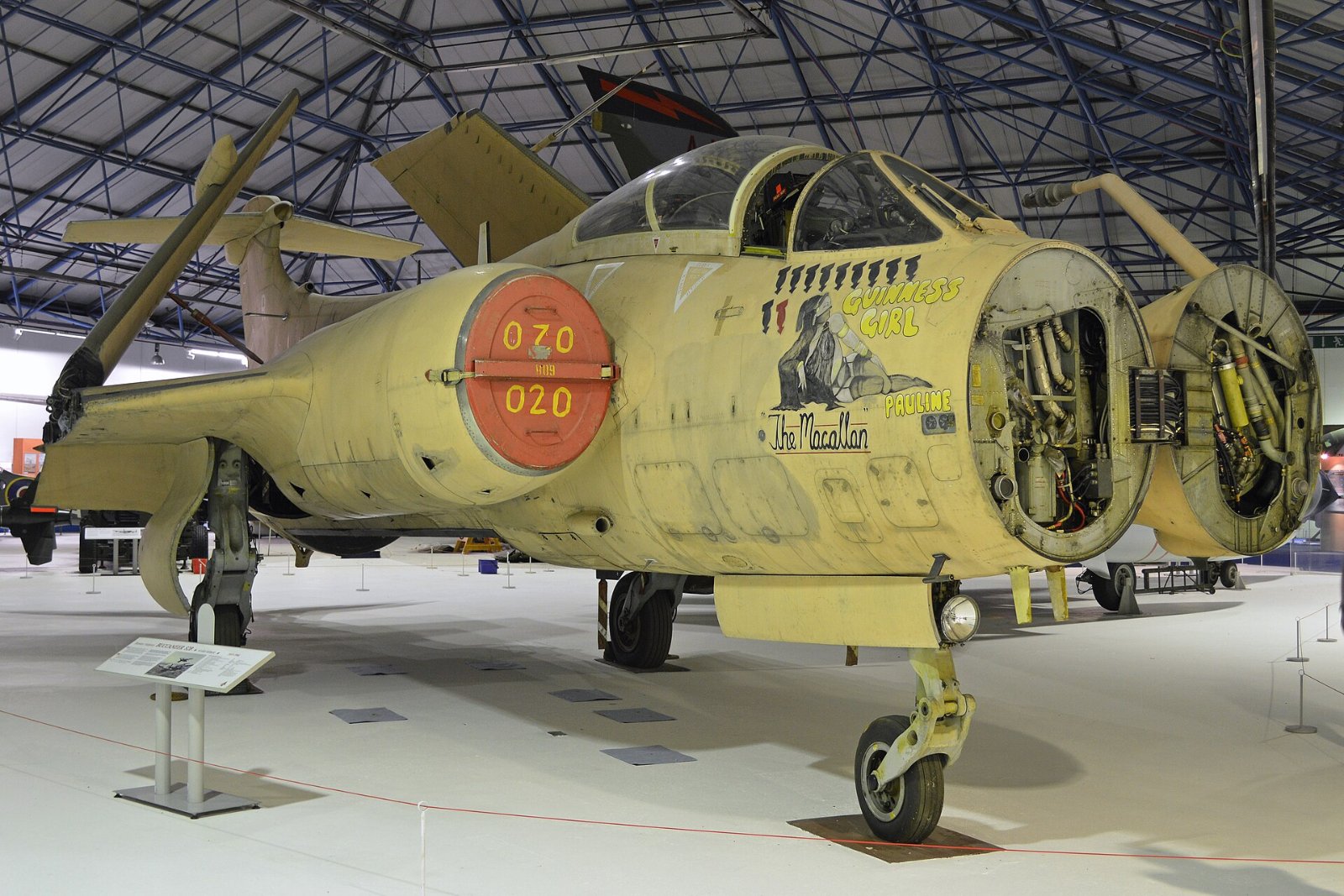
The first six aircraft left Lossiemouth from 26 January 1991, and the detachment was later reinforced to a widely cited total of twelve. Their first combat mission flew on 2 February 1991, and the pattern was that the Buccaneer would fly alongside the bomb-carrying Tornados, aiming its laser at bridges and other targets so the Tornados’ Paveway bombs could home onto the reflected spot. As the campaign went on the Buccaneers began carrying and dropping their own laser-guided bombs as well. The crews gave the detachment a piratical identity, calling themselves the Sky Pirates and decorating their aircraft with Jolly Roger markings and names, among them XW533 “Miss Jolly Roger”. One of the Gulf veterans, XW547, survives in the RAF Museum with its tally of designations and a self-dropped bomb marked on the nose. Precise sortie and bomb totals vary between accounts and are best treated with caution, but the operation gave the old aircraft a really successful combat record.
The affection the Buccaneer inspired has outlived the aircraft itself. A generation of aircrew recorded their memories in the book Buccaneer Boys, and the type retains one of the most devoted followings of any British military aircraft, kept alive by the preserved and taxiable survivors and by the crews who flew it. Much of that loyalty came down to trust: the Buccaneer did exactly what it promised at the low levels where it lived, and it brought its crews home.
South African service
The other major operator was the South African Air Force, which ordered sixteen S.50 aircraft in the early 1960s. One was lost in the South Atlantic during the delivery flight when it suffered a double flame-out, its crew rescued, leaving fifteen to enter service with No. 24 Squadron. In South African hands the Buccaneer became the most potent strike aircraft in the region.
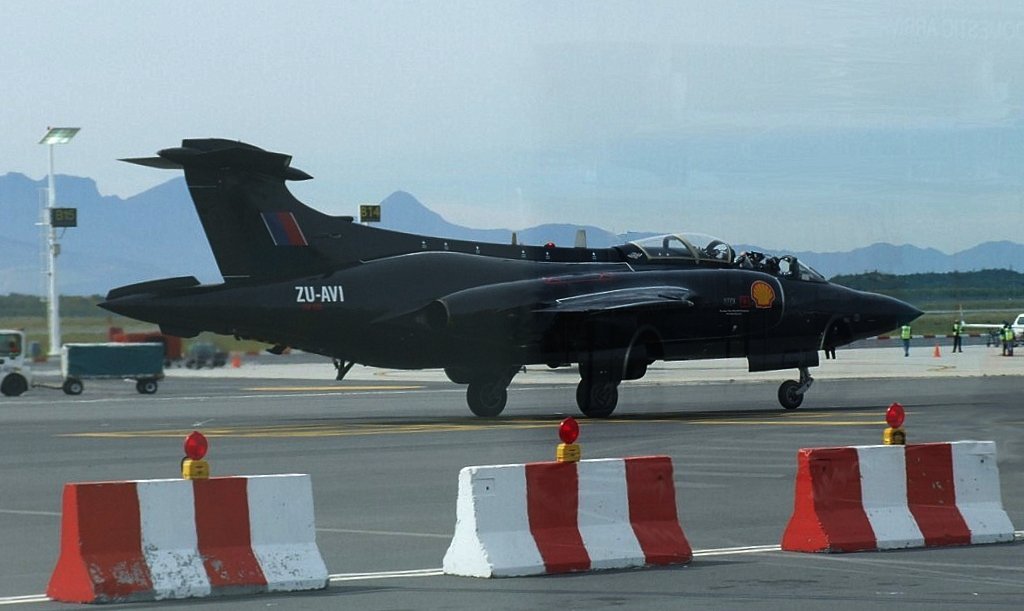
No. 24 Squadron flew the Buccaneer hard during the long Border War over Angola and South West Africa, using it for long-range strikes including the raid on Cassinga in 1978 and, later in the 1980s, for stand-off attacks with guided weapons. Attrition over more than two decades of intensive operations was heavy, and only a handful of airframes remained by the time the type was retired. The last South African Buccaneer flight took place in 1991, ending a service life that, like the aircraft’s British career, spanned the whole of the Cold War.
In its later Border War years the South African Buccaneer force turned increasingly to stand-off guided weapons, using television and laser-guided glide bombs to strike targets from a distance rather than flying into the teeth of the defences, a tactic that kept the ageing aircraft relevant. By the time it was retired in 1991 the type had given No. 24 Squadron nearly three decades of hard service in one of the most demanding operational environments any Buccaneer operator ever faced.
Retirement
The Buccaneer’s British career ended soon after its Gulf War triumph. The maritime strike role was handed to a version of the Panavia Tornado, the GR1B, which was faster but shorter ranged, and the last Buccaneers were withdrawn in March 1994. No. 208 Squadron was the final operational unit, while No. 12 Squadron had already begun re-forming on the Tornado at Lossiemouth at the start of that year. After thirty-two years of front-line service the aeroplane that had been designed to sink Soviet cruisers left the scene, its reputation among those who flew it higher than ever.
Specifications
The figures below describe the Spey-powered S.2, the definitive version. Some numbers, particularly maximum speed and weapon load, are quoted differently across sources depending on configuration, so ranges are given where the record is not settled.
| Crew | Two (pilot and observer) |
|---|---|
| Length | 63 ft 5 in (19.33 m) |
| Wingspan | 44 ft (13.41 m) |
| Height | 16 ft 3 in (4.95 m) |
| Powerplant | Two Rolls-Royce Spey Mk 101 turbofans, about 11,100 lbf each (no afterburner) |
| Maximum speed | High subsonic, about Mach 0.85, roughly 645 mph (560 kn) at low level |
| Service ceiling | About 40,000 ft (12,200 m) |
| Range | About 2,000 nautical miles clean, greater with air-to-air refuelling |
| Maximum take-off weight | About 62,000 lb (28,120 kg) |
| Weapons | Up to four 1,000 lb bombs in the rotating bay plus four underwing pylons; Martel, later Sea Eagle, rockets, and tactical nuclear weapons |
| First flight | 30 April 1958 (prototype XK486) |
| Total built | Approximately 209 to 211 (some sources give 206) |
Where to see a Buccaneer today
A good number of Buccaneers survive, spread across museums in Britain and South Africa, and survivor locations do change, so it is always worth checking with a museum before travelling. Two aircraft are famously kept in running order by the Buccaneer Aviation Group, which moved its operation from Bruntingthorpe to Cotswold Airport, the former RAF Kemble in Gloucestershire, in 2020. Any guide that still lists these runners at Bruntingthorpe is out of date.
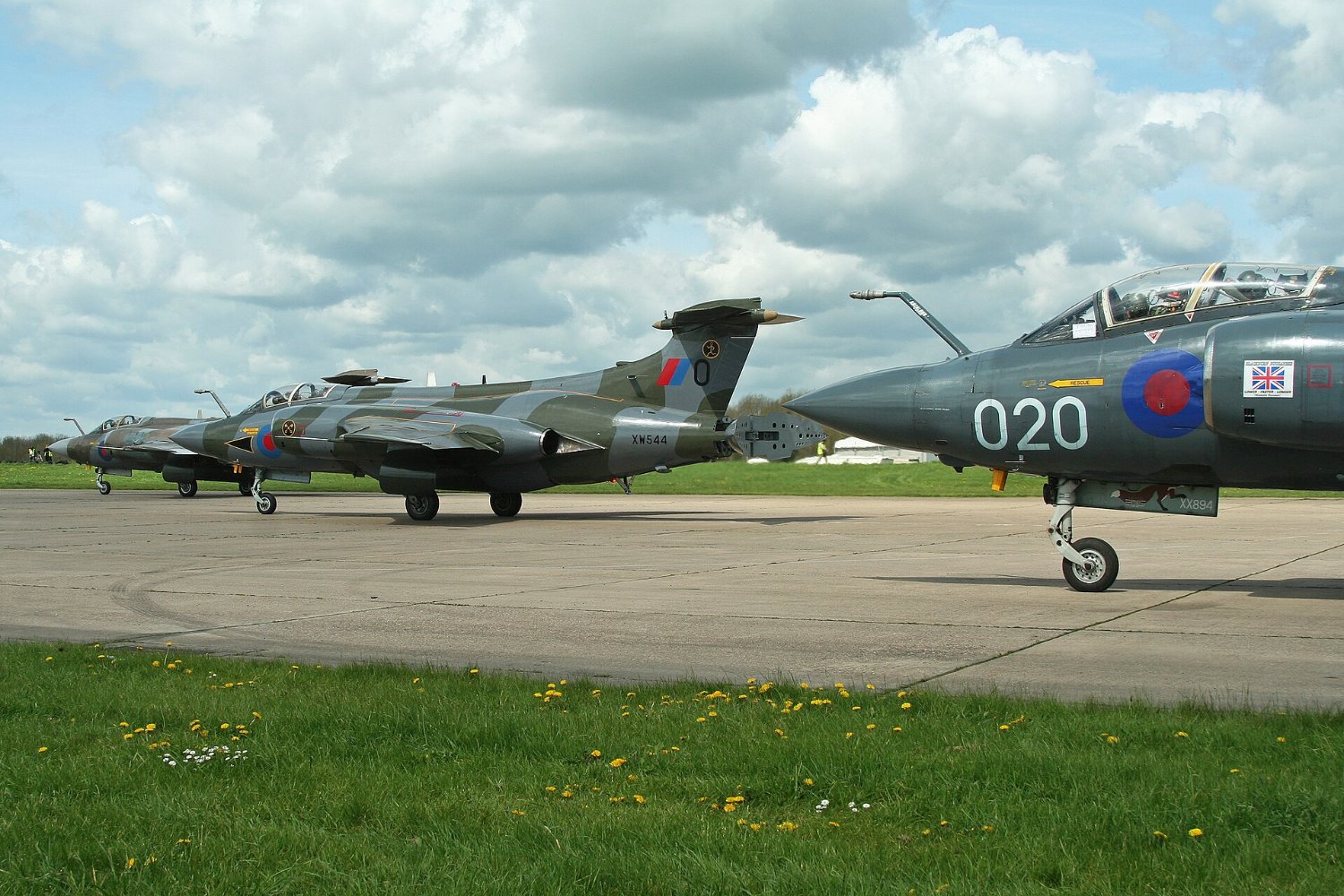
At Cotswold Airport the group keeps XX894 and XW544 in fast-taxi condition, running them at events rather than flying them, and both were active into the mid-2020s. Elsewhere in the United Kingdom you can see complete aircraft at the RAF Museum at Cosford, the Fleet Air Arm Museum at Yeovilton, which also holds the NA.39 prototype, the Yorkshire Air Museum at Elvington, Newark Air Museum and Gatwick Aviation Museum among others, while the Ulster Aviation Society keeps its example in a condition that allows it to demonstrate the wing fold and the rotating bomb bay. The Gulf War veteran XW547 is displayed at the RAF Museum. In South Africa, preserved S.50s can be seen at the South African Air Force Museum and elsewhere, and a small number of ex-Royal Aircraft Establishment aircraft that were once flown in civilian hands at Thunder City in Cape Town are now stored, so any claim that a Buccaneer is currently airworthy should be treated with caution, as none is known to be flying.
Photographing the Buccaneer today
Because no Buccaneer flies, photographing one today means working with preserved and taxiable aircraft, and that calls for a slightly different approach from air-to-air or display work. At the fast-taxi runs held at Cotswold Airport the aircraft moves fast on the ground with the airbrake open and, on some runs, a fine spray of water or a burst of afterglow from the jet pipes, so the same discipline you would use for a fast jet pays off: a shutter speed high enough to freeze the aircraft but low enough to keep a sense of motion, and careful panning as it passes.
For static aircraft in a museum, the priorities shift to light and composition. Look for an angle that shows the area-ruled fuselage and the high tail, get low to give the aircraft presence, and use the rotating bomb bay or the folded wing, where a museum demonstrates them, to tell part of the story in a single frame. Clean backgrounds are hard indoors, so work the details, the intakes, the nose and the cockpit, and pay attention to composition to keep the clutter of a hangar out of the shot. Many of these preserved aircraft appear in the Piemags archive, and you can browse the wider collection through the Piemags galleries.
Legacy
The Buccaneer is remembered as one of the best low-level strike aircraft ever built, and the affection in which its crews held it is unusual in its intensity. It was designed for a single demanding task and it did that task supremely well, flying faster and lower and more accurately than aircraft that arrived long after it. At the American Red Flag exercises it made a strong impression precisely because it could do by hand and skill, at very low level, what newer aircraft needed sophisticated systems to attempt.
It also marks the end of a line. The Buccaneer was the last major aircraft designed independently by Blackburn before the company was absorbed into Hawker Siddeley, and it is often described as the last all-British bomber, an epithet that is more a fond summary than a strict technical definition but that captures something real about its place in history. It served the Royal Navy, the Royal Air Force and the South African Air Force across the entire Cold War, from carrier decks in the early 1960s to the deserts of Iraq in 1991, and it retired with a reputation few aircraft of its generation can match. For the wider story of Britain’s Cold War strike and bomber fleet, see our guide to the V-bombers and to the Panavia Tornado that replaced it. Images of preserved Buccaneers and other Cold War types are available to license through the Piemags licensing pages.
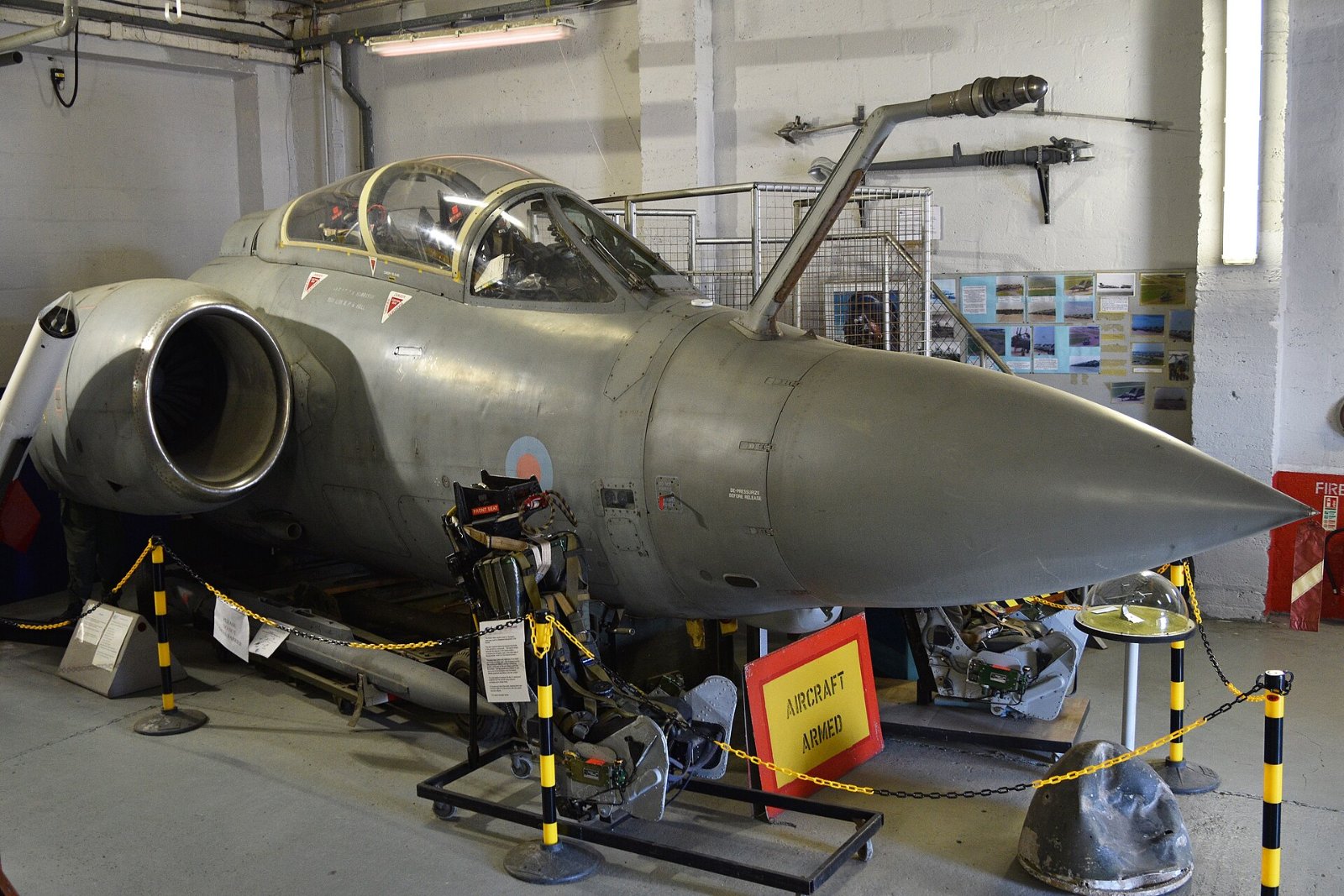
Buccaneer photography is now almost entirely archival, split between Royal Navy and Royal Air Force service and frequently miscredited between the two. Our guide to aviation picture research sets out how to verify a frame before licensing it.
For the campaign that reshaped British thinking about carrier air power, see our account of the Falklands air war of 1982.
Frequently asked questions
What was the Blackburn Buccaneer?
The Blackburn Buccaneer was a British two-seat, twin-engined carrier and land-based strike aircraft designed to attack ships and land targets at very low level and high speed. It served the Royal Navy from 1962, the Royal Air Force until 1994 and the South African Air Force, and is widely regarded as one of the best low-level strike aircraft ever built.
Why was the Buccaneer designed?
It was designed to counter the Soviet Navy’s fast Sverdlov-class cruisers, which threatened Atlantic shipping in the 1950s. Rather than build rival cruisers, the Royal Navy chose a carrier aircraft that could attack them at high speed and very low level under Naval Staff Requirement NA.39.
What engines did the Buccaneer use?
The first version, the S.1, used two de Havilland Gyron Junior turbojets of about 7,100 pounds of thrust each and was badly underpowered. The definitive S.2 used two Rolls-Royce Spey turbofans of about 11,100 pounds of thrust each, with no afterburner, which transformed its performance and range.
What was the Buccaneer’s rotating bomb bay for?
At high speed and low level, conventional bomb doors would create heavy drag and buffeting. The Buccaneer’s bomb bay instead rotated about the fuselage axis, carrying weapons on the inner face and turning them into the airstream only at release. The main purpose was drag reduction and smooth flight, with a reduced radar signature as a bonus.
Did the Buccaneer ever see combat?
Its only shooting war was the 1991 Gulf War, where it used the Pave Spike laser designator to mark targets for Tornado laser-guided bombs and later dropped its own. It had earlier bombed the wrecked tanker Torrey Canyon in 1967 and flew reconnaissance during the Beira Patrol in 1966.
How fast could the Buccaneer fly?
The Buccaneer was a high-subsonic aircraft, capable of about Mach 0.85, roughly 645 miles per hour, at low level, which is where it was designed to operate. It was not a supersonic aircraft, but its speed low down, combined with its strength and range, was exactly what its mission required.
Who flew the Buccaneer?
Three services operated it: the Royal Navy’s Fleet Air Arm from carriers such as HMS Victorious, Eagle, Ark Royal and Hermes; the Royal Air Force, which took it on after the carriers retired; and the South African Air Force, whose No. 24 Squadron flew the export S.50 version.
When was the Buccaneer retired?
The Royal Air Force withdrew the Buccaneer in March 1994, with No. 208 Squadron as the last operational unit. The South African Air Force retired its aircraft in 1991. In British service the type had flown for thirty-two years.
How many Buccaneers were built?
Total production is usually given as around 209 to 211 aircraft, although some references cite 206. This included around 40 S.1s, the Spey-powered S.2 series, new-build RAF S.2Bs and 16 S.50s for South Africa. Development and prototype counting differs between sources.
What replaced the Buccaneer?
In Royal Air Force service the maritime strike role passed to the Panavia Tornado GR1B, which was faster but had a shorter range than the Buccaneer. The Tornado had already replaced the Buccaneer in the overland strike role with the RAF Germany squadrons during the 1980s.
Can you still see a Buccaneer fly?
No Buccaneer is airworthy today. The closest you can get is the fast-taxi runs held by the Buccaneer Aviation Group at Cotswold Airport, the former RAF Kemble, where XX894 and XW544 are run at speed on the ground. Complete aircraft are preserved in museums across Britain and South Africa.
Why was the Buccaneer called the Banana Jet?
The nickname’s origin is contested. One account traces it to an early Blackburn designation reinterpreted as Banana, while a common folk explanation points to the aircraft’s drooped, area-ruled fuselage shape. Crews also called it the Brick, a reference to its exceptional strength.
