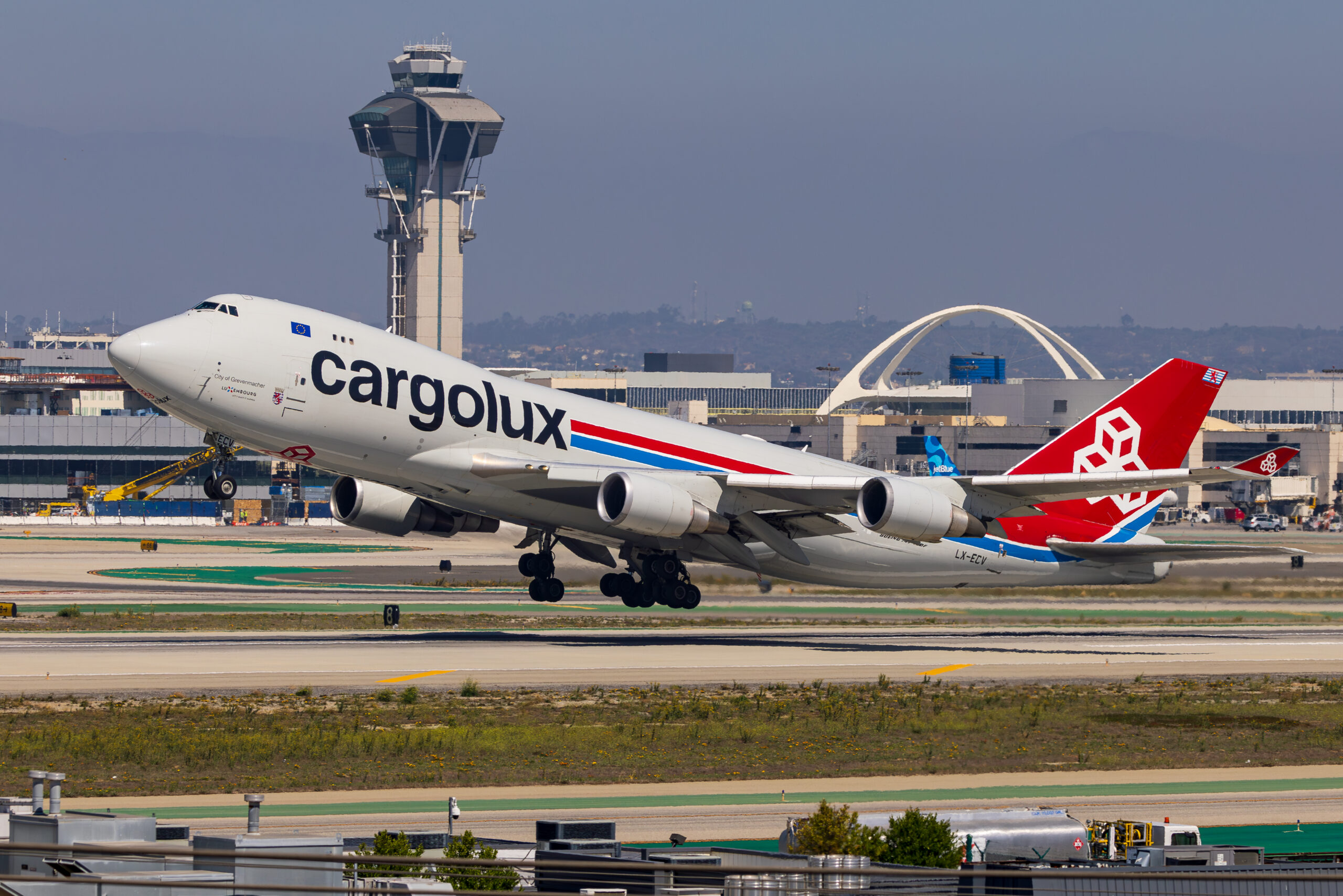
The Boeing 747, the original Jumbo Jet, was the world’s first wide-body airliner: it first flew on 9 February 1969, entered service with Pan Am on 22 January 1970, and by the time the final example was delivered in January 2023, 1,574 had been built and cheap long-haul air travel had become an ordinary fact of life.
No airliner changed flying like the 747. It was conceived in a hurry, built in a factory that did not exist when the contract was signed, nearly bankrupted its maker, and then spent half a century as the backbone of long-haul aviation. It carried presidents, space shuttles, race horses and roughly half of humanity’s long-distance dreams. This profile traces the full story: where the aircraft came from, how it works, what it did in service, every major variant, where you can stand under one today, and how to photograph the survivors and the dwindling active fleet while you still can.
What this guide covers
- Origins and development
- Design: why the 747 looks the way it does
- Service history: the aircraft that shrank the world
- Variants: from 747-100 to 747-8
- The strange jobs: shuttles, presidents and telescopes
- Records, firsts and oddities
- Inside the cabin
- Flying it: from flight engineer to glass cockpit
- The freight Queen
- The 747 in British service
- Programme milestones
- Where to find preserved 747s today
- Specifications
- Photographing the Boeing 747 today
- Legacy
- Frequently asked questions
Origins and development
The 747 began as a customer demand, not a Boeing idea. By the mid 1960s the Boeing 707 had proven the jet airliner formula, and Pan American World Airways, its most influential customer, wanted something far bigger. Pan Am pressed Boeing for a jet roughly two and a half times the size of the 707, with the goal of cutting seat costs by around thirty per cent. Juan Trippe’s airline believed passenger volumes would keep climbing, and it wanted to own that future. In April 1966 Pan Am ordered 25 of the new type, committing to an aircraft that existed only on paper.
Boeing handed the project to Joe Sutter, an engineer pulled off the 737 programme in 1965. Sutter’s team, later celebrated as “the Incredibles”, designed and built the largest airliner the world had seen in roughly 28 months, an achievement that remains startling by any era’s standards. The aircraft needed an engine that did not yet exist either: in late 1966 Pratt & Whitney agreed to develop the JT9D, a high-bypass turbofan of unprecedented scale, to power it.
There was also nowhere to build it. Boeing constructed an entirely new factory at Paine Field in Everett, north of Seattle, raising the world’s largest building by volume around the first airframes as they took shape inside it. The first 747 rolled out of Everett on 30 September 1968, wearing the logos of the 26 airlines that had ordered it. First flight came on 9 February 1969 with test pilots Jack Waddell and Brien Wygle at the controls, certification followed in December 1969, and Pan Am flew the first commercial service, New York to London, on 22 January 1970.
The gamble very nearly broke the company. Development costs were enormous, the JT9D suffered serious teething problems that left finished airframes parked engineless at Everett, and the early 1970s downturn cut airline orders to a trickle. Boeing survived, but the margin was thin, and the episode remains one of the great bet-the-company stories in industrial history.
Design: why the 747 looks the way it does
Every recognisable feature of the 747 traces back to a practical decision. The famous hump exists because Boeing expected the aircraft to be superseded. In the late 1960s the industry believed supersonic transports would take over passenger flying, so the 747 was designed to convert readily into a freighter. That meant loading cargo straight through the nose, which meant putting the cockpit somewhere else: on top. The raised flight deck created a short upper deck behind it, which airlines initially used as a lounge and later filled with seats as the hump grew through successive variants.
Below the hump sat the revolution that mattered: the first twin-aisle cabin. The wide body seated economy passengers ten abreast and transformed the economics of every seat mile. A typical three-class 747 carried 366 passengers, with hundreds more possible in denser layouts. The wing was swept at a pronounced 37.5 degrees, giving a Mach 0.85 cruise, and the aircraft’s great weight rode on four main landing gear bogies of four wheels each, spreading the load so the giant could use existing runways.
Power came first from the Pratt & Whitney JT9D, with General Electric CF6 and Rolls-Royce RB211 options following on the classic variants, the PW4000 joining on the 747-400, and the General Electric GEnx, developed for the 787, powering the final 747-8 generation. That engine flexibility kept three of the world’s great engine makers attached to the programme across its life and gave airlines room to standardise fleets around their preferred supplier.
Structurally the aircraft was conservative where it counted. Four engines, generous wing area and multiply redundant systems made the 747 a reassuring machine for the long overwater routes it was built to fly, decades before twin-engine extended range operations existed in their modern form. Much of what the type pioneered in scale, from terminal gates to catering logistics to air bridge design, quietly reshaped airport infrastructure worldwide.
Service history: the aircraft that shrank the world
Pan Am’s first scheduled 747 service left New York for London on 22 January 1970, and the world’s airlines spent the following decade queueing to follow. The type’s effect on air travel was structural rather than incremental. Seat costs fell as capacity soared, fares followed, and intercontinental flying stopped being the preserve of the wealthy. The aircraft that had been designed as a stopgap before the supersonic age instead defined its era so completely that the supersonic age never commercially arrived, a story we tell from the other side in our Concorde history.
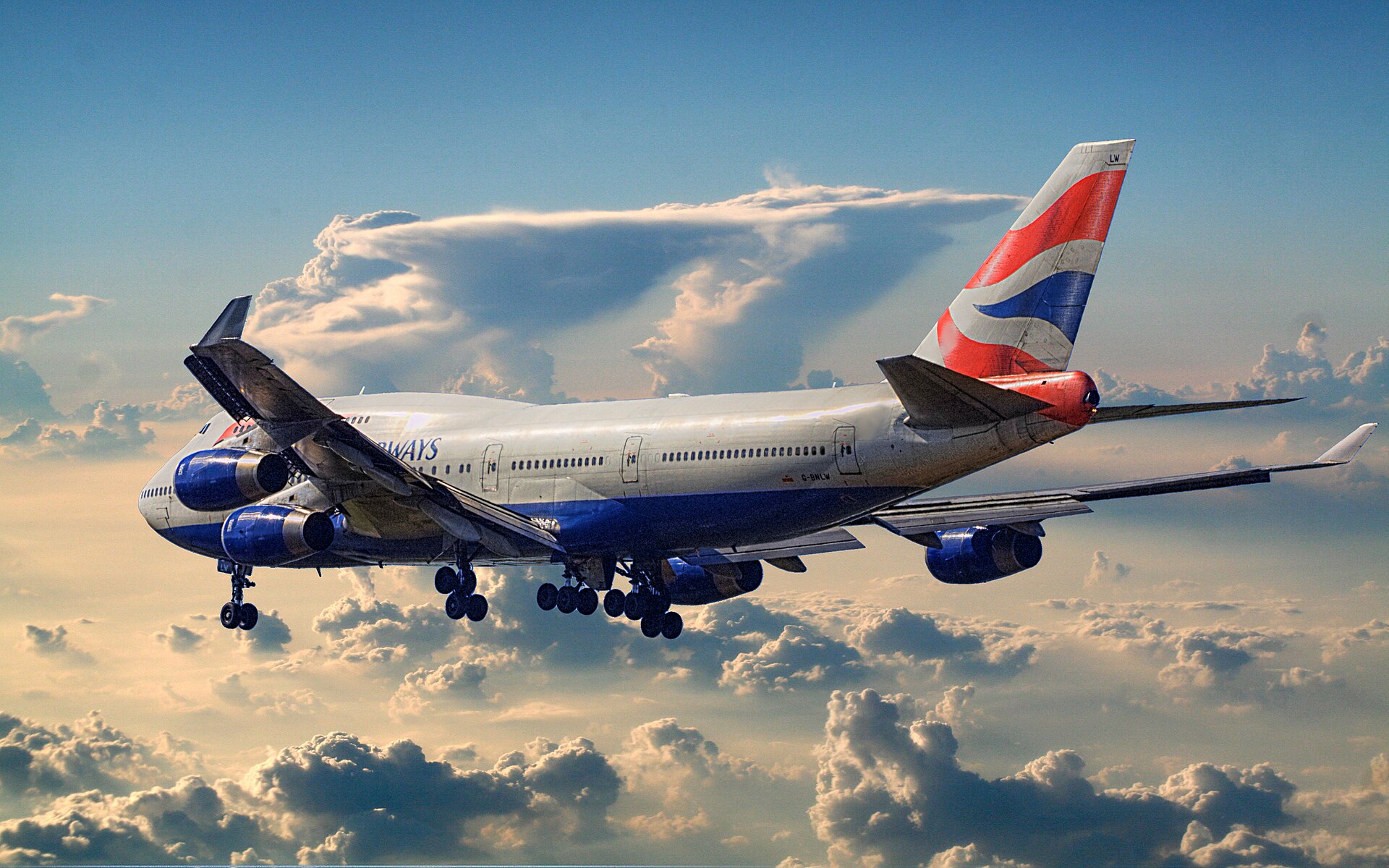
Through the 1970s and 1980s the 747 became the flagship of virtually every major international carrier. British Airways built the world’s largest 747-400 fleet and kept the type at the centre of its long-haul network for three decades. Japanese domestic operators flew high-density short-range versions carrying over 500 passengers on shuttle routes. Freight operators discovered that the nose door and vast main deck made the 747 the backbone of global air cargo, a role in which the type remains dominant today. Boeing delivered the 500th aircraft in 1980 and the 1,000th, to Singapore Airlines, in 1993, a production milestone no other wide-body had approached at the time.
The type’s later passenger career wound down in stages. The Airbus A380 took the size crown in the 2000s, but the deeper threat came from big twins: the 777, A330 and later the 787 and A350 could fly the same routes with two engines and far better economics per trip. Airlines retired 747 passenger fleets steadily through the 2010s, and the pandemic accelerated the endings: British Airways retired its entire remaining 747 fleet in 2020. Production finished with the freighter. The last 747, a 747-8F for Atlas Air, rolled off the Everett line on 6 December 2022 and was delivered on 31 January 2023, closing a 54 year production run of 1,574 aircraft.
Yet the Queen has not left the sky. As of 2026, Lufthansa remains the largest passenger operator with a substantial 747-8 and 747-400 fleet centred on Frankfurt, though it has said it will retire the 747-400 during 2027, leaving the 747-8 as its only passenger jumbo, joined by Korean Air with 747-8s and Air China with both 747-8s and 747-400s, while Rossiya retains 747-400s outside scheduled service. The freighter fleet is far larger, with UPS, Cargolux, Atlas Air, Kalitta and others working 747Fs hard across the world’s cargo trunk routes, and Boeing expects the type to serve for decades yet in that role.
The 747 also spent its life seeing off rivals. The trijet widebodies, Lockheed’s L-1011 TriStar and the McDonnell Douglas DC-10, competed underneath it rather than against it, and neither approached its sales. The Airbus A380, the only aircraft ever to exceed it in passenger capacity, arrived thirty five years later into a market already turning toward twins and ended production before the 747 did. Being first mattered: airports, freight systems and passenger expectations had all been built around the Jumbo, and the aircraft that shaped the infrastructure is hard to displace from it.
Variants: from 747-100 to 747-8
747-100 and 747-200
The original 747-100 established the shape and the revolution, with a maximum take-off weight of 735,000 lb and a range of around 4,620 nautical miles. The 747-200, introduced in 1971, brought uprated engines and an 833,000 lb maximum weight, stretching range to roughly 6,560 nautical miles and making true one-stop round-the-world networks practical. Passenger, freighter, convertible and Combi versions followed, the last carrying passengers and main-deck cargo simultaneously.
747SP
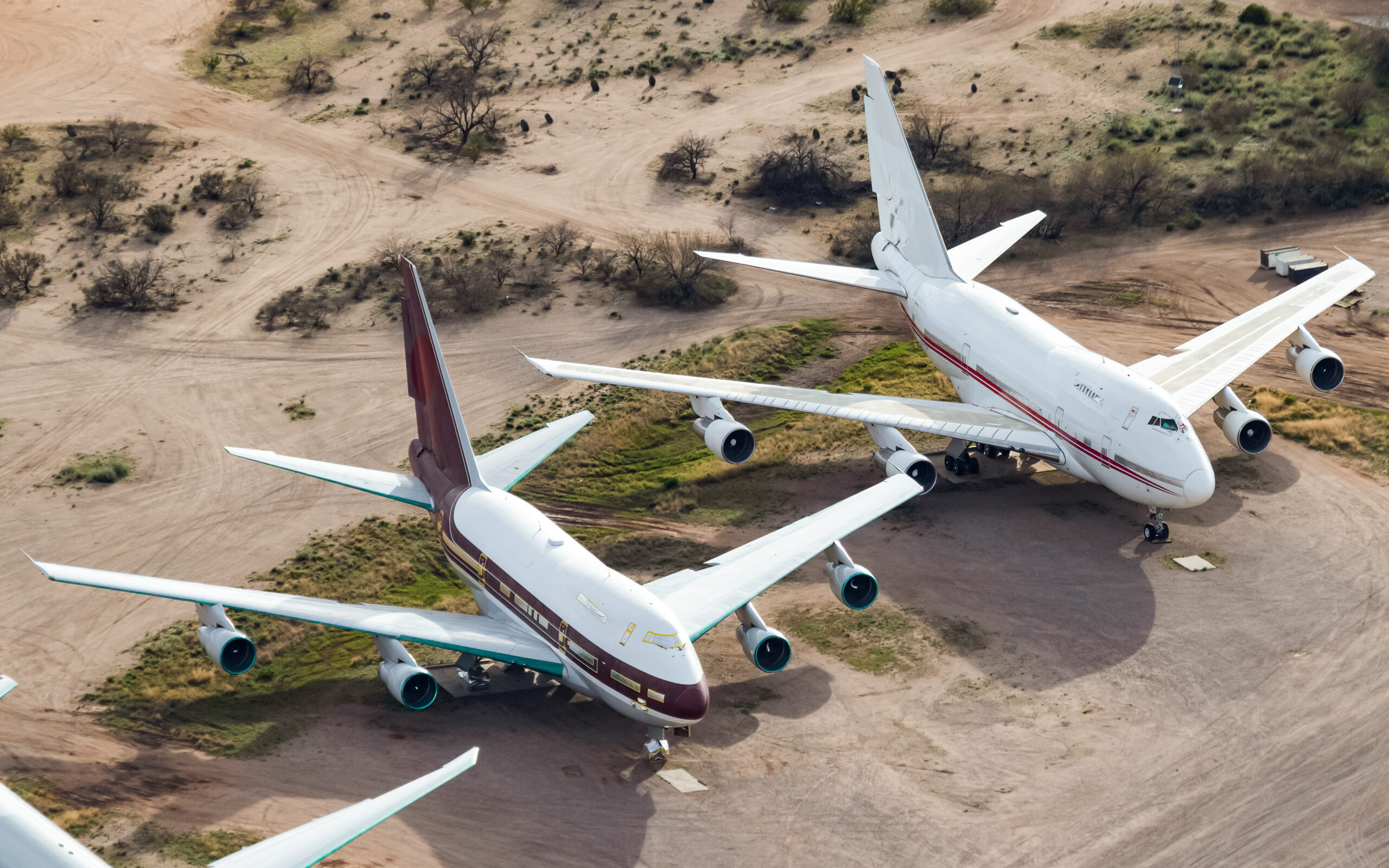
The Special Performance model of 1976 cut the fuselage by over 14 metres to create an ultra-long-range variant that could fly higher, faster and farther than any 747 of its day, linking city pairs like New York and Tokyo nonstop years before any other airliner could. Only 45 were built, making the SP a collector’s item for photographers even in its heyday.
747-300
The 747-300 of 1983 introduced the stretched upper deck, adding capacity to around 400 seats in three classes. It sold modestly, because a far better idea was already coming.
747-400
The definitive 747. First flown on 29 April 1988 and in service with Northwest Airlines from 9 February 1989, the -400 combined the stretched upper deck with a two-crew glass cockpit that eliminated the flight engineer, a new wing with winglets spanning 64.4 metres, improved RB211, CF6 and PW4000 engine options, and a range of some 7,260 nautical miles at an 875,000 lb maximum weight. It became the best selling 747 variant by a wide margin and the standard long-haul heavy of the 1990s and 2000s.
747-8
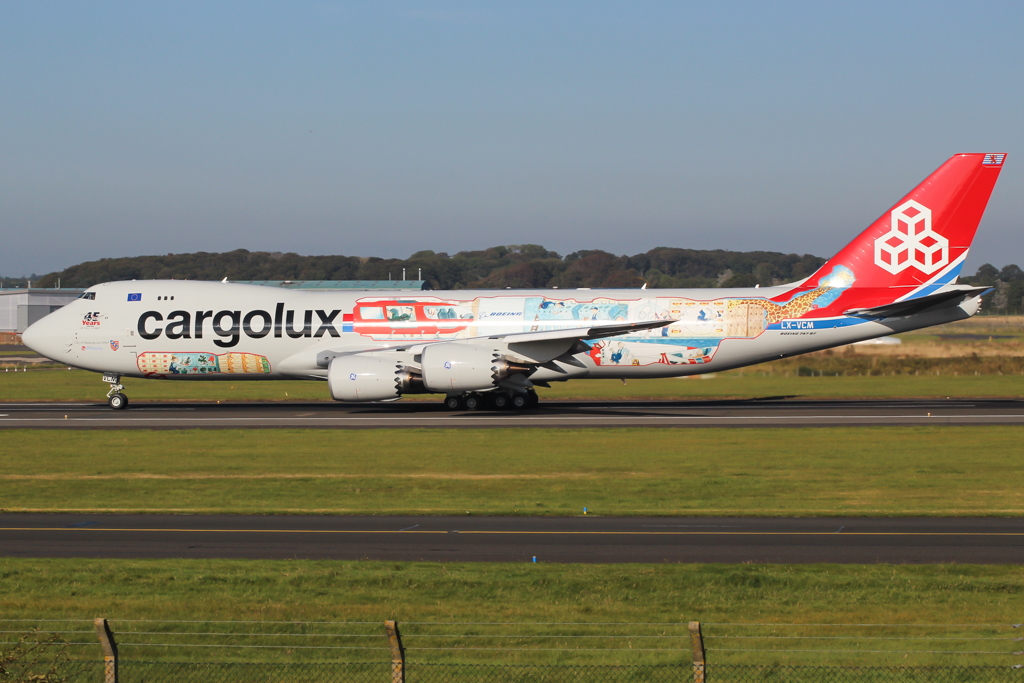
Launched in November 2005 and powered by the 787’s GEnx engine technology, the 747-8 stretched the fuselage to 76.25 metres, which made it the world’s longest airliner in service, a title it will lose to the 777-9 once that aircraft is delivered, with a maximum take-off weight of 987,000 lb, the heaviest aircraft ever built in the United States. The freighter flew first, on 8 February 2010, and Cargolux took the first delivery in October 2011; Lufthansa received the first passenger 747-8 Intercontinental on 1 May 2012. Most 747-8 sales were freighters, and the variant closed the programme in 2023.
The strange jobs: shuttles, presidents and telescopes
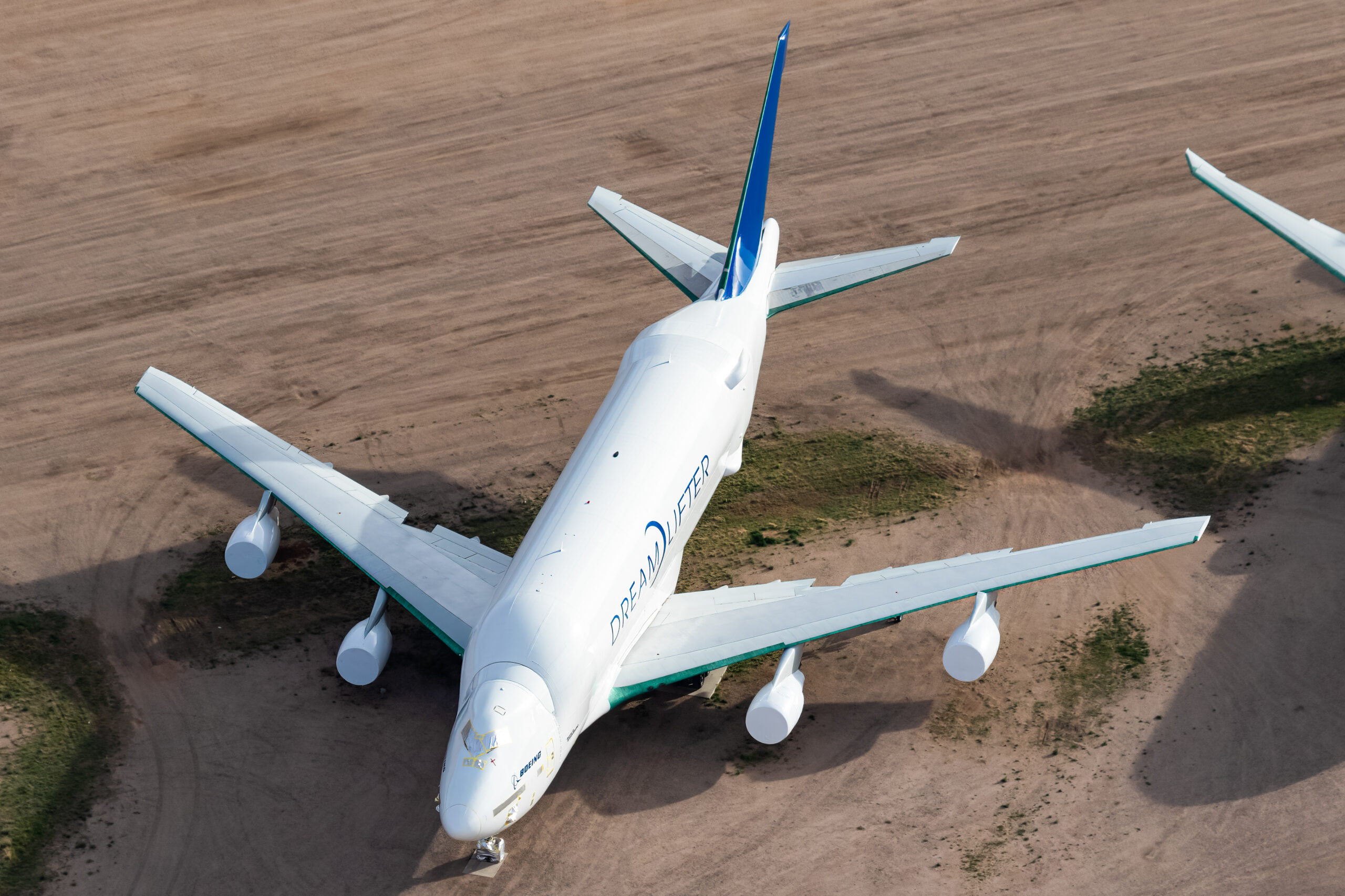
No airliner has moonlighted like the 747. Two 747-100s became NASA’s Shuttle Carrier Aircraft, ferrying Space Shuttle orbiters across the United States on their backs. Two 747-200Bs were converted into VC-25As, the aircraft the world knows as Air Force One, delivered in 1990 and still serving while their 747-8 replacements are completed. The E-4 series serves as the US Air Force’s airborne command post. Boeing built the swollen Dreamlifter conversion to fly 787 components between factories, the YAL-1 tested an airborne laser in the 747’s nose, and SOFIA, a 747SP fitted with a 2.7 metre telescope and a hole in its fuselage, spent a decade flying infrared astronomy missions for NASA and the German space agency. A converted 747 has even fought wildfires as the Global Supertanker.
Inside the cabin: how the 747 changed the passenger experience
Stepping aboard a 747 in 1970 was unlike boarding any aircraft before it. The twin-aisle cabin removed the tube-like feel of the narrowbodies, ceilings lifted, and the sheer width let airlines think about interior architecture rather than mere seating. The most famous flourish sat at the front: a staircase, spiral in the early aircraft, climbing to the upper deck lounge. First class passengers of the early 1970s could take a cocktail upstairs in a space that airlines dressed as pianos bars, restaurants and clubrooms, an era of flying that photographs from the period still make look implausible.
Economics gradually reclaimed the romance. Lounges gave way to revenue seats, the upper deck stretched in the -300 and -400 to hold dozens of passengers, and ten-abreast economy became the template for mass long-haul travel. But the 747 kept cabin advantages to the end: the upper deck became a favourite of frequent flyers for its cabin-within-a-cabin intimacy, and the nose section ahead of the stairs, with no galleys or gear beneath it in passenger trim, remained one of the quietest first class cabins in the sky. Crews loved the aircraft with a devotion no spreadsheet explains, and the 747’s retirement events at airline after airline drew emotions usually reserved for people, not machines.
The passenger experience mattered photographically too, because it built the public’s relationship with the aircraft. No other airliner draws crowds to a fence line on its farewell flight quite like a 747, and that affection is part of why preserved examples keep finding volunteers, visitors and funding.
Flying it: from flight engineer to glass cockpit
The classic 747 flight deck was a three-person operation, with a flight engineer managing fuel, systems and those four thirsty engines from a panel of dials behind the pilots. The aircraft earned a reputation as a big, honest machine: stable in the cruise, forgiving in the flare thanks to that towering cockpit height and long-travel main gear, and demanding mostly in its sheer momentum. Crews learned to fly the main wheels, sixteen of them, onto the runway far behind and below where instinct suggested.
The 747-400 modernised the job completely. The two-crew glass cockpit replaced the flight engineer with automation, six display screens replaced most of the dial forest, and a full flight management system brought the type into the digital era. The -400 also introduced carbon brakes and gave pilots instrumentation refinements as simple and welcome as displayed tyre pressures. For airlines the change cut crew costs at a stroke; for pilots it turned the world’s biggest airliner into an aircraft two people could operate across fourteen time zones. The 747-8 carried the same philosophy further with technology borrowed from the 787 programme.
Ask pilots what they will miss and the answers repeat: the view from the top deck taxiing above every other aircraft on the field, the authority of four engines set to take-off thrust, and the way the aircraft announced its arrival to everyone watching. Few types have been mourned by their crews while still in service. The 747 has been, for years.
The freight Queen: why cargo kept the 747 alive
The design decision that gave the 747 its hump also gave it a second career bigger than most airliners’ first. Because the flight deck sits above the main deck, freighter versions load through an upward-hinging nose door straight down a cavernous, straight-through main deck. Outsized cargo that fits no other airframe, from drilling equipment to satellites to whole helicopters, goes aboard a 747F through the front. Purpose-built freighters and passenger conversions kept the Everett line busy through downturns that would otherwise have closed it, and the final 747 generation sold overwhelmingly as freighters.
The economics explain the loyalty. Air freight pays for volume, payload and reliability rather than fuel-burn perfection, and the 747F carries around 130 tonnes of structured payload with a global support network behind it. When passenger 747s were being parked in deserts through the 2010s, freighter utilisation stayed high, and the air cargo surge of the early 2020s pushed the fleet harder than ever. This is why a photographer’s best odds of a 747 in 2026 are at cargo airports: Anchorage, where transpacific freighters technical-stop in droves, Luxembourg, Liege, Cincinnati, Louisville, Miami, Hong Kong and Seoul. The type that democratised passenger flight now moves a startling share of the world’s urgent goods, and it will be a freighter that flies the last ever 747 service, whenever that distant day comes.
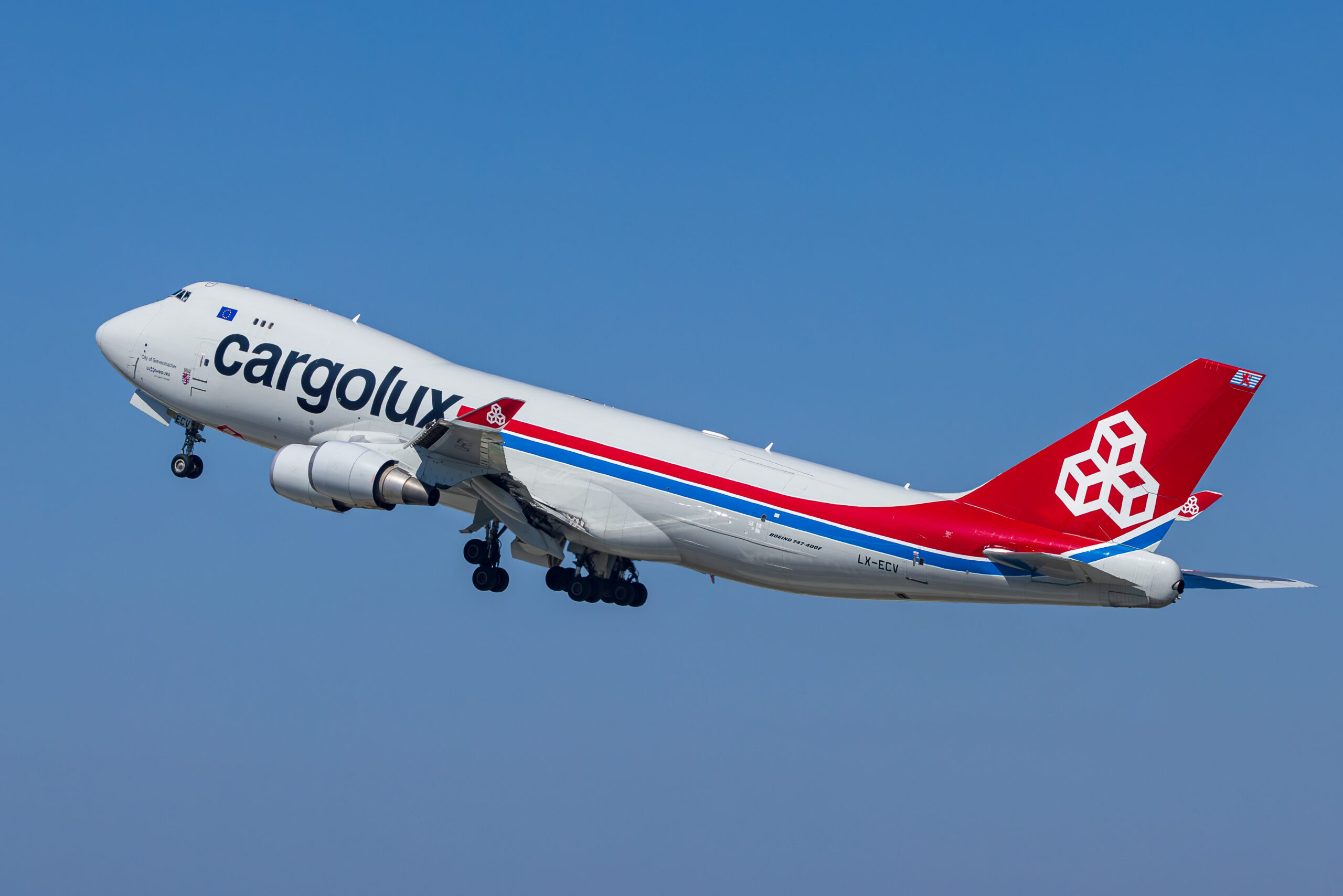
Freight also preserved the classic shapes longest. Nose-door -200Fs soldiered on for decades after passenger classics retired, and the -400F and -8F will do the same. For anyone building a photographic record of the type, the cargo ramp is where the living history is.
The 747 in British service
Britain’s relationship with the 747 ran deeper than most. BOAC introduced the type at the start of the 1970s, and its successor British Airways went on to operate more 747-400s than any other airline, with the type anchoring the Heathrow long-haul network for three decades. Generations of British travellers made their first long-haul flights on a BA Jumbo, and the aircraft became so associated with the airline that its centenary heritage repaints in 2019, including the 1970s Negus scheme, were applied to 747-400s as a matter of course.
The ending came abruptly. The 2020 collapse in long-haul traffic made the economics unanswerable, and British Airways announced the immediate retirement of its entire remaining 747 fleet, years ahead of plan. The final departures from Heathrow that autumn drew crowds to the fences despite everything happening in the world at the time. Two of the heritage-liveried aircraft were saved: G-CIVB in Negus colours at Cotswold Airport and G-BNLY in the Landor scheme at Dunsfold Aerodrome in Surrey, keeping complete British Airways Jumbos on British soil for photographers and enthusiasts. The BOAC-liveried G-BYGC was less lucky: preserved at St Athan in Wales at first, it was eventually scrapped, a reminder that a Jumbo’s survival is never guaranteed.
Virgin Atlantic flew the type too, its 747-400s in the airline’s flamboyant liveries a fixture at Gatwick and Manchester until their own pandemic-era retirement. For British aviation photographers of a certain age, the 747 is simply what a long-haul airliner looks like, and the fence lines at Heathrow have never fully adjusted to its absence.
Programme milestones
| Date | Milestone |
|---|---|
| April 1966 | Pan Am orders 25 aircraft, launching the programme |
| 30 September 1968 | First 747 rolls out at the new Everett factory |
| 9 February 1969 | First flight, with Jack Waddell and Brien Wygle at the controls |
| 22 January 1970 | First commercial service, Pan Am New York to London |
| 1976 | Ultra-long-range 747SP enters service |
| 1980 | 500th aircraft delivered |
| 29 April 1988 | 747-400 first flight; service with Northwest follows in February 1989 |
| 1990 | VC-25A presidential aircraft delivered |
| 1993 | 1,000th 747 delivered, to Singapore Airlines |
| 14 November 2005 | 747-8 launched with GEnx engines |
| 8 February 2010 | 747-8 Freighter first flight; Cargolux delivery October 2011 |
| 1 May 2012 | First passenger 747-8 delivered to Lufthansa |
| October 2020 | British Airways completes retirement of its 747 fleet |
| 6 December 2022 | Final 747 rolls off the Everett line |
| 31 January 2023 | Last delivery: a 747-8F to Atlas Air, aircraft number 1,574 |
Records, firsts and oddities
The 747’s fact file reads like a list of things aircraft are not supposed to do. Its factory remains the largest building in the world by usable volume. It made its public debut at the Paris Air Show in 1969 with queues stretching across the static park, and thirty years later the United States Postal Service put it on a stamp after a public vote ranked the Jumbo among the most significant technological achievements of the twentieth century. In 1989 the first Qantas 747-400 flew London to Sydney nonstop on its delivery flight, a distance record for a commercial airliner at the time, and the airframe that did it is the one now preserved at Albion Park. In 2011 a 747-8F crossed the Atlantic to Paris with all four engines burning a sustainable fuel blend, the first transatlantic flight of a large commercial aircraft powered that way.
The oddities keep going. A 747 has flown with five engines, ferrying a spare in a pod under the wing, a capability built into the classic variants. One spent its career with a telescope looking out of a hole in its pressure hull. Two spent decades giving space shuttles piggyback rides. Another dumps fire retardant on wildfires. It is hard to name a job aviation has invented that someone has not, at some point, handed to a 747.
Where to find preserved 747s today
For an aircraft built in such numbers, complete preserved 747s are rarer than you might expect, because scrapping a Jumbo is profitable and moving one is monstrous. These are the standout survivors for a photographer planning a pilgrimage, each preserving a different chapter of the story, and each photogenic in a completely different way: a bare-metal test veteran, an airline flagship in heritage colours, a record holder in the southern hemisphere and a museum piece displayed like sculpture.
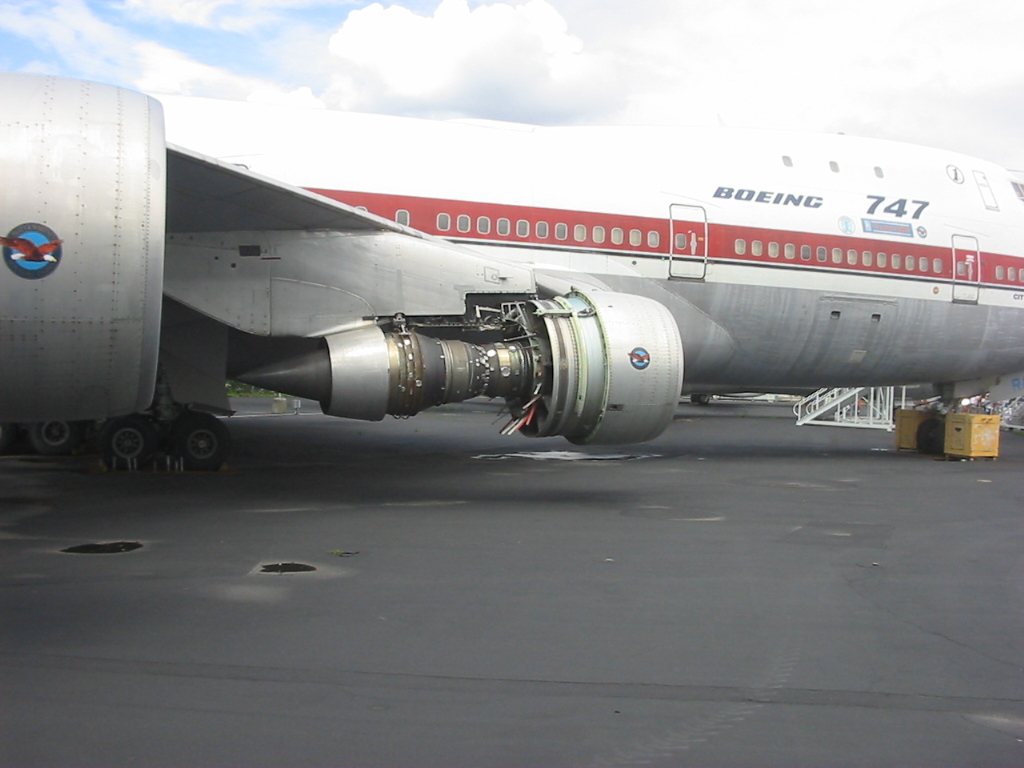
The first of them all. RA001, the prototype City of Everett, lives in the Aviation Pavilion at the Museum of Flight in Seattle, still in its 1969 flight-test colours. After certification work it served Boeing for decades as an engine testbed, including for the PW4000 that would power the 777, before its final flight on 6 April 1995 delivered it to the museum with just 5,300 hours flown. It was extensively restored in 2013 and 2014 and you can walk through its test-instrumented interior.
Britain’s Jumbo. G-CIVB, a British Airways 747-400 repainted in the airline’s 1970s Negus heritage livery for BA’s centenary, is preserved at Cotswold Airport near Kemble in Gloucestershire. It arrived in October 2020 as BA retired the fleet and opened to visitors in 2022. For UK photographers it is the most accessible complete 747 in the country, and the airport runs regular access events.
The record breaker. VH-OJA City of Canberra, the first Qantas 747-400, is displayed at the HARS Aviation Museum at Albion Park south of Sydney. On its 1989 delivery flight it flew London to Sydney nonstop, a world record for a commercial airliner at the time. Qantas donated it to the museum in 2015.
The one on stilts. The Technik Museum Speyer in Germany displays a Lufthansa 747-200 mounted high in the air on steel supports, reached by external stairs, with even the cargo deck and a wing walkway open to visitors. The airframe served Lufthansa for over two decades before retirement, and its journey to the museum in 2002 involved floating the fuselage down the Rhine on pontoons.
Beyond these, 747s survive at museums and airports from Arizona’s desert collections to Asia, and several VC-25 and E-4 airframes will eventually join them. But the four above give a photographer the full arc: the prototype, the British flagship, the record setter and the most theatrical display in aviation.
Specifications
| Variant | First flight | Max take-off weight | Typical range | Notes |
|---|---|---|---|---|
| 747-100 | 9 February 1969 | 735,000 lb (333 t) | 4,620 nmi | First wide-body airliner; JT9D engines |
| 747-200 | 1970 (service 1971) | 833,000 lb (378 t) | 6,560 nmi | Uprated engines; freighter and Combi versions |
| 747SP | 1975 (service 1976) | Shortened airframe | Longest range of its day | 45 built; ultra-long-range special |
| 747-300 | 1982 (service 1983) | 833,000 lb (378 t) | Similar to -200 | Stretched upper deck, about 400 seats |
| 747-400 | 29 April 1988 | 875,000 lb (397 t) | 7,260 nmi | Glass cockpit, two-crew, 64.4 m winglet wing; best seller |
| 747-8 | 8 February 2010 (F) | 987,000 lb (447 t) | Longest 747 | 76.25 m long; GEnx engines; final variant |
Across all variants the type held its defining numbers: a 37.5 degree wing sweep, Mach 0.85 cruise, four engines and a sixteen-wheel main undercarriage. Total production reached 1,574 aircraft between 1968 and 2023, including the prototype.
Photographing the Boeing 747 today
Photographing the Queen in 2026 is an exercise in going where she still works. Frankfurt is the world capital of passenger 747 photography, with Lufthansa’s -8s and -400s arriving and departing all day and several well-known public spotting positions around the field. Seoul Incheon offers Korean Air’s 747-8s, and Air China’s work through Beijing. For freighters, the great cargo hubs deliver: Anchorage above all, where 747Fs from multiple carriers stack up on the ramp, plus Luxembourg for Cargolux, Cincinnati and Louisville for the integrators and Hong Kong for the Asian trunk routes.
The photographic problems are airliner problems, covered in depth in our airliner photography guide: heat haze off the runway, exposure against bright sky, and the discipline of shooting arrivals with the light rather than against it. The 747 adds its own rewards. Its size means slower apparent speed and easier tracking than any narrowbody, and its shape reads instantly even in silhouette, which makes backlit and golden hour work unusually productive; our golden hour guide applies almost verbatim. Give the aircraft room in the frame: the hump line, the wing dihedral under load and the sixteen-wheel gear at rotation are the details that separate a 747 photograph from a generic airliner shot. If you are starting out around airports, our plane spotting guide covers the fieldcraft.
Settings for an active 747 are gentle by fast jet standards. Shutter speed needs only to beat the long lens you are holding, so 1/800s to 1/1250s covers departures and arrivals with margin, and there is no propeller to blur. The interesting decisions are compositional. A 70-200mm handles most runway distances at the big hubs because the aircraft is so large, a 100-400mm earns its place for taxiway details and heat-haze-limited distant work, and the wide end matters more than photographers expect: a 747 at the gate with handlers, loaders and fuel trucks around it is an environmental picture worth making before the type disappears. Overcast days suit the classic liveries, low sun models that nose profile like nothing else in the sky, and night ramps at cargo hubs, shot from public positions, give the freighter fleet the drama its schedule mostly hides. Caption everything with registration, variant, operator, location and date; in ten years those keywords will be doing real work in an archive.
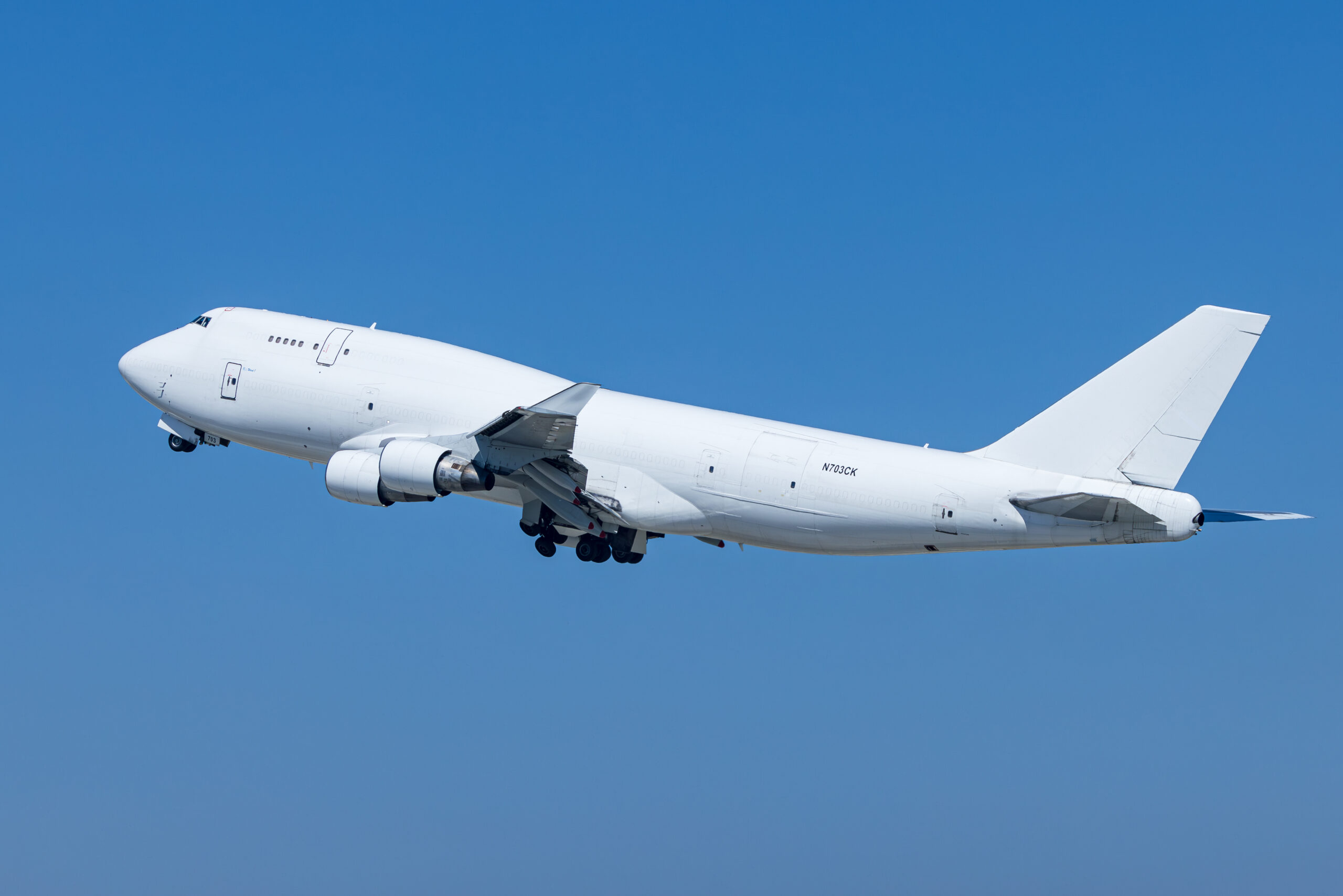
There is also a third category between active and preserved: the storage yards of the American desert. Organised photo flights over fields like Pinal Airpark in Arizona put stored 747s directly below your lens, which is how the Dreamlifter and 747SP aerials in this article, photographed by our colleagues at Aviation Photo Crew, were made. Paul’s own 747 work, like the LAX freighter frames above, is licensable through the Professional Aviation Photography galleries under the terms on the licences page.
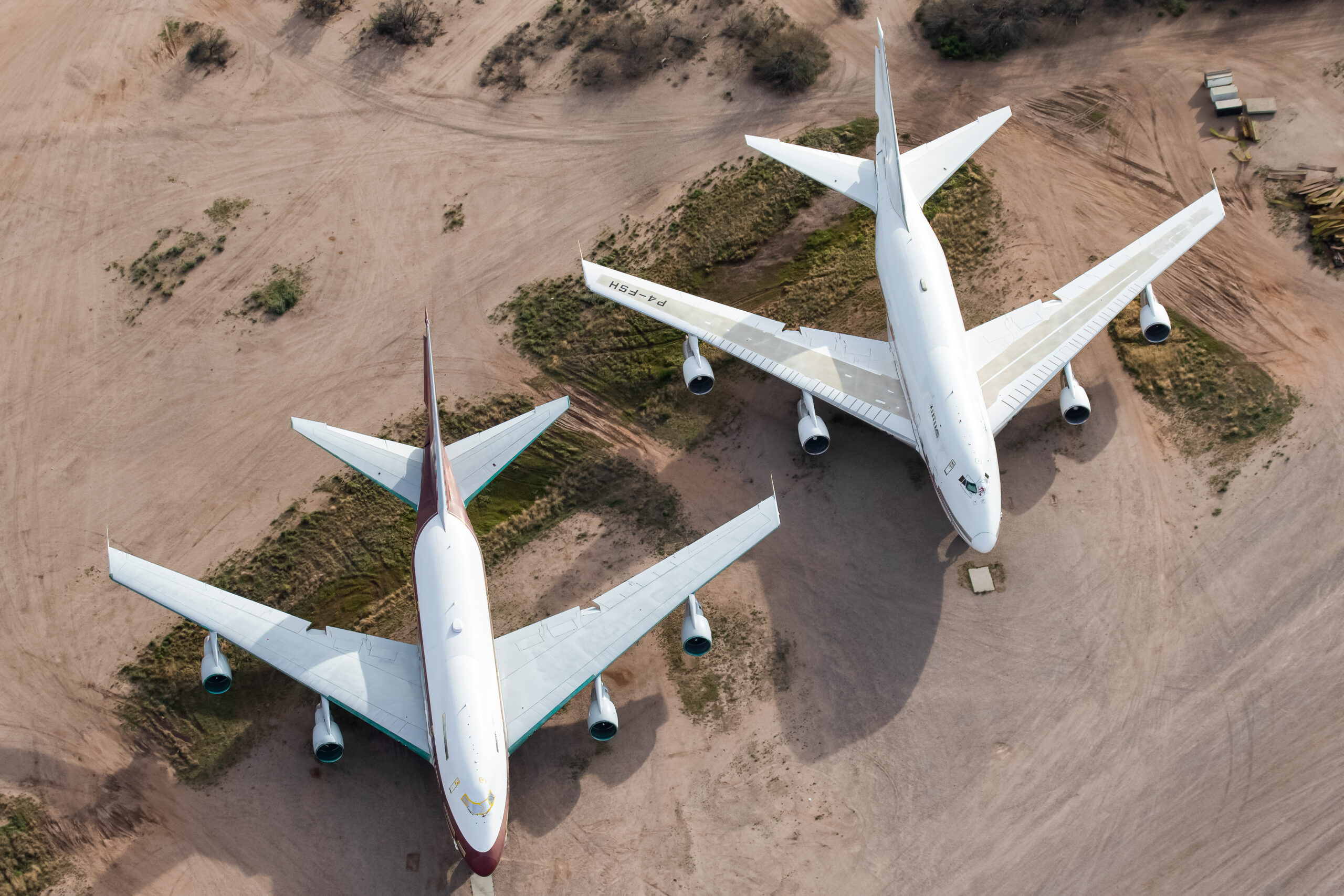
Preserved examples reward a different approach: wide lenses, early light before visitors arrive, and detail studies of the nose gear, engine intakes and flight deck. Museum access days at Cotswold and the walk-through displays at Seattle and Speyer let you shoot interiors that no active airline would ever show you.
Legacy
The 747’s legacy is the modern world’s assumption that anywhere is reachable. It cut the real cost of crossing an ocean so far that mass tourism, global families and just-in-time intercontinental freight all became routine, and it did so while becoming the most recognisable silhouette in aviation. It reshaped airports, drove engine technology two generations forward, and gave Boeing both its greatest risk and its greatest monument. The big twins that replaced it fly further on less fuel, but none of them changed what flying is. The 747 did that, once, completely, and every cheap long-haul ticket since has been flying in its wake. When the last freighters finally retire, decades from now, the type will have served the better part of a century.
The 747 took the volume from an aeroplane that had spent a decade creating it. Our history of the Boeing 707 covers where six-abreast seating, the podded engine and the doors fore and aft on the left all came from.
Frequently asked questions
When did the Boeing 747 first fly?
The first 747 flew on 9 February 1969 from Paine Field in Everett, Washington, with test pilots Jack Waddell and Brien Wygle at the controls. Certification followed in December 1969 and the type entered service with Pan Am on 22 January 1970 on the New York to London route.
Why is the Boeing 747 called the Jumbo Jet and the Queen of the Skies?
Jumbo Jet was coined because the 747 was the first wide-body airliner, vastly bigger than anything before it. Queen of the Skies grew from its status as the flagship of the world’s international airlines for decades, a nickname Boeing itself embraced for the aircraft.
How many Boeing 747s were built?
Boeing built 1,574 aircraft, including the prototype, between 1968 and 2023. Production ran for 54 years at the Everett factory, and the final aircraft, a 747-8 Freighter, was delivered to Atlas Air on 31 January 2023.
Why does the 747 have a hump?
The cockpit was placed above the main deck so freighter versions could load cargo through an upward-hinging nose door. Boeing expected supersonic airliners to take over passenger flying and designed the 747 for an easy conversion to freight work. The raised flight deck created the upper deck, first used as a lounge and later fitted with seats.
Is the Boeing 747 still flying in 2026?
Yes. Lufthansa is the largest passenger operator, flying both 747-8s and 747-400s, joined by Korean Air, Air China and Rossiya. The freighter fleet is much larger, with operators including UPS, Cargolux, Atlas Air and Kalitta, and 747 freighters are expected to fly for decades yet.
What was the fastest and heaviest 747?
All 747s cruise at around Mach 0.85, among the fastest subsonic airliners. The heaviest variant is the 747-8, with a maximum take-off weight of 987,000 lb, which makes it the heaviest aircraft of any kind ever built in the United States. At 76.25 metres it was also the world’s longest airliner when it entered service.
Where can I see a preserved Boeing 747?
The prototype City of Everett is displayed at the Museum of Flight in Seattle. In Britain, G-CIVB wears the 1970s Negus livery at Cotswold Airport and G-BNLY wears the Landor scheme at Dunsfold. The Technik Museum Speyer in Germany mounts a Lufthansa 747-200 high on steel supports, and the record-setting Qantas 747-400 VH-OJA is at the HARS museum south of Sydney.
What replaced the Boeing 747?
Big twin-engine airliners replaced it: the Boeing 777 and 787 and the Airbus A350 fly the same long-haul routes with better fuel economics per trip. The Airbus A380 exceeded the 747’s size but sold in far smaller numbers. In cargo, nothing has fully replaced the 747’s nose-loading capability.
The aeroplane built to take its crown has its own history: the Airbus A380.
