The Canon RF 100-500mm is the best all-round lens you can put on a Canon R-series body for aviation photography, and I think it is worth the £3,159 Wex asks. It is sharp wide open at 500mm, the Dual Nano USM autofocus stays with a fast jet across the crowd line, and at 207.6mm retracted you can carry it all day. One thing to know before you buy an extender for it: with an RF 1.4x or 2x fitted it will only zoom from 300mm to 500mm, and there is a mechanism in the lens to make sure of it.
What is on this page
- The short verdict
- What this review is based on
- The specifications that matter
- What f/4.5 to 7.1 actually means
- How it behaves at an airshow
- How much reach you actually need, in metres
- At the airport fence, where you need less than you think
- Red Flag, Luke and the military fields in between
- Slow shutter speeds and propeller blur
- What you give up
- What to buy, and what it costs
- A short note on the extenders
- Who should not buy this lens
- Settings that suit this lens
- How it compares
- Questions people ask
The short verdict
Buy it. I have used the Canon RF 100-500mm F4.5-7.1L IS USM at airshows, at airports and at military fields, and there is nothing about it that annoys me. It is very sharp. The focus is fast. It is short. Wex wants £3,159, which is a lot of money, and it is a small amount to spend for what you get back.
The rest of this page is the detail, including the thing that decides how much lens aviation photography actually needs, which almost no review works out.
What this review is based on
My own use, and Canon’s own paperwork. I have kept the two apart so you can see which is which.
I have shot this lens at airshows, at airports and at military fields on Canon R-series bodies. Anywhere this page says how the lens behaves, that is me talking. I have not used the RF extenders, so there is only a short note on them at the end and it is other people’s testing, not mine.
Everything else comes from Canon. The specifications, focal lengths, apertures and compatibility statements were read off Canon’s product pages, technical articles and press releases rather than lifted out of another review, and every one is listed at the foot of the page. Canon’s pages contradict each other in two places. I have said so in both, rather than quietly picking whichever number suited the argument.
There is no lab work here. No charts, no MTF, no controlled resolution comparison, because I did not do any. If you want measurements, go to a site with a test bench.
The specifications that matter
| Item | Figure |
|---|---|
| Announced | 9 July 2020, alongside the EOS R5 and R6 |
| Optical construction | 20 elements in 14 groups, with six UD and one Super UD element |
| Maximum aperture | f/4.5 at 100mm, f/7.1 at 500mm |
| Diaphragm | 9 blades |
| Weight | 1,530g with the tripod collar, about 1,370g without it |
| Size | 93.8 x 207.6mm, retracted |
| Filter thread | 77mm |
| Closest focus | 0.9m at 100mm, 1.2m at 500mm |
| Maximum magnification | 0.33x at 500mm |
| Focus motor | Dual Nano USM |
| Stabilisation | 5 stops on its own, 6 stops working with in-body stabilisation on the EOS R5 and R6 |
| Sealing | L-series dust and weather resistant construction, fluorine coating on the front element |
| Price | £3,159 at Wex, 28 August 2026 |
Two of those numbers decide whether you can still hold the thing at four in the afternoon.
It is short. 207.6mm retracted, for a lens that gets to 500mm. I think that is the most underrated thing about it. It goes in a normal bag. You can walk a mile of airfield perimeter with it and still lift it at the end of the day.
It is not heavy and it is not light. 1,530g with the collar on, and anybody telling you a 500mm zoom is light is selling you something. It is 520g under Canon’s own RF 200-800mm though, which is the lens most people put it against, and 520g is what decides whether it comes with you or stays in the car.
What f/4.5 to 7.1 actually means
The name is honest and it is still easy to misread. f/4.5 is not what you shoot at. It is the aperture right at the bottom of the zoom range, and it does not last.
Canon does not publish the ramp. The Digital Picture measured it off the camera’s reported values and gives f/4.5 from 100 to 150mm, f/5 to 253mm, f/5.6 to 362mm, f/6.3 to 471mm, and f/7.1 from 472mm to 500mm. That is one reviewer’s measurement rather than a Canon figure, which is why it is labelled as one here. The shape of it is not in question. f/4.5 has gone before you reach 200mm, and you are at or near f/7.1 everywhere aviation photography actually happens.
So treat it as an f/6.3 to f/7.1 lens with a bright end you will hardly ever point at an aeroplane. Whether that costs you anything comes down to the light.
How it behaves at an airshow
Three things, and they have held on every day I have used it: it is very sharp, it focuses fast, and it does not fall apart when the light goes.
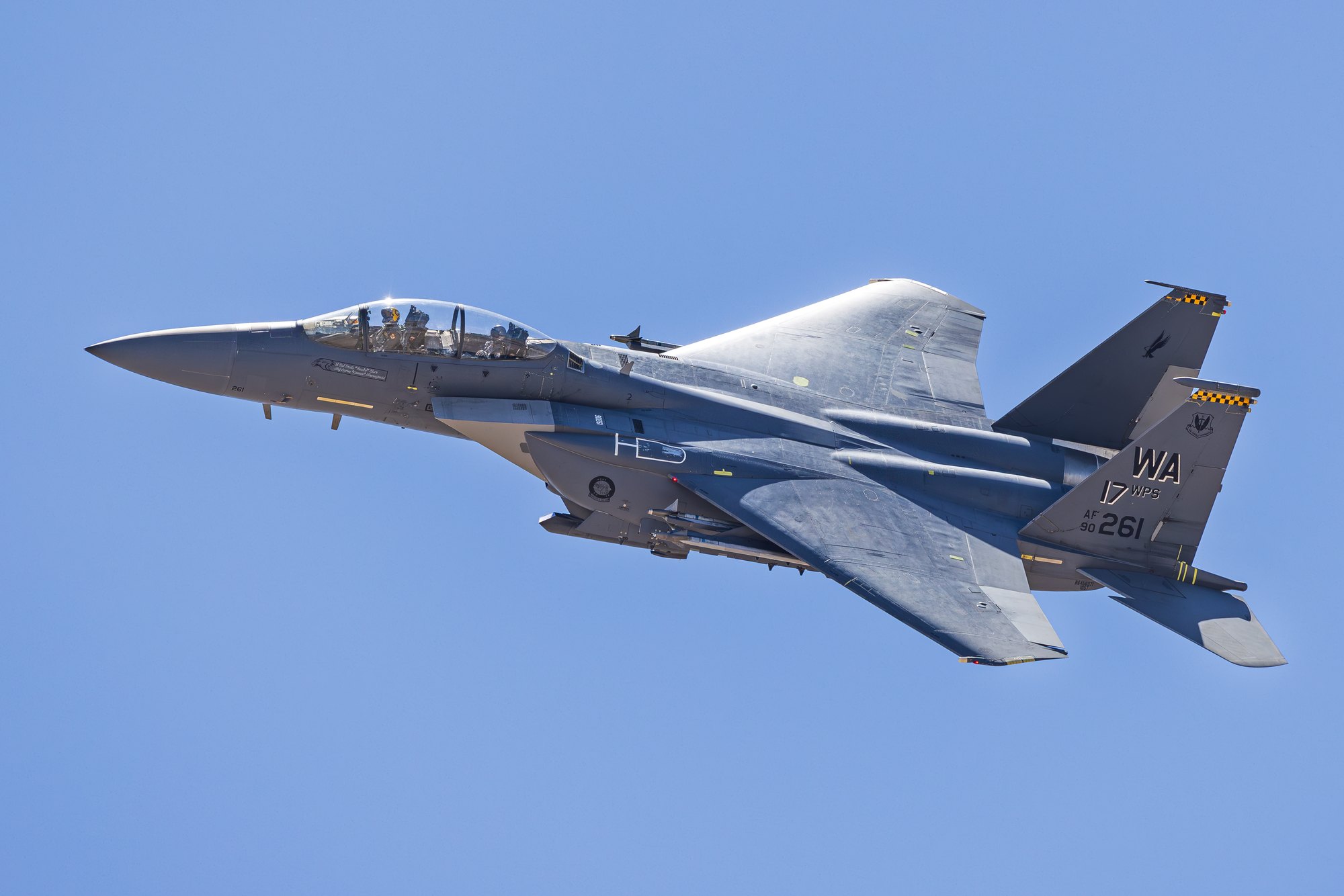
Sharpness is what everybody asks about a zoom that reaches 500mm at this price. Wide open at the long end, on Canon R-series bodies, the frames come back needing no apology. I have never had to work around a soft corner with it, or stop down a stop first to be safe.
The measured reviews broadly agree with that and they are not unanimous, so here is where they land. Dustin Abbott’s chart testing found “incredibly consistent performance at every tested focal length with no real drop-off”, and “very little difference between the wide open performance from the lens and when it was stopped down”. OpticalLimits rates 100 to 200mm as “excellent centre and a very good to excellent outer image field”, with “a slight decrease in quality but the quality is still very high” by 350mm. Against that, Thom Hogan says that at 500mm the “centre is very good, and again the corners are only fair”, and Amateur Photographer agrees that “corners at 500mm underperform compared to wider zoom settings”.
Both camps agree the centre holds up all the way to 500mm. The argument is about the corners at full zoom, and for aviation work the corners are sky.
The autofocus is the other half of it, and it is super fast. The Dual Nano USM drives the focus group quickly and almost silently, and it stays with a fast jet crossing the display line. Digital Camera World found the same thing and put a number on the improvement that came with better bodies: on the original EOS R their hit rate was “we missed more than we hit”, and on the R5 “our hit rate went up to practically 100 per cent”. If you are reading a 2020 review of this lens, check which body it was shot on, because that one variable moves the result more than anything about the lens.
How much reach you actually need, in metres
This is the part almost every review skips, and it is what decides whether 500mm is the right amount of lens for what you shoot. It is not a matter of opinion. The distances are set by regulators and the aircraft are the size they are.
An airliner is four times the size of a fighter and it comes four times closer. That is the whole of it. At an airport the 100-500mm is not merely adequate, it is more lens than you need. At a military airfield it is exactly right. At an airshow crowd line, photographing fast jets, 500mm is where you start cropping.
Take the fighter first. The FAA’s air show special provisions put fast jets in Category I, aircraft “that operate at speeds of more than 245 knots”, and require that they “perform aerobatic maneuvers no closer than 1,500 feet horizontally from a single spectator area”. That is 457 metres. The UK is almost identical by a different route: CAP 403 sets 230 metres as standard and 450 metres for an aircraft above 300 knots with its velocity vector towards the crowd.
Now the arithmetic. A full-frame sensor is 36mm wide, so a 500mm lens sees 36/500 of the distance across the frame. At 457 metres that is 32.9 metres of horizontal view.
| Aircraft | Length | At 500mm | Cropped to fill |
|---|---|---|---|
| F-16 Fighting Falcon | 14.8m | 45% of the frame | about half the pixels thrown away |
| F-35A Lightning II | 15.7m | 48% | the same |
| Eurofighter Typhoon | 16.0m | 48% | the same |
| F/A-18E Super Hornet | 18.5m | 56% | a gentler crop |
An F-16 at 500mm from the minimum legal distance is under half the frame wide. That is a photograph with a lot of sky in it, and it is why fast jets at a display are the one job where you crop. On a 45 megapixel R5 there is room to do it, which is a large part of why this lens and that body work so well together.
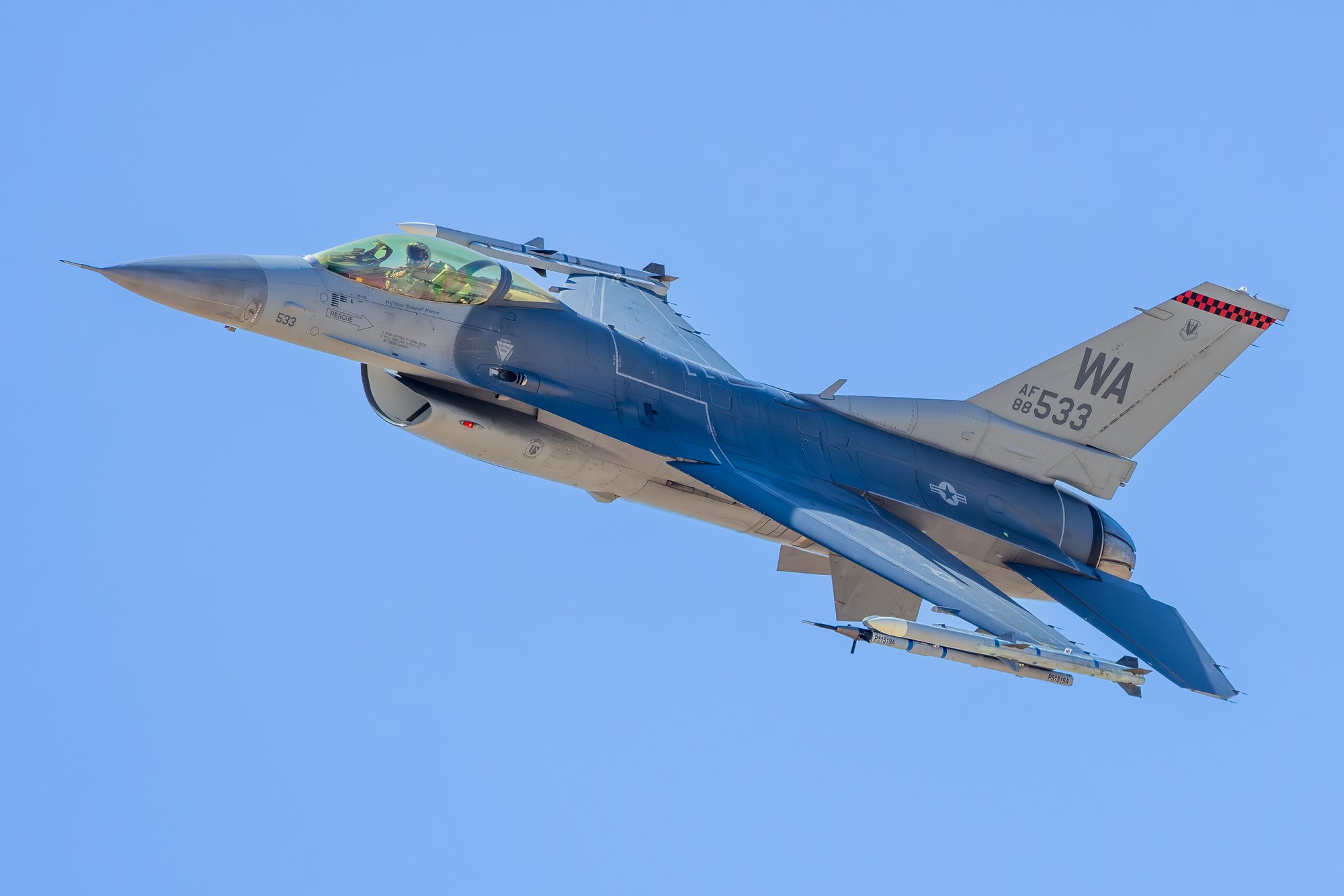
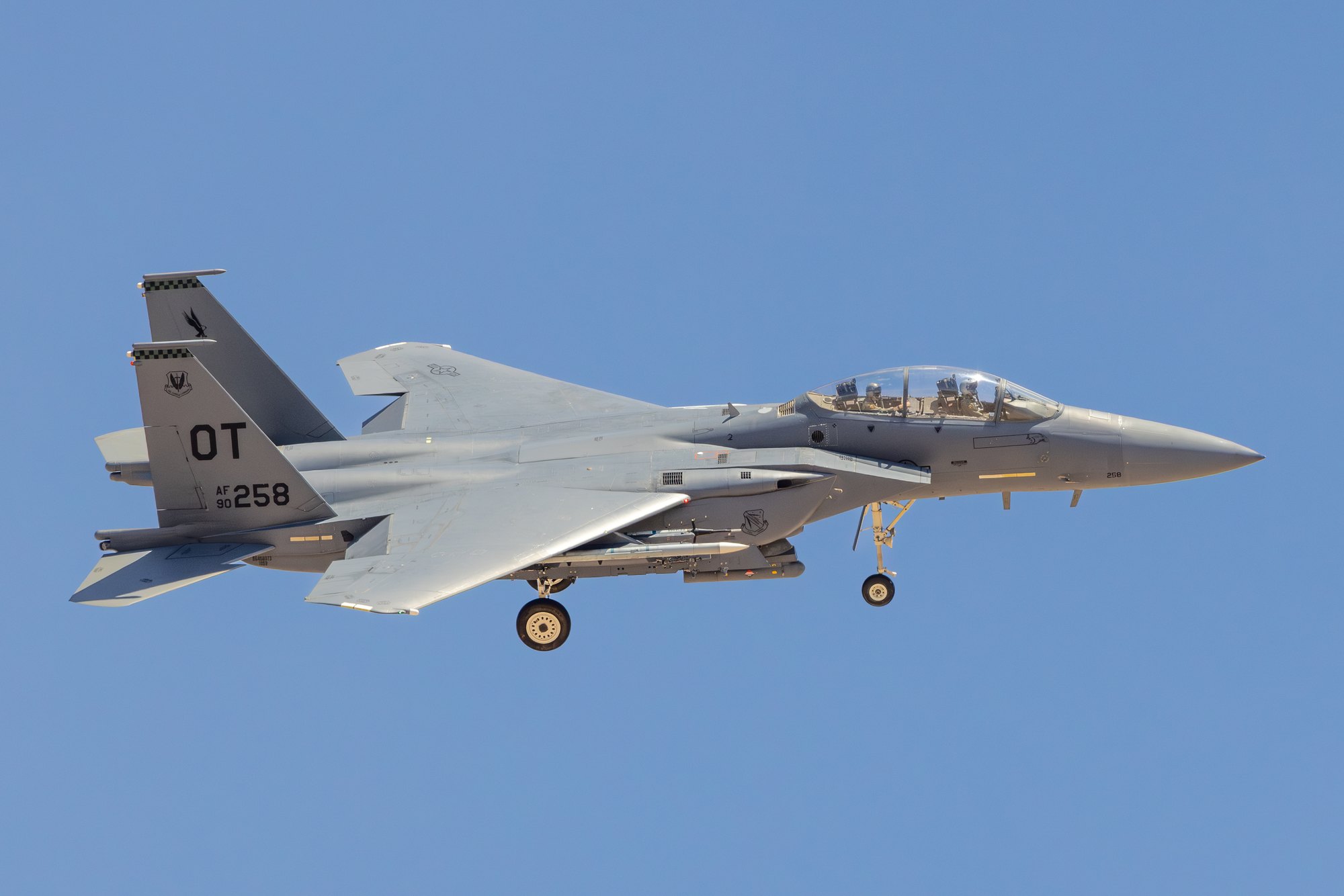
An important distinction, because the photographs on this page look like they contradict it. The 457 metre figure is a display separation minimum. It applies to a crowd line at an airshow and nowhere else. At a military airfield you are watching arrivals and departures from a public road or a fence, often at half that distance or less, which is why the F-16 above fills the frame at 500mm and the Strike Eagle below fills it at 343mm. Same lens, same focal lengths, completely different result, and the variable is where you are allowed to stand rather than anything about the lens.
And 457 metres is the closest it is allowed to be. A display is flown as a circuit, and the far end of a turn, a topside pass, or a repositioning leg puts the aircraft a good deal further out than the minimum. That is where the day’s best planform shots are, and it is where 500mm runs out.
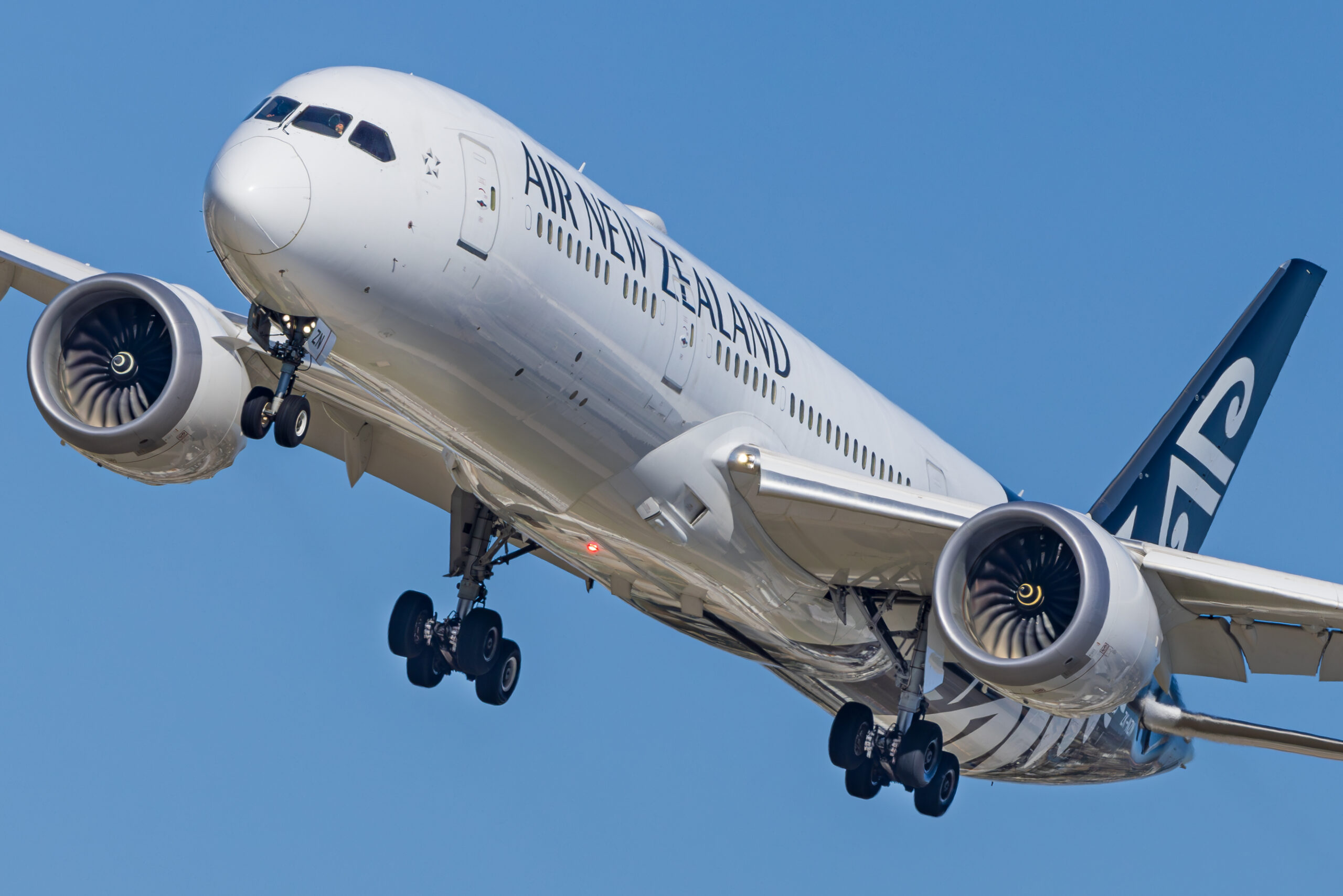
Now the airliner, and the numbers go the other way entirely. A Boeing 787-9 is 63 metres long, over four times the length of an F-16. At 500mm it fills the frame from 875 metres. A 737-800 at 39.5 metres fills it from 549 metres. On short final at a spotting position, where you are a few hundred metres from the aircraft rather than half a kilometre, a 787 at 500mm does not fit in the frame at all. It is nearly three times too big for it.
Which is why the 100-500mm is ample at an airport. Most of my airliner work sits between 200 and 400mm because it has to. The Air New Zealand 787 further down this page was taken at 343mm, not 500.
At the airport fence, where you need less than you think
The received wisdom is that airliners are a long way off and need reach. They are not and they do not, and the arithmetic above is why: an airliner is enormous and it comes close to you. Together those two facts make the 100-500mm more lens than the job needs.
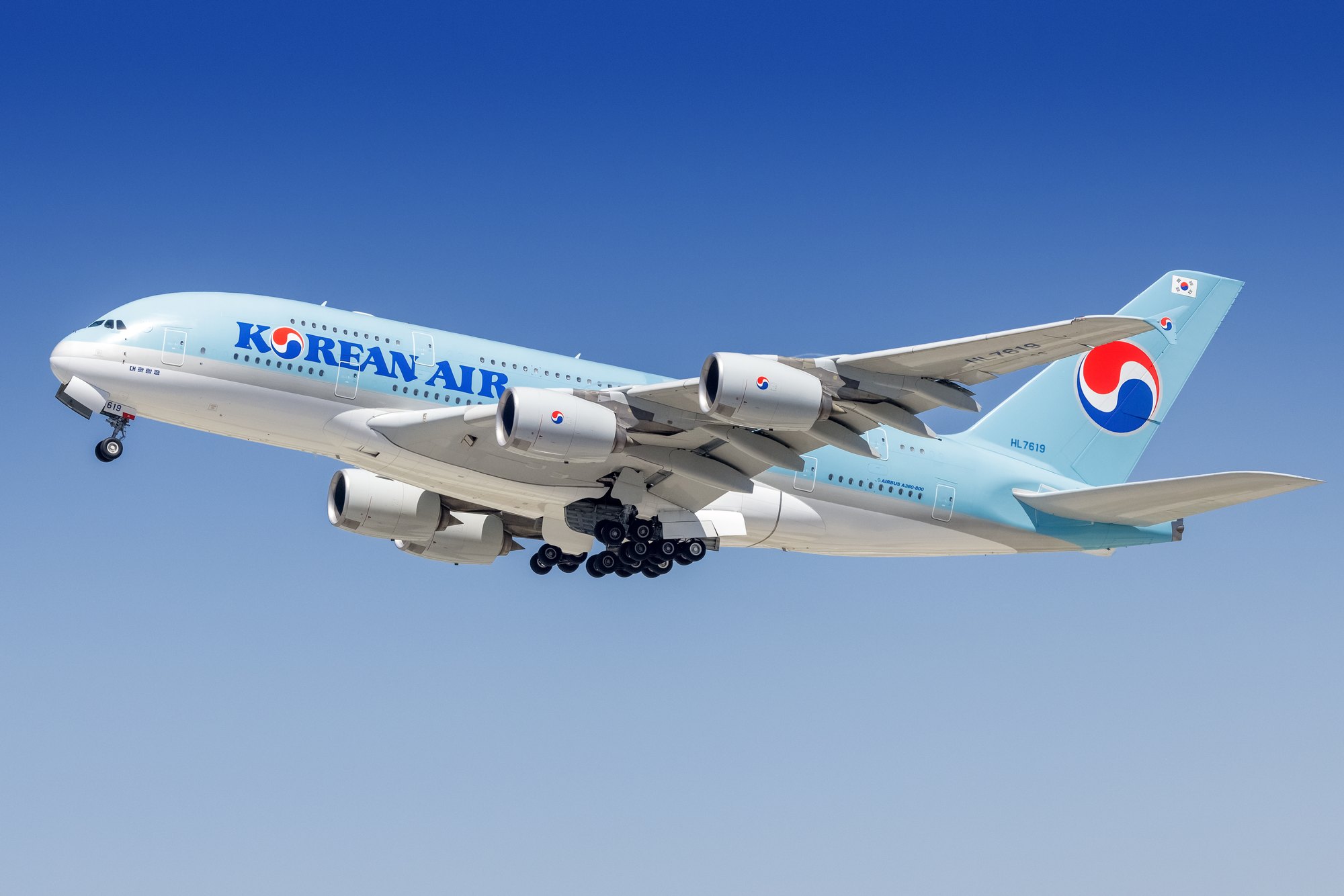
The frame above is the argument in one picture. An Airbus A380 is 72.72 metres long and 79.75 metres across the wings, and at Los Angeles it overflows the frame at 123mm. Not 500. Not 300. A hundred and twenty three.
What sets the focal length at an airport is the size of the aircraft and how close the runway is, and neither ever asks for 500mm. Pulling the frames from one August week at Los Angeles, all on this lens, they run from 123mm for the A380 to 400mm for an Embraer E175, which at 31.7 metres is less than half the A380’s length. Same airport, same lens, same photographer, and the small regional jet needs more than three times the focal length of the double-decker. That is the relationship in miniature: size and distance together, not distance alone.
So for airport work this lens is the whole answer. The money is better spent on getting to a better vantage point than on more focal length, and the wide end matters here in a way it never does at a display: 200mm is a focal length you use constantly at a fence.
Palm Springs makes the same point with a different set of numbers. Across 49 frames taken there on this lens, only three reached 500mm, and all three were business aircraft rather than airliners. Our Palm Springs spotting and photography guide has the full breakdown by focal length.
Two things that do matter at an airport, and neither is reach.
Fences are less trouble than people expect. Get the front element up close to chain link, shoot at 400mm and f/7.1, and the mesh is so far outside the plane of focus that it vanishes. It is the fence post that beats you, and the answer to a fence post is to move two feet. A 93.8mm barrel goes through gaps that a fat supertelephoto will not.
Heat is what really beats you. On a warm day, looking down a runway over hot tarmac, the air between you and the aircraft is moving and no lens resolves through it. Frames that look soft at 100 per cent are usually haze rather than optics. The test is easy: if the same lens on the same settings is sharp on an aircraft in the air and mushy on one on the ground at the same distance, it is not the lens. Shoot the approach and the departure instead of the taxi, or come back at eight in the morning. It is also why more focal length is not the answer at an airport: magnifying half a mile of moving air just magnifies the shimmer.
The last one only turns up after about the fourth hour. Airport sessions are long. You are not working a twenty minute display slot, you are waiting, with the lens on the camera the whole time, and carrying it between viewpoints because the light was wrong at the first one. At 1,530g and 207.6mm retracted this is a lens you keep in your hands rather than one you put down and then miss something picking up. That is the sixth hour, not the first, and it is where the 520g it saves over the RF 200-800mm gets paid back.
Closest focus is 0.9m at 100mm and 1.2m at 500mm, which is no use at a fence and very useful the moment you go indoors. A museum hangar, a static line, a nose detail. It focuses close enough at the wide end to be the only lens you brought, which is rather the point of a zoom that reaches 500mm and still starts at 100.
Red Flag, Luke and the military fields in between
Between the airliner at the fence and the fast jet at a display sits a third case, and it is the one where this lens is at its most interesting: a military airfield on an exercise, where the aircraft are fighter-sized but you are watching arrivals and departures rather than a display line.
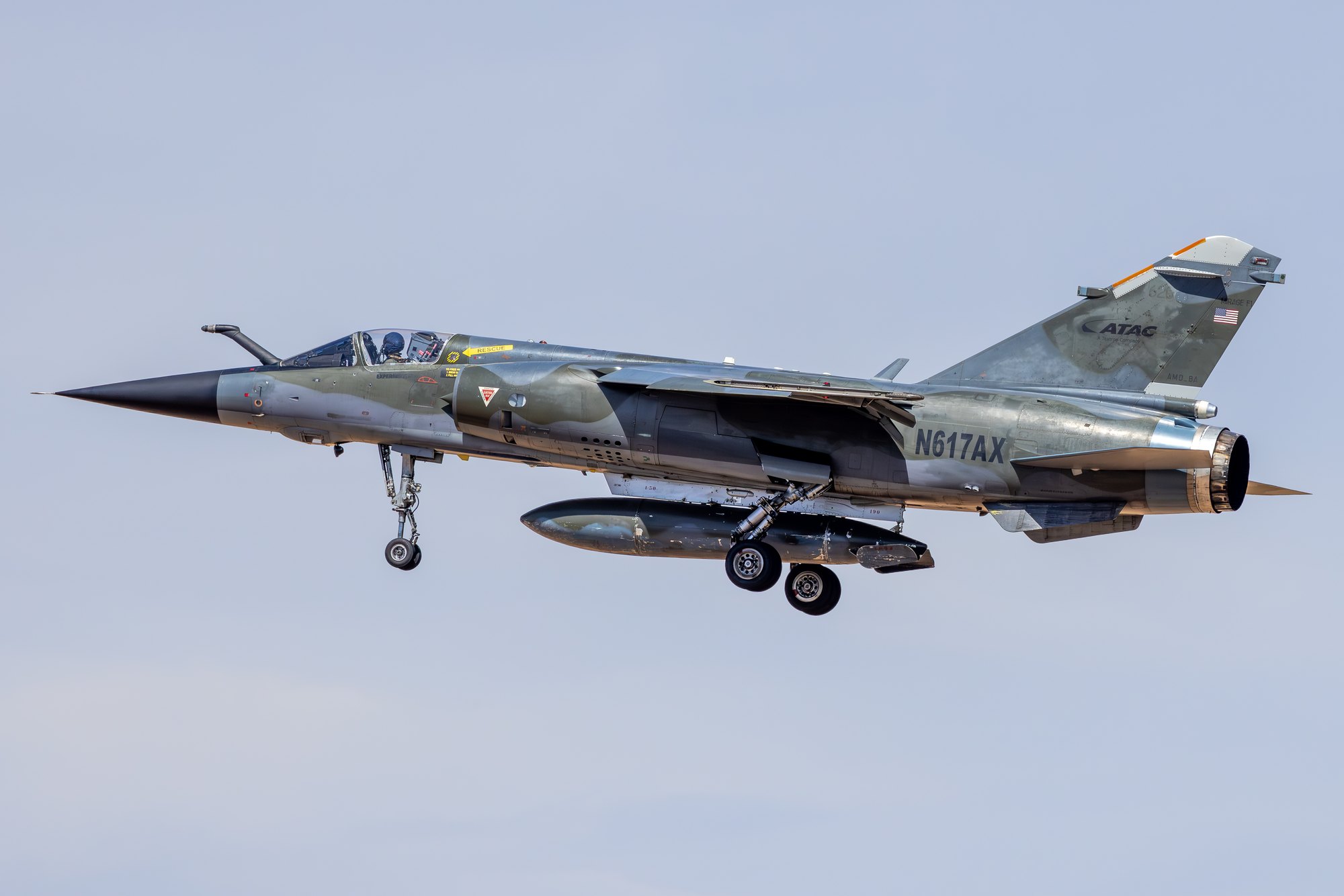
The distances here depend entirely on where you can stand, and they are published. The Nellis observation guide is specific about it: arrivals on runway 21R “require at least 400mm”, arrivals on 21L “require at least 800mm”, and runway 21 departures need “300mm plus reach”. For Red Flag it notes that “launches are typically on runway 03 and recoveries are typically on runway 21”. Global Aviation Resource’s guide to the same base recommends “something with 300-500mm” and warns that for the most distant arrivals “they are a long way away, so whilst photos are possible, you’ll need a lens with a lot of mm and you wont get those lovely banking topside shots”.
That matches what I found. Every frame on this page from Red Flag and Luke was taken on this lens between 343mm and 500mm, and three of the four sit at 400mm or 500mm. On the right runway the 100-500mm is exactly the right lens. On the wrong one, no lens you can carry is enough, and that is a positioning problem rather than an equipment problem.
At Red Flag the 100-500mm on its own was pretty good, and I did not feel short of reach for the shots that were actually available from where I was standing.
Slow shutter speeds and propeller blur
This is where the stabilisation stops being a number on a box. Five stops on its own, six when the body joins in.
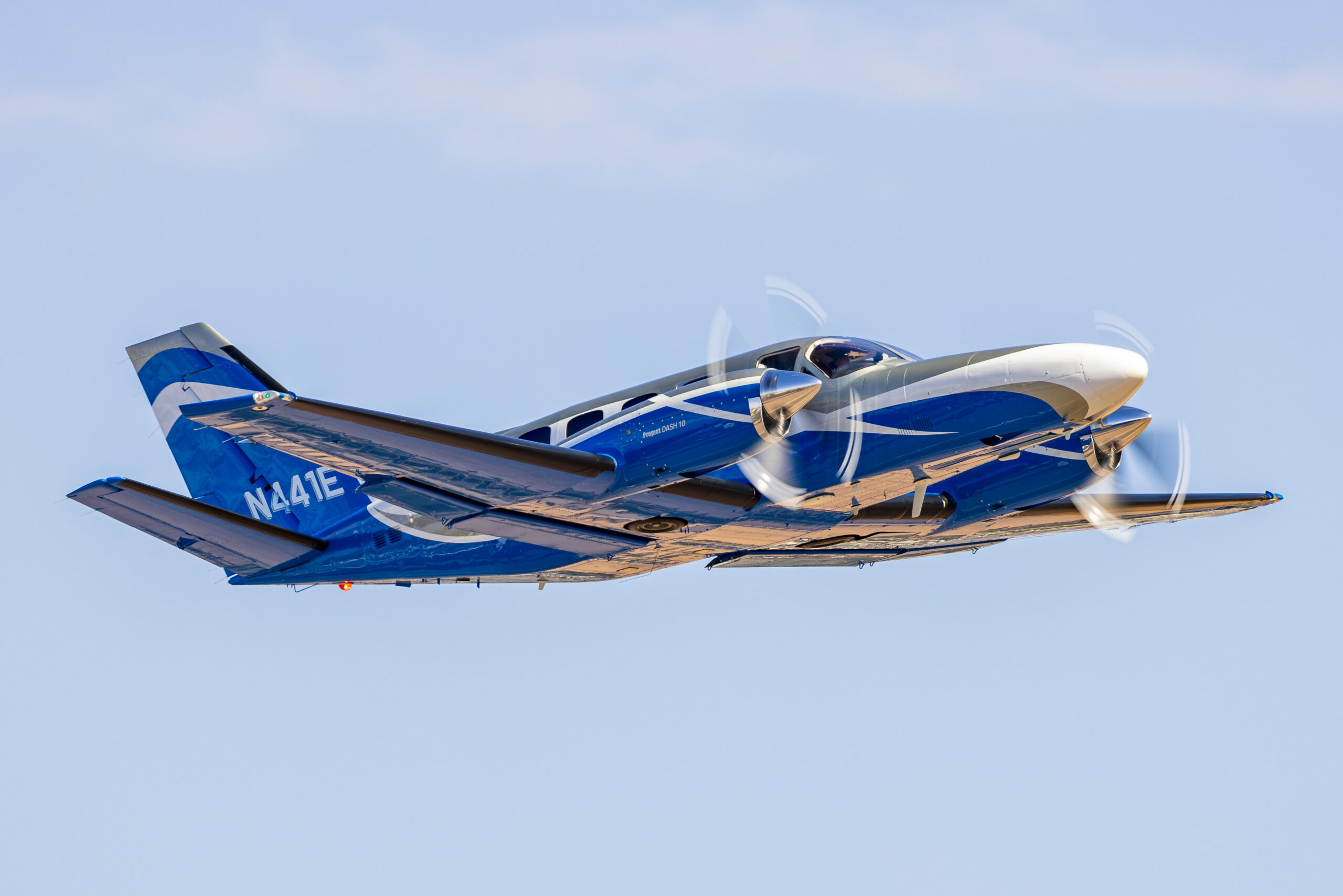
Propellers and rotors need slow shutter speeds. A turboprop wants somewhere around 1/250 second to give you a full disc; a piston warbird wants slower again. At 500mm the old reciprocal rule says 1/500, so 1/250 is already a stop past where you are supposed to be, and it goes further than that on a piston aircraft. Without stabilisation the keeper rate falls off a cliff. With it, and a smooth pan, the frames are there.
Reviewers disagree about how far you can push it, and the spread is wide enough to be worth knowing. Dustin Abbott got a sharp handheld frame at 500mm at 1/40 second, calls that “about four stops of assistance”, and says flatly that “getting stable images at 1/8th of a second at 500mm seems unlikely to me”. Martin Bailey reports sharp results at “1/30 or even 1/20 sec”. Amateur Photographer claims “sharp shots down to 1/10sec at 500mm with a steady hand”. None of the three is a lab test, and a two-stop spread between three careful photographers tells you the real figure depends on you. Assume four stops, be pleased when you get five.
It is just as happy in dim light. Flat overcast, the last half hour of a flying day, inside a hangar. Between the stabilisation and autofocus that does not give up when the contrast drops, the lens is not what is holding you back. Your shutter speed is.
What you give up
I said there is nothing about this lens that annoys me and I meant it, but there are four things you should know before you spend £3,159. None of them has cost me a picture.
It extends
The 207.6mm Canon quotes is the retracted length. This is not an internal zoom, so it grows as you zoom, the balance moves forward, and the barrel draws air past a moving seal. On a dusty airfield or a wet crowd line that is worth thinking about, which is what the L-series sealing is there for. The internal-zoom alternatives, Canon’s own RF 200-800mm among them, are longer and heavier in exchange.
The wide end is brighter than it is useful
f/4.5 covers 100 to 150mm, which is not where aircraft photography happens. Treat it as f/6.3 to f/7.1 for anything at range and it will not catch you out.
The zoom ring loosens with age
Short-term reviews rate the adjustable tension ring highly and Amateur Photographer says it “prevents zoom creep”. A photographer who has owned the lens for five years reports the ring “remains quite loose even when maximally tightened”, and that the tripod collar lock has gone the same way. Worth knowing if you are buying used.
Canon’s own pages disagree with each other
The minimum aperture at 500mm is f/54 on Canon’s specification page and f/51 at the Canon Camera Museum. It will never affect a photograph. It is a reminder to check a number on more than one page before repeating it.
What to buy, and what it costs
| Item | Price | Verdict |
|---|---|---|
| Canon RF 100-500mm F4.5-7.1L IS USM | £3,159 | The lens to buy |
| Canon RF 200-800mm f/6.3-9 IS USM | £2,269 | If reach is the whole problem |
| Canon RF 100-400mm f/5.6-8 IS USM | £719 | If the budget will not stretch |
Buy the lens. For airliners, for military airfields, for propeller work and for everything except a fast jet at the far end of a display, it is the whole answer on its own, and it is the only one of the three I can speak for from use.
A short note on the extenders
I have not used them, so this is other people’s testing. Two things are worth knowing. Canon builds a mechanism into this lens that limits it to 300-500mm whenever an extender is fitted, in Canon’s words “a mechanism which limits the zooming of the RF 100-500mm F4.5-7.1L IS USM zoom range (300 to 500 mm)”. And of the two, the 1.4x is the better reviewed: Nature TTL was “still very happy with the image quality” with it, and says of the other “I would not buy the 2x extender for this lens”. Neither is necessary. The lens is the point.
Who should not buy this lens
Three cases.
If you need more than 500mm most of the time, Canon’s RF 200-800mm f/6.3-9 IS USM goes further for £2,269, which is nearly £900 less. It is bigger, heavier and slower, and it has a harder time focusing in gloom. If reach is the whole problem, it solves the whole problem.
If £3,159 is most of your budget, the RF 100-400mm f/5.6-8 IS USM at £719 gets you started for less than a quarter of the money, and on an APS-C body like the EOS R7 it frames like a 160-640mm. It is 635g against 1,530g. It is not as good a lens. It is nowhere near four times worse.
If you shoot mostly in bad light, an f/7.1 long end is a real limit and no amount of stabilisation freezes a moving aeroplane. That is an argument for a fast prime, not for a different zoom.
For everybody else shooting aircraft on a Canon R-series body, this is the lens. Our guide to the best lenses for aviation photography puts it against every rival system, our guide to photographing fast jets covers the settings that get the most out of it, and if you are still choosing a body to put it on, our comparison of mirrorless and DSLR for aviation work is the place to start. For the slow-shutter technique the propeller frames here depend on, see our guide to propeller blur shutter speeds.
Every photograph on this page comes from the Piemags aviation archive. You can browse the aviation archive to licence images for personal, editorial or commercial use, on the terms set out in our licence terms.
Settings that suit this lens
None of this comes off a Canon brochure. It is what the lens itself asks for.
Shutter speed
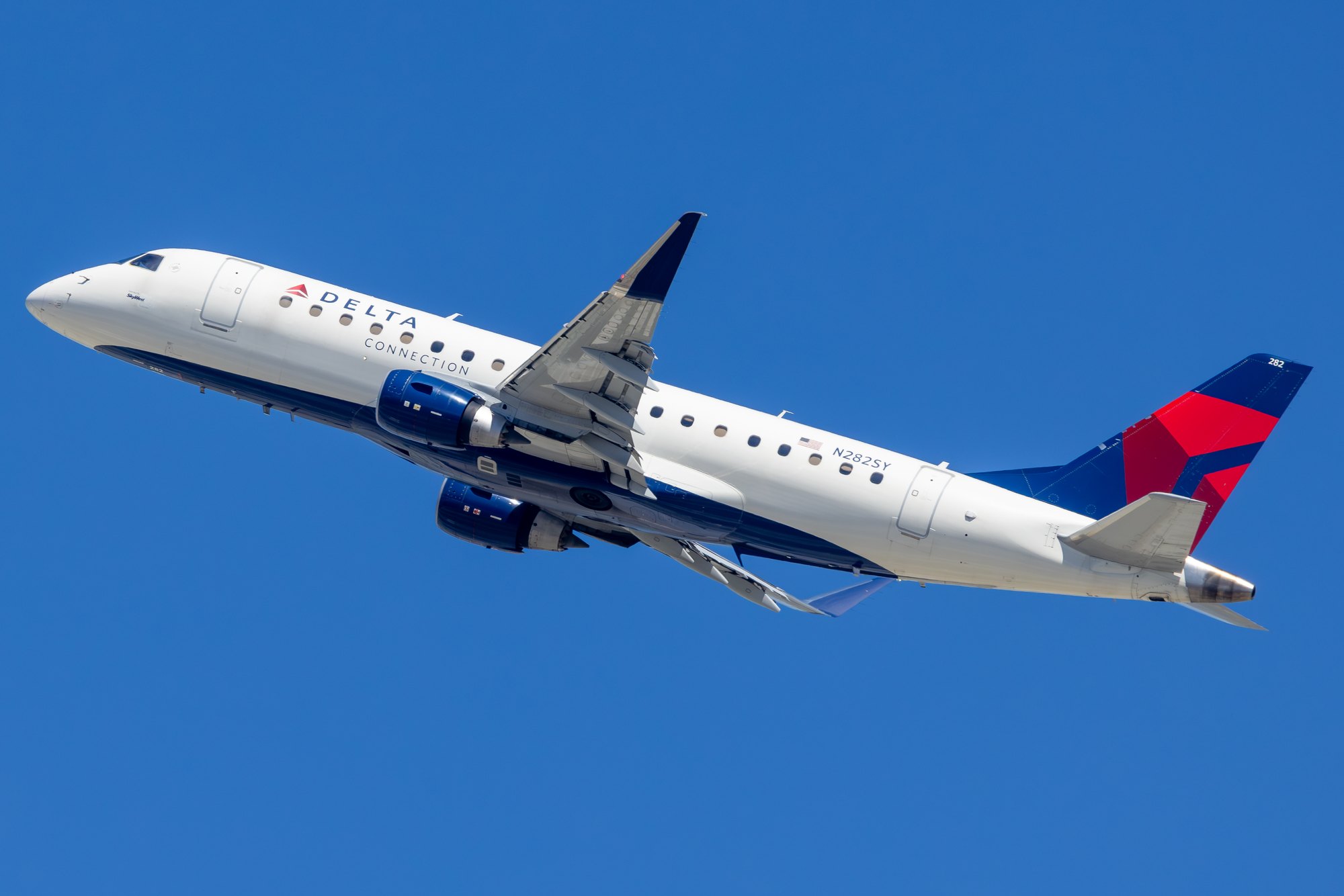
For jets, 1/1000 second and up. The Growler frame above was 1/1600 at 500mm. For propellers and rotors, come down to around 1/250 for a turboprop and slower again for a piston engine, and let the stabilisation and a smooth pan do the work. The Cessna 441 above was 1/250 at 500mm, which is exactly what the stabilisation is for.
Aperture
Wide open is fine, and that changes how you work. You do not have to stop down to f/8 before you trust it, so you keep the shutter speed you actually need. When you do stop down, do it for depth of field on a close subject, not out of suspicion.
Autofocus
Servo AF with subject detection set to Vehicles, which is where Canon files aircraft: its own AF guide lists Vehicles as “motorsports [cars and motorcycles], trains, aircraft [jets and helicopters]”. Our guide to airshow camera settings and autofocus goes through tracking sensitivity and area choices properly. They matter more on a long lens than a short one, because a moment of lost tracking at 500mm is a lost pass.
Stabilisation mode
The lens has three: general, panning, and one that only kicks in at the moment of exposure. For following an aircraft across the crowd line you want the panning mode, because the general mode fights the pan.
How it compares
| Lens | Reach | Weight | Price | The case for it |
|---|---|---|---|---|
| RF 100-500mm f/4.5-7.1L IS USM | 100-500mm | 1,530g | £3,159 | Sharpest, shortest, most flexible. The one to own. |
| RF 200-800mm f/6.3-9 IS USM | 200-800mm | 2,050g | £2,269 | 800mm for less money. Slower, larger and heavier. |
| RF 100-400mm f/5.6-8 IS USM | 100-400mm | 635g | £719 | A quarter of the price, 635g. The starter. |
The 200-800mm is the one worth arguing about, because on paper it beats this lens: more reach, less money. What it does not give you is the 100 to 200mm end for ground and taxi shots, the L-series optics, or the 520g. Its f/9 long end also asks more of the light than f/7.1 does. If you want one lens for a whole airshow day, buy this one. If you want the longest lens your money will buy, buy that one.
Questions people ask
Is the Canon RF 100-500mm good for aviation photography?
Yes, and if you shoot Canon it is probably the lens to own. It is sharp wide open at the long end, the Dual Nano USM autofocus stays with a fast jet crossing a display line, and at 207.6mm retracted and 1,530g with the tripod collar you can carry it for a full flying day. Wex sells it for £3,159.
Can you use a teleconverter with the Canon RF 100-500mm?
Yes, but only from 300mm to 500mm. Canon fits a mechanism that limits the zoom range whenever an extender is attached, in its own words “a mechanism which limits the zooming of the RF 100-500mm F4.5-7.1L IS USM zoom range (300 to 500 mm)”. The 1.4x gives 420-700mm at f/8 to f/10 and the 2x gives 600-1000mm at f/11 to f/14. For most aviation work neither is necessary.
Is the Canon RF 100-500mm sharp wide open?
Yes, and that is the practical point rather than a specification. You do not need to stop down a stop before you trust it, so you keep the shutter speed you need for a moving aircraft instead of trading it away to feel safe.
Is the Canon RF 100-500mm good enough for a 45 megapixel body?
Yes, and on fast jets that resolution is part of the point. At the FAA minimum display distance of 457 metres an F-16 fills under half the frame at 500mm, so you are cropping, and a 45 megapixel EOS R5 gives you the room to do it. Chart testing by Dustin Abbott found “incredibly consistent performance at every tested focal length with no real drop-off” and “very little difference between the wide open performance from the lens and when it was stopped down”. Reviewers disagree about the corners at 500mm, where Thom Hogan finds them “only fair”, but the centre holds up throughout, and on an aircraft against sky the centre is what carries the picture.
What is the maximum aperture of the RF 100-500mm at 400mm?
About f/6.3. Canon does not publish the full aperture ramp, but a measured breakdown gives f/4.5 from 100 to 150mm, f/5 to 253mm, f/5.6 to 362mm, f/6.3 to 471mm and f/7.1 from 472mm. Treat it as an f/6.3 to f/7.1 lens for anything at range, because the f/4.5 covers only the first fifty millimetres of the zoom.
How much does the Canon RF 100-500mm weigh?
1,530g with the tripod collar fitted and about 1,370g without it, both figures Canon’s own. Reviews comparing it with rivals often mix the two, so check which one you are being quoted.
Can you use the RF 100-500mm for propeller blur?
Yes, and it is one of the things it does best. Propeller work needs slow shutter speeds, around 1/250 second for a turboprop and slower for a piston engine. At 500mm the old reciprocal rule says 1/500, so 1/250 is already a stop past it and a piston aircraft takes you further still. Five stops of optical stabilisation, six when the body co-ordinates its own, is what makes those frames repeatable rather than lucky.
Is the RF 100-500mm an internal zoom?
No. It extends as you zoom, and the 207.6mm length Canon quotes is the retracted figure. On a dusty or wet airfield that is worth knowing, although the L-series dust and weather resistant construction is there for exactly that. The internal-zoom alternatives are longer and heavier.
RF 100-500mm or RF 200-800mm for aviation photography?
The 100-500mm if you want one lens for a whole airshow day, because it covers ground and taxi shots as well as the display and it is 520g lighter. The 200-800mm if reach is the entire problem: it gives 800mm without an extender for £2,269, which is nearly £900 less, at the cost of size, weight and an f/9 long end that asks more of the light.
Is 500mm enough for airshow photography?
For a fast jet it is the point where you start wanting more. The FAA requires Category I aircraft, meaning those operating above 245 knots, to fly aerobatic manoeuvres no closer than 1,500 feet from the crowd, which is 457 metres; UK CAP 403 sets 450 metres above 300 knots. At 457 metres an F-16, 14.8 metres long, fills about 45 per cent of a full frame at 500mm and about 90 per cent at 1000mm with the 2x. And that is the minimum distance: the far end of a display turn is further out again.
What focal length do you use most on the RF 100-500mm for aviation?
It depends entirely on the subject and it is not what most people assume. Airliners at an airport sit between 200 and 400mm, because a 63 metre Boeing 787 will not fit in the frame at 500mm from anywhere you would normally stand. Military airfields put you at 343mm to 500mm. Fast jets at an airshow crowd line, held at 457 metres by the FAA, are the one case where 500mm has you cropping. The lens covers all three, which is the argument for owning it.
Sources and further reading
- Canon, Extender RF 2x product page, for the sentence limiting the RF 100-500mm zoom range to 300 to 500mm. canon-europe.com
- Canon, AF Setting Guide, for Vehicles covering “motorsports [cars and motorcycles], trains, aircraft [jets and helicopters]”. cam.start.canon
- Canon, RF 100-500mm F4.5-7.1L IS USM specifications, for optics, weight, dimensions, focus and the extender combinations. canon-cna.com
- Canon UK, RF 100-500mm F4.5-7.1L IS USM product page, for Dual Nano USM, the five and six stop stabilisation figures and the sealing. canon.co.uk
- Canon Canada, press release of 9 July 2020 announcing the EOS R5, EOS R6 and the RF lenses, for the announcement date and extender compatibility “from 300 to 500mm focal length”. canon.ca
- Canon Camera Museum, product record rf497, for construction, magnification and the marketed date. global.canon
- The Digital Picture, review of the Canon RF 100-500mm F4.5-7.1L IS USM, the measured aperture ramp and the autofocus observations with each extender. Secondary, and labelled as such in the text. the-digital-picture.com
- FAA, Air Show Special Provisions, for the Category I definition (over 245 knots) and the 1,500 foot minimum for aerobatic manoeuvres. faa.gov
- UK Civil Aviation Authority, CAP 403, Flying Displays and Special Events, for the 230 metre standard separation and the 450 metre figure above 300 KIAS. caa.co.uk
- US Air Force fact sheets for the F-16 and F-35A dimensions, and NAVAIR for the F/A-18. Eurofighter for the Typhoon at 15.97m. af.mil
- Aviation Photo Digest, Nellis AFB Aircraft Observation Guide, for the focal lengths each runway needs and the Red Flag runway pattern. aviationphotodigest.com
- Global Aviation Resource, Nellis Air Force Base photography guide, for the 300-500mm recommendation and the warning about the far arrivals. globalaviationresource.com
- Dustin Abbott, review of the RF 100-500mm, for the chart-tested sharpness consistency and the 1/40 second stabilisation result. dustinabbott.net
- OpticalLimits, review of the RF 100-500mm, for the resolution figures across the zoom range and the measured distortion and vignetting. opticallimits.com
- Thom Hogan, sansmirror.com, for the dissenting view that the corners at 500mm are only fair. sansmirror.com
- Amateur Photographer, review of the RF 100-500mm, for the corner performance at 500mm and the 1/10 second stabilisation claim. amateurphotographer.com
- Digital Camera World, review of the RF 100-500mm, for the autofocus hit rate on the original EOS R against the EOS R5. digitalcameraworld.com
- Nature TTL, wildlife field test of the RF 100-500mm, for “I would not buy the 2x extender for this lens”. naturettl.com
- Martin Bailey, on autofocus with extenders on mirrorless bodies, and his 1/20 to 1/30 second handheld results at 500mm. martinbaileyphotography.com
- Wex Photo Video, prices for the lens and both extenders, read from the retailer product feed on 28 August 2026. wexphotovideo.com
